Hear from Our Customers
A lot of excavation problems don’t show up on day one. They show up six months later when water pools where it shouldn’t, when a foundation settles unevenly, or when a septic system fails inspection because no one accounted for the water table. On the North Fork, where roughly a third of properties in the Peconic Estuary area sit above groundwater at depths of less than 13 feet, that’s not a worst-case scenario. It’s a routine site condition that has to be planned for from the start.
The sandy loam soils that run through Cutchogue, Peconic, and Mattituck are easy to dig but don’t behave like the heavier clay profiles you’d find further west on Long Island. Backfill compaction matters more. Trench stability requires more attention. And drainage outcomes depend almost entirely on how the grading was executed not on the soil doing the work naturally. When you get that right, the rest of the project builds on solid footing.
For high-value properties in Southold whether it’s a new build off Route 25, a vineyard facility in Cutchogue, or a waterfront renovation near Gardiner’s Bay the excavation work underneath is what determines whether everything above it holds up. Get it right early, and you avoid the kind of expensive corrections that no one wants to deal with mid-build.
We’re a full-service excavation contractor serving Southold and the broader North Fork. The work here isn’t the same as mid-island excavation the sites are different, the regulations are layered, and the clients expect a higher standard. That’s the market we work in, and it’s the standard we hold ourselves to on every project.
Southold has its own permitting environment. The Town Building Department, Suffolk County Health Department, and NYSDEC all have a hand in what happens on your site especially if you’re working near the wetlands and waterways that make up so much of Southold’s geography. We know those requirements, we work within them, and we don’t leave clients to figure out the compliance side on their own.
From Mattituck to Orient, from residential lots near Jockey Creek to agricultural parcels in the interior, we’ve worked across the hamlets that make up Southold and we understand what each type of site demands. That’s not something you can fake with a location page.

It starts with a site visit and a clear conversation about what the project actually requires. Before any equipment moves, we look at the site conditions soil profile, grade, proximity to wetlands or waterways, and what permits are going to be needed. In Southold, that last part matters more than most places. If your property is near tidal or freshwater wetlands, a NYSDEC permit may be required before work can begin. If excavation touches a town road, there’s a bonding requirement. Southold Town also imposes a double-fee penalty for any land clearing or excavation that starts without the right permits in place so we make sure that’s sorted before a single machine arrives on your property.
Once the permitting path is clear, we scope the work in writing. You’ll know exactly what’s included bulk earthworks, spoil removal, erosion controls, grading, and any drainage elements before you sign anything. No vague line items, no surprises when the invoice arrives.
On site, we work to the grade. Erosion and sediment controls go in from day one, not as an afterthought before an inspection. The town supervisor has publicly flagged sediment control failures on new construction as a recurring problem during nor’easters we take that seriously on every project. When the work is done, the site is clean, the grades drain correctly, and you’re ready for whatever comes next.
Ready to get started?
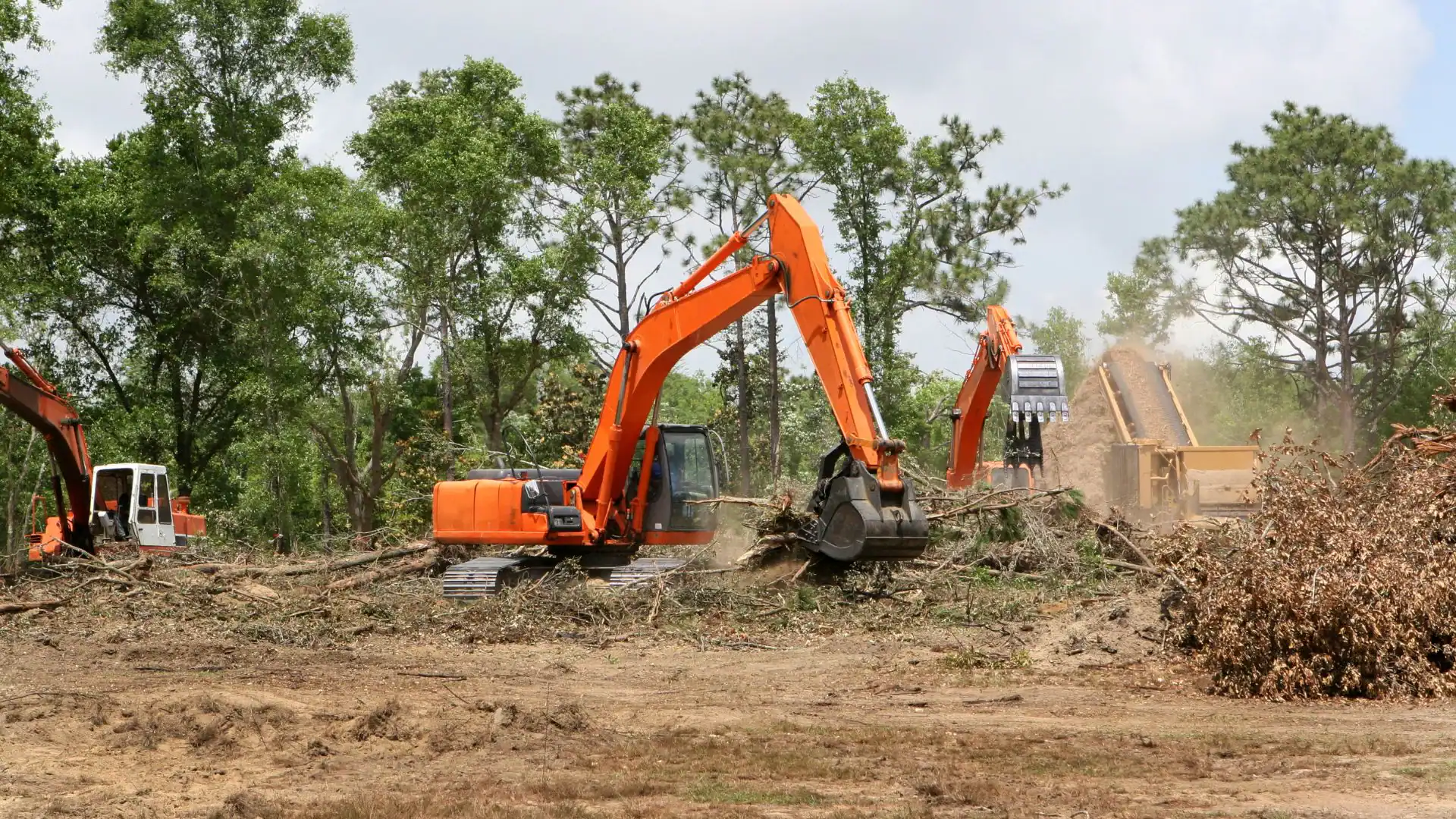
Whether you’re preparing a residential lot in East Marion, clearing acreage for a new vineyard block in Cutchogue, or breaking ground on a commercial build near the Village of Greenport, the excavation scope on a North Fork project can cover a lot of ground. We handle the complete earthworks package land clearing, bulk excavation, cut and fill, finish grading, drainage installation, trench excavation, and dig and haul services under one contract, with one point of contact from start to finish.
That matters on complex sites. Coordinating multiple subcontractors for different phases of earthworks creates scheduling gaps, accountability problems, and cost overruns that nobody needs on a high-value build. When one contractor manages the full scope, the project moves cleaner and the outcome is more consistent.
For waterfront and bay-adjacent properties which make up a significant share of the Southold market we bring the wetlands awareness and NYSDEC compliance experience that coastal excavation requires. For agricultural and vineyard properties, we understand the drainage and site preparation needs that protect root systems and support long-term land productivity. And for residential clients building on Southold’s sandy loam lots, we execute the grading and compaction work that those soil conditions specifically demand. Whatever the project type, the work gets done to a standard that matches what you’re building.
Yes, and in Southold the permit requirement carries real teeth. The Town Building Department requires permits for construction projects involving excavation, and if you begin land clearing or excavation before those permits are in place, the town imposes a double-fee penalty on the permit cost. That’s not a minor administrative inconvenience it’s a meaningful financial hit that’s completely avoidable with the right preparation upfront.
Beyond the town’s building permit, there are other layers depending on your specific site. If your property is near tidal or freshwater wetlands which covers a substantial portion of Southold given its Long Island Sound and Peconic Bay frontage a NYSDEC wetlands permit is required before work can begin. If excavation affects a town road, a maintenance bond is required: two years for excavations 18 inches or less, three years for anything deeper. We handle the permitting coordination as part of our process so you’re not navigating that on your own.
It’s one of the most important site factors to account for on the North Fork, and it’s one that gets overlooked more than it should. Approximately 34% of properties in the Peconic Estuary area which covers much of Southold have groundwater depths of less than 13 feet. That’s a shallow water table by any standard, and it directly affects how deep you can go for footings, how septic systems need to be positioned, where drainage dry wells can be installed, and how utility trenching needs to be managed.
If a contractor doesn’t check the groundwater depth before scoping the excavation, you can end up with a foundation design or septic placement that creates compliance problems or drainage failures after the fact. We assess water table conditions as part of our initial site evaluation on every Southold project, and we factor that into how the work is scoped and executed. It’s a basic step that makes a significant difference in the long-term outcome of the project.
Southold’s geography puts a large number of properties within or adjacent to regulated wetlands. The town is bordered by Long Island Sound to the north and Peconic Bay and Gardiner’s Bay to the south, with creek and inlet systems running through the interior including areas around Jockey Creek and Mattituck Inlet. Any construction or excavation activity in or near these areas triggers NYSDEC permit requirements, and the Town’s own code requires silt boom installation for intertidal construction and excavation work.
In practical terms, this means that before any equipment goes to work on a wetlands-adjacent site in Southold, the permit needs to be in hand, the buffer distances need to be respected, and erosion and sediment controls need to be installed and maintained throughout the project. Working without those permits isn’t just a regulatory risk it can result in stop-work orders, remediation requirements, and fines that far exceed the cost of doing it right the first time. We’re experienced in identifying when NYSDEC permits apply and in executing excavation work near Southold’s coastal and estuarine areas in a way that keeps the project compliant and on schedule.
It depends on the scope, but the honest answer for Southold specifically is that the permitting timeline often drives the schedule more than the physical work itself. A straightforward residential excavation on a lot without wetlands adjacency or street excavation involvement might move from permit approval to completed earthworks within a week or two. A more complex project one involving NYSDEC permits, multiple phases of earthworks, or drainage infrastructure can take longer to get through the approval process before the first machine arrives.
This matters especially on the North Fork because the construction season is shaped by the second-home market’s spring and summer peak. If you’re planning a new build or a major site preparation project and you want the excavation completed before the summer season, you need to start the permitting process earlier than most people expect. We walk through realistic timelines during the initial site visit so you can plan your broader construction schedule around actual dates, not optimistic estimates.
Excavation is the process of removing material from a site digging for foundations, trenching for utilities, clearing bulk earth to achieve a target elevation. Grading is what happens after: shaping and smoothing the site to achieve specific drainage slopes, level building pads, or final surface profiles. They’re related but distinct, and on most Southold projects you need both done in sequence to get a site that’s ready to build on.
The reason grading matters so much on the North Fork is that Southold’s sandy loam soils are very level and don’t naturally redirect water the way sloped terrain does. Drainage outcomes on these sites depend almost entirely on the precision of the finish grade. If the grade doesn’t direct water away from the structure and toward the appropriate drainage points, you end up with pooling, erosion, and potential foundation issues especially given the shallow water table conditions common in the Peconic Estuary area. Getting both the excavation and the grading right, in the right sequence, is what produces a site that performs correctly over time.
The most important things to verify are licensing, insurance, and actual local experience not just a town name on a website. In Southold specifically, you want a contractor who can speak to the NYSDEC permit process, who understands the town’s double-fee penalty for unpermitted work, and who has hands-on experience with the North Fork’s sandy loam soils and shallow groundwater conditions. These aren’t abstract credentials they’re the difference between a project that moves cleanly through permitting and execution and one that stalls at the first site condition the contractor didn’t anticipate.
Ask for written quotes that clearly scope what’s included: spoil removal, erosion controls, permit coordination, and site cleanup. A contractor who gives you a vague number and figures out the details later is a contractor who will find reasons to add costs once the work is underway. On a high-value Southold property where average sale prices on the North Fork exceed $1.3 million the excavation work underneath everything else deserves the same standard of professionalism you’d expect from any other contractor on the project. Verify the license, confirm the insurance, and make sure the person you’re talking to actually knows Southold.