Hear from Our Customers
Calverton isn’t a quarter-acre suburb. The lots here are measured in acres, the vegetation is established, and the regulatory environment between the Pine Barrens Act, the Town of Riverhead’s permit requirements, and potential wetland setbacks near the Peconic River is more layered than most contractors on Long Island are prepared to deal with. When clearing goes wrong here, it doesn’t just mean a messy site. It can mean a stop-work order, a DEC violation, or a fine that costs more than the job itself.
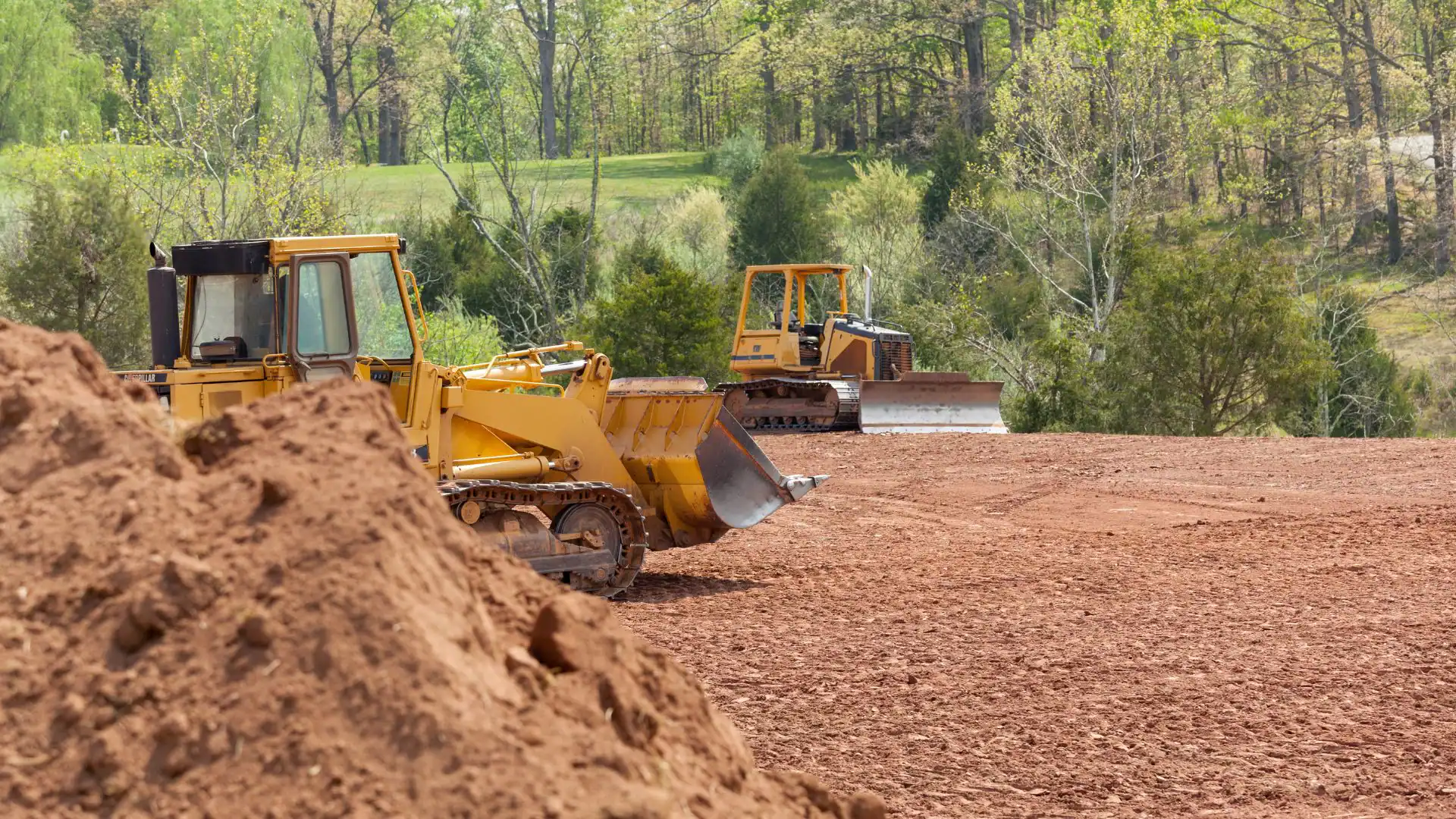
When it goes right, you get a site that’s clean, level, and actually ready for whatever comes next whether that’s new construction, agricultural use, or simply reclaiming land that’s been sitting overgrown for years. No debris piles pushed to the tree line. No stumps left in the ground. No surprises on the invoice.
For the significant number of Calverton property owners dealing with larger, older parcels especially those who’ve owned the land for decades and watched the scrub take over the difference between a real land clearing contractor and a landscaping company that added clearing to its website is the difference between a finished site and a half-done job you’re still managing six months later.
We’re a Long Island land clearing and earthworks contractor. This isn’t a tree service company that added clearing to the service list it’s what we do, with the equipment and field knowledge to back it up across the full range of clearing work: brush clearing, lot clearing, land reclamation, vegetation removal, and overgrown property clearing on parcels that actually require heavy equipment to do the job correctly.
Calverton sits in a part of Suffolk County where the regulatory environment is genuinely complex. The Pine Barrens overlay, the Town of Riverhead’s Chapter 217 permit requirements, the dual-township boundary with Brookhaven, and the DEC wetland setbacks along the Peconic River corridor are not details you want to discover mid-job. We know this area, we know what applies where, and we confirm all of it before a machine moves on your property.
It starts with a site assessment. Before we quote anything, we look at the property the size, the vegetation type, the terrain, and where it sits relative to the Pine Barrens zones and any nearby wetland features. For Calverton properties, this step matters more than it does in most places. If your parcel falls near the Peconic River corridor or within the Pine Barrens compatible growth area, that shapes what work requires approval before it starts. We identify that upfront, not after the equipment is already on site.
From there, we confirm which municipality governs your parcel Town of Riverhead or Town of Brookhaven, depending on where the property sits and advise on what permit requirements apply to your specific project. If a land clearing permit is needed under Riverhead’s Chapter 217 process, we walk you through what that involves so there are no delays once work begins.
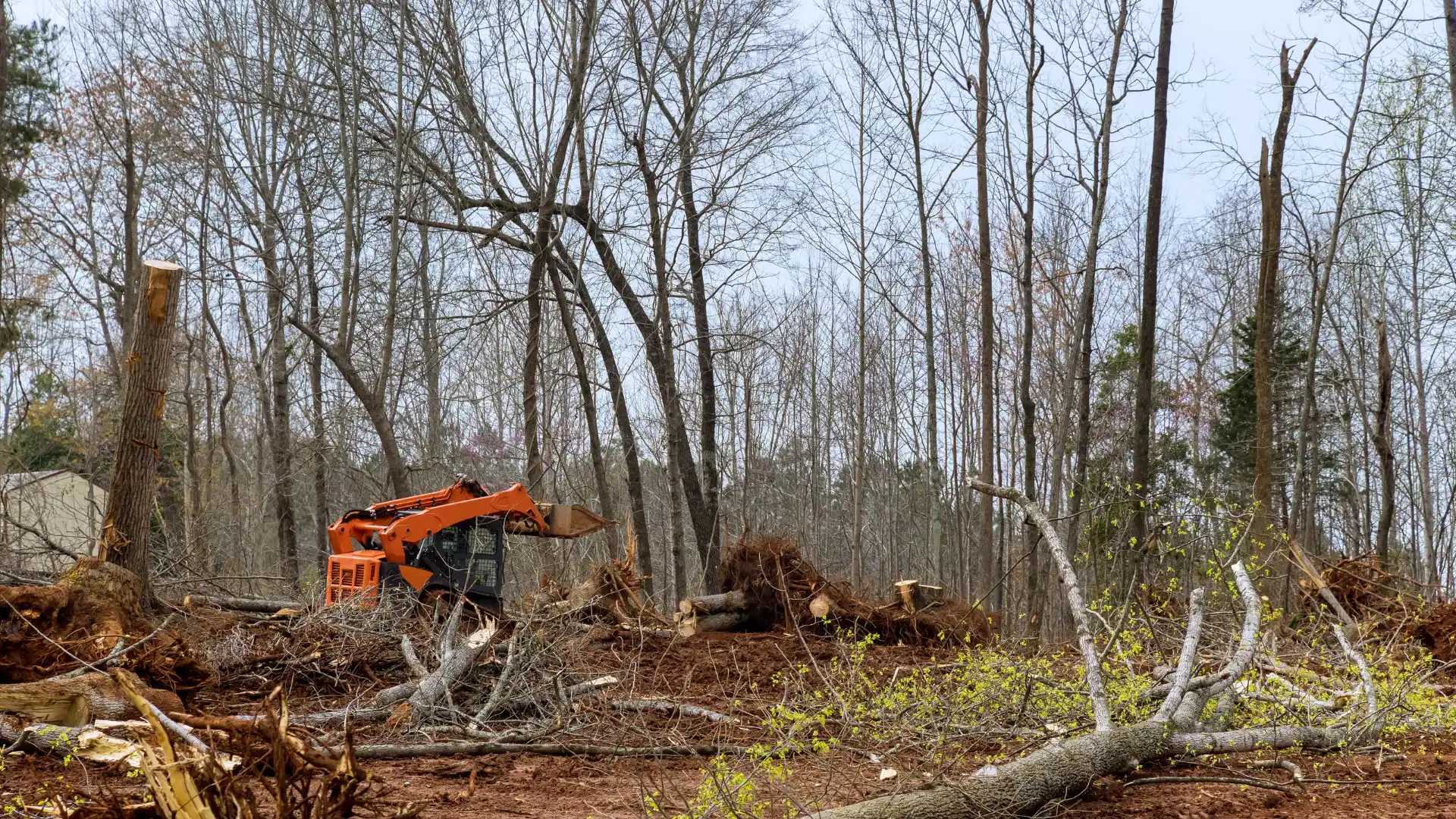
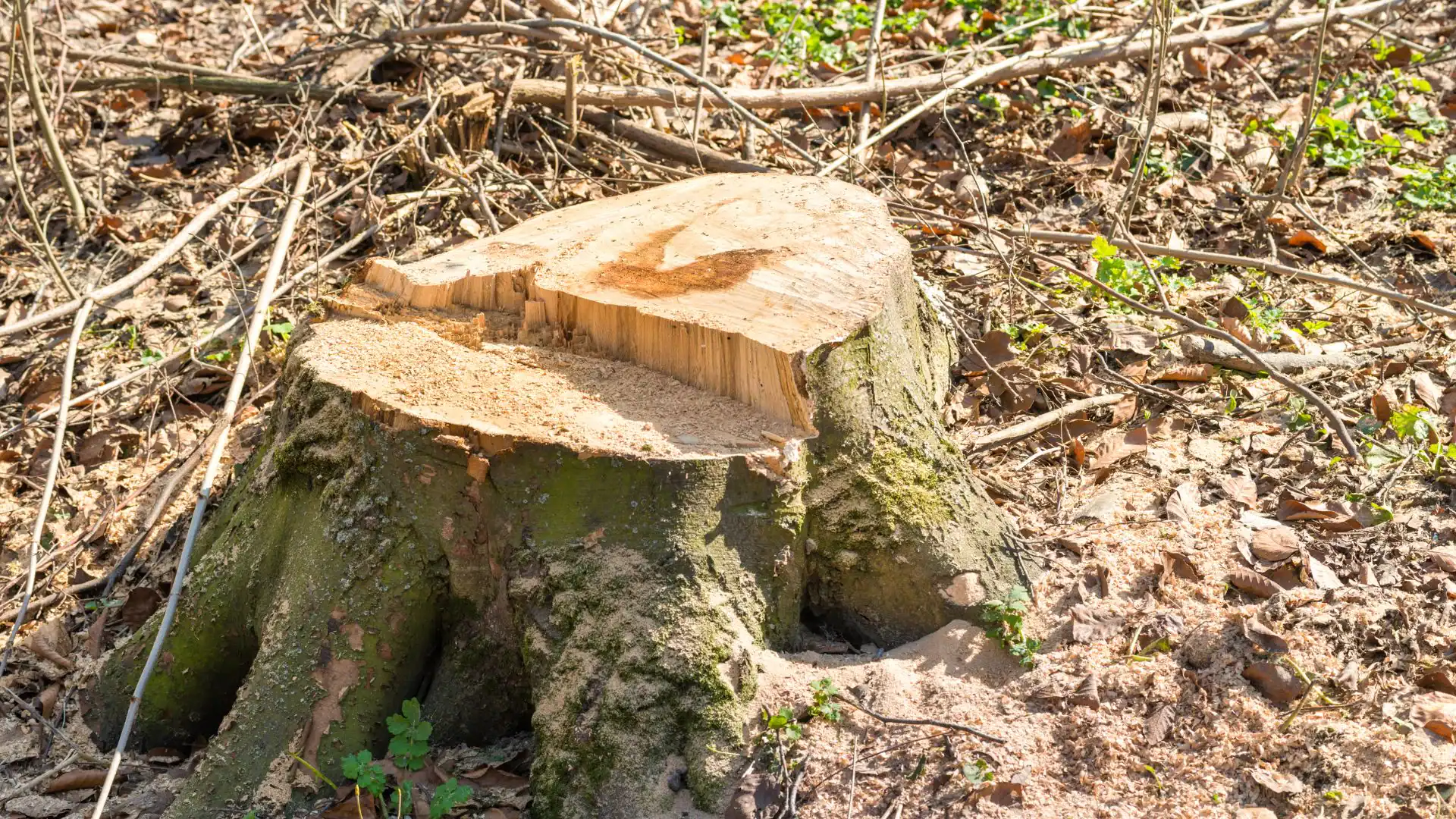
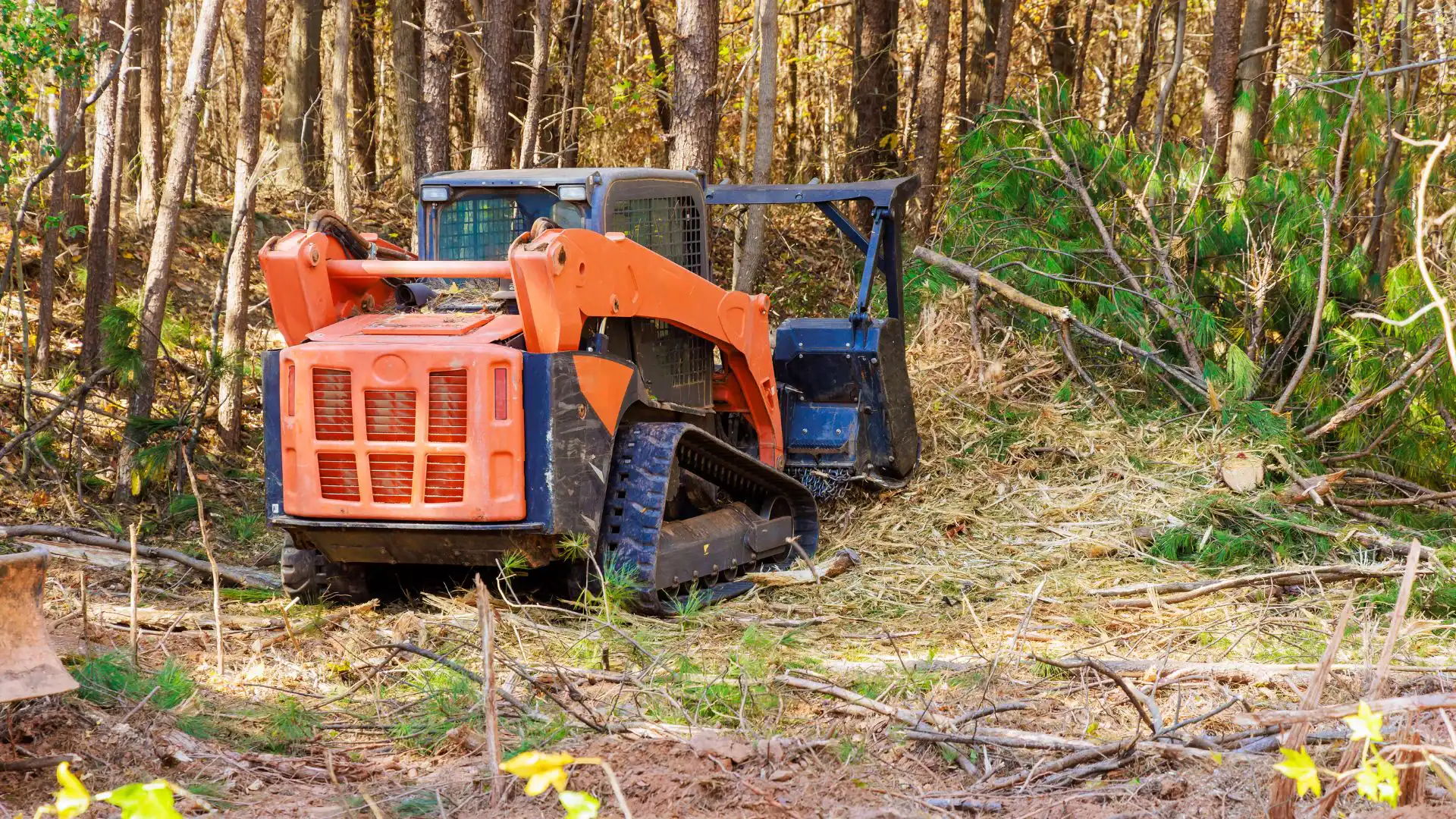
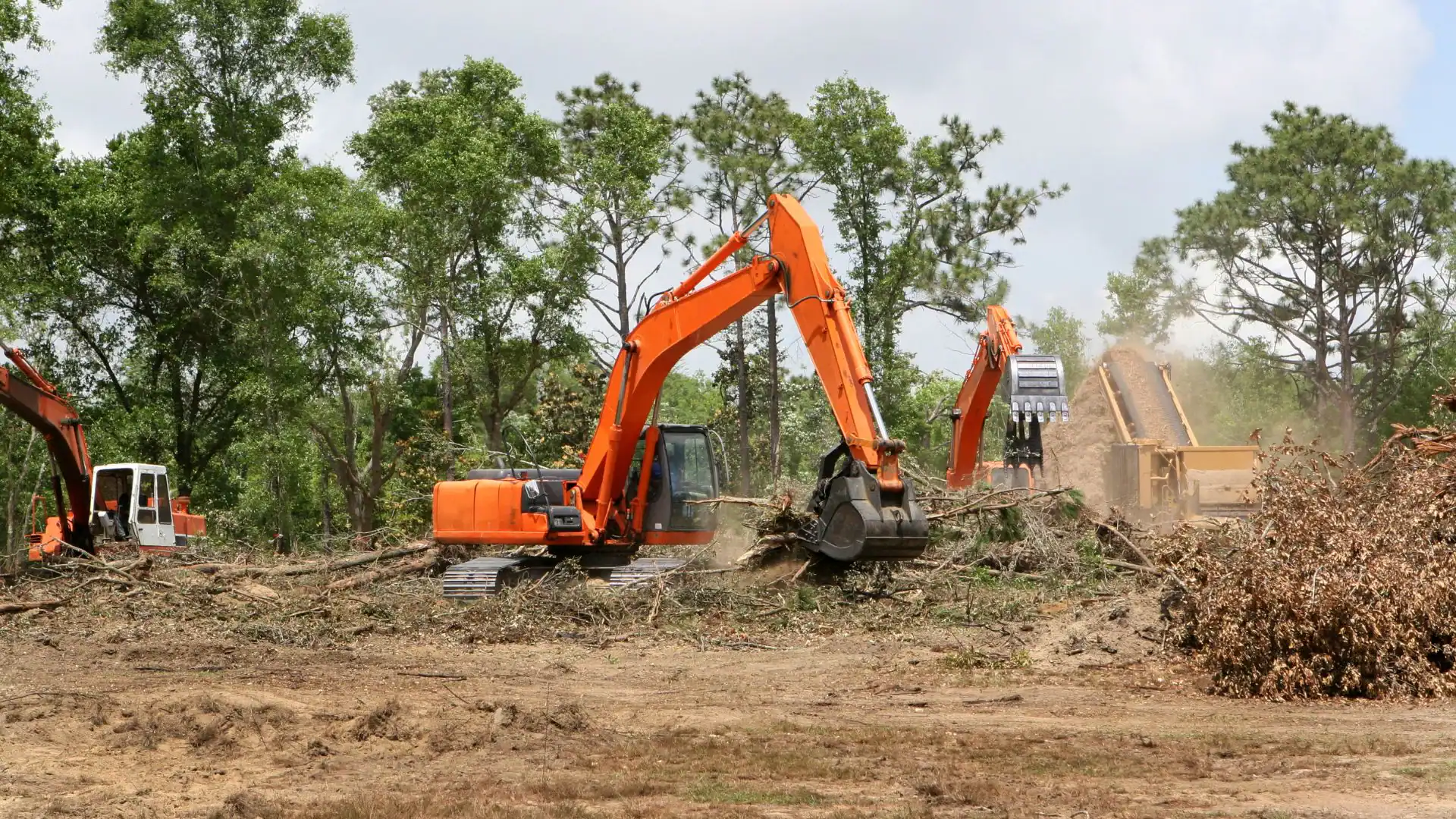
When the crew arrives, the process is systematic: clearing the overgrowth, removing stumps and root systems where needed, processing or hauling debris, and leaving the site in the condition your next step requires. For properties with invasive species like multiflora rose or Oriental bittersweet both common on neglected Calverton parcels we address the root system, not just the above-ground growth, so the cleared land stays clear.
Ready to get started?
The clearing work we do in Calverton covers the full range of what property owners in this area actually need. Brush clearing and vegetation removal for parcels reclaiming themselves from pitch pine, scrub oak, and invasive species. Lot clearing for new construction coordinated with your builder’s timeline and leaving the site in the condition the foundation or slab requires. Land reclamation services for rural and agricultural properties that have been left unmanaged, including grading, stump removal, and erosion stabilization once the surface is clear. Overgrown property clearing for the kind of acreage that a landscaping crew simply isn’t equipped to handle.
Every job in Calverton is quoted with full scope transparency clearing, stump removal, debris disposal, and any compliance-related steps broken out as separate line items. That’s not a pitch, it’s just how quoting should work when you’re dealing with larger parcels and a regulatory environment where the scope can genuinely vary based on what’s on the land and where it sits.
If your property is near the Calverton Ponds Preserve, adjacent to the Peconic River, or within an area flagged under the Pine Barrens Act, we identify that before the quote goes out so what you’re approving reflects the actual job, not a best-case estimate.
In most cases involving development activity, yes. The Town of Riverhead requires a land clearing permit under Chapter 217 of its Town Code for clearing, grading, cutting, filling, excavating, or tree removal connected to any development project. For development-related clearing specifically, site plan approval must be obtained before the land clearing permit is issued meaning the broader development approval process needs to be complete before physical work can legally begin.
The important nuance for Calverton is the dual-township boundary. Most of Calverton falls within the Town of Riverhead, but properties south of the Peconic River sit within the Town of Brookhaven, which has its own separate permit requirements and enforcement process. Before assuming which town’s rules apply to your parcel, it’s worth confirming your exact location a step we take on every Calverton job before quoting.
The Long Island Central Pine Barrens Act established a protected zone covering more than 100,000 acres across eastern Suffolk County, with Calverton sitting within or directly adjacent to this area. The framework divides land into a core preservation area and a compatible growth area, and each carries different restrictions on what can be cleared, what approvals are required, and what land uses are permitted. The Calverton Pine Barrens State Forest 191 acres managed by the NYSDEC east of William Floyd Parkway and north of Route 25 sits within the hamlet itself, which gives you a sense of how close this regulatory layer is to typical residential and rural parcels in the area.
Before any clearing work begins on a Calverton property, it’s worth knowing which zone your parcel falls within. Clearing work that proceeds without accounting for Pine Barrens restrictions can result in enforcement action from the Central Pine Barrens Commission. We check every Calverton property against the Pine Barrens land use framework as part of our pre-job assessment it’s not an optional step.
On a typical Calverton property which tends to be significantly larger than a standard suburban lot the volume of cleared vegetation can be substantial. Pitch pine, scrub oak, multiflora rose thickets, and established native scrub all generate large amounts of material when cleared, and what happens to that material should be part of the conversation before the job starts, not after.
Depending on the site and the scope of work, cleared vegetation can be chipped and processed on site as mulch, hauled off the property entirely, or a combination of both. Stumps are removed or ground depending on what the site’s next use requires. We quote debris handling as a line item separate from the clearing itself so you know exactly what’s included and what the site will look like when we leave. The goal is a clean, usable surface, not a cleared field with debris piles pushed to the perimeter.
Yes, and it’s one of the more important site factors to identify early. Properties near the Peconic River and its associated wetlands are subject to New York State DEC regulations under the Freshwater Wetlands Act (Article 24 of the Environmental Conservation Law). Regulated setbacks typically extend 100 feet from the edge of protected wetlands, and clearing within those setbacks without DEC approval can result in significant fines and mandatory remediation meaning you’d be required to restore what was removed at your own expense.
The Calverton Ponds Preserve, managed by The Nature Conservancy and identified as containing one of the highest concentrations of rare and endangered species in New York State, is also located within the hamlet. Properties adjacent to the preserve or near other sensitive wetland features carry a heightened level of regulatory scrutiny. We identify wetland boundaries and their associated setbacks during the site assessment phase on every Calverton job near the river corridor before any equipment is positioned.
The honest answer is that it depends on several factors that vary significantly across Calverton properties: the total acreage, the density and type of vegetation, whether stump removal is required, how debris will be handled, and whether any permit or compliance steps are part of the scope. A one-acre lot with light brush clears very differently and costs very differently than a three-acre parcel with established pitch pine, scrub oak, and a multiflora rose understory that’s been growing unchecked for a decade.
What we can tell you is that every quote from us is itemized. Clearing, stump removal, debris disposal, and any compliance-related work are broken out separately so you understand exactly what you’re paying for. Long Island’s cost of living is high and professional clearing on larger parcels reflects that but a transparent, itemized quote means no surprises at invoice time, which is the more important number for most Calverton property owners.
Most overgrown Calverton properties can be fully reclaimed but the approach matters. Pitch pine and scrub oak, which are native to the Pine Barrens ecosystem that covers much of this area, regenerate aggressively from root stock after cutting. If you simply cut them at ground level, they come back. The same is true for invasive species like multiflora rose and Oriental bittersweet, which are well-established across neglected parcels in eastern Suffolk County and will regrow from the root system if the below-ground portion isn’t addressed.
Full land reclamation on a Calverton property typically involves clearing the above-ground vegetation, removing or treating the root systems of species that regenerate from the ground up, grading the surface, and stabilizing against erosion. For properties that have been unmanaged for many years and given that a significant portion of Calverton’s population includes older adults who may have owned large lots for decades this is a multi-stage process, not a single-pass mow. Done correctly, the result is a stable, usable site. Done incorrectly, you’re clearing the same land again in three years.