Hear from Our Customers
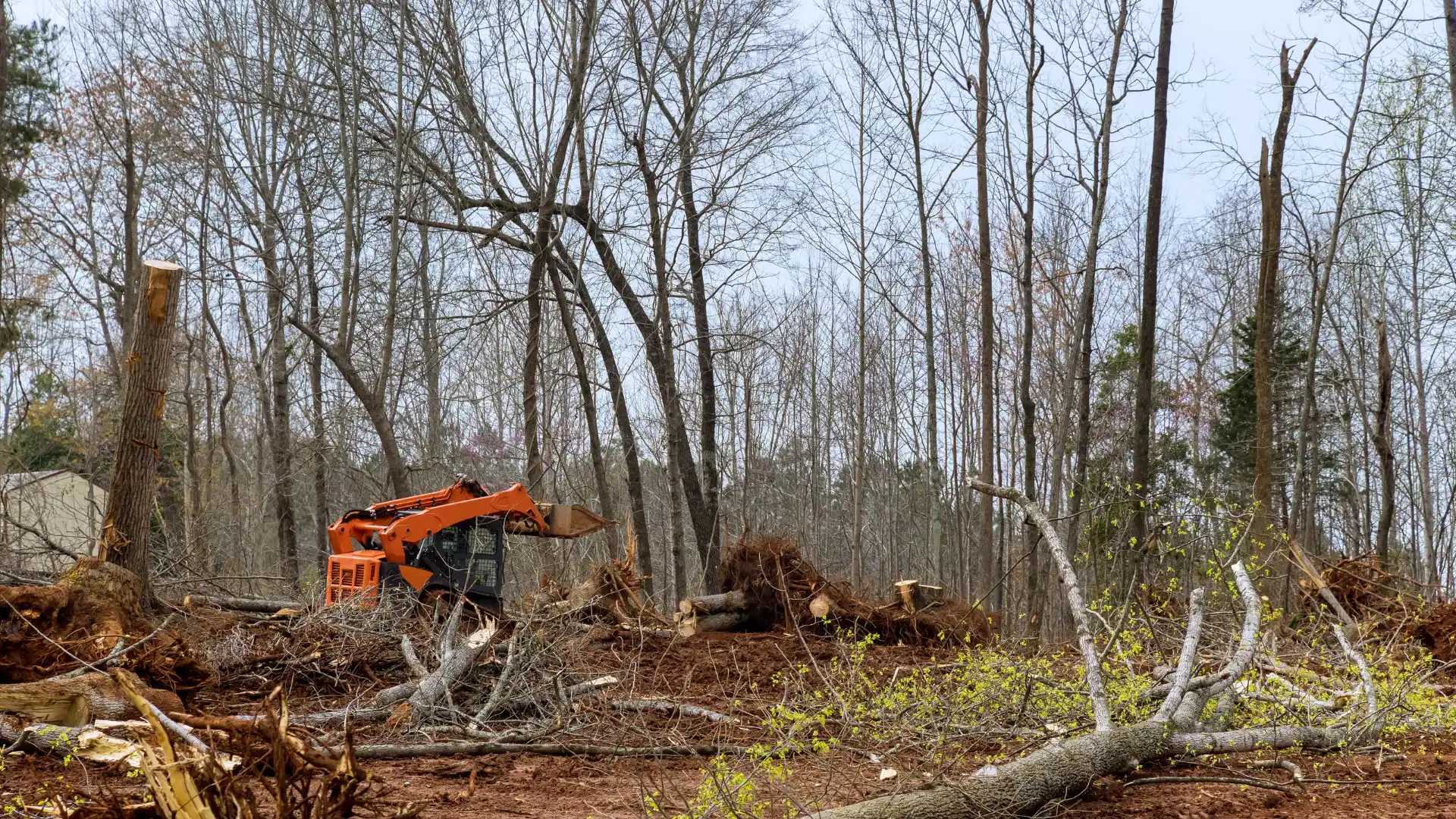
When a section of your West Hills property has been taken over by decades of growth, it stops being an asset and starts being a liability. Dense understory, invasive species, downed limbs from nor’easters it piles up fast on large North Shore lots, and it doesn’t sort itself out. What you’re left with is land you’re paying taxes on but can’t actually use.
Clearing it changes that. Whether you’re preparing a footprint for a pool, a barn, or an accessory structure or you’re simply reclaiming a section of your property that’s been left to overgrow the result is usable, accessible land that reflects what you actually paid for when you bought here in West Hills.
There’s also a health dimension that’s specific to this area. Suffolk County has some of the highest Lyme disease rates in the country, and the dense shrubby understory common on West Hills properties is exactly the kind of habitat ticks thrive in. Clearing overgrown brush and vegetation off your lot isn’t just about aesthetics it’s a real reduction in the risk your family faces every time you walk the back half of your property.
“Gold Coast” isn’t a brand name pulled from thin air. It’s the historic designation for the North Shore of Long Island the same stretch of elevated, wooded terrain where West Hills sits, where Oheka Castle was built, and where estate-scale land has defined the community for over a century. That name means something here, and we carry it because this is the region we actually know and work in.
West Hills properties aren’t like most Long Island lots. The Harbor Hill moraine creates steeper grades, rockier subsurface conditions, and mature canopy trees that require a different level of care than flat south-shore clearing jobs. We know the terrain here, we know the Town of Huntington’s permit requirements under Chapter 168, and we know what it takes to clear a wooded North Shore property without turning it into a construction site.
You get a contractor who shows up knowing what they’re dealing with not one who figures it out after the equipment arrives.
It starts with a site walkthrough. Before any equipment is scheduled, we assess your property what needs to go, what you want to keep, what the terrain looks like, and whether the Town of Huntington’s Chapter 168 tree permit requirements apply to your job. If trees six inches DBH or larger are in scope, we handle the permit application and coordinate with the Town’s Planning Department before any work begins. You don’t need to manage that process we do.
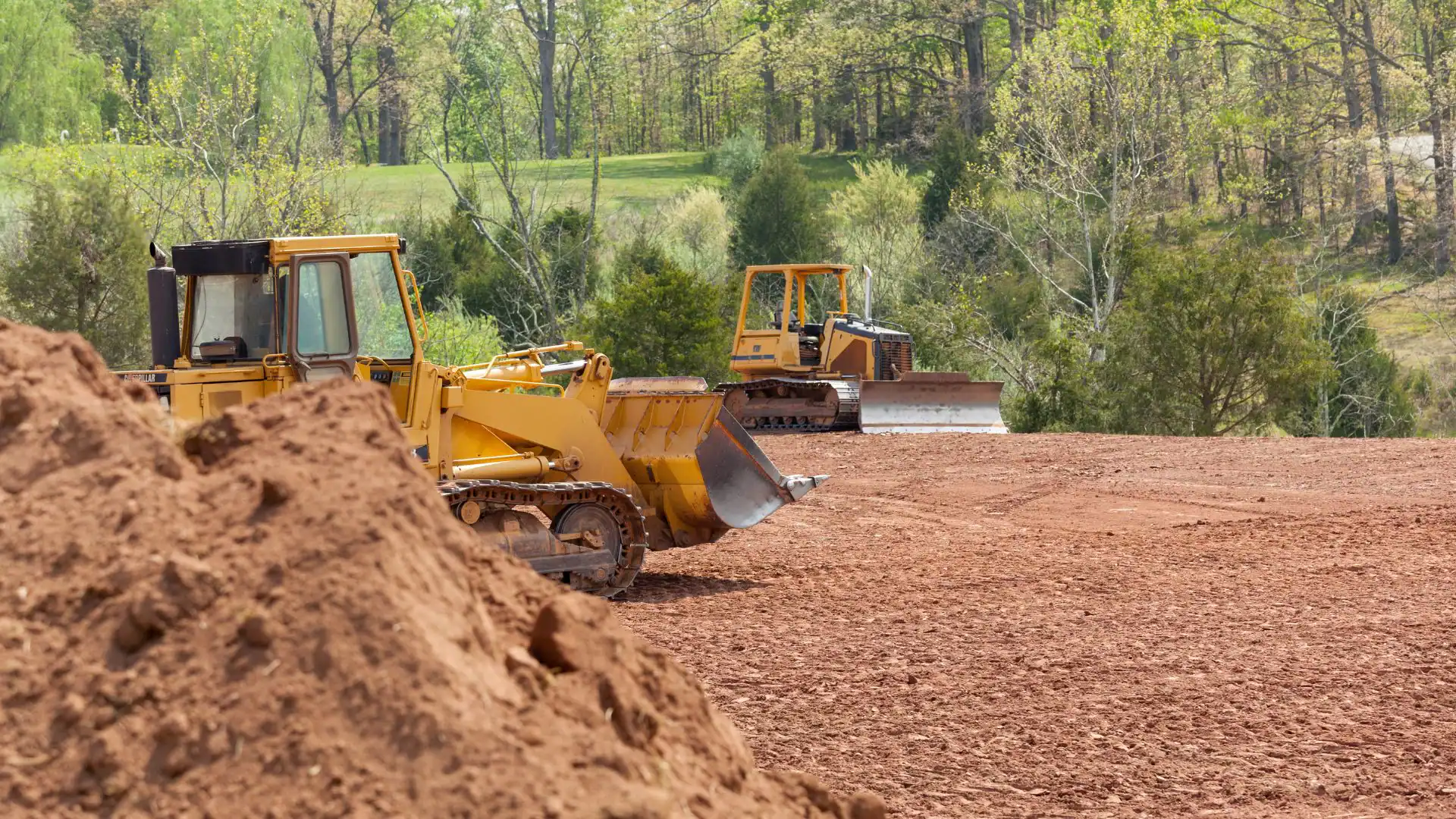
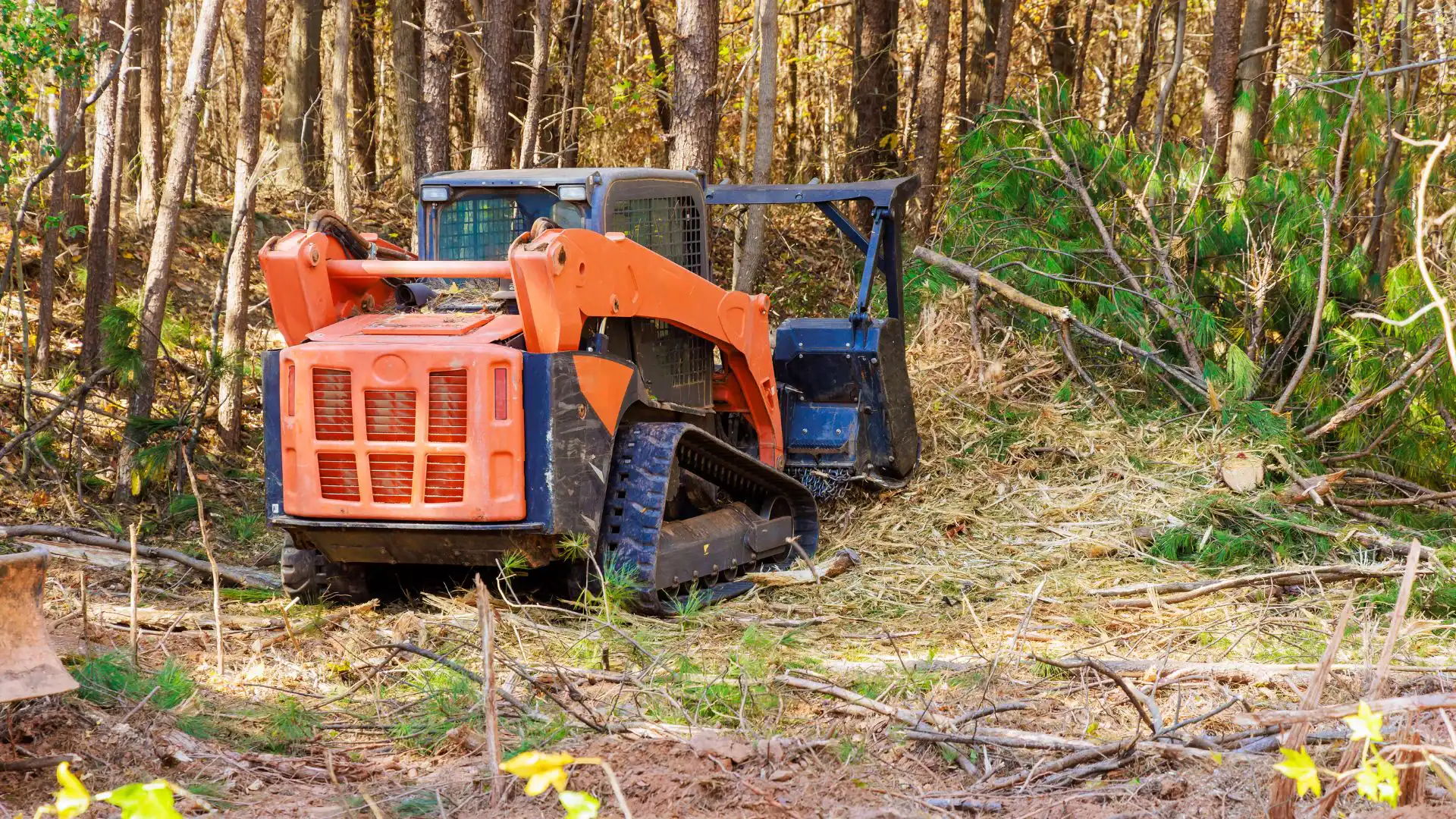
Once permits are confirmed and scope is agreed, we mobilize the right equipment for the conditions on your specific lot. Steep grades near Jayne’s Hill elevation, rocky moraine subsurface, mature canopy trees with established root systems these all factor into how we approach the work. We’re not bringing a one-size setup to a property that requires something more deliberate.
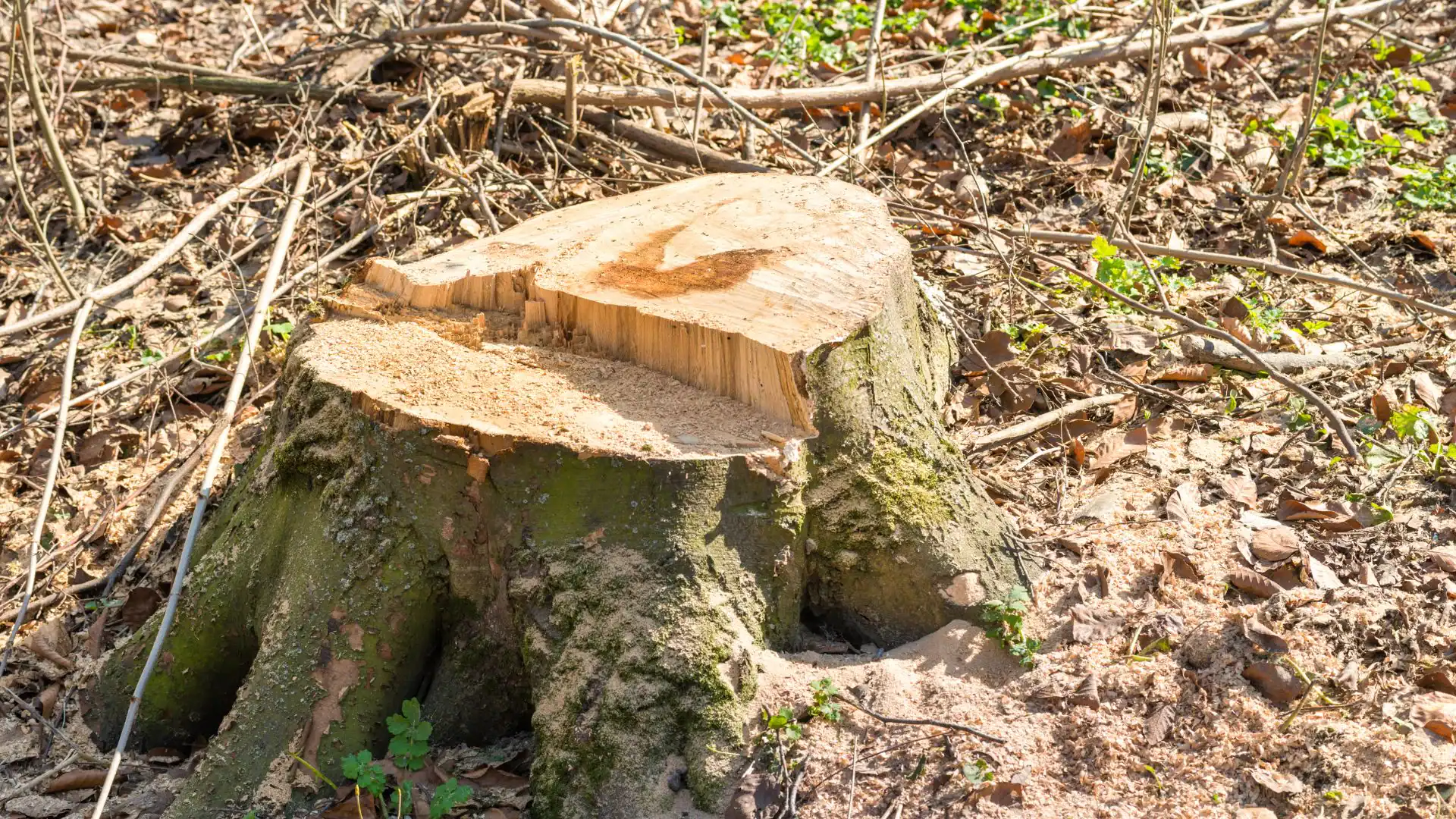
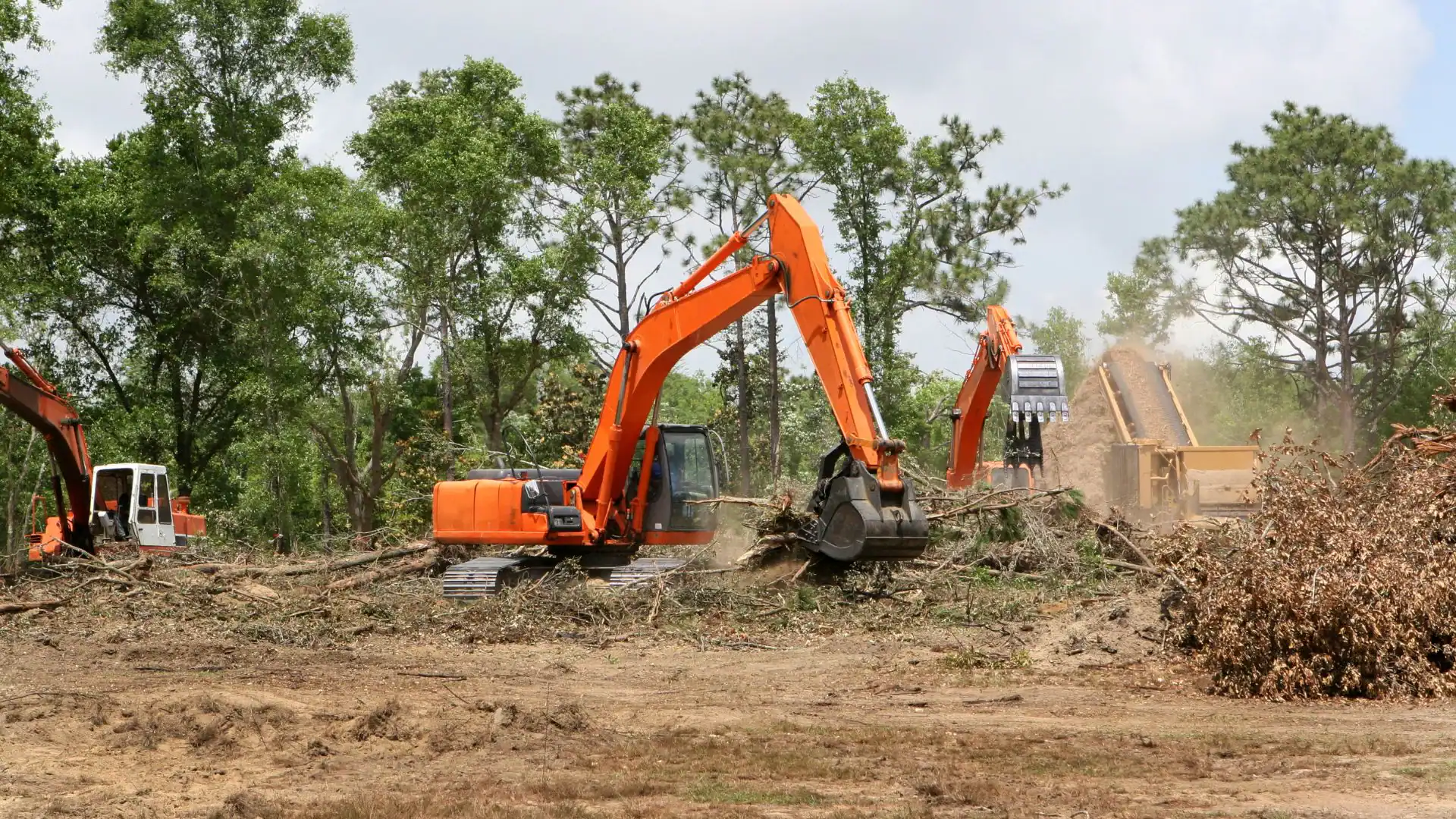
The job ends with a clean site. Debris, stumps, and green waste are addressed as part of the scope not left in a pile for you to deal with later. Before we leave, you’ll know exactly what was done, what was preserved, and what the land looks like going forward. No surprises, no follow-up calls chasing loose ends.
Ready to get started?
Land clearing in West Hills isn’t a single service it’s a range of work that depends entirely on what your property looks like and what you’re trying to accomplish. Overgrown property clearing on a former horse pasture invaded by multiflora rose is a fundamentally different job from lot clearing services for a pool installation on a residential acre. We scope accordingly.
For properties that have been left unmanaged for years or that changed hands and came with decades of accumulated growth we offer land reclamation services that address the full picture: invasive species removal, stump grinding, debris clearing, and site grading prep. Multiflora rose, Japanese knotweed, and Oriental bittersweet are common on West Hills lots, and they don’t respond to surface-level cutting. They come back harder. We remove them correctly the first time.
For homeowners preparing a specific footprint for construction, our lot clearing services in West Hills are scoped to clear what’s needed while preserving the surrounding canopy and staying fully compliant with Huntington’s tree permit process. Every job whether it’s brush clearing services on an overgrown section or full vegetation removal services ahead of a major project is quoted with clear line items. You’ll see exactly what’s included before anything starts.
Yes and this is one of the most important things to get right before any work starts. The Town of Huntington enforces a tree preservation code under Chapter 168 that requires a permit before removing, cutting, or substantially altering any tree with a diameter of six inches at breast height or larger. That applies to residential properties in West Hills, and it applies regardless of whether the tree is on the edge of your lot or deep in a wooded section.
If clearing work begins before a permit is issued, the Town triples the standard permit fee as a penalty and that’s on top of any stop-work orders or enforcement action that may follow. There are exemptions for trees that a qualified arborist documents as dead, dying, or hazardous, but documentation is still expected even in those cases. We handle the permit application process as part of every applicable clearing job in West Hills, so the paperwork is in order before any equipment arrives on your property.
It depends on the size of the area, the density and maturity of the vegetation, whether stump grinding is included, how much debris needs to be hauled, and whether permit fees apply. On a large, heavily wooded West Hills lot which is the norm here, not the exception a full clearing job can range considerably based on those variables. What we can tell you is that a vague lump-sum quote from any contractor is not a fair basis for comparison, because it almost always excludes items that become costly additions once the job is underway.
Every quote from us breaks out clearing, stump removal, debris disposal, and permit costs as separate line items. West Hills properties at median values near $742,000 aren’t the place to cut corners on a contractor and they’re not the place to accept a quote you can’t actually read. You’ll know what you’re paying for before anything starts, and there won’t be line items appearing after the fact.
Invasive species are a genuine and persistent problem on large North Shore lots, and West Hills properties are no exception. Multiflora rose, Japanese knotweed, Oriental bittersweet, and Japanese barberry are all well-established in the Huntington area particularly on large lots and former horse pastures where active management has lapsed. The Long Island Invasive Species Management Area identifies this entire region as a priority management zone, and for good reason.
The critical point is that surface-level cutting doesn’t solve the problem. Knotweed in particular will regrow aggressively from root fragments if the removal isn’t done correctly. Multiflora rose comes back denser if it’s just mowed over. Our approach to land reclamation services in West Hills addresses the root system, not just what’s visible above ground. We’ll also advise you on follow-up management for any species that require seasonal treatment to prevent regrowth because a single clearing visit isn’t always the full answer with established invasive populations.
Spring and fall are the two peak windows for land clearing in West Hills, and both have distinct advantages. Spring clearing particularly work that starts in March or April aligns with construction timelines and lets you get a usable site ready before the summer season. If you’re planning a pool, a structure, or any landscaping that needs a cleared footprint, spring is when most projects need to be ready. Permit applications submitted in late winter give enough lead time to start work when the ground is accessible.
Fall is arguably the better window for assessing and clearing overgrown or wooded sections of a property. Once deciduous trees drop their leaves, the site becomes much easier to read you can see the full canopy structure, identify which trees are worth preserving, and spot invasive species that are easier to target before they go dormant. West Hills’ elevated position on the Harbor Hill moraine also means wind exposure is real here, and nor’easters cause recurring storm damage on large wooded lots. Post-storm clearing is something we handle year-round, not just seasonally.
Yes, but there are important considerations when your property backs onto preserved land. West Hills County Park and the Froehlich Farm Nature Preserve border residential properties in the hamlet, and clearing work near those boundaries can implicate both Town of Huntington permit requirements and New York State DEC regulations particularly if there are wetland buffers or protected habitat adjacency involved. Working close to a park boundary without understanding where the preserved land begins is how projects create problems they didn’t anticipate.
Before any clearing work near a park or preserve boundary, we walk the site, confirm the property lines, and assess whether any DEC review is required. Suffolk County’s stormwater management framework can also apply on larger clearing jobs where soil disturbance is significant especially on the sloped terrain that’s common on West Hills properties near the park. We implement appropriate erosion and sediment controls as standard practice on those jobs, not as an afterthought.
It varies more than most people expect, and the honest answer depends on factors specific to your lot. A targeted brush clearing job on a defined section of a residential property might take a single day. A full land reclamation project on a large, heavily wooded or invasive-species-dominated lot the kind that’s common on West Hills estate properties and former horse pastures can run several days depending on the volume of material, the terrain, and whether stump grinding is part of the scope.
The moraine terrain of West Hills adds a layer of complexity that flat south-shore lots don’t have. Rocky subsurface, steep grades, and mature canopy trees with established root systems all affect how quickly equipment can move and how carefully the work needs to be done. We give realistic timelines during the quoting process not the shortest number that gets us the job. When we schedule your start date, we account for the actual conditions on your property, including any permit processing time required by the Town of Huntington before work can legally begin.