
Hear from Our Customers
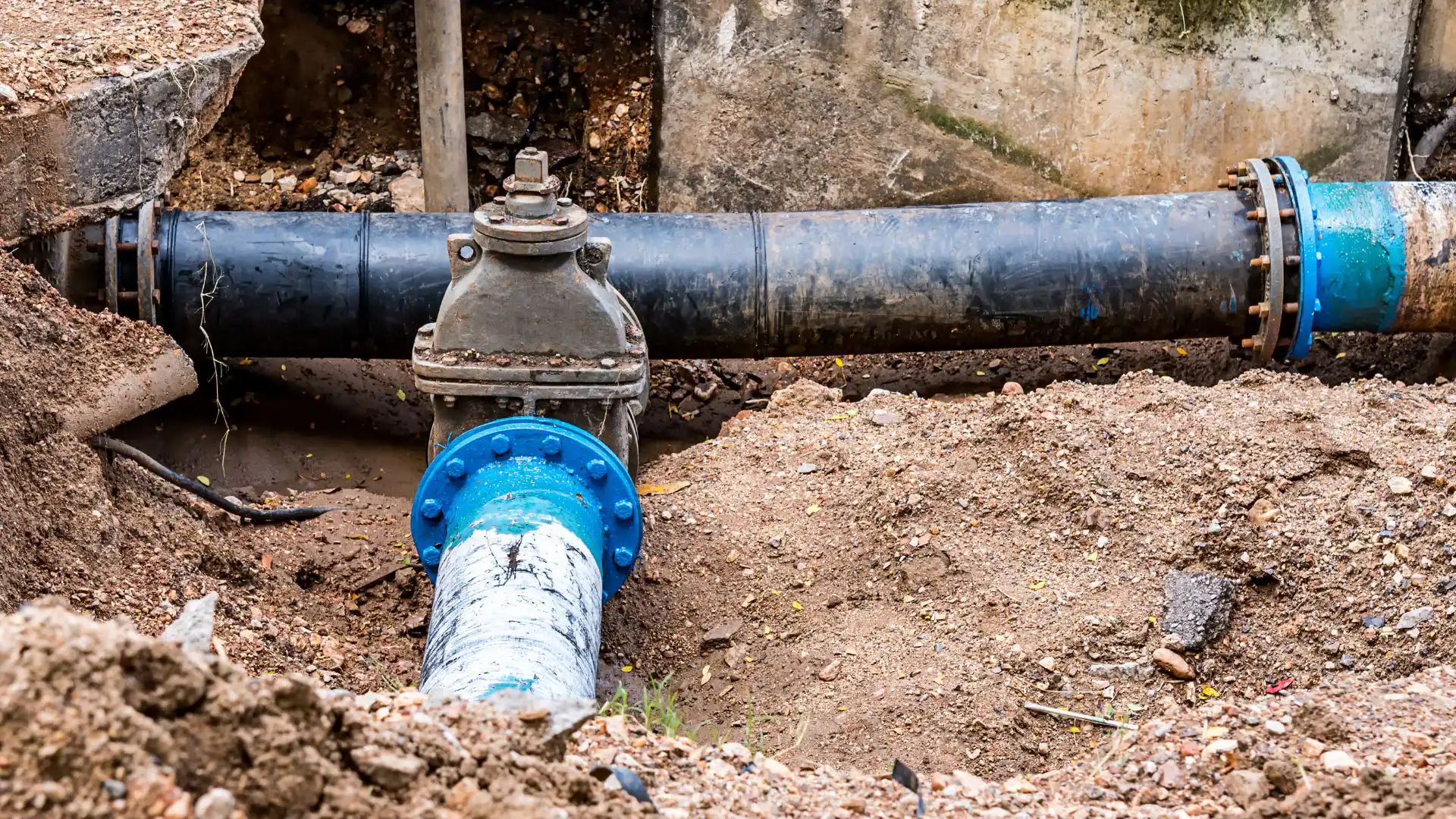
Standing water isn’t just an eyesore. It’s pressure against your foundation, it’s mosquitoes breeding in your backyard, it’s your lawn suffocating under soil that never fully dries out. Once a drainage system is properly installed, that cycle stops. You get your yard back usable, healthy, and not something you dread looking at after every rainstorm.
For South Setauket homeowners specifically, this matters more than most people realize. The clay-heavy soils common on Long Island’s North Shore absorb water slowly. When a storm drops two or three inches fast or ten inches in a weekend like August 2024 that water has nowhere to go except across the surface and toward whatever is lowest. In a lot of cases, that’s your foundation or your basement.
Homes in South Setauket were mostly built between the 1940s and 1960s, well before modern stormwater management was part of residential construction. If your yard drains poorly, it probably wasn’t designed to drain at all. A properly installed system doesn’t just fix the symptom it addresses what was never built in the first place. That’s the difference between patching the problem and actually solving it.
We work throughout the North Shore of Long Island, and South Setauket is home turf. We understand what the soil does here, how the terrain behaves near the Stony Brook University corridor, and what the Town of Brookhaven actually requires when you install a drainage system on a residential property. That’s not something every contractor can say.
We’ve seen what happens when drainage is installed without that local knowledge water redirected onto a neighbor’s yard, systems sized for average rainfall that fail in a real storm, pipes installed without proper slope that back up within a season. We don’t show up with a generic solution. We assess your specific property, your specific soil, and where the water is actually coming from before we recommend anything.
Every project comes with a detailed written quote and a workmanship warranty, because a drainage system that fails in the next heavy rain isn’t a finished job. You’ll know exactly what’s being done, why, and what to expect when it’s complete.
It starts with a site assessment not a quick glance and a guess. We walk the property, map where the water is entering, where it’s pooling, and what’s causing it. Is it a grading issue from a driveway addition that changed the slope? A downspout dumping too close to the foundation? A neighbor’s runoff coming onto your property? The source matters as much as the symptom, and we find it before anything gets dug up.
From there, we design a system that fits your specific property. In South Setauket, that often means accounting for clay-containing North Shore soils that limit how fast water can percolate, and designing discharge points that comply with the Town of Brookhaven’s stormwater requirements under Chapter 86. Brookhaven prohibits redirecting runoff onto neighboring properties without prior approval so the design has to be done right from the start, not corrected after the fact.
Once the work is underway, we handle everything through to full restoration. If turf or landscaping gets disturbed during installation, we put it back. South Setauket homeowners have mature, established yards some developed over decades and we treat them accordingly. When we’re done, the property looks better than it did before, because a yard that drains properly is a healthier yard.
Ready to get started?
Landscape drainage services aren’t one-size-fits-all, and the solution for a North Shore Long Island property isn’t the same as what works on the South Shore. The soil composition is different, the topography is different, and the regulatory environment through the Town of Brookhaven adds a layer that not every contractor is familiar with. What gets installed on your property is determined by what your property actually needs not a package picked off a menu.
Common solutions for South Setauket properties include French drains, catch basins, dry wells, trench drains, surface regrading, and channel drain systems often in combination. A single French drain is frequently not enough when the underlying issue is poor overall grading or heavy clay soil that limits absorption. We identify which components are necessary, explain why, and install them as an integrated system rather than a patchwork of individual fixes.
The Conscience Bay and Setauket Harbor watershed sits within this area, and the Town of Brookhaven has managed stormwater concerns here at the municipal level for years. Any drainage system installed on a residential property needs to discharge to an appropriate outlet not a sanitary sewer, not a neighboring lot. We design every system with that in mind, so you’re not dealing with a compliance issue on top of a drainage problem.
Most homes in South Setauket were built between the 1940s and 1960s, and the majority were never designed with engineered drainage in mind. That means there’s no existing system to repair or upgrade you’re starting from scratch, which is actually a cleaner situation than trying to troubleshoot a failed original system. The right starting point is always a thorough site assessment to understand the full water flow path across your specific property.
For homes without any drainage infrastructure, the most common approach combines surface regrading to redirect water away from the foundation with a subsurface system typically French drains, dry wells, or catch basins depending on where the water is entering and how much volume the yard needs to handle. On North Shore Long Island, where clay-containing soils slow percolation significantly, dry wells need to be sized appropriately and placed in locations where the soil can actually absorb the discharge over time. A proper soil evaluation before installation makes a real difference in long-term performance.
Most residential drainage projects on Long Island fall somewhere between $2,000 and $8,000, depending on the scope of the problem, the size of the area being addressed, and which components are required. A straightforward French drain installation runs roughly $10 to $50 per linear foot. More complex systems that combine multiple components catch basins, dry wells, regrading, and piping will sit at the higher end of that range or beyond it for larger properties.
The more useful number to keep in mind is what poor drainage costs when it’s left unaddressed. Foundation repairs from water damage average $23,000 to $48,000. A single basement flooding incident can run $10,000 to $26,000 in cleanup and repairs. For South Setauket homeowners with properties valued at $471,000 and well above, a properly installed drainage system is genuinely one of the more cost-effective investments available for protecting the home. The goal isn’t to spend the minimum it’s to spend what it actually takes to solve the problem permanently.
It depends on the scope of the project, but Brookhaven Town does have a stormwater management ordinance Chapter 86 that governs how drainage systems are designed and discharged on residential properties. One of the most important provisions is that stormwater runoff cannot be redirected onto neighboring private or public property without prior approval. This is a real regulation, and it matters more than most homeowners realize when hiring a contractor.
For certain projects, particularly those involving significant land disturbance or new drainage infrastructure, a soil percolation test may be required, and permanent stormwater management system covenants may need to be filed with the Suffolk County Clerk’s office. The specifics depend on what’s being installed and where. We design every drainage system for South Setauket properties to comply with Brookhaven’s requirements from the start proper discharge points, appropriate outlets, and grading that meets Town standards. We’d rather get it right the first time than have you deal with a compliance issue after the fact.
If your yard floods during moderate rainfall not just during extreme events the issue is almost always a combination of soil permeability and grading. On Long Island’s North Shore, clay-containing soils are common, and clay absorbs water slowly. When rain falls faster than the soil can accept it, the water moves across the surface toward whatever is lowest. If your grading directs that flow toward your house, your patio, or a low spot in the lawn, it pools there and it doesn’t take a major storm to trigger it.
The other common culprit is runoff from neighboring properties or from your own impervious surfaces driveways, patios, walkways that concentrates water in areas that weren’t designed to receive it. Downspouts discharging too close to the foundation are another frequent contributor. The fix depends on identifying all the sources, not just the most obvious one. A drainage assessment that maps the full water flow path across your property is the only way to know what’s actually driving the problem before deciding what to install.
The August 2024 storm which dropped up to ten inches of rain on parts of Long Island over a single weekend and prompted a Governor-declared Disaster Emergency for Suffolk County exposed a lot of properties that had marginal drainage to conditions they simply couldn’t handle. South Setauket and the surrounding area were among the hardest-hit zones, and over 2,000 homes in the broader region were affected. If your yard held up during that event, it doesn’t necessarily mean your drainage is adequate it may mean the water found somewhere else to go, or that you were on the edge of a problem that a future storm will push over.
The more important question is what happens to your yard during a typical heavy storm two to three inches in a few hours, which is not unusual for Long Island summers. If you’re seeing pooling, slow drainage, or water approaching the foundation during normal rain events, the 2024 storm was a preview of what a worse event looks like. Addressing drainage now, before the next major storm, is significantly less expensive and disruptive than dealing with the aftermath of one.
This is one of the most common points of confusion for homeowners dealing with yard flooding, and it’s worth clearing up. Plumbers handle water inside your home clogged household drains, sewer lines, pipe blockages. If water is backing up in a sink or a toilet, that’s a plumber’s job. If water is pooling in your yard, running toward your foundation, or flooding your lawn after rain, that’s a landscape drainage problem and it requires a completely different set of skills, tools, and knowledge.
A landscape drainage contractor evaluates how water moves across and through the land the grading, the soil, the flow paths, and the discharge points. In South Setauket, where most search results for drainage services return plumbing companies rather than landscape drainage contractors, this distinction matters. Calling a plumber for a yard flooding problem is like calling an electrician for a roof leak they’re both professionals, but neither one is the right fit for what you’re dealing with. If your issue is surface water, standing water in the yard, or water moving toward your home from outside, a landscape drainage contractor is who you need to call first.
Other Services we provide in South Setauket