
Hear from Our Customers
In Dix Hills, the rolling terrain that makes these properties feel private and spacious is the same reason water pools where you don’t want it. When your lot drops five, eight, maybe ten feet from the back of the house to the property line, water doesn’t spread it runs, concentrates, and sits. On clay-heavy moraine soil, it can sit for days. A properly installed French drain intercepts that water underground and moves it away before it ever reaches your foundation wall or turns your yard into a seasonal swamp.
The stakes here are real. Homes in Dix Hills are worth well over a million dollars, and a wet basement or chronically soggy yard doesn’t just affect your quality of life it affects what your home is worth when it’s time to sell. Buyers at this price point bring engineers and attorneys to their inspections. Drainage problems get flagged, and they cost sellers far more at the negotiating table than a French drain would have cost to fix.
Most homes in Dix Hills were built around 1970, before modern stormwater standards existed. That means the original drainage infrastructure if any was installed at all is either at the end of its service life or was never there to begin with. A French drain installation isn’t a luxury upgrade. For a lot of Dix Hills homeowners, it’s overdue maintenance on a seven-figure asset.
We’re a water drainage contractor serving the central Long Island market, including Dix Hills and the broader Half Hollow Hills area within the Town of Huntington. We work on the kind of properties that define this community established single-family homes on rolling lots with mature trees, significant landscaping investment, and drainage challenges that generic contractors misread because they’ve never worked in moraine clay soil.
We understand that the north-of-LIE properties in Dix Hills drain differently than communities built on the sandy outwash plains of the South Shore. That’s not a talking point it directly affects how a French drain system needs to be designed, how deep the pipe needs to go to survive Long Island winters, and where the water can realistically be discharged on your specific lot.
When you call us, you’re talking to someone who has worked in this terrain, understands the Town of Huntington’s requirements, and will give you a straight answer about what your property actually needs not a sales pitch.
It starts with a free on-site assessment. We walk your property, identify where the water is coming from, trace where it’s going, and look at your grade, your soil conditions, and any existing drainage infrastructure. No phone quotes your lot in Dix Hills is different from your neighbor’s, and a system designed without seeing the property is a guess, not a solution.
Once we understand the site, we design the system around it. That means determining the right trench depth for Long Island’s frost line so the pipe doesn’t freeze and crack in February, selecting the correct perforated pipe and geotextile filter fabric to keep clay silt from clogging the system over time, and calculating the slope needed to keep water moving consistently through the drain. In Dix Hills, we also check for underground utilities, cesspool systems, and irrigation lines before any excavation begins calling 811 is required by New York State law, and it’s something we handle as part of the job.
Installation is followed by full yard restoration. Topsoil is replaced, grass is seeded or sodded to match what was there, and the surface is left clean. Your landscaping the mature trees, the established beds, the lawn you’ve maintained for years is treated as part of the job, not an afterthought. When we leave, the only thing that’s changed is that your yard finally drains.
Ready to get started?
A French drain system for a Dix Hills property isn’t the same job as one installed on a flat South Shore lot with sandy soil. The moraine terrain here creates grade changes, concentrated water flow paths, and clay-heavy ground that holds moisture rather than releasing it. Every system we install is designed around those specific conditions not a standard template applied regardless of what the site actually looks like.
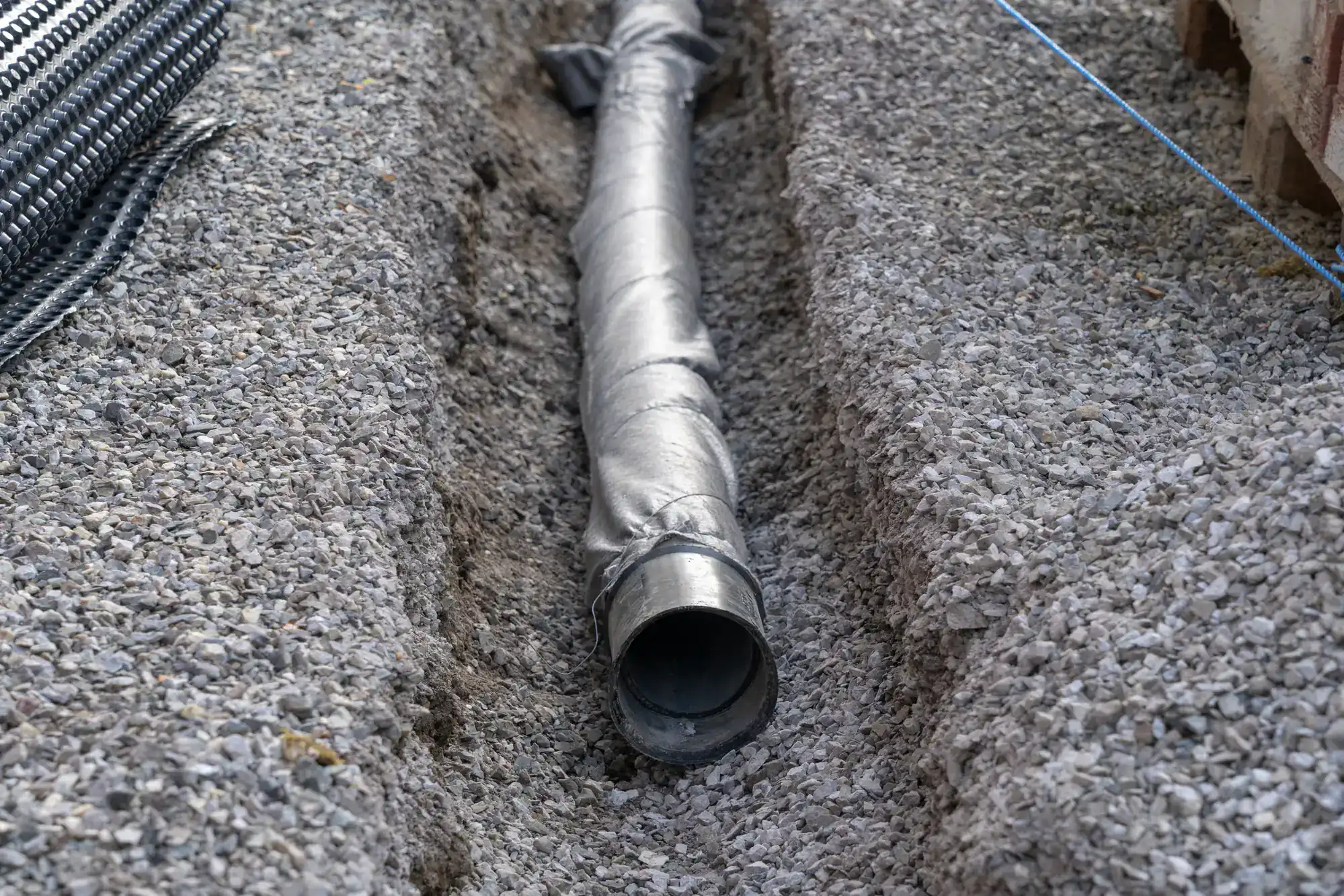
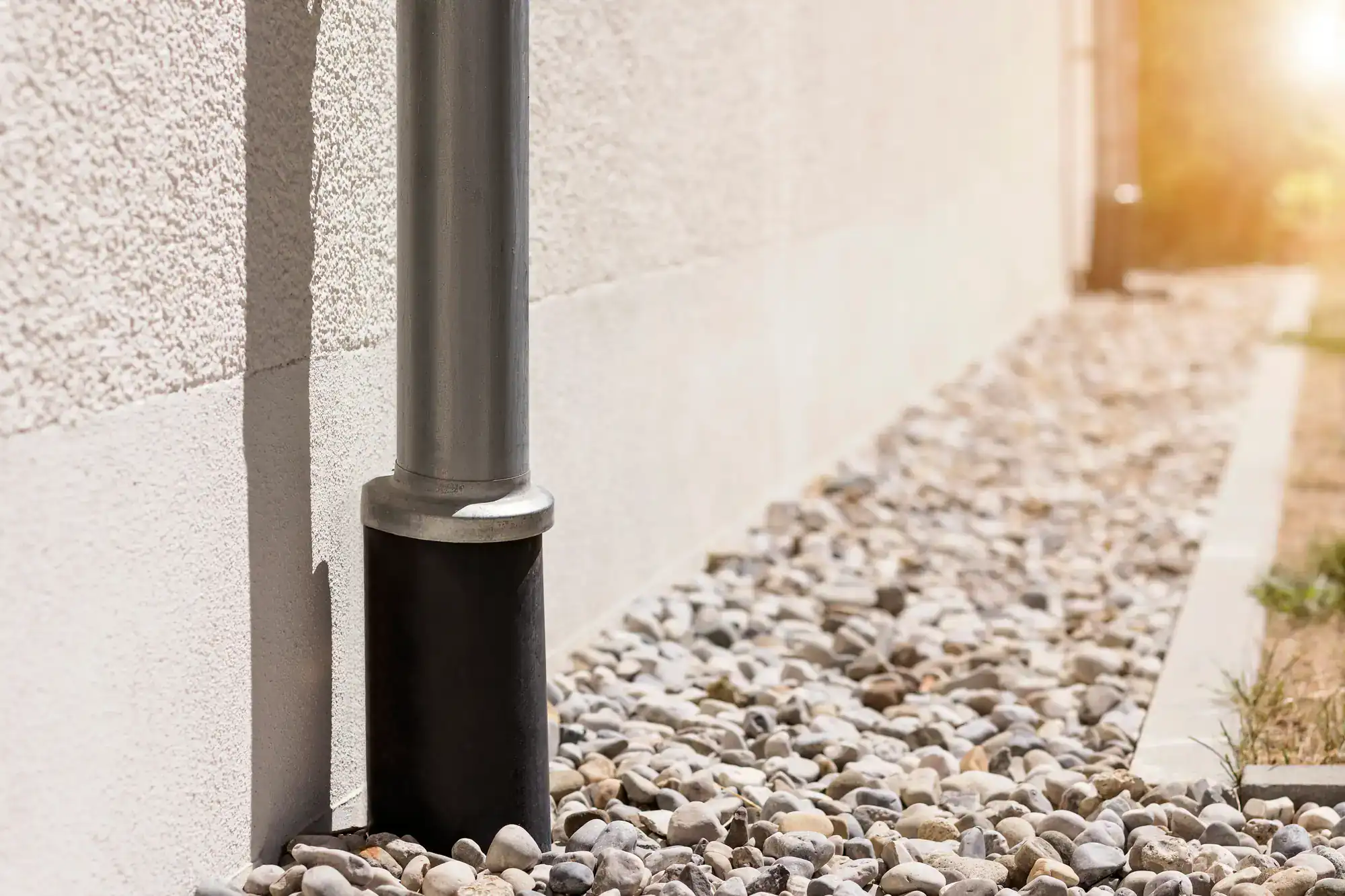
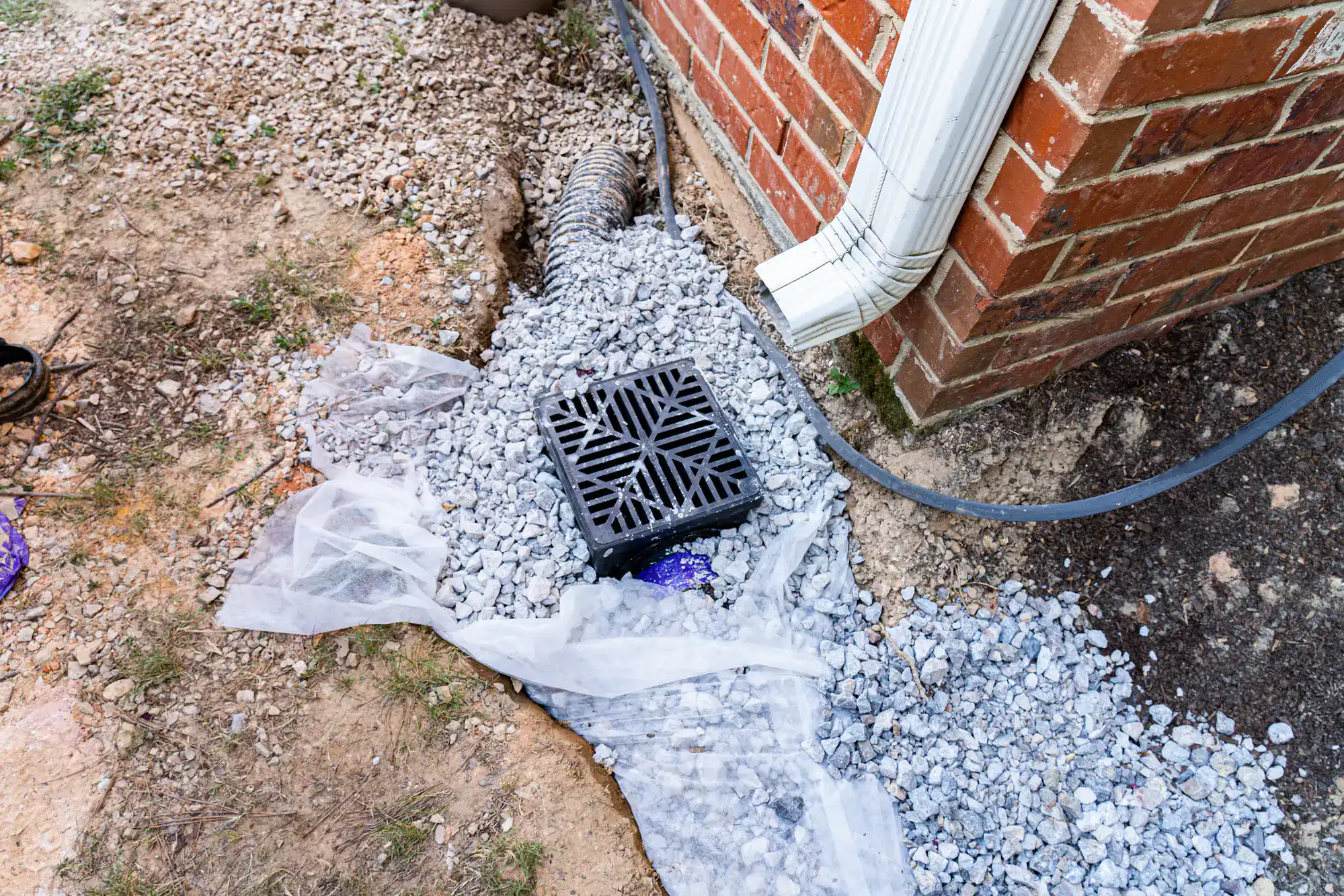
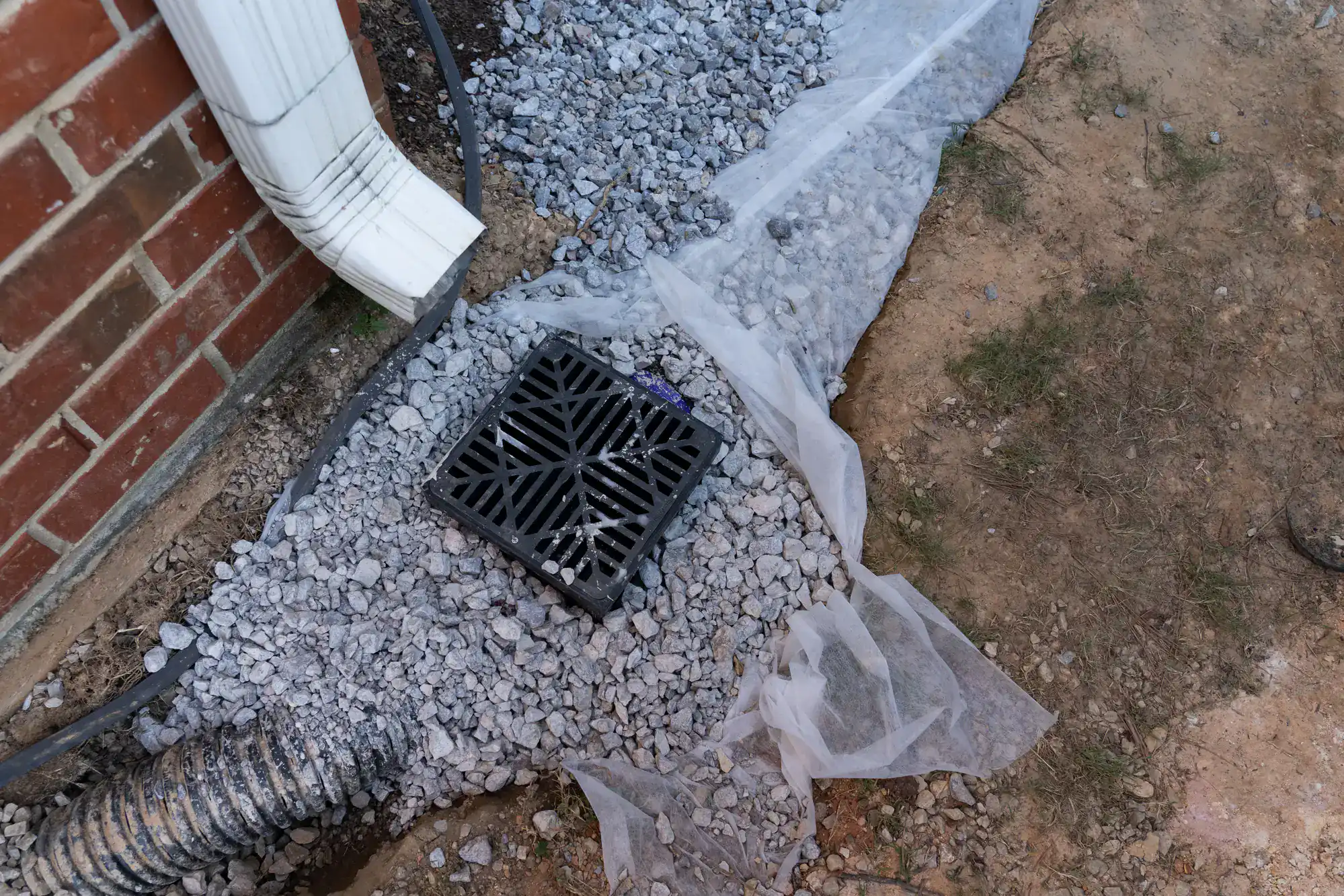
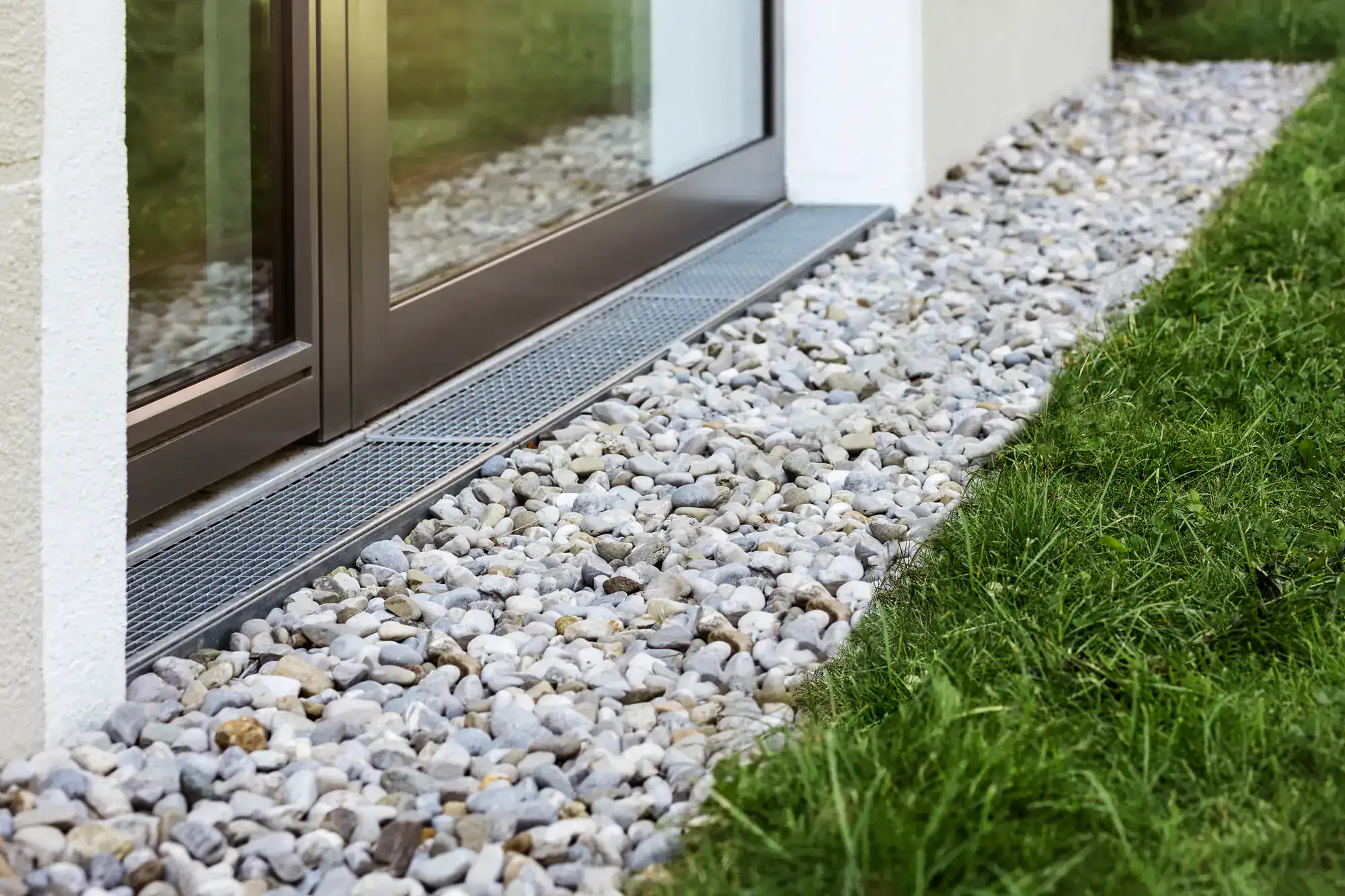
For yard drainage, that typically means a perforated pipe set in washed angular gravel, wrapped in geotextile filter fabric to prevent clay silt infiltration, sloped at the correct grade to maintain consistent flow, and daylit or connected to a dry well at an appropriate discharge point. For foundation drainage, we assess whether an exterior perimeter system, an interior drain tile system, or a combination of both is the right approach based on where the water is entering and how the lot is graded.
We also handle the permit research for the Town of Huntington, utility marking, and any Suffolk County groundwater compliance considerations that apply to your property. If your home is near a protected area or wetland which applies to some properties in the Dix Hills area we identify that upfront so there are no surprises mid-project. You get a complete installation with no loose ends.
The short answer is clay soil. Dix Hills sits on Long Island’s glacial moraine, which means the ground beneath your yard is dense, clay-heavy North Shore soil not the sandy outwash you’d find in South Shore communities like West Islip or Lindenhurst. Clay doesn’t drain. When it gets saturated, water sits on top of it because there’s nowhere for it to go. Add in the rolling terrain that’s common throughout Dix Hills, and you’ve got water running downhill and pooling at low points on your property sometimes for several days after a storm.
This isn’t a grading problem you can fix by adding topsoil. It’s a subsurface drainage problem, and it requires a subsurface solution. A French drain creates an underground pathway for that water to move through and away from the problem area, working with your soil conditions instead of fighting them. If you’ve tried regrading or surface fixes and the problem keeps coming back, a French drain system is almost certainly what your yard actually needs.
In Suffolk County, French drain installation typically runs $60 to $70 per linear foot based on current local market pricing. For a typical residential project in Dix Hills, that puts most jobs somewhere in the $4,500 to $12,000 range depending on the length of the system, how deep the trench needs to go, what the discharge situation looks like, and whether any landscaping restoration is involved. More complex installations perimeter foundation systems, properties with difficult access, or jobs requiring dry well connections can run higher.
The more useful comparison isn’t what a French drain costs it’s what it costs to skip it. Foundation repair in this area runs $15,000 to $50,000. Mold remediation starts at $3,000 and can climb well past that. And in a market where Dix Hills homes are listed above $1 million, a drainage problem flagged during a home inspection can cost you far more than the fix at the negotiating table. We give you a specific, written quote after a free on-site assessment no phone estimates, no vague ranges, no surprises.
It depends on the scope of the work and where on your property the system is being installed. In the Town of Huntington which governs Dix Hills drainage projects that alter surface water flow, involve significant excavation, or are located near wetlands or protected natural areas may require permits before work can begin. Suffolk County also has groundwater protection regulations that affect how drainage systems must be designed and where water can be discharged, given that Long Island relies entirely on its underground aquifer for drinking water.
Before any work starts, we research the permit requirements specific to your property and handle the application process if permits are needed. We also coordinate the 811 utility marking call that New York State law requires before any excavation. If your property is near a wetland or protected area which applies to some parcels in the Dix Hills area we identify that during the initial site assessment so the project is planned correctly from the start. You won’t be left figuring out municipal code on your own.
A French drain installed correctly in clay soil works well and can last 30 to 40 years. The key word is correctly. The most common reason French drains fail in clay-heavy ground like Dix Hills has nothing to do with the concept it’s poor installation. Specifically, systems installed without proper geotextile filter fabric around the gravel bed allow fine clay particles to migrate into the pipe over time, eventually clogging it completely. Some contractors skip the fabric to cut costs. That’s a system that works for a few years and then fails.
A properly installed system uses double-punched geotextile filter fabric to keep clay silt out of the gravel and pipe, washed angular gravel (not rounded stone, which compacts) to maintain void space around the pipe, and perforated pipe with enough slope to keep water moving. In Dix Hills’ clay soil environment, these details aren’t optional they’re what separates a 30-year system from a 5-year one. When you’re getting quotes, ask every contractor specifically what fabric they use and how they handle clay soil infiltration. The answer tells you a lot.
Deep enough to stay below the frost line and on Long Island, that means at least 36 inches in most cases. This is one of the most common failures in DIY French drain installations and low-quality contractor work in this climate. A pipe buried too shallow will freeze during a Long Island winter, crack, and either stop draining entirely or drain in the wrong direction when the ground shifts. By spring which is exactly when you need the system working hardest, during snowmelt and heavy spring rains you’ve got a failed system buried in your yard.
Proper installation depth also matters for foundation drainage specifically. If the goal is to relieve hydrostatic pressure against your basement walls, the pipe needs to be positioned at or below the footing level to intercept water before it builds up against the foundation. The right depth for your specific installation depends on what the system is designed to do and what the soil profile looks like at your address. We assess that during the site walkthrough before any work is planned.
Yes and for many Dix Hills homes, it’s the most effective long-term solution available. Here’s what’s actually happening when a basement floods after heavy rain: the clay soil surrounding your foundation becomes fully saturated, and hydrostatic pressure builds up against the foundation walls. That pressure forces water through cracks, through the cove joint at the base of the wall, or through porous concrete block. The water isn’t coming through the wall because the wall is broken it’s coming through because the ground outside is holding more water than it can contain.
An exterior French drain installed around the foundation perimeter intercepts that groundwater before it can build up against the wall, eliminating the pressure that drives water inside. For some homes, an interior drain tile system that captures water after it enters and routes it to a sump pump is the more practical approach depending on the property layout and access. Given that most homes in Dix Hills were built around 1970 before modern waterproofing standards and that the area recorded nearly seven inches of rain during one documented storm event, a basement that’s been staying dry on luck alone is worth addressing before the next major nor’easter makes that decision for you.