
Hear from Our Customers
In Hampton Bays, drainage problems aren’t optional they’re inevitable. The hamlet sits surrounded on three sides by water. The water table in low-lying neighborhoods near Tiana Bay and Ponquogue can sit just a few feet below the surface during wet months. When a storm rolls through, that ground saturates fast. The water has nowhere to go.
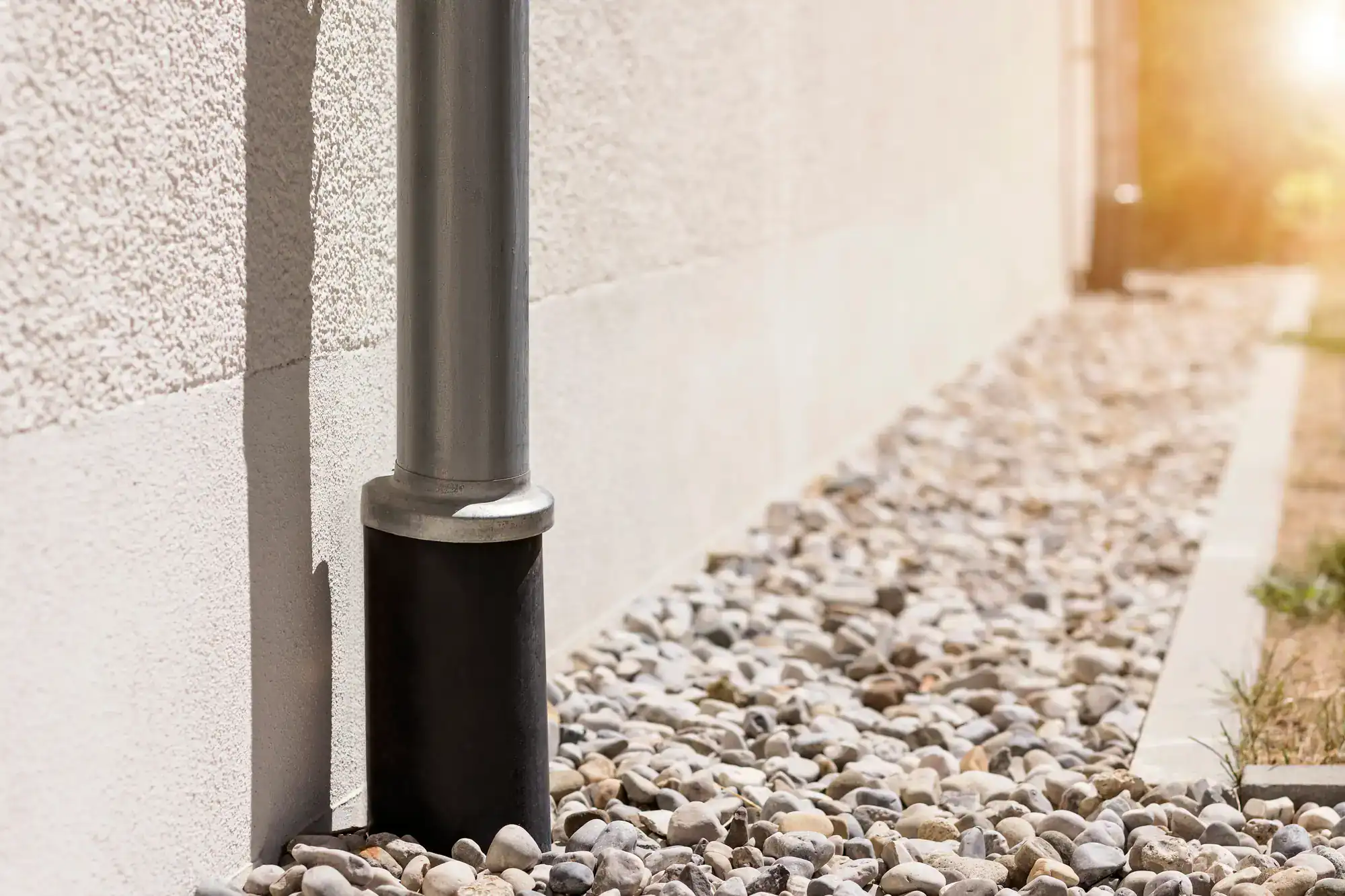
A properly installed French drain system gives it somewhere to go. It intercepts subsurface water before it pools in your yard, pushes against your foundation walls, or works its way into your basement. Most Hampton Bays homeowners with a working system see their yards drain within 24 to 36 hours after a heavy rain. That’s not just more comfortable it protects a property that, at today’s market values, is likely worth over a million dollars.
The math is straightforward. A residential French drain installation in Hampton Bays typically runs between $5,000 and $12,000 depending on the scope of the system. Foundation repair, if water intrusion goes unaddressed long enough, starts at $15,000 and climbs from there. A French drain system that’s installed correctly lasts 30 to 40 years. For a coastal property in a flood-zone hamlet, it’s one of the most sensible investments you can make.
We’re a Long Island drainage and landworks contractor. Drainage isn’t something we tack on to a list of landscaping services it’s the work we specialize in. That focus matters when you’re dealing with the specific conditions that come with owning property in Hampton Bays, where sandy loam soil, a naturally elevated water table, and proximity to tidal water create challenges that a general landscaper isn’t equipped to solve correctly.
We’re fully licensed and insured in New York State, and we work throughout Suffolk County and the Town of Southampton. We understand the regulatory side of drainage work in this area including permit requirements, DEC considerations for properties near wetlands and tidal zones, and Suffolk County Health Department guidelines for homes on septic systems, which covers most of Hampton Bays. We handle all of that so you don’t have to.
When you call us, you get a free on-site assessment before anything else. We look at your specific property, identify where the water is coming from, and tell you exactly what it will take to fix it. No guesswork, no phone quotes, no pressure.
It starts with a site assessment. We come to your Hampton Bays property, walk the yard, look at the grade, check for low spots and water entry points, and evaluate what’s happening beneath the surface. In a place like Hampton Bays where one property near the Shinnecock Canal might have a completely different drainage profile than one up near Red Creek that assessment isn’t a formality. It’s how we design a system that actually works for your specific lot.
From there, we handle any required permits through the Town of Southampton’s Building Department. If your property is near a wetland buffer or tidal area, we manage the DEC compliance piece as well. Before any digging starts, we contact New York 811 to have all underground utilities marked that’s required by state law, and it’s something we take care of automatically.
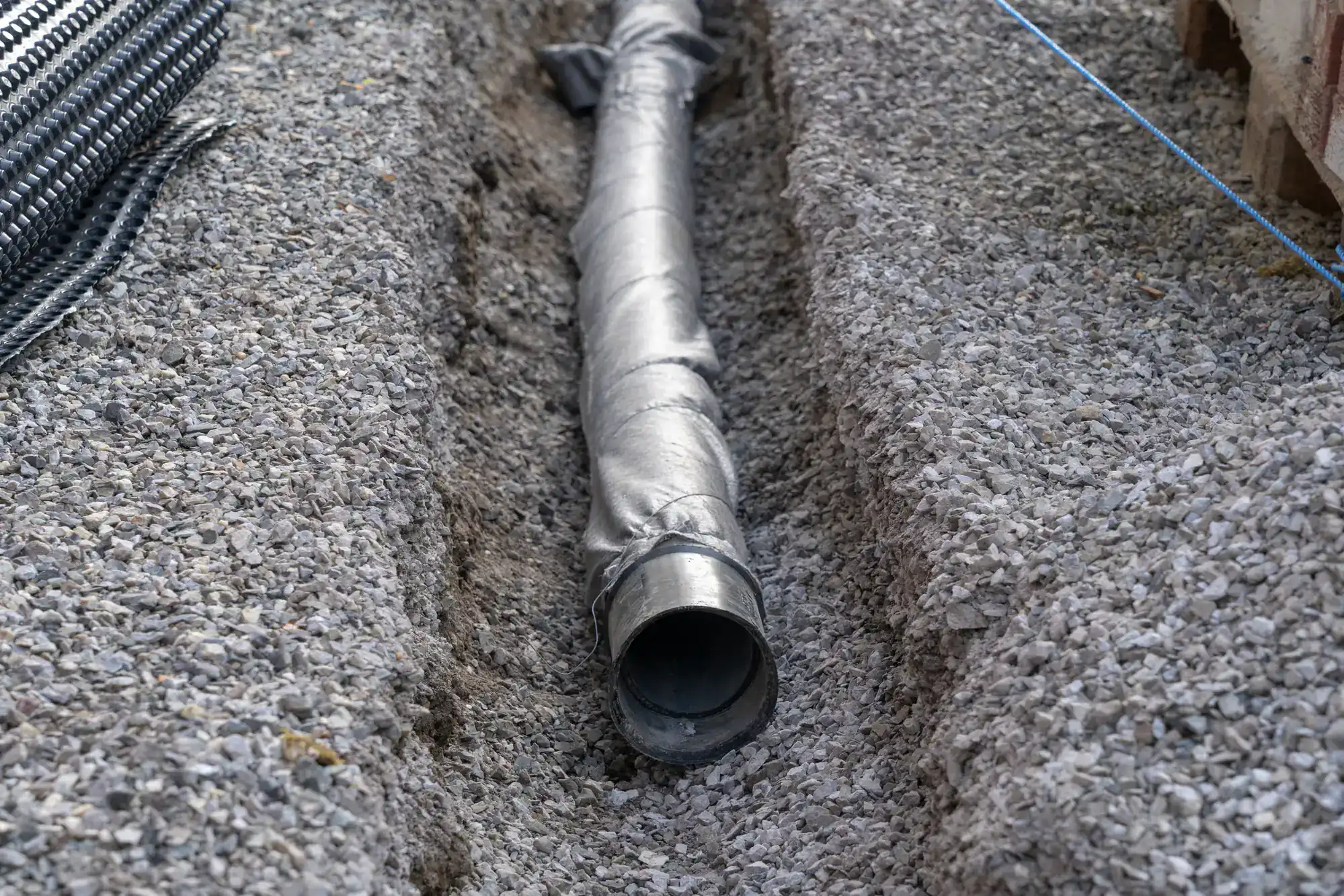
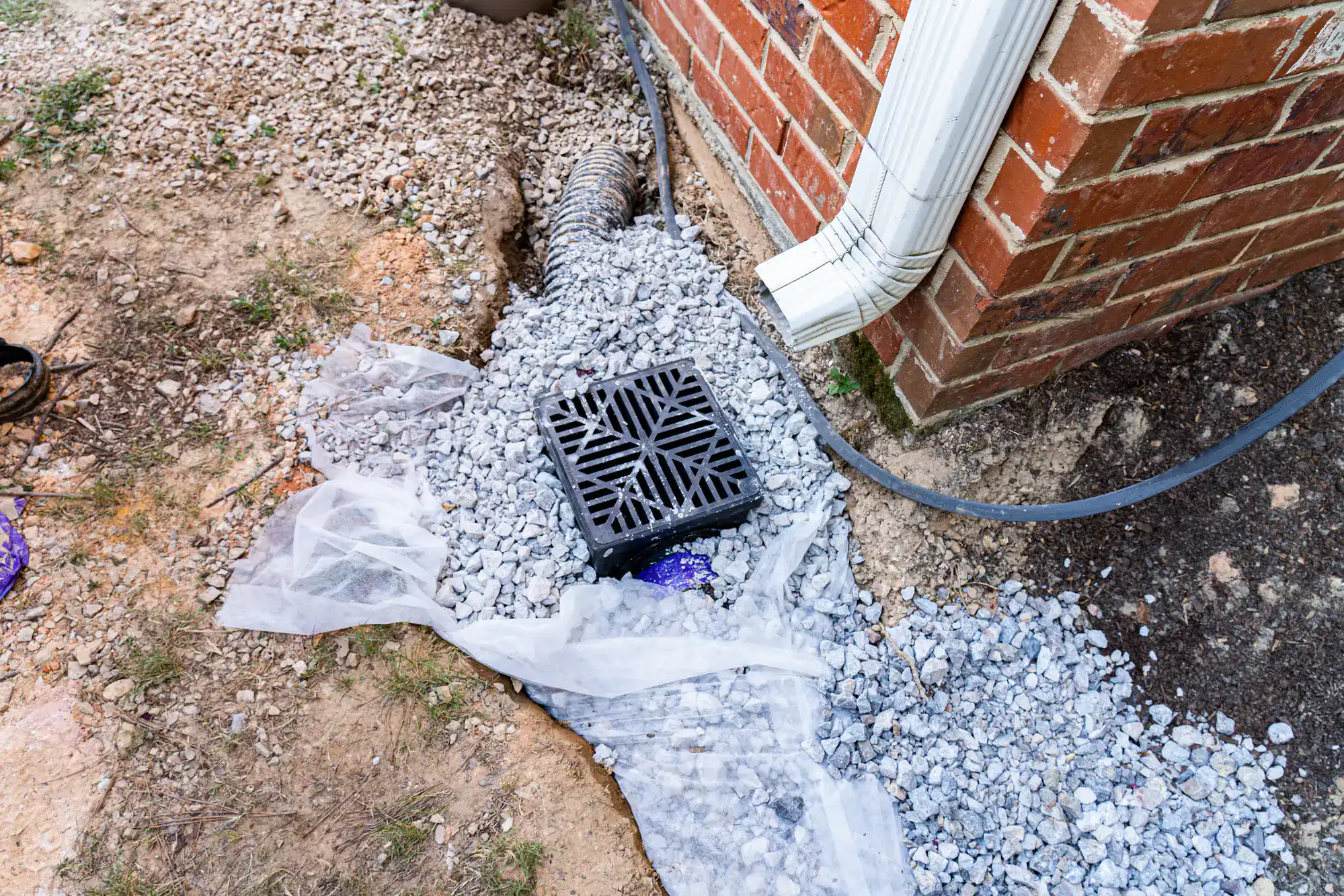
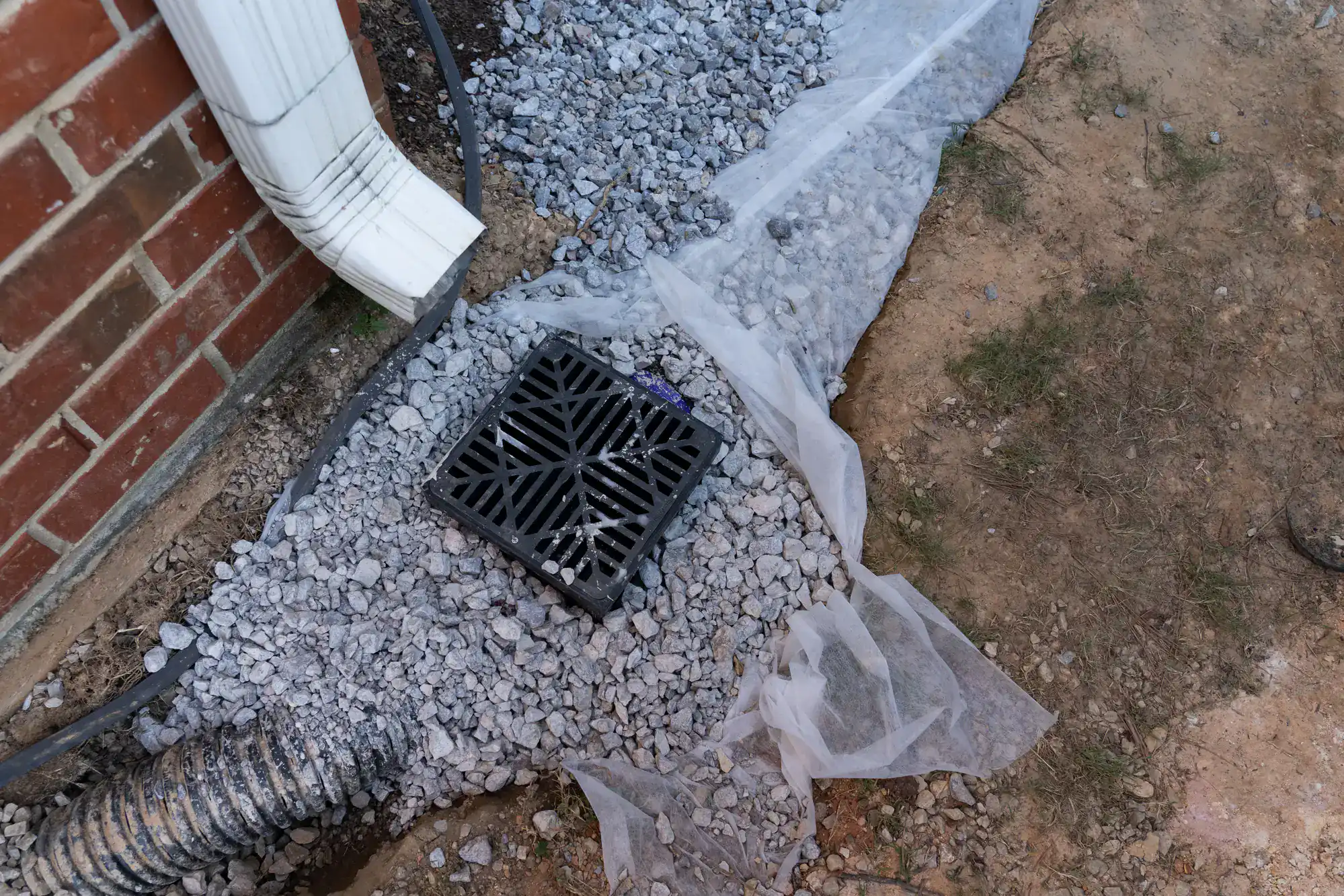
Installation typically takes one to three days for a residential system. We excavate the trench, set the slope, lay geotextile fabric, fill with washed angular gravel, and install perforated pipe at the correct depth for Long Island’s freeze-thaw cycle shallow installs crack in the first hard winter, and we don’t build systems that fail. Once the pipe is tied to a defined outlet point, we backfill, grade, and restore the surface. Your yard gets put back together topsoil, seed, or sod matched to what was there before.
Ready to get started?
Every French drain system we install in Hampton Bays is designed around your property’s actual conditions not a standard template. We account for your soil profile, the proximity to bay water, your foundation type, and whether you’re dealing with surface runoff, subsurface groundwater, or both. Homes near Tiana Bay and Ponquogue often need systems engineered for a high water table. Older cottages that were converted from seasonal to year-round use frequently have no foundation drainage at all. Properties near the Shinnecock Canal may fall within regulated wetland buffers that affect how and where the outlet is placed. None of that is unusual to us it’s what we work with regularly across the Town of Southampton.
What’s included in every installation: full site assessment, permit coordination, 811 utility marking, proper geotextile fabric, washed angular gravel, perforated pipe installed at freeze-safe depth, a defined and functional outlet point, and complete surface restoration after excavation. We don’t leave you with a trench scar across your lawn. The yard gets restored.
We also stand behind the work. Every system we install comes with a workmanship warranty if the drainage doesn’t perform as designed, we come back and make it right. For seasonal homeowners who aren’t on-site year-round, that matters. You shouldn’t have to wonder whether the system held up over the winter.
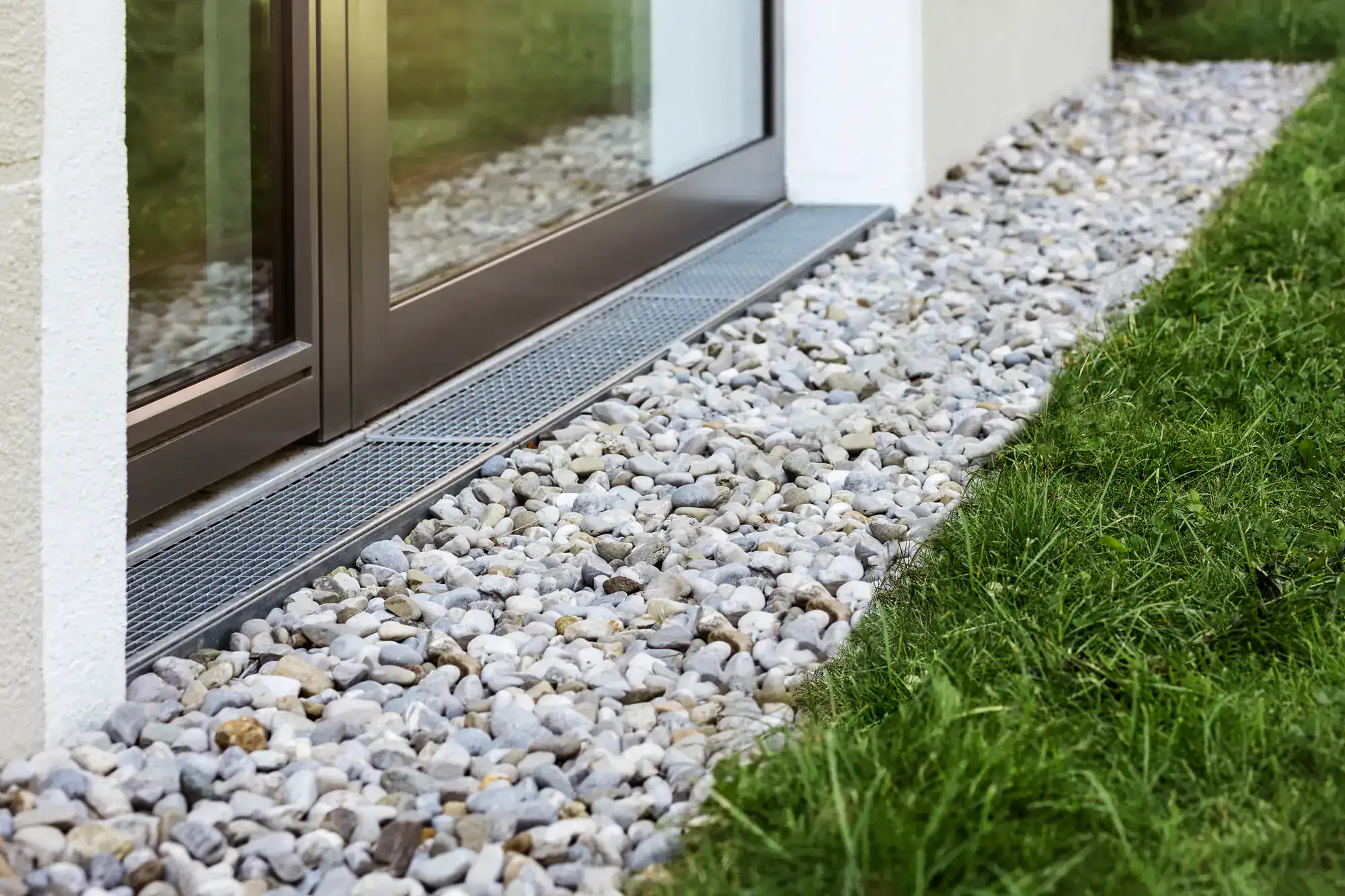
It’s a fair assumption sandy soil drains faster than clay, so it seems like water shouldn’t be a problem. But in Hampton Bays, the issue isn’t always the soil type. It’s the water table. In neighborhoods near Tiana Bay, Ponquogue, and the lower-lying areas around the Shinnecock Canal, the water table can sit just a few feet below grade during wet seasons. When that’s your baseline, even well-draining sandy soil gets overwhelmed quickly during a heavy storm or a prolonged wet spring. The ground simply can’t move the water fast enough when it’s already near capacity below the surface.
There’s also the fill factor. A lot of older Hampton Bays properties were built up with fill soil over the years to elevate structures or level lots. That fill layer often has completely different drainage characteristics than the native sand beneath it and it can trap water rather than let it pass through. A site assessment tells you what’s actually happening on your property, which is the only way to know whether a French drain is warranted and what kind of system makes sense.
For most residential properties in Hampton Bays, a French drain installation runs somewhere between $5,000 and $12,000. Where your project falls in that range depends on the length of the system, the depth required, whether the outlet ties into an existing drainage structure or needs to be created, and whether any permit coordination is involved which is more common here than in inland towns given the proximity to wetlands and tidal areas.
It’s worth putting that number next to what you’re protecting. Hampton Bays home values have crossed the $1 million median mark, and foundation repair the likely outcome if water intrusion goes unaddressed starts at $15,000 and often runs much higher. Mold remediation in a coastal environment where ambient humidity is already elevated adds to that. A French drain system that lasts 30 to 40 years is a proportionally small investment against those risks. We give you a firm quote after a free on-site assessment no estimates over the phone, because every property in Hampton Bays is different enough that a phone number would be meaningless.
It depends on your specific property, and it’s one of the reasons a proper site assessment matters before any work begins. Hampton Bays falls under the jurisdiction of the Town of Southampton’s Building Department. Drainage work that alters surface water flow, involves significant grading, or is located near a wetland buffer or tidal area may require a permit and given how much of Hampton Bays sits adjacent to Shinnecock Bay, Tiana Bay, or other regulated water bodies, that applies to more properties here than you might expect.
If your property falls within a New York State DEC-regulated wetland buffer or is in a FEMA-designated Special Flood Hazard Area which covers a meaningful portion of the hamlet, particularly near the bays and Dune Road there may be additional approvals required before installation. We handle all permit applications and regulatory coordination on your behalf. You don’t need to figure out the Town of Southampton’s process or navigate DEC requirements on your own. We manage that from the start so the project doesn’t stall waiting on paperwork.
This is one of the most important technical questions for any Long Island drainage installation, and it’s where a lot of cheaper installs fail. Hampton Bays experiences a full four-season climate with winters that regularly push below freezing. A French drain installed too shallow which happens more often than it should with inexperienced contractors will freeze during the first hard cold stretch. When the pipe freezes and expands, it cracks. The system stops functioning, and you’re back to the same drainage problem you started with, plus the cost of fixing a failed install.
The correct installation depth for perforated drainage pipe in Hampton Bays accounts for Long Island’s frost depth, which generally requires the pipe to be set below the freeze line to maintain function through winter. The exact depth varies based on the slope of your yard, the outlet location, and the specific conditions of your property but it’s something we design for from the start, not an afterthought. Every system we install is built to work in January as well as it does in July.
Yes, and it’s an important consideration that often gets overlooked. Most properties in Hampton Bays are not connected to municipal sewer they rely on cesspools or septic systems, which means the Suffolk County Health Department has guidelines about how close drainage work can come to your leaching field or septic components. Installing a French drain too close to a septic system can saturate the leaching field, compromise its function, and in the worst case, contaminate the groundwater supply that feeds private wells in the area.
This is one of the reasons we do a thorough site assessment before any design work. We locate your septic system components, understand the setback requirements that apply to your property, and route the French drain system accordingly. It’s not a reason to avoid drainage work it’s a reason to have it done by someone who knows what to look for. In a hamlet where the majority of homes are on private septic and well water, getting this right isn’t optional. It’s part of doing the job correctly.
Fall is genuinely one of the best windows for French drain installation in Hampton Bays, and the timing works in your favor in a few ways. The ground is still workable before the first hard freeze, which means installation can be completed cleanly and the disturbed soil has time to settle before winter. Getting the system in before the cold months also means it’s fully functional by the time spring arrives which in Hampton Bays, with snowmelt combining with April and May rains, is typically when drainage problems are at their worst.
For seasonal homeowners who aren’t on-site year-round, fall also lines up with the natural rhythm of closing up the property. If you noticed drainage issues during the summer a yard that stayed wet after storms, a basement corner that showed moisture fall is the right time to address it before those conditions sit unresolved through the winter and compound into something more serious by spring. Year-round residents benefit from the same logic: a fall installation means you’re not scrambling to find a contractor in May when everyone else who discovered the same problem after the spring thaw is calling at the same time.