
Hear from Our Customers
Standing water in a Sound Beach yard isn’t just a nuisance. It’s hydrostatic pressure building against your foundation every time it rains, and on the North Shore, that’s a year-round event. Nor’easters in February, heavy spring snowmelt, summer thunderstorms your drainage system doesn’t get a break here the way it might in a drier climate. A properly designed French drain moves that water away from your home before it has a chance to do damage.
For a lot of Sound Beach homeowners, the problem goes deeper than the weather. Much of the housing stock here started as seasonal summer cottages and was converted to year-round homes over the decades. That original construction rarely included engineered drainage it didn’t need to for a few warm months a year. But once you’re living there full-time, running a finished basement, and adding impervious surfaces like patios and driveways, the drainage load is completely different. A French drain system designed for how your home actually functions today can eliminate the wet basement cycles, the soggy corners of your lawn, and the slow foundation stress that adds up over time.
The other thing worth understanding is what prevention costs versus what repair costs. A residential French drain installation typically runs in the $5,000–$9,000 range. Foundation repair on Long Island runs $15,000–$50,000. Mold remediation starts around $3,000 and climbs fast. This isn’t a home improvement decision it’s a risk management one.
Sound Beach sits on glacially deposited terrain where the soil can shift from fast-draining sandy loam to dense, nearly impermeable clay within the same block sometimes within the same property. There are boulders and hardpan deposits that don’t show up until you’re a foot into a trench. That kind of variability doesn’t show up in a phone quote, and it doesn’t respond well to a one-size-fits-all system design.
We work in the North Shore corridor of Suffolk County and understand the slope and bluff topography that creates directional water flow problems for properties in and around Sound Beach. We know the Town of Brookhaven’s permit requirements and the freeze-thaw conditions that will crack a shallow-installed pipe by March if the depth isn’t right. We don’t show up with a generic plan. We assess your property first, identify where the water is coming from and where it needs to go, and build the system around what your specific lot actually needs.
It starts with a free on-site assessment. We come to your property, walk the yard, identify the water source, check the slope and soil conditions, and look at where the water needs to discharge. In Sound Beach, this step isn’t optional the soil variability here means what works for your neighbor’s property may not work for yours. We don’t give estimates over the phone for that reason.
Once we understand your site, we design the system. That means specifying the right pipe type, the right filter fabric to keep fine glacial silt out of the gravel bed, and the right depth for Long Island’s frost line. A pipe installed too shallow in this climate will freeze during a hard winter and fail by spring exactly when you need it most. Before any excavation begins, we handle utility marking through 811 and, where the project requires it, coordinate any permits with the Town of Brookhaven. If your property is near the coastal area along Long Island Sound or a wetland buffer, we factor in those regulatory requirements upfront so nothing stalls the project mid-job.
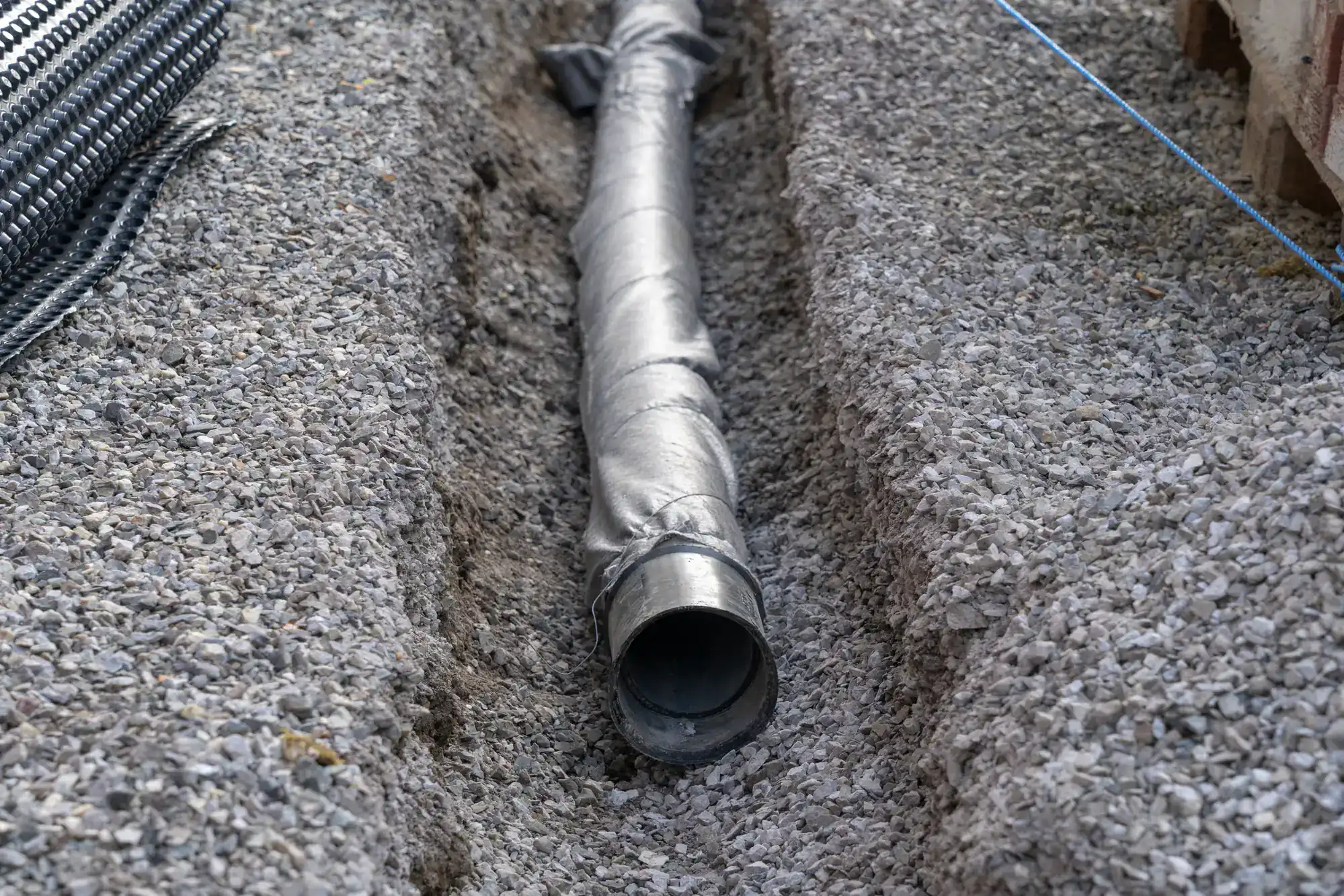
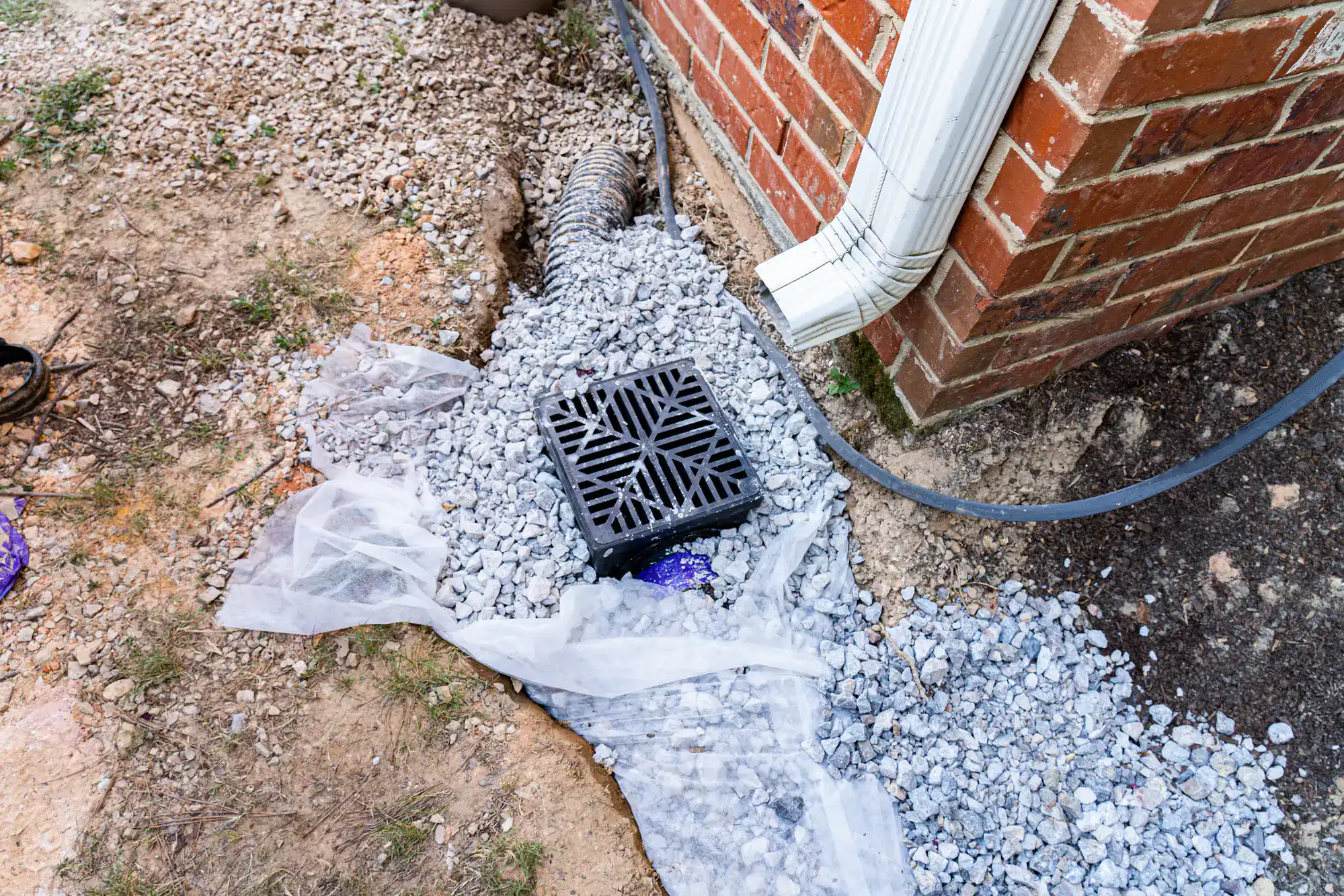
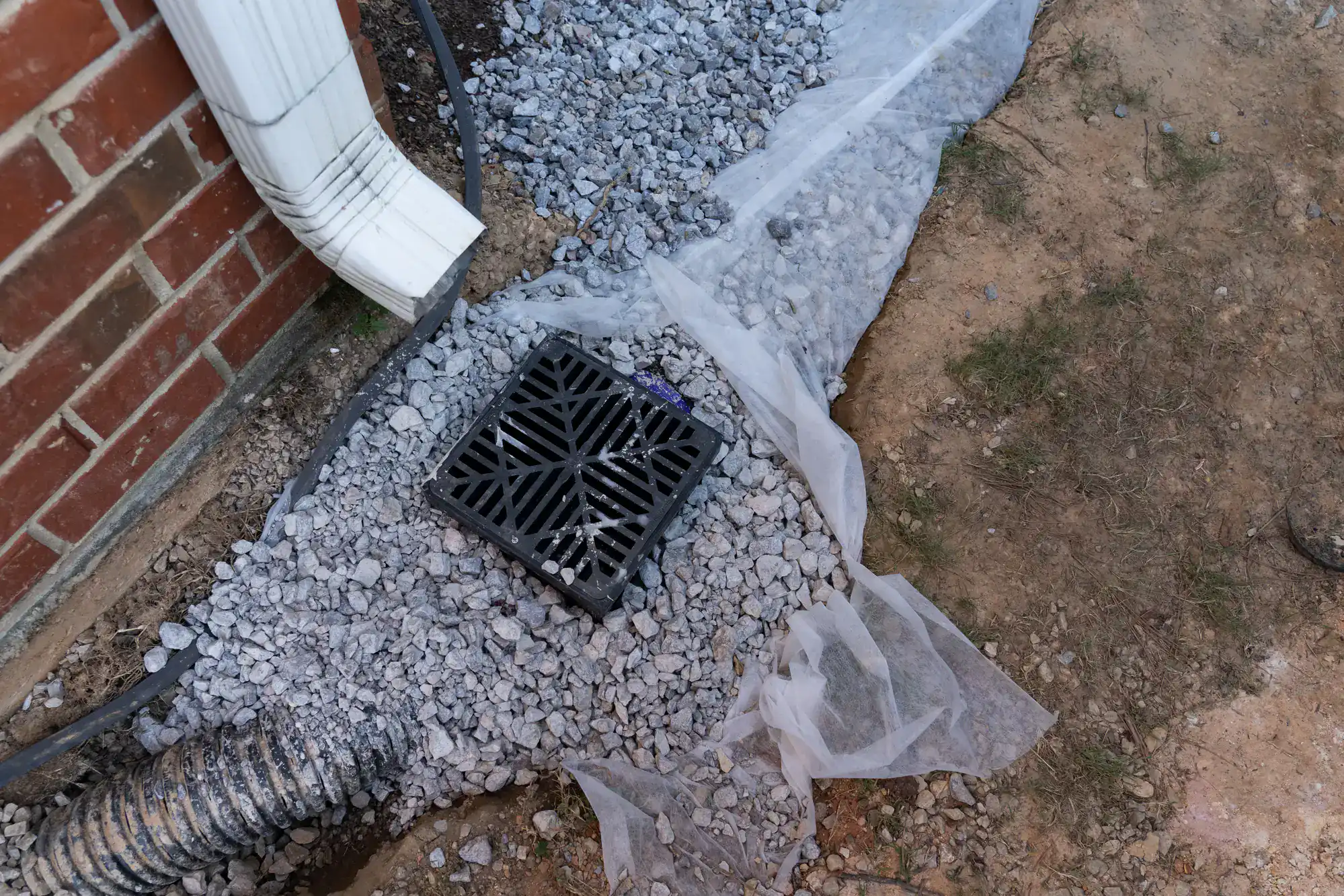
Installation involves trenching, laying the pipe in a properly graded bed of washed angular gravel, wrapping the system in geotextile filter fabric, and backfilling. When we’re done, the yard is restored topsoil, seeding, surface matching. The disruption is temporary. The drainage is not.
Ready to get started?
A French drain system is only as good as the materials and the site knowledge behind it. The most common reason these systems fail prematurely especially in North Shore communities like Sound Beach is cheap materials paired with a design that didn’t account for local soil conditions. Corrugated plastic tubing collapses under soil pressure. The wrong geotextile fabric lets fine glacial silt infiltrate the gravel bed and clog the system within a few years. Round pea gravel doesn’t create enough void space for water to move efficiently. Every French drain installation we complete uses perforated pipe, double-punched geotextile filter fabric, and washed angular gravel the material standards that hold up over decades, not just a few seasons.
Beyond materials, the system design accounts for what’s specific to your property. Sound Beach’s North Shore terrain includes elevation changes and slopes that direct water toward lower-lying properties. If your lot sits downhill from neighboring properties, your system needs to handle that runoff load, not just your own precipitation. We design for that. We also account for Suffolk County’s stormwater discharge requirements and the proximity of cesspools or septic systems common on North Shore hamlets that don’t have municipal sewer service before we ever break ground.
Every installation comes with a workmanship warranty. If the system doesn’t perform as designed, we come back and make it right. That’s not a marketing phrase it’s the standard we hold ourselves to on every job in Sound Beach and across the North Shore.
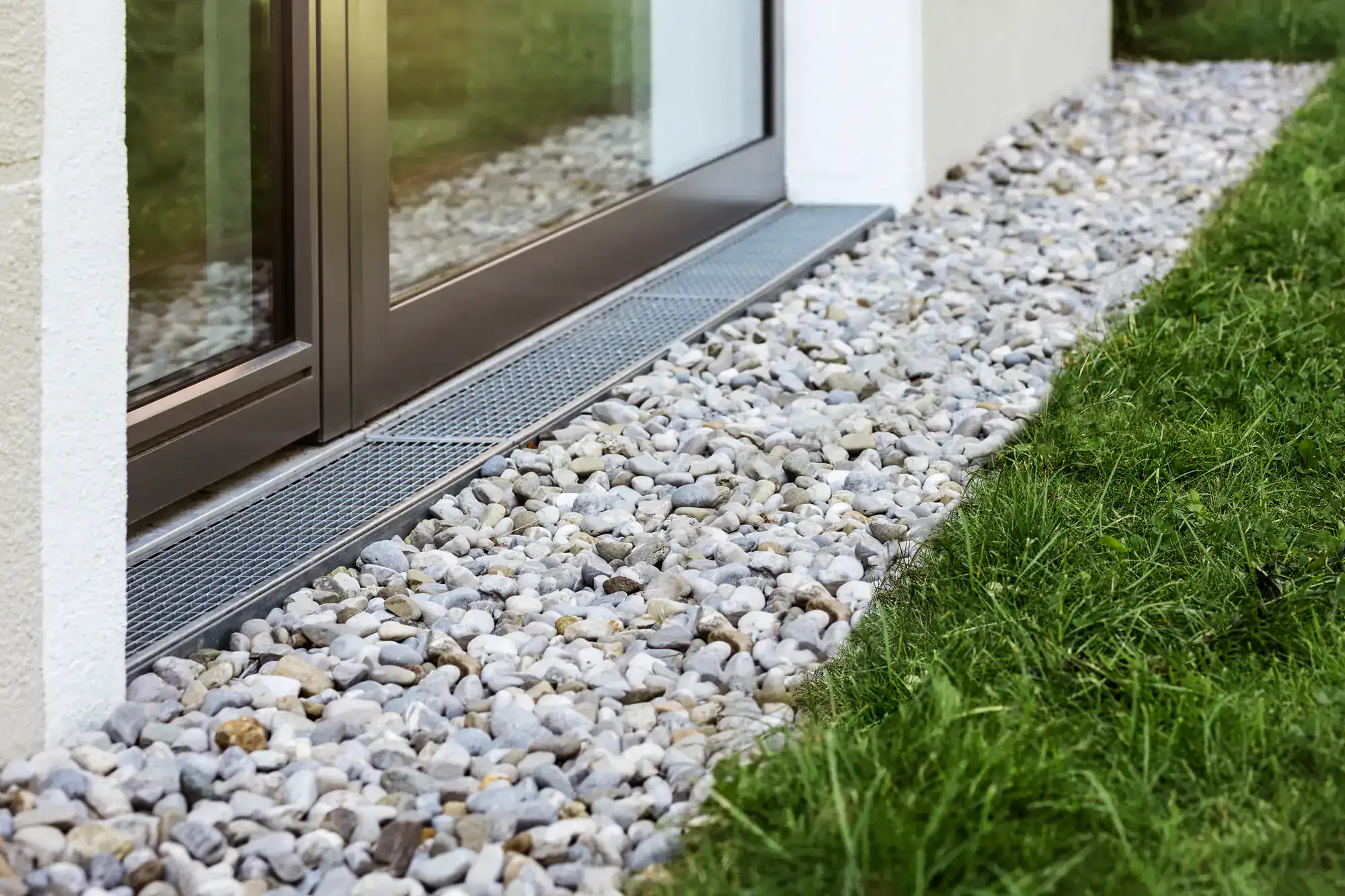
Sound Beach sits on glacially deposited soils that vary significantly from one property to the next. Some lots have sandy, fast-draining soil. Others have a layer of dense glacial clay just below the surface that water simply cannot move through quickly. When your soil has low permeability which is common across the North Shore rainwater has nowhere to go after a storm. It sits on the surface, saturates the root zone, and creates the soggy, unusable yard conditions that can last for days after even a moderate rainfall.
The other factor is the terrain. Sound Beach’s North Shore topography includes natural slopes and elevation changes that channel runoff from higher properties toward lower ones. If your lot sits in a low point or receives flow from neighboring properties uphill, you’re managing more water than just what falls on your own yard. A French drain system intercepts that water before it pools, redirecting it away from your lawn and foundation through a properly graded underground pipe. Getting the design right starts with understanding your specific soil and slope which is why a site visit matters more here than in most places.
For a residential French drain installation in Sound Beach, most homeowners are looking at somewhere in the $5,000–$9,000 range, depending on the length and complexity of the system, soil conditions on the property, and whether any discharge infrastructure needs to be added. Properties with rocky or clay-heavy glacial soils which are not uncommon in Sound Beach can add to excavation time and cost. Properties near the coastal area along Long Island Sound or near wetland buffers may also require additional permitting through the Town of Brookhaven, which can affect the overall project scope.
The number that matters more than the installation cost is the cost of not acting. Foundation repair on Long Island runs $15,000–$50,000 depending on severity. Mold remediation starts around $3,000 and escalates quickly once it’s established in a finished basement. Retaining wall failures can cost $15,000–$80,000 to correct. A French drain system installed now is significantly less expensive than any of those outcomes and it prevents all of them from compounding over time. We provide a firm quote after an on-site assessment, not a ballpark over the phone, because Sound Beach properties vary too much for phone estimates to be reliable.
Yes if it’s installed correctly. The most common winter failure mode for French drains in this climate is pipe installed too shallow. Long Island’s frost depth is typically around 36 inches, and a pipe buried well above that threshold will freeze during a hard cold snap, crack, and fail by the time spring arrives. That’s one of the most frequent causes of premature French drain failure on the North Shore, and it’s entirely preventable with proper installation depth.
Sound Beach’s position directly on Long Island Sound also means the community experiences the full force of nor’easters the major winter storm systems that push up the Atlantic coast and deliver heavy precipitation, sometimes as rain and sometimes as sleet or snow depending on temperature. Spring snowmelt combined with early-season rainfall creates the highest annual drainage stress event of the year: a large volume of water entering the ground over a short period, often into soil that’s still partially frozen and slow to absorb. A properly designed French drain system handles that event because it was built for it not just for a mild October rain. Every system we install is designed with Long Island’s frost line and seasonal drainage load in mind.
It depends on the scope and location of the project. The Town of Brookhaven requires permits for certain drainage and excavation work, particularly when the project alters stormwater flow, involves significant excavation, or is located near wetlands, flood zones, or the coastal area along Long Island Sound. Sound Beach’s proximity to the Sound means some properties fall within FEMA flood zones or New York State Coastal Erosion Hazard Areas, both of which add regulatory review to any work affecting drainage or water flow near the shoreline.
Before any excavation begins on any project, 811 must be called to mark underground utilities that’s a legal requirement in New York State, not optional. Suffolk County’s MS4 stormwater program, which covers the Town of Brookhaven, also imposes requirements on how drainage systems must be designed and where they can discharge. We handle the regulatory side of the project on your behalf. You don’t need to research Brookhaven’s permit thresholds or coordinate with the town yourself we manage all of that so the job moves forward without delays or compliance issues.
It’s actually one of the most common situations we see in Sound Beach. The community was established in 1929 as a summer colony, and a significant portion of the housing stock here started as seasonal cottages. After World War II, many of those homes were gradually converted to year-round residences expanded, modernized, and updated over the decades. The problem is that the original construction was designed for a few warm months of occupancy, not for a full-time family living there through every season. Drainage infrastructure, if it existed at all, was built for a much lighter use case.
When a seasonal cottage becomes a year-round home especially one that’s been expanded with additions, a finished basement, or new impervious surfaces like a driveway or patio the drainage load increases substantially. More occupancy means more water use. More hardscape means less ground absorption. A finished basement means water intrusion that would have been a minor inconvenience in a seasonal structure becomes a serious problem. If your home went through that conversion process and drainage was never updated to match, the system you have now or the lack of one isn’t adequate for how you’re actually living in the house. A properly designed French drain system addresses the drainage load of your home as it exists today.
A properly installed French drain system using quality materials should last 30 to 40 years. The variables that shorten that lifespan are almost always materials-related or installation-related not time-related. Corrugated plastic pipe collapses under soil pressure. The wrong filter fabric allows fine silt to infiltrate the gravel bed and clog the system within a few years. Pipe installed at the wrong depth in a freeze-thaw climate like Long Island’s will crack by the end of its first winter. These aren’t rare outcomes they’re the most common reasons homeowners end up replacing a French drain that was only installed a few years ago.
In Sound Beach specifically, the glacial silt content in certain soil types makes filter fabric selection particularly important. Fine particles from clay-heavy soils will infiltrate and clog a low-grade fabric quickly, turning a drainage system into a blocked pipe over time. We specify double-punched geotextile filter fabric, perforated pipe, and washed angular gravel on every installation the material standards that hold up under North Shore soil conditions and Long Island winters over the long term. When you’re comparing quotes, ask every contractor what materials they’re specifying. The difference between a 5-year system and a 35-year system usually comes down to that answer.