
Hear from Our Customers
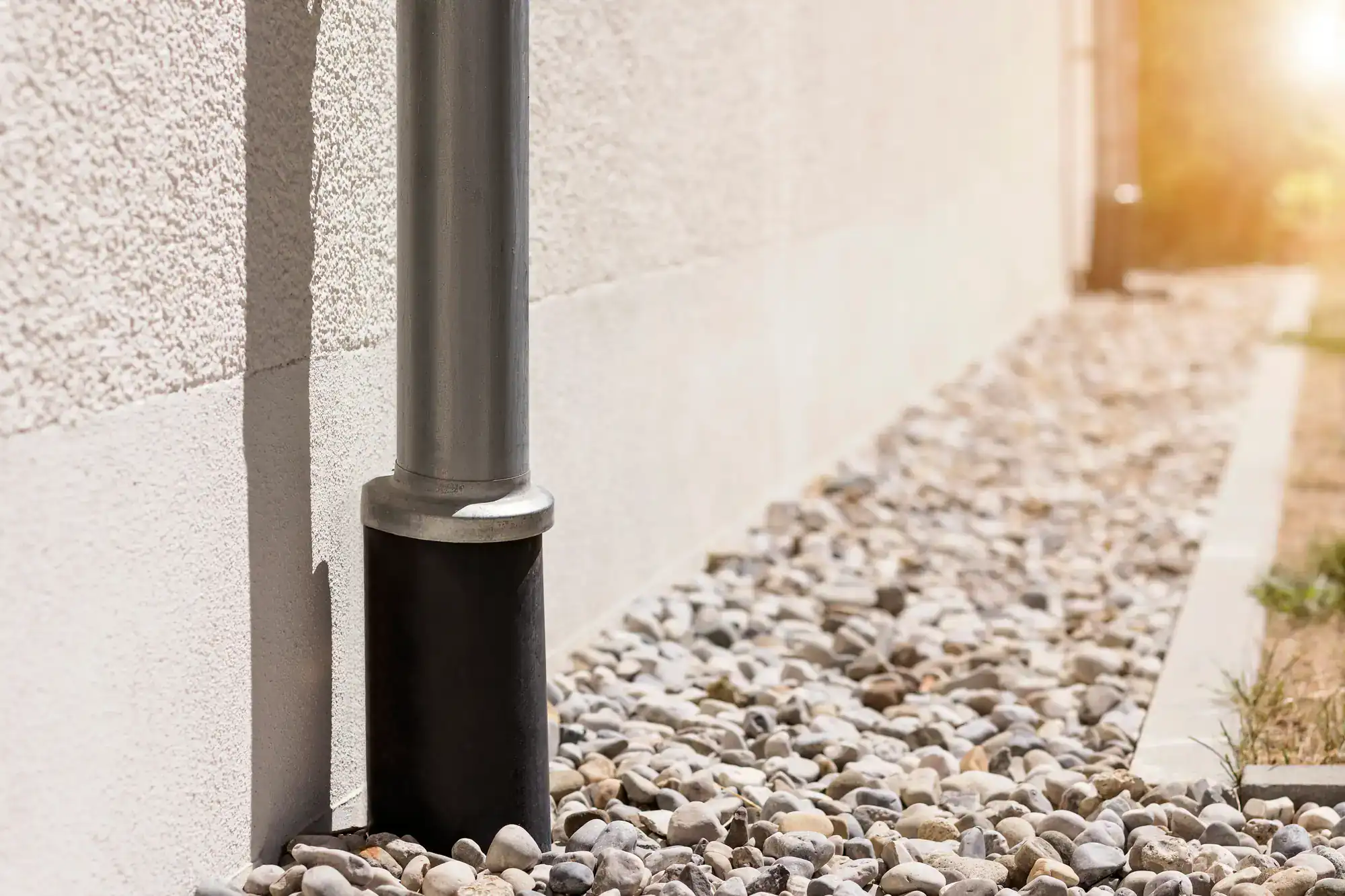
Once a properly designed French drain system is in the ground, the standing water that used to linger for days after a storm is gone. The soggy corner of your yard that killed your grass every spring stops being a problem. The basement that smelled musty after every heavy rain stays dry. That’s what this actually looks like when it’s done right.
South Huntington’s housing stock is mostly post-war construction homes built between the late 1940s and mid-1960s that were never designed with modern drainage standards in mind. If your home is 60-plus years old and you’re dealing with water issues, the original drainage system hasn’t just aged it’s likely failed completely. A French drain for your South Huntington yard isn’t a patch. It’s a replacement for infrastructure that was never adequate to begin with.
The soil here compounds everything. The glacially deposited terrain throughout the Huntington Hills area creates a mix of sandy loam and clay that varies street to street. Where clay is elevated which is common in the lower-lying residential neighborhoods between Route 110 and Round Swamp Road water has nowhere to go after a storm. It pools, saturates, and eventually finds your foundation. A residential French drain installation intercepts that water before it gets there, redirects it through a properly engineered system, and discharges it away from the areas that matter most.
We’re a residential drainage contractor serving South Huntington and the surrounding communities of the greater Huntington area including Huntington Station, Dix Hills, Melville, West Hills, and Elwood. We work specifically in this part of western Suffolk County because we know it. The soil conditions, the housing stock, the Town of Huntington’s stormwater regulations none of that is new to us.
We don’t quote drainage work over the phone. Every project starts with a free on-site assessment, because a yard near Pidgeon Hill Road drains differently than one closer to Half Hollow Road, and the right solution depends on what’s actually happening at your specific property. That’s not a sales tactic it’s just how drainage work should be done.
We’re fully licensed and insured to work in New York State, we handle all permitting through the Town of Huntington’s Building and Engineering Departments, and we call 811 before any excavation because that’s legally required and it’s the right way to operate. You shouldn’t have to manage any of that. We do.
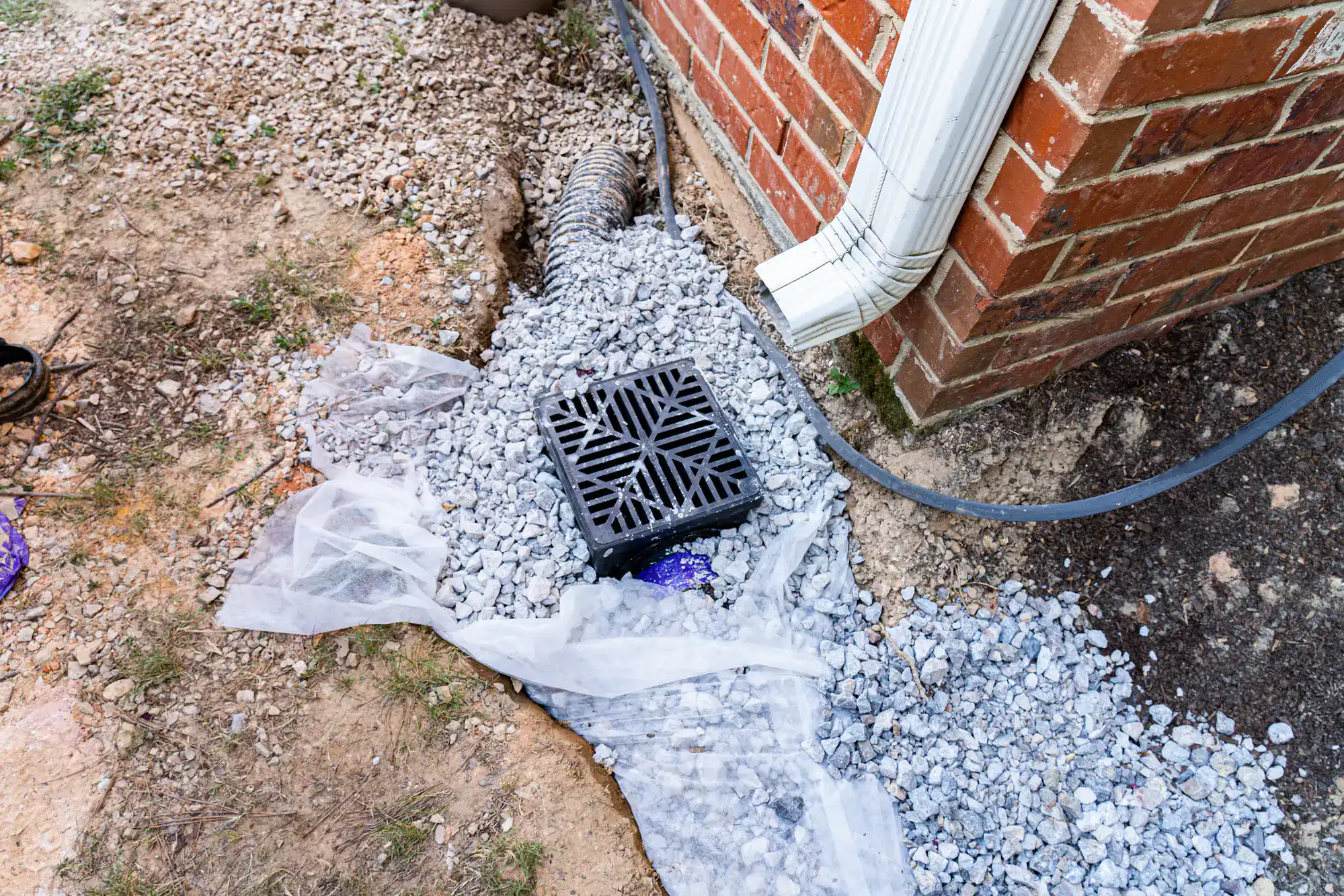
It starts with the free on-site assessment. We come to your property, walk the yard, evaluate where the water is coming from, check the grade, test the soil conditions, and identify the correct outlet point for the system. In South Huntington, that assessment almost always reveals one of two things: either the original drainage infrastructure has failed entirely, or there was never anything adequate installed in the first place. Either way, we know what we’re looking at before we ever recommend anything.
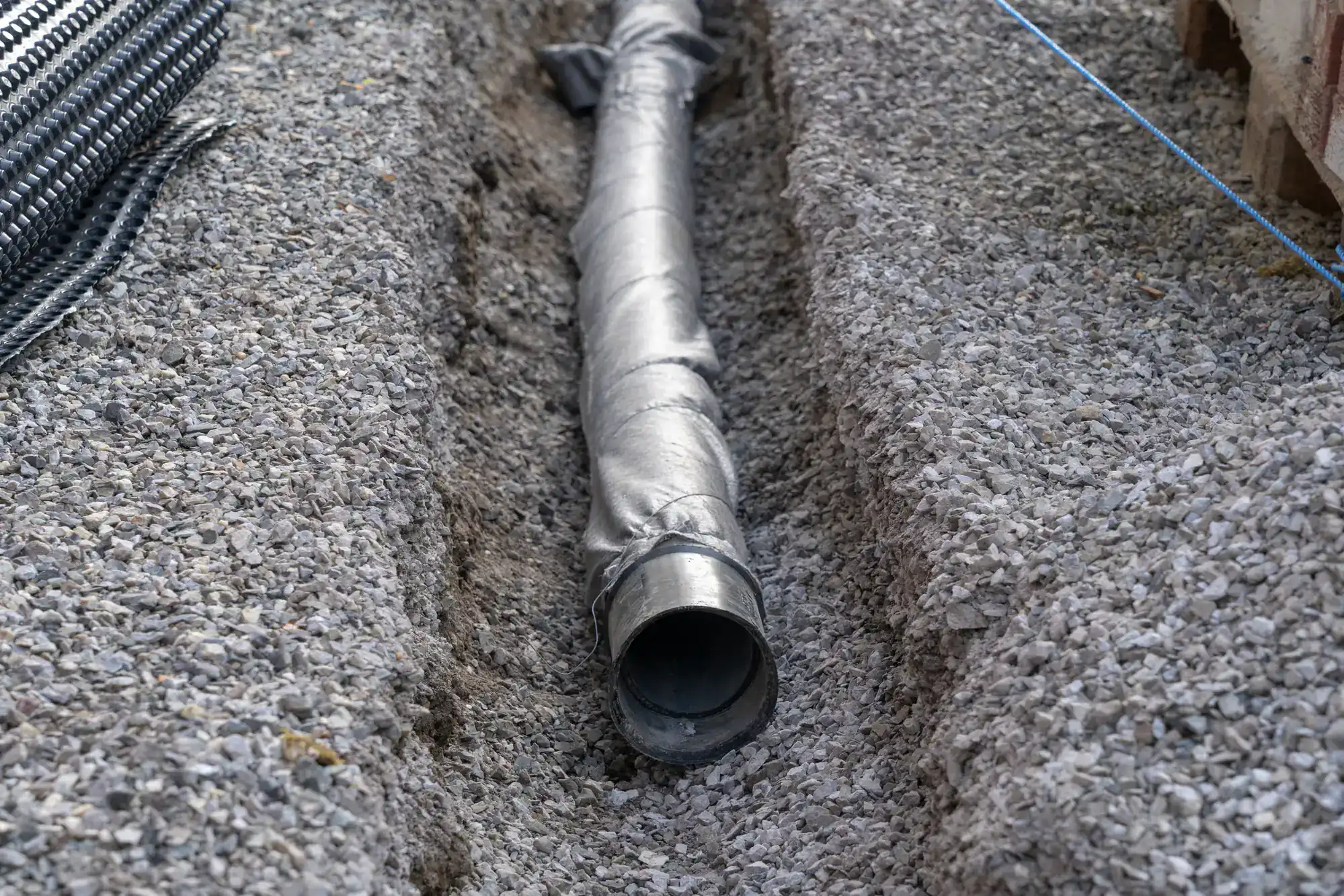
From there, we design the system for your specific property. That means determining the correct pipe depth on Long Island, frost penetrates the ground to roughly 36 inches in a hard winter, so any pipe installed too shallow will freeze and crack before the first season is out. It means selecting the right pipe, the right geotextile filter fabric to keep silt from clogging the system, and the right angular gravel to maintain void space for water flow. Every material choice gets explained to you before we start.
Installation on a typical South Huntington residential property takes one to three days. We trench, install, backfill, replace topsoil, and seed or sod any disturbed lawn areas before we leave. The Town of Huntington’s Chapter 170 Stormwater Management Code governs where and how the system can discharge we handle all of that compliance so you don’t have to think about it. When we’re done, your yard looks like we were never there. Except now it drains.
Ready to get started?
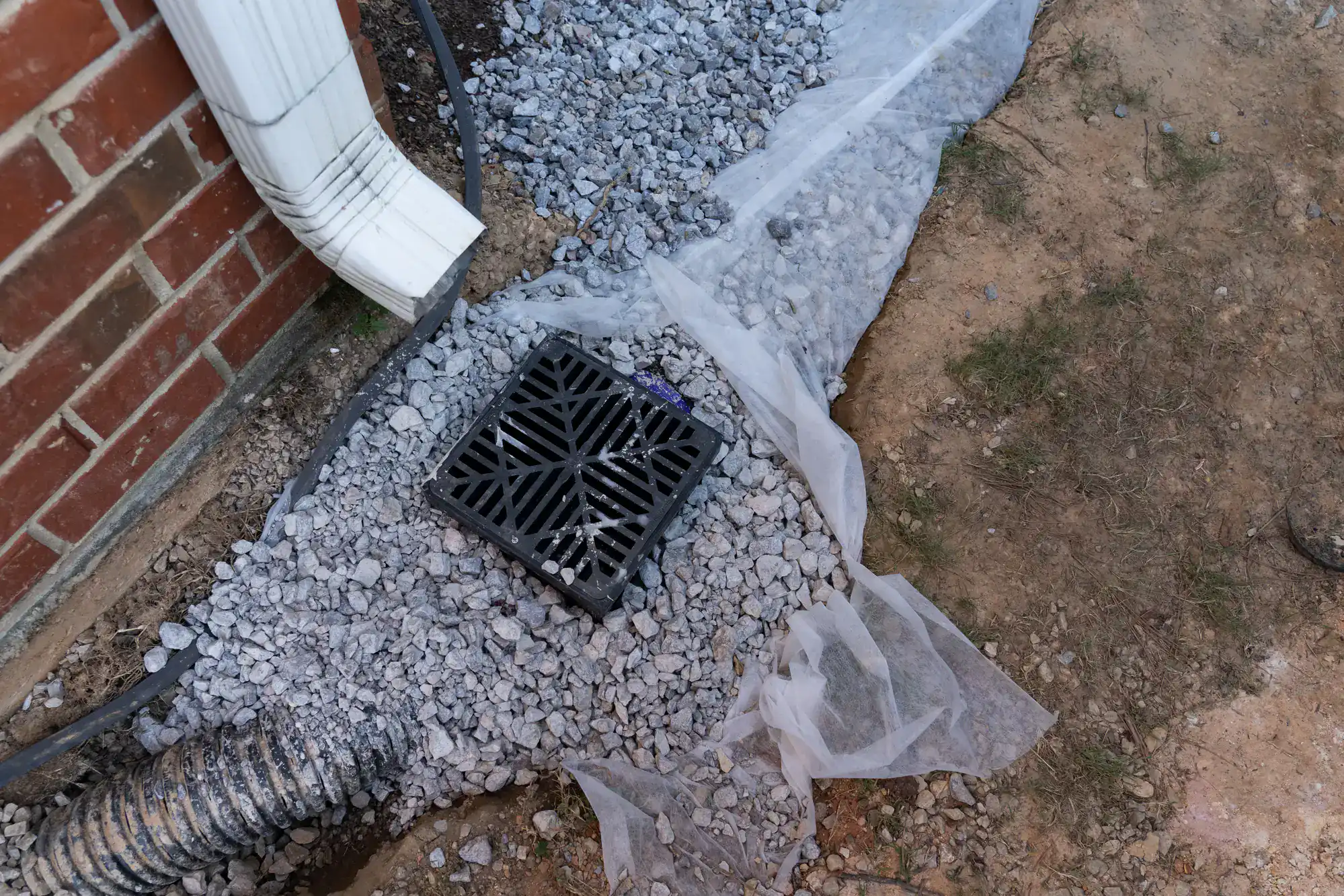
A French drain installation in South Huntington, NY from us includes a full site assessment, system design specific to your property’s grade and soil conditions, all required permitting through the Town of Huntington, utility marking coordination through New York 811, installation with perforated pipe, double-punched geotextile filter fabric wrapped around the entire gravel bed, and washed angular gravel sized for maximum drainage performance. Every system is designed with a verified slope so water moves it doesn’t sit.
We also handle the outlet. Where the system discharges matters both for performance and for code compliance under the Town of Huntington’s stormwater management regulations. Discharging into a neighbor’s yard or connecting improperly to a municipal system isn’t just bad practice, it’s a code violation. We design every outlet point to meet Town requirements and to move water efficiently off your property.
What you’re getting is a water drainage contractor in South Huntington that treats your property like a real engineering problem, not a one-size-fits-all job. Homes in this hamlet many of them sitting on clay-heavy soil with aging or absent original drainage need systems designed for their specific conditions. That’s what every installation here is built around, and it’s what separates a system that lasts 30 to 40 years from one that fails in three.
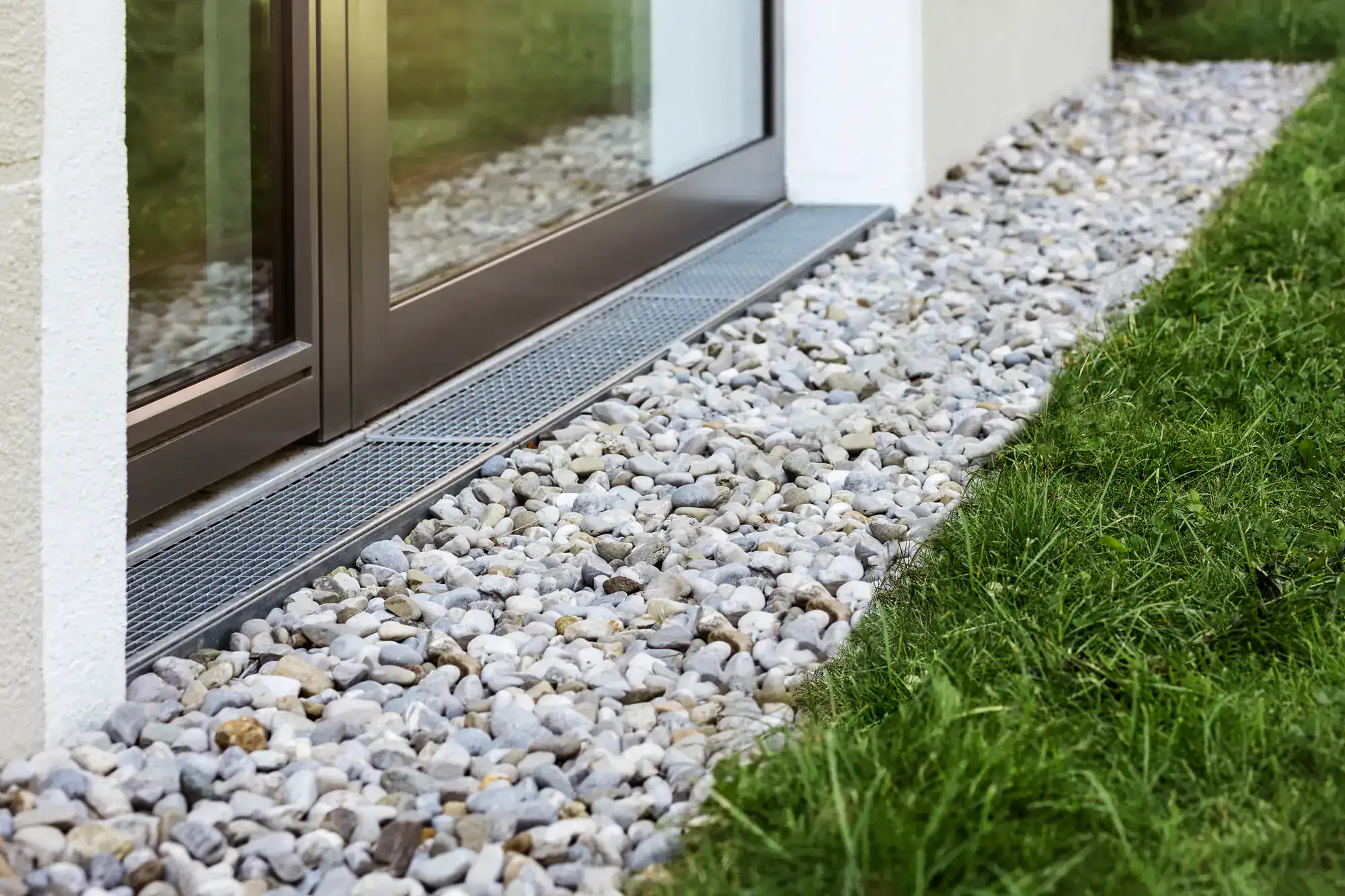
The most common reason is the soil. South Huntington sits on glacially deposited terrain that produces a mix of sandy loam and clay throughout the hamlet’s residential neighborhoods. In areas where clay content is elevated which is common in the lower-lying sections between Route 110 and Round Swamp Road water simply can’t absorb into the ground fast enough after a storm. It pools on the surface, saturates the root zone, and stays there until it evaporates.
The other factor is the age of the housing stock. Most homes in South Huntington were built between the late 1940s and mid-1960s. Whatever drainage infrastructure existed when those homes were built if any has had 60 to 70 years to collapse, silt up, or fail completely. A French drain system intercepts subsurface water before it saturates your yard and redirects it to a defined outlet away from your lawn and foundation. It’s a permanent fix, not a seasonal workaround.
For most residential properties in South Huntington, a professionally installed French drain system runs between $5,000 and $12,000 depending on the length of the system, the complexity of the outlet, and the specific soil and grade conditions on your property. Professionally installed systems typically run $20 to $60 per linear foot. We don’t quote over the phone because the range is wide and the right number depends on what’s actually happening at your property.
What’s worth keeping in mind is what you’re protecting. The median home value in South Huntington is over $636,000. Foundation repair on Long Island runs $15,000 to $50,000. Mold remediation in an older home the kind with plaster walls and limited ventilation that’s common in this hamlet starts at $3,000 and escalates fast. A French drain system that costs $7,000 today is considerably cheaper than the problems it prevents. The free on-site assessment gives you a real number for your specific property with no obligation to move forward.
It depends on the scope of the work, but for most residential French drain installations in South Huntington, the answer is yes particularly when the system alters surface water flow patterns or involves any connection to the town’s storm sewer infrastructure. The Town of Huntington’s Chapter 170 Stormwater Management Code governs non-stormwater discharges to the municipal separate storm sewer system (MS4), and drainage work that affects those systems requires authorization.
We handle all permitting through the Town of Huntington’s Building and Engineering Departments as part of every installation. We also coordinate utility marking through New York 811 before any excavation begins that’s a legal requirement in New York State, not optional. You don’t need to navigate the Town’s permitting process yourself. We manage it from start to finish, and we make sure every system we install is fully compliant with both town-level and Suffolk County environmental regulations.
Yes and clay soil is actually one of the main reasons a French drain works so well here. The problem with clay isn’t that water disappears slowly it’s that water has almost nowhere to go naturally. A French drain doesn’t rely on the surrounding soil to absorb water. It intercepts water at the subsurface level and moves it through a perforated pipe surrounded by angular gravel, which creates the void space that clay soil can’t provide on its own. The water follows the path of least resistance which is now the system you’ve installed, not your foundation.
The key is proper design. The pipe needs to be set at the right depth, the gravel bed needs to be wrapped in geotextile filter fabric to prevent clay particles from migrating in and clogging the system over time, and the outlet needs to be positioned correctly so water actually exits the property. A French drain installed without those details in a clay-heavy yard will fail within a few years. One installed correctly will perform for 30 to 40 years.
On Long Island, frost can penetrate the ground to roughly 36 inches during a hard winter. A French drain pipe installed above that depth is at risk of freezing and cracking before its first season is over which is one of the most common failure points we see in systems installed by contractors who don’t account for the local climate, or in DIY installs that follow general guidelines rather than region-specific ones.
In South Huntington, we design every system with Long Island’s freeze-thaw cycle in mind. That means pipe depth is determined not just by the grade and drainage requirements of your property, but by the thermal conditions your system will face every winter. A system that freezes and cracks in January isn’t a drainage system anymore it’s an expensive trench. Getting the depth right from the start is one of the details that separates a 30-year system from a three-year one, and it’s something we address specifically during the site assessment for every South Huntington property.
In many cases, yes but it depends on where the water is coming from. If your basement is taking on water because of surface runoff, poor yard drainage, or hydrostatic pressure building up against your foundation walls, a French drain system installed around the perimeter of your home can intercept that water before it ever reaches the foundation. That’s a drainage French drain doing exactly what it’s designed to do.
If the water is coming through cracks in the foundation itself, or if your basement has a high water table issue that’s unrelated to surface drainage, a French drain alone may not be the complete answer you may need a combination of exterior drainage work and interior waterproofing. South Huntington’s post-war housing stock, with its aging foundation materials and original drainage infrastructure that’s largely failed, tends to produce a mix of both scenarios. The site assessment is where we figure out which one you’re dealing with. We’ll tell you honestly what a French drain will solve and what it won’t because installing the wrong solution doesn’t help anyone.