
Hear from Our Customers
The soggy patch in your yard that takes four days to drain after a storm isn’t just an eyesore. It’s hydrostatic pressure building against your foundation wall, season after season. Left alone, that pressure finds its way in through hairline cracks, through the floor-wall joint, through places you won’t notice until the damage is already done.
Wading River sits on Long Island’s glacial moraine, and that geology matters. Beneath the topsoil, many properties here have clay-rich soil horizons that hold water instead of letting it pass through. When rain saturates the sandy layer above that clay, the water has nowhere to go but sideways and the lowest point it can find is usually your foundation or a low-lying section of your yard. A properly designed French drain system intercepts that water before it gets there.
The financial case is straightforward. Homes in Wading River are selling in the $560,000 to $695,000 range. A drainage problem is a disclosure issue at closing, and buyers will use it to negotiate. A documented wet basement can cost you $60,000 or more in purchase price reductions far more than the cost of a system that fixes it permanently. The work we do now protects what you’ve built here.
We’re a residential drainage contractor serving Suffolk County’s North Shore. We’re not a national waterproofing chain that added drainage to a brochure. Drainage is the work and we approach every property the way it deserves: with a site visit, a real diagnosis, and a system designed for the specific conditions on your lot.
Wading River isn’t a generic Long Island suburb, and we don’t treat it like one. We know the terrain shifts significantly across the hamlet from the elevated, rolling lots near Wildwood State Park to the lower-lying properties along Creek Road and Sound Road that saw documented flooding during the January 2024 winter storm. We also know that Wading River straddles both the Town of Riverhead and the Town of Brookhaven, which means permit requirements can differ depending on exactly where your property sits. We handle that for you.
Every system we install is backed by a workmanship warranty. If it doesn’t perform, we come back no runaround.
It starts with a free on-site assessment. We come to your property in Wading River, walk the yard, and look at where the water is coming from, where it’s going, and what’s in the way. Soil type, slope, proximity to the tidal creek or the marsh preserve, your foundation’s condition all of it factors into what we recommend. You won’t get a phone quote from us, because a phone quote for drainage work in this area is a guess.
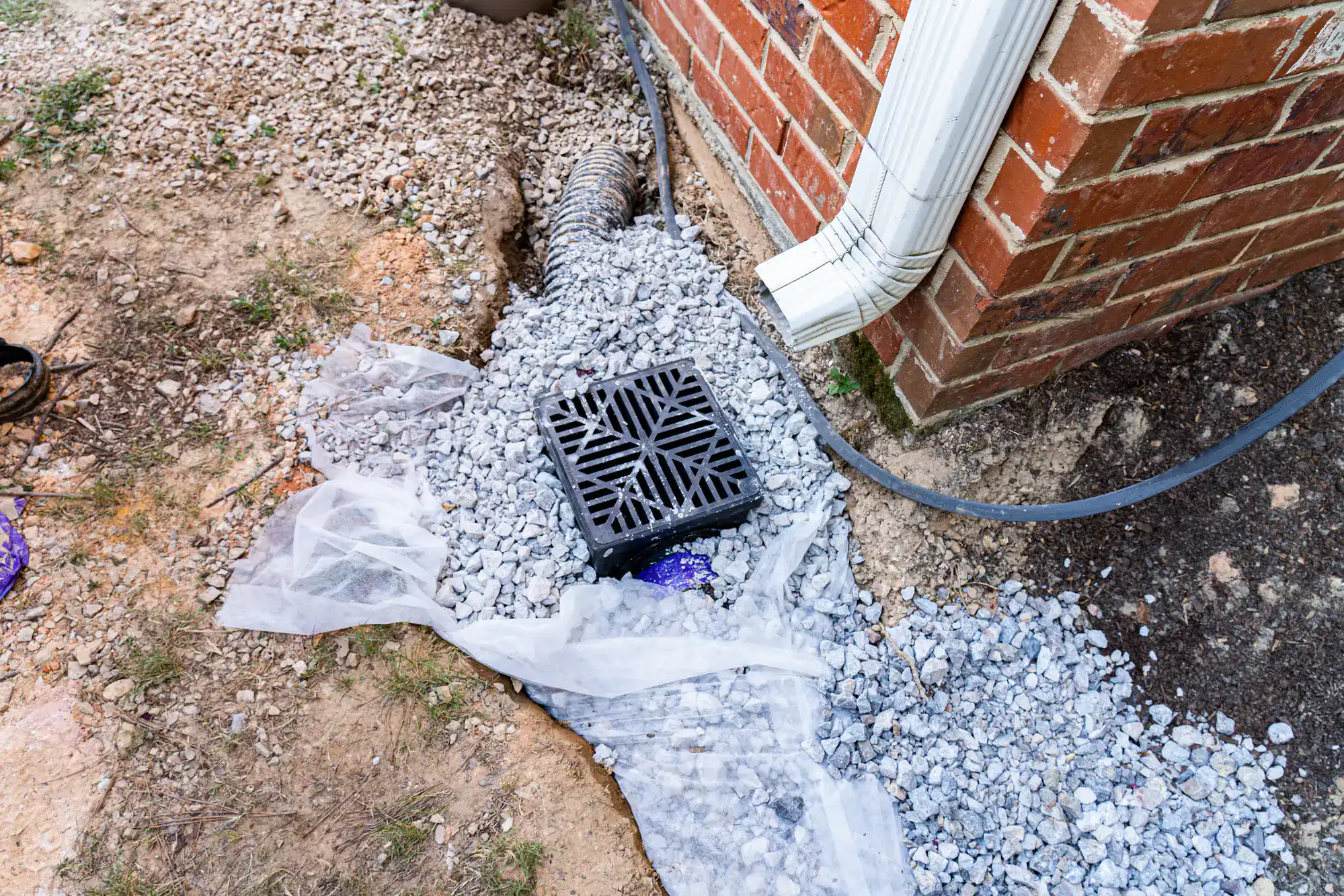
Once we’ve assessed the site, we design the system. That might be a perimeter French drain along your foundation, a curtain drain installed upslope to intercept moving groundwater before it reaches the house, or a full yard drainage system with catch basins and defined outlet points. Properties near the Wading River Marsh Preserve or the tidal creek may fall within DEC wetland setback areas we identify that upfront and handle any required permits through the appropriate town, whether that’s Riverhead or Brookhaven.
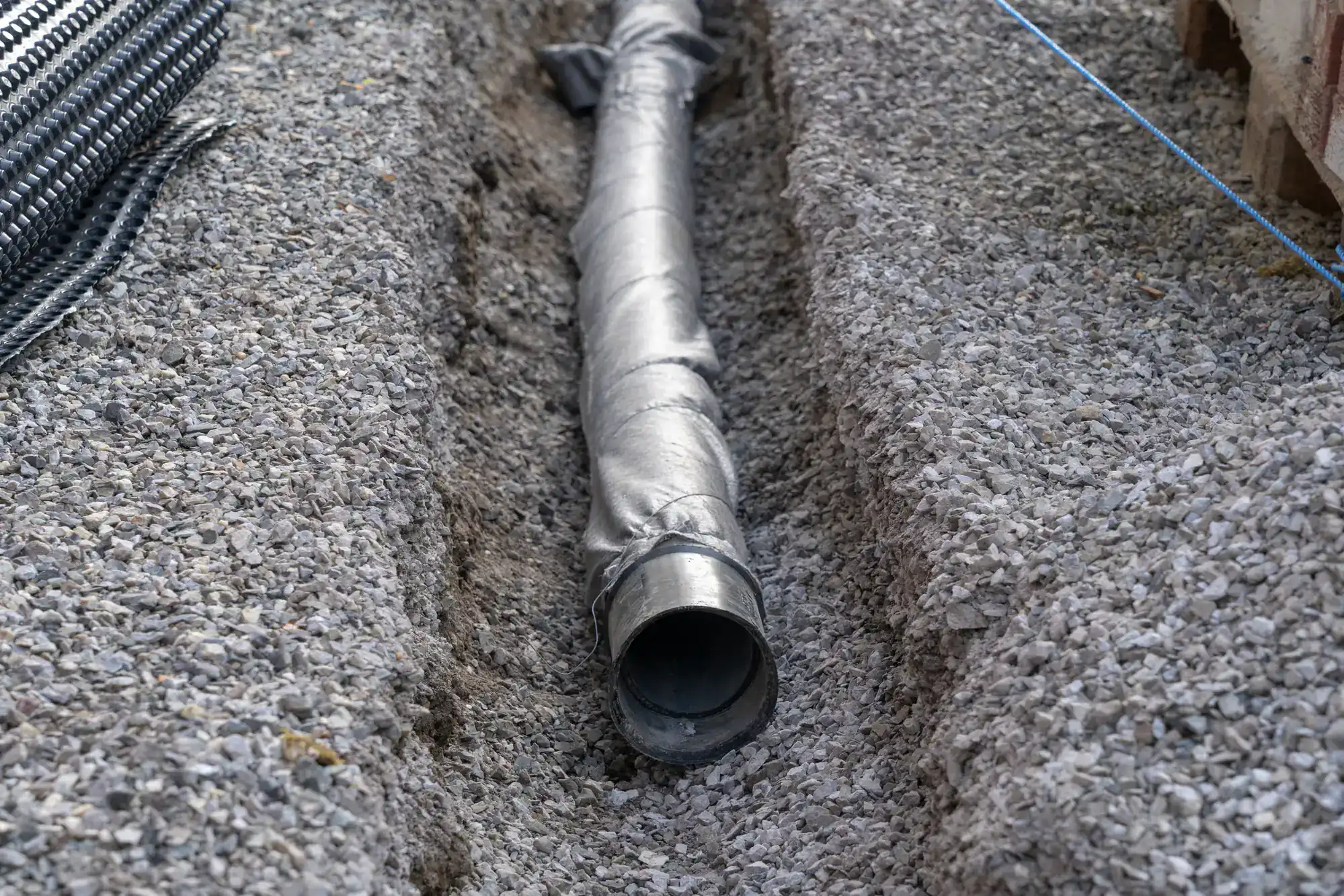
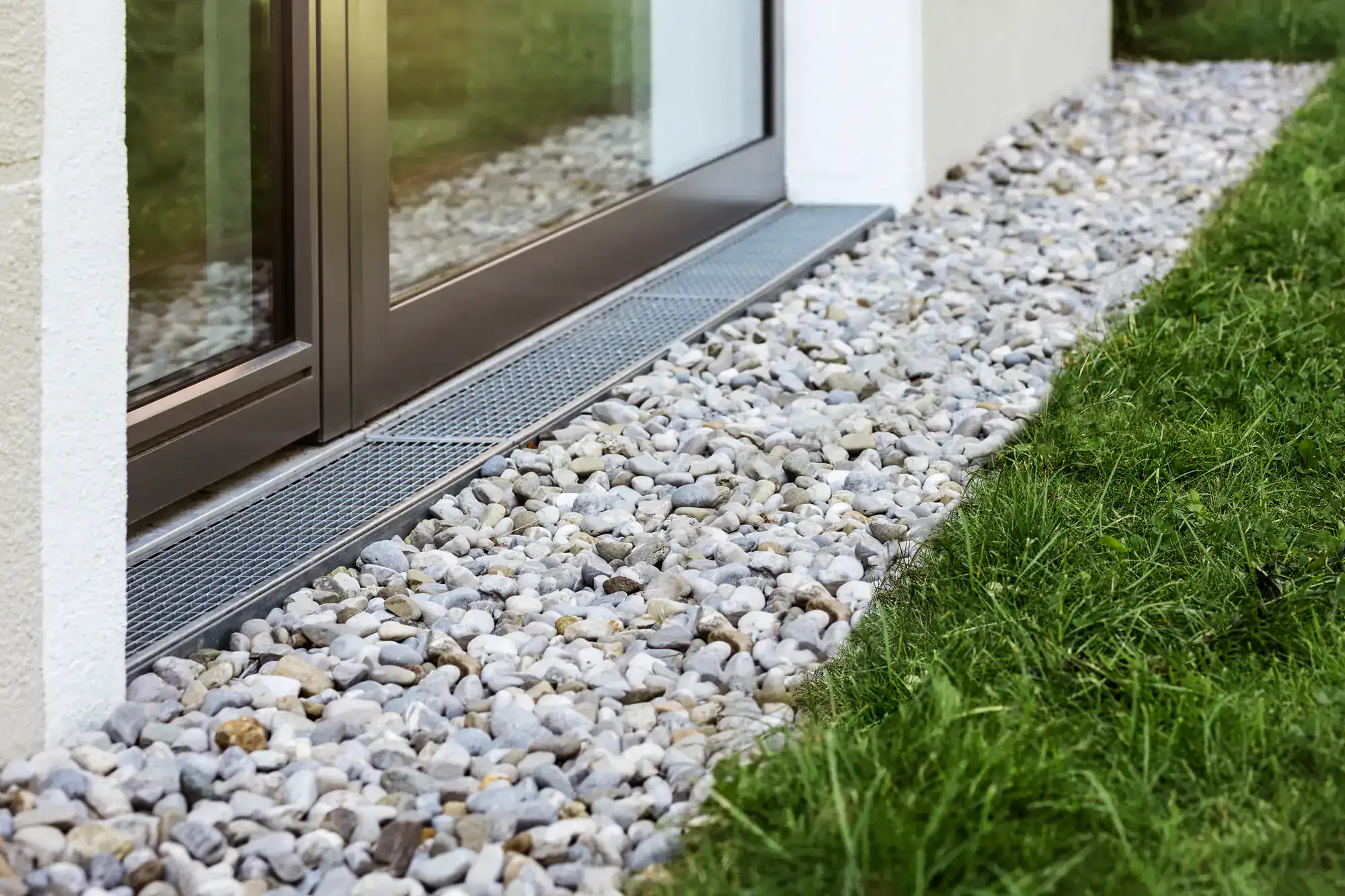
Installation means trench excavation, perforated SDR pipe set at the correct depth for Long Island’s freeze-thaw climate, washed angular gravel, and double-punched geotextile filter fabric the material that keeps Wading River’s clay soil from infiltrating and clogging the system over time. We restore the yard when we’re done. Topsoil, seeding, or sod matching whatever brings your landscape back to where it was. The trench disappears. The drainage problem doesn’t come back.
Ready to get started?
A French drain is only as good as what goes into it. The pipe grade matters we use perforated SDR pipe, not the corrugated plastic that collapses under soil pressure and clogs within a few years. The fabric matters double-punched geotextile rated for clay-heavy soil, because Wading River’s glacial till profile demands it. The slope matters a consistent one-inch drop per ten feet of pipe is what makes the system drain instead of pool. And the depth matters pipes installed too shallow in this climate will freeze and crack in the first hard winter.
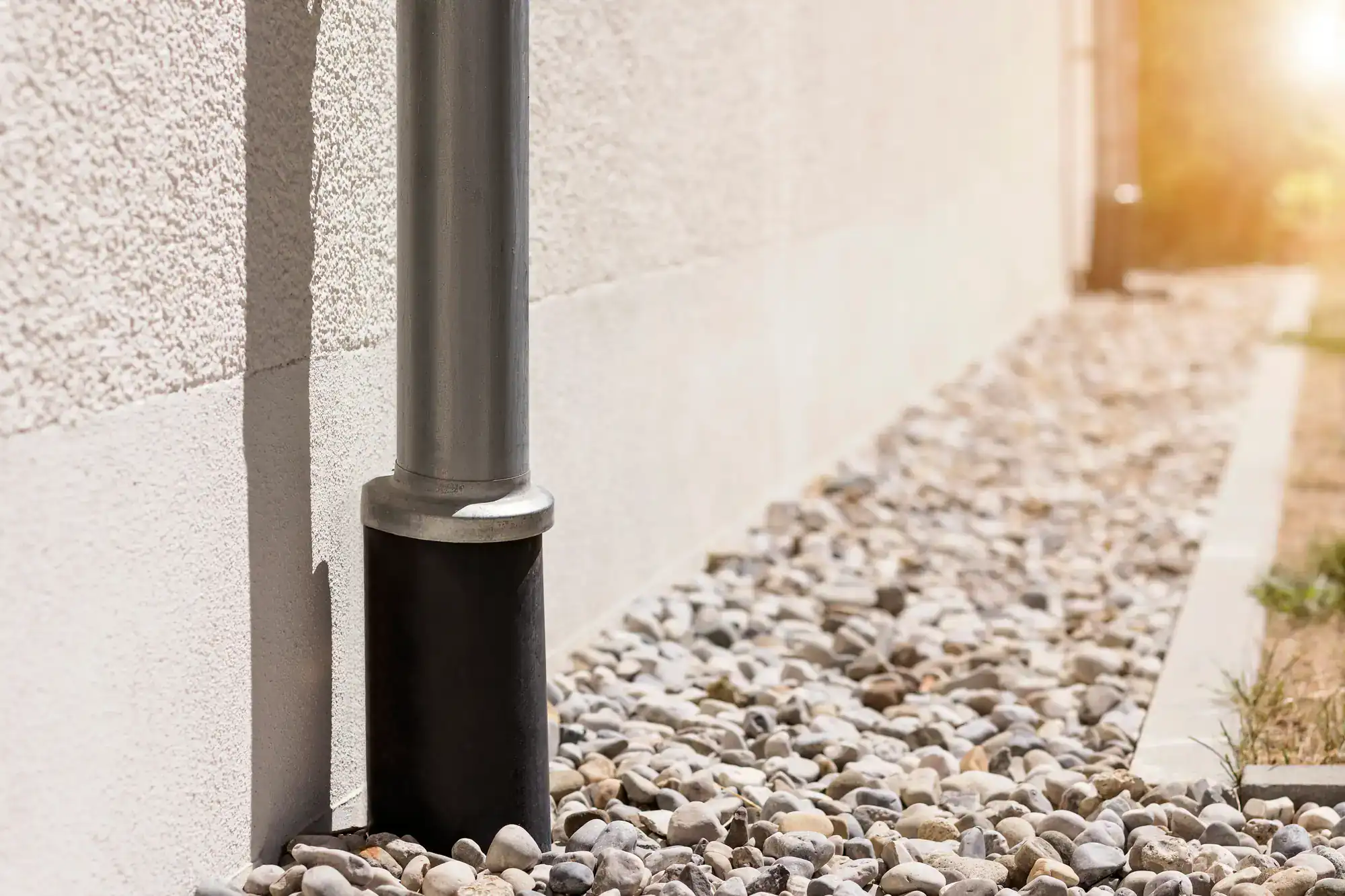
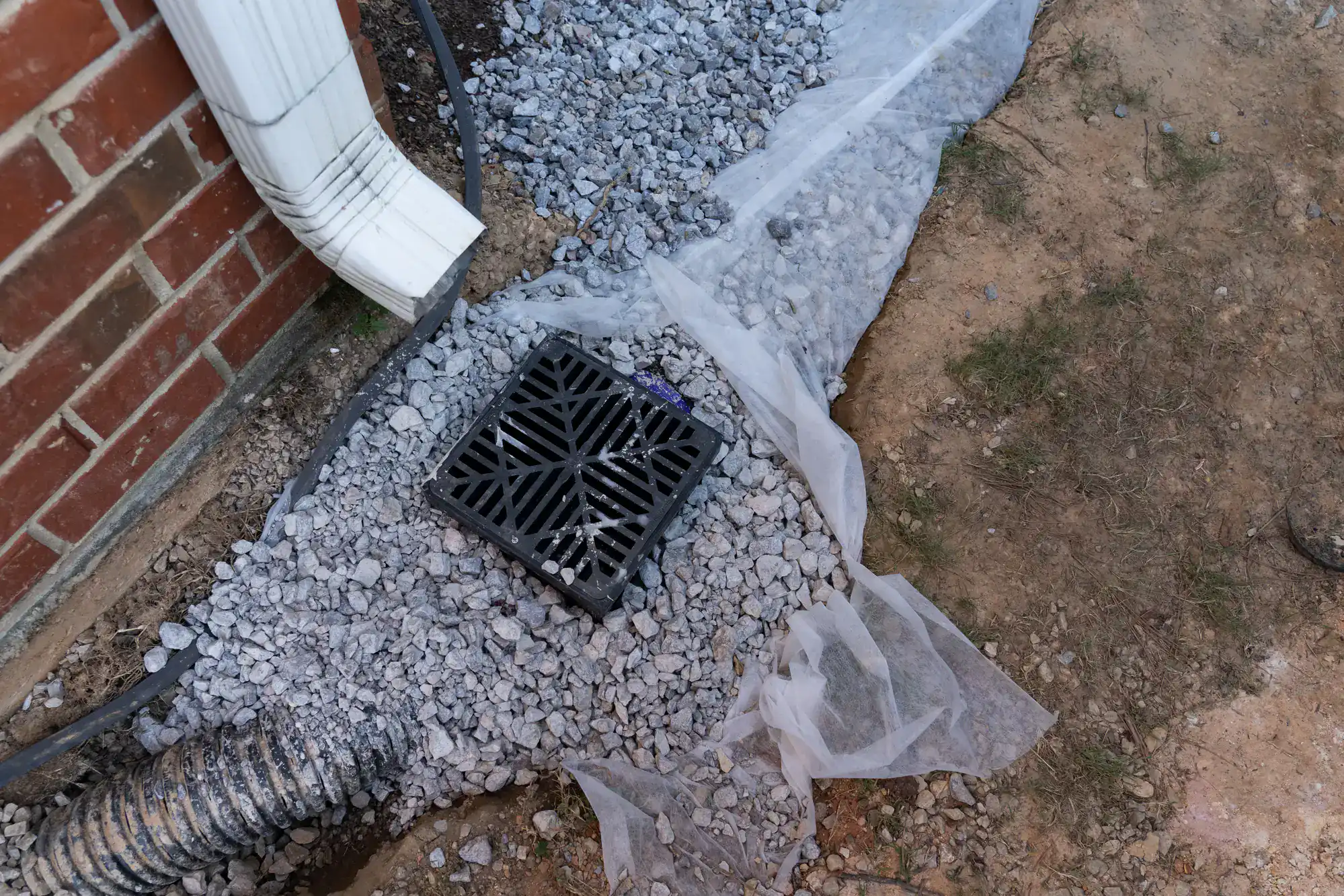
Beyond the trench itself, a complete French drain installation in Wading River often includes catch basins in areas where surface water accumulates fast, proper downspout routing that ties into the system without overloading it, and an outlet point that’s designed to discharge safely away from neighboring properties and away from any DEC-regulated wetland areas. The Wading River Marsh Preserve sits within the hamlet, and properties near that corridor require careful outlet siting.
What you get is a system designed to last 30 to 40 years. Suffolk County has experienced 35 declared natural disasters nearly double the national average including 12 hurricanes and 9 recorded flood events. A drainage system in this hamlet needs to be built for the conditions that actually exist here, not for a mild climate somewhere else.
It depends on where your property sits and what the project involves. Wading River is split between two town jurisdictions the Town of Riverhead and the Town of Brookhaven and each has its own building department, permit process, and stormwater management requirements. Most standard residential French drain installations don’t require a full building permit, but projects that involve significant soil disturbance, discharge routing, or proximity to regulated wetland areas can trigger additional review.
Properties near the Wading River Marsh Preserve, the tidal creek, or any DEC-regulated wetland may fall within a 100-foot setback zone where New York State DEC review is required before work begins. Brookhaven also operates under NYSDEC SPDES Phase II stormwater requirements, which adds documentation standards for certain projects. Before any excavation, New York State law requires calling 811 to have underground utilities marked that’s handled as part of every installation we do. We identify your jurisdiction, assess the permit requirements specific to your address, and manage the process from there.
Most residential French drain installations in the Wading River area fall between $5,000 and $12,000, with the average project landing around $7,000 to $9,500 depending on scope. The variables that drive cost are linear footage, system depth, whether the project includes catch basins or downspout tie-ins, site access, and how complex the outlet routing needs to be. Properties on rolling terrain which is common on Wading River’s glacial moraine sometimes require longer curtain drain runs to intercept upslope groundwater effectively, which adds to the overall footage.
The more useful number to hold in mind is what deferred drainage costs. Foundation crack repair in this region runs $15,000 to $50,000. Mold remediation starts at $3,000 and climbs fast. And in a market where homes are selling for $560,000 to $695,000, a documented drainage problem at closing can cost far more in price reductions than the system itself. We provide a specific written estimate after the on-site assessment not a range pulled from a website.
Depth depends on two things: what you’re trying to protect and what the frost line is in your area. On Long Island’s North Shore including Wading River the frost depth is generally considered to be 36 to 48 inches. A French drain pipe installed shallower than that is at real risk of freezing and cracking during a hard winter, which can compromise the entire system without any visible warning signs until the wet yard or basement returns.
For foundation perimeter drains, the pipe typically needs to sit at or below the footing level to intercept water before it builds pressure against the wall. For yard drainage and curtain drains on sloped lots, depth is determined by where the water is moving in the soil profile which in Wading River often means accounting for the clay horizon that sits beneath the upper sandy layer. That clay layer acts as a barrier, and the drain needs to be positioned above it to capture perched water before it migrates laterally. We assess soil depth and composition during the site visit to determine the right installation depth for your specific property.
A curtain drain is a French drain installed upslope of a structure across the path of moving groundwater rather than along the foundation perimeter. Its job is to intercept water before it reaches the house, not after it’s already arrived. If your property sits at the bottom of a slope, or if you have a hillside lot where water visibly runs toward the foundation during and after rain events, a curtain drain is often the right primary solution.
Wading River’s glacial moraine topography creates meaningful elevation variation across the hamlet. Properties near Wildwood State Park, along the higher terrain off Hulse Landing Road, or on lots that slope toward a lower-lying neighbor are exactly the type of sites where a curtain drain makes sense. A standard perimeter drain alone won’t stop water that’s moving downhill through the soil it just catches what’s already arrived. Intercepting it upslope is more effective and usually more cost-efficient than trying to manage it at the foundation wall. We identify which approach or combination of approaches fits your specific lot during the assessment.
A properly installed French drain system lasts 30 to 40 years. The factors that shorten that lifespan are almost always installation shortcuts: corrugated pipe that collapses under soil pressure, insufficient or wrong-grade geotextile fabric that allows fine soil particles to infiltrate the gravel bed, inadequate slope that causes water to pool in the pipe instead of draining, and shallow installation depth that exposes the pipe to freeze-thaw damage.
In Wading River specifically, the clay-rich soil horizons present in much of the hamlet’s glacial till profile make fabric selection especially consequential. Clay particles are fine enough to work through low-grade filter fabric over time, gradually filling the gravel bed and reducing drainage capacity usually within five to ten years on a poorly installed system. Double-punched geotextile fabric rated for clay-heavy soil is the correct specification here, not the single-layer material that gets used on budget installations. The difference in material cost is small. The difference in system lifespan is significant. We use the right materials on every installation because a system that fails in eight years isn’t actually a solution.
Yes, but it requires careful planning and, in some cases, permits that wouldn’t apply to an inland property. The Wading River Marsh Preserve 104 acres of protected tidal marsh managed by The Nature Conservancy and the tidal creek that flows westward into Long Island Sound are both regulated under New York State DEC Tidal Wetlands jurisdiction. Properties within 300 feet of tidal wetlands may require a DEC Tidal Wetlands permit before any drainage work begins, and properties within the 100-foot adjacent area face stricter review.
The practical implications for drainage design near these areas are real. Outlet placement is the most critical variable you cannot discharge French drain water in a direction that impacts a regulated wetland or tidal area. The outlet point needs to be sited carefully, often routed to a municipal catch basin, a dry well, or a defined discharge location that meets both town and DEC standards. For homeowners near Creek Road, Sound Road, or the marsh corridor, this isn’t a bureaucratic detail it’s the difference between an installation that holds up to scrutiny and one that creates liability. We assess setback distances, identify the applicable permits for your specific address, and design the outlet routing before any work begins.