Hear from Our Customers
Most drainage problems in East Farmingdale don’t start where they look like they start. You see standing water in the backyard or a soggy lawn that takes three days to dry out, and you assume it’s a rain volume issue. Sometimes it is. But in this community, the more common culprit is a combination of things working against you at once South Shore sandy soil that normally drains well, a shallow groundwater table that rises and cuts off that drainage from below, and commercial impervious surfaces nearby that push runoff volumes well beyond what your property was designed to handle.
When a drainage system is designed correctly for these conditions, the difference is immediate and lasting. Water moves off your property the way it’s supposed to. Your lawn stays healthy. Your foundation isn’t absorbing moisture it shouldn’t be. And if you’re in the Half Hollow Hills school district portion of East Farmingdale, where home values are regularly reaching $800,000 and above, you’re protecting equity that took years to build.
The August 2024 Suffolk County flooding severe enough to prompt a gubernatorial disaster emergency declaration was a reminder that East Farmingdale doesn’t get to sit out major storm events. A properly installed drainage system doesn’t just handle the light stuff. It’s sized for the worst conditions this region actually sees.
We’re a landscape drainage contractor not a plumber. That distinction matters more than it sounds. If you’ve already called a plumber and been told there’s nothing wrong with your pipes, you weren’t calling the wrong company because they were bad at their job. You were calling the wrong type of company. Pipe problems and land drainage problems are different, and they require different expertise entirely.
We work specifically in the landscape and earthworks space, which means we look at how water moves across and through your property not just what’s happening inside a pipe. We assess grading, soil conditions, existing drainage infrastructure, and where your water is actually coming from before we recommend anything. For East Farmingdale homeowners, that often means accounting for the groundwater dynamics unique to the South Shore and the runoff pressures created by the Route 110 corridor and Republic Airport nearby.
Every project we take on starts with a thorough site assessment, a clear written quote, and a scope of work you understand before we start digging.
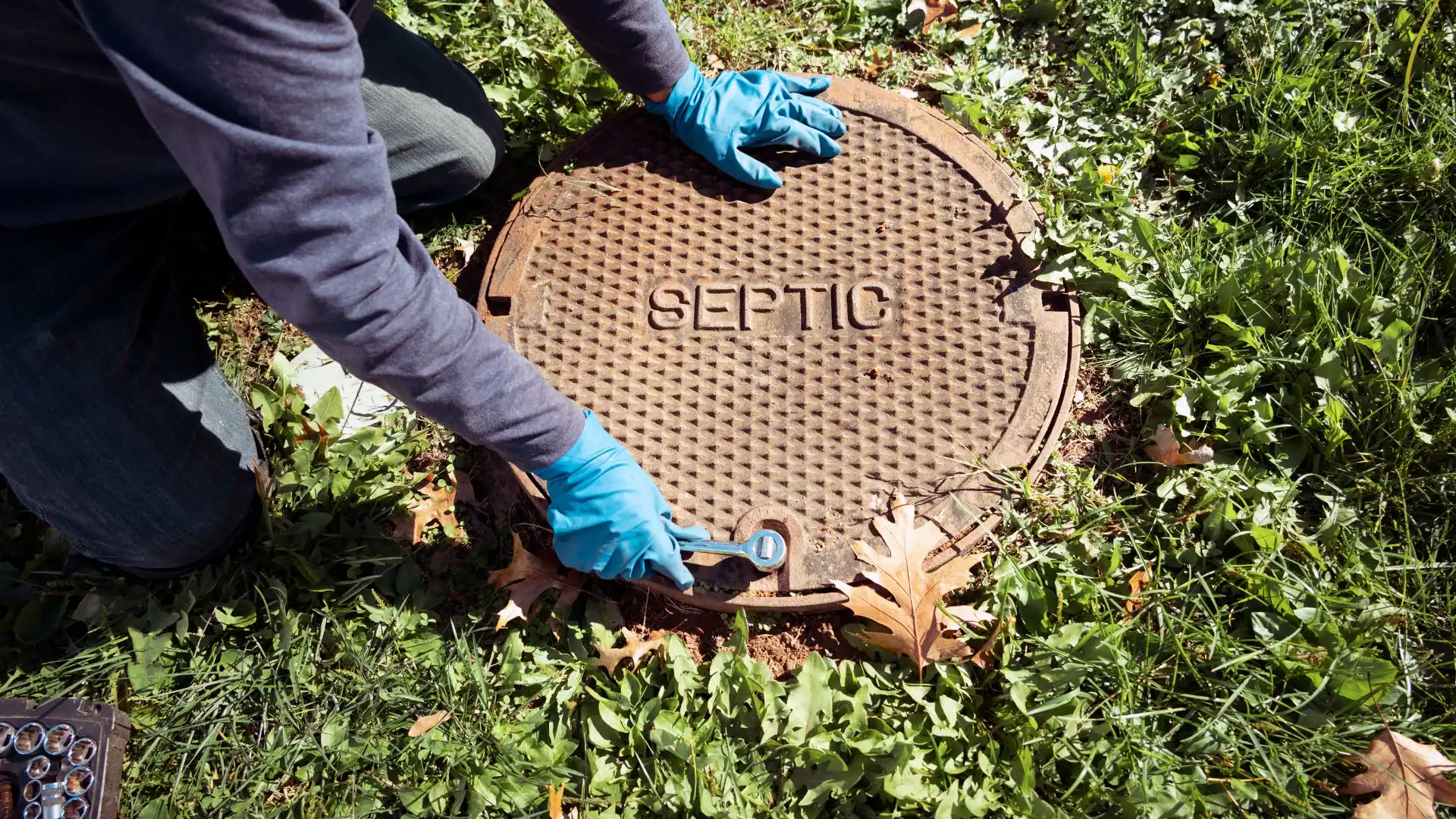
It starts with a site assessment. We walk your property, trace the water’s path, identify where it’s entering, where it’s pooling, and what’s preventing it from moving. In East Farmingdale, this step is especially important because the source of the problem isn’t always obvious a yard that floods may be receiving runoff from a neighboring commercial property, or it may be dealing with a rising water table that’s saturating the soil from below rather than above. We don’t skip this step or rush it.
Once we understand the full picture, we design a system appropriate for your specific conditions. That might be a French drain, a catch basin, a trench drain along a driveway, regrading to redirect surface flow, or a combination of several approaches. We also handle any required Town of Babylon permits before work begins including sewer excavation permits if excavation will be near sewer infrastructure, which is a requirement many homeowners don’t know exists until after unpermitted work has already been done.
Installation is clean and methodical. When the system is in, we backfill, restore the lawn and landscaping, and walk you through what was installed and how it works. You shouldn’t be left guessing. The best time to schedule in East Farmingdale is late spring or early fall before nor’easter season hits and while the ground is workable.
Ready to get started?
The drainage systems we install in East Farmingdale are designed around what this community actually deals with not what works in Huntington or Smithtown. South Shore sandy soils behave differently than the clay-heavy or rocky soils you find on the North Shore. The groundwater table here sits close to the surface, which means a drywell that works fine in October can fail completely in March when seasonal saturation pushes water back up. We account for that when we size and position every component.
Depending on what your property needs, our work can include French drain installation, catch basin and channel drain systems, dry creek beds that manage surface flow while blending into the landscape, yard regrading to correct pitch problems, and drywell replacement for aging systems from the post-war era that have silted up or collapsed after 50 to 70 years of use. Many East Farmingdale homes were built between the 1940s and 1960s original drainage infrastructure from that period is often long past its useful life, even if it wasn’t causing obvious problems until recently.
We also work with homeowners near the Route 110 corridor and the Republic Airport perimeter who are dealing with commercial-scale runoff volumes. Those properties need systems designed for higher inflow not the same solution we’d install on a quiet residential lot with no commercial neighbors.
The most common reason is that the water table beneath your yard is already elevated before the rain even starts. East Farmingdale sits on Long Island’s South Shore, where the underlying soil is predominantly sandy glacial outwash the kind of soil that normally drains well. The problem is that the South Shore aquifer sits close to the surface, and after a period of sustained rainfall, that groundwater table rises. When it does, there’s nowhere for surface water to drain because the soil below is already saturated.
This is different from a clay-soil drainage problem, and it requires a different solution. Installing a standard drywell without accounting for the seasonal high water table is one of the most common reasons drainage systems fail in East Farmingdale they work in dry conditions and fail exactly when you need them most. A properly designed system for this area accounts for where the water table sits at its peak, not just its average.
A plumber works on pipes clearing blockages, repairing sewer lines, fixing broken connections inside or beneath your home. If your drain is clogged or a pipe has cracked, that’s the right call. But if your yard floods after rain, water pools near your foundation, or your lawn stays soggy for days, that’s a land and grading problem not a pipe problem. A plumber can’t fix it because there’s nothing broken inside a pipe. The issue is how water is moving across and through your property.
We look at grading, soil conditions, surface water flow, existing drainage infrastructure, and where the water is actually coming from. We design and install systems that redirect water away from your home and off your property. If you’ve already had a plumber out and been told everything looks fine, that’s not a dead end. It just means you now know it’s a landscape drainage issue, and that’s exactly what we handle.
Depending on the scope of the work, yes. Any excavation near sewer infrastructure within the Town of Babylon requires a Sewer Excavation Permit, which must be signed by the Town’s Commissioner of Public Works, the contractor, and the homeowner. It’s a straightforward process if you know it exists but homeowners who hire contractors unfamiliar with Babylon’s requirements often find out after the fact that work was done without the necessary permits, which can create real problems if you ever sell the home or need to pull a future permit.
For larger projects involving significant grading or drainage modifications, the Town of Babylon’s Engineering Division may also require a site plan review. We handle the permitting process as part of every project. You don’t have to research what’s required or chase down the right office we manage that so the work is done right and on the record from the start.
Most residential drainage projects in the Suffolk County market fall somewhere between $3,000 and $10,000, depending on what the property actually needs. A straightforward French drain installation on a smaller lot sits toward the lower end of that range. A more involved system catch basins, channel drains, regrading, and drywell replacement combined can move higher, especially on properties that are receiving runoff from neighboring commercial surfaces, which is a real factor for some East Farmingdale homeowners near Route 110 or the airport perimeter.
What’s worth keeping in mind is what the alternative costs. Water damage repairs average over $13,000 per insurance claim nationally, and foundation work resulting from chronic water intrusion can run $23,000 to $48,000. On a home worth $700,000 to $800,000 which is a realistic range in parts of East Farmingdale right now a properly installed drainage system is a straightforward investment in protecting what you already own. We provide written quotes with full scope detail before any work begins, so you know exactly what you’re paying for.
That depends heavily on how the system is designed and sized. The August 2024 storm that triggered a Suffolk County disaster emergency declaration was a record rainfall event and systems that were undersized or poorly designed for peak conditions failed during it. A French drain that handles a typical nor’easter might be completely overwhelmed by a storm of that magnitude if it wasn’t engineered with adequate capacity.
When we design a drainage system, we size it for the worst conditions this region realistically sees not just average rainfall. That means calculating inflow volumes, discharge capacity, and what happens when multiple inputs are maxed out at the same time. For East Farmingdale properties that sit near commercial impervious surfaces, this is especially important because the runoff volume hitting your yard during a major storm isn’t just from your own property. A system designed only for your lot’s rainfall will fail when it’s also receiving commercial overflow. We account for that in the design.
This is one of the most common questions we hear from homeowners in established East Farmingdale neighborhoods, and the answer almost always comes down to aging infrastructure. Most homes in this community were built between the late 1940s and the 1960s and the drywells, grading, and drainage systems installed during that era are now 60 to 80 years old. Drywells from that period have typically silted up completely, meaning they no longer absorb water. They just fill up and sit there.
At the same time, decades of landscaping changes, pool installations, additions, and simple soil settlement can gradually shift the grading of a property redirecting water toward a foundation instead of away from it. These changes happen slowly enough that you don’t notice them year to year, but the cumulative effect can be significant. A property that managed water well for three decades can develop serious drainage problems as infrastructure ages and grading shifts. The fix usually isn’t complicated once the cause is identified but identifying it correctly is the part that matters most.