
Hear from Our Customers
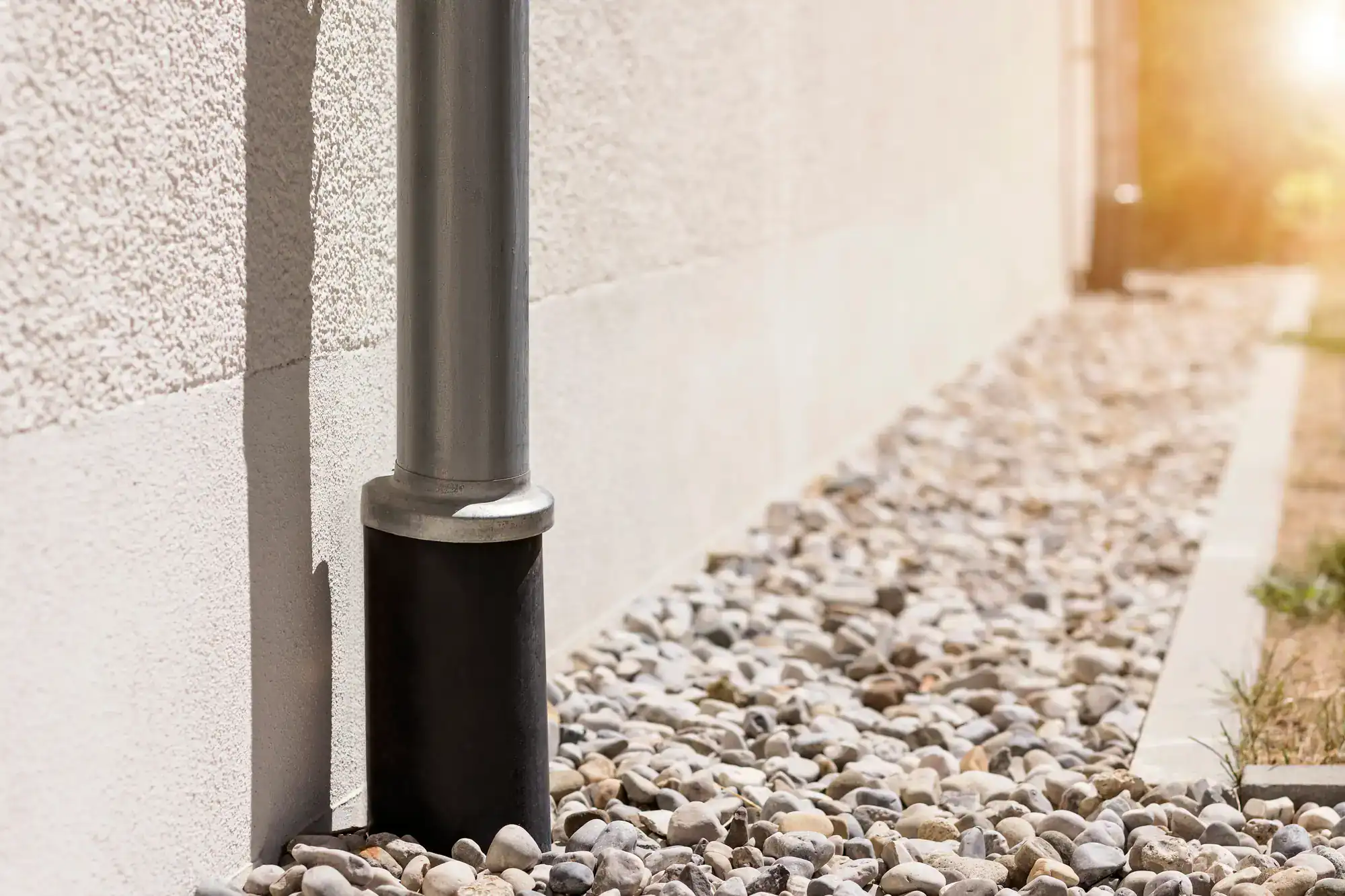
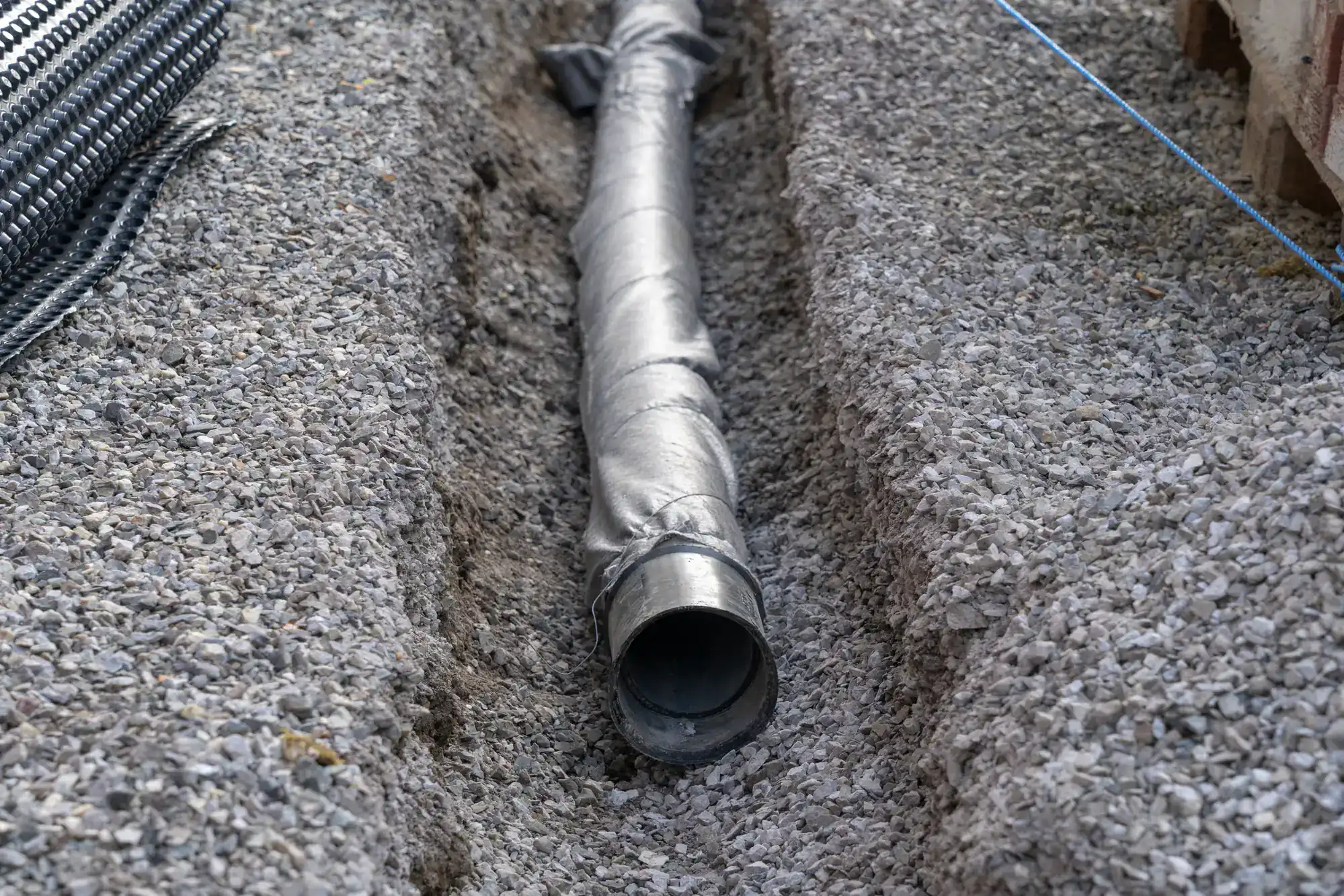
Bay Shore homeowners deal with something inland Suffolk County towns simply don’t a water table that sits close to the surface year-round, influenced by the Great South Bay just to the south. When it rains, that groundwater rises fast. It pushes against your foundation, saturates your yard, and finds every weak point your home has. A properly installed French drain system intercepts that water before it gets there, routing it away through perforated pipe, washed angular gravel, and geotextile filter fabric to a defined outlet point.
The results are straightforward. Your basement stops taking on moisture. Your yard dries out within a day or two after a heavy rain instead of staying soggy for a week. You stop watching that corner of the foundation with a flashlight every spring. For homes in Baywood, along Montauk Highway, or anywhere south of Sunrise Highway where the ground sits lower and drainage is slower, that shift is significant.
There’s also the financial reality. Foundation crack repair on Long Island runs $15,000 to $50,000. Mold remediation starts at $3,000 and climbs fast in a coastal climate where humidity never really lets up. A French drain installation that solves the problem now is a fraction of either of those numbers and it protects a home that, in Bay Shore’s current market, is worth holding onto.
We work on Long Island. That means we understand what South Shore soil actually behaves like the sandy layers near the coast that move water sideways toward your foundation instead of straight down, the clay pockets that hold moisture against your walls, and the freeze-thaw cycles that destroy a shallow pipe installation by March.
We serve Bay Shore and the surrounding communities in the Town of Islip including West Bay Shore, Baywood, and the neighborhoods stretching north toward Brentwood. We know the Town of Islip’s stormwater requirements, Suffolk County’s rules on drainage discharge, and what it takes to get a system installed correctly in this specific drainage environment. That local knowledge isn’t a talking point it’s what separates a French drain that lasts 30 years from one that fails in three.
When you reach out, you’re talking to people who have worked this ground in Bay Shore and the surrounding area, not a call center routing your job to whoever’s available.
It starts with a free on-site assessment. There’s no way to design a French drain system for a Bay Shore property over the phone your soil composition, yard slope, foundation type, and proximity to the water table all affect what the right system looks like. We come out, walk the property, identify where the water is coming from and where it needs to go, and give you a clear scope of work before anything else happens.
Once you’re ready to move forward, we handle the 811 utility marking call required by New York State law before any excavation and manage any permit requirements through the Town of Islip. We excavate the trench at the correct depth for Long Island’s frost line, which sits around 36 inches. Pipes buried too shallow freeze, expand, and crack before your first winter is out. We line the trench with geotextile filter fabric, bed the perforated pipe in washed angular gravel, wrap it properly, and backfill with clean material. Your lawn gets restored when we’re done topsoil and seed or sod matched to what was there.
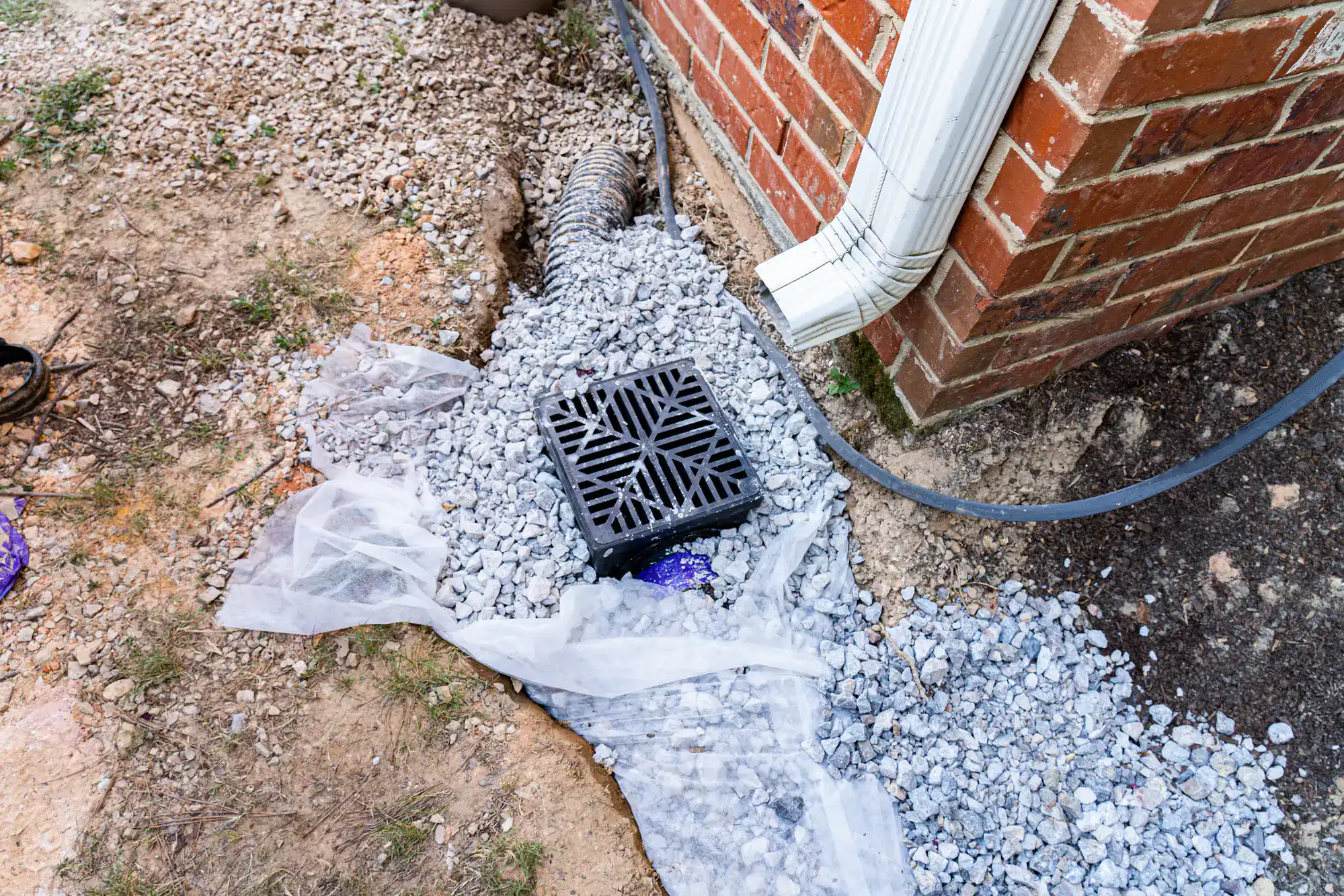
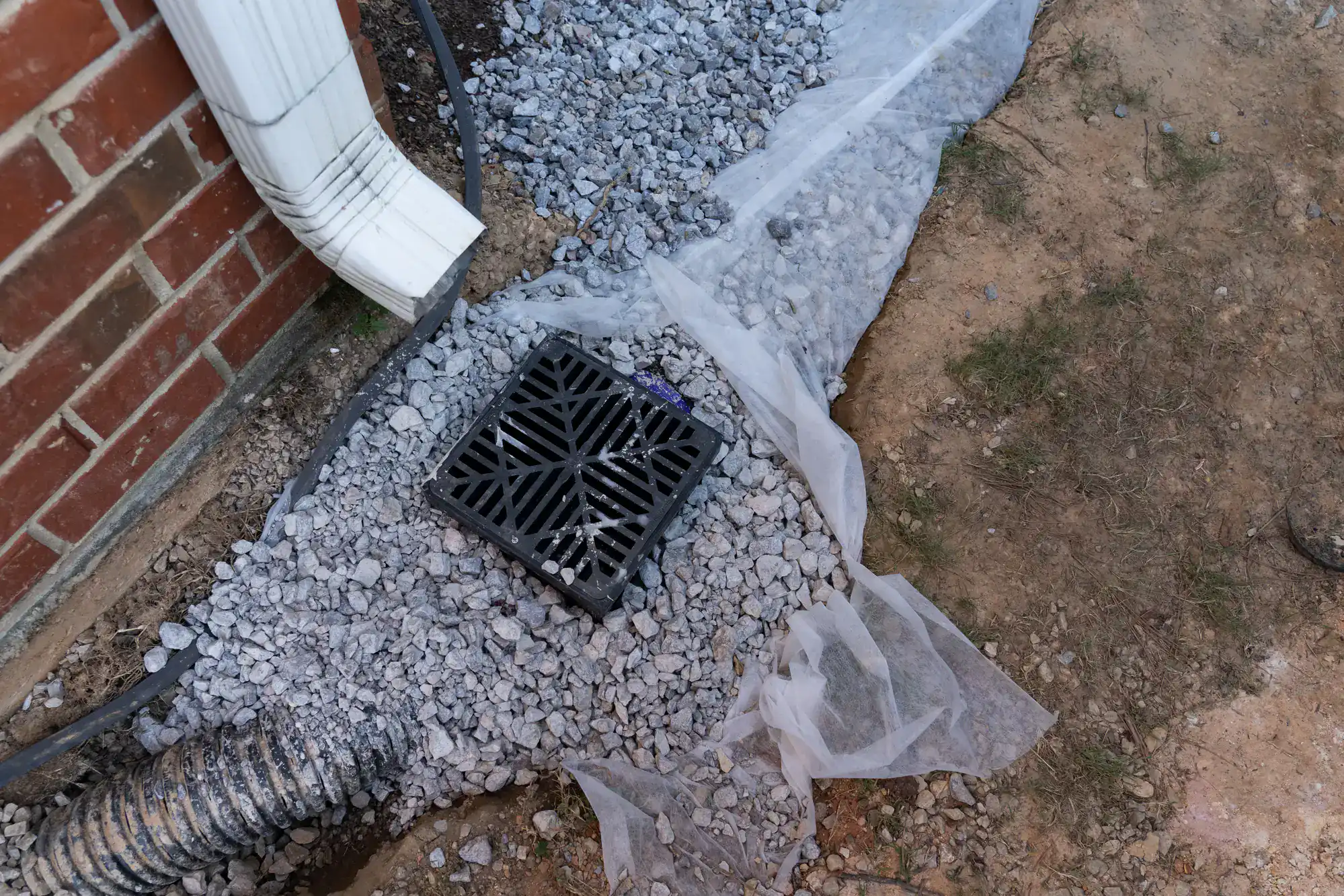
The outlet point is routed to an appropriate discharge location a daylight outlet, a dry well, or an approved stormwater structure. Suffolk County Code prohibits drainage discharge into the sewer system, and we make sure every installation is compliant from the start.
Ready to get started?
Not every French drain is the same, and in Bay Shore, the margin for cutting corners is zero. The homes here ranches, capes, colonials, and split-levels, most of them built between the 1940s and 1970s were never designed with today’s storm loads or current drainage standards in mind. What passed for adequate drainage in 1965 is not adequate now, especially for properties south of Sunrise Highway where the ground is lower and the bay’s influence on the water table is most pronounced.
Every French drain installation we complete uses perforated PVC or SDR pipe specified for the application, double-punched geotextile filter fabric wrapping the full gravel bed, and washed angular gravel at the correct depth and width. These aren’t upgrades they’re the baseline for a system that actually holds up. We don’t use corrugated garden tubing that collapses within a few seasons, and we don’t skip the fabric because it saves time. Those are the shortcuts that explain why so many Bay Shore homeowners are replacing a system that was installed by someone else.
For properties near the Great South Bay or within the Town of Islip’s wetland buffer areas, additional site review may be required before installation. We identify those conditions during the initial assessment and walk you through what’s needed. No surprises after the fact.
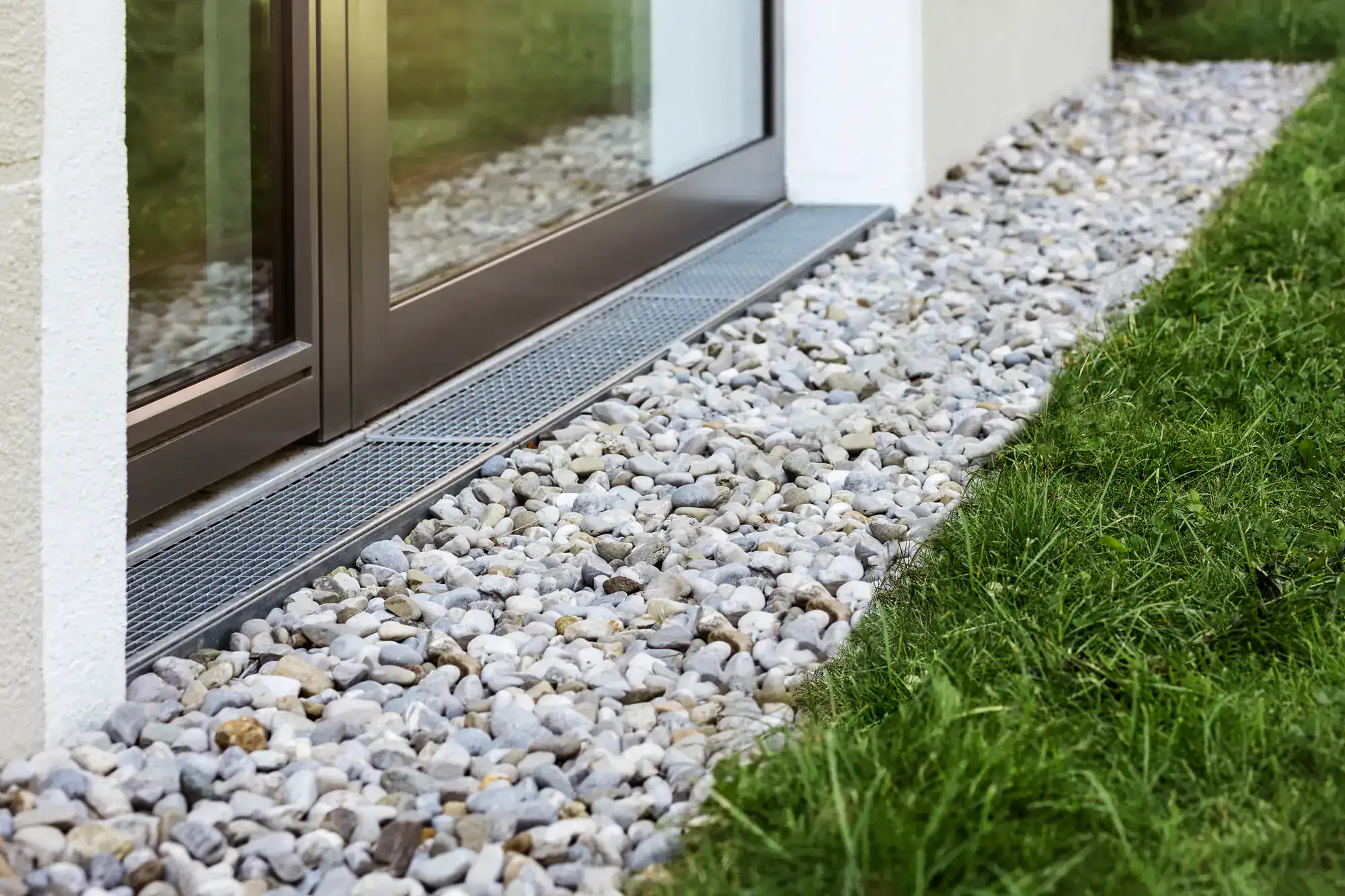
Yes and in some ways, Bay Shore’s sandy soil makes a French drain more effective, not less. Sandy soil allows water to move laterally through the ground relatively easily, which means a properly positioned French drain can intercept that moving water before it reaches your foundation or pools in low areas of your yard. The system works by creating a preferential path water follows the gravel bed and perforated pipe instead of continuing toward your home.
The complication in Bay Shore is that sandy soils often exist alongside clay pockets, which behave completely differently. Clay holds moisture against foundation walls and doesn’t release it quickly. A French drain designed without accounting for both soil types won’t perform the way it should. That’s why a site-specific assessment matters here the system needs to be designed around what’s actually in your ground, not a generic template.
Most residential French drain installations in Bay Shore fall between $5,000 and $12,000. The range is wide because the scope varies significantly a simple yard drainage system with a short run and an easy outlet point costs less than a foundation-adjacent system that requires deeper excavation, more linear footage, and a more complex discharge solution.
In Bay Shore specifically, a few factors can affect the final number. Properties south of Sunrise Highway or near the Great South Bay may have higher groundwater conditions that require a more robust system. Homes with older, degraded drainage infrastructure may need existing pipe removed before new installation. And any property that falls within or near a Town of Islip wetland buffer area may require additional permitting, which adds time and cost. The only way to give you an accurate number is to see the property which is why we start with a free on-site assessment.
A correctly installed French drain won’t freeze but a shallow one will. Long Island’s frost depth is approximately 36 inches, which means any pipe buried less than that is at risk of freezing during a hard winter. When a pipe freezes, it expands. That expansion cracks the pipe, shifts the gravel bed, and can compromise the filter fabric. By spring, when you need the system most after snowmelt and April rains, it’s already damaged.
This is one of the most common failure points we see in Bay Shore systems installed by generalist contractors or landscapers who didn’t account for Long Island’s freeze-thaw cycle. The fix isn’t complicated, but it requires knowing the local frost depth and specifying materials accordingly. Every exterior French drain we install in Bay Shore is buried at a depth appropriate for this climate, using pipe and fabric rated for cold-weather performance. The system works in March because it was built for March.
It depends on the scope of the project and where your property sits. Bay Shore falls under the Town of Islip’s jurisdiction for building permits and stormwater management. Drainage work that involves significant excavation, alters the flow of surface water, or occurs near a watercourse or wetland area may require a permit from the Town of Islip Building Division. Properties close to the Great South Bay particularly those south of Montauk Highway are more likely to fall within or adjacent to regulated wetland buffer areas, which triggers additional review.
Separately, New York State requires an 811 utility marking call before any excavation, regardless of project size. That’s not optional it’s the law. Suffolk County Code also has clear rules about where drainage can be discharged: it cannot go into the county sewer system. Outlet points must be directed to a daylight outlet, dry well, or approved stormwater structure. We handle all of this as part of every installation the 811 call, the permit research, and the compliant outlet design. You don’t have to navigate Town of Islip requirements on your own.
For a typical residential French drain installation in Bay Shore, the actual installation work usually takes one to two days once everything is in place. A straightforward yard drainage system on a standard-sized South Shore lot the kind of ranch or colonial common throughout Baywood or the neighborhoods along Montauk Highway can often be completed in a single day. Larger or more complex projects, like foundation perimeter drains with multiple outlet points or systems that require deeper excavation near the water table, take longer.
The timeline before installation depends on a few things. The 811 utility marking call requires advance notice typically three business days in New York before excavation can begin. If your property requires a permit from the Town of Islip, that adds time depending on current processing loads. We walk you through the realistic timeline during the assessment so you know what to expect before the project starts. Most Bay Shore homeowners are looking at one to two weeks from assessment to completed installation under normal conditions.
A French drain is one of the most effective tools available for managing the groundwater and subsurface water accumulation that follows major storm events and in Bay Shore, that matters. The Great South Bay’s proximity means that during significant storms, water doesn’t just fall from the sky. Tidal influence can push back against street drainage outfalls, groundwater rises quickly as the water table is already close to the surface, and the combination of surface runoff and subsurface pressure hits Bay Shore properties from multiple directions at once.
What a French drain does is intercept subsurface water before it reaches your foundation and redirect surface water away from low-lying areas in your yard. It won’t stop a storm surge nothing residential does but it significantly reduces the groundwater pressure and yard saturation that follows any major rain event. For Bay Shore homeowners who want to manage what they can control, a properly engineered French drain system is a practical, durable step in the right direction. It won’t eliminate flood risk, but it addresses the chronic drainage conditions that make every storm harder on your property than it needs to be.