
Hear from Our Customers
Most Brentwood homes were built in the 1950s and 60s before modern drainage standards existed and before anyone accounted for how much the water table in central Suffolk County would rise as development expanded across the island. The original drainage systems in these homes, if there were any at all, are now 60 to 70 years old. Clay and concrete drain tiles from that era have a finite lifespan, and most of them have already reached it.
What that means for you is straightforward: when it rains, water has nowhere to go. Brentwood sits on the relatively flat central Long Island plain, so there’s no natural slope carrying runoff away from your foundation. The U.S. Geological Survey’s groundwater monitoring well right here in Brentwood well S1810, operated by the USGS in the Town of Islip documents a direct, measurable correlation between rainfall events and rising groundwater levels in this specific area. That rising water table pushes against your basement walls and foundation slab from below, not just from the sides. That’s hydrostatic pressure, and it’s the reason you see cracks, efflorescence, or moisture even when it hasn’t rained in a few days.
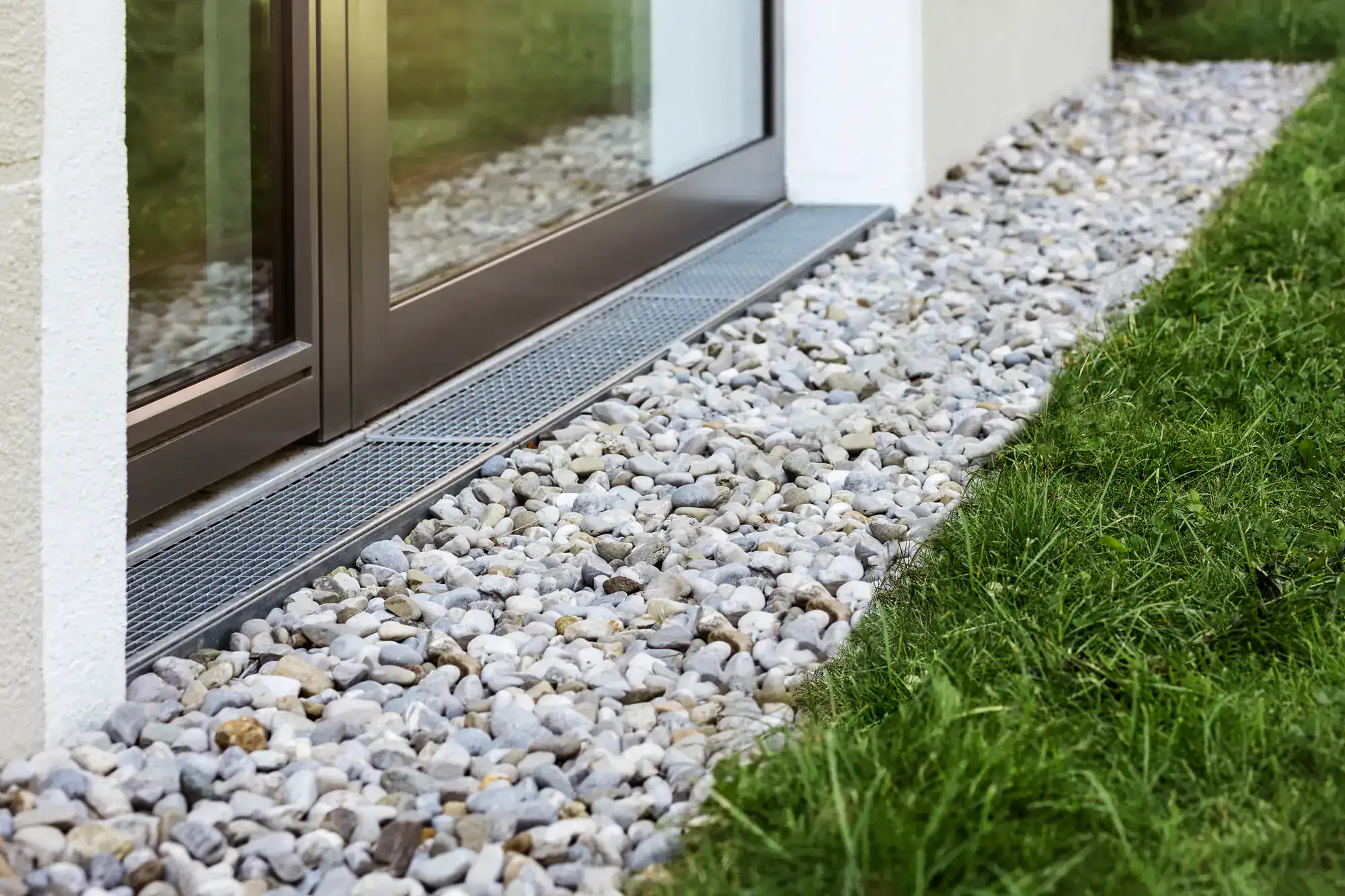
A properly installed French drain system changes that. We intercept groundwater before it reaches your foundation, create an engineered path for surface water on flat terrain, and relieve the pressure that causes long-term structural damage. The yard becomes usable again. The basement stays dry. And the foundation likely the most valuable structural asset in your home stops taking on the kind of slow, cumulative damage that turns into a $15,000 to $50,000 repair bill.
We’re a Long Island-based drainage contractor, and Brentwood is part of the core territory we work in. That matters because drainage isn’t a one-size-fits-all service. The soil conditions in central Suffolk County, the shallow groundwater table documented in the Town of Islip, and the post-war housing stock that defines neighborhoods throughout Brentwood all shape how a drainage system needs to be designed and installed. A contractor who doesn’t know this area will give you a generic solution to a specific problem.
We handle everything the on-site assessment, the system design, the Town of Islip permit process, the 811 utility marking that New York State law requires before any excavation, the installation, and the yard restoration when the work is done. You don’t manage any of that. We do.
Every installation comes with a workmanship warranty. If the system doesn’t perform the way it was designed to, we come back and make it right. That’s not a marketing line it’s how we stand behind the work.
It starts with a free on-site assessment. We come to your Brentwood property, walk the yard, look at the basement if water intrusion is part of the problem, and evaluate where water is entering, where it’s pooling, and why. That assessment drives everything the system design, the pipe routing, the outlet location, and the scope of work. You’ll know exactly what we’re recommending and why before any work is scheduled.
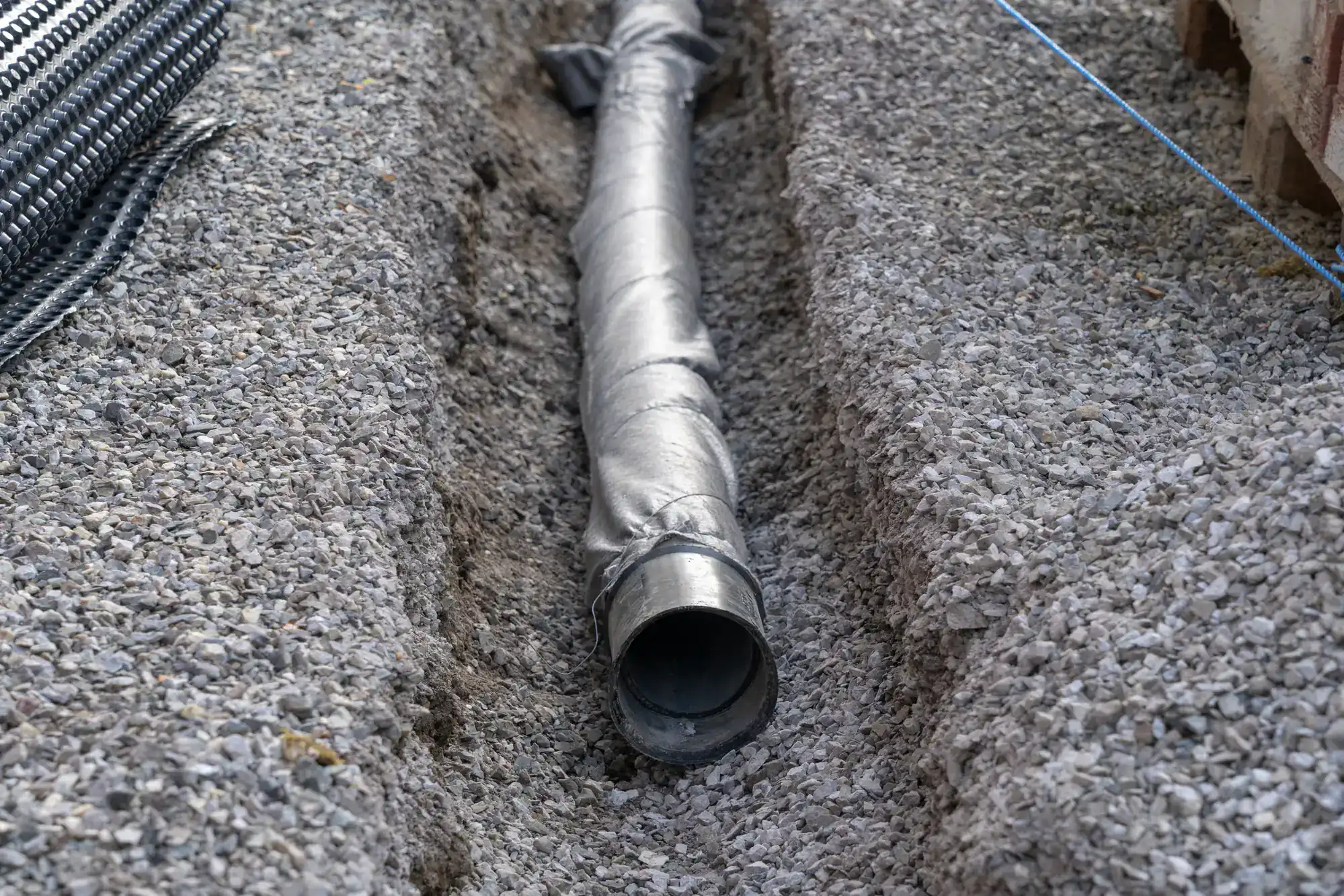
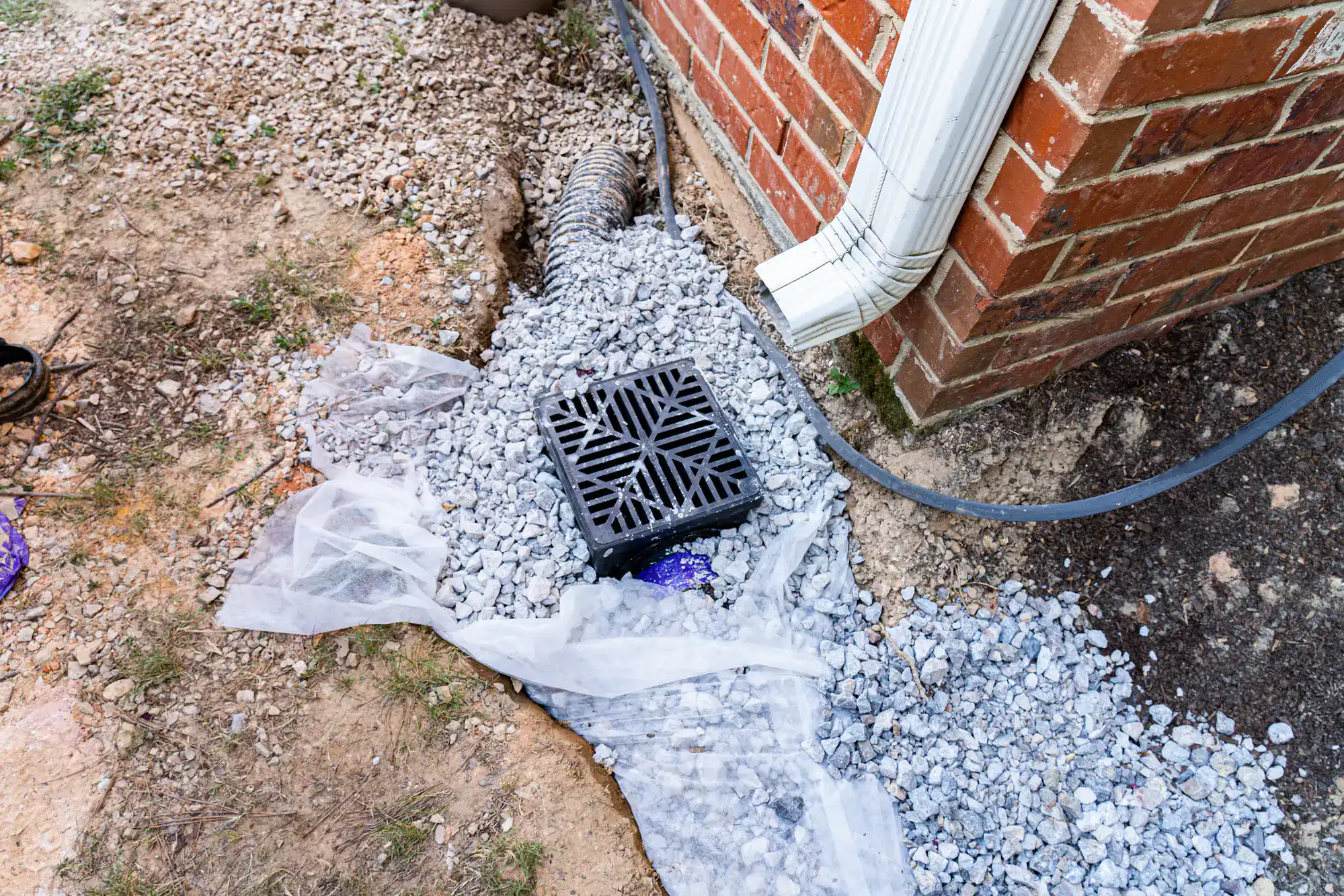
Once the plan is set, we handle the Town of Islip permit process if the scope requires it, and we call 811 before any digging starts that’s a legal requirement in New York State, not optional. We excavate a trench, typically 18 to 24 inches deep, lay a bed of washed angular gravel, install perforated pipe wrapped in geotextile fabric, backfill, and grade the surface back to match your yard. The slope is calculated not guessed. French drain systems require at least one inch of drop per eight to ten feet of pipe to function correctly, and getting that wrong is the single most common reason systems fail within a few years.
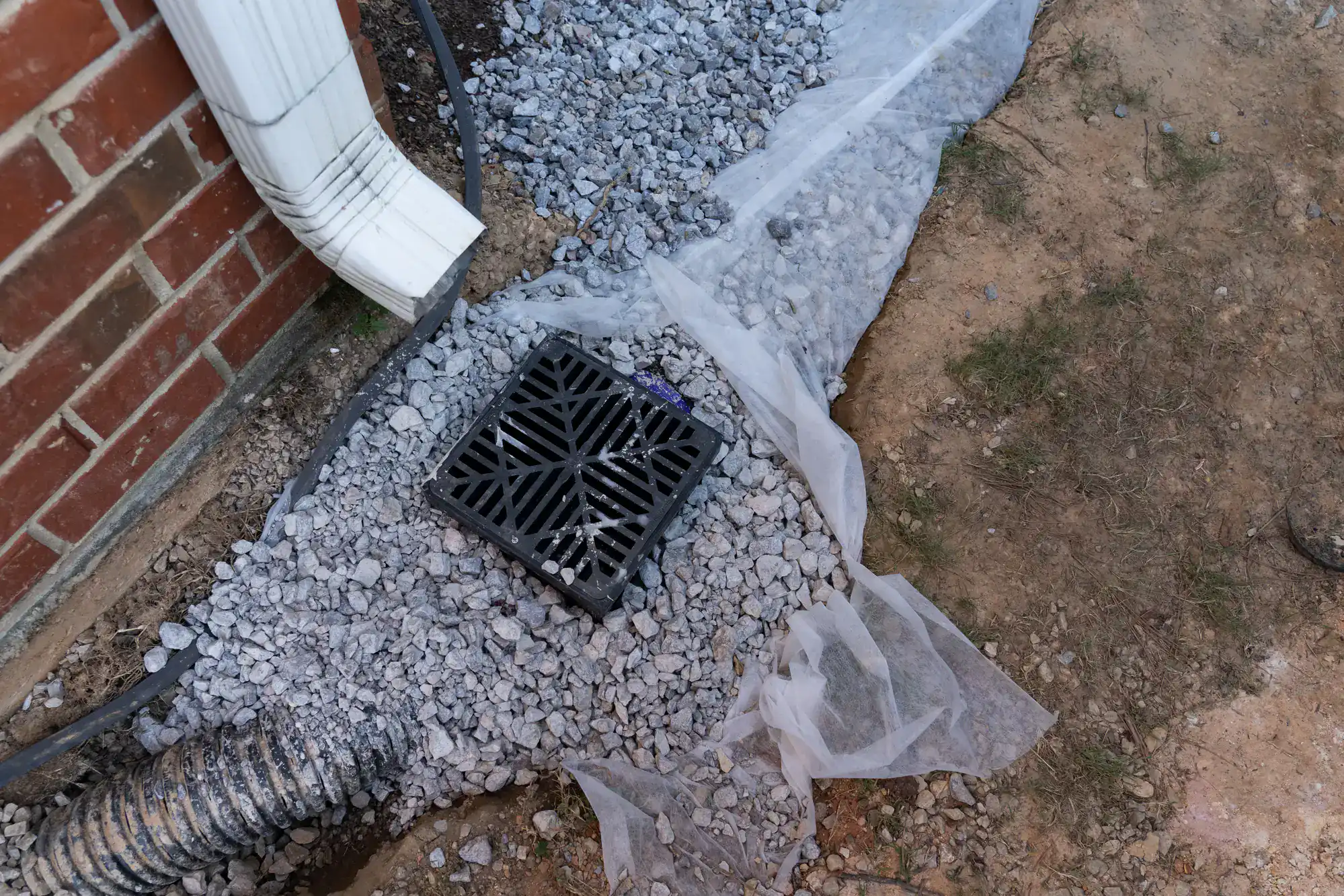
When the installation is complete, we restore the surface topsoil, seeding or sod to match what was there and clean up. Most homeowners are surprised by how minimal the visible disruption is once we’re done. The system is underground and invisible. What you’re left with is a yard that drains and a foundation that isn’t under constant pressure.
Ready to get started?
There’s a meaningful quality gap between a French drain installed by a drainage specialist and one installed by a landscaper or general contractor who adds drainage as a side job. The difference isn’t always visible on day one it shows up two or three years later when the system fails and you’re back to a wet basement and a soggy yard. The components matter: the pipe specification, the gravel void ratio, the geotextile fabric grade, the slope calculation, and the outlet design. Get any one of those wrong and the system underperforms or fails entirely.
For Brentwood properties, there are a few additional factors that shape how we design and install each system. The groundwater table in this part of Suffolk County is notably shallow, which means exterior French drains need to be engineered not just for surface runoff but for subsurface water management. Homes near the former Pilgrim State Hospital campus and throughout the denser residential corridors along Suffolk Avenue and Brentwood Road often have soil conditions that require a site-specific assessment before any pipe goes in the ground. We also account for Long Island’s freeze-thaw cycle pipe buried too shallow will freeze, crack, and fail. We install at the correct depth for the local frost line every time.
Whether you’re dealing with a yard that won’t drain, a basement that floods after every storm, or foundation walls showing early signs of water stress, the right system design starts with understanding your specific property. That’s what the free assessment is for and it costs you nothing to find out what you’re actually dealing with.
It depends on the scope of the work. The Town of Islip Building Division oversees permits for drainage work that alters the flow of surface or subsurface water on a residential property. For most standard French drain installations a perimeter drain around a foundation or a yard drainage system that outlets to a dry well on your own property a permit may or may not be required depending on the specifics. If the system connects to a municipal storm sewer or affects drainage patterns in a way that impacts neighboring properties, a permit is more likely to be required.
We handle all of that for you. We know the Town of Islip permit process, we know when a permit is needed and when it isn’t, and we take care of the application if it is. We also handle the 811 utility marking call before any excavation begins that’s required by New York State law regardless of permit status. You don’t need to figure out the municipal side of this. That’s our job.
Most residential French drain installations in the Brentwood area fall in the range of $5,000 to $9,000, depending on the linear footage of pipe required, the depth of the system, the outlet type, and site-specific conditions like soil composition and access. Per linear foot, professional installation typically runs $20 to $60. Larger systems or those requiring more complex outlet engineering will be on the higher end of that range.
The number that matters more, though, is the cost of not doing it. Foundation crack repair in the Long Island market runs $15,000 to $50,000 depending on severity. Mold remediation starts around $3,000 and escalates quickly once it spreads to framing or insulation. For a Brentwood homeowner with a median property value around $416,000 and real estate taxes running close to $9,000 a year, protecting that investment with a properly installed drainage system is one of the more straightforward financial decisions you can make. The free on-site assessment gives you a specific number for your property before you commit to anything.
The short answer is topography and geology specific to Brentwood. The town sits on the central Long Island plain relatively flat terrain with no natural slope to carry surface water away from your property quickly. When rain falls faster than the soil can absorb it, it pools and stays. But there’s a second factor that’s specific to this part of Suffolk County: the groundwater table here is shallow, and it rises measurably after significant rain events. The USGS monitors this directly through a groundwater well in Brentwood. When the table is already elevated from a previous storm, new rainfall has even less soil capacity to drain into.
For homes built in the 1950s and 60s which is most of Brentwood’s residential stock the original drainage infrastructure was minimal to nonexistent. There’s no engineered path for that water to follow. A French drain system creates that path: a sloped, gravel-filled trench with perforated pipe that intercepts subsurface water and routes it to a defined outlet before it saturates your lawn or pushes against your foundation. On flat terrain like Brentwood’s, that engineered slope is the only slope your yard has.
A properly installed French drain system correct pipe, correct fabric, correct gravel, correct slope has a realistic lifespan of 30 to 40 years. The systems that fail in five years or less almost always have one of a few common problems: pipe buried too shallow and damaged by the freeze-thaw cycle, geotextile fabric that was skipped or wrong for the soil type, insufficient slope that allows sediment to collect and clog the pipe over time, or a poorly defined outlet point that backs up during heavy rain.
On Long Island, the freeze-thaw cycle is a real factor. Suffolk County winters bring repeated freezing and thawing, and pipe that isn’t buried below the local frost depth will crack. Soil conditions in Brentwood vary some areas have sandy glacial outwash that drains relatively fast, others have pockets of clay-heavy soil that hold water and put more stress on the system. A site assessment before installation identifies which conditions you’re dealing with and informs the design accordingly. The goal is a system built for your specific property, not a standard template dropped into ground that may require something different.
They solve different parts of the same problem, and in some cases you do need both. A French drain is a passive system it intercepts groundwater and surface water before it reaches your foundation and routes it away through gravity. No power required, no moving parts, no maintenance beyond keeping the outlet clear. A sump pump is an active system it collects water that has already entered the basement or accumulated in a pit below the slab, and it pumps it out. If your basement is taking on water, a sump pump handles what’s already inside. A French drain reduces how much water is pushing against the foundation in the first place.
For many Brentwood homes especially those built in the 50s and 60s with no original drainage system a French drain installed on the exterior perimeter of the foundation is the first line of defense. It relieves hydrostatic pressure before water ever gets through the wall. A sump pump can be a useful backup, particularly during heavy storm events when the water table rises quickly. Whether you need one or both depends on the severity of your water intrusion and the specific conditions of your property, which is exactly what the free on-site assessment is designed to determine.
Yes if it’s properly sized for current conditions, not conditions from 40 years ago. New York State has documented a measurable increase in heavy precipitation events since the 1950s, and those trends are projected to continue. The storms hitting Brentwood today are more intense than what the original drainage infrastructure in this neighborhood was designed to handle. If your yard started flooding or your basement started taking on water in recent years without any obvious change to your property, the storms have likely just outpaced the infrastructure not the other way around.
A French drain system designed and installed today accounts for modern storm volumes. That means adequate pipe diameter, sufficient gravel capacity, a properly sized outlet, and a slope that moves water fast enough during high-intensity events. It also means designing for Brentwood’s specific groundwater conditions when the water table is already elevated from a prior storm and another one hits, the system needs enough capacity to handle both surface runoff and subsurface pressure simultaneously. That’s the kind of site-specific design that comes out of a proper assessment, and it’s the difference between a system that works in a light rain and one that holds up when it actually matters.