
Hear from Our Customers
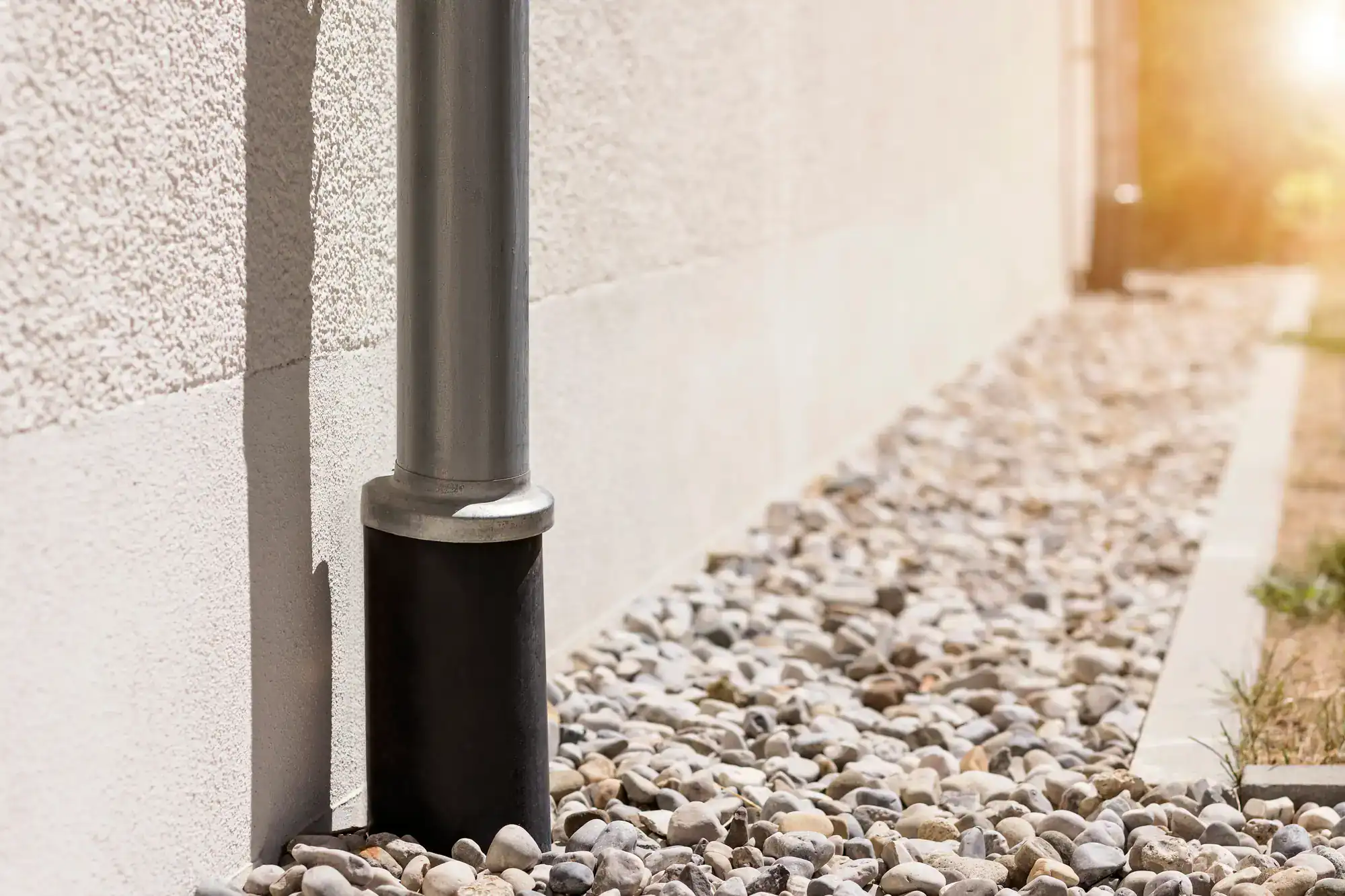
When drainage works the way it should, you stop watching the backyard turn into a swamp after every Nor’easter. You stop finding moisture along the basement wall in March. You stop wondering whether the soggy corner near the fence is slowly working against your foundation. That’s what a properly installed French drain system actually gives you not just drier ground, but real peace of mind about a home worth protecting.
For Brookhaven homeowners, that peace of mind carries a little more weight than it does in most places. The hamlet sits right where the lower Carmans River meets the Great South Bay, and that geography means your water table responds to more than just rain. Tidal events, storm surges, and the seasonal rise that comes with south shore living all affect how water moves through the ground beneath your property. A drainage system that doesn’t account for that will underperform and you’ll know it the next time a storm rolls through.
A significant share of homes in Brookhaven were built in the 1960s and 1970s, and many of them were never equipped with real drainage infrastructure. If your home is in that range, there’s a good chance the problem isn’t going to fix itself. What was a soggy corner five years ago becomes a foundation concern ten years from now. Resolving it now before it compounds is almost always the more straightforward and less expensive path.
We’re a residential drainage contractor serving homeowners across Suffolk County, including Brookhaven and surrounding south shore communities like Bellport and South Haven. We don’t treat every property the same, because they’re not. The soil near the Wertheim National Wildlife Refuge behaves differently than the upland lots further north. The drainage challenges along the Carmans River corridor are different from what you’d find in a higher-elevation inland community. We design around what’s actually happening on your specific property.
What that means in practice is a site assessment before anything else. We want to see where the water is coming from, where it’s going, and what’s already in the ground before we recommend anything. That’s not a formality it’s how you avoid spending money on the wrong solution. We handle everything from the initial assessment through permitting, installation, and full site restoration. When we leave, your yard looks like we were never there. The drainage system is the only thing that stays.
It starts with a free on-site assessment. We come out, walk the property, and look at where water is pooling, how the grade sits, what the soil is doing, and whether there’s any existing drainage infrastructure that’s worth keeping or needs to come out. For properties near the Carmans River or Beaver Dam Creek, we also factor in the Town of Brookhaven’s wetlands and stormwater management requirements including whether a permit is needed before any excavation begins. We handle all of that on your behalf.
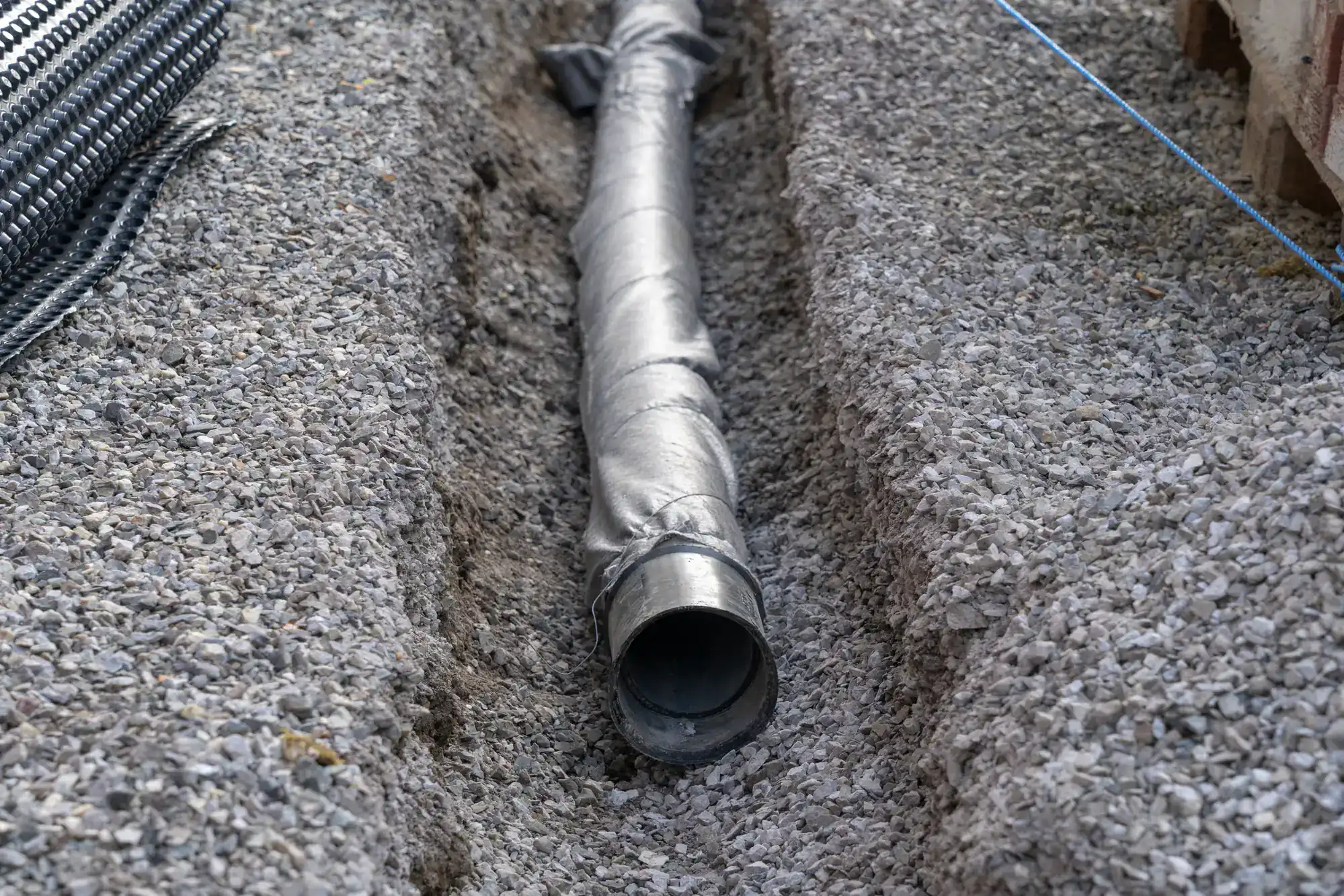
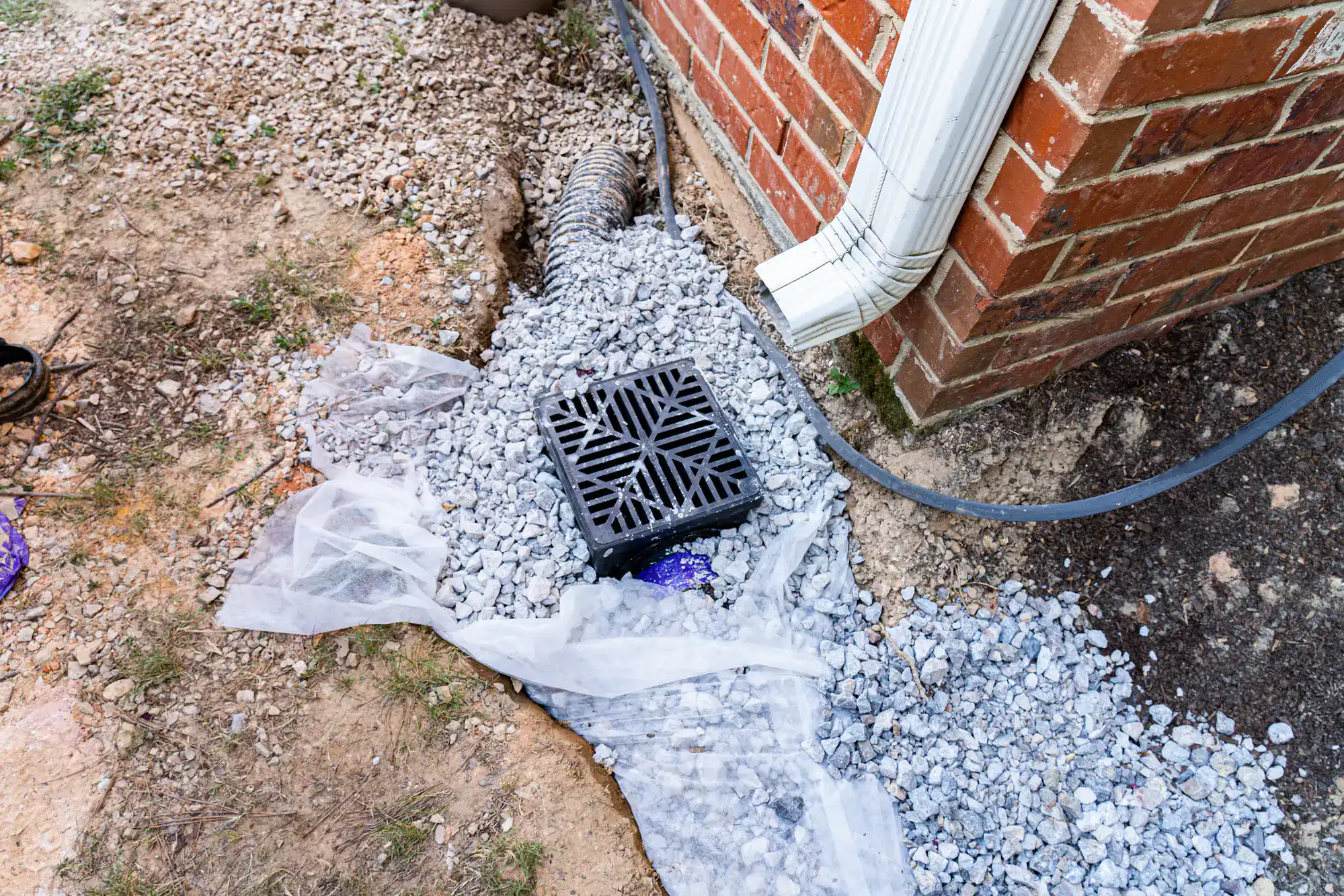
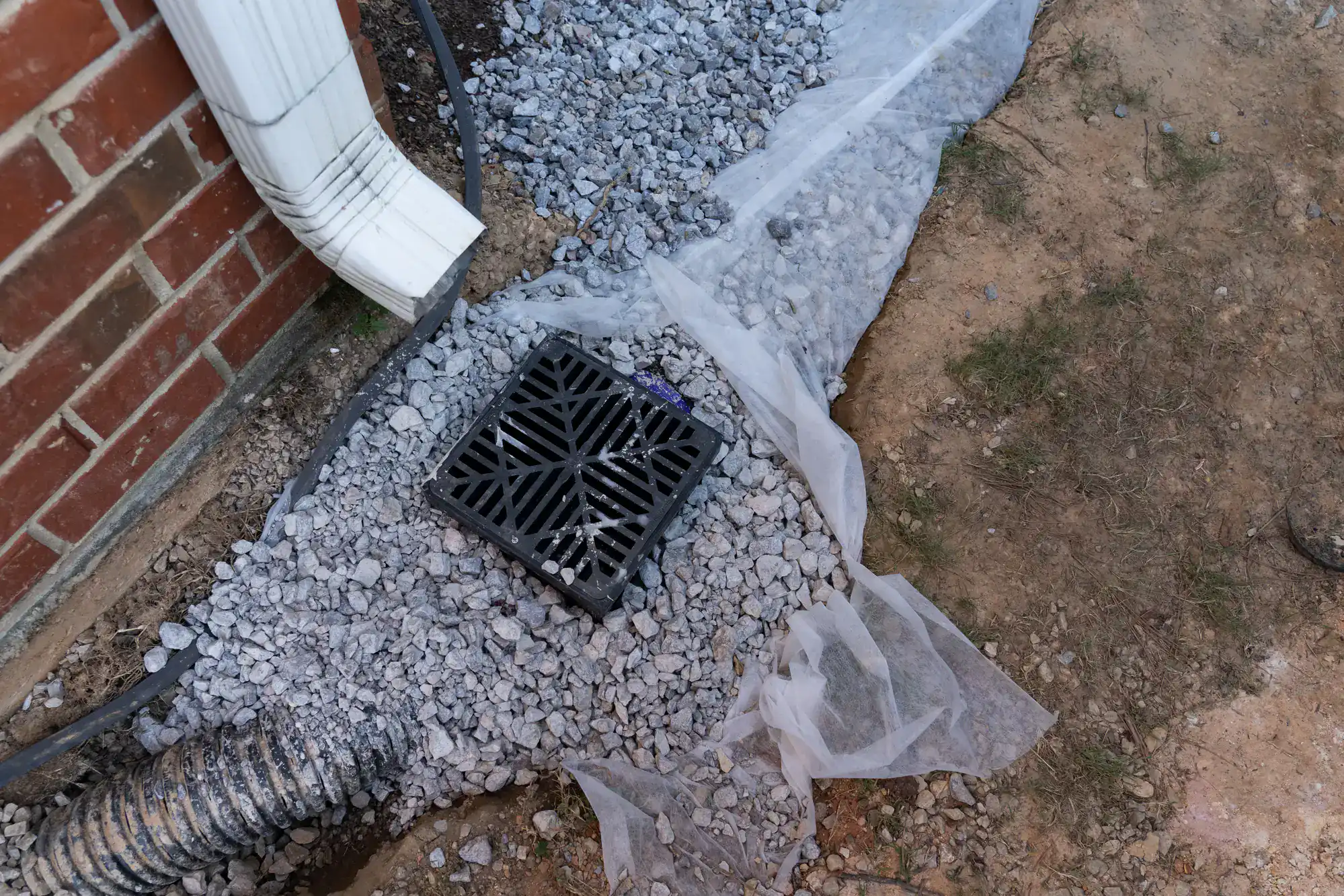
Once the assessment is done and the design is confirmed, installation typically takes one to three days for most residential properties. We trench to the right depth, lay perforated pipe with proper slope a consistent drop of at least one inch per eight to ten feet of run wrap the system in geotextile filter fabric to keep silt out, and backfill with washed angular gravel before closing everything up. The outlet point is designed to discharge on your property, in compliance with the town’s requirement that stormwater stay contained on site.
After the system is in, we restore the surface. Topsoil, seeding, sod matching whatever it takes to bring the yard back to where it was, or better. The disruption is temporary. The drainage is not.
Ready to get started?
French drain installation in Brookhaven isn’t a one-size-fits-all job. The system we design for a property near the Wertheim Wildlife Refuge where hydric soils and organic matter slow drainage significantly looks different from what we’d install on a higher-elevation lot with sandy, well-draining soil. Both need a French drain. Neither needs the same French drain. That’s the distinction that separates a system that works for thirty years from one that clogs in two.
Every installation includes a full site assessment, utility marking through 811 before any digging starts, proper geotextile filter fabric, perforated pipe with confirmed slope, washed angular gravel, and a defined discharge outlet that meets the Town of Brookhaven’s on-site stormwater containment requirement under Chapter 86A. For properties near tidal waterways or the Carmans River corridor, we assess whether the outlet needs additional engineering to prevent backflow during high-water events because a standard outlet design can work against you in a south shore flood scenario.
We also handle the full surface restoration after installation. You shouldn’t have to coordinate a separate landscaping crew to fix what a drainage contractor tore up. That’s included. From the first assessment to the last patch of sod, it’s one contractor, one process, and one point of accountability.
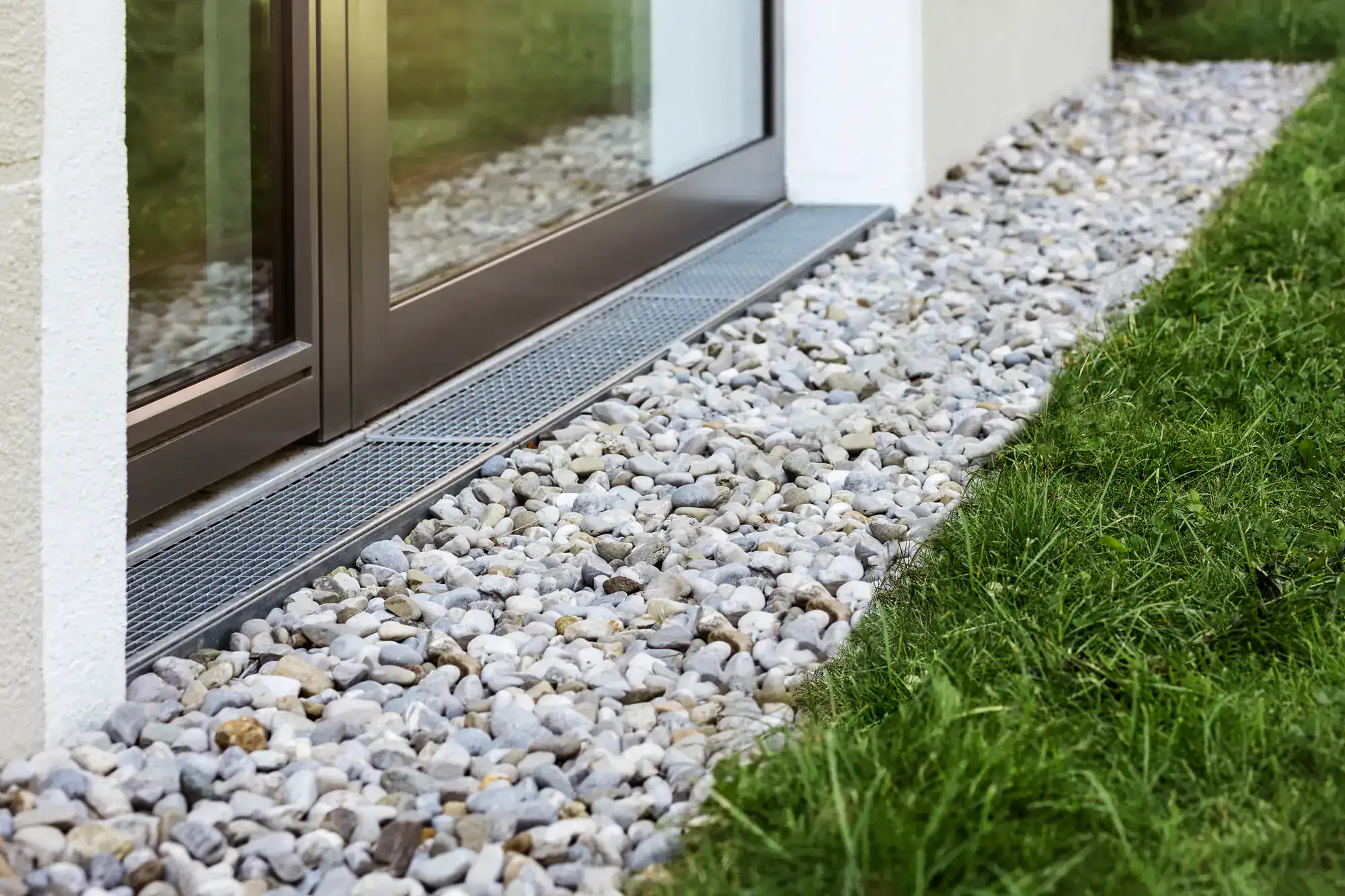
It’s a fair question, and the answer usually comes down to where the water is coming from. The Town of Brookhaven Highway Department maintains roughly 44,000 drainage structures across the town, and when those systems are overwhelmed like they were during the August 2024 storms the town focuses on public infrastructure first. What happens on your private property is your responsibility, regardless of what’s happening at the curb.
If water is pooling in your yard and doesn’t clear within 24 hours after a storm, or if you’re seeing moisture along your basement walls, those are signs that your property’s drainage isn’t keeping up and that’s not something the town will fix for you. A French drain system addresses the problem at the source, moving water away from your foundation and yard before it can cause damage. A site assessment is the fastest way to know for certain whether a French drain is the right solution or whether something else a catch basin, a dry well, or a combination makes more sense for your specific property.
Most residential French drain installations in Brookhaven fall somewhere between $5,000 and $9,500, depending on the length of the trench run, the complexity of the outlet design, and whether any permitting is required. Properties near the Carmans River or Beaver Dam Creek may require a wetlands review under the Town of Brookhaven’s Chapter 81 regulations, which can add time to the process though not necessarily significant cost.
What’s worth keeping in mind is the comparison. Foundation crack repair runs $15,000 to $50,000. Mold remediation starts around $3,000 and escalates depending on how far it’s spread. A documented wet basement can reduce your home’s resale value by 10% or more and in a market where Brookhaven hamlet homes are valued near $750,000, that’s a potential loss of $75,000 at sale. A properly installed French drain system, built to last 30 to 40 years, is a straightforward investment when you look at what it’s protecting against.
It depends on your property and where the system will discharge. Under the Town of Brookhaven’s stormwater management code, drainage systems must contain water on your own property you can’t redirect runoff onto a neighbor’s yard or into the street without approval. For most standard residential French drain installations, this is handled through proper outlet design rather than a formal permit.
However, if your property is near the Carmans River, Beaver Dam Creek, or any other waterway or wetland area, the town’s Wetlands and Waterways chapter (Chapter 81) may require a permit before any excavation begins. The Town of Brookhaven also operates under a state SPDES stormwater permit, which means there are additional compliance considerations for projects that disturb a certain amount of land. We handle all of this before a shovel goes in the ground including calling 811 for utility marking. You won’t be left to navigate the permitting process on your own.
It affects the design more than most people realize. The lower Carmans River transitions from freshwater to a tidal estuary as it approaches the Great South Bay, and that tidal influence extends into the groundwater beneath properties in Brookhaven especially during storm events, full moon high tides, and periods of sustained rainfall. In those conditions, the water table in lower-lying areas of the hamlet can rise significantly, which means a French drain outlet that works fine under normal conditions can back up when the surrounding ground is already saturated.
For properties in the Carmans River corridor or near the southern edge of Brookhaven, we assess the outlet design carefully sometimes incorporating a check valve or elevated discharge point to prevent backflow during high-water events. We also look at the soil profile, because the hydric soils near the river and the Wertheim Wildlife Refuge hold water differently than the sandier soils on higher ground. The system needs to be sized and routed for what your property actually experiences, not what a standard installation guide assumes.
A properly installed French drain system should last 30 to 40 years. The four most common reasons they fail before that are: insufficient slope on the pipe, which causes water to sit instead of flow; missing or low-quality geotextile filter fabric, which allows silt to infiltrate and clog the system within a few years; the wrong pipe material, particularly old corrugated tubing that collapses over time; and a poorly designed outlet with no defined discharge point.
In Brookhaven specifically, there’s a fifth failure mode worth knowing about: systems that weren’t designed to handle the seasonal groundwater rise that comes with south shore living. If the outlet sits too low relative to the water table during a tidal event or major storm, the system can lose its ability to drain at the exact moment you need it most. That’s why the design phase matters as much as the installation itself. Cutting corners on materials or skipping the site assessment to save money upfront is almost always what leads to a system that needs to be replaced in five to ten years instead of thirty.
This comes up more than you’d think, and it’s one of the more frustrating situations a homeowner can be in. You already paid for a solution, and the problem is still there. Before recommending anything, we want to understand what was installed, how it was installed, and whether the issue is a design failure, a materials failure, or something that was never going to work given the conditions on your property.
In some cases, the existing system can be partially salvaged a re-graded outlet, a fabric wrap on a clogged section, or an extension to a better discharge point. In other cases, particularly with older corrugated pipe that’s collapsed or a system that was installed without filter fabric, the most cost-effective path is a full replacement done right. We’ll give you an honest read on which situation you’re dealing with after the site assessment. There’s no benefit to us in recommending more work than your property actually needs and there’s no benefit to you in patching something that’s going to fail again in two years.