
Hear from Our Customers
When a French drain system is working the way it should, the difference is immediate and lasting. Your yard dries out within a day or two of heavy rain instead of staying soggy for a week. The basement that used to show moisture every March stays dry through the entire snowmelt season. That outdoor space your family hasn’t been able to use it becomes usable again.
Centereach’s housing stock is predominantly post-war construction homes built in the 1950s through 1970s during the Dawn Estates and Eastwood Village development era. Those homes were built on compacted Long Island soil without modern drainage infrastructure, and many of them have never had a proper drainage system installed. The clay-heavy subsoil that sits beneath most central Suffolk County properties drains at less than an inch per hour in many locations. That means every significant rainstorm, every snowmelt event off a frozen February ground, sends water straight toward the lowest point on your property which is usually your foundation wall or basement floor.
A properly installed French drain intercepts that water before it gets there and redirects it to a defined outlet. Not a temporary fix. Not a sump pump running every time it rains. A permanent underground system that handles the load quietly, year after year, for decades.
We’re a residential drainage contractor serving homeowners throughout central Suffolk County, including Centereach and the surrounding communities of Selden, Farmingville, Lake Grove, and Lake Ronkonkoma. Drainage is what we do not a sideline, not an upsell attached to a landscaping package. Every project we take on is a drainage problem that needs a real, engineered solution.
We work regularly in Town of Brookhaven-jurisdiction properties, which means we understand the local permit requirements, the stormwater management codes, and the utility marking obligations that apply to every excavation job in this area. We also understand what we’re digging into the compacted construction fill and clay subsoil that defines so much of the housing stock along the Route 25 and Nicolls Road corridor.
When you schedule a site visit, you’re talking to someone who has worked on properties like yours, in Centereach, with these exact soil conditions. That context matters when it comes to designing a system that actually works.
It starts with a free on-site assessment not a phone quote, not an estimate based on square footage. Someone comes to your property, walks the yard, identifies where the water is coming from, where it’s going, and where it needs to be redirected. That diagnostic step is what separates a system that works from one that just moves the problem somewhere else.
Once the design is confirmed, we handle the permit research and utility marking through 811 (Dig Safe NY) before any excavation begins. In Centereach, that means verifying compliance with Town of Brookhaven’s stormwater management codes including any wetlands considerations under Chapter 81 if your property is near a natural drainage course. Most homeowners don’t want to deal with any of that, and they don’t have to.
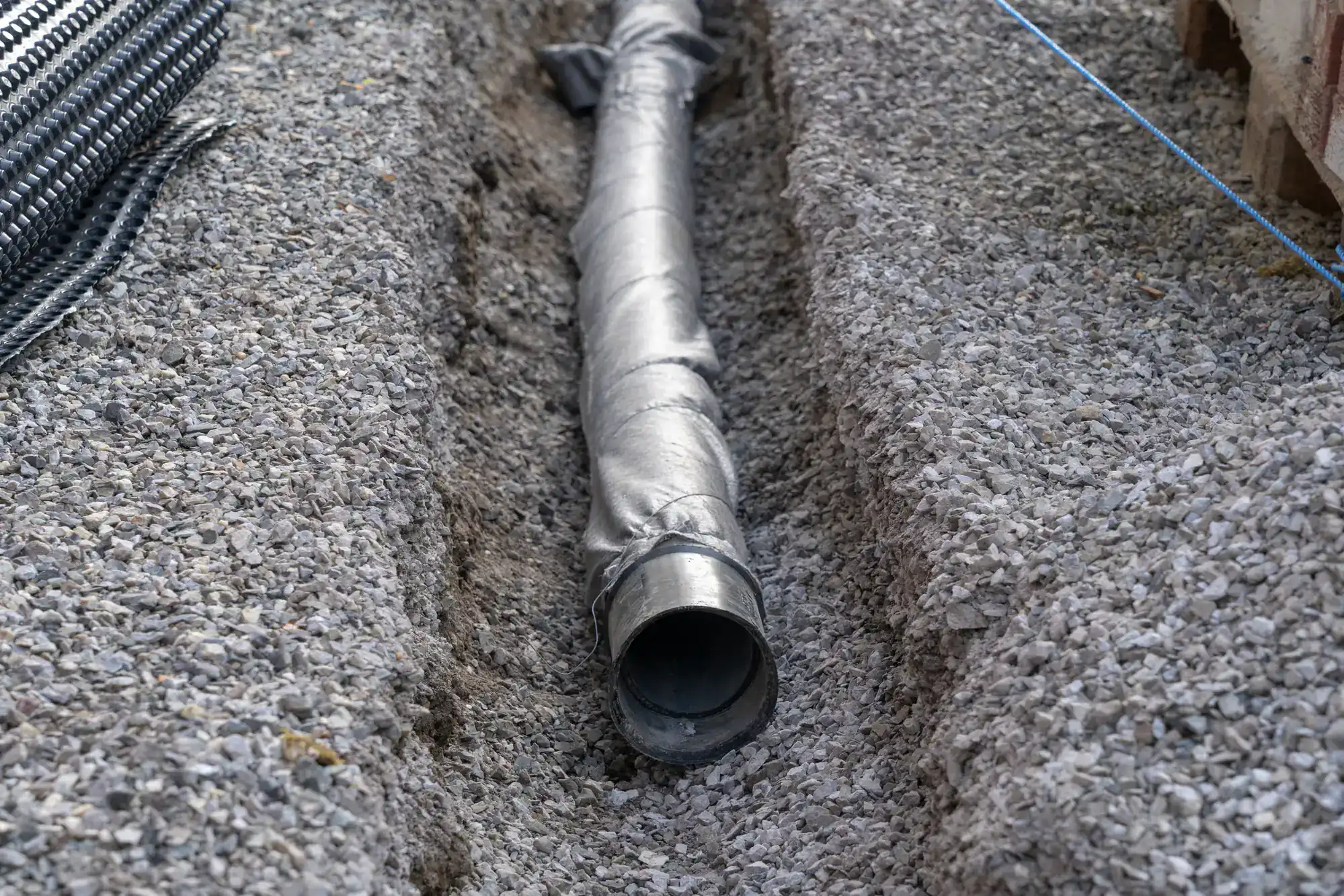
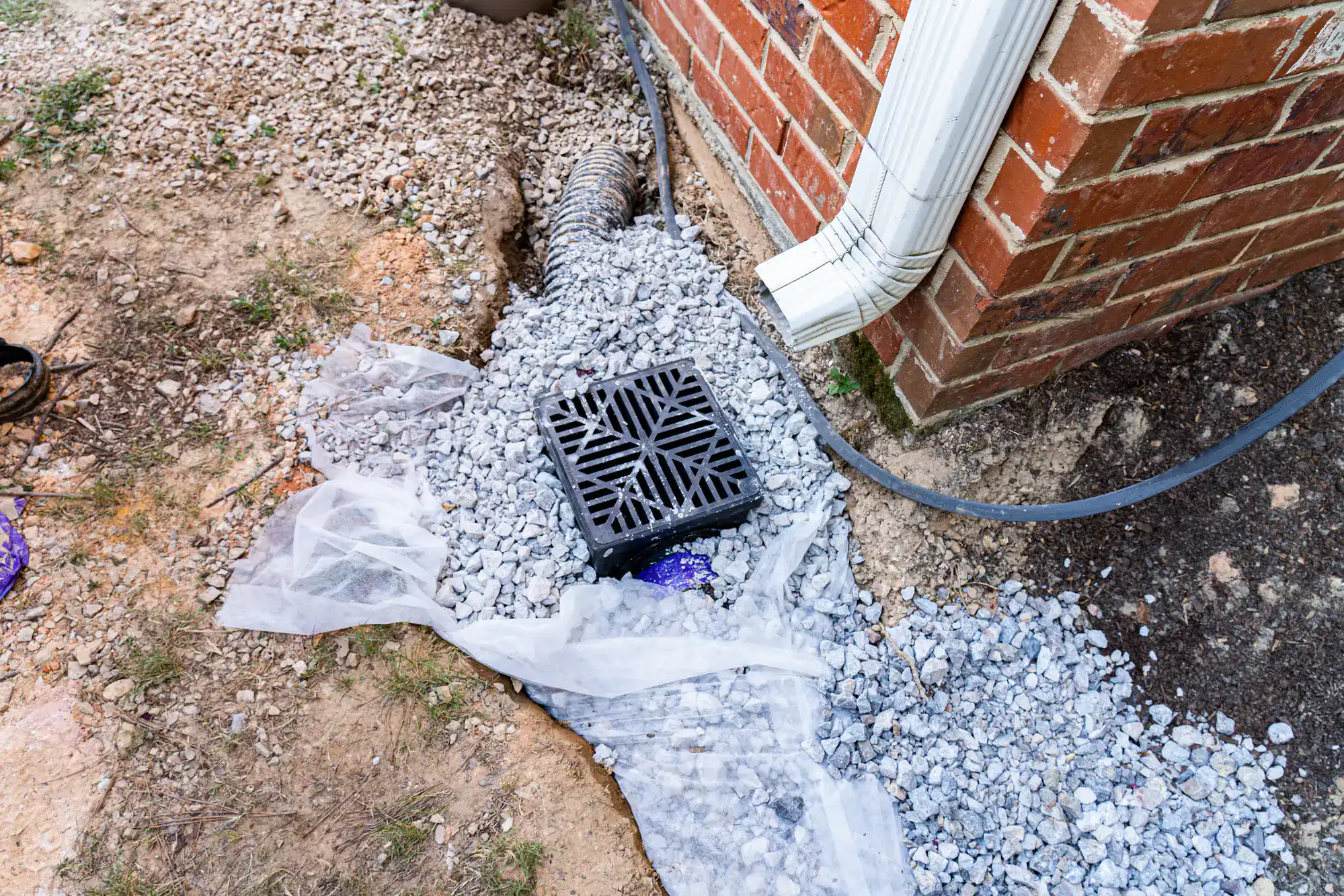
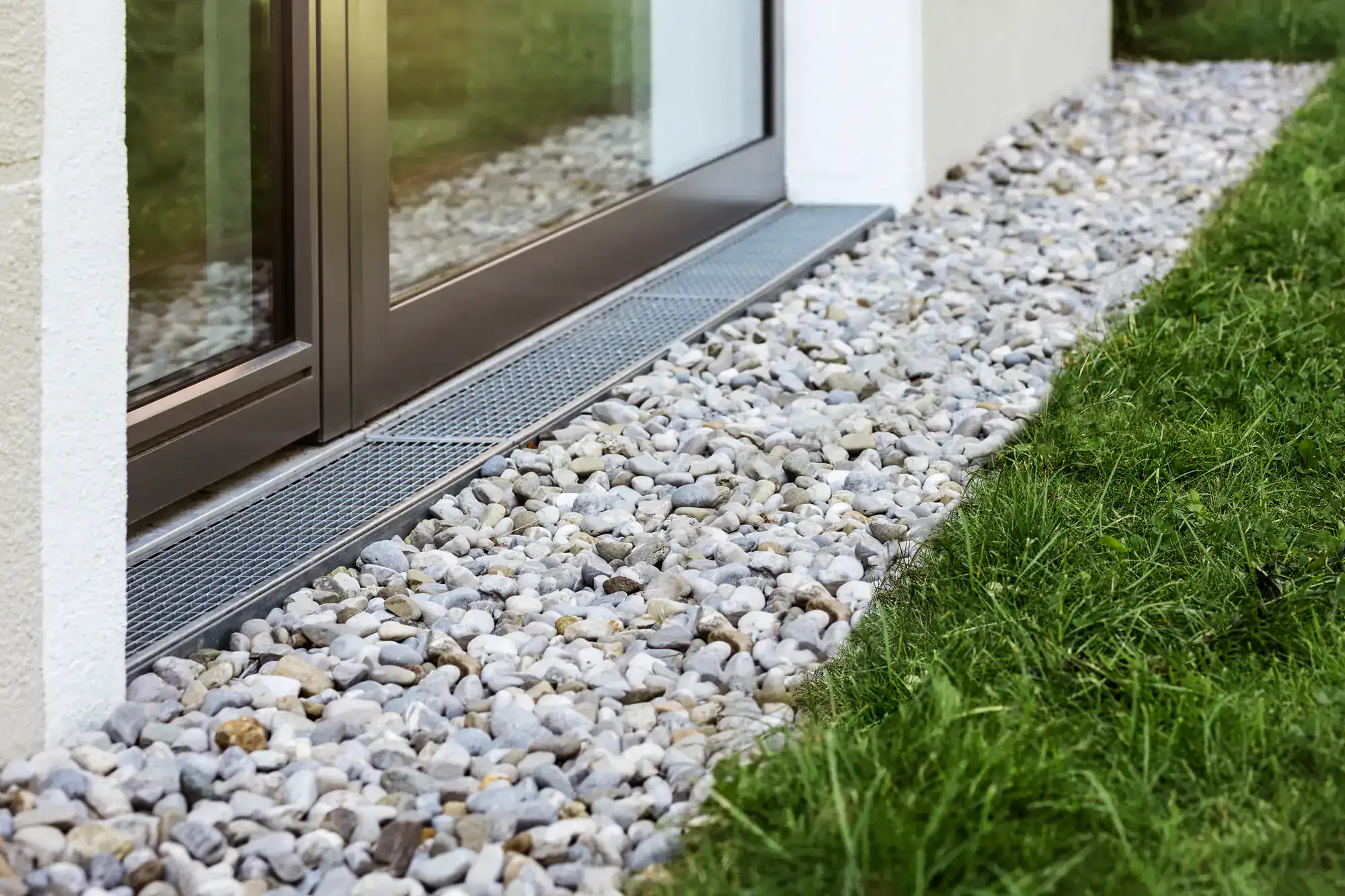
Installation typically takes one to three days depending on the scope of the system. We trench precisely, install perforated pipe wrapped in geotextile filter fabric and surrounded by washed angular gravel, and calculate the slope carefully typically one inch of drop per eight to ten feet of run so the system moves water consistently without backing up. When we’re done, the trench is backfilled, topsoil is restored, and the area is seeded to match the surrounding lawn. The only thing that changes is that your yard drains the way it should.
Ready to get started?
Every French drain installation we complete uses perforated pipe not the corrugated garden-grade tubing that clogs within a few years in Suffolk County’s silt-heavy soil. The entire gravel bed is wrapped in double-punched geotextile filter fabric, which keeps the fine clay particles that are abundant in central Long Island’s subsoil from migrating into the pipe and blocking the perforations over time. The gravel itself is washed angular stone, not round pea gravel, which compacts and loses its drainage capacity. These material choices are not upgrades they are the baseline for a system that will still be working 30 to 40 years from now.
Beyond the materials, every system we design is built around your specific property. The slope of your lot, the depth of the clay layer beneath your topsoil, the location of your downspouts, your sump pump discharge point, and where water is entering your basement or pooling in your yard all factor into how the system is laid out. No two Centereach properties drain the same way, and no two systems should be identical.
What’s included in every installation: the on-site drainage assessment, all permit research and utility marking, full material specification, installation with slope verification, and complete yard restoration. You get a workmanship warranty on the installation, and a system designed to handle Long Island’s freeze-thaw cycle, spring snowmelt load, and the heavy nor’easter events that periodically push the New York metro area’s drainage infrastructure to its limits.
The most common reason is the clay-heavy subsoil that sits beneath the topsoil on a large percentage of central Suffolk County properties. Clay drains at a fraction of the rate of sandy or loamy soil sometimes less than one inch per hour which means it simply can’t absorb rainfall fast enough during a normal storm. Water hits that layer and spreads sideways rather than percolating down, which is why you end up with pooling in low spots, soggy turf that won’t firm up, and saturated soil that stays wet long after the rain has stopped.
For homes in Centereach’s original post-war neighborhoods the properties built during the Dawn Estates and Eastwood Village development era this problem is compounded by the soil compaction that happened during construction. Heavy machinery grading those lots in the 1950s and 1960s created an additional impermeable layer just below the surface. A French drain system intercepts that subsurface water and gives it a path out, which is why it’s the right solution for this specific soil profile rather than surface grading alone.
For most residential properties in Centereach, a French drain installation falls in the range of $5,000 to $9,000. The final number depends on the length of the system, how deep the trench needs to go to get below the clay layer and maintain proper slope, whether the outlet requires a dry well or ties into an existing drainage point, and how much yard restoration is involved. Larger or more complex systems those addressing both yard drainage and foundation perimeter issues can run higher.
The more useful way to think about cost is in comparison to what you’re protecting against. Foundation crack repair and waterproofing in this region runs $15,000 to $50,000. Mold remediation in a wet basement starts at $3,000 and escalates depending on how far it’s spread. A documented water intrusion history can reduce your home’s resale value by 10% or more and in a market where Centereach home values have appreciated significantly, that’s a meaningful number. The drainage system is the cheaper option by a wide margin, and a properly installed one lasts 30 to 40 years.
It depends on the scope and location of the work. Centereach falls under Town of Brookhaven jurisdiction, which operates under a NYSDEC SPDES stormwater permit and enforces stormwater management and erosion control regulations that apply to projects altering surface water flow. If your property is near a natural drainage course, a pond, or a wetland area protected under Chapter 81 of the town code which covers any water body or wetland of 300 square feet or more additional review or a wetlands permit may be required before work can begin.
New York State law also requires calling 811 (Dig Safe NY) before any excavation, regardless of project size. This is mandatory, not optional, and it’s free it marks all underground utilities so they’re not disturbed during trenching. We handle the permit research and utility marking as a standard part of every Centereach installation. You don’t need to figure out what’s required or who to call that’s our job, and we do it before a shovel goes in the ground.
A French drain is the right solution when water is entering your basement through the foundation wall or floor due to subsurface groundwater pressure which is the most common cause of basement moisture in Centereach’s post-war housing stock. When the clay subsoil becomes saturated after a heavy rain or during snowmelt season, it creates hydrostatic pressure against the foundation. A French drain installed along the exterior perimeter of the foundation intercepts that water before it builds up against the wall, which eliminates the pressure and stops the intrusion at its source.
If water is entering through a crack in the foundation wall, that crack may need to be addressed directly as well but the French drain handles the underlying cause. A sump pump manages water that’s already inside; a French drain keeps it from getting there in the first place. During your on-site assessment, we’ll identify exactly where the water is coming from and whether a French drain alone addresses it, or whether additional work is needed. We’ll be straightforward about that there’s no benefit to installing a system that only partially solves the problem.
Fall is generally the best window specifically September through early November, before the ground freezes. Installing in the fall means the system is fully operational before the February and March snowmelt season, which is when drainage failures are most visible and most damaging in central Suffolk County. Frozen ground can’t absorb snowmelt, and when that combines with early spring rain hitting soil that’s still frost-hardened, the load on your drainage infrastructure is at its peak. Having a working system in place before that happens is the ideal outcome.
Spring installation is also common, typically once the ground thaws and firms up enough to trench cleanly usually April through May. The tradeoff is that you’re installing after you’ve already experienced the problem rather than before it. Summer works well logistically, as the ground is workable and yard restoration establishes quickly in warm weather. The one window to avoid is mid-winter, when frozen ground makes proper trenching and slope verification difficult. If you’re planning ahead after a wet spring or a flooding event from a storm, fall is the time to act.
A properly installed French drain system using the right pipe, the right fabric, and the right gravel lasts 30 to 40 years on Long Island properties. The key word is properly. The most common reason French drains fail prematurely in Suffolk County is material quality. Corrugated plastic tubing without geotextile filter fabric allows the fine clay and silt particles that are abundant in central Long Island’s soil to migrate into the pipe over time, clogging the perforations and rendering the system useless within five to ten years. Some systems fail even faster.
The filter fabric wrapped around the gravel bed is what keeps that from happening. It acts as a barrier that allows water to pass through while blocking the soil particles that would otherwise fill the pipe. Combined with washed angular gravel which maintains its void space and drainage capacity over time, unlike round pea gravel that compacts and precise slope calculation to ensure consistent water movement, the system stays functional for decades without requiring excavation and replacement. When you’re investing in a French drain for your Centereach home, the material spec matters as much as the installation itself. That’s why we explain exactly what goes into the ground before any work begins.