
Hear from Our Customers
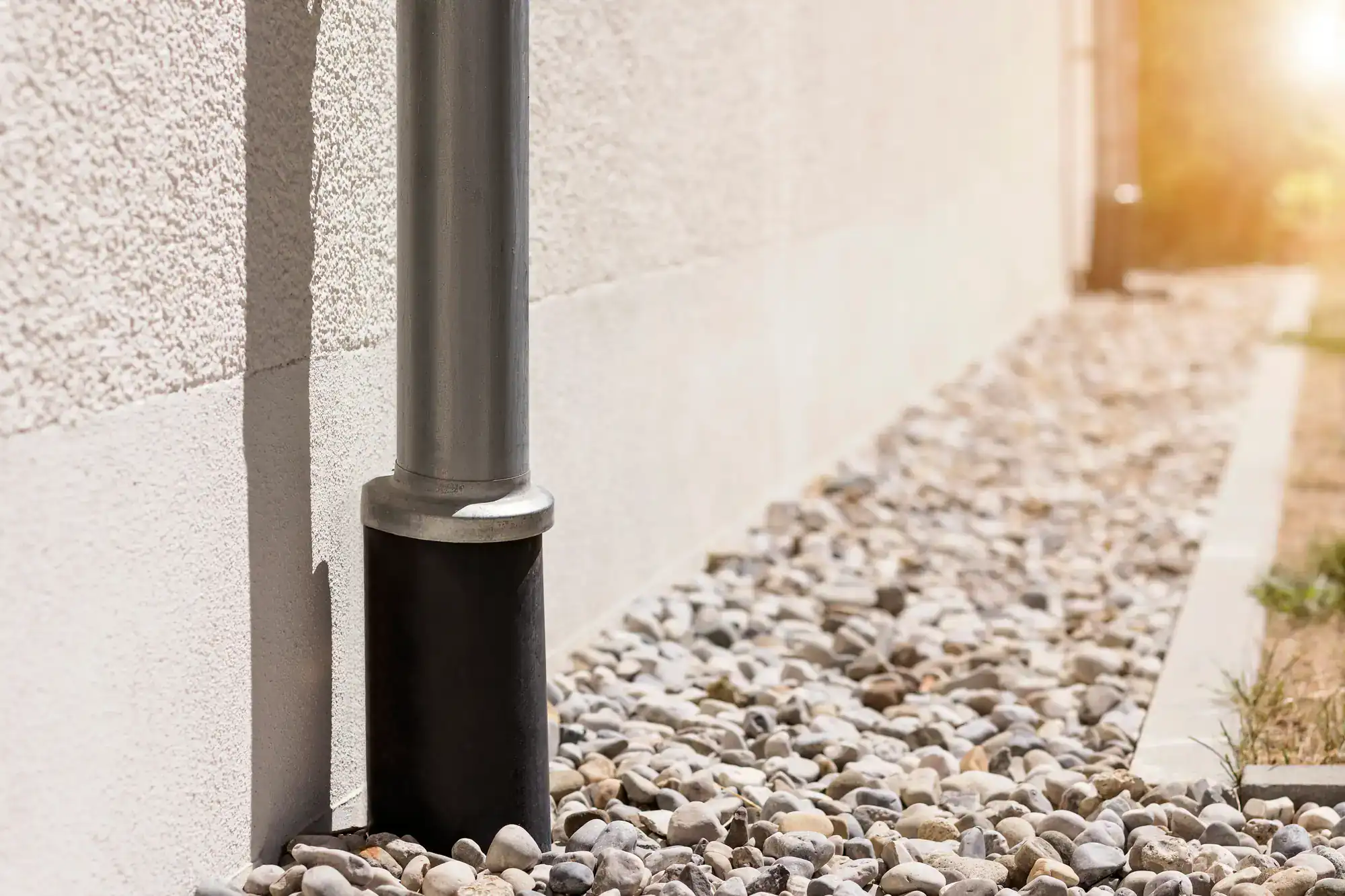
The most immediate thing you notice is the yard. No more standing water sitting on the lawn for three days after a storm. No more soft, spongy patches near the foundation. No more watching your kids avoid half the backyard because it never fully dries out. That’s what a properly installed French drain system in Commack, NY actually delivers not just a drier yard, but a usable one.
What you don’t see is just as important. Commack’s soil has significant clay content that acts like a natural barrier water hits it and stops. It doesn’t drain down. It presses sideways, and a lot of that pressure ends up against your foundation walls. Over time, that hydrostatic pressure is what causes basement moisture, wall cracks, and the kind of structural damage that costs tens of thousands of dollars to fix. We intercept that water before it ever reaches your foundation.
For homeowners in Commack where the median home value sits around $800,000 this isn’t a landscaping upgrade. It’s protection for the most significant investment most families will ever make. The August 2024 flooding event that triggered a Suffolk County Disaster Emergency and opened sinkholes right here in this hamlet made that clear. The next heavy storm isn’t a hypothetical. A residential French drain installation in Commack, NY is how you get ahead of it.
We’re a drainage contractor that works specifically in Suffolk County communities like Commack not a county-wide call center that dispatches whoever’s available. When we assess a property in Commack, we’re drawing on real experience with the clay-bearing soils, post-war housing stock, and drainage conditions that define mid-island Long Island. That’s a different knowledge base than a generalist landscaper who added drainage to their service list.
Commack sits across two town boundaries part Town of Huntington, part Town of Smithtown and each has its own permitting process, building department, and drainage codes. We know both. We handle the permitting, the utility marking (New York State law requires an 811 call before any excavation), and the code compliance. You don’t have to figure out which town your property is in or which office to call.
We’ve worked near Hoyt Farm, along the Commack Road corridor, and in neighborhoods where the flooding patterns from Veterans Memorial Highway and Sunken Meadow State Parkway make drainage a genuine priority. This isn’t a market we’re expanding into. It’s a community we already serve.
It starts with a free on-site assessment. We come to your Commack property, walk the yard, look at where water is collecting, trace the path it’s traveling, and identify the source. This step matters more than most homeowners realize the right diagnosis is the foundation of the right system. We don’t give phone estimates for drainage work because we’ve seen too many systems fail when someone designed them without standing on the actual ground.
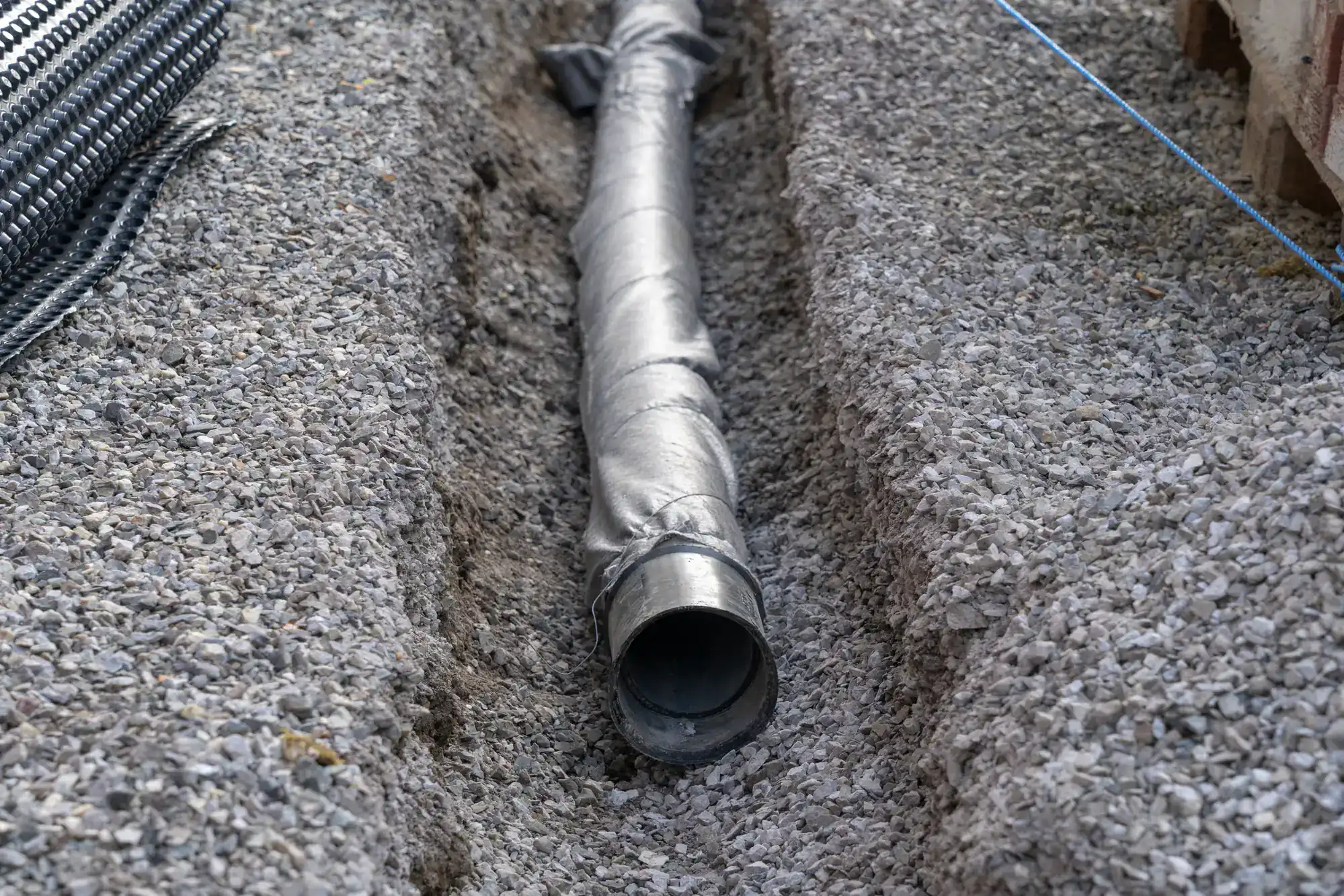
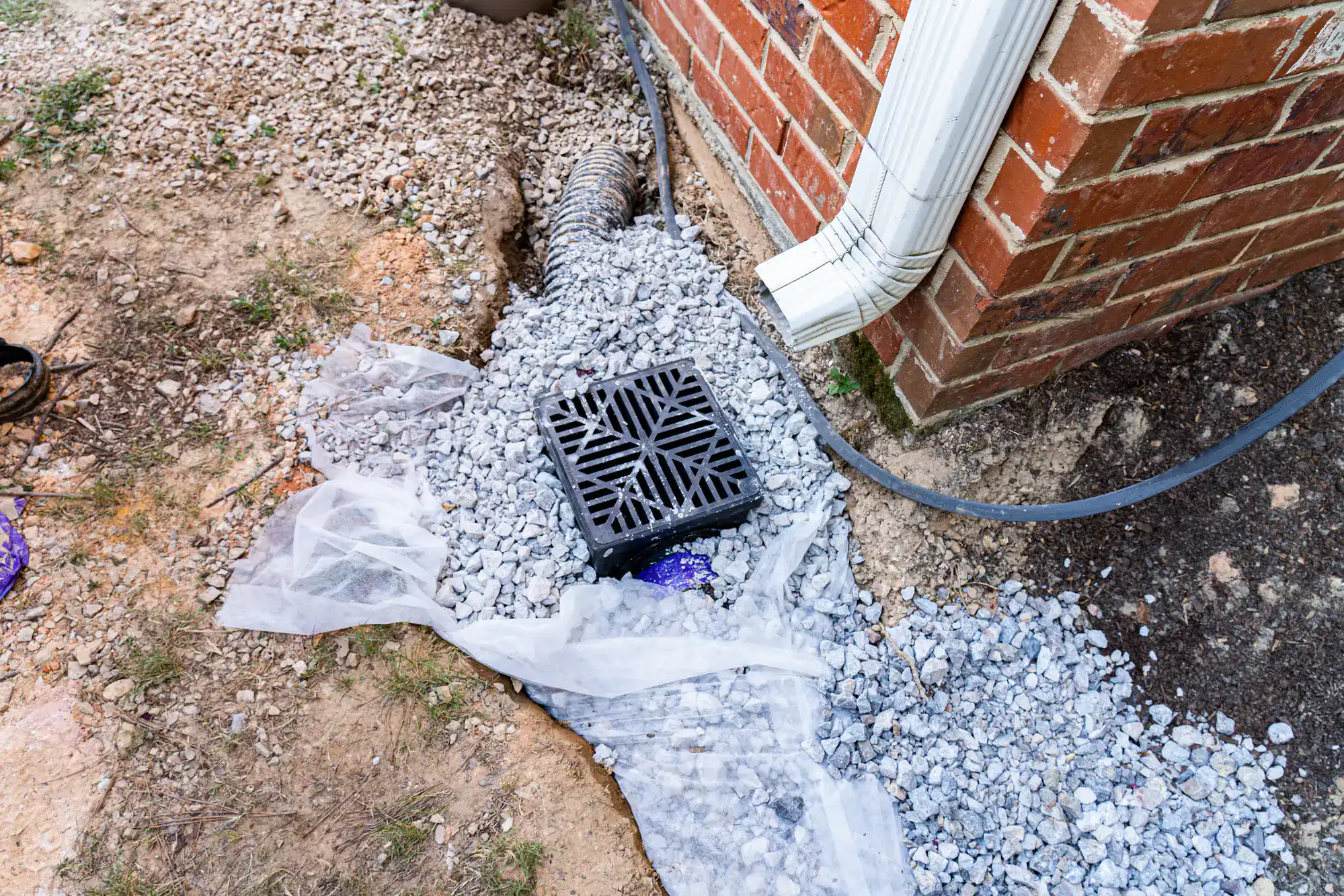
Once we understand what’s happening, we design a French drain system built for your specific property. That means selecting the right pipe specification, the right geotextile filter fabric weight to handle Commack’s silty clay soils, and the right gravel washed angular stone, not rounded pea gravel that maintains the void space the system needs to function. We calculate the slope precisely so water moves through the pipe to the outlet rather than sitting in it. Before any digging starts, we call 811 to mark utilities required by New York State law and something every homeowner should confirm their contractor is doing.
Installation on most residential properties takes one to three days. After the system is in the ground, we restore the yard topsoil, seeding or sod to match what was there, full cleanup. The fall window before ground freeze is the most popular installation period for Commack homeowners who dealt with summer flooding and don’t want to repeat it. Spring works well too, right when the clay soil thaws and reveals exactly how much water it’s been holding back all winter.
Ready to get started?
Every French drain system we install in Commack is engineered for the conditions that actually exist here. That means accounting for clay-heavy soil that resists percolation, Long Island’s frost depth of approximately 36 inches (pipes installed too shallow will freeze and crack in a Suffolk County winter), and the intensity of storm events that have gotten measurably worse over the past several years. A system built to generic specs in a different soil environment will underperform here. We don’t install generic systems.
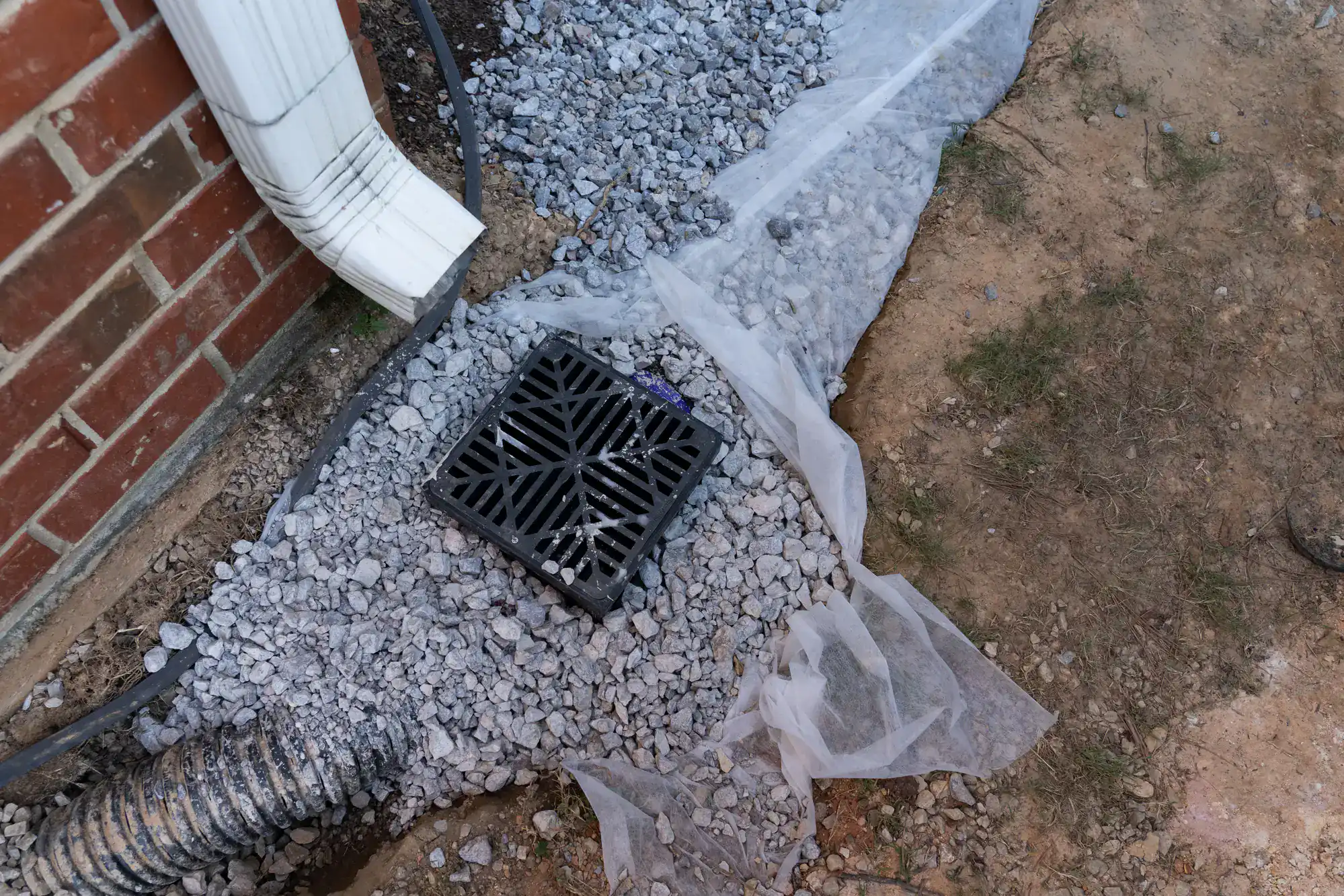
For Commack homeowners specifically, we address the most common drainage failure points: corrugated pipe that collapses under soil pressure, filter fabric that’s too light and allows silt infiltration within a few years, insufficient gravel depth, and improper outlet placement. Each of these is a shortcut that shows up as a failed system two to five years after installation. The materials we use perforated pipe with the right wall strength, double-punched geotextile fabric, washed angular gravel are the baseline for a system that lasts 30 to 40 years, not a premium upgrade.
Because Commack straddles the Town of Huntington and Town of Smithtown boundaries, we also handle all permitting requirements specific to whichever jurisdiction your property falls under. If your home is near a low-lying area along Veterans Memorial Highway or in one of the neighborhoods around Commack Road where water pooling is well-documented, we factor those local drainage patterns into the system design. The outlet location, the pipe depth, the fabric spec all of it is calibrated to your property and your town, not a template.
It depends on which side of the town line your property sits on. Commack is split between the Town of Huntington and the Town of Smithtown, and each has its own building department and drainage-related codes. In Smithtown, drainage work that alters surface water flow patterns or affects adjacent properties can trigger a review under the town’s subdivision and construction standards. Huntington has its own requirements as well. The scope of the work also matters a basic yard drainage system on a standard residential lot is handled differently than a project near a FEMA-designated flood zone or wetland buffer.
The honest answer is that permit requirements for residential French drain installation in Commack aren’t always straightforward, which is exactly why it matters to work with a contractor who already knows both towns’ processes. We handle the permitting determination and filing on your behalf. We also complete the required 811 utility marking call before any excavation begins that’s a New York State legal requirement, not optional, and it’s something you should confirm any contractor you hire is doing.
A properly installed French drain system meaning the right pipe, the right fabric, the right gravel, and the right slope should last 30 to 40 years. That’s not a marketing claim; it’s the realistic lifespan of a system built to professional standards with quality materials. The systems that fail in five years or less almost always come down to one of a few shortcuts: filter fabric that’s too lightweight and allows silt from Commack’s clay-heavy soil to infiltrate and clog the pipe, rounded gravel that compacts and loses drainage capacity, or pipe installed too shallow that freezes and cracks during Long Island’s winter freeze-thaw cycles.
Longevity is directly tied to the installation. The materials cost more when done right, and the labor takes longer when the slope is calculated precisely and the fabric is installed without gaps. But for a Commack homeowner protecting an $800,000 property, the math is clear a system that lasts 30 years versus one that needs to be replaced in five is not a close comparison. You’re not just paying for a French drain. You’re paying for one that works for the life of your ownership.
It depends on where the water is coming from. A French drain system is the right solution when basement moisture is caused by hydrostatic pressure groundwater or surface water that’s saturating the soil around your foundation and pushing inward. In Commack, this is extremely common because the clay soil doesn’t drain freely. Water accumulates against foundation walls, and over time that pressure finds its way through cracks, mortar joints, and window wells. We intercept that water before it reaches the foundation and redirect it away from the structure.
If the water is entering through a crack that’s already formed, you may need both a drainage system and crack repair the drain handles the ongoing water management, and the repair seals the existing entry point. If the water is coming from a plumbing leak or condensation rather than ground infiltration, a French drain won’t address it. That’s why the on-site assessment matters. We look at where the water is entering, what the soil conditions are around your foundation, and what combination of solutions actually fits your specific situation not a one-size-fits-all answer.
For most residential properties in Commack, professionally installed French drain systems run between $5,000 and $9,000 or more depending on the length of the system, the complexity of the outlet design, and site-specific conditions like mature tree roots, existing hardscaping, or proximity to the foundation. Long Island labor and material costs tend to push projects toward the higher end of national averages. A larger property with multiple drainage problem areas or a system that needs to tie into a drywell or street outlet will cost more than a straightforward yard drainage run.
What’s worth keeping in perspective is what you’re protecting. Foundation crack repair and waterproofing in Suffolk County runs $15,000 to $50,000. Mold remediation starts around $3,000 and can reach $25,000 depending on the extent. A wet basement can reduce your asking price at resale by 10% or more on an $800,000 Commack home, that’s $80,000 off the table. A French drain system in the $5,000 to $9,000 range is not a large expense relative to those numbers. We provide a specific written estimate after the on-site assessment, so you know exactly what you’re paying for before any work begins.
Grading reshaping the surface of the yard so it slopes away from the house can help with minor surface water issues, but it has real limits. If your soil is clay-heavy, which it almost certainly is in Commack, regrading the surface doesn’t change the fact that water still can’t percolate down through the ground quickly enough. It just redirects where the water pools instead of eliminating the pooling. And if your lot is relatively flat or surrounded by neighboring properties, there may not be a natural direction to grade toward that actually solves the problem.
A French drain works below the surface. It creates a subsurface pathway perforated pipe surrounded by gravel and wrapped in filter fabric that collects water from the saturated soil and carries it to a defined outlet point. It solves the problem at the source rather than moving it around. For most Commack properties dealing with persistent standing water or basement moisture, grading alone isn’t enough. Some projects benefit from a combination of both corrected surface grade and a subsurface drainage system but the French drain is typically what does the actual work. That determination is part of what we assess during the free site visit.
Fall is actually one of the best windows for French drain installation in Commack, and it’s the most common time we hear from homeowners who dealt with summer flooding and don’t want a repeat. The ground is still workable after the heat of summer, and getting the system in before the ground freezes means you’re protected before the spring thaw which is when Commack’s clay soil reveals the full extent of its drainage limitations. Snowmelt combined with spring rain saturating already-compacted ground is one of the most stressful conditions a foundation faces all year.
Spring installation works well too, especially for homeowners who discovered the problem during the thaw and want it addressed before the summer storm season. What you want to avoid is waiting so long that the ground freezes solid, which in Suffolk County typically happens by late December and can extend through February. Once the ground is frozen, excavation becomes significantly more difficult and expensive. If you’re on the fence about timing, the practical answer is: the sooner the system is in the ground, the sooner it’s working. Commack has had enough significant storm events in recent years that waiting for the “right” season is rarely worth the risk of another flooding event in the meantime.