
Hear from Our Customers
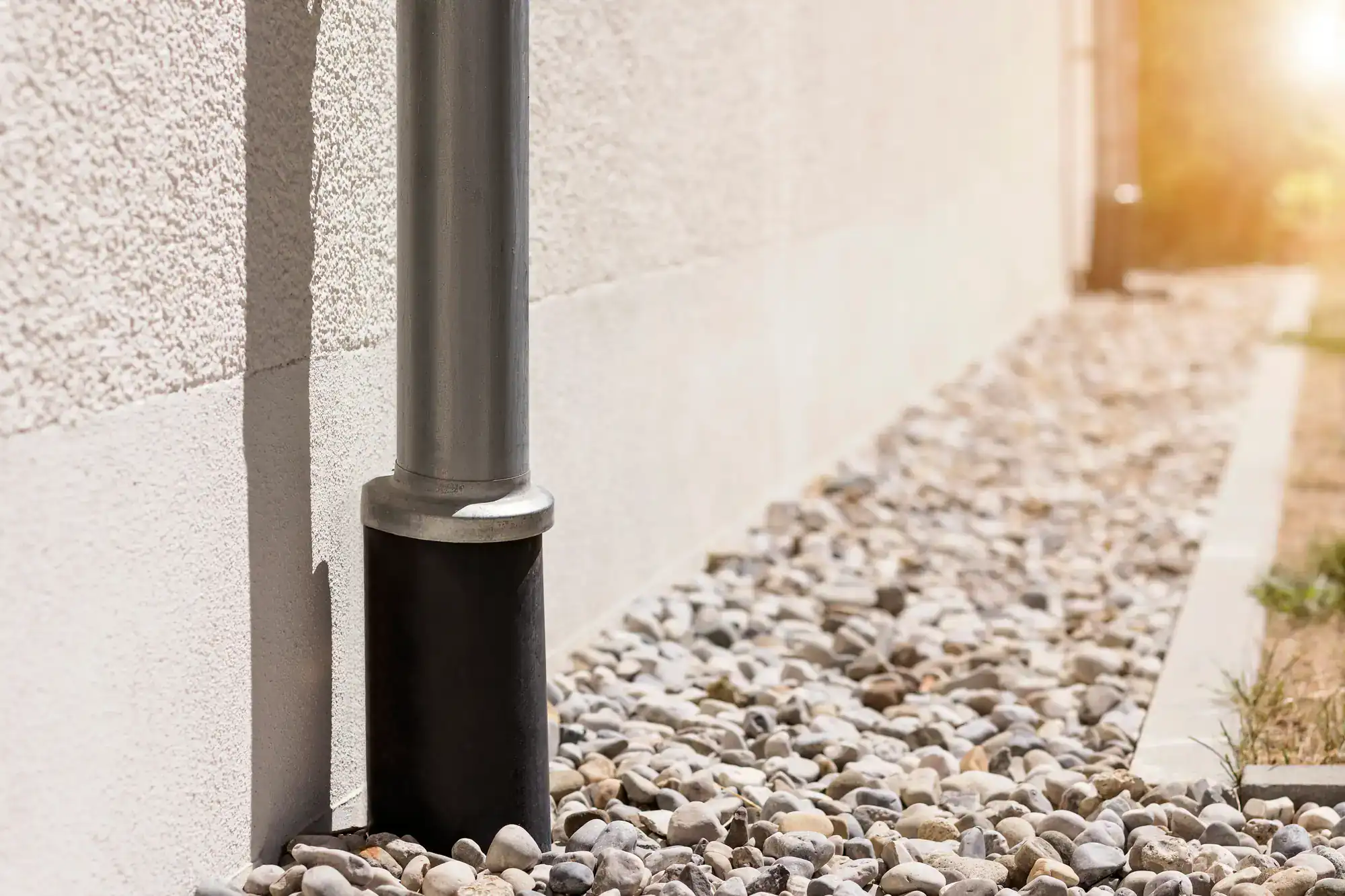
Most Elwood homeowners dealing with drainage problems have already tried something. They’ve regraded a corner of the yard, extended a downspout, or had someone add topsoil. And the yard is still wet every time it rains. That’s because those fixes address the surface. The real problem is happening underground, where Elwood’s sandy loam topsoil meets the clay and glacial till beneath it. Water moves through the sandy layer easily, hits that clay barrier, and has nowhere to go so it pools, saturates the yard, and eventually finds its way into your foundation.
A properly installed French drain intercepts that water before it becomes your problem. It captures the lateral flow at the right depth, moves it away from your home through a graded perforated pipe system, and outlets it safely away from the structure. The yard dries out. The basement stops taking on moisture. And the outdoor space you’ve been avoiding after every storm becomes usable again.
For Elwood’s housing stock most of it Cape Cods, hi-ranches, and colonials built between the 1950s and 1970s this matters more than people realize. These homes were built under drainage standards that didn’t anticipate today’s storm intensity or the way decades of landscaping change a property’s grading. If your home is in that age range and you’ve never had engineered drainage installed, you’re not dealing with a fluke. You’re dealing with infrastructure that was never designed to handle what it’s being asked to handle now.
We’re a residential drainage contractor serving Long Island homeowners, and Elwood sits at the center of the territory we know best. We work throughout the Town of Huntington from the neighborhoods along Jericho Turnpike to the established streets off Elwood Road and we’ve seen the same drainage patterns repeat themselves across this area’s mid-century housing stock.
We’re not a landscaping company that added drainage as an upsell. Drainage is the work. That means when we look at your property, we’re thinking about soil depth, frost line, pipe slope, outlet placement, and what the Town of Huntington’s stormwater code requires for your specific installation not just where to dig a trench.
Every job we do is fully permitted where required, installed to last through Long Island’s freeze-thaw winters, and backed by real workmanship. When you call us out for an assessment, you get a straight answer about what’s causing the problem and what it will actually take to fix it.
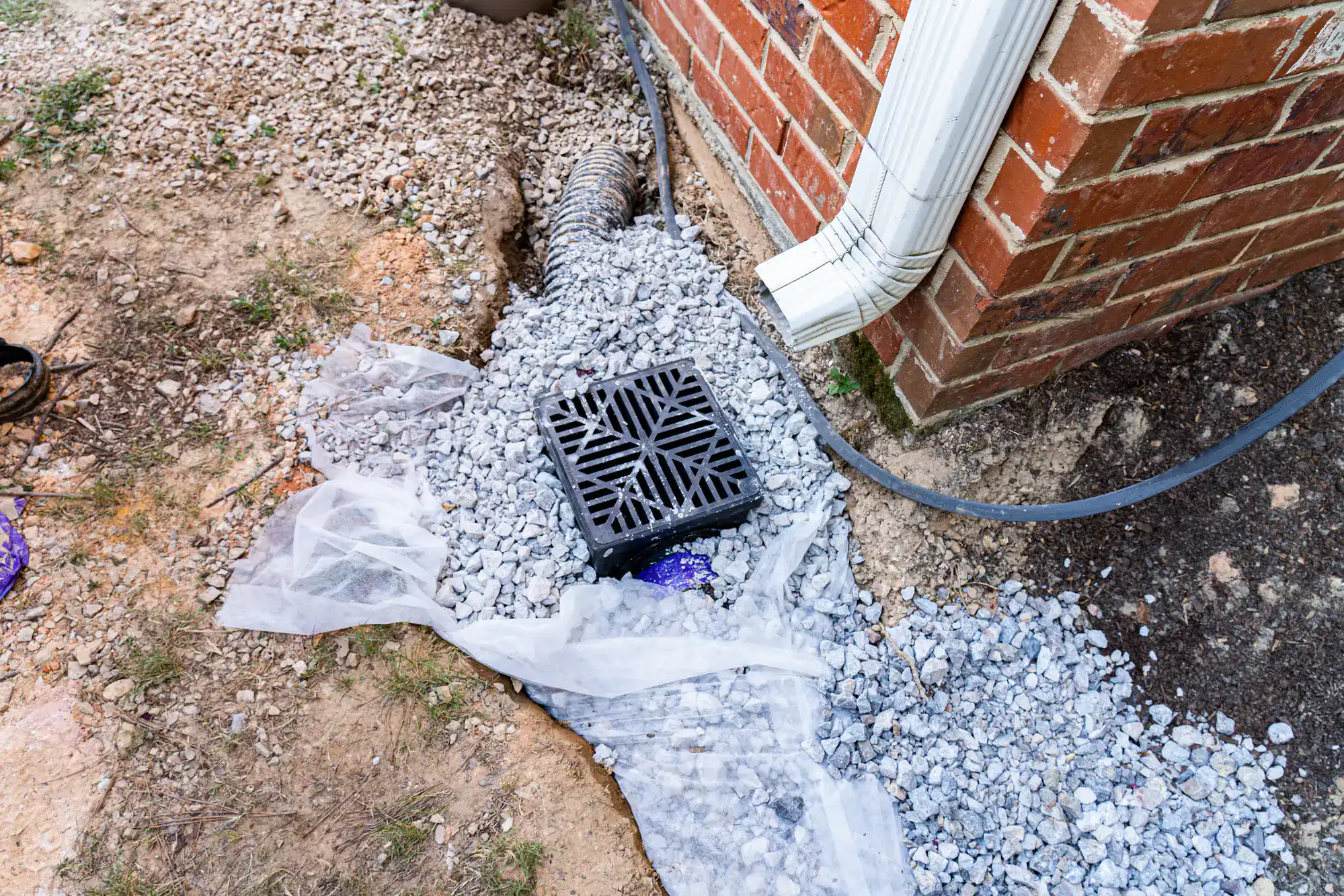
It starts with a site visit. We come to your Elwood property, walk the yard, look at where water is collecting, check your existing grading, and identify the path water is taking underground. That assessment tells us what type of system you need, how deep it needs to go, and where it needs to outlet. We don’t quote jobs from photos or phone calls the ground tells the story.
Once we have a plan, we handle any permits required by the Town of Huntington before a single shovel goes in the ground. Depending on the scope of the installation especially if it ties into municipal stormwater infrastructure Chapter 170 of the Town Code may require a permit through the Department of Engineering Services. We manage that process so you don’t have to.
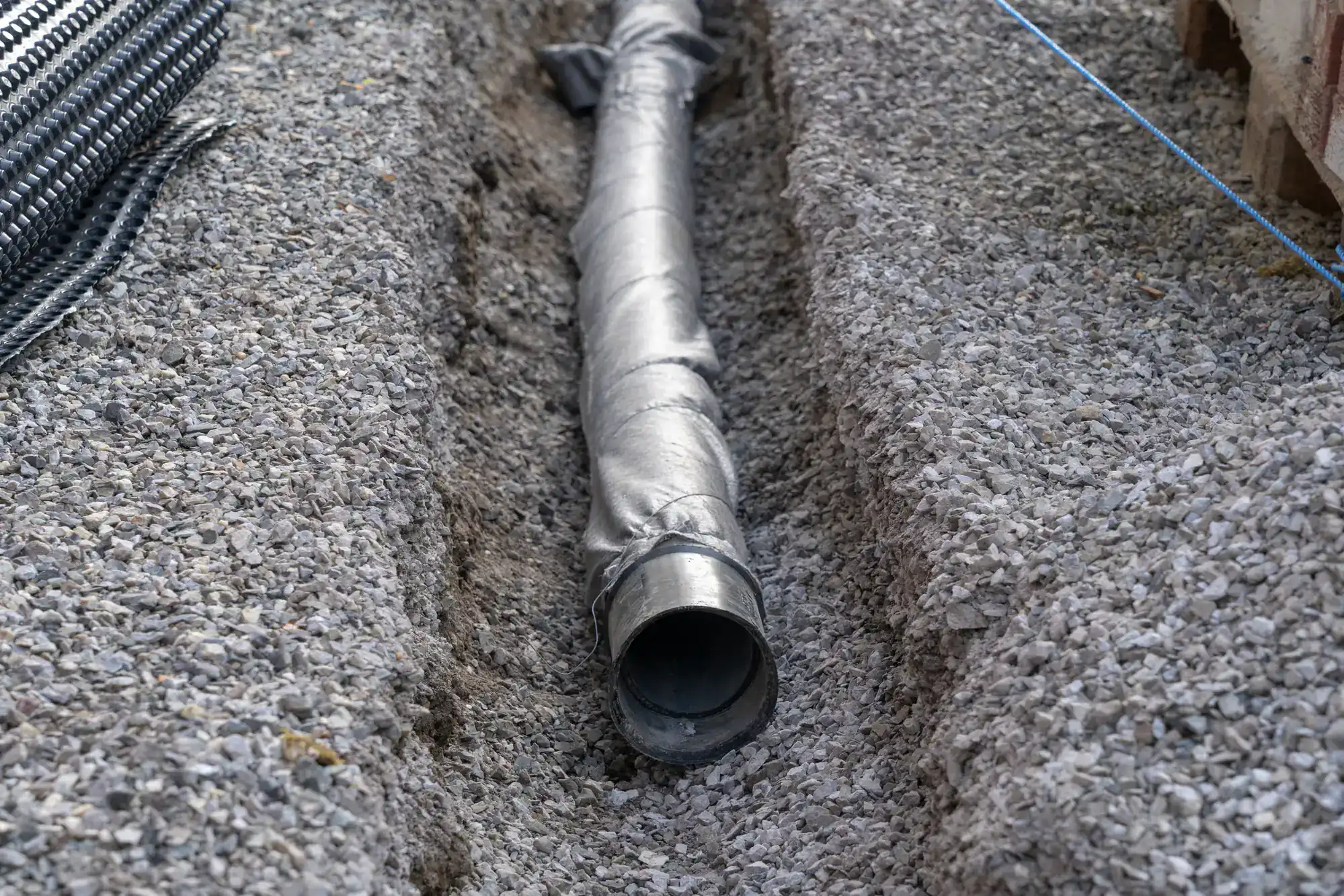
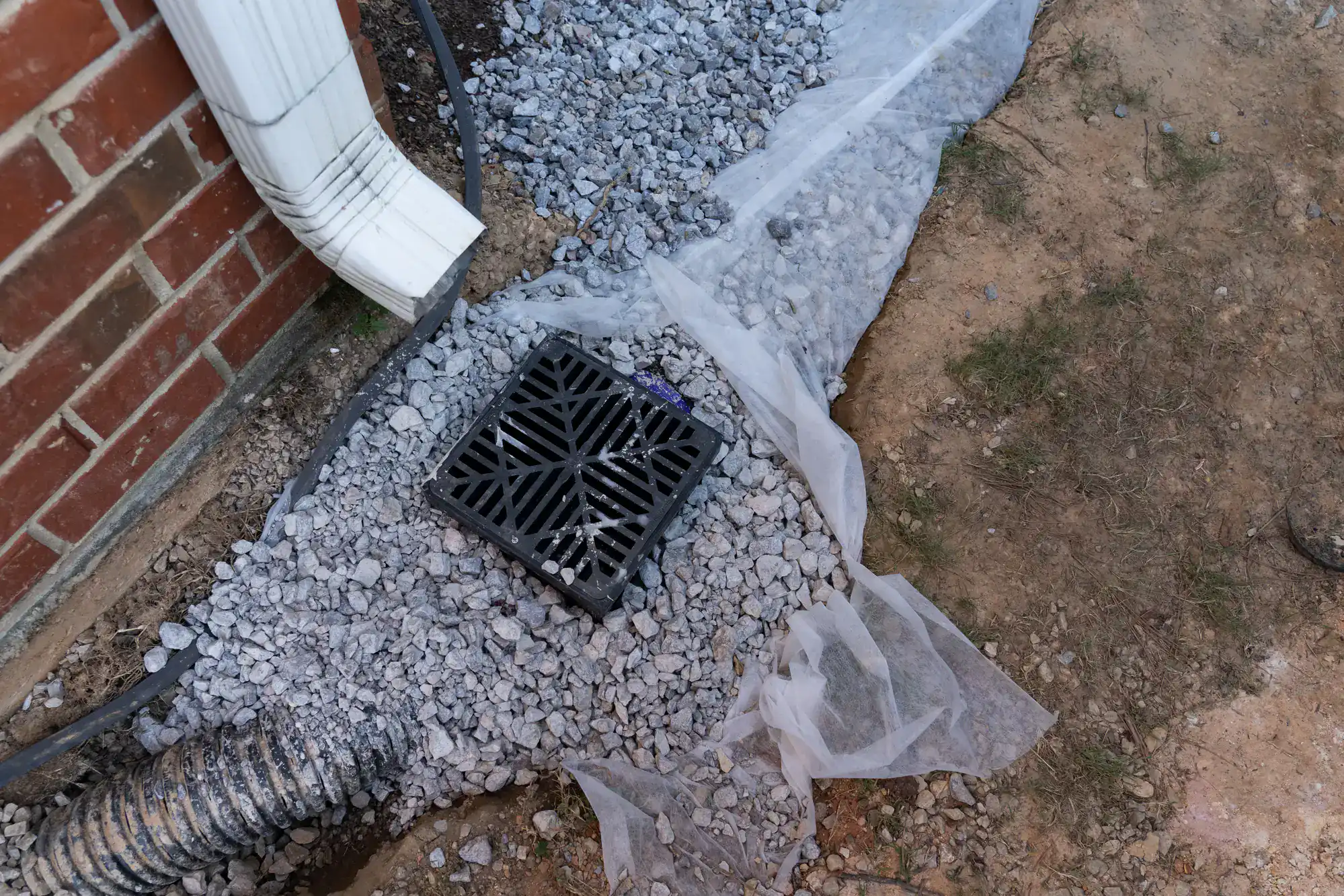
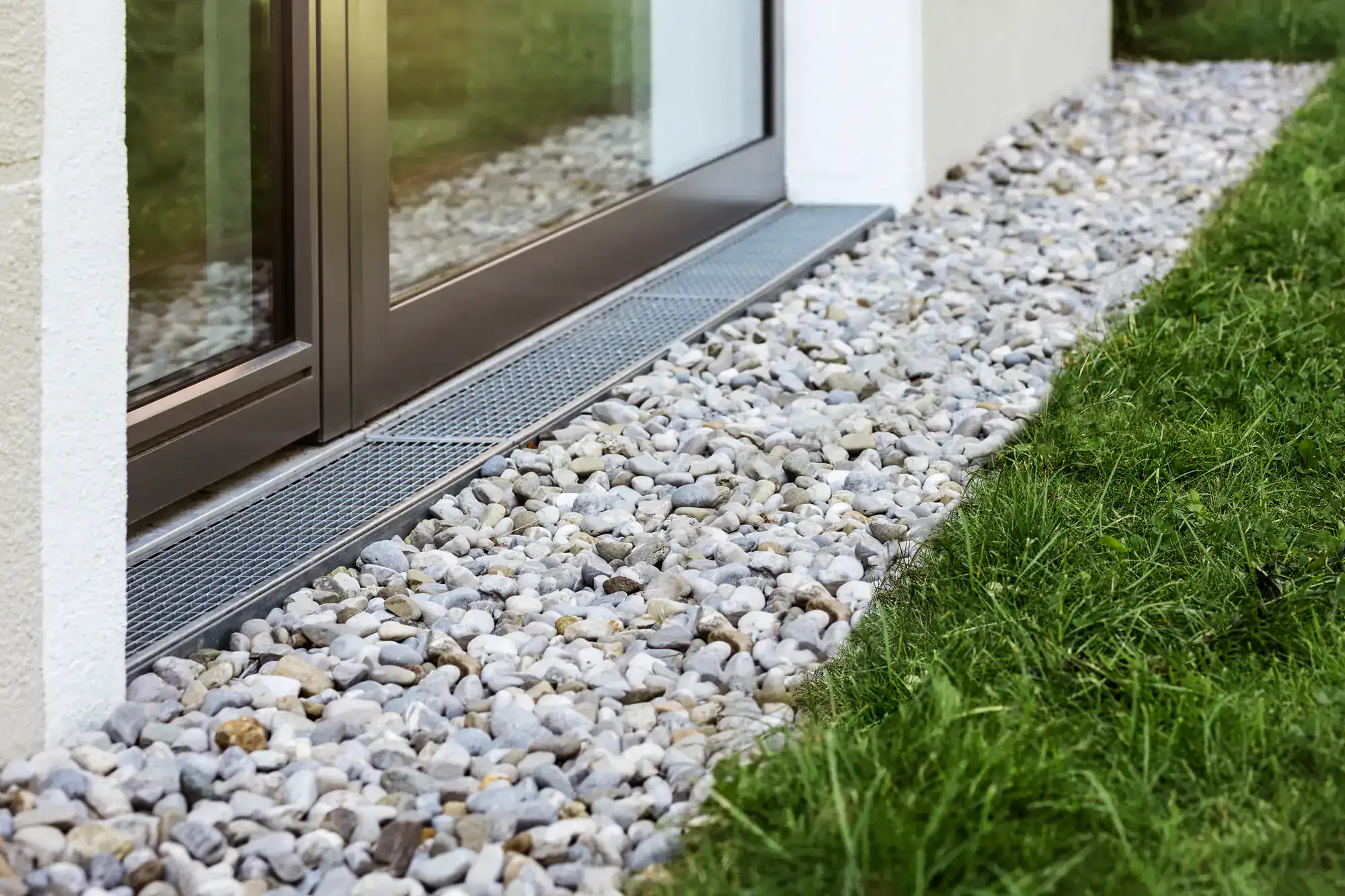
Installation involves targeted trenching along the path we’ve mapped, laying geotextile filter fabric to keep silt out of the system long-term, bedding the trench with washed angular gravel, and setting the perforated pipe at the right depth and slope. In Elwood’s climate, that depth matters pipes installed too shallow will freeze and crack in the first hard winter. After the pipe is set and the trench is backfilled, we restore the surface. Topsoil goes back, grass is reseeded or matched, and within a season, you’d barely know we were there except that the yard actually drains now.
Ready to get started?
Not all French drain installations are the same, and the difference shows up years later. The most common failure points we see are improper pipe slope, missing or cheap filter fabric, corrugated pipe that collapses over time, and systems buried too shallow to survive a Long Island winter. A system installed correctly with the right materials, the right depth, and the right outlet should last 30 to 40 years. A shortcut job fails in two to five.
For Elwood properties, we design each system around the specific conditions on that lot. That includes the soil layering typical of this part of Suffolk County, the frost depth requirements for this climate, and the grading of the individual yard. Whether you’re dealing with a chronically wet lawn, water pushing against your foundation, or erosion from uncontrolled surface runoff, the solution gets designed for your property not pulled from a standard template.
We also take the landscaping seriously. Elwood’s established neighborhoods have mature trees, gardens, and lawns that homeowners have invested in for years. We trench with precision, restore the surface after installation, and treat your property like it belongs to someone who cares about it because it does. The disruption is temporary. The drainage is permanent.
This is one of the most common questions we hear from homeowners in Elwood and throughout this part of Long Island, and the answer almost always comes back to soil. Elwood’s ground is made up of sandy loam on top, which drains quickly, but beneath that layer sits clay and glacial till material left behind by the glaciers that formed Long Island thousands of years ago. Water moves through the sandy surface fast, hits that clay layer, and stops. With nowhere to go vertically, it spreads laterally and pools at the surface.
This isn’t a grading problem you can solve with topsoil. It’s a subsurface drainage problem, and it requires a subsurface solution. A French drain installed at the right depth intercepts that water at the clay interface and redirects it away from the yard through a graded pipe system. Once it’s in, the yard drains the way it should have all along and those days-long puddles stop showing up after every storm.
For a residential French drain installation in Suffolk County, most homeowners spend somewhere between $5,000 and $9,000 depending on the length of the system, the depth required, the outlet location, and the complexity of the property. Larger systems or installations that require connection to existing drainage infrastructure can run higher.
The more useful number to think about isn’t the installation cost it’s what you’re protecting. In Elwood, where average home values sit around $726,000 and annual property taxes run roughly $10,000, a documented water problem can reduce your resale value by 10% or more. That’s $70,000 or more in potential lost equity on a home in this price range. Foundation crack repair, if water is allowed to work against the foundation long enough, runs $15,000 to $50,000. Against those numbers, a properly installed drainage system is one of the better investments you can make in a home at this value.
It depends on the scope of the installation. The Town of Huntington operates a formal Stormwater Management Program under Chapter 170 of the Town Code, and drainage work that alters stormwater flow, connects to municipal infrastructure, or involves significant excavation may require a permit through the Town’s Department of Engineering Services. Plumbing permits can also apply when drainage systems are being installed, repaired, or modified.
The honest answer is that permit requirements vary by project, and navigating the Town of Huntington’s process without experience can lead to delays and costly corrections. When we handle your installation, we assess what’s required before the job starts and manage all permit applications on your behalf. You don’t need to become familiar with municipal stormwater code that’s part of what you’re hiring a professional for.
Yes if it’s installed too shallow. This is one of the most common reasons French drain systems fail in the Northeast, and it’s completely avoidable with the right installation depth. In Elwood, average January temperatures hover around 37 to 38 degrees, and ground freezing is a regular winter condition. A pipe buried just a few inches below the surface will freeze, crack, and stop functioning often without any visible sign of damage until the system fails to drain the following spring.
Proper installation means placing the pipe below Elwood’s frost depth so it stays protected through the full winter season. This is a detail that experienced drainage contractors account for automatically. If you’re getting quotes on a French drain and the contractor isn’t discussing pipe depth in the context of your local frost conditions, that’s a gap worth asking about directly. It’s the difference between a system that lasts decades and one that needs to be dug up and replaced after the first hard freeze.
A French drain and a dry well solve related but different problems. A French drain is a linear system it intercepts water along a path (the edge of a yard, the perimeter of a foundation, a slope) and moves it away from the problem area through a graded pipe. A dry well is a vertical structure that collects water at a single point and disperses it into the surrounding soil over time. Many Long Island properties use both in combination.
In Elwood, where the sandy-over-clay soil profile limits how quickly water can percolate downward, a dry well alone often isn’t enough especially during heavy rain events when the soil is already saturated. A French drain is usually the right primary solution when you’re dealing with lateral water movement across the yard or hydrostatic pressure building against a foundation. A dry well can work well as the outlet point for a French drain system, receiving the redirected water and dispersing it where soil conditions allow. The right answer depends on your specific property, which is why we always start with an on-site assessment before recommending anything.
For a typical residential installation in Elwood, most French drain systems are completed in one to two days. Larger or more complex systems those running significant lengths around a foundation perimeter, or installations requiring multiple outlet points can take longer, but it’s rarely a multi-week project.
The disruption is real but temporary. Installation involves trenching through the yard along the planned pipe route, which means some turf and soil will be disturbed. We backfill the trench after the pipe is set, restore the topsoil, and reseed or match the grass. Within a growing season, the yard typically looks the way it did before we started with the critical difference that it now drains correctly. For Elwood homeowners with established landscaping and mature gardens, we work carefully around existing plantings and communicate clearly about what will and won’t be affected before we begin. The goal is a yard that looks untouched and drains properly not one that looks like a construction site six months later.