
Hear from Our Customers
The wooded lots that make Gordon Heights feel like a neighborhood worth owning are also part of the drainage challenge. Mature trees, organic debris, and the clay-heavy soil profile that runs through the mid-island corridor create conditions where water has no natural place to go so it finds the lowest point it can, and that’s usually your foundation perimeter or your basement floor.
When we install a French drain system correctly in Gordon Heights, that changes. Water gets intercepted before it builds pressure against your walls. Your backyard stops being a soggy, unusable space after every storm and becomes the outdoor area you bought this property for. Families near Bartlett Pond Park and throughout the Gordon Heights corridor have been dealing with these drainage issues for decades not because the problem is unsolvable, but because most fixes are temporary.
A properly engineered French drain for your yard in Gordon Heights is a long-term solution. We’re talking 30 to 40 years when it’s built with the right materials. That means perforated pipe, not cheap corrugated tubing. Filter fabric that actually keeps Suffolk County’s silty soil from clogging the gravel bed over time. And a system designed around your specific lot, not a one-size-fits-all trench. When the next heavy storm rolls through and in central Suffolk, it will your yard handles it. Your basement stays dry. Your foundation stays intact.
We serve homeowners across the Longwood Central School District corridor Gordon Heights, Coram, Middle Island, Ridge, Yaphank and we understand what drainage work actually requires in this part of Suffolk County. The clay-and-loam soil profile here behaves differently than what you’d find in a beachfront community, and the systems we design reflect that. We don’t bring a coastal approach to a mid-island problem.
Gordon Heights is a community built on homeownership. Families here have been investing in this land since 1927, and the homes on these wooded lots represent real equity equity worth protecting. We approach every French drain installation with that in mind. You’re not getting a crew that’s discovering your neighborhood for the first time. You’re getting a water drainage contractor that knows what the soil does after a week of rain, what the water table looks like in spring, and what a system needs to hold up in a wooded lot with mature trees and organic debris working against it year after year.
It starts with a free on-site assessment. Every yard in Gordon Heights is different lot topography, proximity to the foundation, tree placement, soil depth, and where the water is actually coming from all vary from property to property. We don’t quote French drain systems over the phone because a phone quote is a guess. We come out, walk the property, diagnose the problem, and give you a clear, itemized number before any work begins.
Before any digging starts, New York State law requires a call to 811 to mark underground utilities. We handle that. If the scope of work in Brookhaven Town requires a permit particularly for systems near wetlands or those that alter surface water flow we manage that process too. You don’t need to become an expert in town code to get a drainage problem solved.
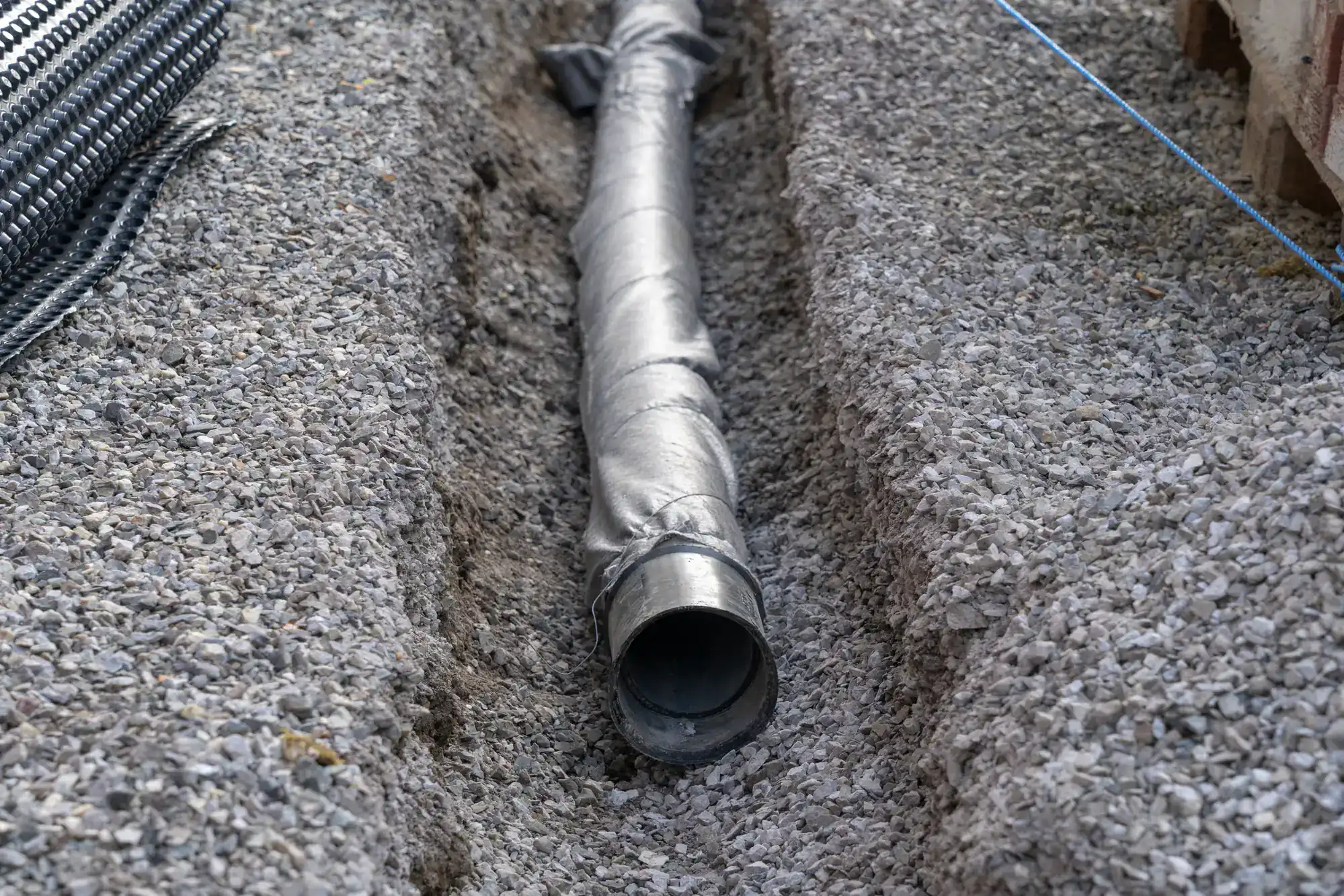
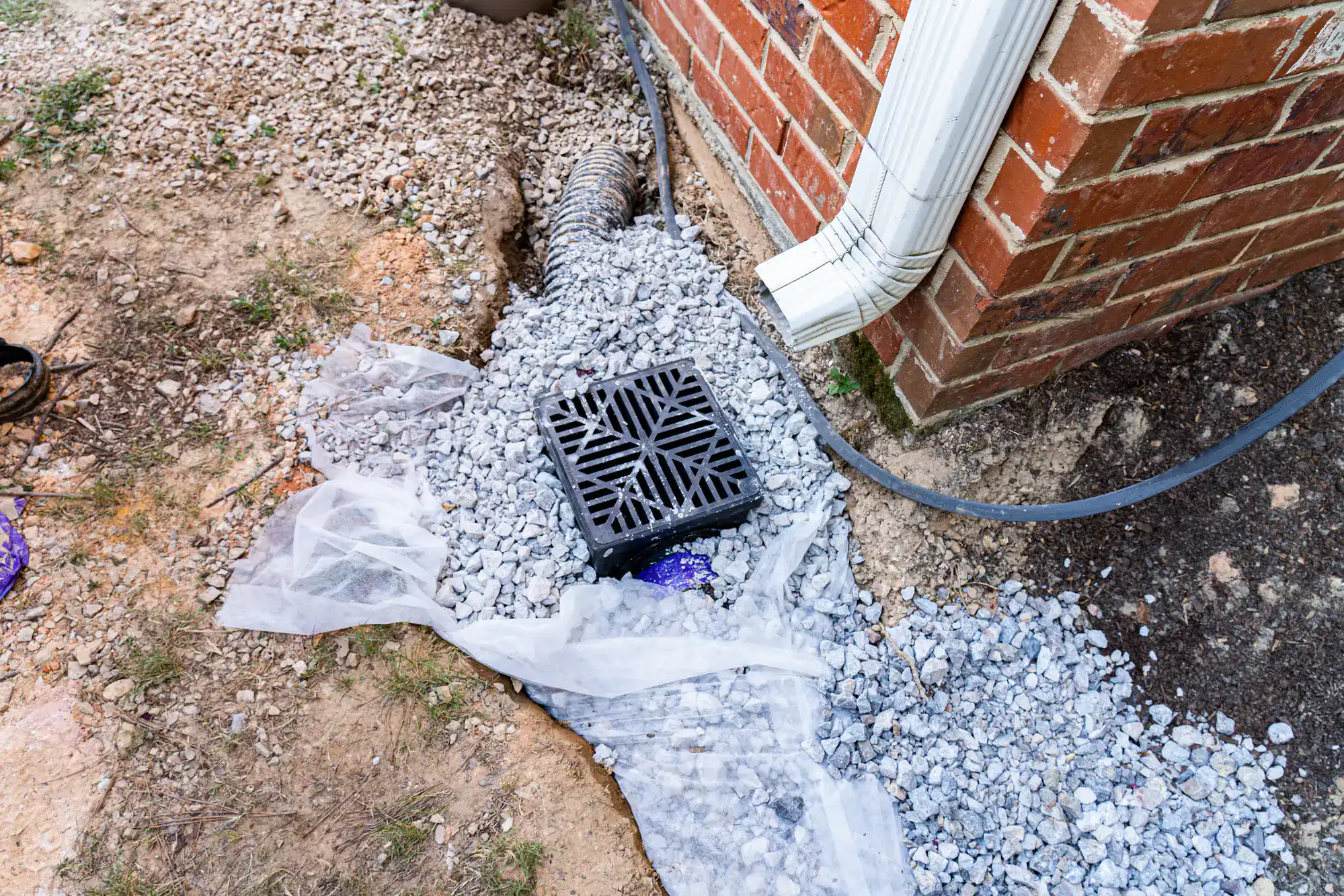
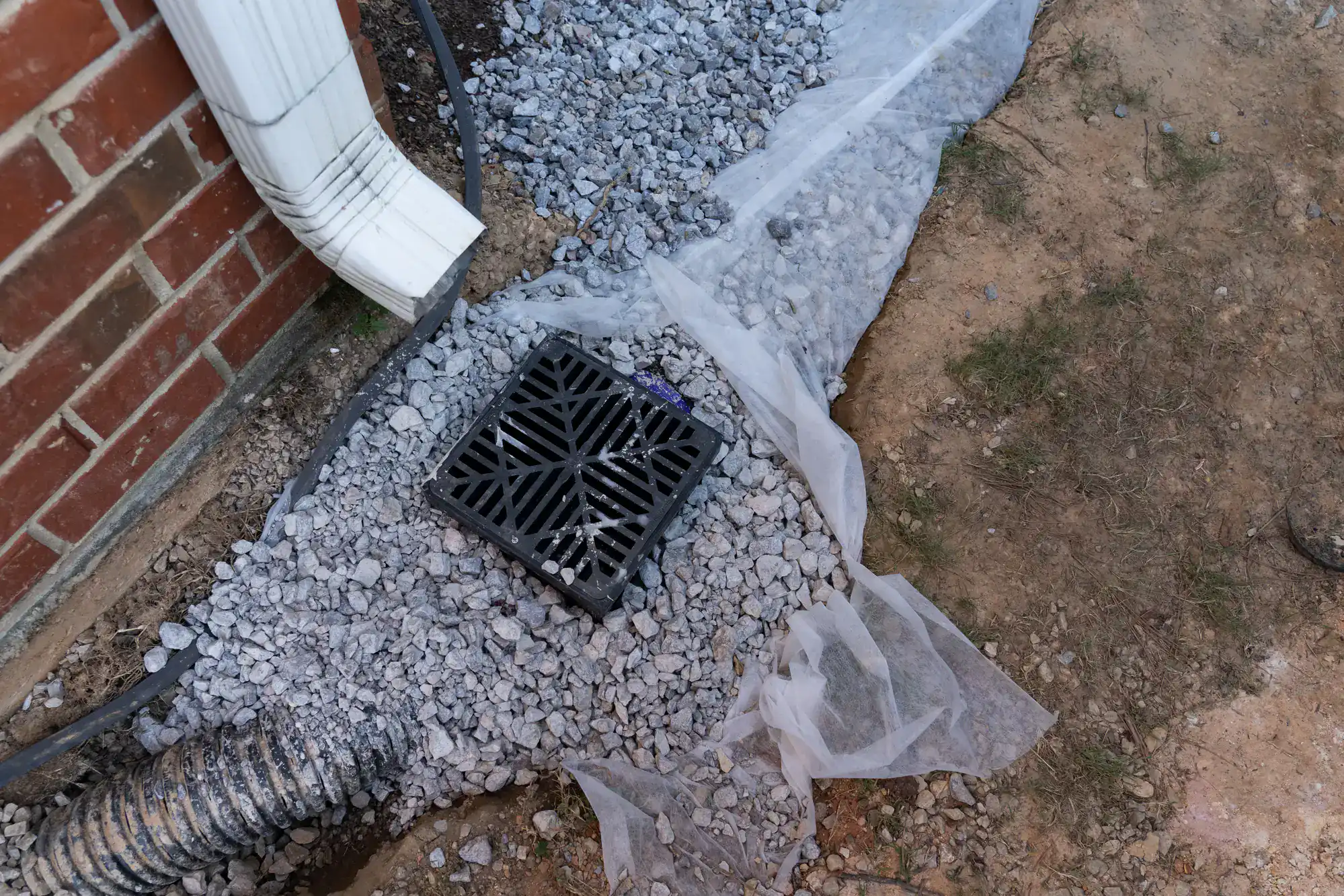
The installation itself involves excavating a trench along the path where water is collecting, lining it with geotextile filter fabric, filling it with washed angular gravel, and laying perforated pipe at a calculated slope so water flows consistently to the outlet point. Once the system is in, we backfill, replace topsoil, and seed the disturbed areas. The goal is a yard that looks better than it did before and drains better than it ever has. We don’t leave a job site that looks like a construction zone.
Ready to get started?
Every French drain system we install in Gordon Heights is specified for the conditions that actually exist here. That means double-punched geotextile filter fabric wrapping the entire gravel bed not just the pipe because the silty clay soil in central Suffolk County will infiltrate an under-protected system within a few seasons and clog it from the inside out. It means washed angular gravel, not round pea gravel, because angular material locks together and maintains flow channels over time. And it means a consistent slope one inch of drop for every eight to ten feet of pipe run so water moves through the system instead of sitting in it.
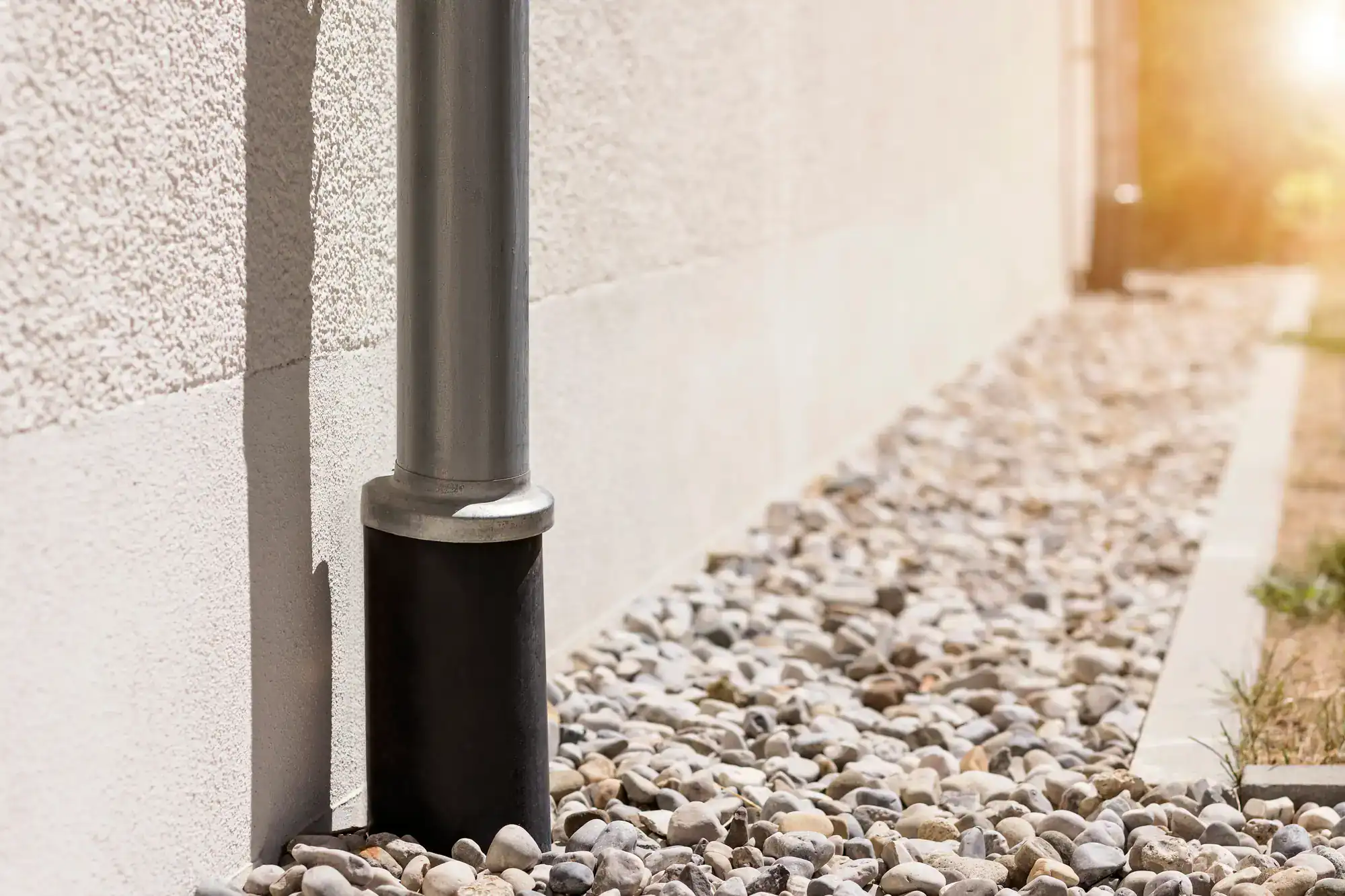
For Gordon Heights homeowners specifically, there’s another layer worth knowing about. Most homes in this area rely on cesspools or septic systems rather than public sewers. When the water table rises during heavy rain exactly when your yard is flooding and your basement is seeping your cesspool is simultaneously being stressed from below. A French drain system that redirects groundwater away from your foundation also reduces the hydraulic load on your cesspool. One investment, multiple layers of protection.
Residential French drain installation in Gordon Heights typically runs between $5,000 and $12,000 depending on system length, soil conditions, and outlet configuration. That range sounds significant until you put it next to foundation crack repair, which starts at $15,000 and climbs to $50,000. On a home valued at over $413,000 where median values have nearly tripled since 2000 protecting your foundation with a properly installed drainage system is straightforward math.
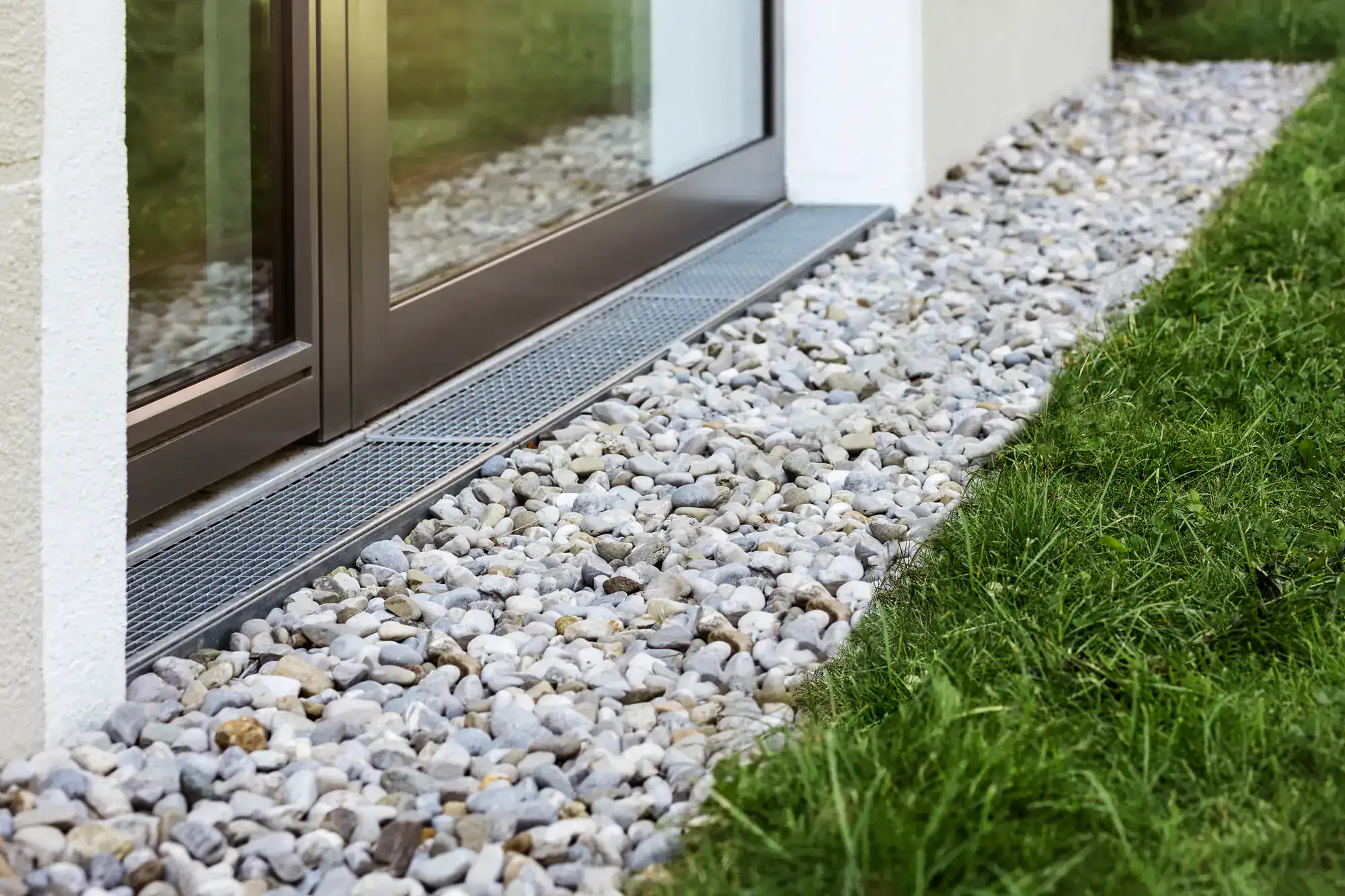
The short answer is the soil. Central Suffolk County’s mid-island soil profile includes layers of clay and silt loam beneath the surface that are nearly impermeable when saturated. Unlike sandy coastal soils that drain quickly, clay holds water and releases it very slowly which is why your yard can still be soggy three or four days after a storm that your neighbors in other parts of Long Island have already forgotten about.
Gordon Heights compounds this because of its wooded character. Mature tree canopy slows evaporation, organic debris on the soil surface reduces infiltration, and root systems can disrupt natural drainage patterns across a lot. When the water table is already elevated from a wet season which happens regularly in the spring and after extended rain events like the August 2024 storm that hit the northern Suffolk corridor there’s simply nowhere for surface water to go. A French drain system intercepts that water before it saturates your yard and redirects it to a proper outlet point, solving the problem at the source.
For a residential French drain installation in Gordon Heights, most homeowners spend somewhere between $5,000 and $12,000. Where you land in that range depends on a few things: how long the system needs to be, how deep the trench needs to go to get below the clay layer, what the outlet configuration looks like, and whether the work requires any permitting through Brookhaven Town.
The more useful number to keep in mind is what you’re comparing it against. Foundation crack repair in this area starts around $15,000 and can reach $50,000 depending on severity. Mold remediation starts at $3,000 and escalates fast once it’s established in a basement. And if you’re thinking about selling, a documented history of basement water intrusion can reduce your home’s market value by 10% or more at the point of sale. On a Gordon Heights home valued at over $413,000, that’s a potential loss of more than $41,000. The French drain cost looks different in that context.
It depends on the scope of the work. In the Town of Brookhaven which governs Gordon Heights permits are generally required when drainage work alters surface water flow patterns, when the system is located near wetlands or a body of water, or when the outlet directs water toward a public right-of-way or adjacent property. Not every residential French drain triggers a permit requirement, but some do, and getting that wrong creates problems down the road.
What’s required before any digging in New York State, regardless of permit status, is a call to 811 to have underground utilities marked. This is a legal requirement, not optional. We handle the 811 call and manage any required permit applications through Brookhaven Town as part of the job. You don’t have to navigate that process yourself. If the scope of your project requires additional review for example, if your property is near a wetland area in the Gordon Heights corridor we’ll let you know upfront, before any work is quoted or scheduled.
A French drain system installed with quality materials and proper design should last 30 to 40 years. The operative word is “installed correctly” because the failure modes that shorten a system’s life are almost always materials-related, and they don’t show up immediately. A system installed with the wrong filter fabric will start silting up within a few seasons as Suffolk County’s clay-and-silt soil infiltrates the gravel bed. A system installed with corrugated plastic tubing instead of rigid perforated pipe can collapse under soil pressure. Neither failure is visible at the time of installation.
In Gordon Heights specifically, the wooded lot environment adds a layer of consideration. Root intrusion into perforated pipe is a real failure mode when mature trees are nearby, which is why the filter fabric specification matters so much here. A double-punched geotextile fabric that wraps the entire gravel bed not just the pipe creates a physical barrier against both fine soil particles and organic infiltration. Annual visual inspection of the outlet point is a good habit, but a properly installed system in this area should run for decades without needing significant intervention.
In most cases, yes but the right answer depends on where the water is actually coming from. There are two primary sources of basement water intrusion: surface water that migrates toward the foundation because of poor grading or inadequate drainage, and groundwater that builds hydrostatic pressure against basement walls as the water table rises. A French drain system addresses both, but the design differs depending on the source.
For Gordon Heights homes, the groundwater piece is particularly relevant. The Long Island aquifer system underlies the entire mid-island corridor, and the water table here can rise significantly during wet seasons and after sustained heavy rain. When that happens, the hydrostatic pressure on basement walls increases, and older mid-century homes the ranch-style and hi-ranch construction that defines a lot of Gordon Heights weren’t built with drainage infrastructure designed to handle that load. A perimeter French drain system installed at the foundation level intercepts that groundwater before it builds pressure against your walls. It’s not a cosmetic fix it’s addressing the actual mechanism that’s letting water in.
This is one of the most common concerns we hear from Gordon Heights homeowners, and it’s a fair one. The wooded character of these lots is one of the main reasons people chose to live here, and the idea of excavation running through an established yard understandably raises questions about what gets disturbed and what gets restored.
The honest answer is that installation does require excavation there’s no way around that. But a well-planned system routes around significant root zones where possible, and the trench profile for a French drain is typically narrow enough that it doesn’t require removing established trees or large shrubs. After installation, we backfill the trench, replace topsoil, and seed or sod the disturbed areas to match the surrounding lawn. Root intrusion into the pipe over time is a real consideration in wooded settings, which is why the filter fabric specification we use is specifically designed to create a barrier against organic infiltration not just soil particles. The system is built to coexist with your landscape, not compete with it.