
Hear from Our Customers
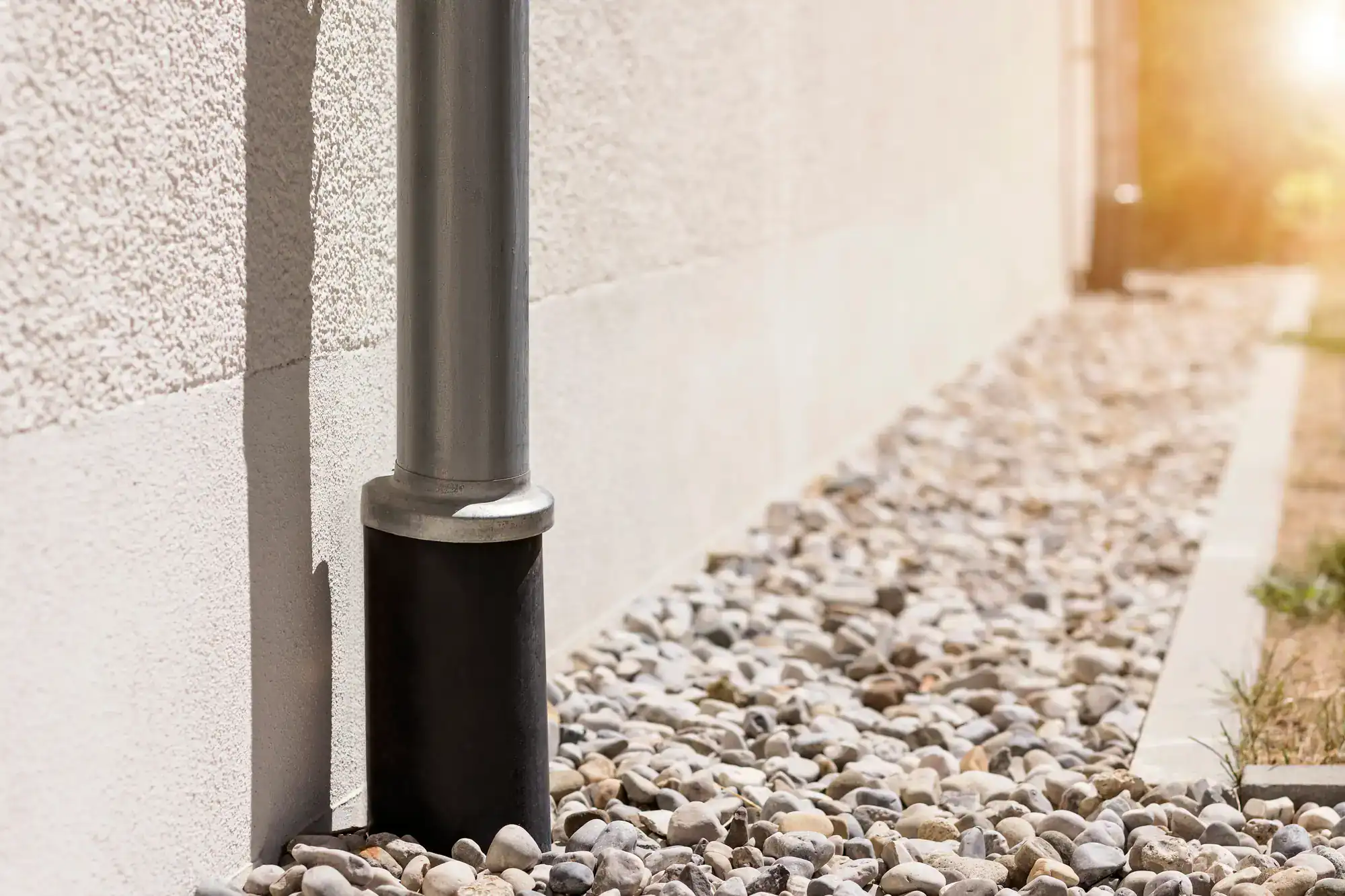
When a French drain system is installed correctly, the difference is immediate and obvious. Water moves away from your foundation instead of sitting against it. Your yard dries out after rain instead of staying saturated for days. The low spots that turned into ponds after every storm stop being a problem. That’s what a properly designed residential French drain installation actually delivers not a temporary patch, but a permanent fix.
For Hauppauge homeowners specifically, this matters more than most people realize. The median home here was built around 1969, which means the original drainage infrastructure dry wells, perimeter grading, downspout connections is now pushing 55 years old. Those systems were designed for a different rainfall baseline. After the August 2024 storm that dropped 9.4 inches of rain in 24 hours across western Suffolk County, a lot of homeowners found out the hard way that their aging drainage couldn’t keep up. A modern French drain system is how you stop relying on infrastructure that was never meant to last this long.
The water table across this part of Long Island is also documented as high, particularly in East Hauppauge. When the ground saturates quickly, water has nowhere to go but toward your foundation. A properly installed French drain intercepts that water before it gets there and redirects it to a defined outlet point. With median home values in Hauppauge sitting between $700,000 and $792,000, the math on protecting that asset is straightforward.
We’re a water drainage contractor that works throughout western Suffolk County, including Hauppauge and the surrounding communities. We know this area the soil composition, the water table behavior, the aging housing stock in neighborhoods like the Bird Section, and the permit complexity that comes with Hauppauge sitting across both the Town of Smithtown and the Town of Islip jurisdictions.
That dual-town boundary is something most contractors don’t think about until it becomes a problem. Depending on where your property sits in Hauppauge, your drainage project may fall under Smithtown’s Chapter 153 stormwater ordinance, Islip’s parallel stormwater code, or both. We handle the permit research and filings so you don’t have to figure that out on your own.
We don’t subcontract the work. The crew that shows up to assess your property is the same crew that installs the system. Every job starts with a free on-site assessment not a sales pitch, but an actual diagnosis of where your water is coming from and what it will take to fix it for good.
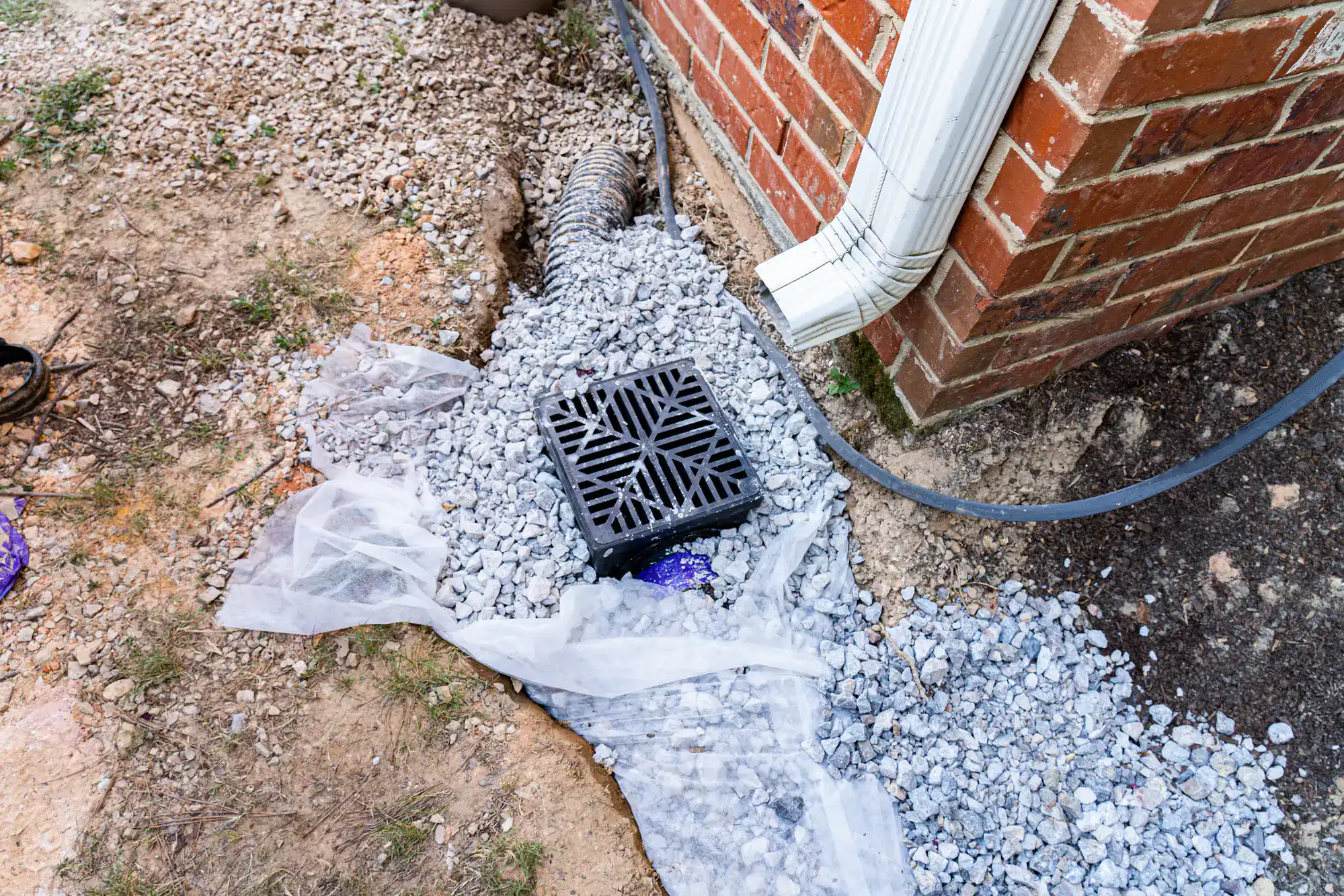
It starts with the free on-site assessment. We come to your property, walk the yard, look at where water is entering or pooling, check the grade, and assess whether the existing drainage infrastructure dry wells, downspout connections, any perimeter systems is functional or failing. In Hauppauge’s older housing stock, it’s common to find original dry wells that have silted over completely, which means water that used to have somewhere to go now has nowhere. We identify that before we quote anything.
From there, we design a system specific to your property not a one-size-fits-all trench. The design accounts for your soil type, your lot’s topography, the frost depth requirements for Long Island winters, and where the outlet point will be. Before any digging starts, we file the required notifications under New York’s 811 Call Before You Dig law and confirm any permit requirements under whichever town jurisdiction your property falls in. That step protects you legally and protects your property practically.
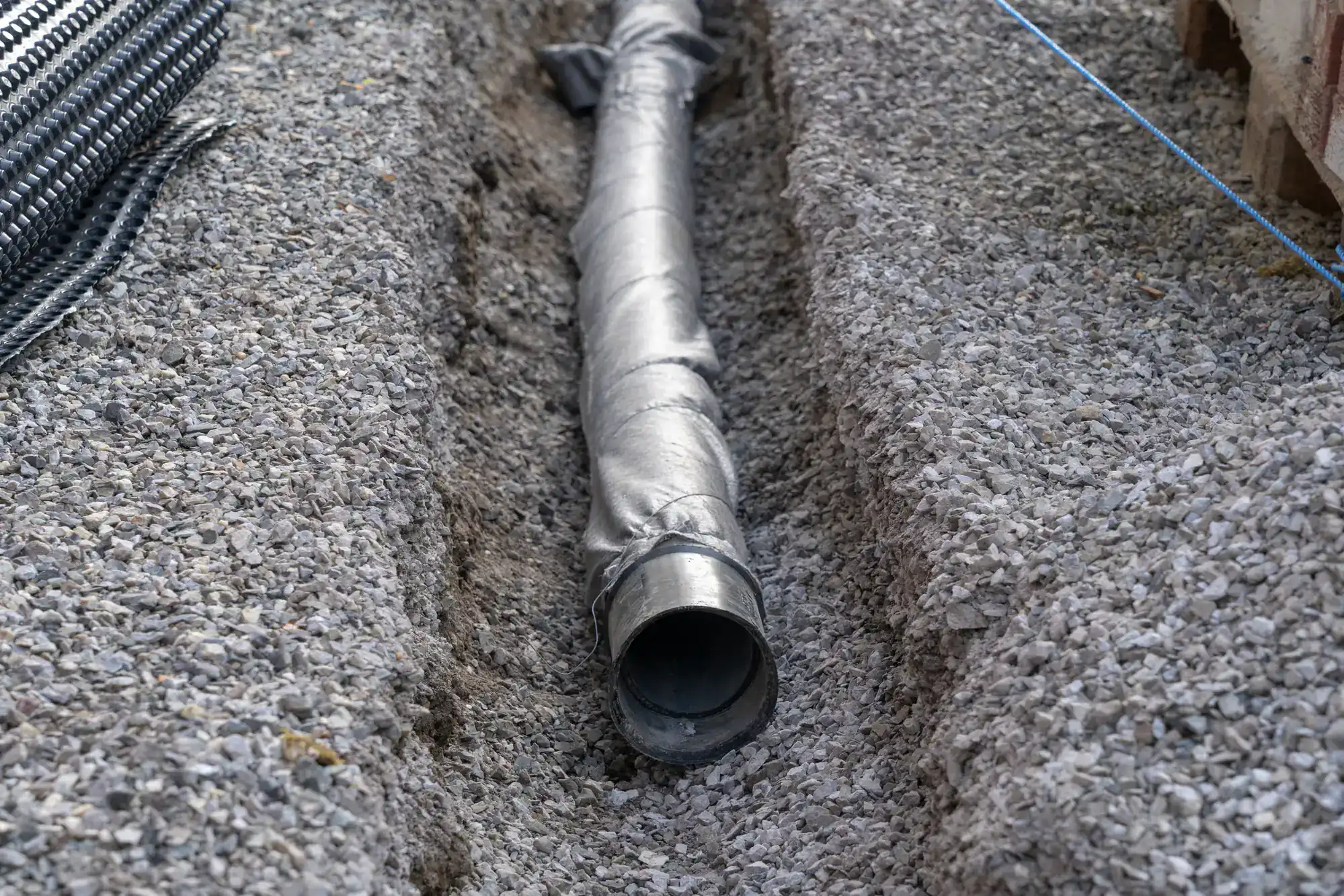
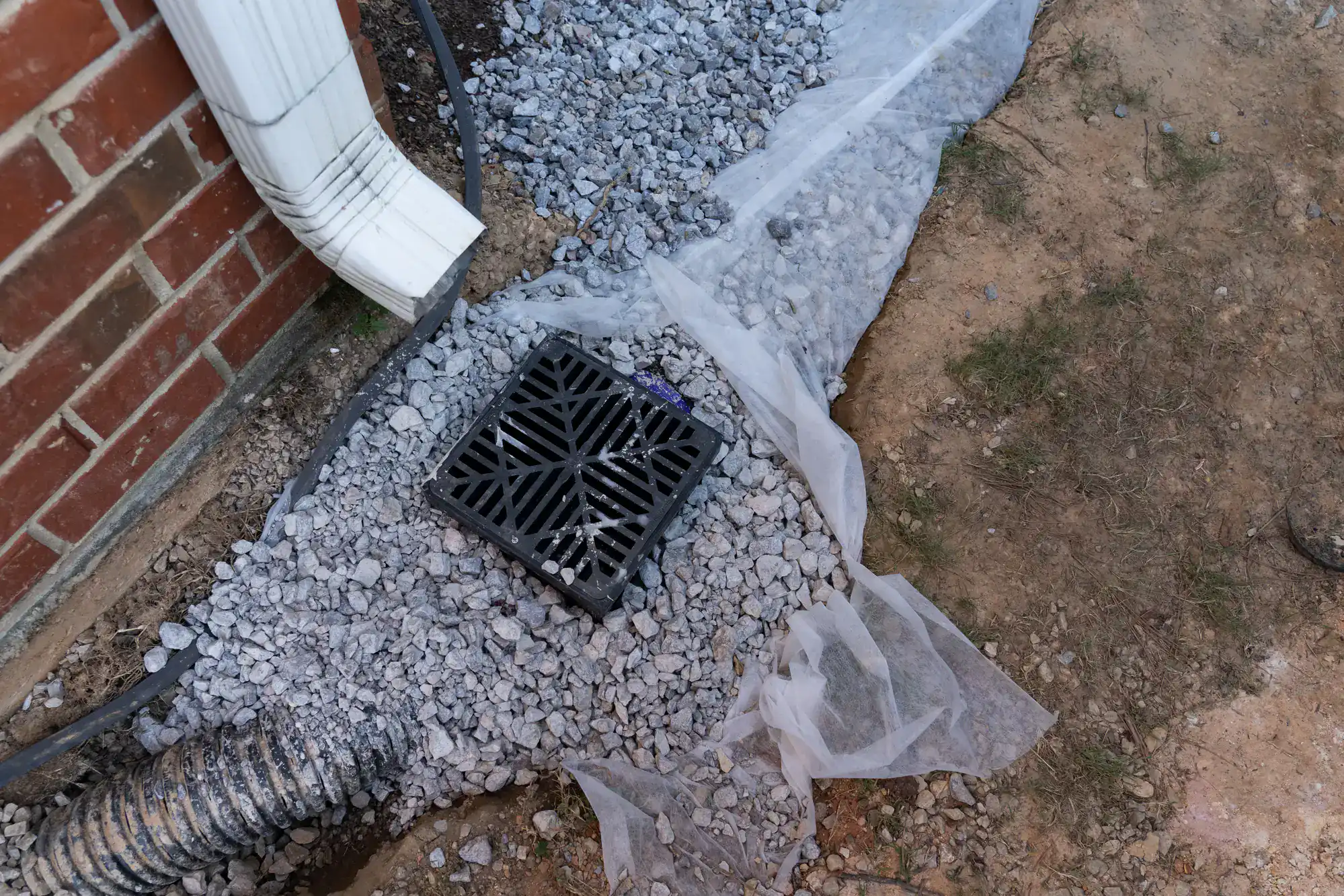
Installation typically takes one to three days for a residential job. We use perforated SDR pipe, double-punched geotextile filter fabric, and washed angular gravel not the cheap corrugated tubing or landscape fabric that fails within a few years. When the work is done, the yard is fully restored: topsoil, seeding, or sod matched to your existing lawn. The goal is that you can barely tell we were there except that the water problem is gone.
Ready to get started?
Every French drain system we install in Hauppauge is designed around what’s actually happening on that specific property. That means we’re looking at surface drainage issues yard ponding, soggy low spots, runoff from neighboring lots as well as subsurface conditions, including the water table depth and how quickly your soil saturates during sustained rainfall. In some cases, the right solution is a yard drainage system. In others, it’s a perimeter foundation drain, an interior footing drain, or a combination. We tell you what your property actually needs, not what’s easiest to install.
Because Hauppauge spans two municipal jurisdictions, every project also involves confirming which town’s stormwater management requirements apply and whether any permits need to be pulled. The Town of Smithtown’s property maintenance code explicitly requires that surface and subsurface water be adequately drained to protect buildings and properties. If your drainage is failing, you may already be out of compliance and a documented fix protects you on that front as well.
Materials matter more than most homeowners know. Corrugated plastic pipe clogs. Landscape fabric silts over. Round pea gravel doesn’t drain the same way angular stone does. We specify every component for durability because a French drain system that fails in three years isn’t a solution, it’s a delay. Our systems are built to last 30 to 40 years in Long Island’s climate, including the freeze-thaw cycles that stress inferior pipe installations every winter.
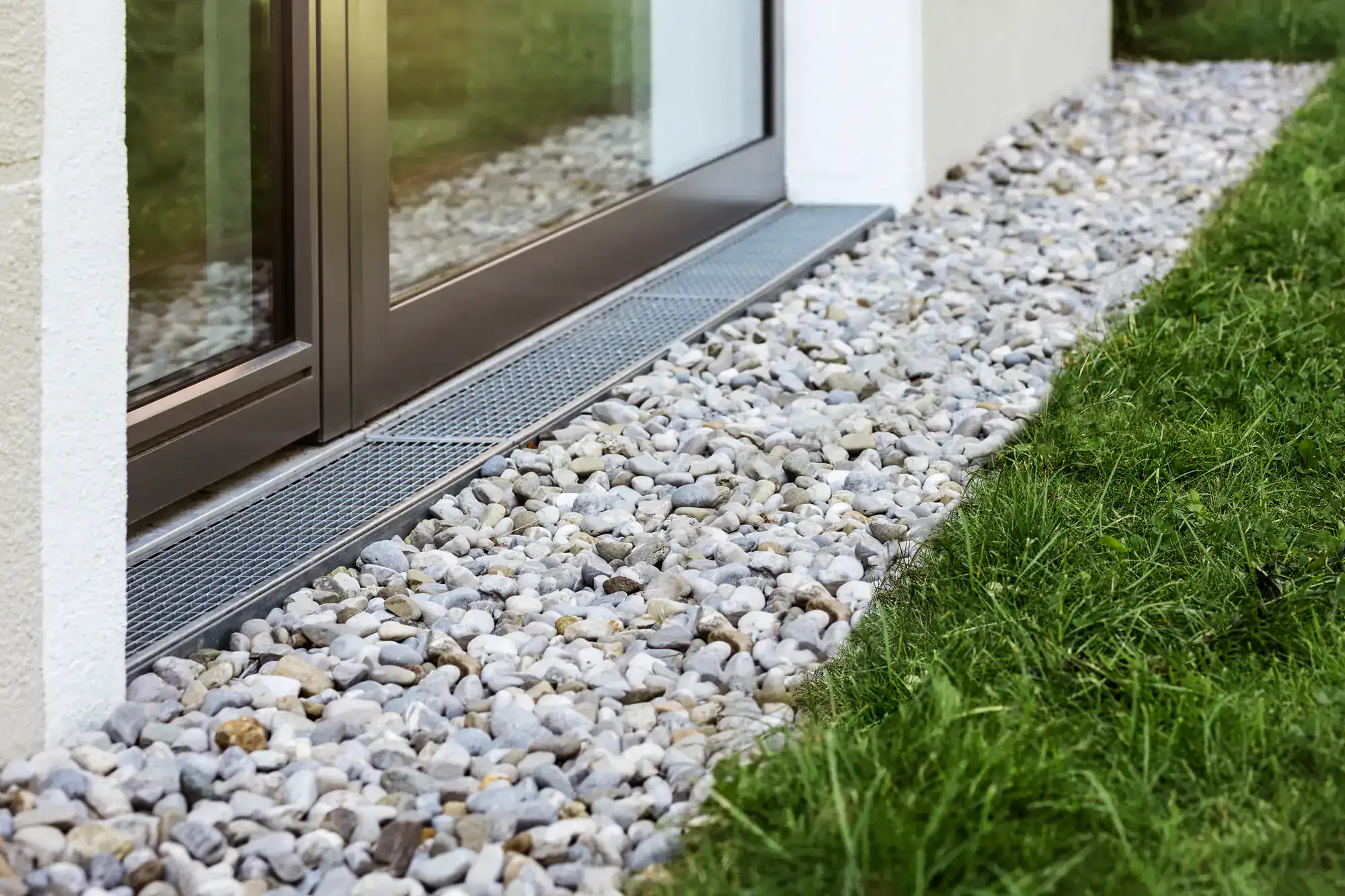
The honest range for a residential French drain installation in Hauppauge is roughly $3,500 to $12,000, depending on the length of the system, the complexity of the drainage problem, and whether the outlet point requires a new dry well or connects to an existing one. National averages hover around $9,000, and Long Island pricing typically runs at or above that midpoint given local labor costs and permit requirements.
What drives cost up in Hauppauge specifically is often the condition of the existing drainage infrastructure. In homes built in the 1950s and 1960s which make up a large portion of Hauppauge’s housing stock original dry wells are frequently collapsed or silted over and need to be replaced as part of the project. That adds cost, but it’s also the only way to make the new system function correctly. A French drain that outlets into a failed dry well is just moving the problem underground. We give you a written quote after the on-site assessment, so you know exactly what you’re getting and why before any work begins.
It depends on the scope of the work and which side of Hauppauge your property sits on. Because Hauppauge straddles both the Town of Smithtown and the Town of Islip, the applicable permit requirements vary by location. Smithtown’s Chapter 153 stormwater management ordinance governs land development and drainage activities on the Smithtown side. Islip has parallel stormwater management requirements on its side of the boundary. For most single-family residential French drain installations, a full stormwater pollution prevention plan isn’t required but specific permit filings may still apply depending on the project’s proximity to wetlands, flood zones, or town drainage infrastructure.
Beyond local permits, New York State law requires all excavators to notify 811 before any digging begins, without exception. This protects against striking buried utility lines, and it’s a legal requirement not optional. We handle all of this as a standard part of every project. You won’t be left trying to figure out which town’s rules apply to your address or whether you need to make a call before the crew shows up.
There are usually two things happening at once. The first is surface drainage your yard has low spots or compacted soil that holds water instead of letting it move toward a drain or outlet. The second is a subsurface issue the water table in this part of western Suffolk County is documented as high, which means groundwater rises quickly during heavy rain and saturates the soil from below, not just from above. When both are happening simultaneously, even a yard with reasonable grading can stay wet for days.
In Hauppauge’s older neighborhoods, a third factor is often in play: the original dry well that was supposed to receive surface runoff has silted over or collapsed. Water that used to drain away now has nowhere to go. This is extremely common in homes built in the 1950s through 1970s, which describes most of Hauppauge’s housing stock. A French drain system addresses all three of these problems by intercepting surface and subsurface water and moving it to a functional outlet point. The first step is figuring out which combination of factors is driving your specific problem which is exactly what the on-site assessment is for.
Yes if it’s installed correctly for Long Island’s frost conditions. The key variable is burial depth. Pipe that’s installed too shallow will freeze during a hard winter, and Long Island does get genuine freeze-thaw cycles even with its coastal moderation. When a French drain freezes, it stops functioning exactly when you need it most during late-winter snowmelt, when the ground is still partially frozen and surface water has nowhere to infiltrate.
We install pipe at the appropriate depth for Long Island’s frost line, which eliminates that vulnerability. We also use solid pipe sections in areas where freezing is a concern, rather than perforated pipe that can trap water and ice. The systems we install are designed to handle what Long Island’s winters actually deliver not what a generic installation guide assumes. A properly built French drain system in Hauppauge should function reliably through 30 to 40 years of seasonal cycles without freeze-related failures.
In most cases, the answer is both and they work together rather than being alternatives. A French drain is a collection and transport system: it gathers water from the soil and surface and moves it to a defined outlet. A dry well is often that outlet an underground chamber that allows collected water to slowly percolate back into the surrounding soil. In Hauppauge, where the original dry wells installed in the 1950s and 1960s have reached or exceeded their functional lifespan, many drainage projects involve installing a new French drain system that outlets into a new or rehabilitated dry well.
Whether you need a French drain, a dry well, or both depends on your lot’s topography, your soil’s permeability, how quickly your water table rises during heavy rain, and where the water is actually coming from. A yard with a single low spot might only need a catch basin and dry well. A yard with widespread saturation along a foundation needs a full perimeter French drain system with a proper outlet. The on-site assessment answers that question definitively there’s no way to give you an accurate answer without actually looking at your property.
Most residential French drain installations in Hauppauge take one to three days from start to finish, depending on the length of the system and whether any dry well work is included. The excavation is targeted we dig where the system needs to go, not across your entire yard. For established properties in neighborhoods like the Bird Section or the older sections of Hauppauge Northwest, where homeowners have invested years in their landscaping, we work carefully around existing plantings and mature trees wherever the design allows.
When the installation is complete, the trench is backfilled, compacted, and restored. That means topsoil is brought back in, and the surface is seeded or sodded to match your existing lawn. Within a few weeks of growth, the work area blends back in. The disruption is temporary typically a few days of visible excavation. The fix is permanent. If your home has been dealing with a wet yard or a damp basement for years, a few days of yard disruption is a reasonable trade for a drainage system that handles whatever western Suffolk County’s weather sends your way for the next several decades.