
Hear from Our Customers
The most immediate thing you notice is the yard itself. No more standing puddles that hang around for two or three days after a rainstorm. No more soggy patches that kill the grass, invite moss, and make half your property unusable from March through May. In Lake Grove, where spring snowmelt and nor’easter rains hit ground that’s still half-frozen, that kind of chronic saturation isn’t just annoying it’s a warning sign that water is pressing against your foundation.
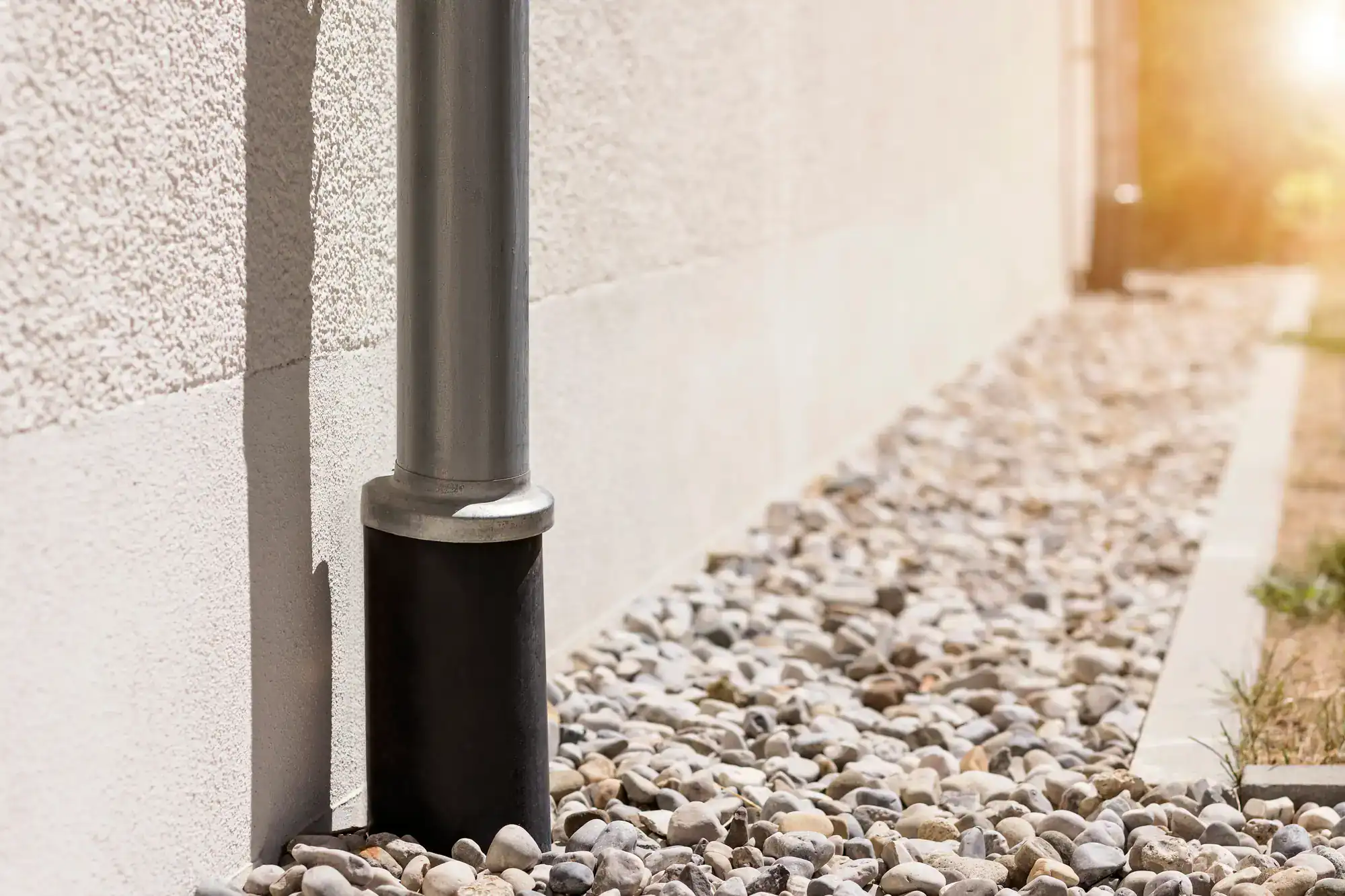
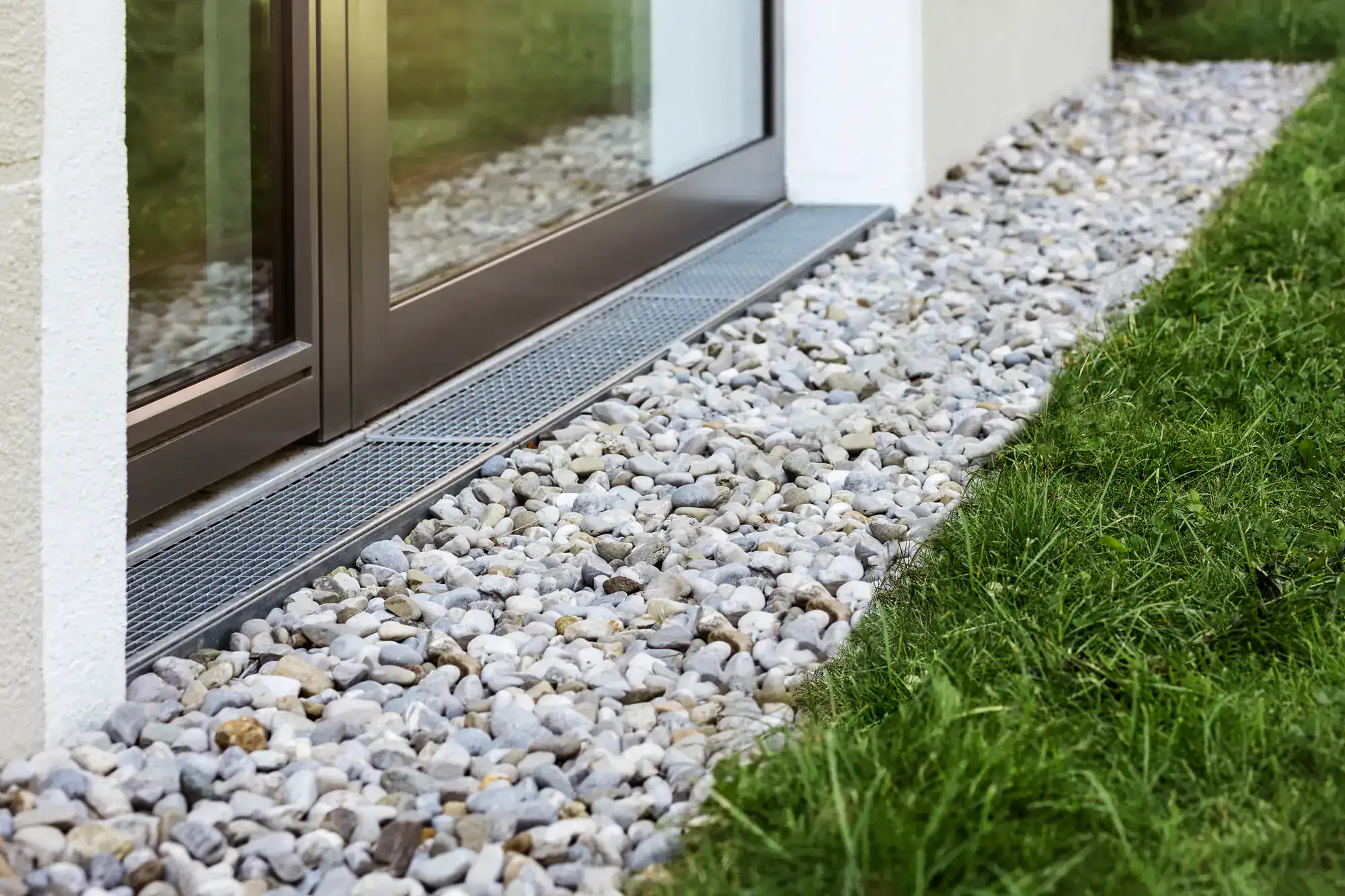
Most of the homes in Lake Grove were built in the 1950s through the 1970s, during the rapid development that followed the village’s incorporation. Those homes weren’t built with engineered drainage systems. The original grading has settled. Downspouts discharge against foundation walls. Decades of driveways, patios, and additions have reduced the yard’s ability to absorb water. A properly installed French drain system intercepts that water before it reaches your foundation and moves it away quietly, underground, without any ongoing maintenance on your part.
The long-term picture matters too. A wet basement in Lake Grove’s current market where median home values sit between $500,000 and $733,000 is a liability at closing. Buyers walk away from wet basement disclosures. A French drain system that’s documented and warranted is the opposite of that. It’s proof the home has been maintained and protected.
We’re a residential drainage contractor serving Long Island homeowners, with a focus on French drain installation, yard drainage, and foundation water management. We work throughout central and western Suffolk County the same aging-suburban landscape that defines Lake Grove, Centereach, Nesconset, Stony Brook, and the surrounding communities.
That matters because drainage isn’t a one-size-fits-all service. The soil conditions in central Suffolk County, the freeze-thaw cycle that runs from December through February, the post-war housing stock that makes up most of Lake Grove’s neighborhoods these are things we work with every day. When we assess a property near Middle Country Road or in one of the ranch-and-cape developments that grew up around the village after incorporation, we’re not guessing at what’s happening underground. We’ve seen it before.
Every project starts with a free on-site assessment. No phone quotes, no guesswork. We look at the property, find the source of the problem, and tell you exactly what a solution looks like before you spend a dollar.
It starts with the assessment. We come to your property, walk the yard, identify where water is entering, where it’s pooling, and where it needs to go. We look at the slope, the soil, the proximity to your foundation, and the available outlet points. In Lake Grove, that assessment also accounts for the Village’s own building code requirements because Lake Grove is an incorporated village with its own Building Inspector, separate from the surrounding Town of Brookhaven. If permits are required, we handle that process. You don’t have to navigate it.
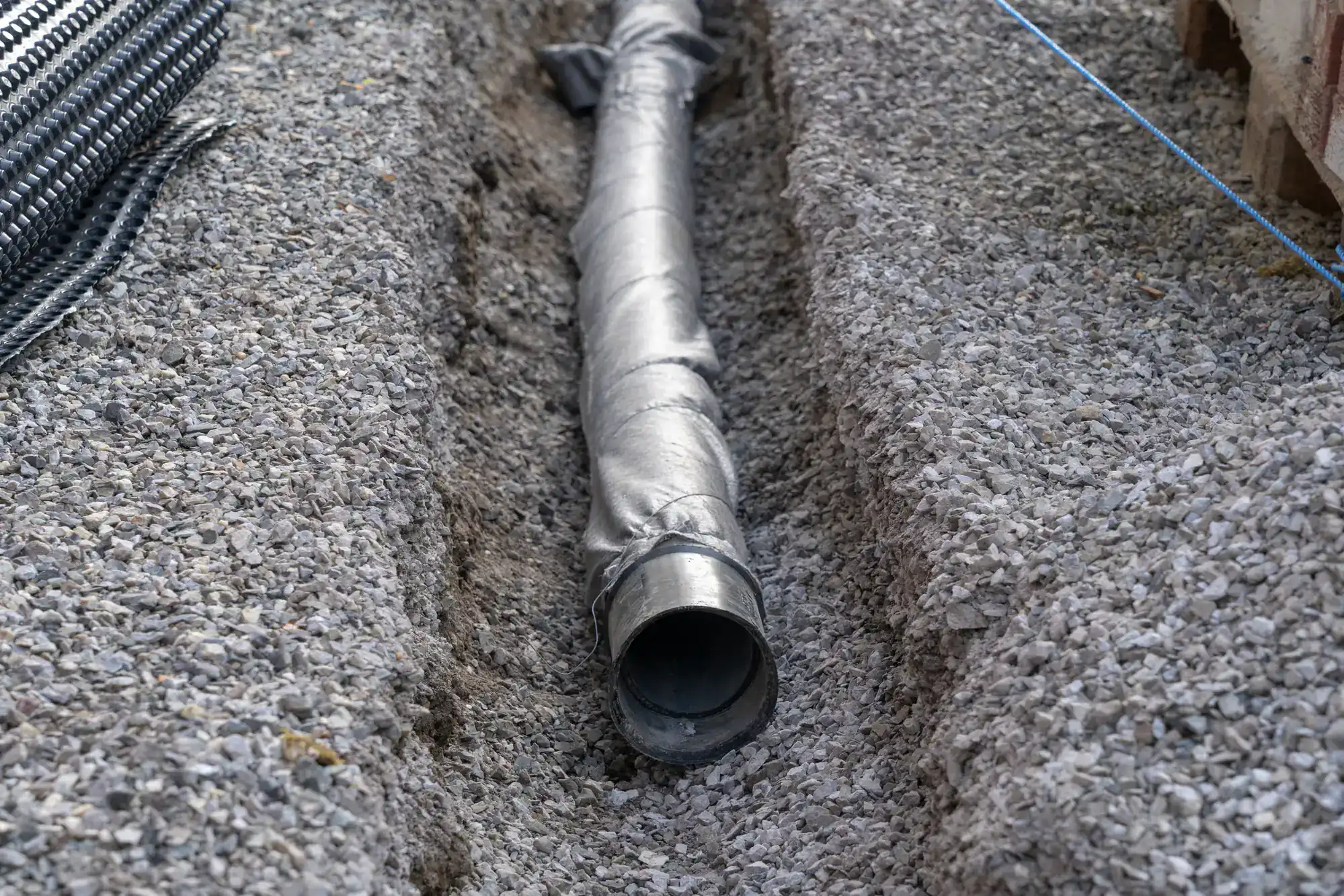
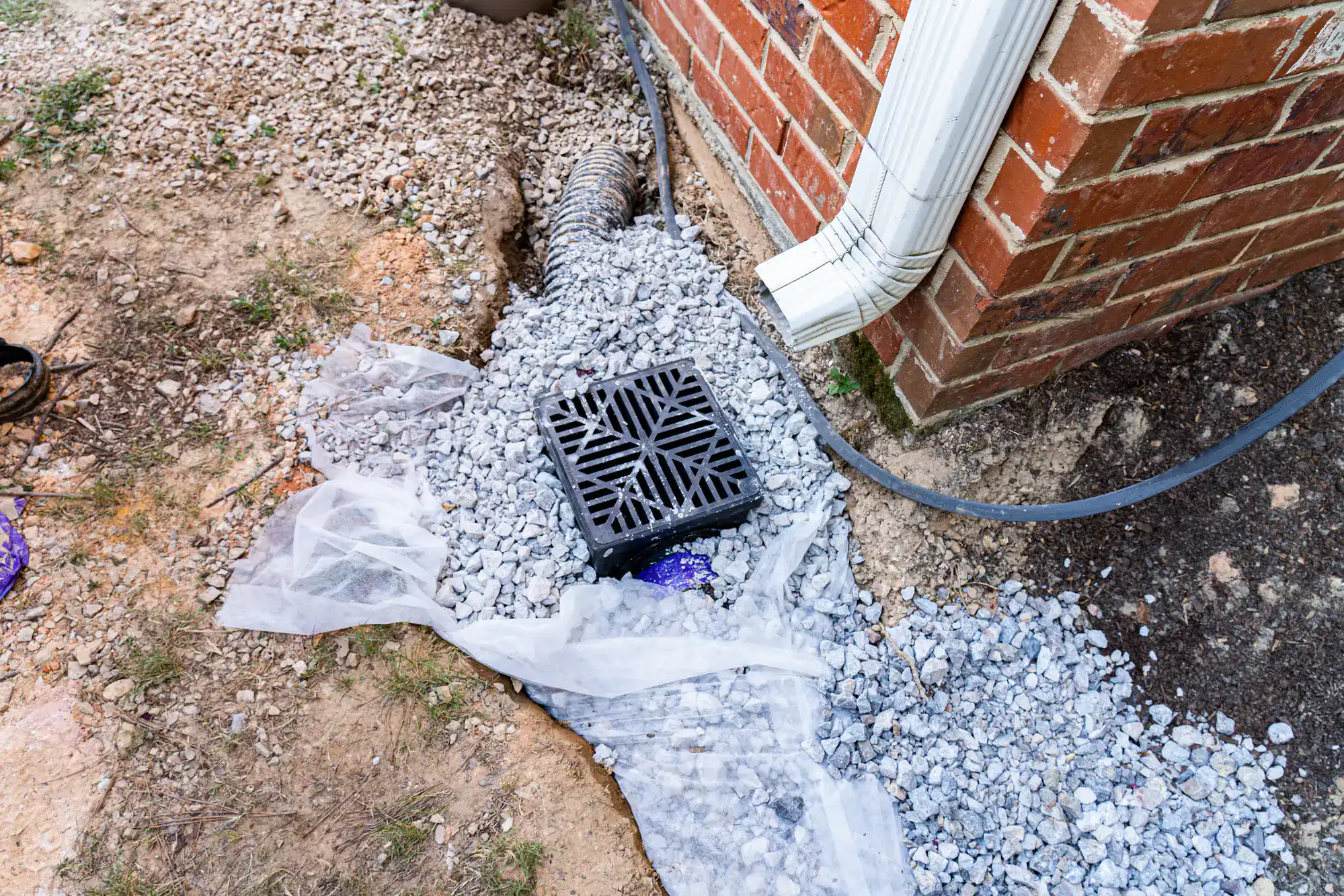
Once the plan is set, we handle the 811 utility marking call before any digging starts that’s required by New York State law, and it protects your property from gas line or cable damage. Then we excavate the trench, lay the geotextile filter fabric, place the washed angular gravel bed, and set the perforated pipe at the correct depth and slope. In Suffolk County, pipe depth matters more than most contractors will tell you. A system installed too shallow will freeze during our winter freeze-thaw cycles and fail within a few years. We install at the depth appropriate for Long Island’s frost conditions so the system works in February just as well as it does in July.
After the pipe is connected to a defined outlet point and the trench is backfilled, we restore the surface topsoil, seeding, and cleanup included. Most residential installations in Lake Grove are completed in one to three days. The disruption is short. The fix is permanent.
Ready to get started?
The difference between a French drain that lasts 30 to 40 years and one that clogs and fails in three comes down to materials and installation discipline. We use perforated pipe not cheap corrugated tubing wrapped in double-punched geotextile filter fabric that surrounds the entire gravel bed, not just the pipe. The gravel is washed and angular, which maintains void space and prevents fine particles from migrating into the system over time. The pipe is laid at a calculated slope typically one inch of drop per eight to ten feet so gravity does the work consistently, year after year.
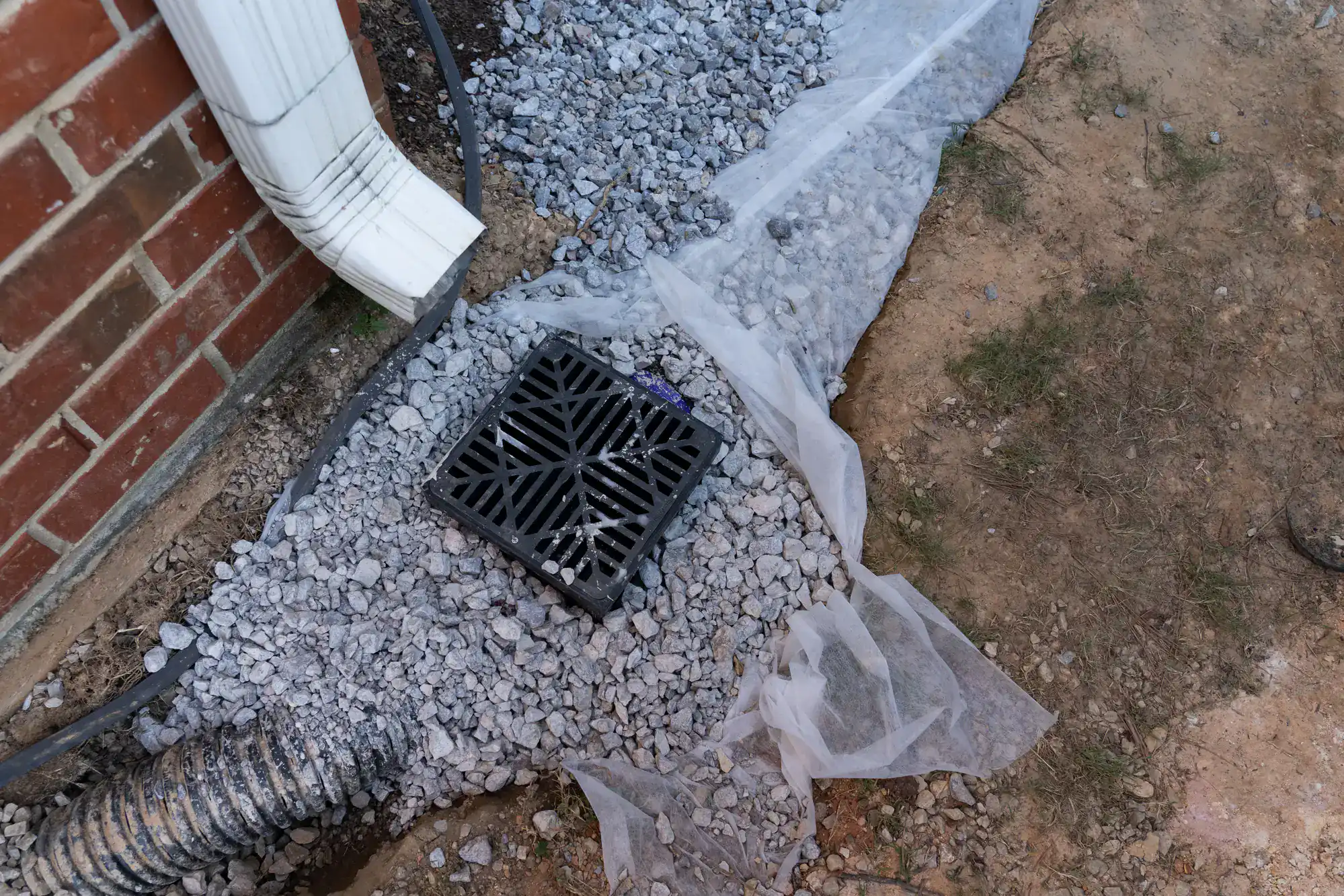
Every installation includes a clearly defined outlet point. Water has to go somewhere, and that destination is engineered into the design from the start, not figured out at the end. For Lake Grove properties where the Village Code or Town of Brookhaven’s stormwater regulations require a specific discharge approach, we design the outlet accordingly and ensure full compliance. We also coordinate with the Village Building Inspector when permits are required so the installation is documented, inspected, and on record.
Yard restoration is part of every job. When we leave your property, the trench is backfilled, the surface is seeded or matched to your existing lawn, and the area is cleaned up. What you’re left with is a yard that drains and no visible evidence that we were ever there.
It depends on the scope of the work, but in Lake Grove specifically, the answer is often yes and it’s worth taking seriously. Lake Grove is an incorporated village, which means it operates under its own Village Code and has its own Building Inspector, separate from the Town of Brookhaven’s permitting process. Drainage work that involves significant grading, changes to stormwater flow, or discharge to a public right-of-way may require a permit from the Village Building Department. The surrounding Town of Brookhaven also has its own stormwater management regulations under Chapter 35 of the Town Code, which governs grading and roof runoff management for residential properties.
On top of that, New York State requires all excavators to call 811 before digging to have underground utilities marked that’s not optional, and it’s something we handle as a standard part of every job. We’re familiar with both the village-level and town-level requirements in Lake Grove, and we manage the permit process from start to finish so you don’t have to figure it out yourself.
Most residential French drain installations fall in the range of $5,000 to $9,250, depending on the length of the drain run, the complexity of the outlet point, the soil conditions on the property, and whether any additional grading or downspout management is included. In Lake Grove, where many homes sit on quarter-acre to half-acre lots with aging drainage infrastructure, the average project tends to land in the middle of that range though every property is different, and the only way to give you an accurate number is to walk the yard.
What’s worth keeping in mind is the cost comparison. Foundation repair in this market runs $15,000 to $50,000. Mold remediation starts at $3,000 and climbs quickly once it spreads into walls and framing. And a wet basement flagged by a home inspector during a sale can reduce your asking price by 10% or more on a $600,000 Lake Grove home, that’s $60,000 off the table. A French drain installation is not an expense you’re adding. It’s a much larger expense you’re preventing. We offer a free on-site assessment so you know exactly what you’re looking at before committing to anything.
A properly installed French drain system with the right materials, correct depth, and engineered slope should last 30 to 40 years without significant maintenance. The key phrase there is “properly installed.” The most common reason French drains fail prematurely on Long Island is installation depth. Pipes buried too close to the surface will freeze during Suffolk County’s winter freeze-thaw cycles, which run from roughly December through February and involve repeated temperature swings above and below freezing. When a pipe freezes and thaws repeatedly, it cracks. Once the pipe cracks, the system fails and you’re looking at a costly repair or full replacement.
The second most common failure point is fabric and gravel selection. Systems built with round pea gravel instead of angular washed gravel, or without proper geotextile filter fabric wrapping the entire gravel bed, allow fine soil particles to migrate into the system over time. That silting process gradually clogs the drain until it stops functioning. We specify materials and installation depth specifically for Long Island’s climate and soil conditions which is why our systems are built to last decades, not just years.
In most Lake Grove yards, it comes down to one or more of a few things. The most common is compacted soil. The majority of homes in the village were built between the 1950s and 1970s, and decades of foot traffic, lawn maintenance, and construction have compressed the soil to the point where water can’t percolate the way it once did. Central Suffolk County soils are naturally sandy loam decent drainage when undisturbed but compaction changes that significantly.
The second major factor is impervious surface expansion. Every driveway extension, patio, walkway, or addition added over the years is surface area that water can no longer absorb into. That water has to go somewhere, and it usually ends up pooling in the lowest point of the yard or against the foundation. The third factor is grading. Original grading from when the home was built has often settled, shifted, or been altered by landscaping over the decades, and the slope that once moved water away from the structure now directs it toward it. A French drain system addresses all three of these by intercepting water at its source and moving it to a defined outlet regardless of what the soil, grade, or surface conditions are doing.
An exterior French drain can absolutely be part of the solution for a wet basement and in many cases, it’s the most effective and lasting fix available. The key is understanding where the water is coming from. If your basement is getting wet because surface water and rainwater are saturating the soil around your foundation and pressing through the walls or floor, an exterior French drain system intercepts that water before it ever reaches the structure. It’s a preventive approach, and it addresses the source of the problem rather than just managing the symptoms.
What a French drain does not replace is a sump pump system for water that’s already inside the basement, or interior waterproofing for active wall seepage. In some Lake Grove homes particularly older ranch and cape-style homes where the original foundation waterproofing has degraded over decades the most complete solution combines an exterior French drain to manage yard and surface water with an interior drainage approach for any water that does get through. During our free on-site assessment, we’ll tell you honestly what’s driving the problem and whether a French drain alone will solve it, or whether a combined approach makes more sense for your specific property.
Most residential French drain installations in Lake Grove are completed in one to three days. The timeline depends on the length of the drain run, the complexity of the outlet point, and whether any additional grading work is involved. Larger or more involved systems properties with multiple problem areas or significant slope correction needed can take longer, but single-run installations on a typical Lake Grove lot are usually a one-to-two day job.
As for the yard, yes excavation is involved. There’s no way around that. But the disruption is contained to the trench line, and restoration is included in every installation we do. That means topsoil, seeding, and cleanup are part of the job, not add-ons. By the time the grass fills back in, the only evidence of the work is a yard that actually drains after a rainstorm instead of holding water for days. For Lake Grove homeowners who have put real time and money into their landscaping over the years, that’s something we take seriously. We work carefully, we clean up completely, and we restore the surface to match what was there before.