
Hear from Our Customers
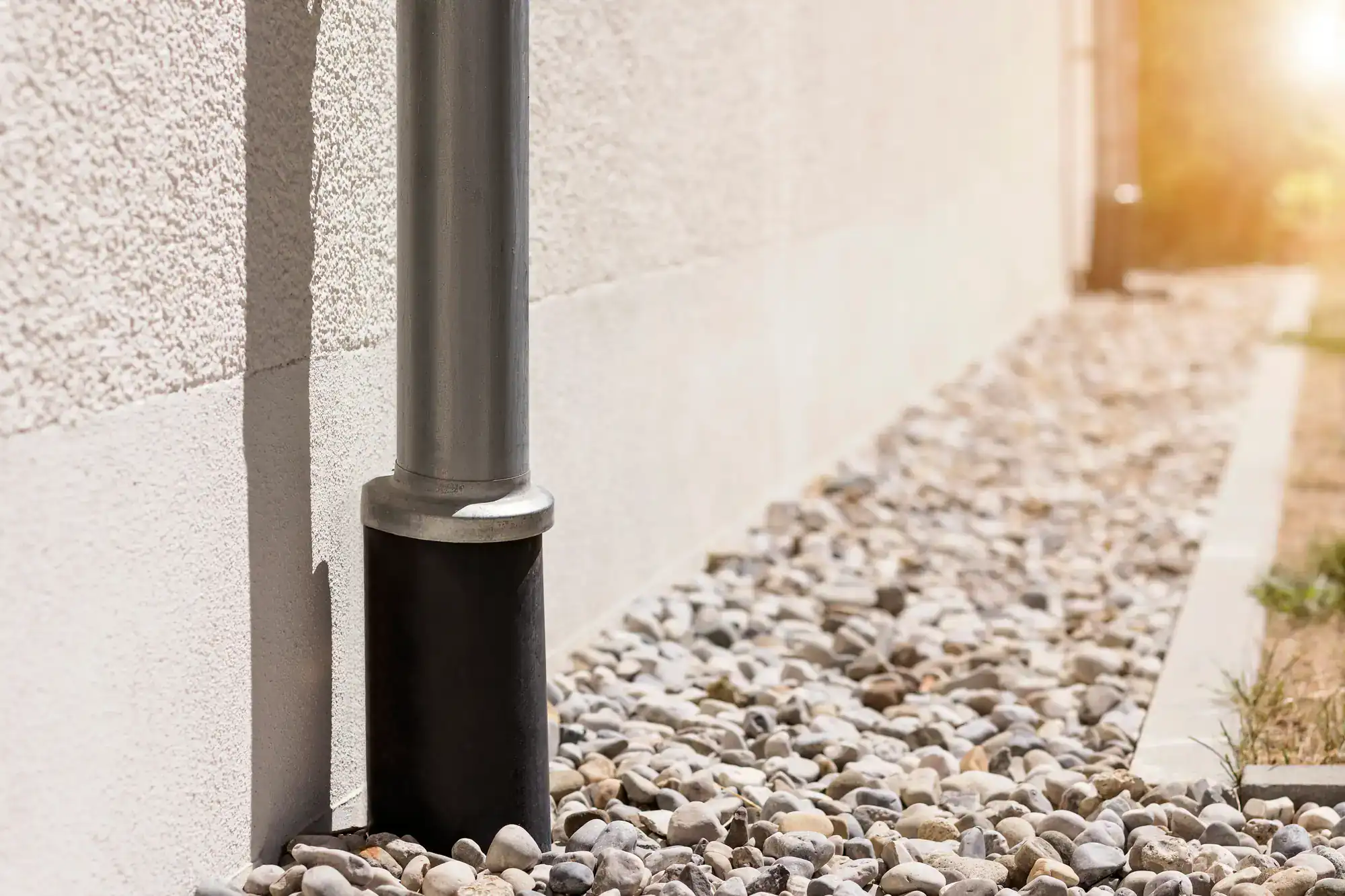
Most homes in North Amityville were built during the post-WWII suburban boom quickly, affordably, and without much thought given to drainage. Decades later, the ground has settled, the grades have shifted, and the infrastructure underneath hasn’t kept pace with the rainfall this area actually gets. What you’re left with is a yard that holds water after every storm and a basement that stays damp longer than it should.
A properly installed French drain system changes that. Water gets intercepted before it pools, before it saturates the soil around your foundation, and before it finds its way through a wall or floor. The yard becomes usable again not just after dry spells, but after real rain. And the foundation gets the relief it needs from the constant pressure that clay-bearing South Shore soil creates when it’s wet and expanding.
North Amityville also sits in a FEMA-designated AE6 flood zone, which means the flooding risk here isn’t theoretical it’s documented. The state just committed $11.7 million to replace the century-old Amityville Creek culvert on Merrick Road specifically because the drainage infrastructure in this corridor can’t handle what it’s being asked to handle. That investment protects the road. A French drain from us protects your property.
We work throughout the South Shore and western Suffolk County, including North Amityville and the surrounding communities of Copiague, Lindenhurst, West Babylon, and North Lindenhurst. These aren’t areas we occasionally service they’re the corridor we know best, and the drainage conditions here are ones we’ve worked in repeatedly.
That matters because drainage isn’t a one-size-fits-all job. The soil composition in this part of the Town of Babylon, the shallow aquifer that responds to tidal fluctuation, the way the municipal stormwater system can actually surge backward during heavy storms these are things you only understand through real experience in North Amityville and the surrounding area. We design every French drain system around the actual conditions of the property, not a generic template.
You get a licensed, insured contractor who handles everything from utility coordination to Town of Babylon permit requirements so you don’t have to figure out what the town needs or who to call before a shovel goes in the ground.
It starts with a free on-site assessment. Not a phone quote, not a satellite image estimate an actual walk of your property by someone who can look at the slope, probe the soil, identify where water is entering or pooling, and figure out where it needs to go. In North Amityville, that outlet question matters more than most people realize. With the water table as shallow as it is on the South Shore, discharge placement has to be deliberate you can’t just point a pipe at the street and call it done.
Once the system is designed, we handle the 811 utility marking call before any digging starts. That’s a New York State legal requirement, and it’s something every homeowner doing DIY drainage work is responsible for on their own but with us, it’s handled as a standard part of the job. We also coordinate any Town of Babylon permit requirements before installation begins, so there are no surprises mid-project.
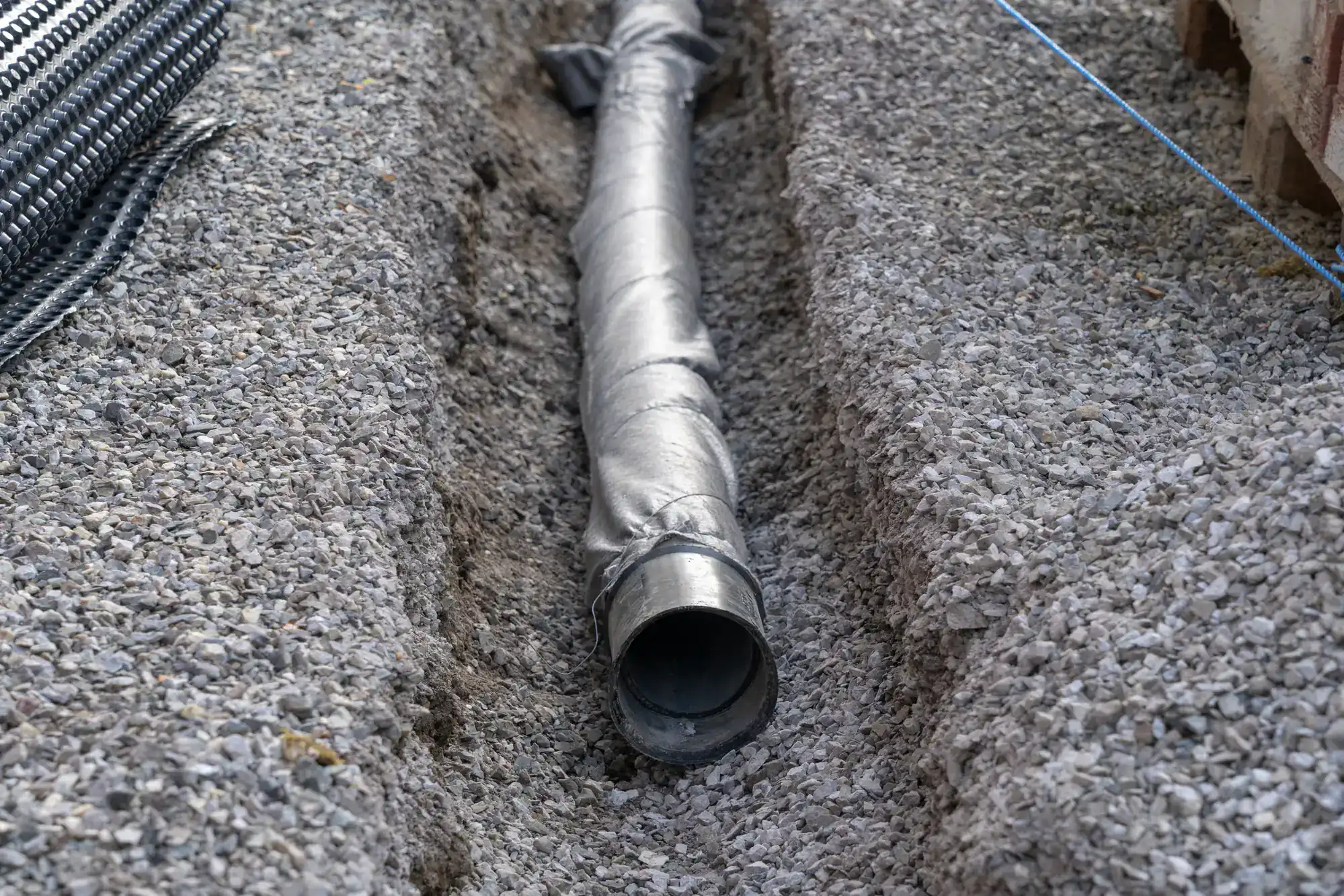
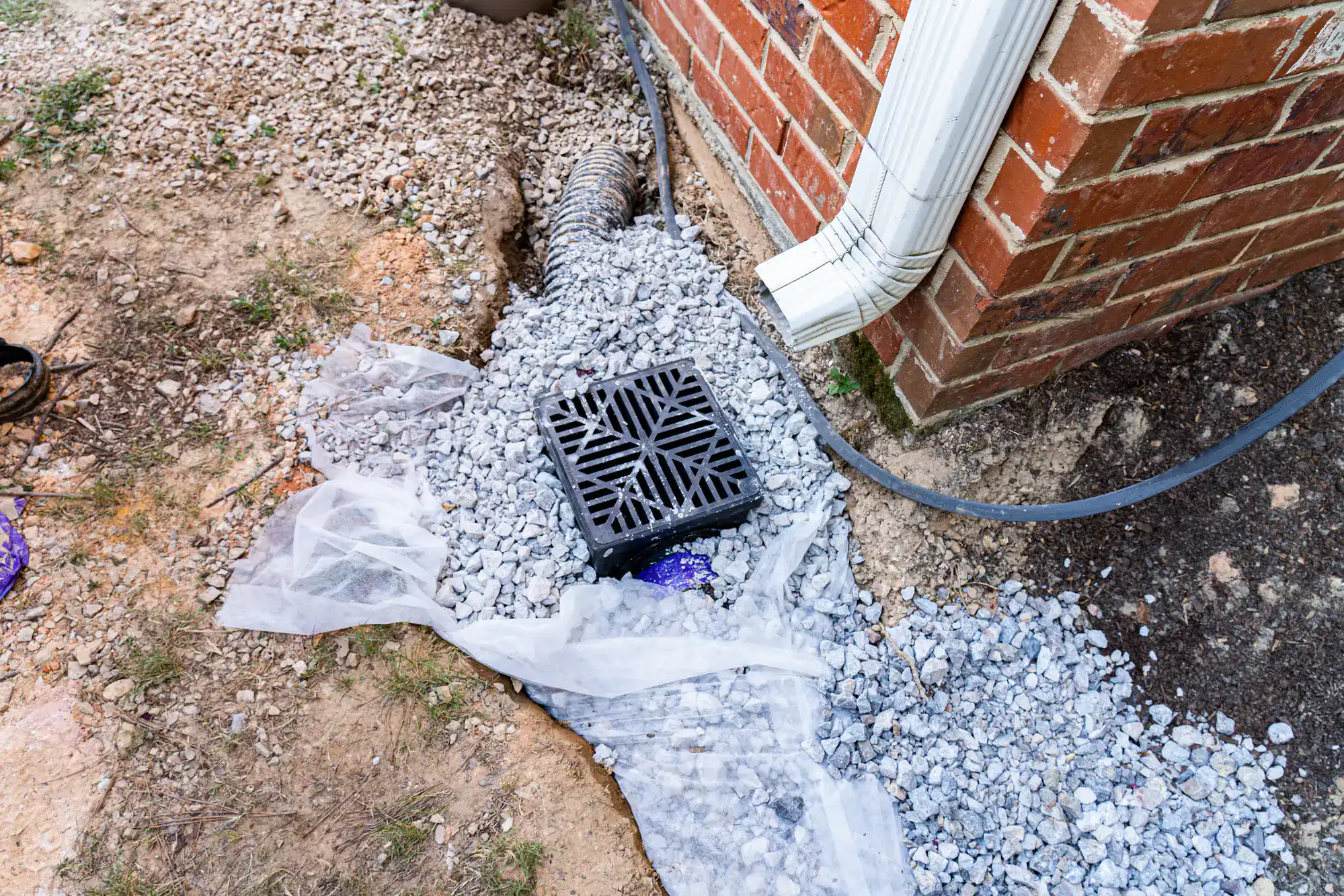
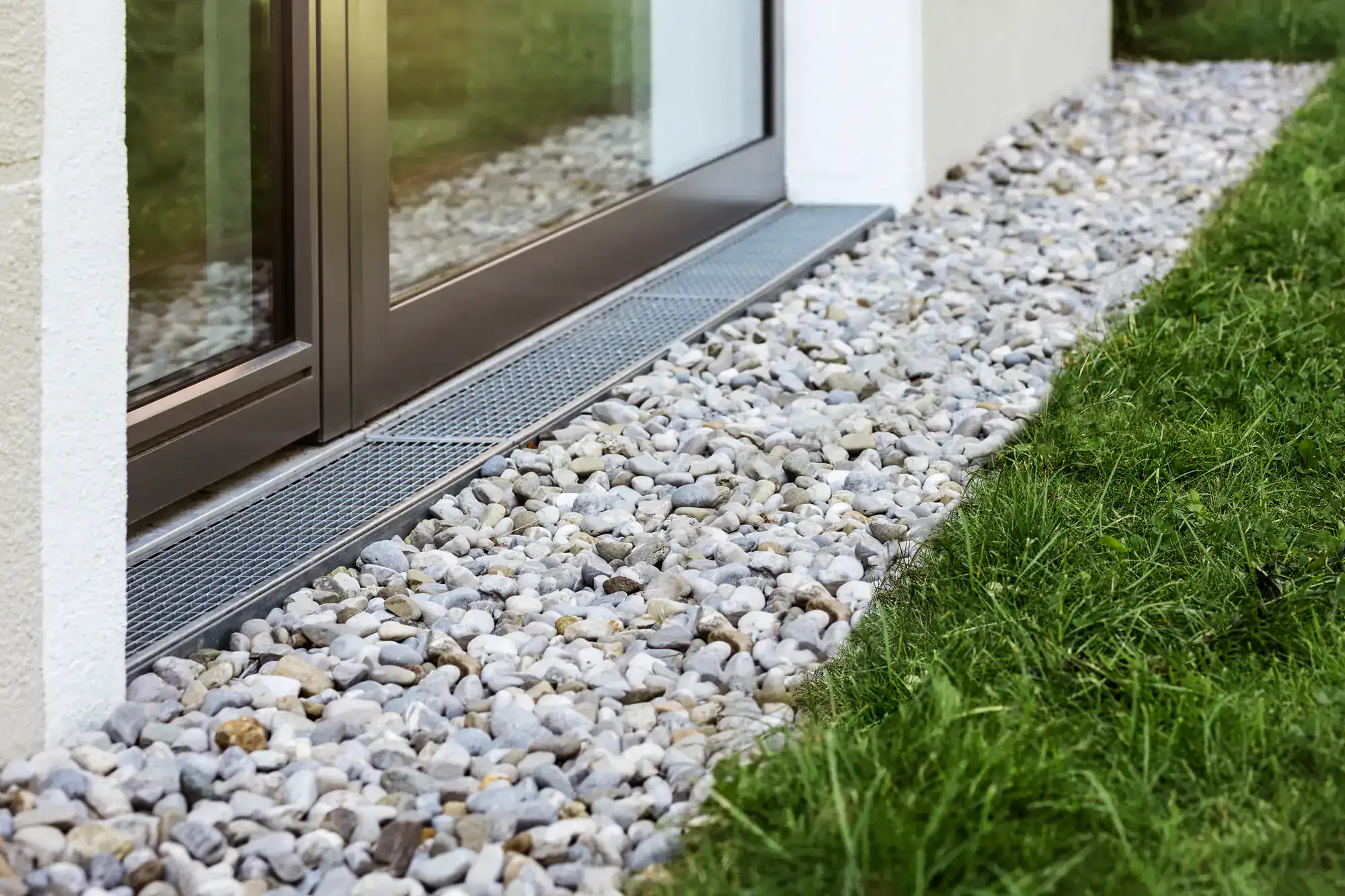
The installation itself uses perforated pipe, double-punched geotextile filter fabric, and washed angular gravel not the cheapest available materials, but the ones that actually hold up over 30 to 40 years. Pipe is buried at the correct depth to survive Long Island’s freeze-thaw cycles, and the system is graded at the right slope to move water consistently without backing up. When the work is done, the yard is restored. Most residential installs are complete in one to three days.
Ready to get started?
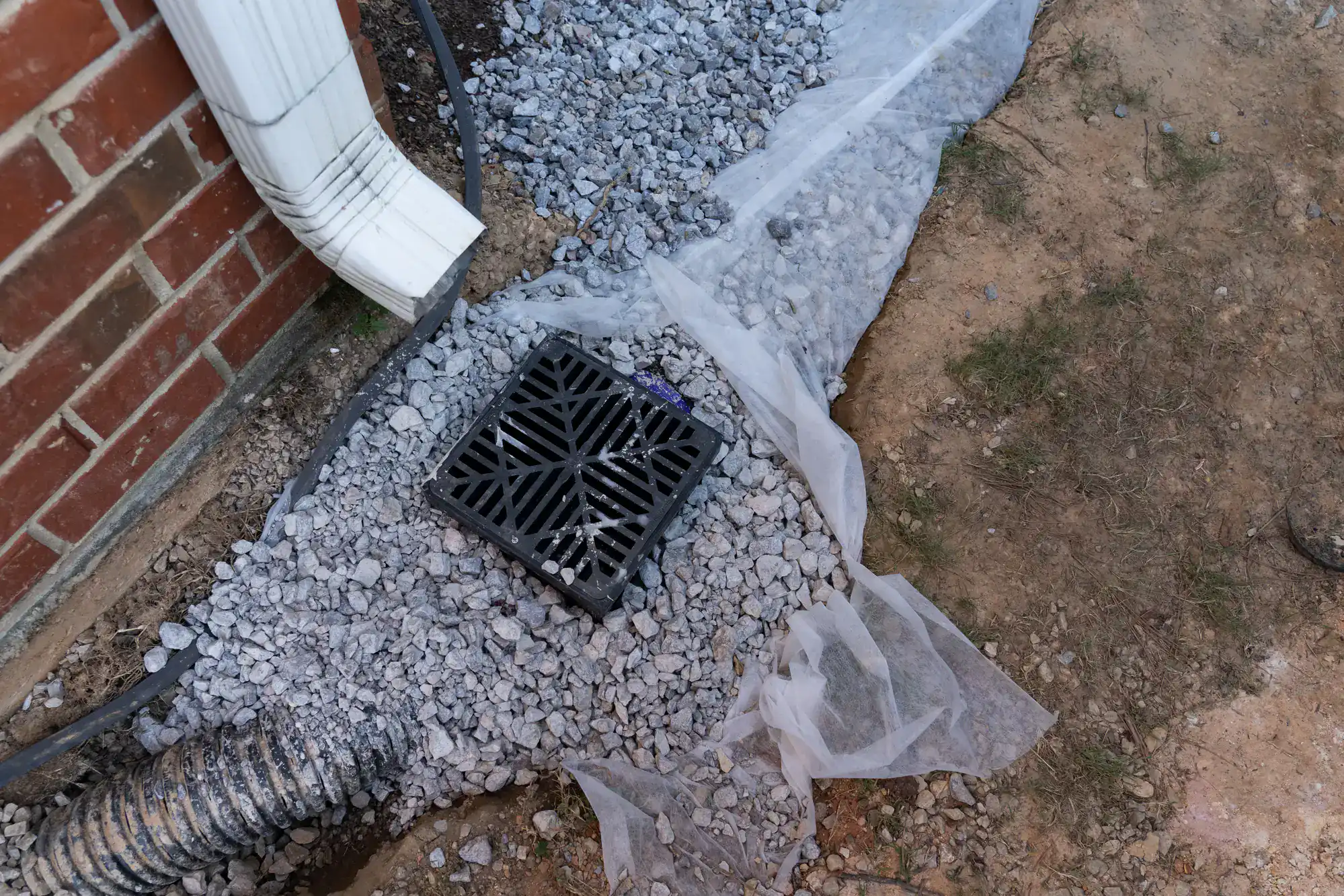
Every French drain installation we complete in North Amityville is designed around what’s actually happening on that specific property. Some homes need a perimeter system that wraps the foundation and intercepts groundwater before it reaches the wall. Others need a yard drain that captures surface water pooling in low spots and channels it to a defined outlet. Some need both. The assessment tells us which and we don’t recommend more than the property actually needs.
The materials we use aren’t negotiable. Perforated pipe wrapped in geotextile filter fabric, surrounded by washed angular gravel, graded at a minimum of one inch per eight to ten feet of run. That combination keeps the system from silting up, keeps the pipe from collapsing, and keeps water moving in the right direction for decades. In North Amityville’s clay-bearing soil, skipping the filter fabric is how systems fail in five years instead of lasting forty.
For homes near the Nassau-Suffolk county line or in the lower-elevation sections of North Amityville areas that sit closest to the AE6 flood zone boundary we pay particular attention to outlet placement and system capacity. The Town of Babylon’s stormwater infrastructure in this corridor has documented limitations, and a French drain system that discharges into an already-overwhelmed municipal system during a storm event isn’t doing its job. We design around that reality, not around it.
It depends on the scope of the work and where the system discharges. For most standard residential French drain installations in the Town of Babylon, a full building permit isn’t required but that doesn’t mean there are no regulatory steps involved. New York State law requires that all underground utilities be marked before any excavation begins, which means an 811 call is legally mandatory before a shovel goes in the ground. That step alone catches homeowners off guard when they try to manage the project themselves.
If the installation involves significant land disturbance, work near a wetland or waterway, or a discharge point that connects to a public drainage system, additional coordination with the Town of Babylon’s Department of Environmental Control may be required under the town’s stormwater management program. North Amityville’s location within a FEMA AE6 flood zone also means some properties have additional grading and drainage restrictions worth reviewing before work begins. We handle all of this as part of the job you don’t need to figure out what the town requires on your own.
For most residential properties in North Amityville, professional French drain installation runs between $5,000 and $9,000 depending on the length of the system, the depth required, whether the project involves a perimeter drain around the foundation or a yard drainage system, and the complexity of the outlet placement. Larger or more involved systems particularly those that need to work around the shallow water table conditions common on the South Shore can run higher.
The number that puts that cost in context is what you’re avoiding. Foundation crack repair in the New York metro area runs $15,000 to $50,000. Mold remediation, which follows chronic basement moisture almost predictably, starts at $3,000 and can go well beyond that depending on how long the problem was ignored. A French drain system installed correctly lasts 30 to 40 years. That’s four decades of protection against repair bills that dwarf the installation cost many times over. The investment isn’t in the drain it’s in not needing the repairs.
The short answer is that the ground under your yard isn’t built to drain quickly. North Amityville sits on the South Shore of Long Island, where the soil includes clay-bearing components that absorb water slowly, hold it for extended periods, and don’t let it percolate away the way sandy or loamy soils do. Add a shallow water table one that responds to tidal fluctuation and seasonal groundwater levels and you have conditions where the soil is often already close to saturation before the rain even starts.
The Town of Babylon’s own documentation acknowledges that most of the South Shore was originally low-level marsh land, developed during the mid-20th century without the drainage engineering that modern construction standards require. The homes and yards in North Amityville were built on that foundation. When rain hits clay-heavy, near-saturated soil with nowhere to go, it sits. A French drain system creates the pathway that the soil can’t provide on its own intercepting water and redirecting it to a controlled discharge point before it turns your yard into a swamp or your basement into a problem.
A French drain and a dry well solve related but different problems, and in some cases you need both. A French drain is a linear system a trench filled with gravel and perforated pipe that intercepts water as it moves through the soil or across the surface and redirects it along a defined path to an outlet. It’s designed to move water from one place to another. A dry well is a vertical structure essentially a buried chamber that receives water and allows it to slowly percolate into the surrounding soil over time. It’s designed to hold water temporarily and let the ground absorb it.
In North Amityville, the effectiveness of a dry well depends heavily on where it’s placed and what the soil looks like at depth. In areas with clay-heavy soil or a shallow water table both of which are common on the South Shore a dry well can fill up faster than the surrounding soil can absorb, which limits its usefulness during heavy rain events. A French drain that discharges to a defined outlet point is often more reliable in these conditions. During the on-site assessment, we evaluate both options and recommend what will actually work for your specific property and soil conditions not what’s cheapest or easiest to install.
Depth depends on what the system is designed to do. A French drain installed to intercept surface water and yard drainage typically needs to be buried at least 18 to 24 inches deep. A foundation perimeter drain designed to capture groundwater and relieve hydrostatic pressure against a basement wall needs to be installed at or below the footing level which for most homes in North Amityville means 4 to 6 feet or deeper, depending on when the home was built and how deep the foundation sits.
On Long Island, depth also matters for a reason that has nothing to do with groundwater freeze protection. The frost line on Long Island is approximately 36 inches. Perforated pipe buried shallower than that is vulnerable to freezing and cracking during the temperature swings that happen repeatedly through a typical winter, where temperatures fluctuate above and below 32 degrees for weeks at a time. A pipe that freezes and cracks doesn’t just stop working it can create a drainage failure that’s expensive to excavate and repair. We install every system at the depth the application requires, with freeze protection built into the design for Long Island’s actual winter conditions.
Most residential French drain installations in North Amityville are complete in one to three days. The timeline depends on the length of the system, how much excavation is involved, and whether the project includes a foundation perimeter drain or a simpler yard drainage run. Larger or more complex systems particularly those that need to navigate around established landscaping, utility lines, or the tight lot sizes common in this part of the hamlet may take a day or two longer.
As for the yard, yes there will be excavation. A trench has to be dug, the system has to be installed, and the trench has to be backfilled. That’s unavoidable. What we do is restore the surface after the work is complete topsoil is replaced, and the disturbed area is graded back to its original condition. The disruption is real but temporary. The drainage improvement is permanent. For homeowners in North Amityville who’ve invested in their outdoor space and in a community of families where the yard actually gets used that restoration step matters, and it’s part of every job we do.