
Hear from Our Customers
When a French drain system works the way it’s supposed to, the difference is immediate and obvious. Water stops pooling in your yard after every storm. Your basement stays dry through northeasters and heavy summer rain. The soggy patch near your foundation that’s been there for years gone. That’s what a properly installed French drain does: it intercepts water before it reaches the places you care about and moves it away from your home.
For North Babylon homeowners specifically, the stakes are higher than most people realize. With median home values sitting around $639,500 and climbing, a drainage problem isn’t just an inconvenience it’s a liability. Real estate agents across Suffolk County will tell you that wet basements and chronically flooded yards either kill deals or trigger serious price cuts.
The geography here makes it worse. North Babylon sits in a low-lying section of the South Shore, and the shallow water table around the Belmont Lake corridor means the ground near your foundation has very little margin before it’s saturated. The homes in this area most of them Cape Cods, ranches, and split-levels built in the 1950s and ’60s weren’t built with modern drainage standards. Whatever was installed six decades ago is either failing or was never adequate to begin with. A French drain installation in North Babylon doesn’t patch the problem. It replaces infrastructure that should have been there from the start.
We’re a dedicated drainage contractor serving homeowners across Long Island, including North Babylon and the surrounding Town of Babylon. Drainage isn’t a side service here it’s our entire focus. That specialization means when you call about a soggy yard or a wet basement, you’re talking to someone who has diagnosed and solved that exact problem dozens of times across the South Shore, not a landscaper or a general contractor who handles drainage when it comes up.
The homes in North Babylon’s established neighborhoods from Parkdale Estates to the residential streets west of Deer Park Avenue have real, specific drainage challenges. Mature trees with deep root systems, decades of soil settlement, and the naturally shallow water table that comes with living near Belmont Lake State Park all factor into how a system needs to be designed. We account for all of it before a single trench is dug.
Every project starts with a free on-site assessment. No guessing, no phone quotes, no generic solutions. You get a contractor who looks at your actual yard, understands what’s happening beneath the surface, and tells you exactly what it will take to fix it.
It starts with the free site assessment. We come out to your North Babylon property, walk the yard, look at where water is entering and where it needs to go, and assess the soil conditions and grade. The South Shore’s shallow water table and the clay-loam mix common in this part of Suffolk County affect how a system needs to be designed that’s information we can only get by being there.
Once the assessment is done, you get a clear scope and a straight quote. Before any excavation begins, we handle the required 811 utility notification New York State law requires underground utilities to be located before any digging, and that’s a step that protects your property and ensures the work is done legally. If your project requires a Town of Babylon permit for drainage improvements, we walk you through that process too.
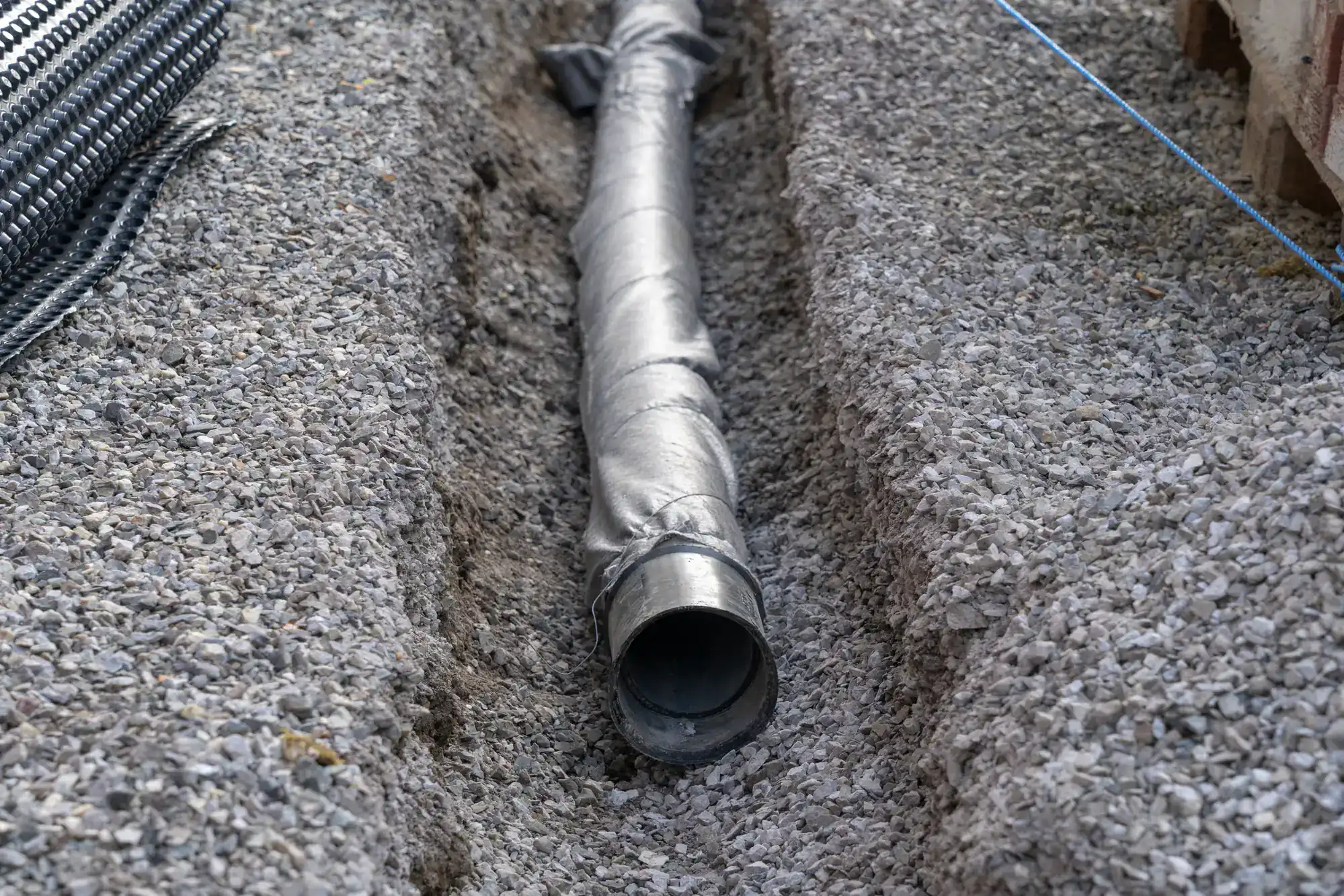
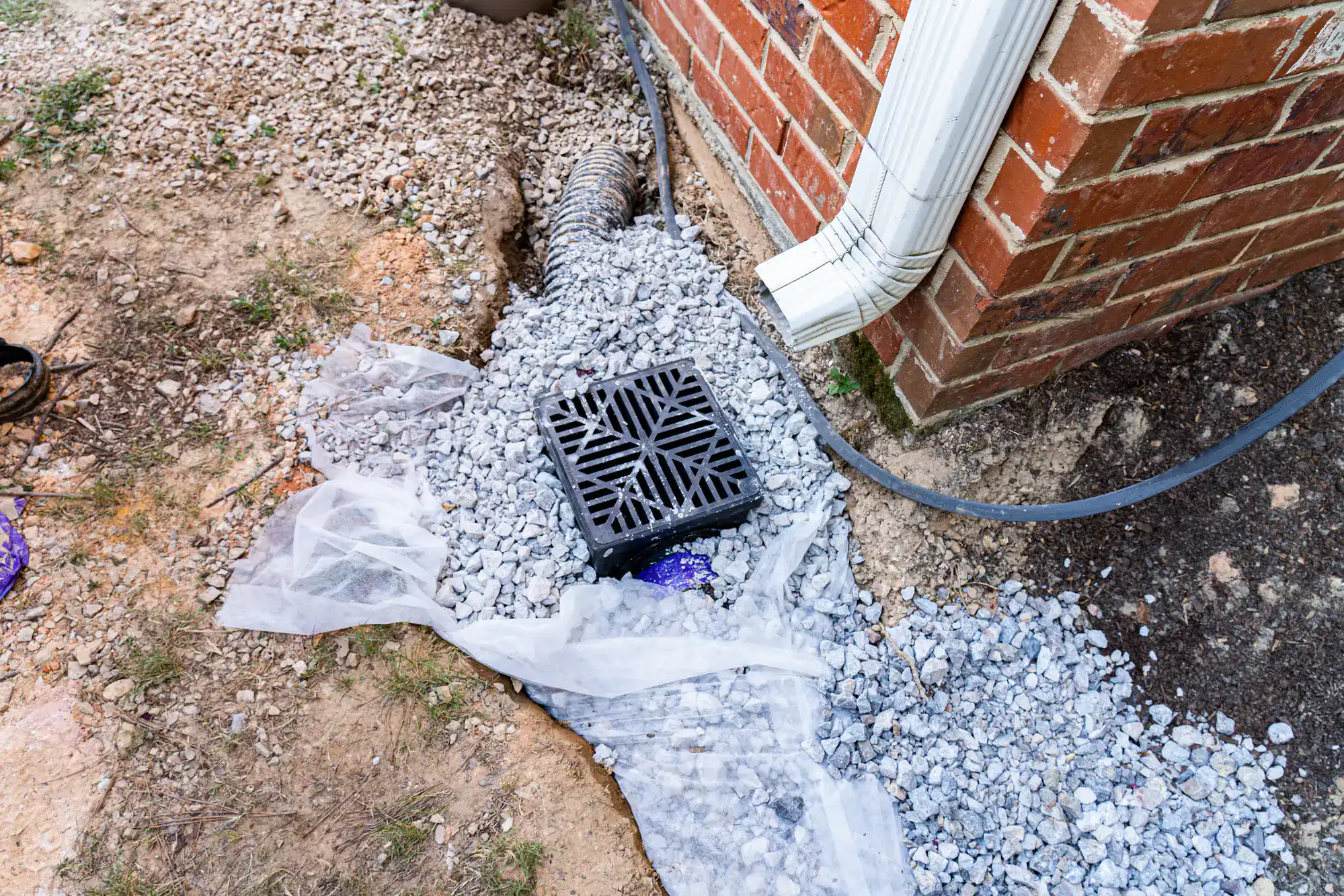
Installation typically takes one to three days for a standard residential French drain system in North Babylon. We trench to the correct depth, lay perforated pipe wrapped in geotextile filter fabric, backfill with washed angular gravel, and restore the surface topsoil, seeding, or sod, depending on what was there before. The goal is a yard that looks right and drains right. Most homeowners are genuinely surprised at how clean the finished result is. The disruption is temporary. The system is built to last 30 to 40 years.
Ready to get started?
A French drain system installed in North Babylon has to account for things a generic drainage guide won’t mention. The water table near the Belmont Lake corridor is naturally shallow. The post-war housing stock means most foundations weren’t built with perimeter drainage. Mature trees one of the things that makes established North Babylon neighborhoods feel like home create root systems that can compromise drainage pathways over time. The system we design for your property accounts for all of that.
Every residential French drain installation we complete includes a full site assessment, proper pipe sizing and slope calculation, geotextile filter fabric to prevent sediment intrusion, washed angular gravel backfill, and complete surface restoration when the work is done. We don’t use cheap corrugated tubing that collapses in a few years. The materials matter and so does the slope. A system installed with the wrong pitch won’t drain. It’ll just hold water underground instead of on the surface.
For North Babylon homeowners dealing with water intrusion at the foundation, we also evaluate whether a perimeter drainage solution or a combination approach makes more sense than a yard-only system. Long Island receives 44 to 47 inches of rain annually, spread across all four seasons, and the August 2014 storm that dropped over 13 inches in 24 hours at Islip just miles from North Babylon is a reminder that this area gets tested hard. Your drainage system should be built for that reality, not the average Tuesday.
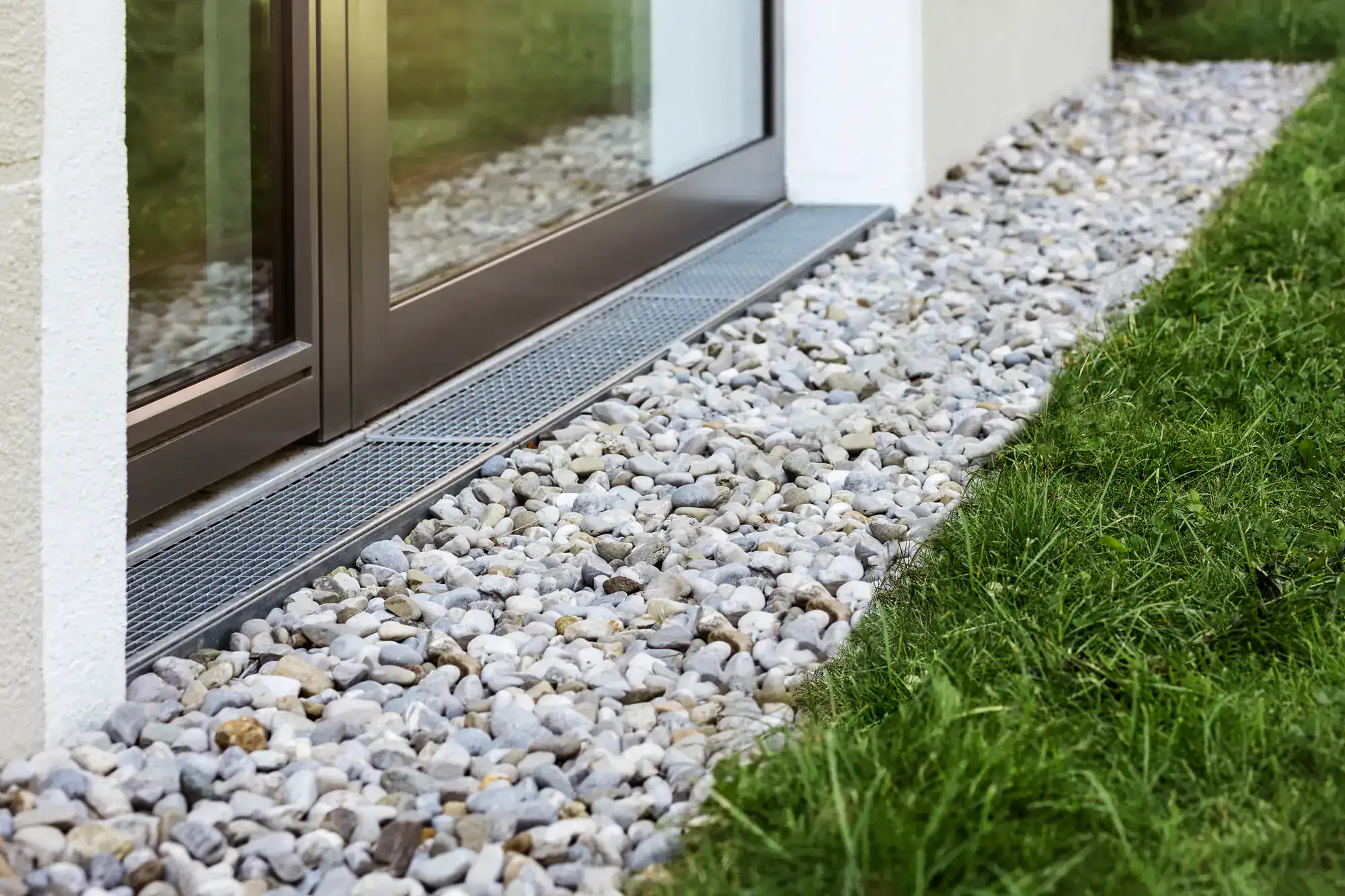
The most common reason is that the soil around your home is already saturated before the rain even starts. North Babylon sits in a low-lying section of the South Shore the Town of Babylon has publicly acknowledged that most of this area was developed on land that’s essentially marshland, with a water table that sits just a foot or two below the surface in many spots. When the ground can’t absorb any more water, it has nowhere to go but up and across your yard.
The second factor is the age of the housing stock. Homes built in the 1950s and ’60s which describes most of North Babylon weren’t built with modern stormwater management in mind. Original grading has shifted over decades, downspouts may be discharging too close to the foundation, and whatever drainage existed at construction has likely degraded significantly. A French drain system for your yard in North Babylon intercepts that subsurface water and redirects it before it becomes the standing pool you’re dealing with after every storm.
For a standard residential French drain installation in North Babylon, you’re generally looking at a range of $5,000 to $12,000 depending on the scope how many linear feet of pipe the system requires, how complex the drainage path is, and what surface restoration is needed when the work is done. Larger properties or systems that need to tie into multiple drainage points will land toward the higher end of that range.
The number that matters more than the installation cost is what you’re protecting. With North Babylon homes trading at a median of around $639,500, a drainage system that prevents foundation damage, mold, and basement water intrusion is a relatively small investment against a very large asset. Foundation crack repair in Suffolk County routinely runs $15,000 to $50,000. Mold remediation starts at $3,000 and climbs fast in the humid Long Island climate. The French drain pays for itself the first time it prevents one of those repair bills and a properly installed system lasts 30 to 40 years.
It depends on the scope and specifics of your project. For most standard residential French drain installations on private property in the Town of Babylon, the primary legal requirement before any excavation is an 811 utility notification New York State law requires you to call or submit a request at least two to three business days before digging so underground utilities can be located and marked. Skipping this step isn’t just a legal issue; it’s a safety one.
Beyond the 811 requirement, the Town of Babylon has stormwater management regulations that govern how drainage improvements must be designed specifically, a system can’t redirect water onto neighboring properties or public rights-of-way in a way that increases flooding risk for adjacent parcels. If your property is in or near a FEMA-designated flood zone, which applies to some South Shore parcels in this area, additional review may be required. We handle the utility notification and walk you through any permit requirements that apply to your specific project before work begins.
A properly installed French drain system the right pipe, the right filter fabric, the right gravel, and the correct slope should last 30 to 40 years in Long Island’s climate. The keyword there is “properly.” Systems that fail early almost always fail for the same reasons: corrugated tubing that collapses under soil pressure, filter fabric that wasn’t used or was the wrong type, insufficient slope that lets sediment accumulate, or gravel that was too fine and compacted over time.
Long Island’s climate does put drainage systems through their paces. You get 44 to 47 inches of rain annually with no real dry season, freeze-thaw cycles through the winter that stress anything buried too shallow, and periodic extreme events the kind of rainfall that hit Islip in August 2014 is a real benchmark for what South Shore drainage systems need to handle. The materials and installation standard we use are chosen specifically for these conditions. A system built to cut corners will show it within a few years. One built correctly will still be working when you sell the house.
This is one of the most common concerns we hear from North Babylon homeowners, and it’s a fair one. The established neighborhoods here especially around Parkdale Estates and the streets west of Deer Park Avenue have mature trees and landscaping that took decades to develop. Nobody wants a drainage fix that leaves the yard looking like a construction site or damages a 40-year-old oak in the process.
The honest answer is that a well-planned installation minimizes impact significantly. The route of the trench is designed around existing root systems wherever possible, and the excavation footprint for a standard French drain is narrow typically 12 to 18 inches wide. Surface restoration is included in every installation: topsoil, seeding, or sod to match what was there before. The disruption is real but temporary, and it’s far less damaging than what chronically saturated soil does to tree root systems over time. Roots sitting in standing water are actually more vulnerable to disease and structural failure than roots in well-drained soil. In many cases, fixing the drainage is the better thing for your trees.
Yes but the right answer depends on where the water is coming from. A French drain system installed around the perimeter of your foundation intercepts groundwater before it builds up enough hydrostatic pressure to push through your basement walls or floor. For the majority of North Babylon homes experiencing basement seepage after heavy rain or during snowmelt season, that’s exactly the problem a perimeter French drain solves.
What it won’t address is water that’s entering through a crack caused by structural movement, or water that’s coming in from a failed window well or a plumbing issue. That’s why the site assessment matters we look at where the water is actually entering and what’s driving it before recommending a system. North Babylon’s post-war housing stock, with its shallow foundations and original drainage that’s now 60-plus years old, creates conditions where groundwater intrusion is extremely common and a French drain for the basement perimeter is often the most direct, permanent fix available. If the issue is more complex, we’ll tell you that too.