
Hear from Our Customers
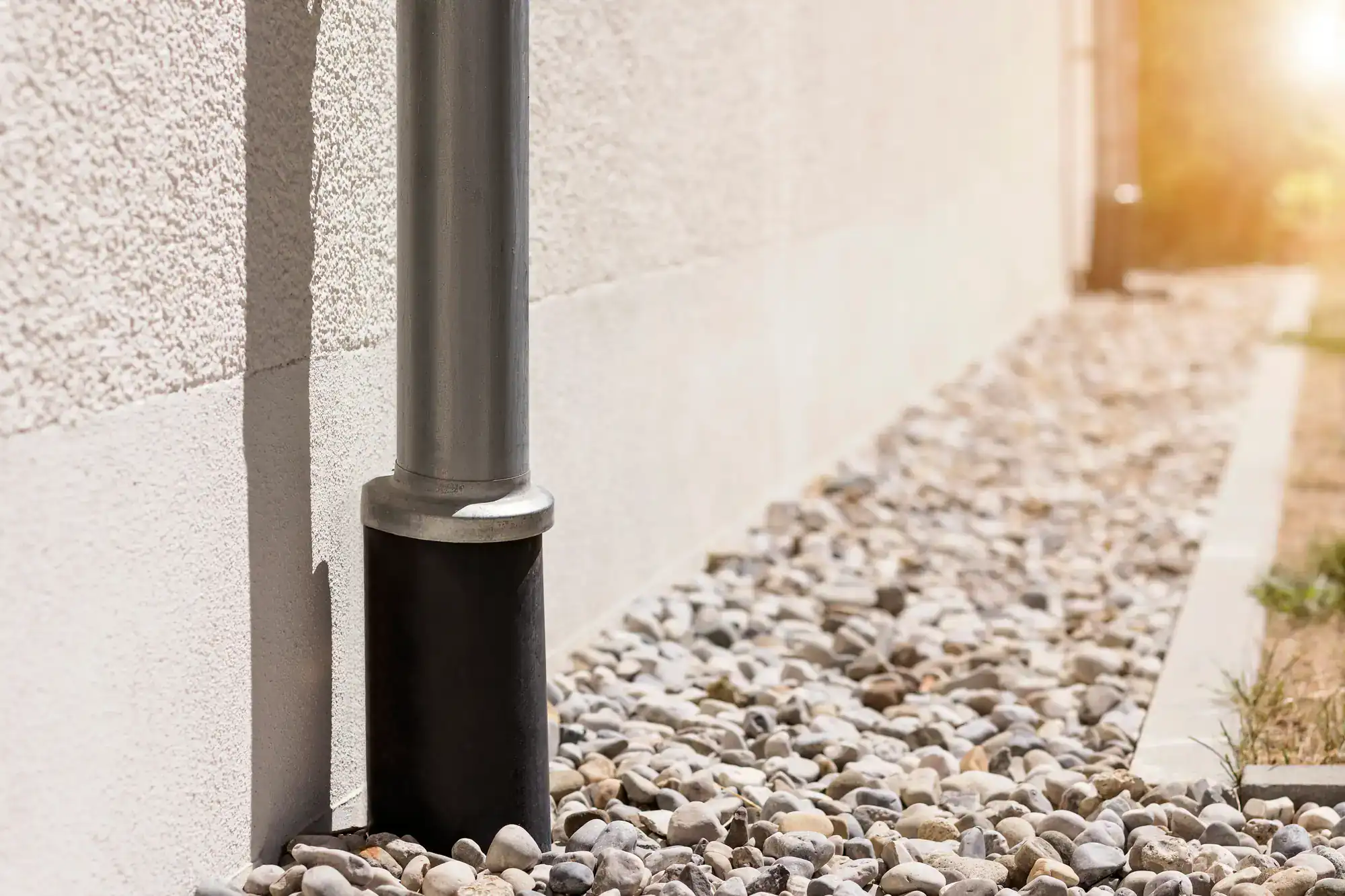
Most homeowners in North Lindenhurst don’t have one drainage problem they have two. Water is getting into the basement, and the backyard stays soggy for days after every storm. Those aren’t separate issues. They’re both symptoms of the same thing: the water table is high, the soil is saturated, and there’s nowhere for the water to go.
When a French drain system is installed correctly, it intercepts that groundwater before it ever reaches your foundation. Your basement stops taking on water after heavy rain. The yard firms up. The dead patches of grass where standing water used to drown the roots start coming back. You get your outdoor space back and you stop watching hairline cracks in your foundation walls get a little worse every season.
North Lindenhurst’s housing stock is mostly post-war construction homes built in the 1940s, 50s, and 60s that were never designed with perimeter drainage in mind. After decades of soil settlement and concrete aging, the drainage situation that was manageable for the first thirty years of a home’s life can become a real problem in year forty or fifty. A properly installed French drain system addresses that directly, and when it’s built with the right materials and slope, it lasts thirty to forty years. That’s not a patch. That’s a permanent fix.
We work specifically in the drainage conditions that define Long Island’s South Shore the elevated water table, the coastal storm exposure, the aging housing stock that runs from North Lindenhurst down through the Village of Lindenhurst and across the Town of Babylon. This isn’t a general landscaping company that added drains to the service list. Drainage is the work.
That focus matters because the drainage challenges in North Lindenhurst are specific. Homes along Wellwood Avenue and the streets running off Sunrise Highway sit on lots that have compacted and settled over sixty-plus years. The municipal stormwater infrastructure serving the hamlet was built for a different era and a different rainfall pattern. When a nor’easter or a late-summer storm system rolls through and drops several inches of rain in a few hours, that system gets overwhelmed and the burden lands on individual properties.
Every project starts with a real site visit. We look at your lot, your grade, your foundation, and where the water is actually coming from before recommending anything. That’s how you get a system that works, not one that looks good on paper.
It starts with a site assessment not a phone estimate, an actual visit to your property. We look at where the water is pooling, how your lot is graded, what the soil profile looks like, and how close the water table is sitting. In North Lindenhurst, that last piece matters more than most places. A system that works fine in a drier inland community can underperform here if it isn’t sized and positioned for high water table conditions.
Before any digging starts, we handle the permitting. Drainage work in North Lindenhurst falls under Town of Babylon jurisdiction, and projects that affect surface water flow require permits under Town of Babylon’s grading and stormwater regulations. We also call 811 for utility marking required by New York State law before any excavation. You don’t have to deal with Town Hall or coordinate with utility companies. That’s on us.
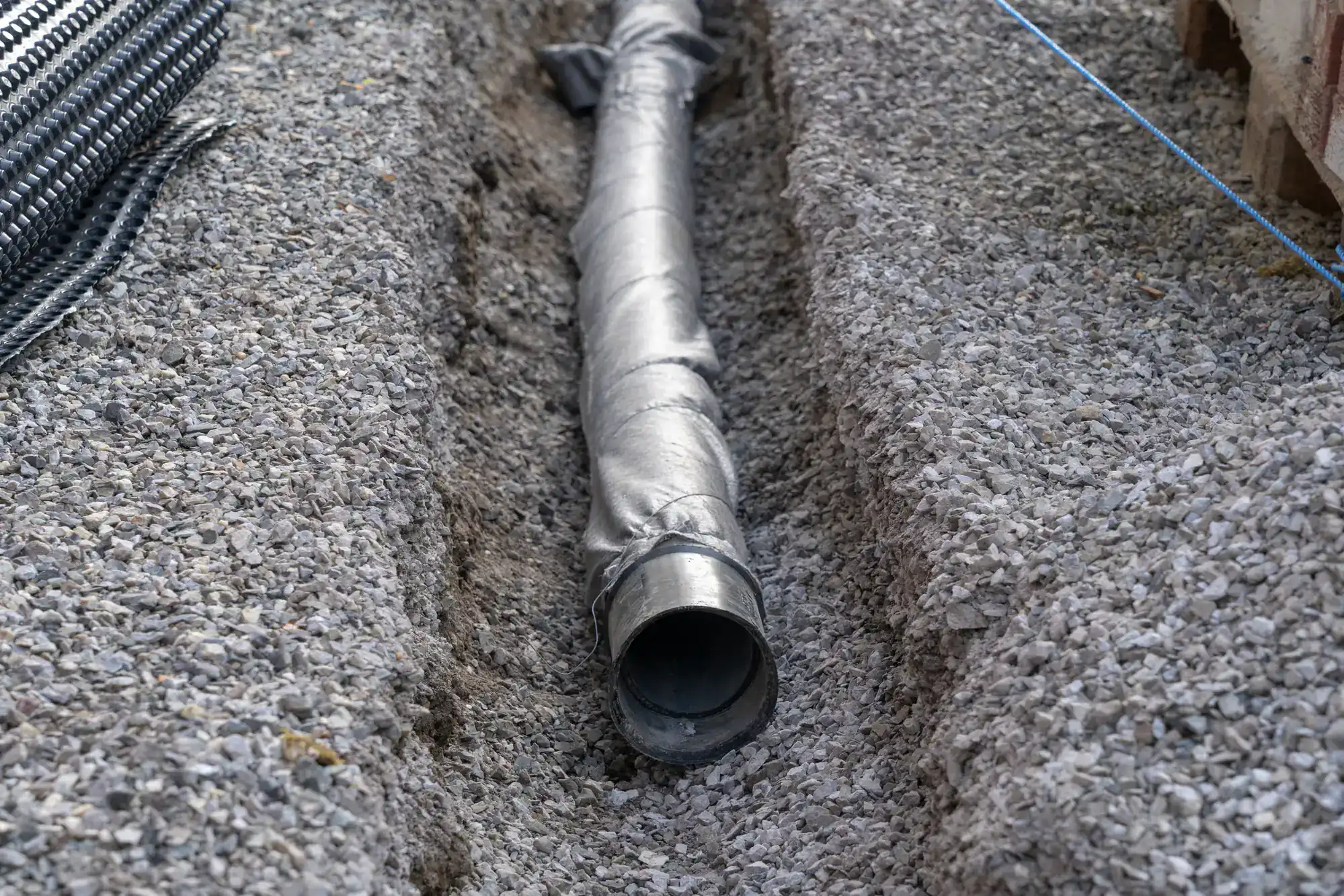
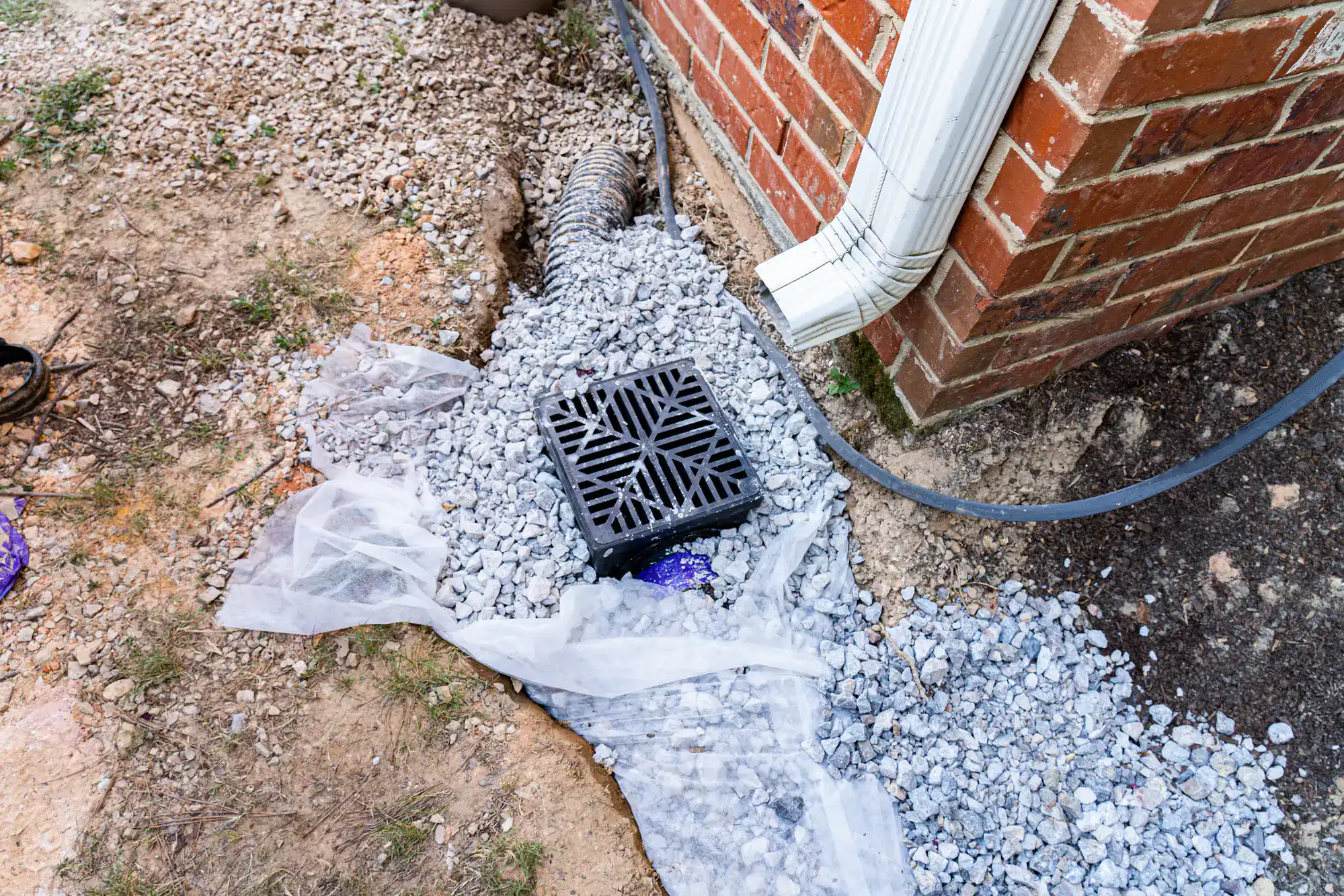
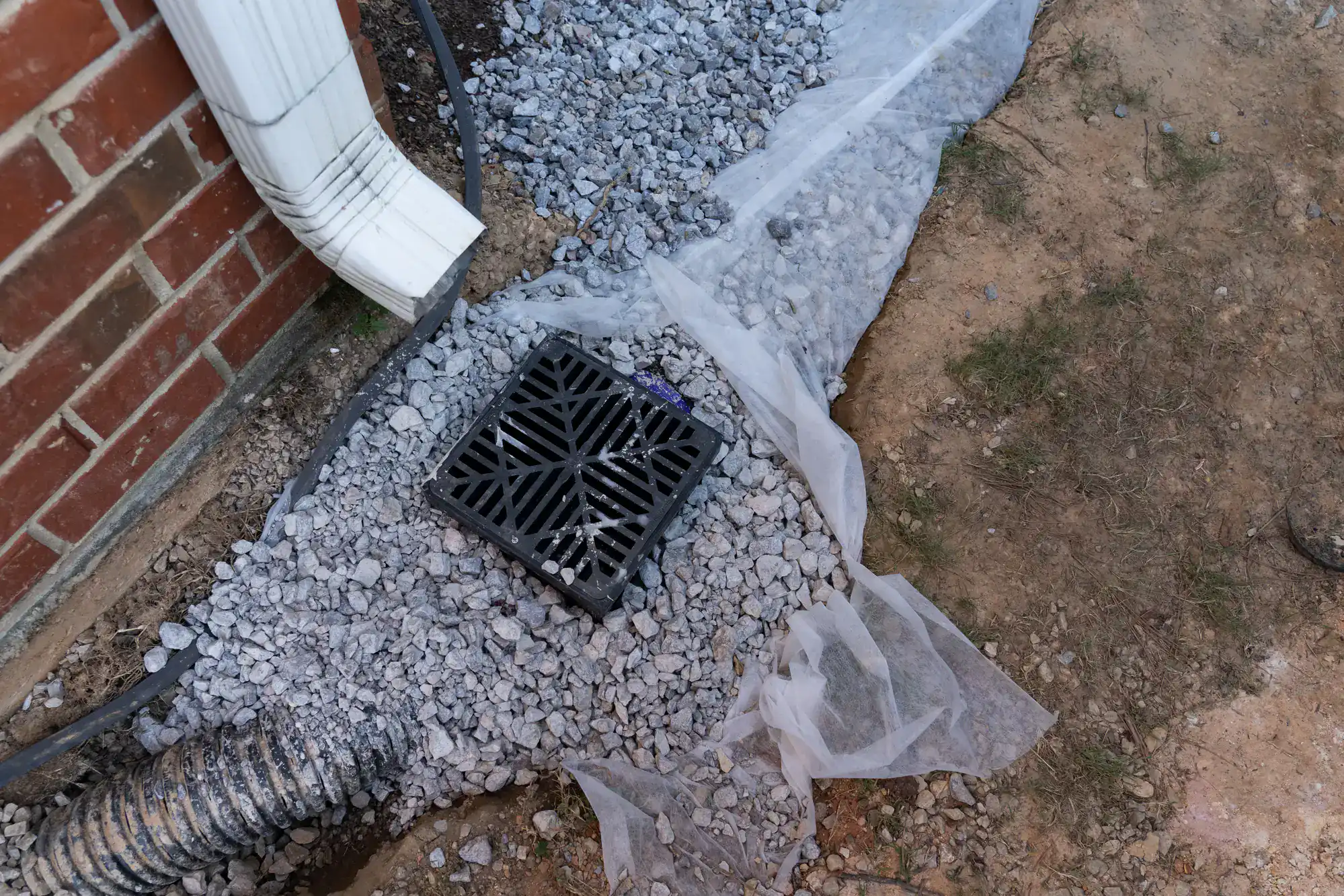
Once the permits are cleared and utilities are marked, we excavate the trench, lay the perforated pipe, wrap it in double-punched geotextile filter fabric to keep silt out, backfill with washed angular gravel, and establish the slope and outlet point the system needs to drain properly. When the work is done, we restore the surface topsoil, seeding, whatever the yard needs to look right again. The disruption is temporary. The drainage benefit is not.
Ready to get started?
A French drain system installed in North Lindenhurst needs to account for things that don’t apply everywhere. The water table is elevated because the Great South Bay sits just to the south. The soil on post-war residential lots has compacted over decades. And the rainfall here over fifty inches a year, often arriving in concentrated storm events rather than slow, steady rain means the system has to be sized for real South Shore storm intensity, not average conditions.
Every installation includes perforated pipe, geotextile filter fabric, and washed angular gravel the materials that determine whether a system lasts three years or thirty. Pipe depth is set to account for Long Island’s frost line, because a French drain installed too shallow will freeze and crack in a North Lindenhurst winter. The outlet point is positioned to discharge correctly without running afoul of Town of Babylon’s prohibition on connecting stormwater to the sanitary sewer system.
What you get at the end is a system designed for your specific property your grade, your soil, your water source, your lot boundaries. Whether the problem is a wet basement, a yard that won’t drain, or both, the scope of work is built around what your property actually needs. Full permit management and surface restoration are included on every project.
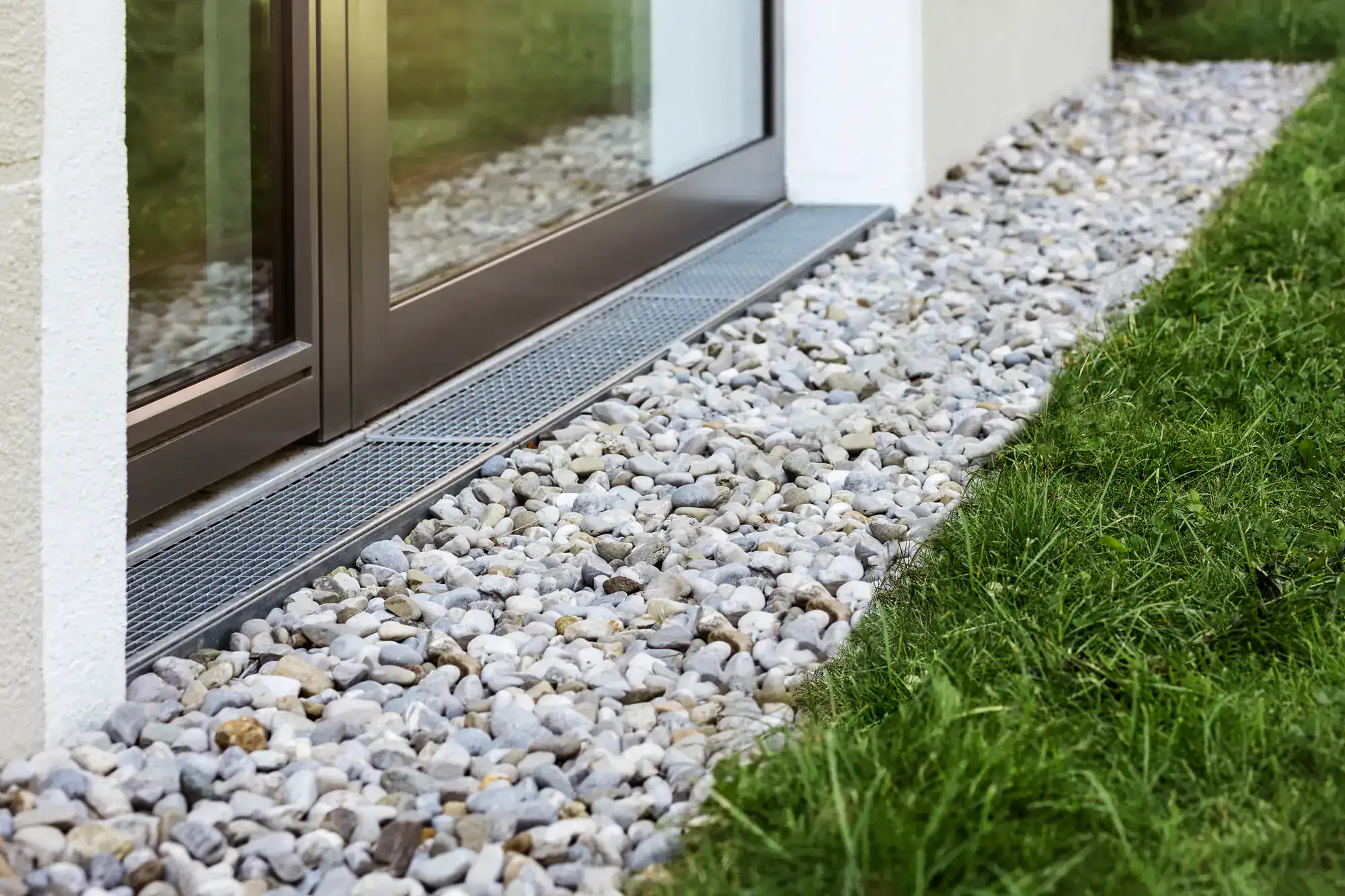
The most common cause in North Lindenhurst is hydrostatic pressure groundwater in the soil surrounding your foundation building up pressure and pushing through the concrete. This happens because the water table in the hamlet is naturally elevated due to the area’s proximity to the Great South Bay, and when a heavy rainstorm saturates soil that’s already close to capacity, the water has to go somewhere. Your foundation walls become the path of least resistance.
Post-war homes in North Lindenhurst compound this problem. Concrete block and poured concrete foundations from the 1940s through 1960s were not built with perimeter drainage systems, and after decades of hydrostatic pressure cycles, even small cracks become entry points. A French drain system installed around the perimeter of your foundation intercepts that groundwater before it builds up against the wall, redirecting it away from the home entirely. That’s a fundamentally different solution than interior waterproofing, which manages water after it’s already inside.
The range is wide because every property is different. A simple yard drainage system on a flat North Lindenhurst residential lot costs less than a full perimeter system around a basement foundation with multiple discharge points. The actual cost depends on the length of the system, how deep the trench needs to go, how many outlet points are required, and how complex the grade is.
What’s worth keeping in mind is what the alternative costs. Foundation crack repair and waterproofing on a Long Island home runs $15,000 to $50,000. Mold remediation in a wet basement starts around $3,000 and goes up fast. A French drain system that prevents those problems from developing or from getting worse is a fraction of that cost. For a North Lindenhurst home in the $500,000 to $700,000 range, protecting the foundation also protects the equity. A documented history of wet basement issues can reduce your asking price by 10% or more when it comes time to sell.
Yes, in most cases. North Lindenhurst falls under Town of Babylon jurisdiction not a village government and drainage work that alters surface water flow or connects to the municipal stormwater system requires permits under Town of Babylon’s grading and stormwater regulations. New York State also requires calling 811 for utility marking before any excavation, which is a legal requirement, not a formality.
The permitting process through the Town of Babylon Building Department can be slow if you don’t know it, and incomplete applications create delays that push your project back by weeks. We handle all of it permit applications, utility marking coordination, and compliance with the Town’s prohibition on connecting stormwater discharge to the sanitary sewer system. You don’t need to visit any office or make any calls. We manage the regulatory side start to finish so the project moves on schedule.
It can if it’s installed at the wrong depth. Long Island’s frost depth means that pipes installed too close to the surface are vulnerable to freezing and cracking during cold stretches, which are common in North Lindenhurst from December through February. A frozen pipe can’t drain, and a cracked pipe that thaws in the spring may be partially or fully blocked without any visible sign from the surface.
The fix is straightforward: install the pipe below the frost line from the start. This is one of the reasons material selection and installation depth matter as much as they do. Corrugated flexible pipe which is cheaper and common in lower-cost installations is more vulnerable to freeze damage and root intrusion than rigid perforated pipe installed at proper depth. A system built correctly for Long Island’s climate will drain in winter conditions and hold up for decades without freeze-related failure. It’s a detail that separates a system that lasts from one that needs to be redone in a few years.
For a standard residential project in North Lindenhurst a yard drainage system or a foundation perimeter drain on a typical post-war lot the installation itself usually takes one to two days once permits are in place and utilities are marked. The permitting timeline through the Town of Babylon adds time before work begins, which is why starting the process early matters, especially if you’re trying to get a system in before nor’easter season or before spring snowmelt and rain combine to saturate the soil again.
Site conditions can affect the timeline. Properties with particularly compacted soil, multiple outlet requirements, or complex grading may take longer. The site assessment at the start of the project gives you a realistic picture of what’s involved before any work is scheduled. One thing that does not get rushed regardless of timeline is surface restoration topsoil replacement and seeding are part of every project, and the yard gets put back the way it should look before the crew leaves.
A soggy yard that won’t drain is a real problem on its own and in North Lindenhurst, it’s often a warning sign of what’s coming for the foundation. When soil stays saturated for extended periods after rain, it’s under hydrostatic pressure. That pressure doesn’t stay in the yard forever. Over time, it works against whatever is closest and for most homes in this hamlet, that’s a foundation wall that’s already sixty or seventy years old.
Beyond the foundation risk, standing water in a North Lindenhurst yard has immediate quality-of-life consequences. Grass drowns in areas where water pools repeatedly, leaving dead patches that don’t recover. Yards that stay wet for days after a storm aren’t usable for kids, for outdoor entertaining, or for gardening. Mosquito breeding in standing water is a real seasonal issue on the South Shore. A French drain system for yard drainage addresses all of that redirecting water away from the low spots before it pools, so the yard drains the way it should and you can actually use the space you’re paying taxes on.