
Hear from Our Customers

When you buy a property in East Islip, you’re often inheriting decades of growth. Homes here have a median construction year of 1958, and a lot of them have rear yards, side lots, and woodland edges that haven’t been touched in years. What you want after a clearing job is simple: usable land, a clean site, and no loose ends.
East Islip’s South Shore position adds a layer that most clearing jobs elsewhere don’t have. Properties near the Great South Bay, Champlin Creek, or the tidal wetland margins that run through neighborhoods like The Moorings require careful assessment before any work begins. A cleared site that was done without checking wetland buffers isn’t a finished job it’s a liability waiting to surface.
Then there’s the vegetation itself. Phragmites colonizes low-lying and drainage areas fast in coastal communities like East Islip. Oriental bittersweet and Japanese knotweed work their way into hedgerows and woodland edges. Getting the land cleared properly means knowing what you’re dealing with, not just running equipment through it. When the job is done right, you get land that’s genuinely ready for landscaping, construction, a sale, or simply reclaiming space you paid for.
Gold Coast Landworks is a land clearing and earthworks contractor serving East Islip and the broader Suffolk County area. We work across the full scope of clearing brush clearing, lot clearing, vegetation removal, land reclamation, and overgrown property clearing and we handle the regulatory side of the job, not just the physical work.
East Islip isn’t a town where you can skip the assessment phase. The Town of Islip Planning Division requires formal land clearing permits, and properties near tidal wetlands or watercourses trigger a separate review under Chapter 67 of the Town Code. We know this process. We’ve navigated it. That matters when your property backs up to a waterway or sits within a regulated buffer zone.
Whether you’re in Beecher Estates, Country Village, or one of the waterfront properties along the bay, we walk the site before we quote anything. You get an accurate scope, a straight price, and a crew that shows up when we say we will.

It starts with a site walk. Every East Islip clearing job gets a proper on-site assessment before a number is put on paper. We’re checking vegetation type and density, access points for equipment, proximity to any wetland or watercourse buffers, and whether a Town of Islip land clearing permit is required before work can begin. If your property is near the bay or a tidal area, we flag that at the assessment stage not after we’ve already started.
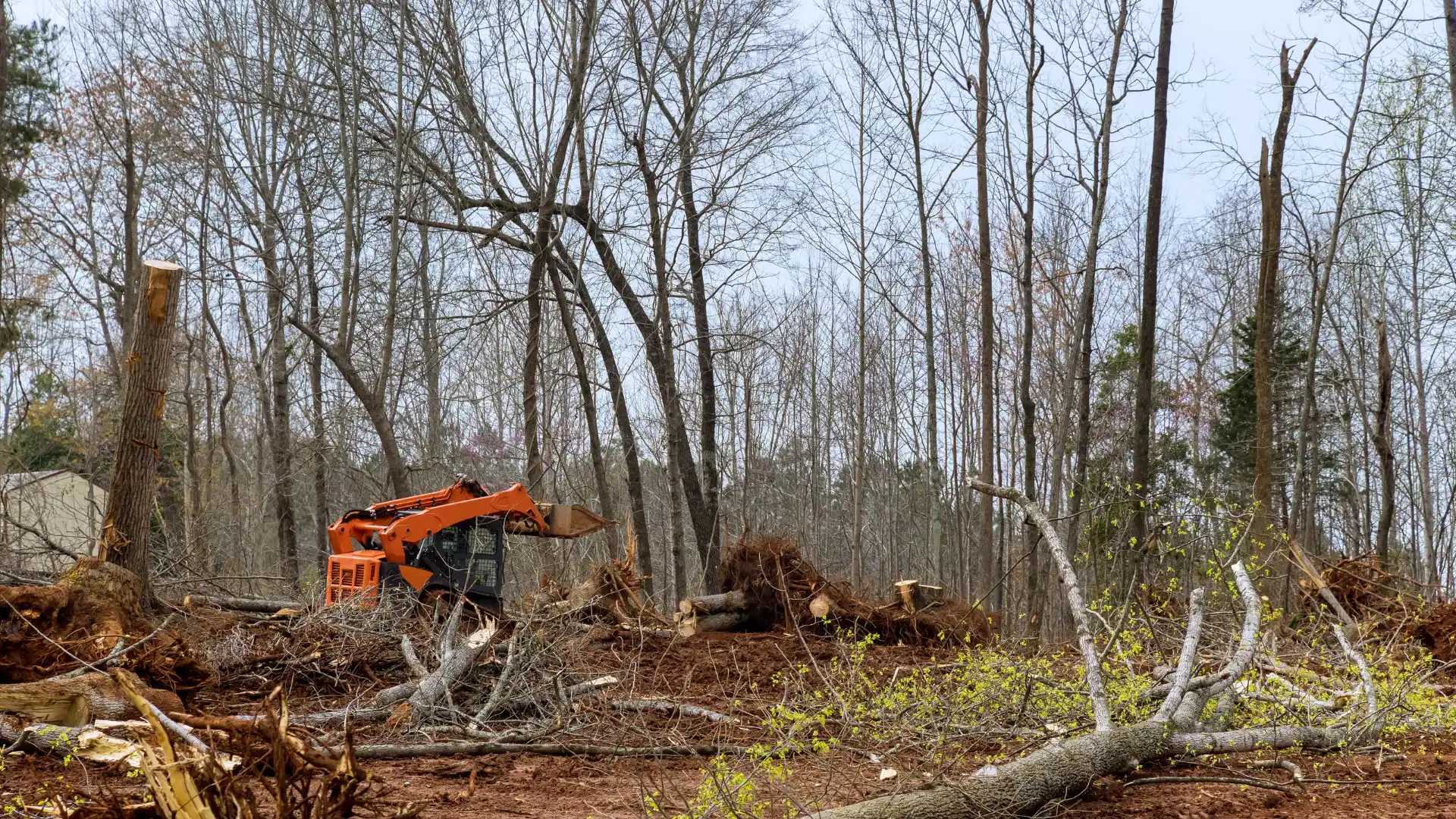
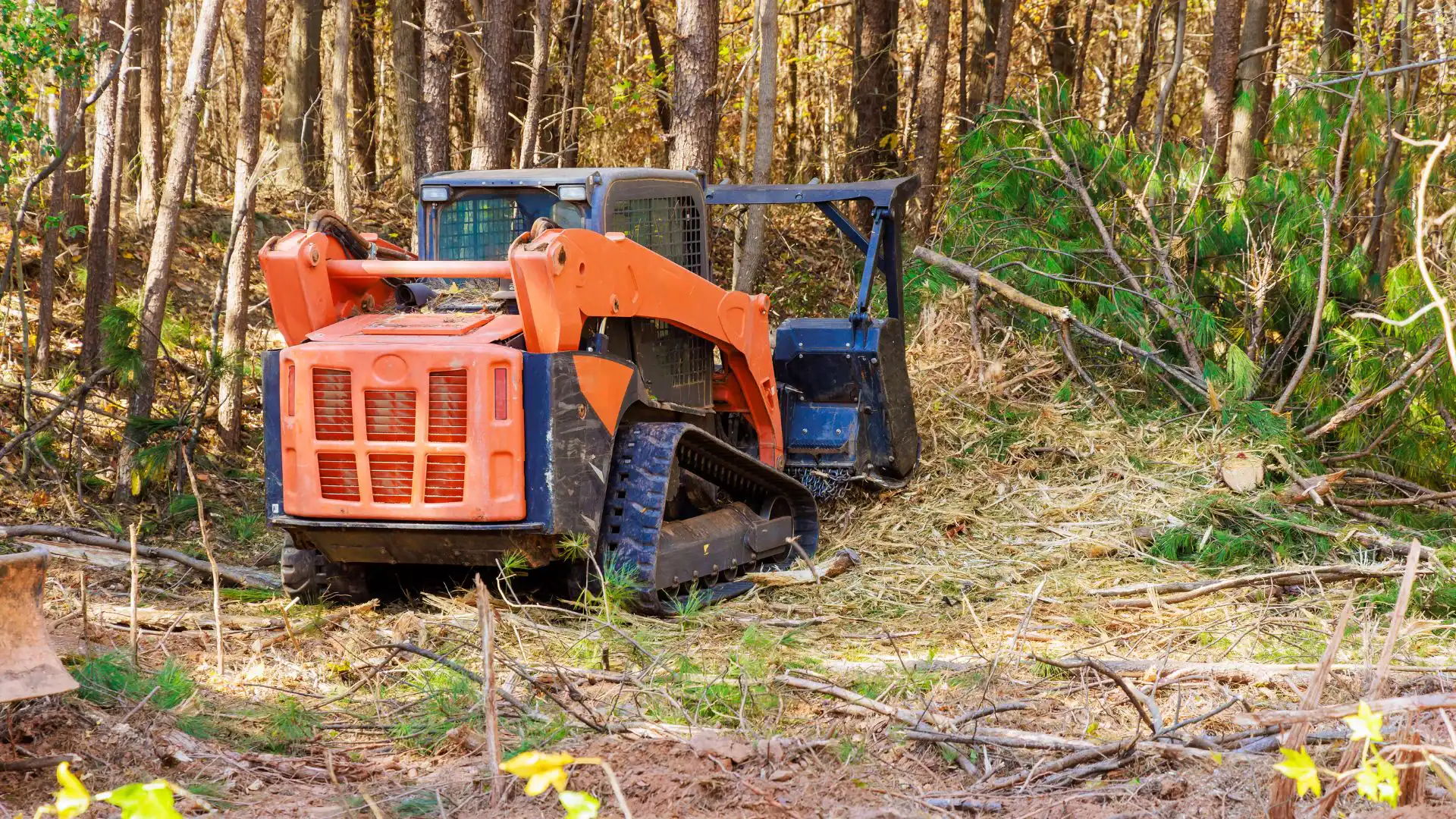
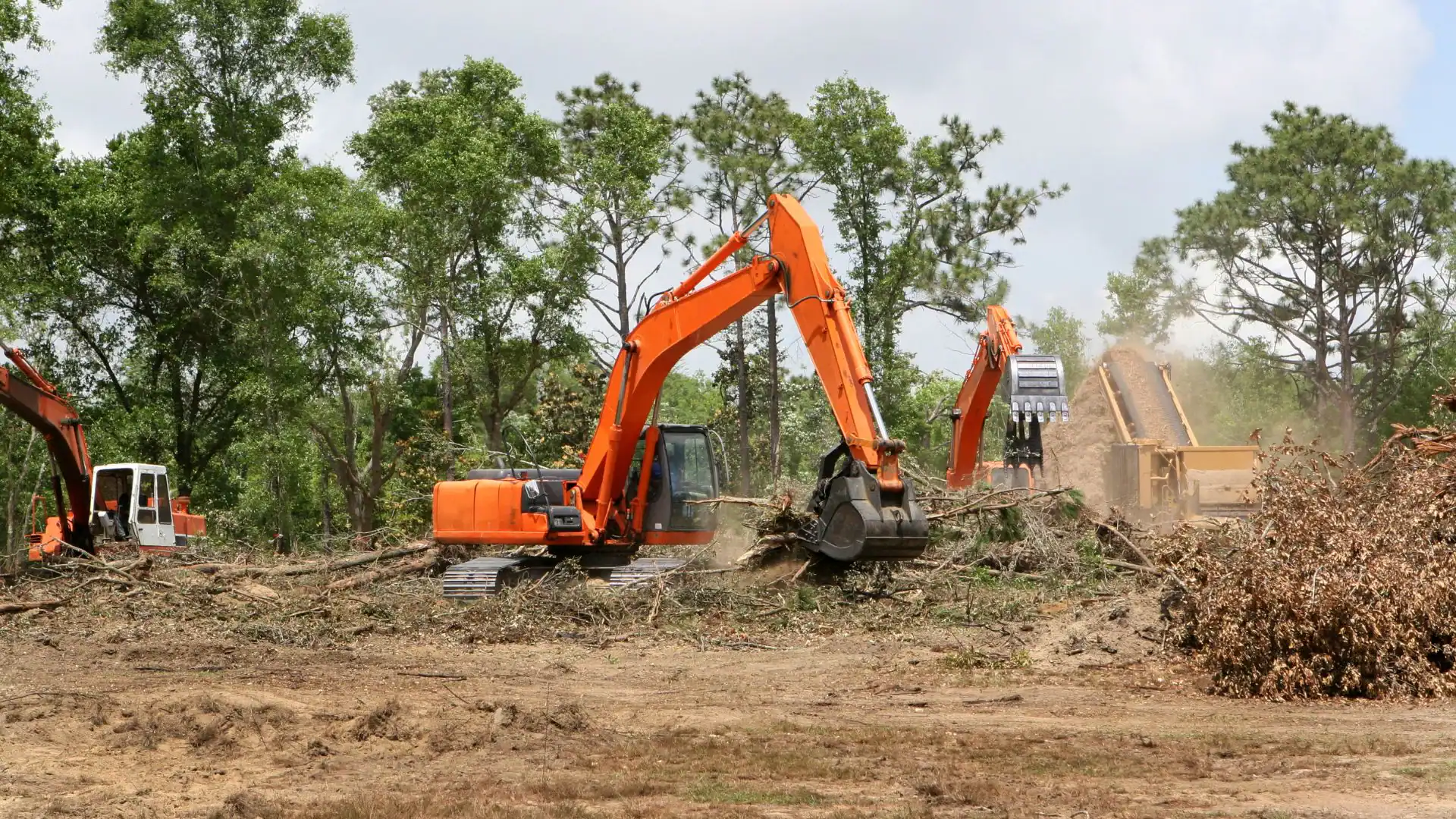
Once the scope is confirmed and any permit requirements are addressed, clearing begins systematically. Brush, overgrowth, and targeted trees come down first. Stumps are ground below grade. Debris is processed and removed or mulched in place, depending on what was agreed. If invasive species like phragmites or knotweed are present which is common on South Shore properties with drainage areas or low-lying sections those are handled with methods that address the root system, not just what’s visible above ground.
Spring and early summer are the busiest periods in East Islip, especially for buyers who closed over winter and want the property cleared before renovation or landscaping begins. If you have a timeline tied to a contractor schedule or a listing date, let us know upfront. We build the job around what you actually need.
Ready to get started?
Land clearing in East Islip covers a wide range of situations, and the scope of each job reflects that. For a standard residential lot in Deer Run or Country Village, that might mean clearing a heavily overgrown rear yard, grinding stumps, and hauling debris. For a waterfront property in The Moorings or along the bay, it means all of that plus a wetlands proximity check, permit coordination with the Town of Islip Planning Division, and equipment selection that doesn’t compromise sensitive areas adjacent to the site.
Overgrown property clearing and land reclamation jobs the ones where the property has been neglected for years go further. That includes systematic removal of dense secondary growth, invasive species treatment, debris processing, and site levelling so the land is genuinely usable when we leave. These aren’t quick jobs, and we don’t quote them that way.
Every job includes itemised quoting so you know exactly what you’re paying for before anything starts. Clearing scope, stump removal, debris disposal, and any permit-related costs are broken out separately. East Islip is a community where properties are worth real money homes here are listing at around $649,000 and the clearing work should reflect the value of what you’re investing in. You won’t get a low number to win the job and a different number at invoice.
In most cases involving significant clearing, yes. The Town of Islip Planning Division administers a formal land clearing permit process that requires a survey map or scaled drawing clearly showing all areas to be cleared and all trees greater than 10 inches in diameter. This isn’t a quick notification it’s a real application with documentation requirements.
If your property is near a tidal wetland, freshwater wetland, or watercourse which applies to a meaningful number of East Islip properties given the hamlet’s proximity to the Great South Bay and its tributaries a separate Wetlands and Watercourses Permit under Chapter 67 of the Town Code may also be required. The Planning Division determines whether NYSDEC review is additionally triggered. Skipping this step isn’t worth the risk. Stop-work orders and mandatory restoration at the property owner’s expense are real outcomes when clearing is done without the correct approvals in place.
It depends on the scope, and any contractor who gives you a firm number before walking the property is guessing. The main cost drivers are lot size, vegetation density, the number and size of trees, stump removal, debris disposal, access for equipment, and whether permit coordination is required.
For a standard residential lot clearing in East Islip say, a heavily overgrown rear yard with secondary growth, some mature trees, and stump grinding you’re generally looking at a few thousand dollars. Larger lots, waterfront properties with access constraints, or full land reclamation jobs on neglected properties will run higher. What matters most is that the quote you receive is itemised and based on an actual site visit, not a satellite image or a phone estimate. That’s the only way to know the number is real.
You can, but it requires the right approvals first. Properties near tidal wetlands, freshwater wetlands, or watercourses in East Islip fall under the Town of Islip’s Wetlands and Watercourses ordinance (Chapter 67), which requires a permit before any clearing begins in or near regulated buffer zones. Depending on the location and scope of the work, New York State DEC review may also apply.
This is one of the most common compliance issues on South Shore properties. A lot can look like a standard residential yard and still sit within or adjacent to a regulated wetland buffer. The tidal wetland margins around Champlin Creek and the bay-facing areas of neighborhoods like The Moorings are particularly relevant here. Getting this assessed before work starts not after is the only way to avoid enforcement action from the Town or the state.
That gets confirmed during the quoting process, and it’s part of the itemised scope. Cleared material is either hauled off-site, chipped and mulched in place, or a combination of both depending on the volume, the site conditions, and what you want done with it. Stumps are ground below grade, not left at ground level or covered over.
For East Islip properties with invasive species present phragmites, Japanese knotweed, or Oriental bittersweet are all common on South Shore lots with drainage areas or wetland-adjacent sections disposal matters more than it does with standard vegetation. Some invasive material needs to be handled and disposed of in a way that prevents it from spreading or re-establishing. That’s factored into the scope when it applies, and it’s not something that gets discovered after the job is done.
The most reliable way is a site walk with someone who can identify what’s actually growing on the property. Phragmites is visually distinctive tall, dense reed growth that tends to take over drainage areas, low-lying sections, and wetland margins and it’s one of the most common invasive species issues on Long Island’s South Shore. If you have a section of your yard that looks like it’s been taken over by tall reeds, that’s almost certainly phragmites.
Japanese knotweed and Oriental bittersweet are harder to identify without experience, but both are present in East Islip and across Suffolk County. Knotweed typically appears as dense, bamboo-like growth along fence lines and property edges. Bittersweet wraps itself around trees and shrubs and can cause significant damage if left unchecked. Standard mechanical clearing without addressing the root system will result in rapid regrowth for all three. If any of these are present on your property, that needs to be part of the clearing scope from the start.
Spring roughly March through May is the most popular window, and for good reason. The ground is workable, vegetation is easier to assess before full summer growth sets in, and it lines up well for homeowners who want the property cleared before landscaping or construction begins. A lot of East Islip buyers who close on properties over the winter are ready to move on clearing as soon as the weather allows.
That said, summer and early fall work well too, and there’s no hard stop on clearing through the warmer months. Winter is slower, and bay-adjacent properties with low-lying or waterlogged ground can limit heavy equipment access during freeze-thaw cycles. If you’re working toward a specific timeline a renovation schedule, a listing date, or a contractor start date book the site assessment early. East Islip’s real estate market moves fast, homes are turning over in around 26 days, and clearing schedules fill up in spring. Getting the assessment done ahead of time means you’re not waiting when it matters.