Hear from Our Customers
A cleared lot isn’t just about aesthetics. It’s about having a site that’s actually ready for your builder, your landscaper, or the next chapter of what you want to do with your property. When the work is done right, you’re not chasing debris removal, calling the town about permit violations, or waiting on a contractor to finish what they started.
Kings Park has a specific set of conditions that make land clearing more involved than most homeowners expect. A significant portion of the hamlet’s housing stock was built in the 1960s which means mature trees, decades of accumulated growth, and in many cases, vegetation that’s been left unchecked for years. Add to that the proximity to the Nissequogue River corridor, where invasive species like phragmites and Japanese knotweed spread aggressively onto private lots from the adjacent parkland, and you’ve got a clearing job that requires more than a chainsaw and a truck.
Properties near Sunken Meadow State Park or backing up to Nissequogue River State Park also sit close to DEC-regulated wetland zones. That affects what can be cleared, how, and whether state-level approvals are needed before work begins. Knowing that upfront before equipment arrives is what separates a smooth project from a costly one.
We are a land clearing and earthworks contractor serving Kings Park and the surrounding Smithtown area. We work on residential lots, overgrown properties, estate parcels, and development sites and we approach every job the same way: figure out what’s required before anything else moves.
In Kings Park, that means knowing Chapter 285 of the Smithtown Town Code, which requires a permit before any tree removal or significant clearing on private property. It means understanding which properties near the Nissequogue River or Long Island Sound shoreline fall within DEC-regulated wetland setbacks. And it means being straight with you about what your specific property needs not quoting low and finding extras once we’re on site.
We serve Kings Park, Fort Salonga, Nissequogue, Commack, and the broader Smithtown area. Every job we take on gets the same level of attention whether it’s a single residential lot off Indian Head Road or a multi-acre site closer to the Sunken Meadow Parkway corridor.

It starts with a site assessment. We come out to your Kings Park property, walk the lot, and get a clear picture of what’s there the vegetation density, any trees that fall under the Smithtown Chapter 285 permit requirement, and whether your property is within a DEC wetland setback zone given its proximity to the Nissequogue River or the Long Island Sound shoreline. That assessment drives everything else.
From there, we give you an itemised quote. Not a ballpark. A quote that breaks out clearing, stump grinding, debris removal, and any permit-related costs as separate line items so you know exactly what you’re paying for before anyone sets foot on your property with equipment. If permits are required through the Town of Smithtown, we walk you through that process and what it means for your timeline.
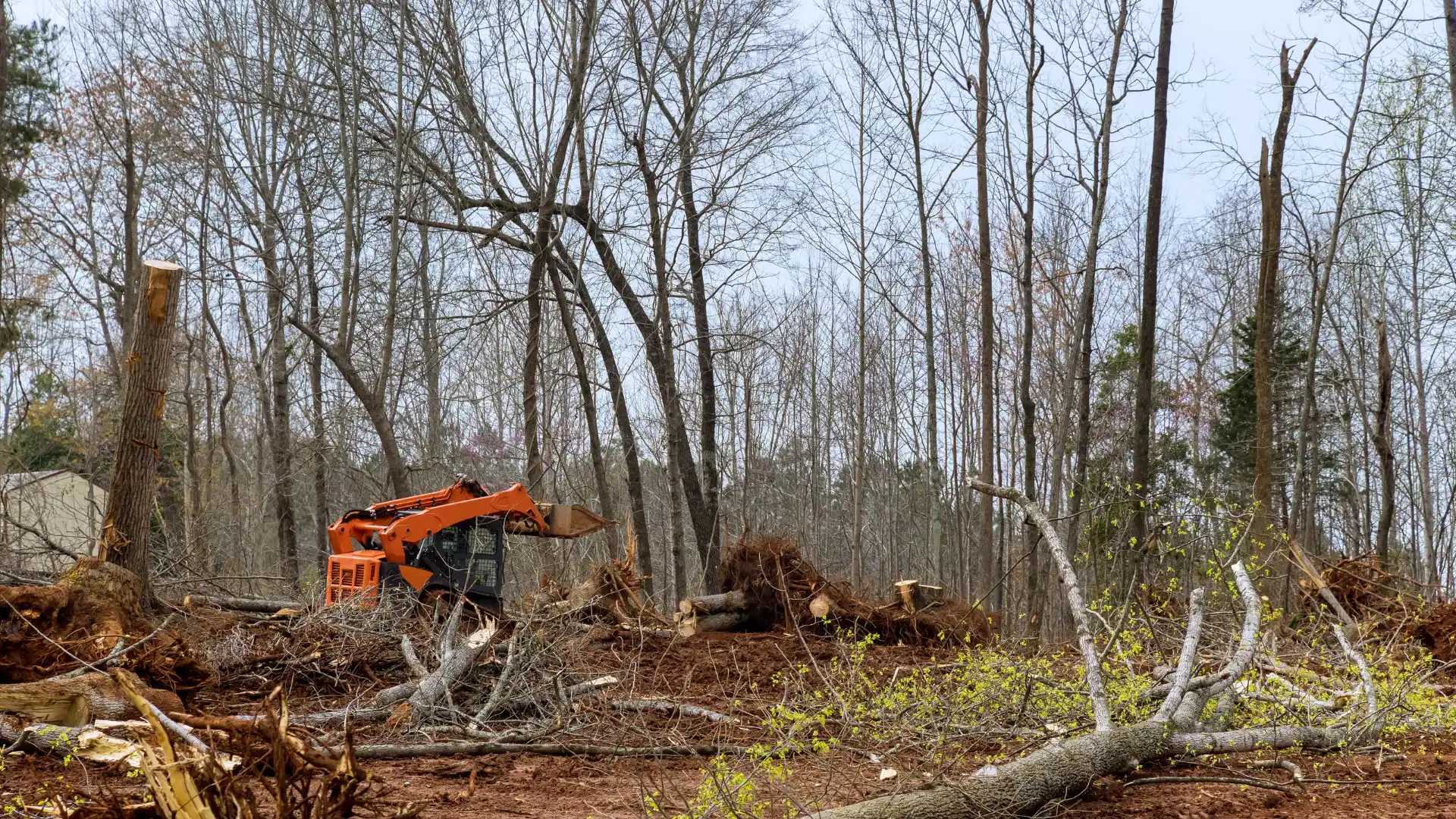
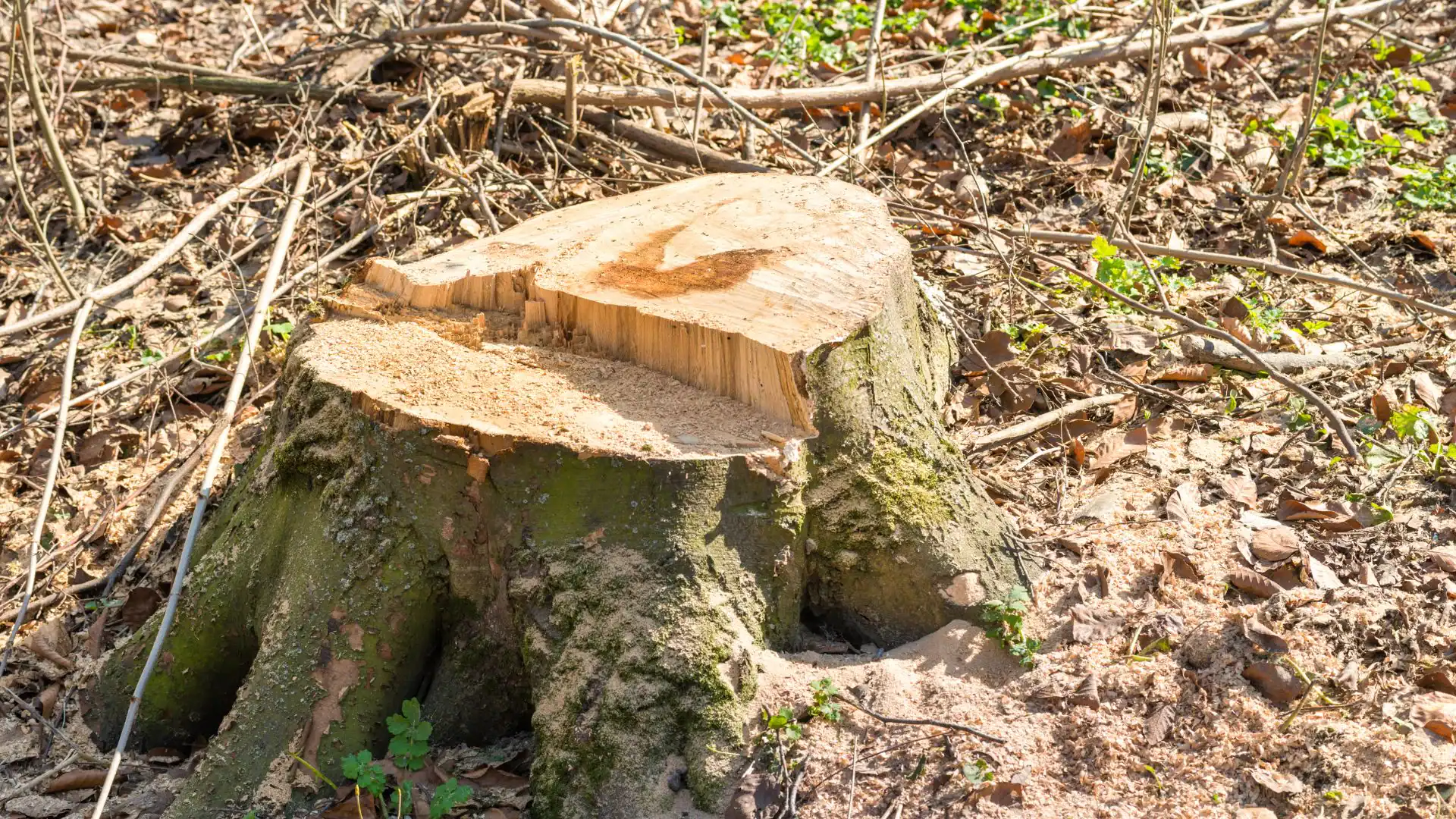
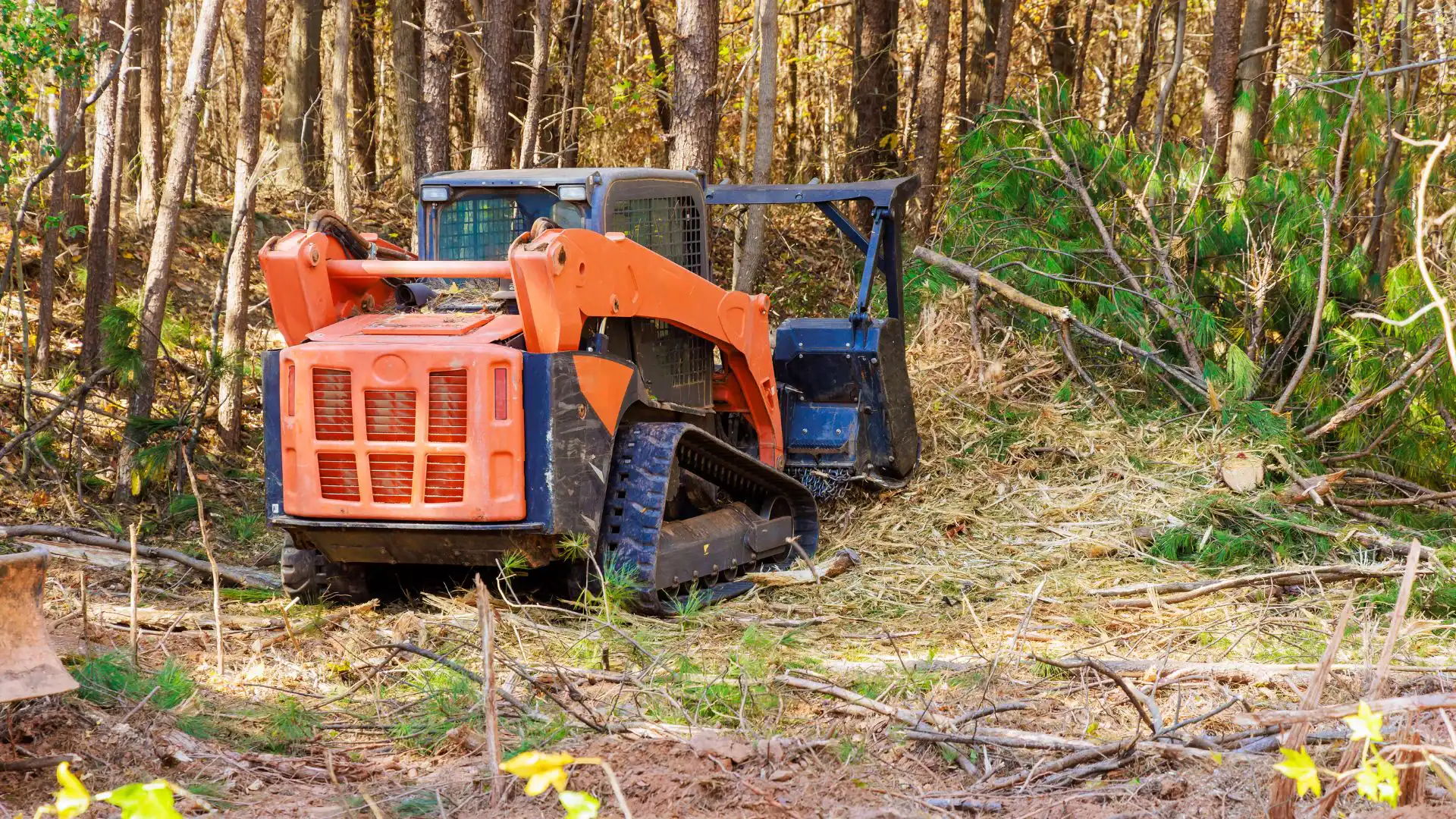
Once approvals are in place and the scope is agreed, we mobilise. The clearing work itself is matched to your site hand-cutting in sensitive boundary areas near neighbouring properties or regulated zones, mechanical clearing on open sections. When we’re done, the site is clean. Debris is removed, stumps are ground, and you’re left with usable land not a pile of brush at the property line.
Ready to get started?
Land clearing in Kings Park isn’t one-size-fits-all, and the range of work we handle reflects that. Overgrown property clearing for a long-neglected lot in the San Remo neighbourhood looks different from brush clearing along a wooded rear boundary near Sunken Meadow Hills. Land reclamation for a property where park-adjacent vegetation has crept over the boundary line is a different scope again from full lot clearing ahead of a new build or major renovation.
What stays consistent across all of it is the compliance piece. Every Kings Park clearing job we take on is assessed against Smithtown Town Code requirements, and any property near the Nissequogue River, its tidal wetlands, or the Sound shoreline is checked against DEC Article 24 and Article 25 setback rules before we quote. That’s not an upsell it’s the baseline of doing this work correctly in this town.
We also handle invasive species removal for Kings Park properties affected by phragmites and Japanese knotweed spread from the Nissequogue River corridor. These plants require proper removal technique to prevent rapid regrowth surface cutting alone doesn’t solve the problem. If your property has an invasive species issue, we’ll tell you what’s actually needed to address it, not just what’s quickest to invoice.
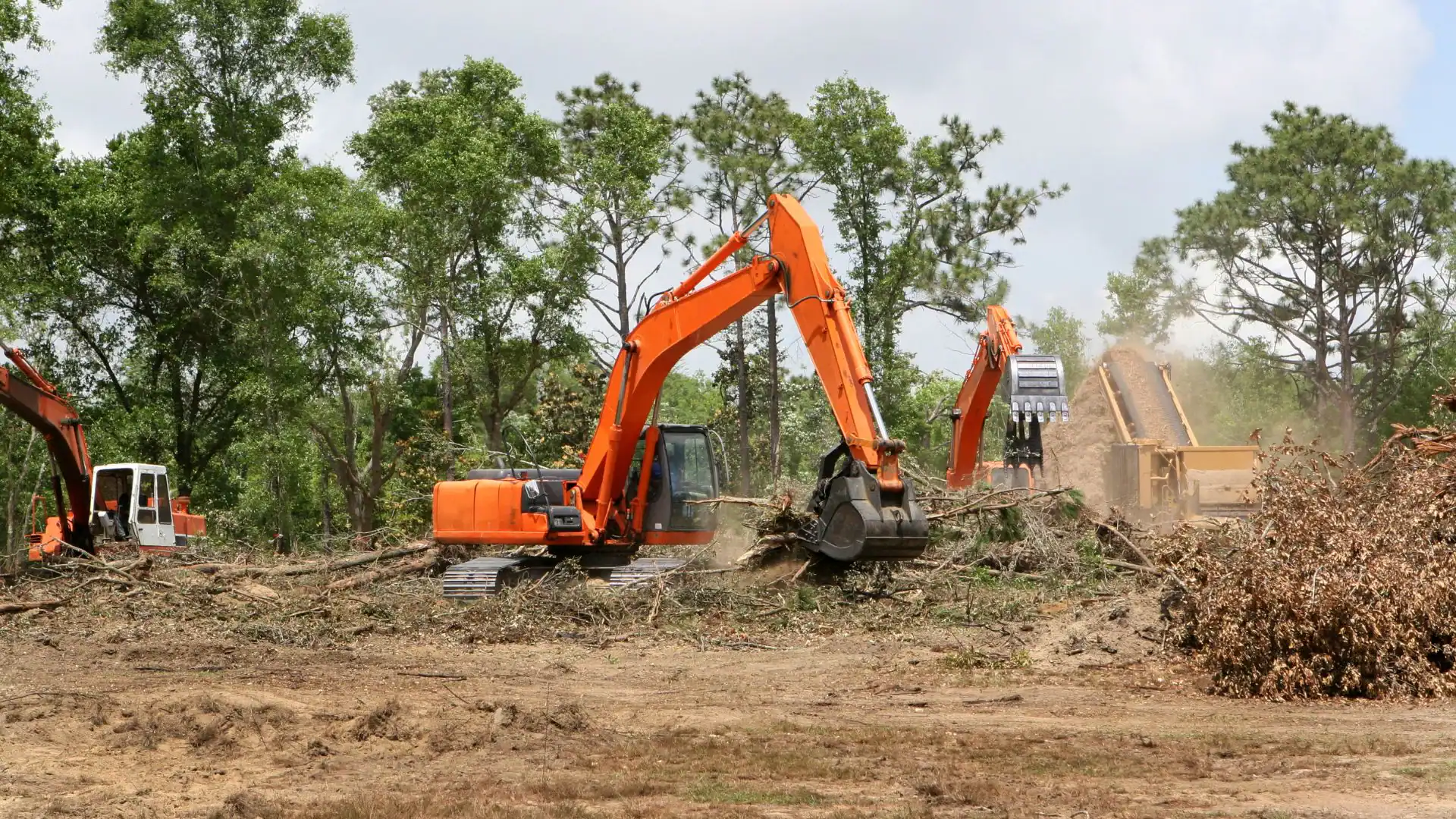
Yes and this is one of the most important things to understand before any clearing work begins in Kings Park. Under Chapter 285 of the Smithtown Town Code, it is unlawful to remove, destroy, or substantially alter any tree on any parcel of real property within the Town of Smithtown without first obtaining a permit. Kings Park is an unincorporated hamlet within Smithtown, so this ordinance applies directly to your property.
This isn’t a technicality that only applies to large trees or street trees it covers tree removal on private residential land. The permit must be obtained before work begins, not after. Contractors who skip this step are putting the legal and financial exposure on you as the property owner, not on themselves. When you work with us, we identify permit requirements during the site assessment phase, before we quote and before any equipment arrives on your property.
For a standard residential lot in Kings Park with light to moderate vegetation, land clearing typically runs in the range of $1,500 to $3,500. That range shifts depending on a few key variables: how dense the growth is, whether there are large trees requiring removal under the Smithtown Chapter 285 permit process, how many stumps need to be ground, and whether debris haulage is included or separately arranged.
Properties in Kings Park that back up to wooded areas near Sunken Meadow State Park or the Nissequogue River corridor often have more complex vegetation than the initial look suggests invasive species like phragmites and knotweed can extend deep into a lot, and mature hardwood growth from decades of neglect adds to the scope. Any permit fees through the Town of Smithtown are a separate cost and will be outlined in your quote as a line item. The best way to get an accurate number for your specific property is a site assessment a quote over the phone for a Kings Park lot is rarely reliable without seeing what’s actually there.
It can, and it’s worth finding out before you start rather than after. Properties near the Nissequogue River, its tidal wetlands, or the Long Island Sound shoreline in Kings Park may fall within regulated zones under New York State DEC Article 24 (Freshwater Wetlands) or Article 25 (Tidal Wetlands). Within those setback areas, land disturbance and vegetation clearing require state-level approval before work begins.
The DEC’s Marine Resources division maintains an office within Nissequogue River State Park right in Kings Park which gives you a sense of how closely this area is monitored environmentally. That doesn’t mean clearing work near the river is impossible, but it does mean the regulatory layer needs to be understood and respected. During our site assessment, we identify whether your property falls within a DEC-regulated zone and what that means for your project scope, timeline, and approvals. Working without that knowledge in this part of Kings Park is a risk that’s easy to avoid with the right contractor.
These terms get used interchangeably sometimes, but they describe meaningfully different scopes of work. Lot clearing typically refers to full clearing of a parcel trees, stumps, shrubs, and surface vegetation removed down to bare ground, usually in preparation for construction or major landscaping. It’s what you’d need before a builder breaks ground on a Kings Park property.
Brush clearing is more targeted. It focuses on dense scrub, overgrown hedges, brambles, and low-level vegetation the kind of growth that takes over a rear yard or side boundary over time. It doesn’t necessarily involve large tree removal. Land reclamation sits somewhere in between, and it’s particularly relevant for Kings Park properties near state parkland where vegetation has encroached from adjacent protected land onto your lot over years. Reclamation work restores the usable boundary of your property without disturbing protected park vegetation on the other side of the line. The right scope for your property depends on what’s actually there which is why we assess before we quote.
Phragmites and Japanese knotweed are both documented in the Nissequogue River corridor, and they spread readily onto private properties in Kings Park particularly lots that border the river system, its wetland margins, or the adjacent state parkland. The challenge with both species is that surface removal alone rarely solves the problem. Cut phragmites at the stem and it regrows from the root system. Remove knotweed without addressing the rhizome network and it comes back aggressively within a season.
Effective removal depends on the extent of the infestation and where it sits on your property relative to any DEC-regulated wetland zones because treatment methods that involve soil disturbance or herbicide application near regulated wetlands require additional consideration. We assess the infestation, identify what removal approach is appropriate for your specific site conditions, and give you a clear picture of what long-term management looks like after the initial clearing. If someone quotes you invasive species removal in Kings Park without asking about the location of the growth relative to the river or wetland boundaries, that’s worth questioning.
Spring is the most in-demand window typically March through May when homeowners who’ve spent winter looking at an overgrown property move quickly to clear before summer construction or landscaping seasons begin. If you’re working toward a build or a major project, booking your clearing early in the year gives you the best chance of hitting your timeline without delays.
Fall is a solid secondary window, particularly for Kings Park properties with heavily wooded sections. Once the leaves drop, it’s easier to assess what’s actually on a lot mature canopy that looks manageable in summer can reveal a much more complex clearing scope once the foliage is gone. Kings Park’s North Shore position also means nor’easters and late-summer storm systems regularly bring down trees and create debris that needs clearing on a less predictable schedule. We handle storm damage clearing as well, and response time matters when a downed tree is blocking access or creating a safety issue. Year-round availability means you’re not waiting weeks for a callback when something urgent comes up.