Hear from Our Customers
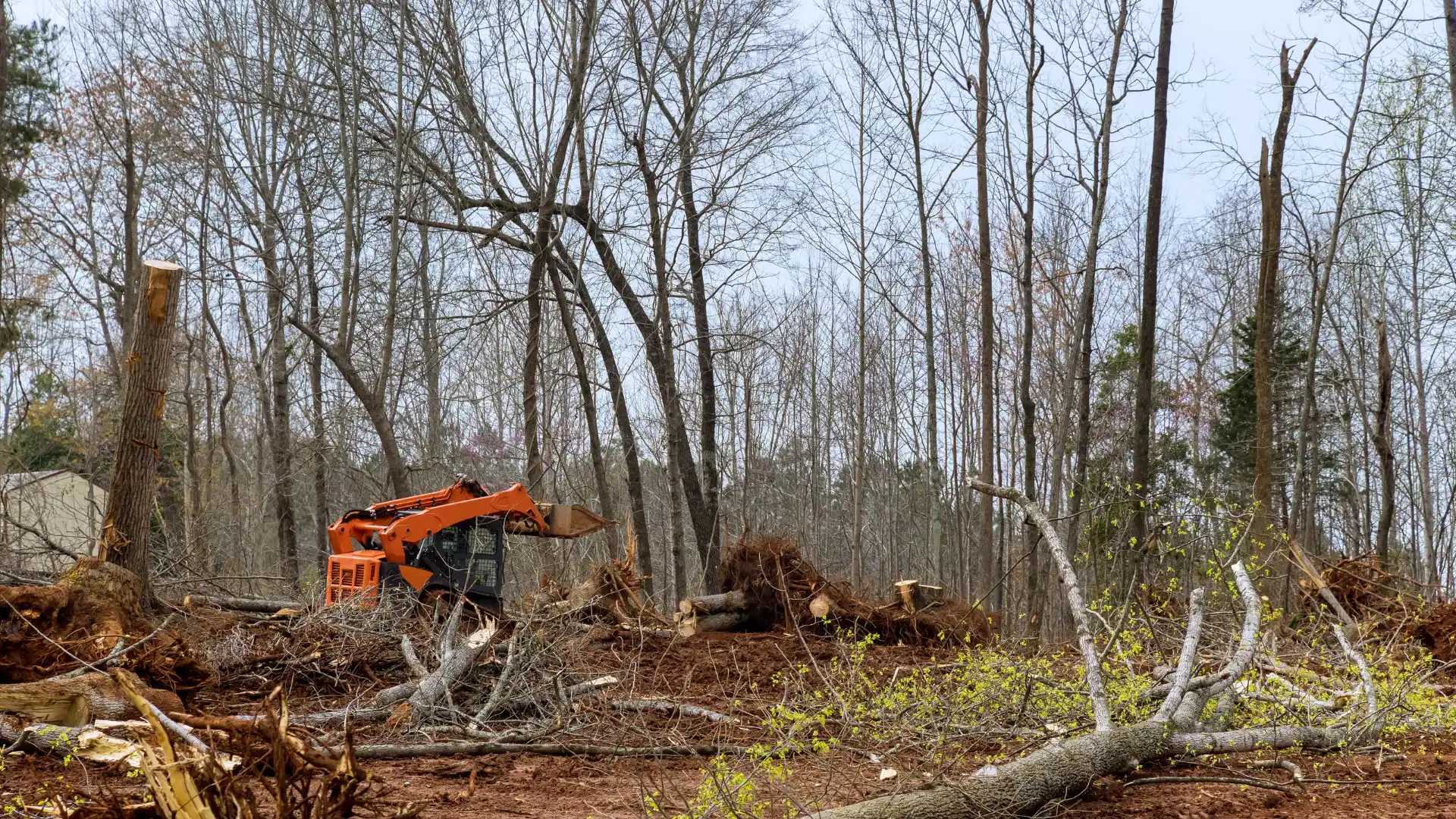
A lot of clearing contractors will show up, cut things down, and leave. What they leave behind debris piles, unground stumps, half-cleared invasive species, and zero paperwork becomes your problem the moment they drive away. That’s not clearing. That’s just cutting.
North Bellport has a significant number of properties that have sat unmanaged for years. Dense brush, phragmites pushing in from wetland edges, Japanese knotweed spreading through root systems, and Ailanthus trees that grow back harder if you cut them wrong. These aren’t standard suburban lots. They need someone who can read the site before the first machine rolls in.
What you actually get when the job is done right is a site that’s genuinely ready for whatever comes next whether that’s a builder, a sale, or simply a property that doesn’t look abandoned. With North Bellport’s active development pipeline, including the state-funded NY Forward revitalization and new residential construction underway through the Long Island Housing Partnership, the timeline pressure on lot preparation is real. You need a cleared site that holds up to scrutiny, not one that triggers a stop-work order because a permit was skipped.
We work across Suffolk County’s South Shore, and North Bellport is territory we know well. The Town of Brookhaven has its own tree preservation rules, its own wetland buffer requirements, and its own enforcement process and none of that is something you want to learn about after clearing starts.
We assess every property before we quote it. That means checking for wetland proximity near the Carmans River corridor, identifying whether a tree clearing permit is required under Brookhaven’s Chapter 70, and flagging any invasive species that need to come out the right way. You get an itemised quote that breaks down exactly what’s included clearing, stump grinding, debris removal before anything starts.
This is the South Shore. Properties here in North Bellport don’t always behave like a clean inland lot. We’ve worked enough of them to know the difference, and that knowledge is built into every job we take on.
It starts with a site visit. Before any equipment shows up, we walk the property identifying vegetation types, checking for wetland buffers, assessing access points, and determining what the Town of Brookhaven requires in terms of permits. If your lot is two acres or more, a tree clearing permit is required. If there are trees at six inches diameter or greater, those need individual permit coverage. We handle that assessment upfront so it doesn’t stall the job later.
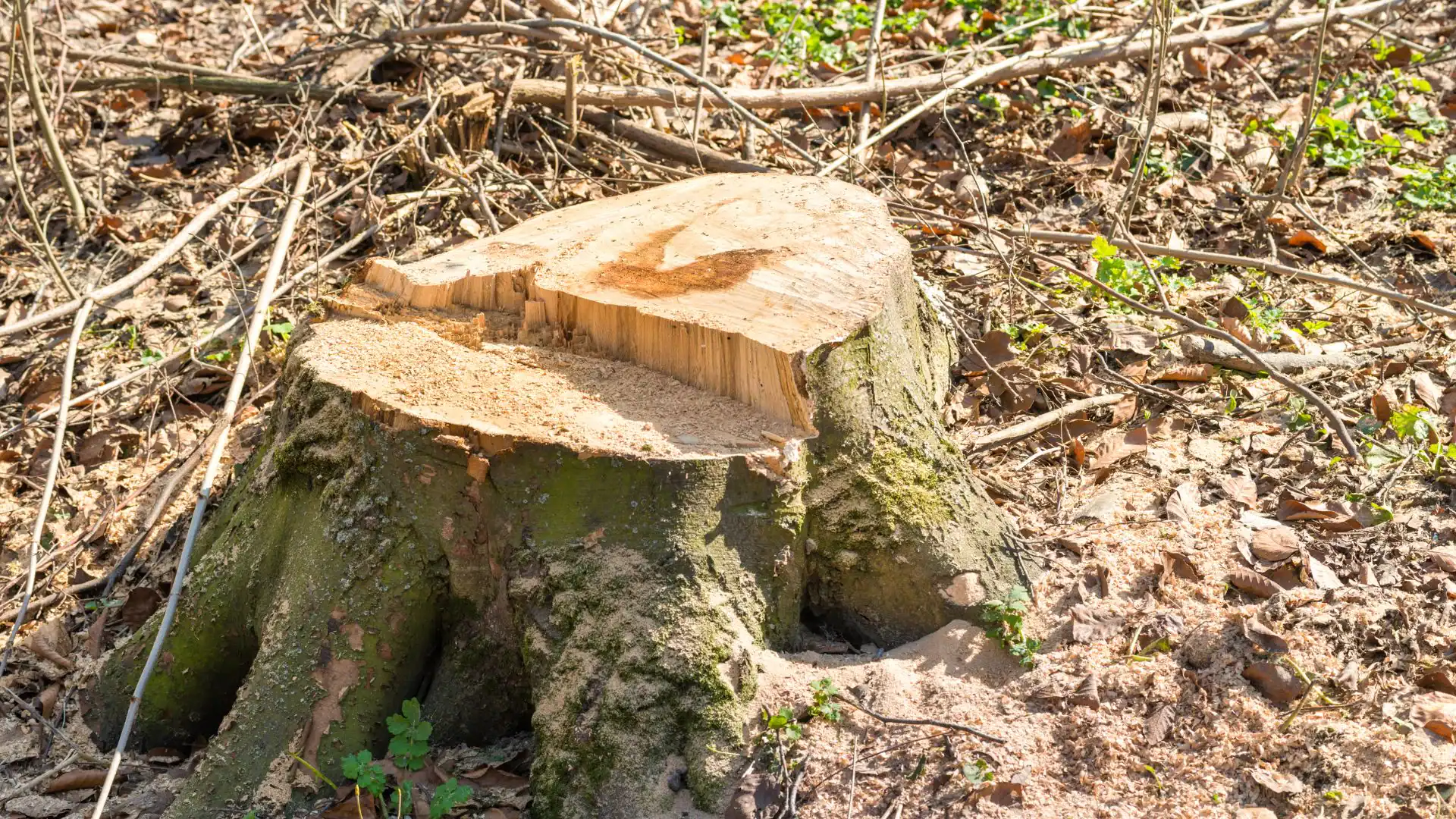
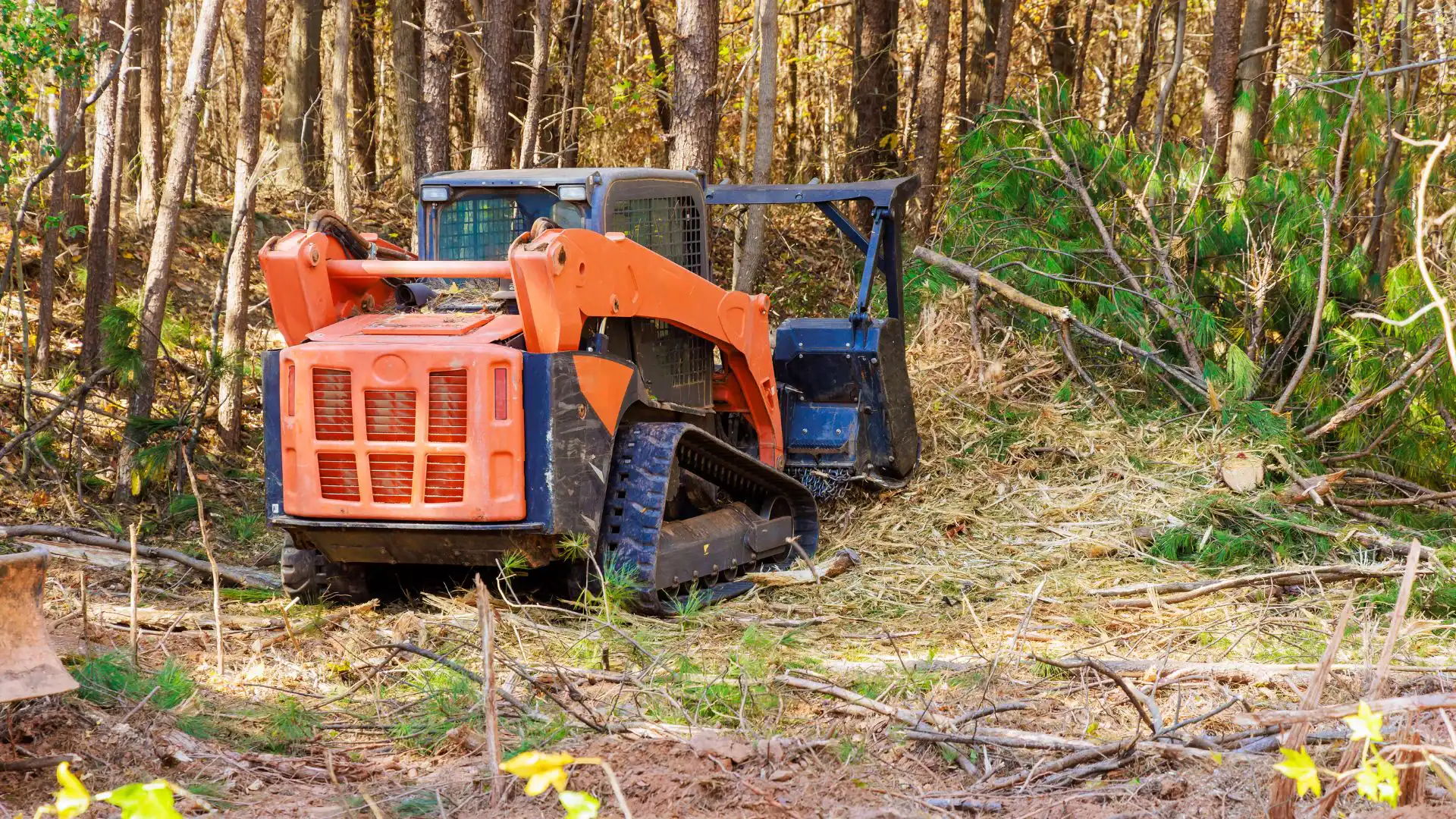
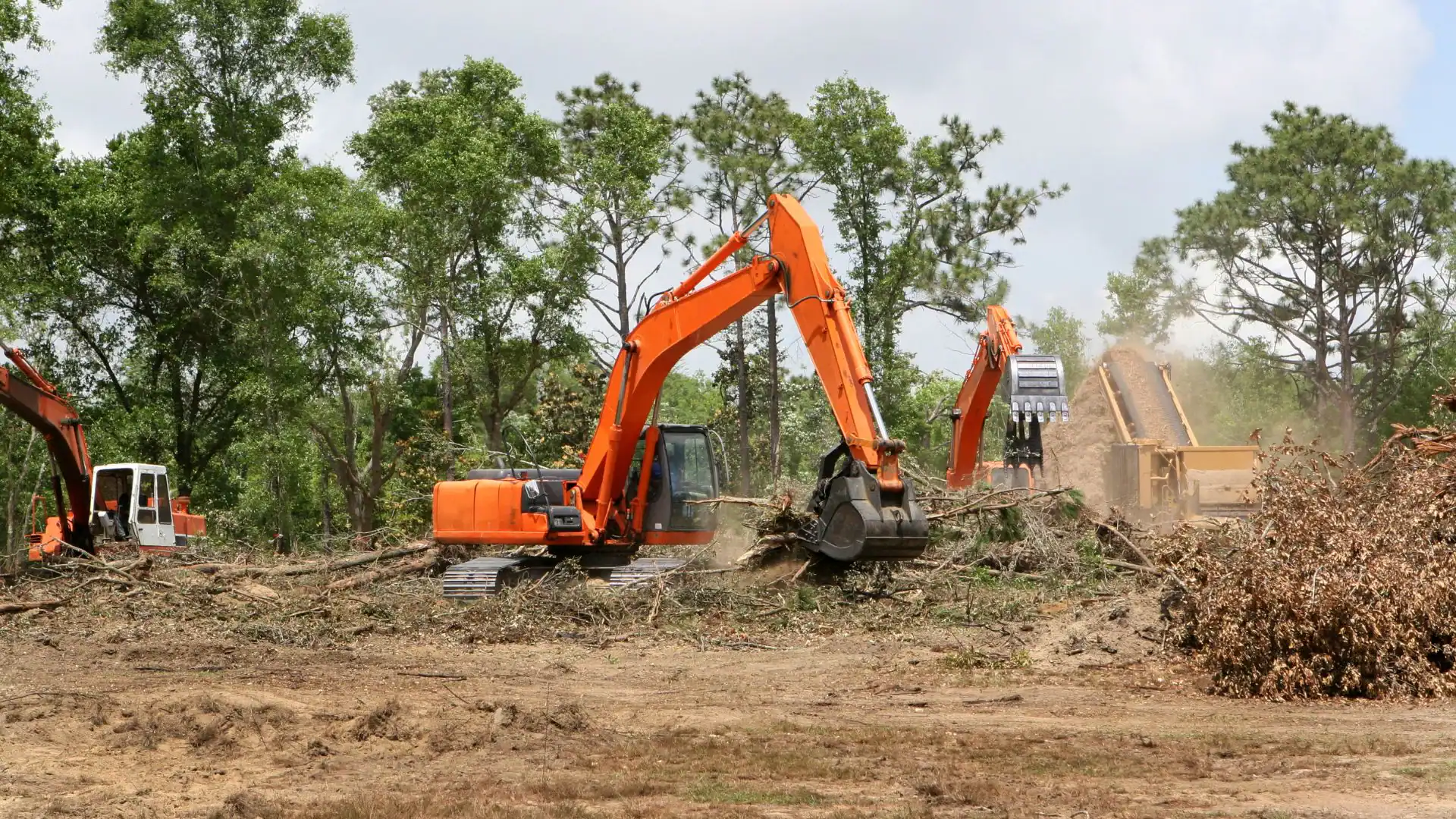
Once the scope is confirmed and permits are in order, clearing begins from the perimeter in. For overgrown North Bellport properties especially those with phragmites, knotweed, or dense scrub we work in a deliberate sequence that prevents spreading invasive root systems with equipment. Stumps are ground down, not just cut at the surface, and all cleared material is either chipped on site or removed entirely depending on what was agreed in your quote.
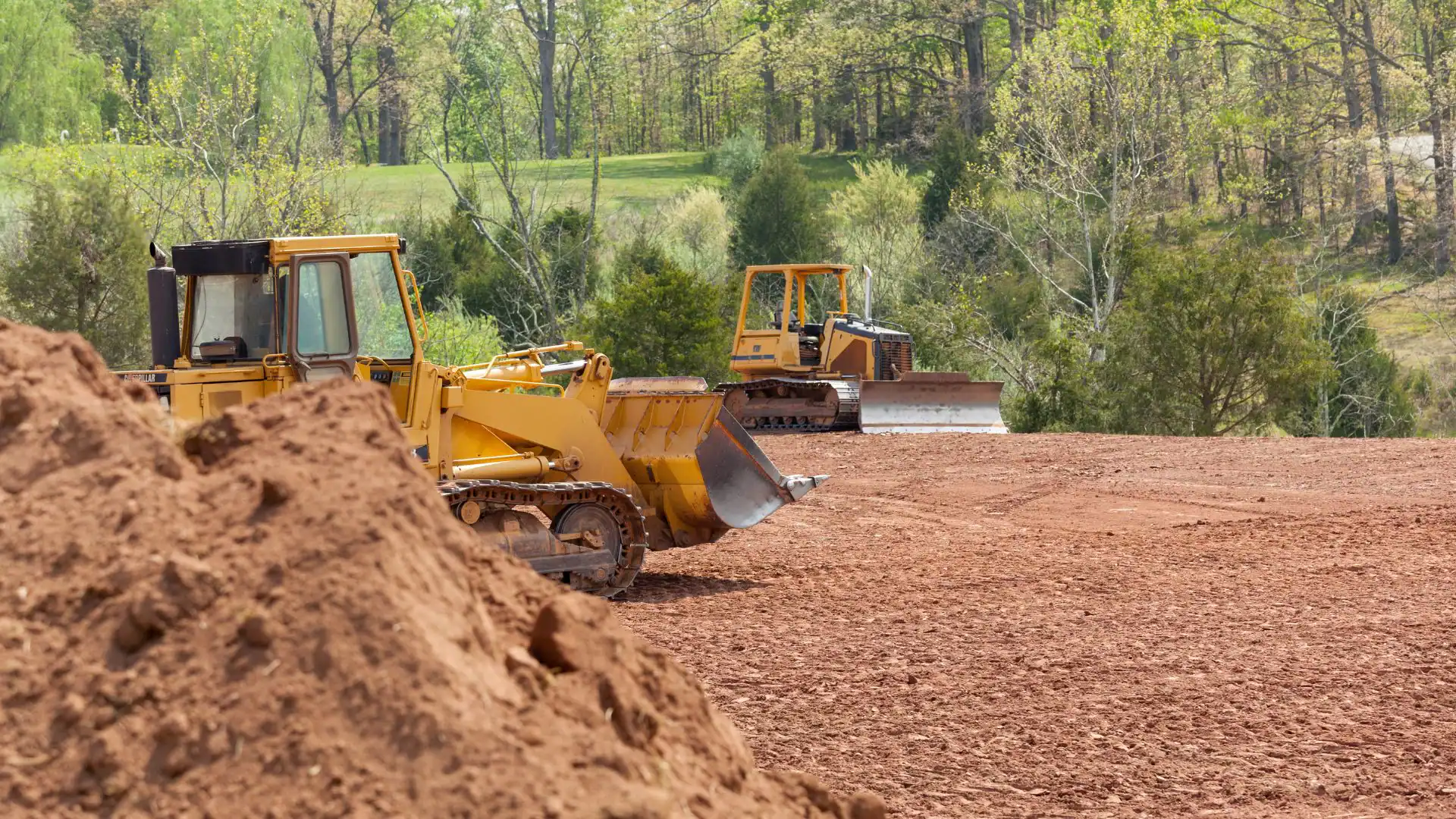
The final step is a walkthrough. You see the site before we leave. If something isn’t right, we address it before the job is closed not after you’ve paid and we’ve moved on. What you’re left with is a flat, clean, permit-compliant site ready for a builder, a landscaper, or whatever your plans call for next.
Ready to get started?
Land clearing in North Bellport isn’t one-size work. A vacant residential lot off Bellport Avenue with years of unchecked growth is a different job than a two-acre parcel near a wetland buffer that requires Brookhaven Chapter 81 review before a single tree comes down. The scope of what’s needed and what’s legally required depends entirely on your specific property.
Overgrown property clearing and land reclamation are two of the most common service requests we get in this area. That means full vegetation removal, invasive species identification and extraction, stump grinding, and site grading where needed. If phragmites are present near a wetland edge, those are handled with the correct removal method not just cut back to the root collar and left to return stronger next season. The same goes for Japanese knotweed, which spreads through rhizome fragments if equipment isn’t managed carefully.
For properties tied to the current development activity in North Bellport whether that’s a new build, an infill lot, or a parcel being prepared for sale ahead of rising local values we work to a timeline that aligns with your construction schedule or closing date. Debris removal is always a confirmed line item in your quote, not a surprise conversation at the end of the job. What the site looks like when we leave is agreed before we start.
In most cases, yes and the specifics depend on your lot size and what’s growing on it. The Town of Brookhaven requires a tree clearing permit for any residential property of two acres or more. For individual trees, a removal permit is required for any tree measuring six inches or greater in diameter at breast height. That applies across the town, including North Bellport.
There’s also a density requirement to be aware of: Brookhaven’s code requires a minimum of 130 DBH inches of tree canopy per acre to be maintained after clearing. If your project disturbs more than one acre of land, a Stormwater Pollution Prevention Plan is also required before work can begin. Skipping these steps doesn’t make the requirement go away it creates enforcement exposure for you as the property owner, including potential fines and orders to replant. We assess permit obligations as part of every quote, so nothing gets missed before the first machine touches your lot.
It does, and it’s one of the things that separates a properly scoped clearing job from one that creates more problems than it solves. North Bellport sits in the transition zone between Long Island’s South Shore coastal environment and the Central Pine Barrens, and that geography brings a specific invasive species profile. The most commonly encountered on properties in this area are phragmites, Japanese knotweed, multiflora rose, Oriental bittersweet, Ailanthus (tree of heaven), and autumn olive.
Each of these requires a different removal approach. Phragmites on wetland-adjacent lots can’t just be cut the root system needs to be addressed or it comes back thicker. Japanese knotweed spreads through rhizome fragments, which means equipment that moves contaminated soil from one part of the lot to another can accelerate the infestation rather than clear it. We identify what’s present before clearing begins and adjust the method accordingly. That’s not extra work it’s what the job actually requires to stay cleared.
Yes, and this is one of the more important questions to get answered before any work starts. Properties in North Bellport and the broader South Shore area frequently sit near or adjacent to regulated wetland buffers whether that’s freshwater wetlands connected to the Carmans River corridor, coastal marshes, or mapped Town of Brookhaven wetland areas. Both Town of Brookhaven Chapter 81 (Wetlands and Waterways) and New York State’s Article 24 (Freshwater Wetlands Act) impose setback restrictions that limit or prohibit clearing within defined buffer zones.
The buffer distance varies depending on the wetland classification and the specific activity being proposed. In some cases, a permit from the Town or from the NYS Department of Environmental Conservation is required before any vegetation removal within the buffer can happen. In others, clearing is simply not permitted within a certain distance of the wetland edge, regardless of what’s growing there. We check for wetland proximity as part of our standard site assessment because finding out after clearing starts is a much more expensive problem than finding out before.
Pricing depends on the size of the lot, the density and type of vegetation, access conditions, whether stump grinding is included, and what debris removal looks like. For a standard residential lot clearing in North Bellport, you’re generally looking at a range of $800 to $3,500 for a typical suburban lot. Larger parcels one acre and above typically run $1,500 to $12,000 or more depending on conditions. Stump grinding is usually quoted separately at approximately $75 to $300 per stump depending on size.
What affects cost most on Long Island’s South Shore is vegetation complexity. A lot that’s been left for five or ten years with dense invasive growth, phragmites, and multiple large-diameter trees is a meaningfully different job than a recently neglected lot with light brush. Permit costs are also a real factor tree clearing permits, individual tree removal permits, and SWPPP preparation all carry fees that need to be accounted for in your budget. We break all of this out in an itemised quote so you see exactly what you’re paying for before any work begins.
Debris removal is one of the most important things to confirm before you book any clearing contractor, because the answer varies significantly from one company to the next. Some contractors clear the vegetation but leave chipped material, cut stumps, and brush piles on site technically cleared, but still a mess you’re responsible for. That’s not an acceptable outcome for most North Bellport property owners, especially those preparing a lot for construction or sale.
With us, debris removal is a confirmed line item in every quote not an afterthought. Depending on your property and the scope of clearing, material can be chipped and spread on site as mulch, or fully removed and hauled away. Which approach makes sense depends on your plans for the lot. If a builder is coming in behind us, leaving organic material on a construction site isn’t practical. We confirm the debris outcome with you at the quoting stage so there’s no conversation about it when the job is done and the site looks exactly as agreed.
Spring and fall are the busiest booking periods on Long Island for land clearing spring because property owners are preparing lots ahead of summer construction starts, and fall because ground conditions are firm, leaf drop makes tree assessment easier, and anyone planning a spring build wants the site ready before winter. In North Bellport specifically, the current development activity tied to the NY Forward revitalization and new residential construction through the Long Island Housing Partnership has added real demand pressure to the local market.
If your clearing is tied to a building permit timeline, a property settlement date, or a construction contract start, booking four to six weeks ahead of your target date is a reasonable baseline. That window allows for the site visit, permit assessment, any required Town of Brookhaven applications, and scheduling without compressing everything into a last-minute rush. For jobs that turn out to require a tree clearing permit or wetland review, the lead time becomes even more important permit processing adds time that can’t be recovered if you’ve already committed to a construction start date.