Hear from Our Customers
Melville’s housing stock tells a story most homeowners know well mid-century split-levels and ranch homes that were graded for a different era, with drainage patterns that made sense in 1965 but flood basements today. When excavation is done right, that cycle stops. Proper grading, correct slope management, and accurate cut and fill work mean water goes where it’s supposed to go away from your foundation, not toward it.
The terrain here isn’t flat. Melville sits within the Harbor Hill Moraine, the same glacially formed ridge that puts Jayne’s Hill Long Island’s highest natural point right in your backyard. That rolling topography means soil conditions vary from lot to lot, and a contractor who hasn’t worked this area before is going to find that out mid-project. Knowing what’s likely under the surface before breaking ground changes how a job gets scoped, priced, and executed.
Beyond drainage and terrain, there’s the bigger picture. With median home values around $854,000 in Melville, what happens below grade directly affects what you have above it. A poorly executed excavation can undermine a foundation, compromise a neighboring structure, or create a drainage problem that costs far more to fix than the original job cost to do correctly. Getting it right the first time isn’t a luxury it’s the only version of this that makes sense.
We operate across the Town of Huntington and western Suffolk County, and Melville is territory we know well not from a map, but from working in it. We understand the Town of Huntington’s grading permit requirements under Chapter 87, what the Building Department expects on site, and how to move through the approval process without costing you weeks of unnecessary delay before a single bucket of dirt moves.
We’ve worked in Strathmore Hills, along the Route 110 corridor, and on residential lots throughout the Half Hollow Hills school district. The soil variability that comes with moraine terrain, the drainage challenges common to homes built in the 50s through 80s, the pace that Melville homeowners and developers expect we’ve built our process around all of it.
What you get is a crew that shows up prepared, communicates clearly, and doesn’t leave you guessing about scope, timeline, or cost. That’s not a pitch it’s just how this has to work when you’re operating in a market where the stakes are this high.

It starts with a site assessment. Before anything is quoted, we look at your property the grade, the soil, the drainage patterns, what’s around the site, and what the Town of Huntington is going to require in terms of permits. In Melville, that typically means a grading permit through the Town’s Department of Engineering Services if the work involves any meaningful change to site topography. If your project touches a street, sidewalk, or curb cut, there’s a separate permit through the Superintendent of Highways. We identify what’s needed upfront so there are no surprises mid-project.
From there, you get a written quote that spells out exactly what’s included spoil removal, erosion controls, NY 811 utility locate compliance, grading tolerances, and site cleanup. New York State law requires notification to NY 811 before any excavation begins, and that’s a non-negotiable first step on every job we run. It protects your property, your neighbors’ services, and everyone on site.
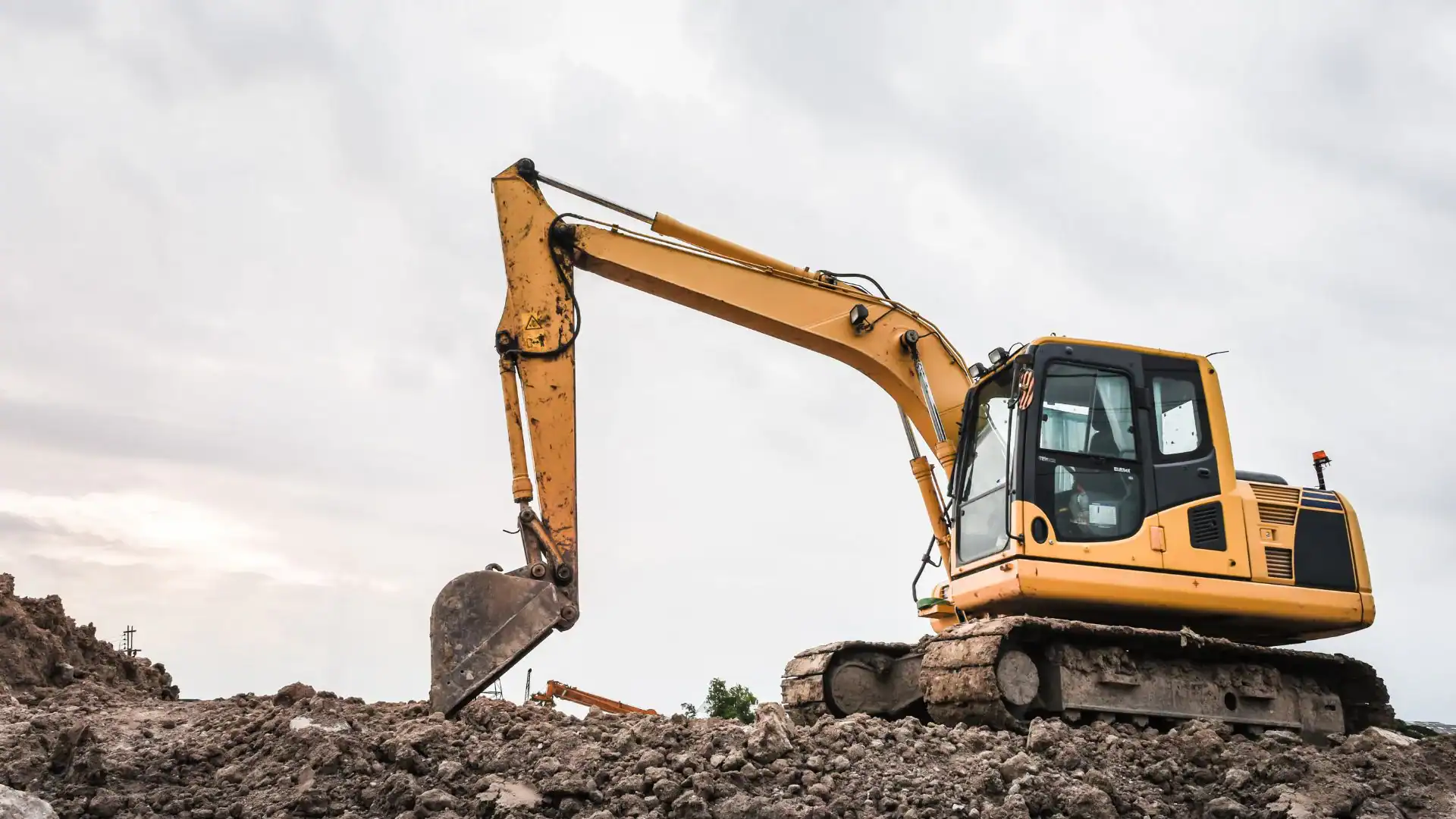
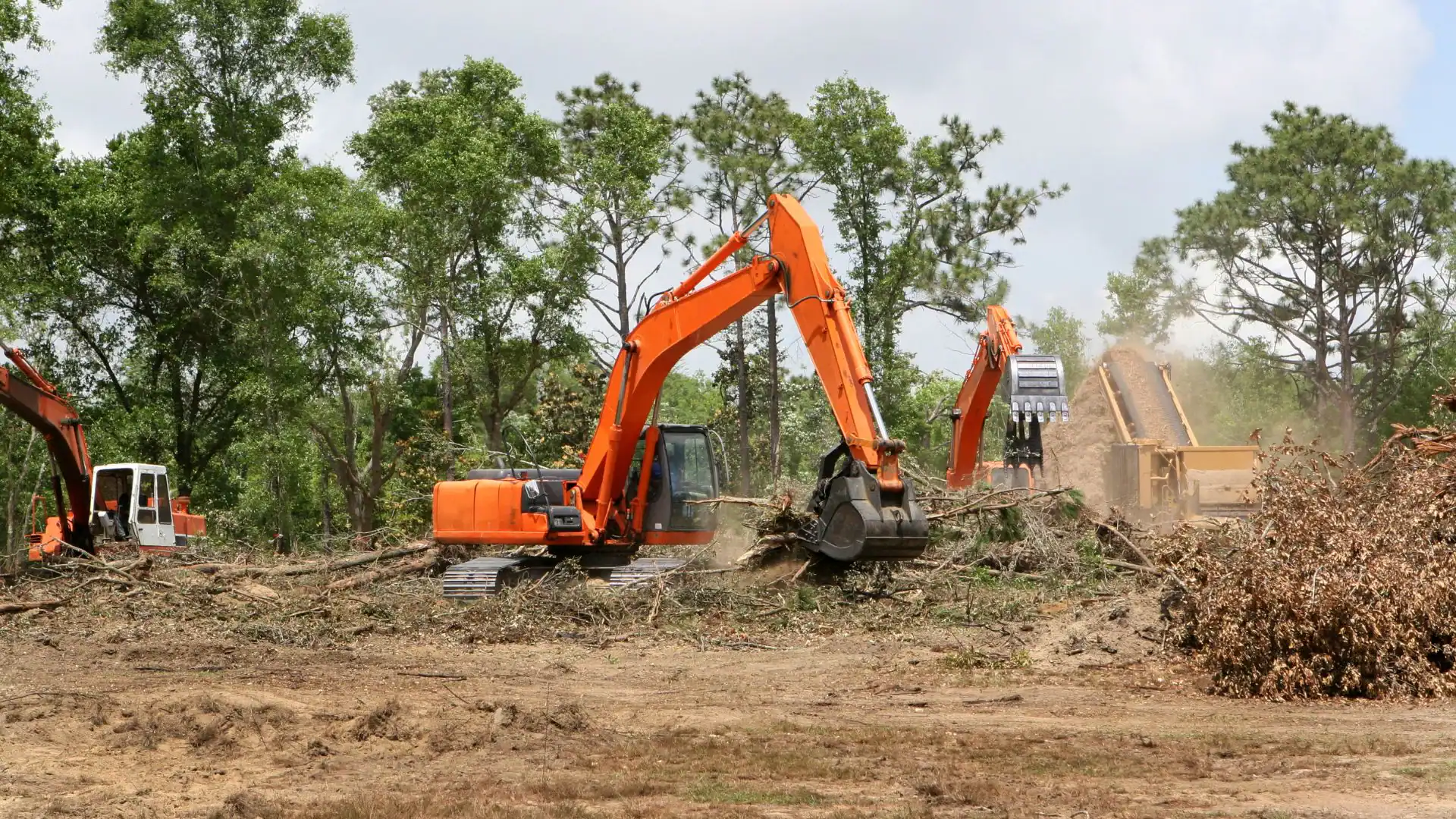
Once permits are in hand and utilities are located, the work begins. Depending on scope, that might mean land clearing, bulk excavation, cut and fill, dig and haul, drainage preparation, or a combination. We handle the full earthworks scope under one contract no handoffs to subcontractors, no gaps in accountability. When we leave, the site is clean, graded to spec, and ready for whatever comes next.
Ready to get started?
Residential excavation in Melville covers more ground than most homeowners initially expect. Pool excavation on a sloped Strathmore Hills lot requires different planning than a flat-grade dig. Foundation excavation on a 1960s ranch that needs underpinning access requires careful shoring. Septic system replacement common in Melville’s aging housing stock involves Suffolk County Department of Health Services approval on top of Town permits, and the soil absorption conditions here vary enough that a proper site evaluation matters before any scope is finalized.
On the commercial side, the Route 110 and LIE corridor is one of the most active stretches on Long Island, and with the Town of Huntington’s Melville Town Center Overlay District now approved, the redevelopment pipeline along that corridor is real and growing. Up to 1,500 new multifamily units are authorized in that district every one of those projects starts with demolition, site clearing, and bulk excavation. We have the equipment capacity and commercial project experience to work at that scale, coordinating with general contractors and developers who expect professional-grade communication and zero tolerance for schedule drift.
Whether the job is residential site preparation, drainage remediation, retaining wall excavation, or large-scale commercial earthworks, we handle the full scope one crew, one contract, one point of contact from first assessment through final grade.
In most cases, yes. The Town of Huntington requires a grading permit under Chapter 87 of the Town Code for any work that materially alters the topography or contour of land. That covers most excavation, grading, and earthworks projects including pool installations, drainage remediation, and site preparation for additions or new construction. The permit is issued through the Town’s Department of Engineering Services, and the code is specific about slope requirements: no final grade can exceed a one-on-three ratio without engineering approval.
If your project involves any excavation in a Town street, sidewalk, or near a curb cut, there’s a separate permit required from the Superintendent of Highways under Chapter 173. These aren’t optional skipping them creates liability and can halt a project mid-execution. We identify which permits apply to your specific scope during the initial site assessment, handle the coordination, and make sure nothing gets filed late or out of order.
More than most homeowners expect. Melville sits within the Harbor Hill Moraine the glacially formed ridge that runs along the center of Long Island and puts Jayne’s Hill, the island’s highest natural point, right next to the community. That geological history means soil conditions in Melville are variable: you’ll find sandy till in some areas, gravelly moraine deposits in others, and clay-bearing subsoil layers that hold water and complicate drainage and foundation work.
Sandy or gravelly soils are generally easier to excavate but may require shoring in deeper cuts. Clay layers are slower to dig through, can shift under load, and often require additional drainage planning to prevent long-term moisture problems. The only way to price a job accurately in this terrain is to assess the specific site not apply a flat rate based on square footage. Contractors who quote without a site visit are guessing, and in Melville’s soil conditions, that guess usually costs the homeowner money.
Dig and haul refers to the full process of excavating material from a site and removing it entirely not just moving it around on the property. It’s a necessary part of most significant excavation projects, particularly in Melville where lot sizes often don’t allow for large-scale spoil management on-site. When you’re excavating for a pool, a foundation, a basement conversion, or a drainage system, the displaced soil has to go somewhere, and in a residential neighborhood, that typically means loading it into trucks and hauling it off the property.
The volume of material removed affects cost directly, as does the type of material clean sandy fill is easier to dispose of than clay-heavy or contaminated soil, which may require special handling. On larger commercial projects along the Route 110 corridor, dig and haul is often a significant line item in the overall earthworks scope. Getting an accurate volume estimate upfront is part of how we build quotes that hold through the life of the project.
Footings in Melville and across Long Island need to be placed a minimum of 36 inches below finished grade. That’s the frost line depth for this region, and it’s not a guideline it’s a building code requirement. Footings placed above the frost line are vulnerable to frost heave, where frozen ground expands and contracts seasonally, causing the footing to shift and the structure above it to crack or settle unevenly over time.
For excavation purposes, this means any foundation dig needs to reach at least 36 inches below the final grade elevation, and in areas with significant slope which is common on residential lots in Melville’s northern and western sections that depth calculation has to account for grade changes across the footprint of the structure. This is one of the reasons an accurate site assessment matters before excavation begins: getting the grade and depth relationships right from the start prevents costly corrections later in the build.
The most common calls we get from Melville homeowners with older properties fall into a few categories. Drainage remediation is at the top of the list homes built in the 1950s through 1980s were graded to standards that don’t hold up well after decades of landscaping changes, pavement additions, and soil settlement. The result is basement flooding, chronic wet spots, and erosion that gets worse every wet season. Regrading the lot, installing French drains, or reshaping site contours addresses the root cause rather than patching the symptom.
Septic system excavation is another common need. Systems installed in the mid-century era are reaching end of life, and replacement requires coordination with the Suffolk County Department of Health Services in addition to Town permits. We also handle retaining wall excavation for properties where slope management has become a problem, and foundation access excavation for waterproofing and structural work on homes that have never had that addressed. If your home was built before 1990 and you’re starting to see signs of drainage or foundation issues, excavation is likely part of the fix.
The Town of Huntington’s approval of the Melville Town Center Overlay District in December 2024 is one of the most significant planning decisions this community has seen in years. The new zoning authorizes up to 1,500 multifamily housing units and mixed-use development along the Route 110 and LIE corridor redeveloping aging office parks and underused parking lots into a walkable town center. Every one of those projects requires demolition, site clearing, bulk excavation, and grading before vertical construction can begin.
For property owners, developers, and general contractors working in that district, the excavation scope on these projects is substantial. We’re talking about sites that were built out as corporate campuses in the 1970s and 80s existing pavement, utilities, and structures that need to come out before new foundations go in. The complexity of commercial excavation in an established corridor like Route 110 requires contractors who understand phased work schedules, utility conflicts, and the coordination demands of a multi-trade commercial build. That’s the type of work we’re equipped and experienced to handle.