Hear from Our Customers
East Hampton isn’t like other towns on Long Island. The Town Code limits how much indigenous vegetation you can legally remove from a residential lot and that percentage shrinks as your lot size grows. If your contractor doesn’t know that before they start, you could end up with a revegetation order, a fine, and a mandatory replanting process that costs more than the clearing job itself. That’s not hypothetical. It happens regularly in East Hampton.
When you hire Gold Coast Landworks, the first thing we do is check which overlay districts apply to your parcel Water Recharge, Harbor Protection, or standard residential and calculate your permitted clearing area under Town Code § 255-2-60. You’ll know exactly what can be cleared legally before any equipment touches your land. That’s not a bonus feature. That’s the baseline.
The properties we work on across East Hampton from wooded parcels in Northwest Woods to coastal scrub lots in Amagansett and overgrown acreage in Springs all come with their own vegetation challenges. Pitch pine, scrub oak, invasive bittersweet, mile-a-minute weed that can push four feet of growth in a single week. We know what we’re dealing with out here, and we know how to handle it within the rules the Town has set.
Gold Coast Landworks operates across Long Island’s East End, and East Hampton is one of the most regulation-dense clearing markets we work in. That’s not a complaint it’s just the reality of working in a town that takes its aquifer, its harbors, and its natural landscape seriously. The Town’s clearing restrictions exist because East Hampton’s groundwater is its sole drinking source, and the vegetation that covers these properties plays a direct role in protecting it.
We serve the full Town of East Hampton the Village, Amagansett, Springs, Wainscott, Montauk, Northwest Woods, and Georgica. Whether you’re a year-round resident, a seasonal property owner coordinating work remotely, or a builder on a permit timeline, you’ll get the same level of compliance-aware, professionally executed work on every job. We quote what we charge, we start when we say we will, and we leave the site in the condition we agreed on not close to it.
It starts with a site assessment. Before we quote anything, we review the parcel which overlay districts apply, what the permitted clearing percentage is for your lot size, and whether a Natural Resources Special Permit is required for any portion of the work. In East Hampton, skipping this step isn’t just sloppy it’s how property owners end up in front of the Town’s natural resources enforcement team.
Once we’ve confirmed what’s permissible, we put together an itemized quote that separates clearing, stump removal, and debris management into distinct line items. No bundled figures that shift at invoice time. You’ll know what each part of the job costs before we schedule a start date. If the Town requires revegetation after clearing which applies to many East Hampton properties, particularly those in the Water Recharge Overlay District we’ll walk you through what that process involves, including the $550 filing fee, the compliance form, and the two required inspections.
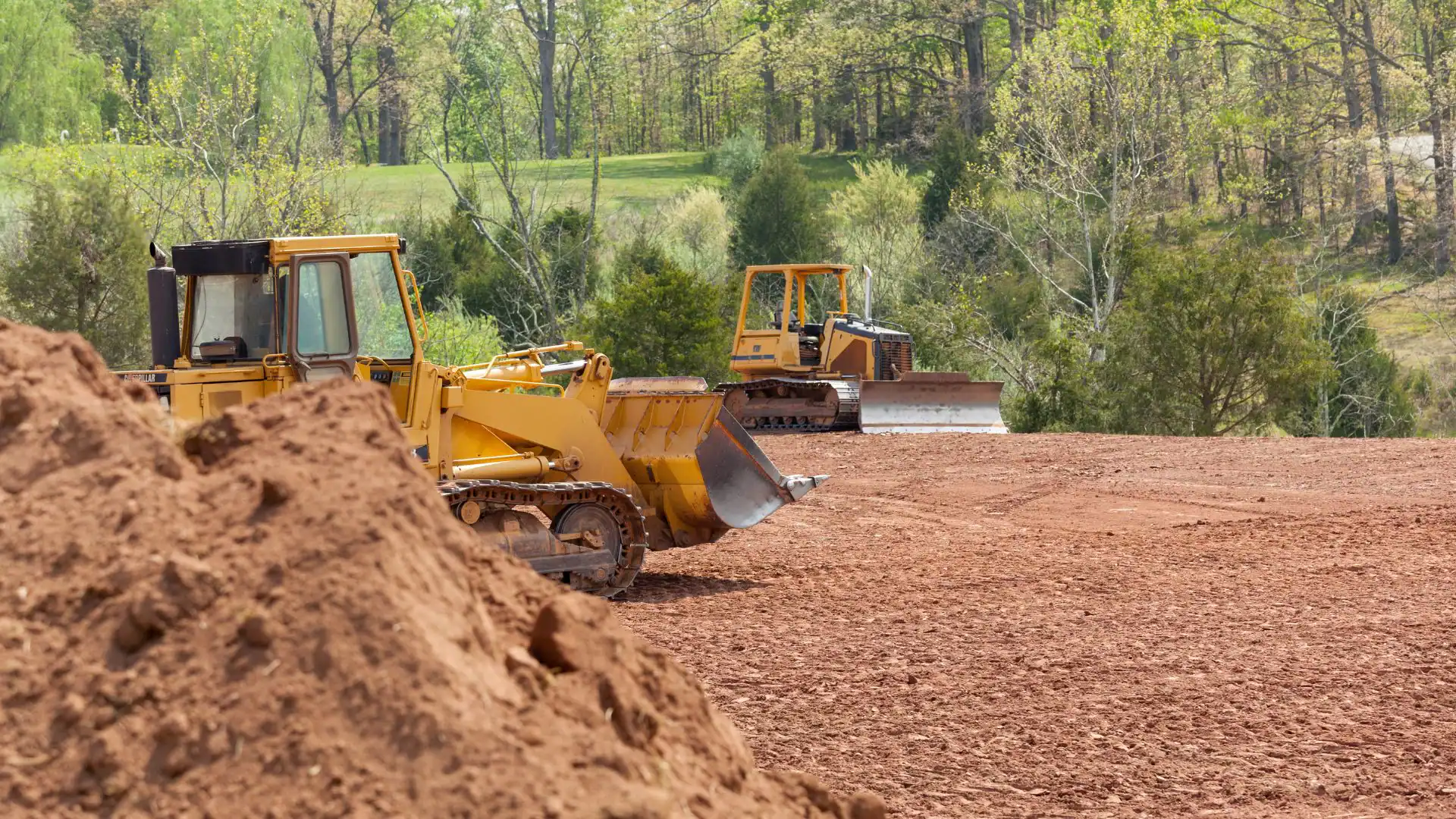
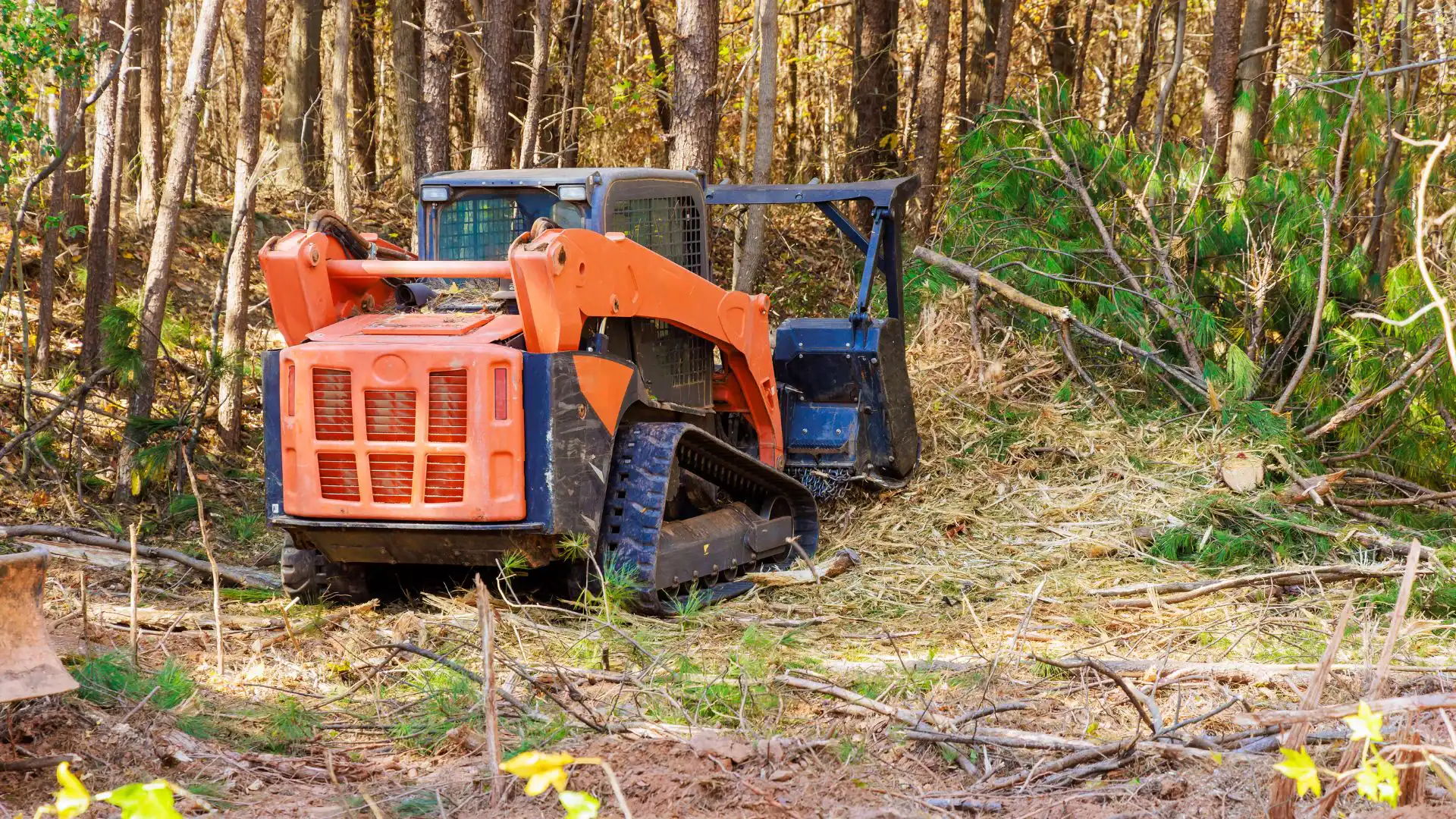
On the day of work, we bring the right equipment for the specific terrain and vegetation type on your property. Pitch pine and scrub oak in Northwest Woods requires a different approach than mature hardwood stands or coastal scrub near the bay. When the job is done, the site is clean, level, and ready for whatever comes next whether that’s a builder, a landscape architect, or a Town inspector.
Ready to get started?
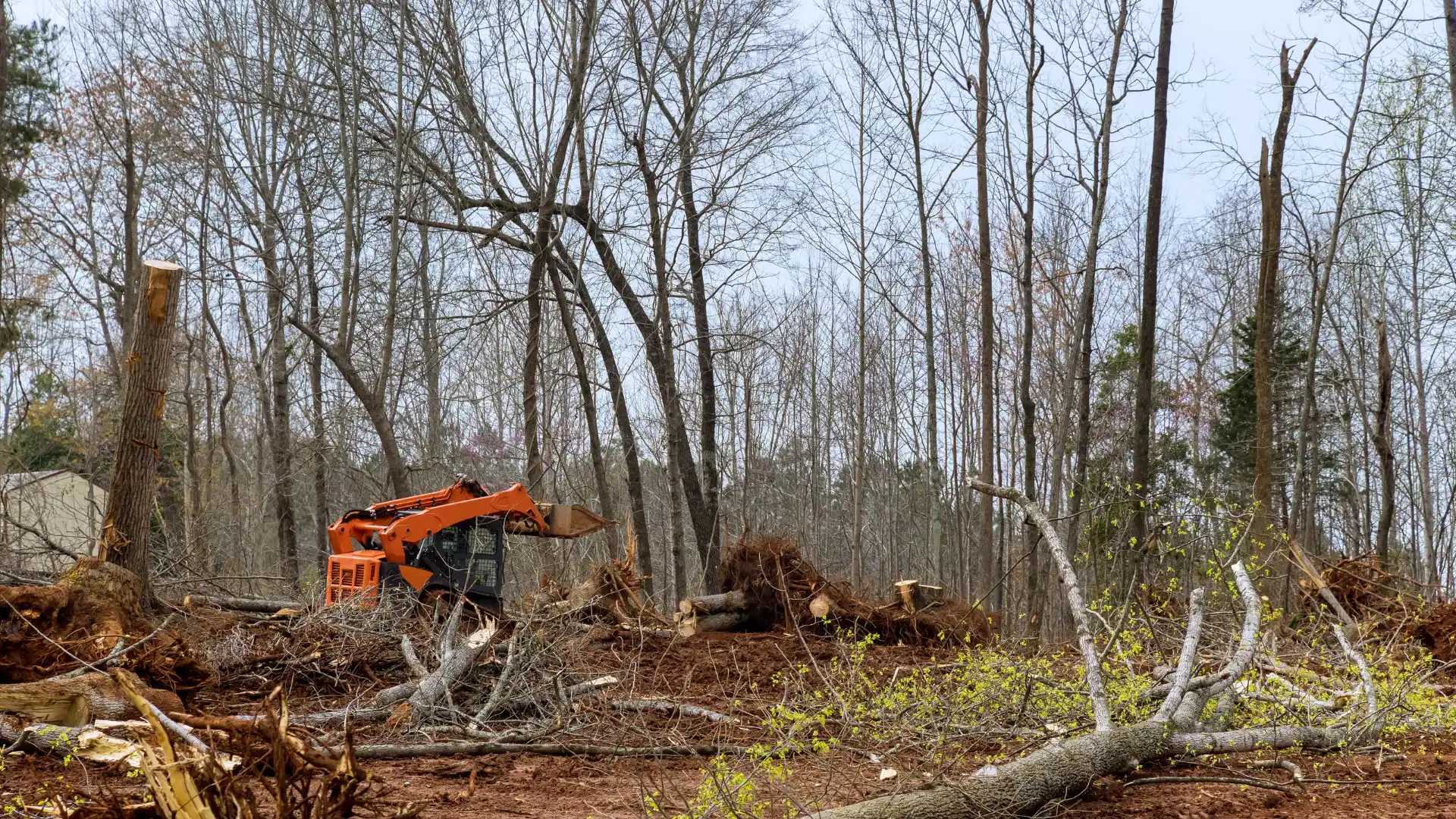
Land clearing in East Hampton covers more ground than most people expect when they first call us. Beyond the basic work of removing trees, brush, and overgrown vegetation, there’s the regulatory layer that governs every job in this town. Five separate sections of the East Hampton Town Code define when and how clearing can take place and which one applies to your property depends on where it sits, how large the lot is, and what natural features are nearby. We check all of that before we quote.
Our brush clearing and overgrown property clearing services are built for the specific vegetation conditions found across the East End dense coastal scrub, pitch pine barrens, mature oak and hickory stands, and the invasive species that have taken hold on properties left unmanaged for a season or two. Mile-a-minute weed, Oriental bittersweet, Japanese barberry, common reed these aren’t standard clearing jobs, and they require targeted removal strategies, not just a machine pass. We also handle bamboo removal for properties in the Village of East Hampton, where bamboo planting is prohibited and established stands need full root extraction to prevent regrowth.
Land reclamation services for larger or long-neglected parcels are available across the full town, including Montauk and the more rural sections of Springs and Wainscott. If the property has been left alone for years and the scope feels overwhelming, that’s exactly the kind of job we’re set up to handle assessed, quoted clearly, and executed in compliance with whatever the Town requires.
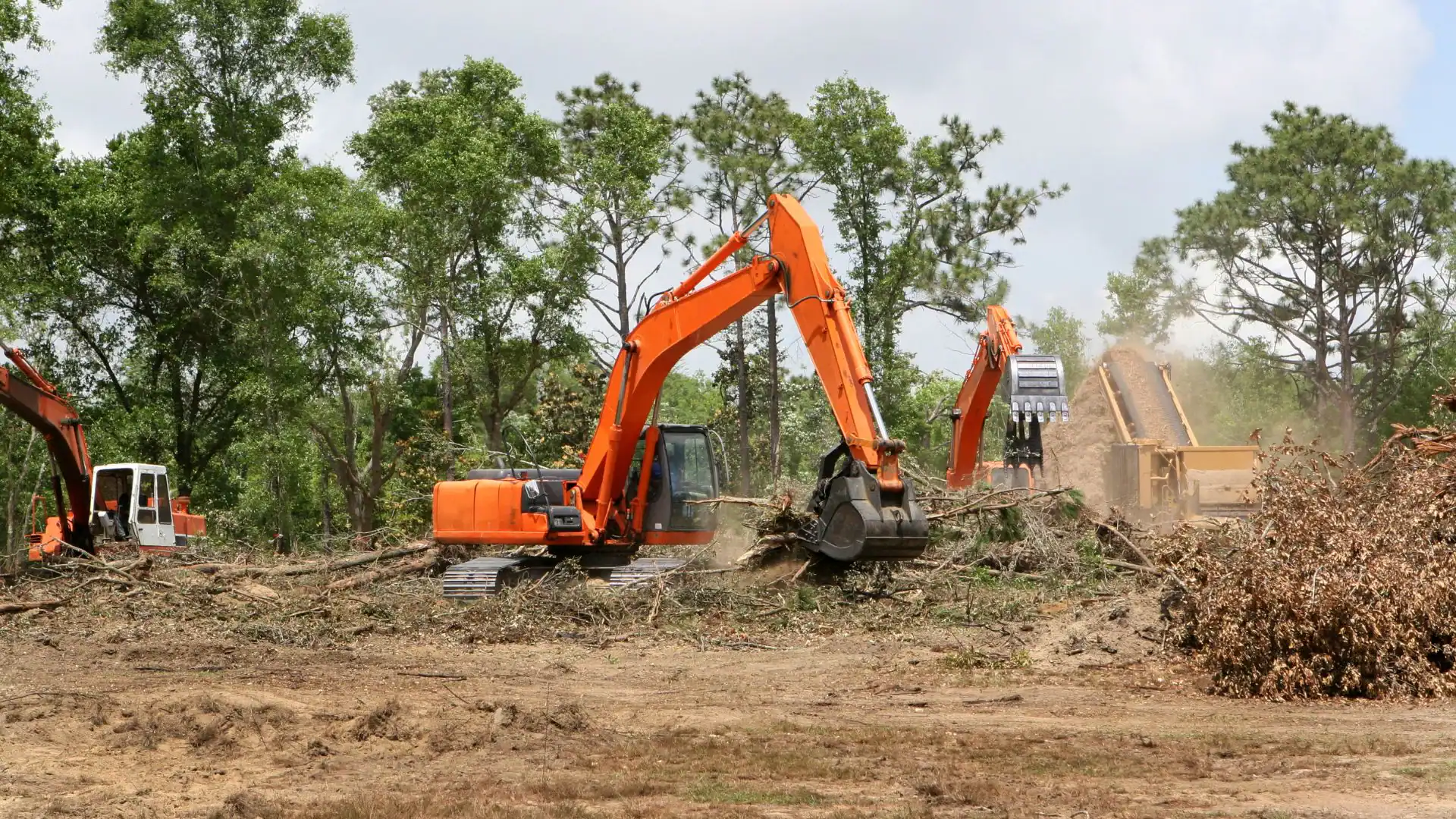
This is the most important question to answer before any clearing work begins in East Hampton, and the answer depends on your specific lot. Under Town Code § 255-2-60, residential properties in East Hampton are subject to a percentage-based cap on how much indigenous natural vegetation can be removed. That percentage decreases as lot size increases meaning a larger parcel in Northwest Woods or Amagansett is permitted to clear a smaller fraction of its total area than a compact village lot in the Village of East Hampton.
On top of the base residential restriction, your property may also fall within the Water Recharge Overlay District or the Harbor Protection Overlay District, both of which impose additional clearing limits specific to East Hampton’s geography and groundwater protection needs. If the work you want to do exceeds what’s permitted under the applicable code, a Natural Resources Special Permit or Planning Board approval may be required before any clearing can take place. We check all of this as part of our pre-quote site review so you know exactly where you stand before any equipment arrives.
It depends on what you’re clearing, where on the property it sits, and how much of it you want to remove. In many cases, clearing that stays within the permitted percentage for your lot size and district doesn’t require a separate clearing permit but if the work approaches or exceeds that threshold, or if it involves vegetation near a wetland, dune, or other protected natural feature, a Natural Resources Special Permit is required before work begins.
The Town of East Hampton actively enforces its vegetation codes, and stop-work orders on clearing jobs are not uncommon when contractors proceed without verifying what’s allowed. The safest approach is to have the regulatory picture confirmed before scheduling anything. We do that as a standard part of our process reviewing the parcel, identifying applicable overlay districts, and confirming permit requirements before we quote the job.
On a standard residential lot, cleared material can be chipped and spread as mulch on site, hauled off entirely, or a combination of both depending on the volume and your preference. On larger parcels in East Hampton, particularly wooded lots in Springs, Montauk, or the Northwest Woods area, the volume of cleared material can be significant, and the debris management plan matters as much as the clearing itself.
We lay out your debris options clearly in the quote, with each option priced separately so you’re not guessing what’s included. Leaving brush piles or log debris pushed to the property boundary isn’t something we do especially on high-value East Hampton properties where the site condition after clearing reflects directly on the quality of the work. The site you get at the end of the job matches what was agreed on at the start.
When clearing is permitted in East Hampton, the Town may require that disturbed areas be replanted with indigenous species particularly on properties within the Water Recharge Overlay District. The goal is to restore the native plant community that existed before clearing, which in recharge areas typically means lowbush blueberries, native oaks, and similar species suited to the local soil and ecology.
The revegetation process involves submitting a compliance form, paying a $550 filing fee, and completing two inspections one at the time of completion and a follow-up one year later to confirm the replanting has established. This is a separate process from the clearing itself, and it’s one that property owners in East Hampton are sometimes caught off guard by if their contractor didn’t mention it upfront. We flag revegetation requirements during the pre-quote review so you’re not dealing with an unexpected obligation after the clearing is done.
East Hampton has a well-documented invasive species problem, and several of the most common ones require more than standard clearing equipment to address properly. Mile-a-minute weed one of the Town’s most aggressive invasives can grow up to four feet in a single week and uses barbs to climb and smother surrounding vegetation. Surface removal without addressing the root system guarantees it comes back.
Oriental bittersweet, Japanese barberry, multiflora rose, and common reed (Phragmites) are also widespread across East Hampton properties, particularly on parcels near wetlands, bay frontage, or areas that have been left unmanaged. Each of these species requires a targeted removal approach not a generic clearing pass. We identify what’s on your property during the site assessment and adjust the clearing method accordingly, including proper disposal to prevent spread to adjacent land.
The honest answer is that the Hamptons construction window is compressed, and the best time to schedule is earlier than you think. Most clearing work in East Hampton happens between April and October, with a significant rush in spring as property owners who purchased over winter prepare their sites ahead of builder and landscape architect schedules. By late spring, clearing contractors are typically fully booked through summer.
Fall September through October is often the most practical window for properties with mature deciduous trees. Leaf drop makes site assessment easier, ground conditions are typically firmer than spring, and the post-summer slowdown means more scheduling flexibility. Winter clearing is also viable for wooded lots where dormant-season work reduces the risk of disturbing nesting wildlife and makes debris management more straightforward. If you have a project in mind for next season, reaching out now rather than in April puts you ahead of the rush.