Hear from Our Customers
Flanders is one of the more complex places on Long Island to clear land and that’s not an exaggeration. You’ve got Flanders Bay to the south, Reeves Bay along Route 24, the Peconic River to the north, and a state-designated wetlands system that touches a significant portion of the hamlet. Southampton Town Code requires a minimum 125-foot buffer for clearing and land disturbance from any wetland boundary. That rule is enforced, and property owners who clear without understanding it face stop-work orders and mandatory restoration costs.
What that means for you is simple: before any clearing work starts on your property, you need to know exactly where your limits are. Not after the equipment arrives. Not after the first tree comes down. Before. That’s the starting point for every job we take on in Flanders a clear picture of what you’re permitted to clear, what requires a permit, and what has to stay untouched.
Once that’s established, the outcome is straightforward. You get a property that’s been cleared correctly, documented properly, and left in a condition that won’t come back to bite you. Whether you’re preparing a lot for construction along the Flanders Road corridor, reclaiming an overgrown parcel near Sears Bellows County Park, or clearing brush from an established residential property, the result is the same land that’s ready for what comes next, without the regulatory headache.
We’re a land clearing contractor serving Flanders and the broader Suffolk County area. Our work covers the full scope brush clearing, lot clearing, vegetation removal, overgrown property clearing, and land reclamation handled by one crew with one point of contact from the first site visit through to final cleanup.
Flanders sits at the western edge of the Town of Southampton, and that matters. The regulatory environment here is different from most of Long Island. Southampton Town has its own wetlands code, its own permitting process, and its own enforcement posture and the Peconic Estuary designation adds another layer of ecological sensitivity that affects how clearing work gets done near the water. This isn’t general knowledge. It’s specific to this area, and it’s built into how every Flanders job we assess and quote.
The Riverside redevelopment corridor along Route 24 is also bringing new activity to the area developers, investors, and buyers preparing sites for what’s coming. If your property is part of that pipeline, or if you’ve simply owned a lot in Flanders for years and it’s finally time to deal with it, the process starts the same way: an honest look at what’s there, what’s allowed, and what it’ll take to get it done right.
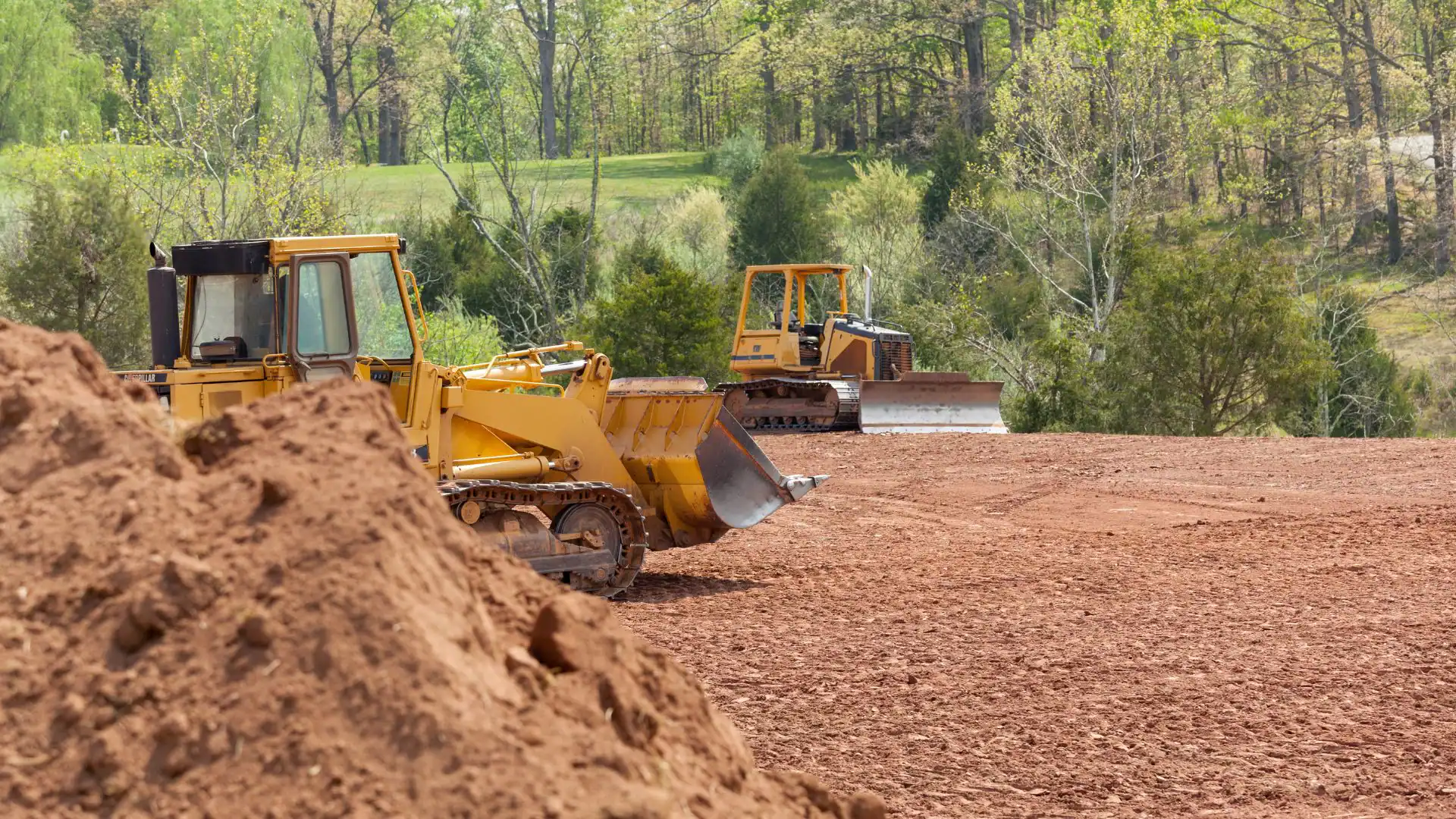
It starts with a site assessment. Before we issue any quote, the property gets a real look not a drive-by estimate. In Flanders, that means checking proximity to wetland boundaries, identifying any vegetation that falls under Southampton Town’s buffer restrictions, and flagging anything that might require a permit from the Town or the NYSDEC before work can begin. If there are Phragmites colonies along a wetland edge, those get identified too because removing common reed incorrectly can spread it through rhizome fragmentation, which makes the problem worse, not better.
Once the assessment is done, you get an itemised quote. Every line is broken out clearing, stump removal, debris processing, haulage so you know exactly what you’re paying for before anything moves. No scope that quietly expands. No debris piles left for you to deal with after the crew leaves.
The clearing itself is matched to your specific site conditions. The sandy, coastal-plain soils of the South Fork drain well but can become unstable under heavy equipment near the water table. Equipment selection and access routes are chosen with that in mind, which keeps the site protected while the work gets done. When the job is finished, the site is clean, the debris is gone, and you have a clear record of what was cleared and how useful if you’re moving into permitting or construction next.
Ready to get started?
Land clearing in Flanders isn’t one-size-fits-all, and the scope of each job reflects that. A residential lot near the Big Duck on Route 24 has different conditions than a waterfront parcel along Reeves Bay or a wooded property bordering Sears Bellows County Park. The services we offer cover the full range: land clearing, brush clearing, lot clearing, vegetation removal, overgrown property clearing, and land reclamation services in Flanders, NY all handled under one quote, one crew, and one clear scope of work.
For properties near the water, the assessment phase is especially important. The Flanders Bay Wetlands designation formally established by the New York State Department of State in 1987 adds a layer of state-level tidal wetland protection that sits on top of Southampton Town’s local code. That means some waterfront parcels require permits before a single branch is cut, and knowing which ones before the job starts is the difference between a clean project and a compliance problem.
Inland properties typically move faster. Sandy soil, scrub oak, pitch pine, and dense native shrub growth are common across the hamlet’s interior, and clearing that type of vegetation is straightforward with the right equipment. Debris removal and site cleanup are included in the quoted scope or clearly broken out as a separate line either way, you’ll know before the work starts, not after. If you’re a property owner in Flanders looking for a land clearing contractor near you who will give you a straight answer before the equipment rolls, that’s exactly how we work.
In most cases, yes and the permit requirement depends on how close your property is to a regulated wetland boundary. Southampton Town Code requires a minimum 125-foot buffer for clearing and land disturbance from the edge of any wetland. If your property in Flanders falls within that zone, you’ll need a wetlands permit from the Town of Southampton before any clearing work can begin. Properties near Flanders Bay, Reeves Bay, or the Peconic River shoreline are the most commonly affected.
On top of the Town’s requirements, the New York State Department of Environmental Conservation has its own freshwater wetlands permit requirements for clearing in or adjacent to designated wetlands. The Flanders Bay Wetlands were formally designated by the New York State Department of State in 1987, which adds a further layer of state-level protection to tidal areas in and around the bay. The short answer is: if your property is anywhere near the water in Flanders, check the regulatory environment before you clear anything. A proper site assessment will tell you exactly where you stand.
Land clearing costs in Flanders vary based on the size of the area being cleared, the density and type of vegetation, stump removal requirements, and debris disposal. For a standard residential lot with moderate vegetation, you’re generally looking at somewhere in the range of $1,500 to $4,000. Larger parcels, heavily wooded properties, or jobs that require permit coordination or wetland-adjacent work will run higher.
What matters more than the headline number is what’s actually included. Some contractors quote the clearing and leave debris removal and stump grinding as extras that show up on the invoice after the fact. A proper quote should break out every element clearing, stumps, debris, haulage so you know the full cost before anyone starts. In Flanders, where properties near Reeves Bay or the Peconic River may require permit work upfront, that transparency matters even more. Ask for an itemised quote before you commit to anything.
Overgrown property clearing is exactly what it sounds like reclaiming land that has been left unmanaged and has accumulated dense vegetation, scrub growth, invasive species, or fallen trees. In Flanders, this is a common scenario. The hamlet has seen steady population growth over the past two decades, and a number of lots particularly those purchased speculatively ahead of the Riverside redevelopment along Route 24 have been sitting unmanaged for years.
The process starts with a site assessment to identify what’s there, what’s regulated, and what equipment is appropriate for the conditions. Sandy coastal-plain soils are common across Flanders, and properties near the bay or the park boundary at Sears Bellows can have specific access and ground stability considerations. Once the scope is clear, clearing proceeds in stages cutting and removing above-ground vegetation first, then stump grinding, then debris removal and site cleanup. The result is a property that’s usable, visually clear, and ready for whatever comes next, whether that’s construction, landscaping, or simply being able to walk the land again.
Yes, but it needs to be handled correctly. Phragmites australis common reed is one of the most aggressive invasive plants along the Flanders Bay and Reeves Bay shoreline, and it’s widespread across wetland edges throughout the hamlet. The problem with mechanical removal of Phragmites is that if it’s done carelessly, rhizome fragments left in the soil can regenerate and spread the plant further, making the infestation worse rather than better.
Correct removal involves cutting at the right time of year, managing the cut material carefully to prevent spread, and in many cases coordinating with follow-up treatment to prevent regrowth. It’s also worth noting that Phragmites colonies often grow at or near wetland boundaries, which means removal work in these areas may require a permit from Southampton Town or the NYSDEC before it can proceed. If you have Phragmites on your property in Flanders, it’s worth flagging that specifically during the site assessment so the right approach can be built into the scope from the start.
For a standard residential lot clearing job in Flanders with moderate vegetation, most work is completed within one to three days once the equipment is on site. Larger parcels, heavily wooded properties, or jobs that involve stump grinding and full debris removal can run longer typically three to five days for a half-acre or larger clearing.
The timeline can also be affected by permit requirements. If your property is near a wetland boundary in Flanders, the clearing work can’t begin until the appropriate permits are in place either from Southampton Town, the NYSDEC, or both. That permit process can take several weeks, so if you’re working toward a construction start date or a development deadline, it’s worth starting the assessment and permit conversation well in advance. Spring is the busiest season for clearing work in the Hamptons-adjacent market, and contractors book up quickly between March and June. Getting on the schedule early gives you the most flexibility.
Lot clearing and land reclamation services in Flanders, NY both involve removing vegetation from a property, but the scope and starting conditions are different. Lot clearing typically refers to preparing a defined parcel for construction or use cutting trees, removing stumps, clearing brush, and leaving a clean, level site ready for the next phase. It’s usually a single-pass job on a property that’s been maintained to some degree, or a newly purchased lot that needs to be cleared before building can start.
Land reclamation goes further. It applies to properties that have been significantly neglected lots that have been left unmanaged for years, land that has been overtaken by invasive species, or parcels where storm damage has left fallen trees and debris throughout the site. In Flanders, land reclamation work often involves properties near the Reeves Bay waterfront or along the Riverside corridor that have been sitting untouched while the area around them developed. The process is more involved, the equipment requirements are heavier, and the timeline is longer but the end result is the same: a property that’s been brought back to a usable, clearable state and is ready for whatever you have planned for it next.