
Hear from Our Customers
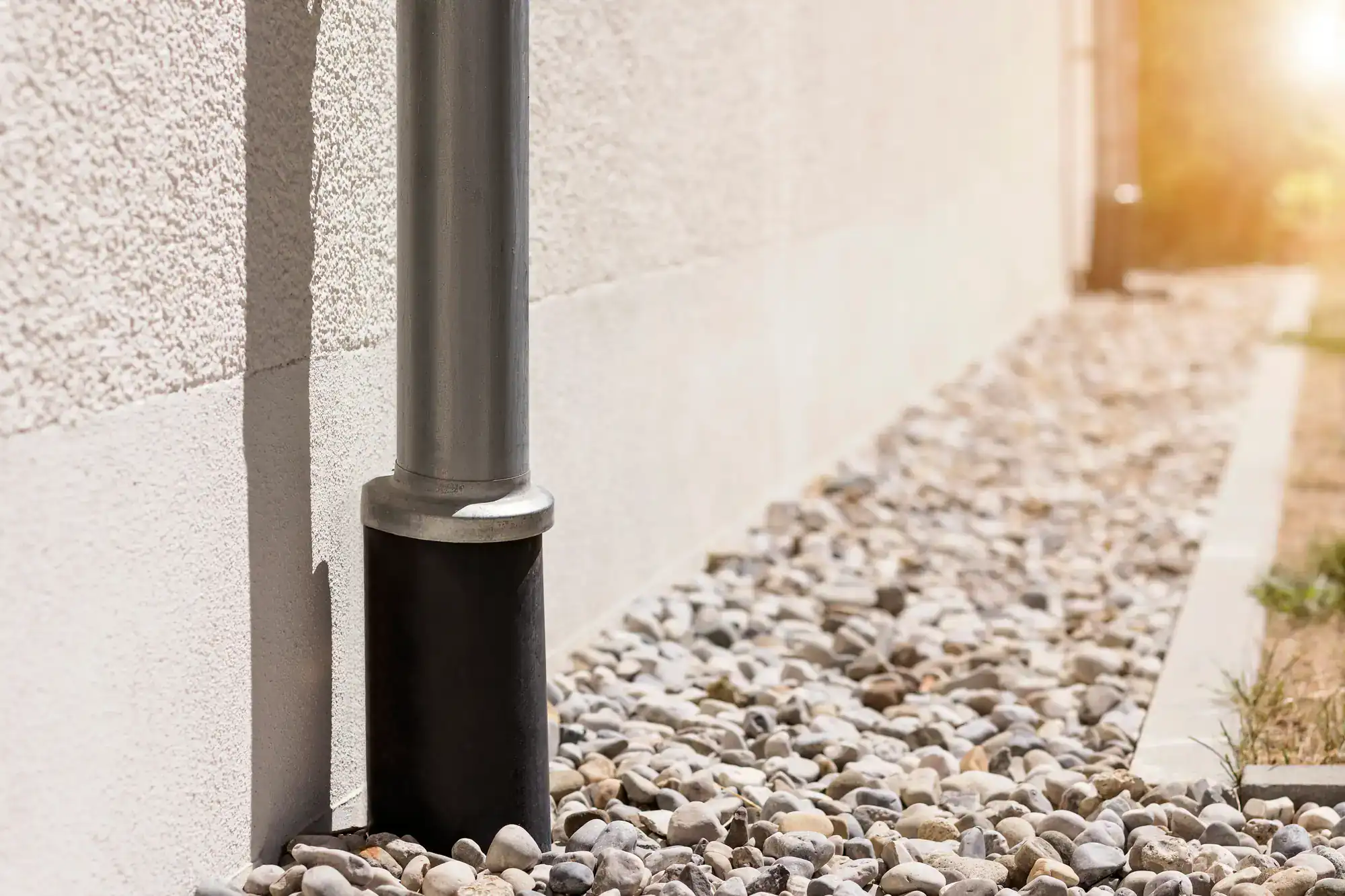
Standing water on a lawn looks like a minor annoyance. What it actually represents is hydrostatic pressure building against your foundation, saturated soil weakening your yard’s structure, and if your property sits near Georgica Pond, Hook Pond, or Accabonac Harbor a water table that can rise faster than most homeowners expect during a wet season. A properly installed French drain system intercepts that water before it reaches anything it shouldn’t.
For second-home owners who aren’t in East Hampton year-round, this matters even more. A drainage problem that develops over a winter doesn’t wait for you to come back in June. It compounds wet concrete, mold growth, cracked walls and by the time you see it, the repair bill is already significant. Foundation crack repair on Long Island runs $15,000 to $50,000. Mold remediation starts at $3,000 and climbs fast. A French drain installation in East Hampton is a fraction of either number.
The South Fork gets roughly 50 inches of rain annually with no real dry season and storm intensity is increasing. Your drainage system needs to be built for what East Hampton actually throws at it, not for average conditions somewhere else.
We’re a licensed and insured land drainage contractor serving residential and commercial properties across Long Island, including East Hampton and the surrounding East End communities Amagansett, Springs, Wainscott, Montauk, and Sag Harbor. We understand that working out here isn’t the same as working in a standard Long Island suburb. The properties are different, the regulations are different, and the stakes are higher.
We know that East Hampton’s Chapter 216 Stormwater Management code requires all drainage to be contained and returned to the ground on-site. We know that properties near tidal wetlands in Springs or Northwest Harbor require NYS DEC permit coordination before a shovel goes in the ground. We know that the Coastal Erosion Overlay District adds another layer of review for work near the coast. These aren’t things you want to figure out mid-project.
When you call us, you’re talking to a drainage contractor that has actually worked in this market not one that added East Hampton to a service area list and hopes for the best.
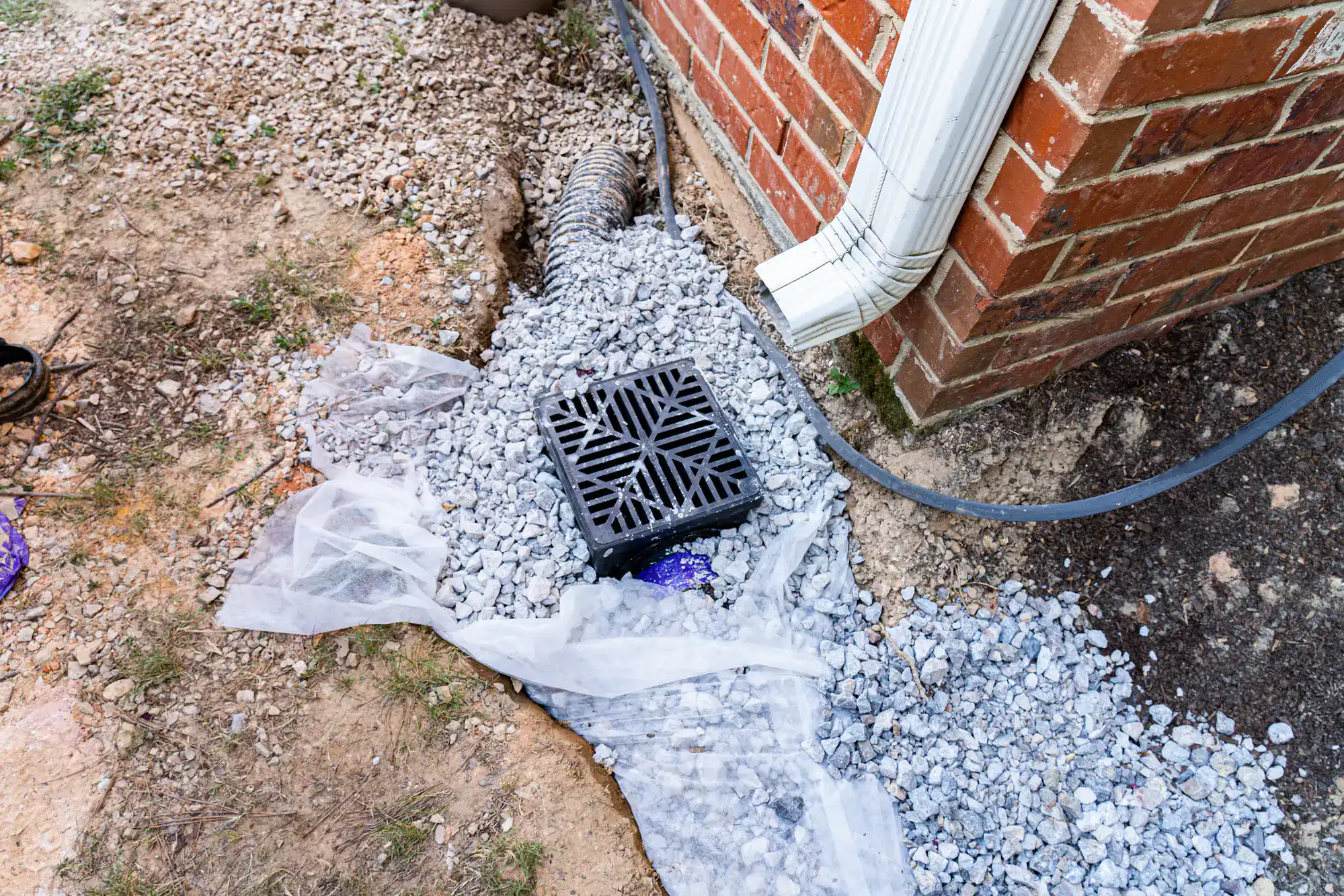
It starts with a free on-site assessment. Not a phone quote an actual visit to your property, because drainage problems in East Hampton can’t be diagnosed from a description. Soil conditions vary significantly across the town, the water table behaves differently near Georgica Pond than it does in the upland areas of Wainscott, and what looks like a simple soggy lawn could be a sign of something happening deeper. We look at the full picture before recommending anything.
From there, we handle all required permitting. In East Hampton, that means navigating the Town Building Department, Chapter 216 stormwater requirements, and for properties near wetlands coordinating with the NYS DEC. If your property falls within a flood hazard area, we’re also aware of the updated construction code requirements taking effect December 31, 2025, and we design accordingly. You don’t have to track any of that. We do.
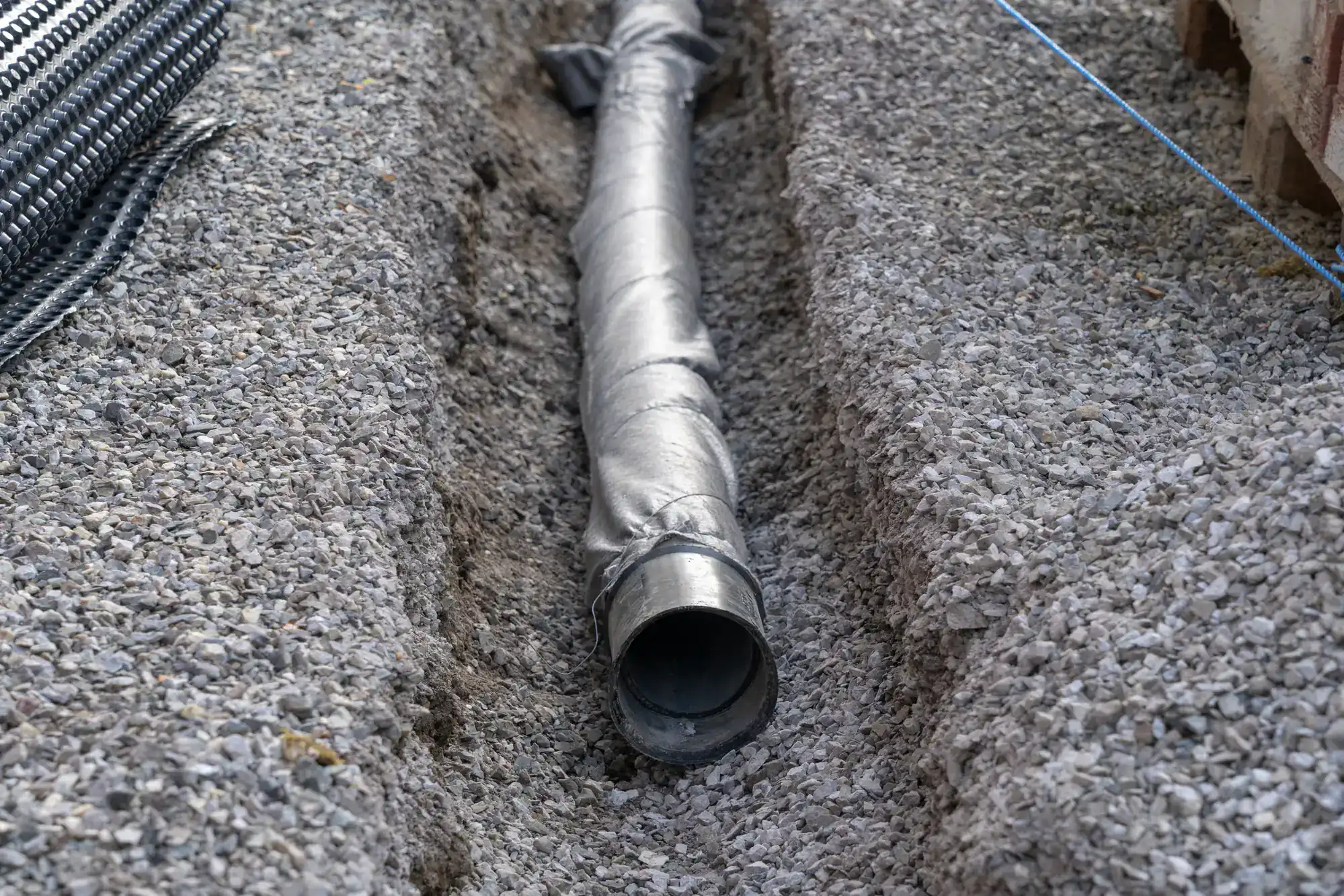
Installation typically takes one to three days depending on system scope. We use perforated pipe, double-punched geotextile filter fabric wrapping the entire gravel bed, and washed angular gravel the materials that produce a 30-to-40-year system, not a five-year patch. When the work is done, we restore the disturbed area with matching topsoil and seed or sod. East Hampton properties have established, expensive landscaping we treat it that way throughout the entire job.
Ready to get started?
A French drain system for an East Hampton property isn’t a one-size solution. Depending on where you’re located and what’s happening with your drainage, the right system could be a perimeter foundation drain to address hydrostatic basement pressure, a yard drainage French drain to redirect surface and subsurface water away from saturated lawn areas, or a more comprehensive drainage system that handles multiple problem zones across a larger property. We assess, recommend, and build what your specific property actually needs.
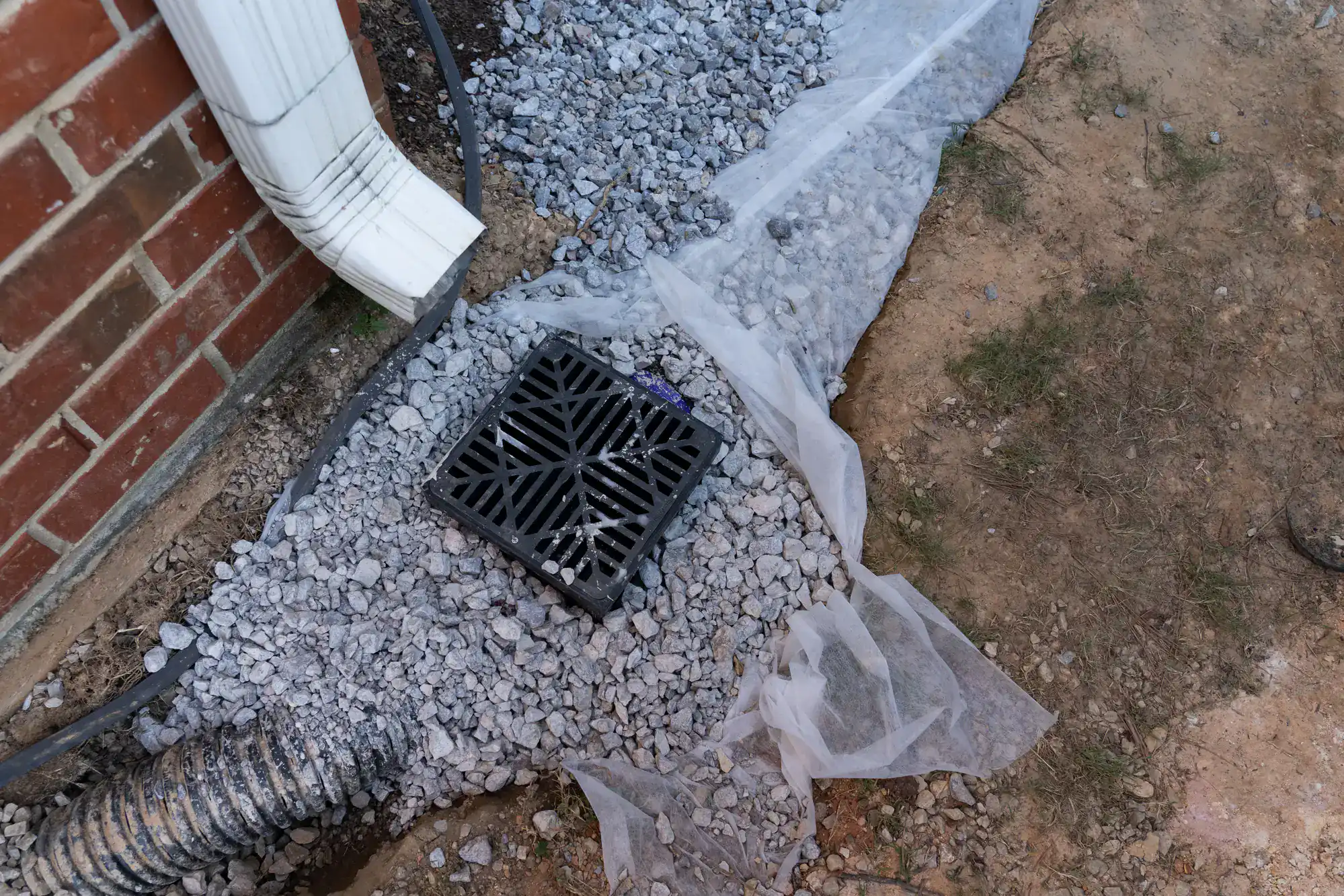
Every installation we complete includes the full material package perforated pipe, geotextile filter fabric, washed angular gravel, and a defined outlet point with proper engineered slope. These aren’t optional upgrades. They’re the baseline for a system that holds up. We also handle full site restoration after the trench work is complete, because in this market, your grounds are part of your property’s value not an afterthought.
For properties in Suffolk County’s coastal zone, near East Hampton’s protected water bodies, or within the town’s Coastal Erosion Overlay District, we build drainage systems that comply with local and state requirements from the start. That means no surprises at the permit stage, no rework after inspection, and no liability left on your end. If you’re a seasonal resident managing this from a distance, that kind of accountability matters even more.
In most cases, yes. East Hampton has one of the more comprehensive stormwater regulatory frameworks in Suffolk County. The town’s Chapter 216 Stormwater Management ordinance governs how drainage systems are designed and installed, and the Building Department issues permits for this type of work. Beyond the town-level permit, properties near tidal wetlands which are extensive in areas like Springs, Northwest Harbor, and along the coastal edges of the town may also require a NYS DEC wetlands permit before any excavation begins.
If your property falls within a flood hazard area, there are additional considerations. The town is implementing updated flood hazard area construction requirements effective December 31, 2025, which will affect permits filed after that date. The permitting process in East Hampton is real, and skipping it creates liability that lands on the property owner. We handle all of this as part of the project you don’t need to figure out which agency requires what.
Most residential French drain installations fall somewhere between $5,000 and $18,000, depending on the scope how much linear footage the system covers, how deep the trench needs to go, whether permitting involves the NYS DEC in addition to the town, and how complex the outlet situation is. Some straightforward yard drainage systems come in under that range. Larger perimeter foundation systems on estate-sized properties can run higher.
What’s worth keeping in mind in East Hampton specifically is the cost comparison. Foundation crack repair on Long Island runs $15,000 to $50,000. In a real estate market where median home values in the village exceed $1.8 million, a drainage problem that gets documented during a sale can reduce the property’s value by 10% or more a six-figure loss on a million-dollar property. The French drain installation isn’t the expensive option. Waiting is. We provide a clear, itemized estimate after the on-site assessment so you know exactly what you’re looking at before any work begins.
The most obvious signs are standing water that lingers for more than a day or two after rain, lawn areas that stay soggy and spongy through the season, and water staining or moisture along basement walls. But some of the more serious drainage problems in East Hampton aren’t visible from the surface. Properties near Georgica Pond, Hook Pond, or Accabonac Harbor can have shallow water tables that rise during wet periods and push moisture against foundation walls from below and you won’t necessarily see that happening until there’s already damage.
If your property is in Springs or near any of the town’s tidal wetlands, the drainage dynamics are more complex than they look. The combination of sandy glacial outwash soils and proximity to water bodies means conditions can change quickly. The only reliable way to know what’s actually happening is a proper site assessment not a phone consultation, not a neighbor’s opinion. If you’re noticing any of the signs above, it’s worth having someone come out and look at the full picture.
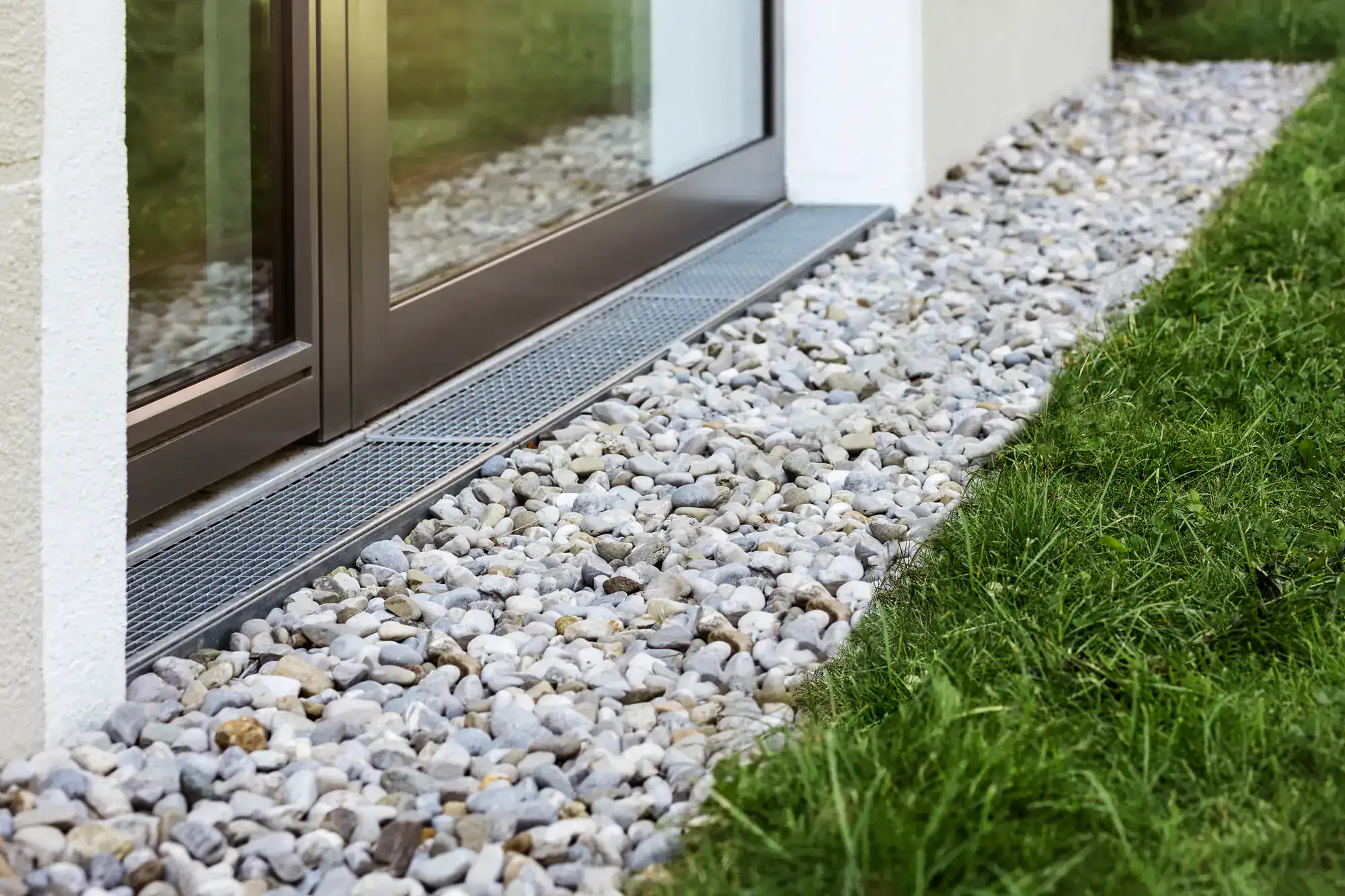
A properly built French drain system uses four core components: perforated pipe, double-punched geotextile filter fabric, washed angular gravel, and a defined outlet point with engineered slope. The filter fabric wraps the entire gravel bed not just the pipe to prevent fine soil particles from migrating into the system over time and clogging it. The gravel needs to be washed and angular, not rounded, so it locks together and maintains void space for water to move through. The pipe needs to be sloped correctly roughly one inch of drop per eight to ten feet of run to keep water moving toward the outlet.
When any of these components are cut or substituted, the system’s lifespan drops dramatically. Cheap corrugated pipe without proper fabric wrapping, or insufficient gravel depth, will typically fail within two to five years as silt fills the void space. A correctly built system lasts 30 to 40 years. In East Hampton, where properties sit vacant for months at a time and you’re not there to catch problems early, the difference between a five-year fix and a 40-year system is not a minor distinction.
This is one of the most common concerns we hear from East Hampton homeowners and it’s a fair one. Properties here often have mature trees, specimen plantings, formal gardens, and custom hardscaping that took years and significant investment to establish. Trench work does require excavation, and we won’t pretend otherwise. But a professional installation is planned around what’s already there not through it.
Before any digging starts, we map the system route to avoid root zones of established trees, work around existing hardscaping where possible, and flag any plantings that need protection during the job. When the installation is complete, we restore the disturbed area with matching topsoil and seed or sod. The goal is a finished site that looks like the work was never done. If your property has particularly sensitive or high-value plantings in the drainage path, we discuss that during the site assessment and adjust the plan accordingly not after the fact.
It can if it’s designed for them. East Hampton sits directly in the path of nor’easters, tropical storms, and intense summer thunderstorms that can drop three to six inches of rain in a single event. A French drain system that’s sized for average rainfall conditions but not peak storm flows will be overwhelmed exactly when you need it most. That’s a design problem, not a material problem.
When we assess a property and design a drainage system, we account for East Hampton’s actual precipitation patterns and for the intensity of the storm events the South Fork regularly sees. The East Hampton Star has documented flash flooding events where the NYS DEC closed local water bodies to shellfish harvesting due to the volume of stormwater runoff. That’s the real-world benchmark a drainage system here needs to meet. Pipe diameter, gravel bed depth, outlet capacity, and system slope all factor into whether the system holds up under those conditions. We build for what East Hampton actually gets, not for a textbook average.