
Hear from Our Customers
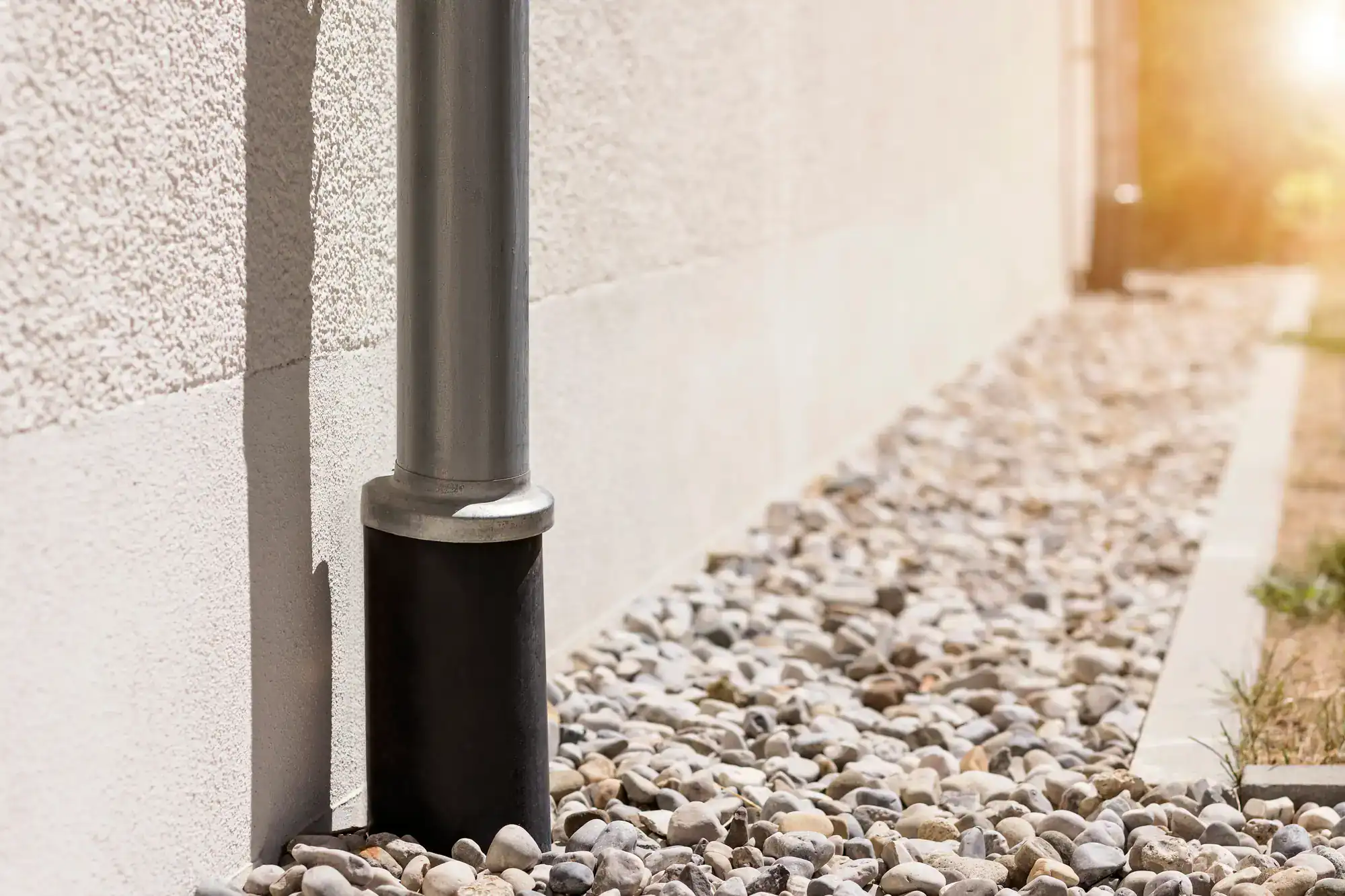
Most East Islip homes were built in the 1950s and 1960s on former estate land that was subdivided and developed fast, not always graded with long-term drainage in mind. Decades later, those same properties are dealing with water problems that only get worse as storm intensity increases. A properly installed French drain system intercepts that water before it reaches your foundation, your basement floor, or the lawn you’ve spent years maintaining.
Living near Great South Bay means your water table is already higher than it would be five miles inland. After a heavy rain, that table rises fast. Properties along the southern end of East Islip near the bay, near the Connetquot River corridor, near streets like Bayview Avenue can stay saturated for days because there’s simply nowhere for the water to go. A French drain gives it somewhere to go.
The result isn’t just a dry basement. It’s a yard that drains within hours instead of days. It’s not worrying every time the forecast calls for two inches of rain. It’s protecting a home that’s worth protecting because in East Islip, the average home value sits close to $700,000, and water damage doesn’t negotiate.
We’re a dedicated drainage and land management contractor serving residential homeowners across Long Island, and drainage isn’t a line item we added to a landscaping menu it’s what we do. That distinction matters when you’re dealing with the specific conditions East Islip presents: bay-adjacent water tables, low-lying terrain, flood-zone designations across much of the residential core, and a housing stock that was never built with modern rainfall events in mind.
We’ve worked throughout East Islip in communities like The Moorings, along the Connetquot River corridor, and across the Town of Islip which has been part of the National Flood Insurance Program since 1972. That’s not background trivia. It means a significant portion of East Islip properties sit in FEMA-designated flood zones, and drainage work here requires a contractor who understands what that means for system design, permitting, and long-term performance.
When we assess your property, we’re not guessing. We’re reading the terrain, the soil, and the water’s actual path and building a system that works with East Islip’s environment, not against it.
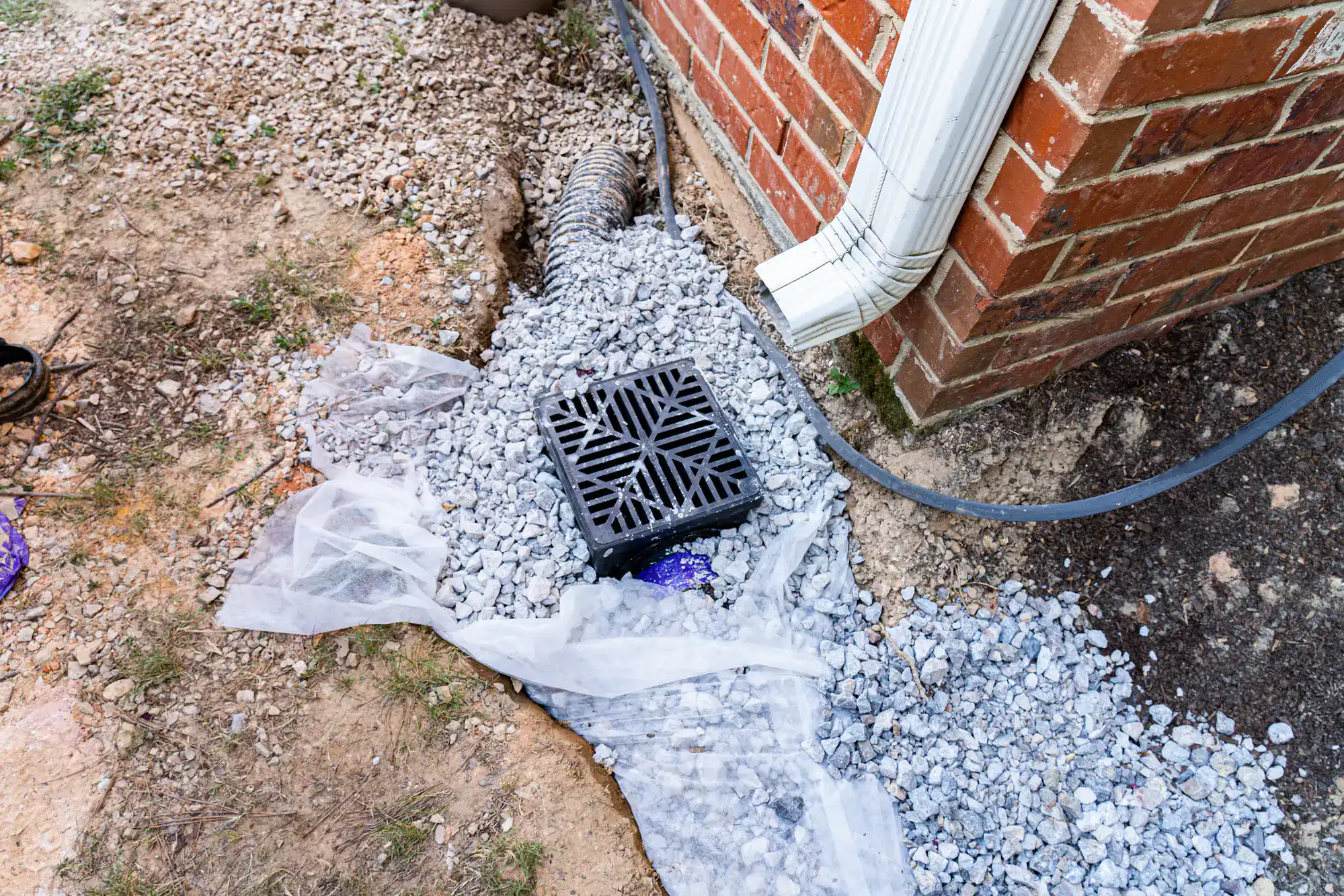
It starts with a free on-site assessment not a phone estimate, not a generic quote form. We come to your property, walk the terrain, and identify where the water is coming from and where it needs to go. In East Islip, that means accounting for your proximity to the bay, your lot’s natural grade, your soil composition, and whether your property sits in a FEMA flood zone that may require a permit from the Town of Islip’s Building Department before any excavation begins. We handle that process so you don’t have to figure it out yourself.
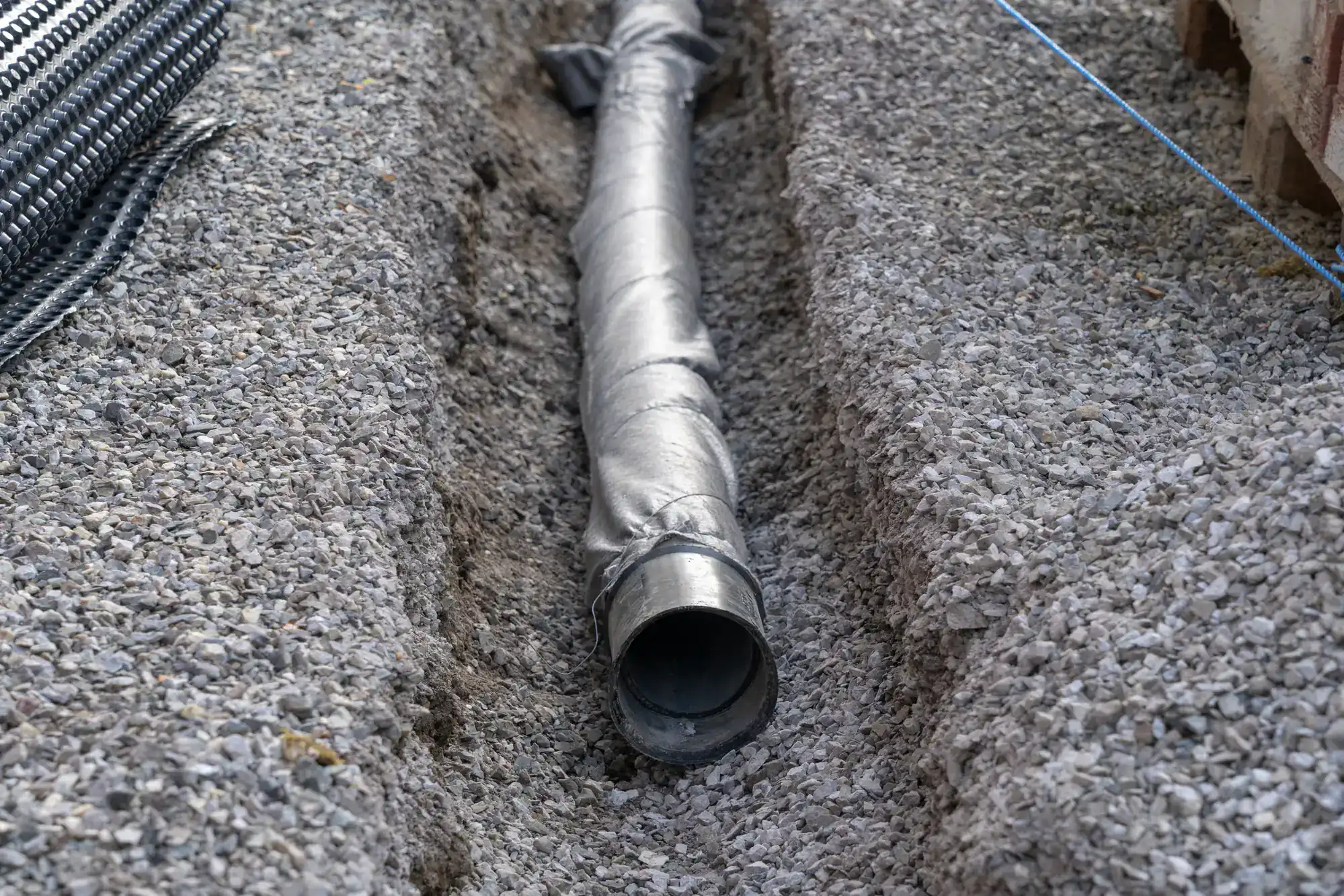
Once the plan is set, we trench the system at the correct depth deep enough to avoid freeze-thaw damage through Long Island winters, properly sloped to move water consistently toward the outlet point. We use perforated pipe, the right geotextile filter fabric for your soil type, and washed angular gravel. These aren’t upgrades they’re the baseline for a system that actually lasts. Cutting corners on any one of them is how a French drain fails inside five years.
Before any digging starts, we call 811 to mark underground utilities required by New York State law and something every homeowner should confirm their contractor does. After installation, we restore your yard: topsoil, seeding, or sod to match what was there. When we leave, the drainage is in and the property looks right.
Ready to get started?
French drain installation in East Islip covers a range of property-specific scenarios. Some homeowners need an exterior perimeter drain to redirect surface water away from the foundation. Others need a system that addresses yard drainage standing water, soft spots, areas that never fully dry. Some need both. What you get depends entirely on what your property needs, and we don’t determine that until we’ve seen it.
Every installation we complete includes proper slope engineering, correctly sized perforated pipe, geotextile filter fabric rated for your soil conditions, and a clearly defined outlet that functions year-round. For East Islip properties near the water particularly in neighborhoods like The Moorings or Beecher Estates, or along the bay-adjacent streets outlet placement is critical. Discharging into an area with a high water table or near a regulated waterway requires careful planning, and properties adjacent to the Connetquot River State Park Preserve may have additional environmental review requirements under New York State law. We account for all of that before we dig.
Full yard restoration is included with every installation. That means topsoil, seeding, or sod to match your existing lawn not a torn-up yard left for you to deal with. Most residential French drain installations in East Islip run between $5,000 and $18,000 depending on trench length, depth, outlet complexity, and site conditions. We give you a specific number after the site visit, not before.
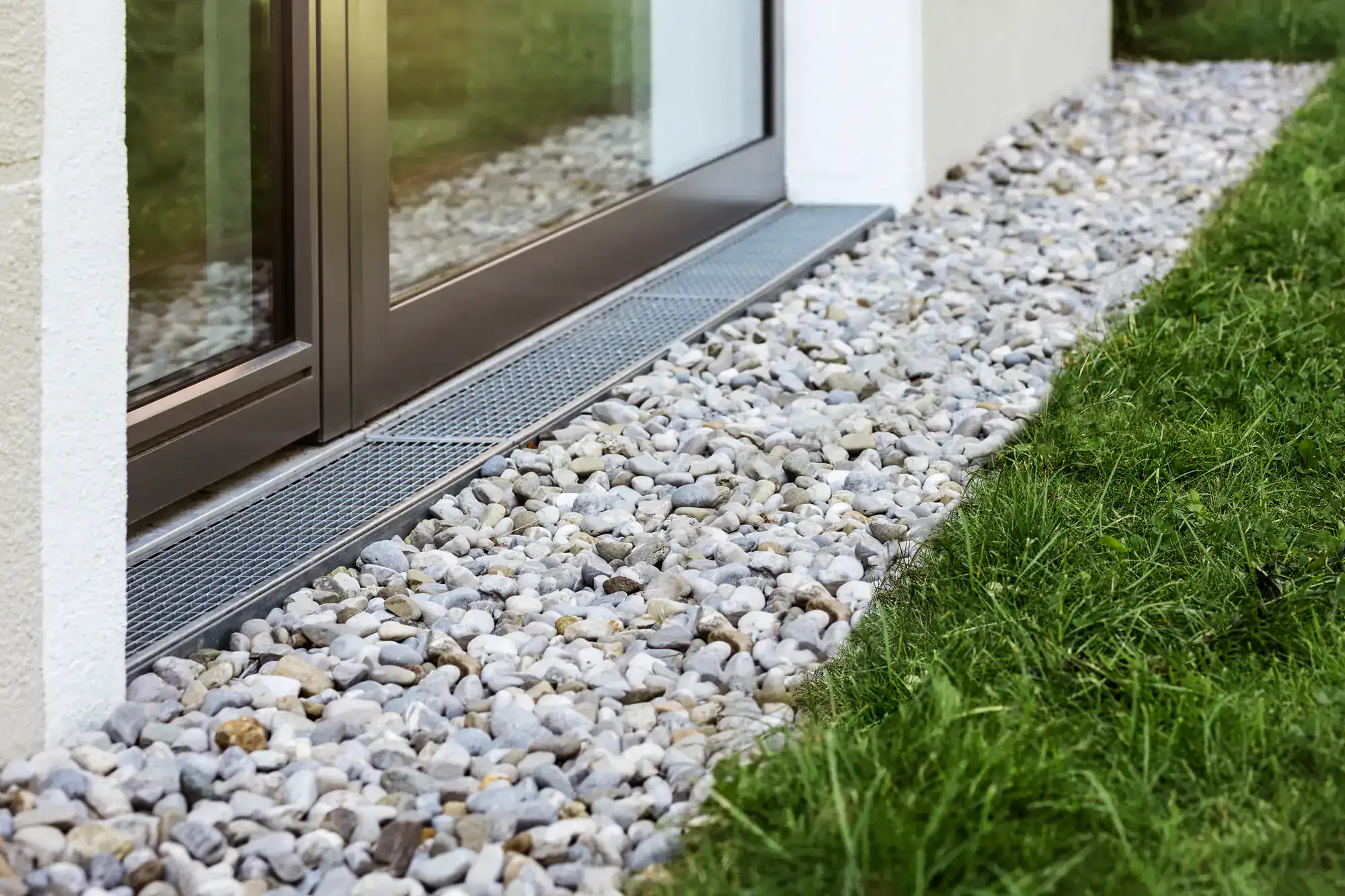
It depends on where the water is coming from. A French drain is designed to intercept and redirect groundwater or surface runoff before it causes damage it works well for soggy yards, water pooling near the foundation, and basement moisture driven by subsurface pressure. But if your basement flooding is caused by a failed sump pump, a cracked foundation wall, or improper downspout discharge, a French drain alone won’t solve it. Sometimes the right answer is a French drain paired with a sump pump or a downspout extension. Sometimes it’s a standalone perimeter system.
In East Islip specifically, the high water table near Great South Bay means a lot of basement moisture issues are groundwater-driven rather than surface-runoff-driven. That distinction changes how the system is designed. The only way to know what your property actually needs is a site visit which is why we don’t quote over the phone and don’t recommend a solution until we’ve walked the property and understood where the water is actually entering.
Most residential French drain installations in East Islip fall between $5,000 and $18,000. The range is wide because the variables are real: how long the trench needs to be, how deep the pipe needs to go, how complex the outlet situation is, and whether your property requires any permitting through the Town of Islip’s Building Department. A simple yard drainage system on a flat lot with a clear outlet runs on the lower end. A perimeter foundation system on a bay-adjacent property in a FEMA flood zone with a more complex discharge point runs higher.
What matters more than the install cost is the cost of not doing it. Foundation crack repair and remediation in Suffolk County typically starts at $15,000 and climbs fast. Mold remediation adds thousands more. In a community where home values average close to $700,000, a properly installed French drain is one of the most cost-effective forms of protection available. We give you a specific number after the site visit not a range designed to get you on the phone.
Potentially, yes and it’s worth taking seriously in East Islip. The Town of Islip has maintained active floodplain management and NFIP participation since 1972, and a significant portion of East Islip’s residential core sits in FEMA-designated flood zones. Drainage work that alters surface water flow, involves excavation, or connects to municipal stormwater infrastructure may require a permit from the Town of Islip’s Building Department. Properties near the Connetquot River or adjacent to wetland areas may also require review under New York State’s Environmental Conservation Law, which governs work within 100 feet of regulated waterways or wetlands.
This isn’t meant to be intimidating most residential French drain installations in East Islip move through the permitting process without major complications. But it does mean you want a contractor who handles this, not one who skips it. Unpermitted drainage work in a flood zone can create issues when you sell, and more importantly, it can result in a system that wasn’t designed to meet the site’s actual regulatory requirements. We manage the permitting process as part of every installation.
A properly installed French drain system lasts 30 to 40 years. That lifespan depends on three things being done right: the right pipe, the right fabric, and the right gravel. Cheap corrugated pipe collapses under soil pressure and root intrusion. The wrong geotextile fabric or no fabric at all lets fine soil particles migrate into the gravel and clog the system within a few years. Insufficient gravel or the wrong aggregate type reduces drainage capacity and accelerates failure.
In East Islip, the soil profile is a mix of sandy loam and glacially deposited material, with clay-heavy patches in some areas closer to the bay. That mix affects which fabric grade and gravel type are appropriate for your specific lot. A system designed for sandy inland soil doesn’t necessarily perform the same way on a bay-adjacent property with heavier soil. This is why material selection isn’t a one-size-fits-all decision and why contractors who apply the same spec to every job tend to produce systems that underperform in South Shore conditions.
Spring and fall are the two peak installation windows on Long Island, and both make sense for different reasons. Spring is when most homeowners discover the problem snowmelt combined with spring rain saturates the ground and makes wet basements and soggy yards impossible to ignore. Fall is when smart homeowners get ahead of it installing before winter so the system is working by the time the ground freezes and spring arrives.
East Islip has a slight advantage over inland Suffolk County communities when it comes to installation timing. The proximity to Great South Bay moderates temperatures, which means freeze-thaw cycles are less extreme and the effective installation season is a bit longer. Ground freeze is less severe here than in communities further north or inland. That said, summer storm season June through September is when South Shore communities get hit hardest, and the 2014 and 2024 flooding events both fell in that window. If you’re reading this after a storm and the problem is fresh, that’s not a bad time to have a drainage contractor come out and assess the property.
Yes, but it requires understanding why it stays wet. Properties in the southern portions of East Islip particularly those close to Great South Bay, near neighborhoods like The Moorings or Beecher Estates, or along streets that run toward the water deal with a water table that sits closer to the surface than most homeowners realize. After a heavy rain, that table rises. Even after the rain stops, the ground stays saturated because there’s no drainage path pulling the water away and the water table is slow to recede.
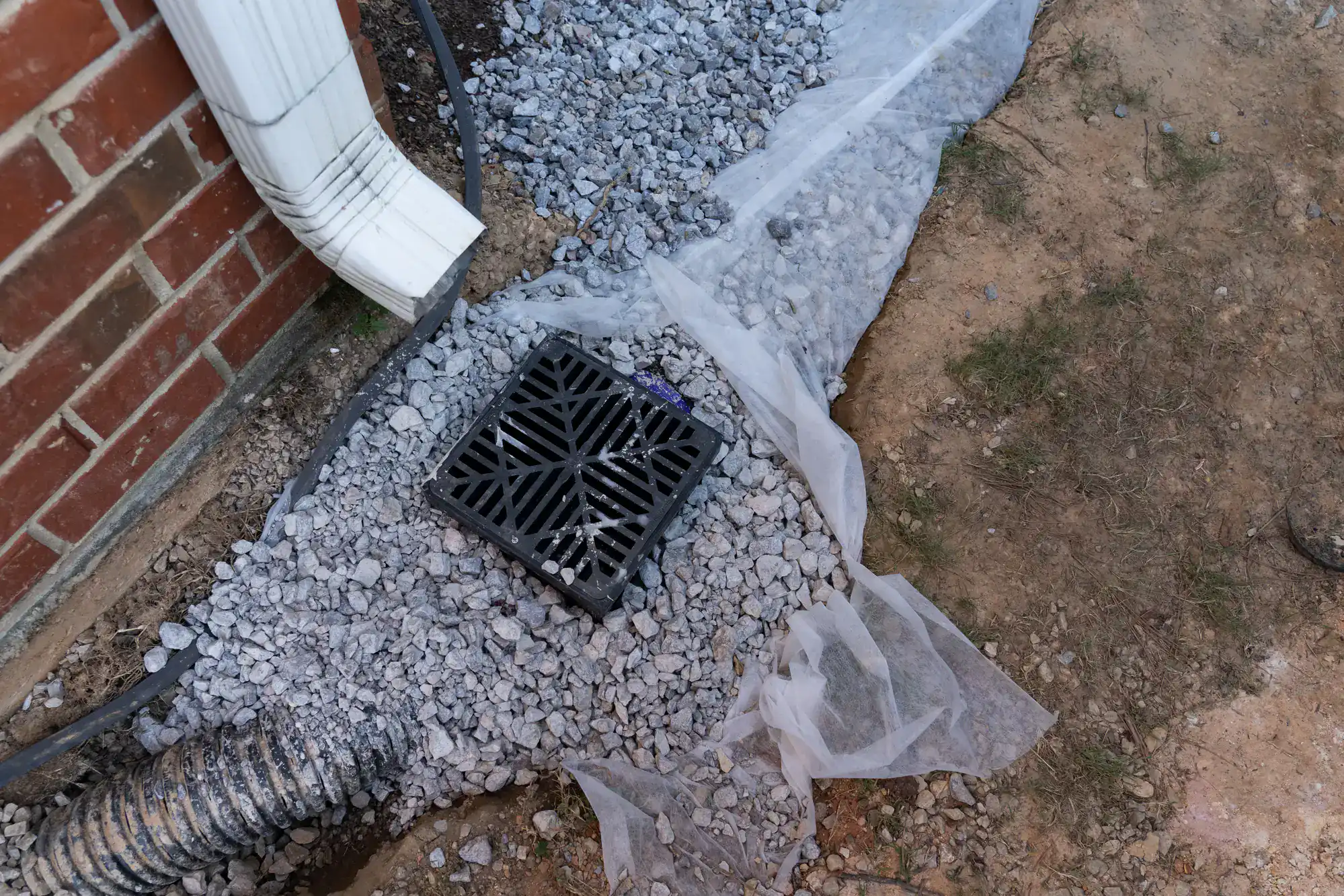
A French drain system designed for this condition intercepts subsurface water along the saturated zone and routes it to a proper outlet typically a dry well, a daylight outlet at a lower elevation, or in some cases a connection to the municipal drainage system where permitted. The outlet location matters enormously for bay-adjacent properties. Discharging too close to a tidal waterway or into an area that’s already saturated defeats the purpose. We design the outlet as carefully as the trench itself, and for properties near the Connetquot River or the bay, we account for the environmental and regulatory factors that affect where and how that discharge point is placed.