
Hear from Our Customers
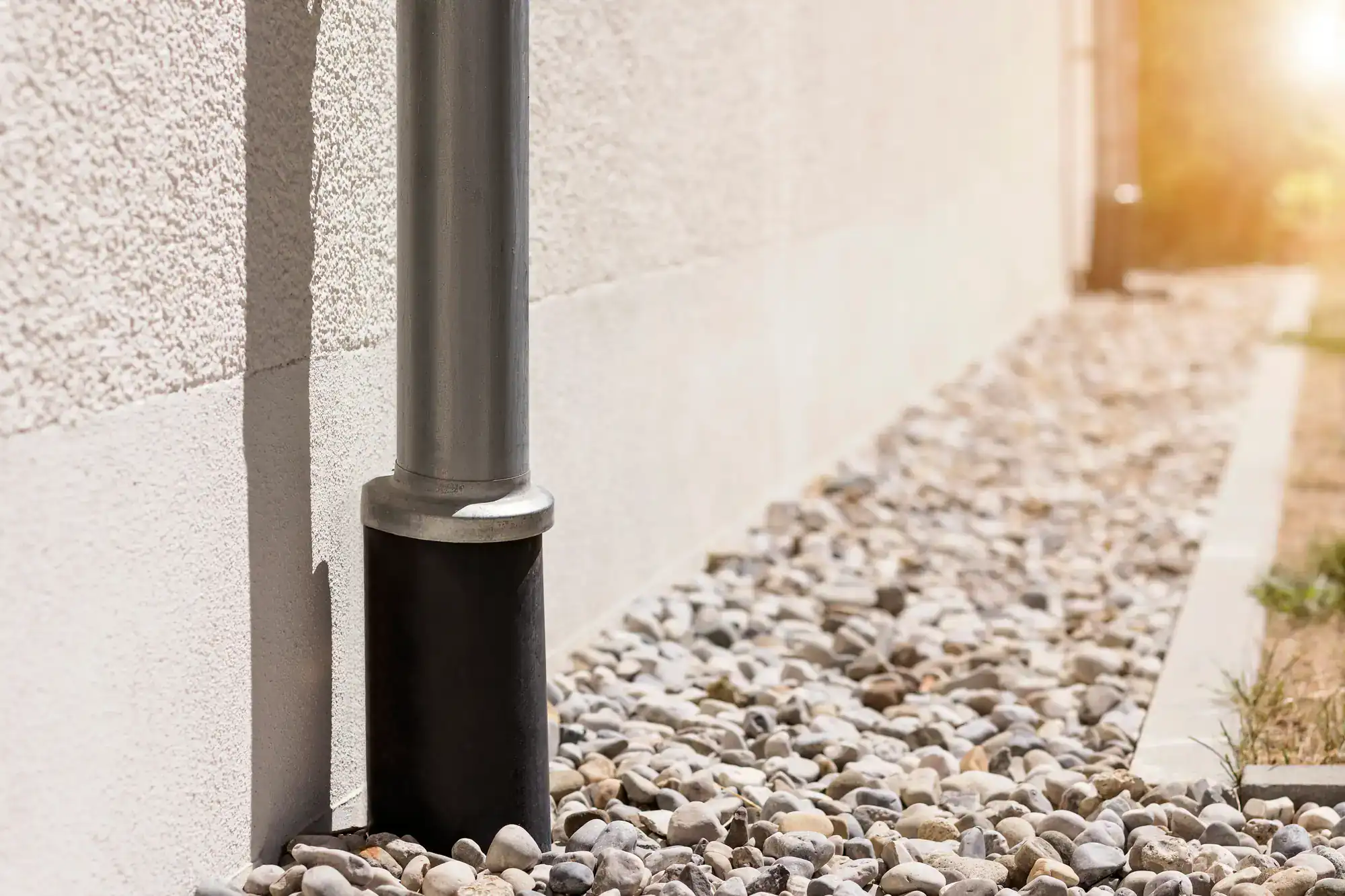
When a French drain system is installed correctly, you stop watching water pool against your foundation after every nor’easter and start using your yard the way it was meant to be used. No more soggy patches that stay wet for days. No more anxiety every time a storm rolls in off the Atlantic.
For homeowners in East Quogue, that outcome matters more than it might somewhere inland. This hamlet sits between Shinnecock Bay and Tiana Bay, with Weesuck Creek running through it and that means the water table here doesn’t just respond to rainfall. It responds to tidal cycles. When the bay rises, the groundwater near your property rises with it. A drainage system that wasn’t designed with that in mind isn’t really solving your problem.
Most of East Quogue’s housing stock was built around 1981. That’s over 40 years of settling, grading shifts, and original drainage infrastructure that was never designed for today’s storm intensity or today’s elevated coastal water table. Getting a properly engineered French drain installed now means you’re not just fixing what’s broken you’re protecting a home that, at East Quogue’s median value, is worth close to $870,000 or more.
We work specifically in the coastal Long Island market which means we’re not applying inland drainage logic to properties that sit near tidal waterways and sandy glacial soils. The South Fork has its own hydrology, and East Quogue sits right in the middle of it.
We understand what it means to install a French drain system near Weesuck Creek, or on a property with a water table that shifts with the tides coming off Shinnecock Bay. We understand Southampton Town’s permit requirements and what it takes to do this work correctly in a coastal flood zone. That’s not a talking point it’s what separates a system that lasts 30 years from one that clogs in three.
Every project we take on in East Quogue starts with an honest on-site assessment. We look at your actual drainage conditions, not a template. If a French drain is the right solution, we’ll tell you exactly what that looks like for your property. If something else makes more sense, we’ll tell you that too.
It starts with a site visit. We walk your property, assess where water is entering or pooling, evaluate the grade and soil conditions, and identify the right outlet point for the system. In East Quogue, that assessment always accounts for proximity to tidal waterways and the sandy coastal soil profile of the South Fork factors that directly affect how the system needs to be designed and where it can safely discharge.
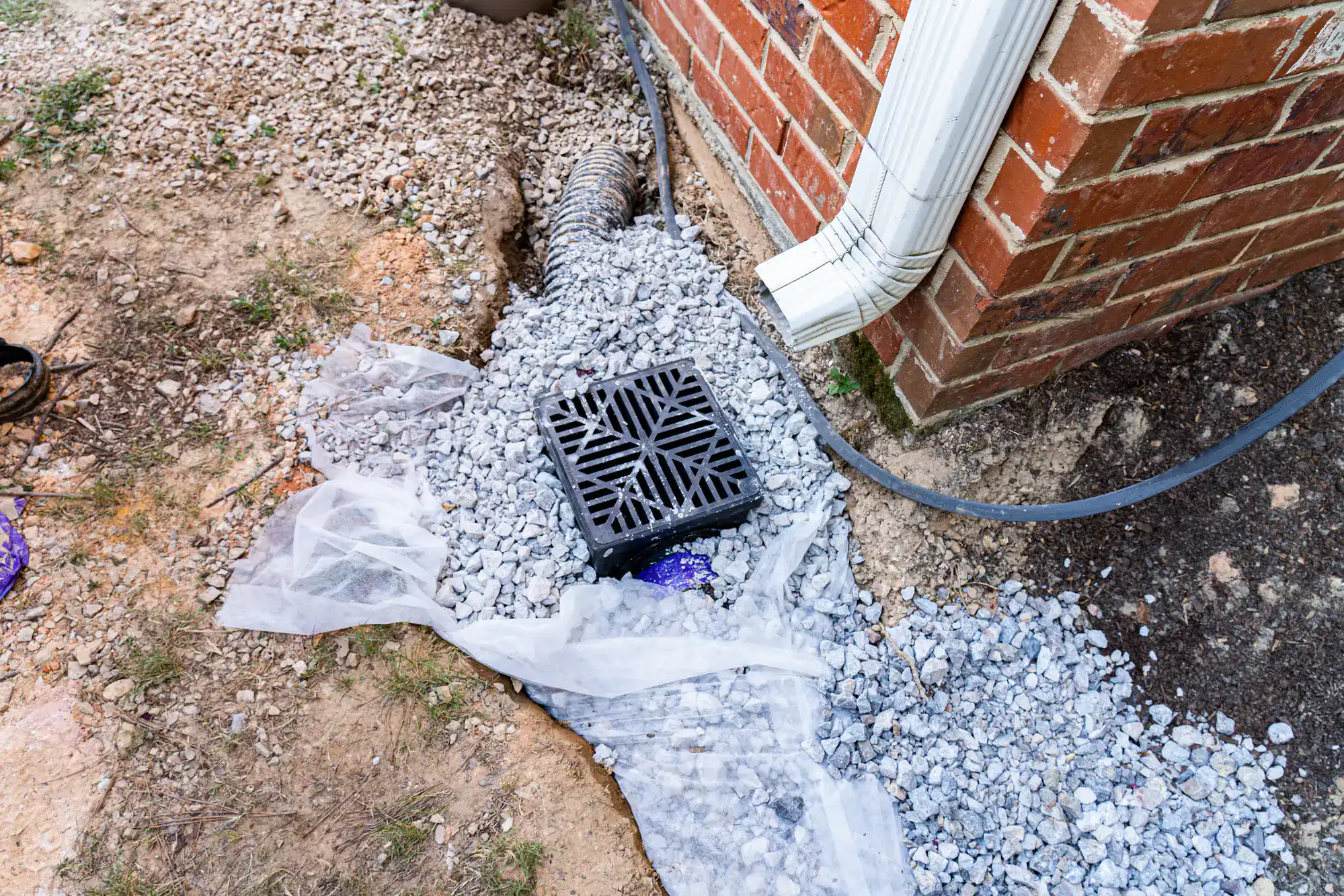
Once the design is confirmed, we handle all utility marking through New York’s 811 system before any digging starts that’s a legal requirement in this state, and it’s standard on every job we do. If your property requires a Southampton Town building permit or falls within a regulated coastal area under New York State environmental law, we manage that process entirely. You don’t have to figure out which forms to file or which office to call.
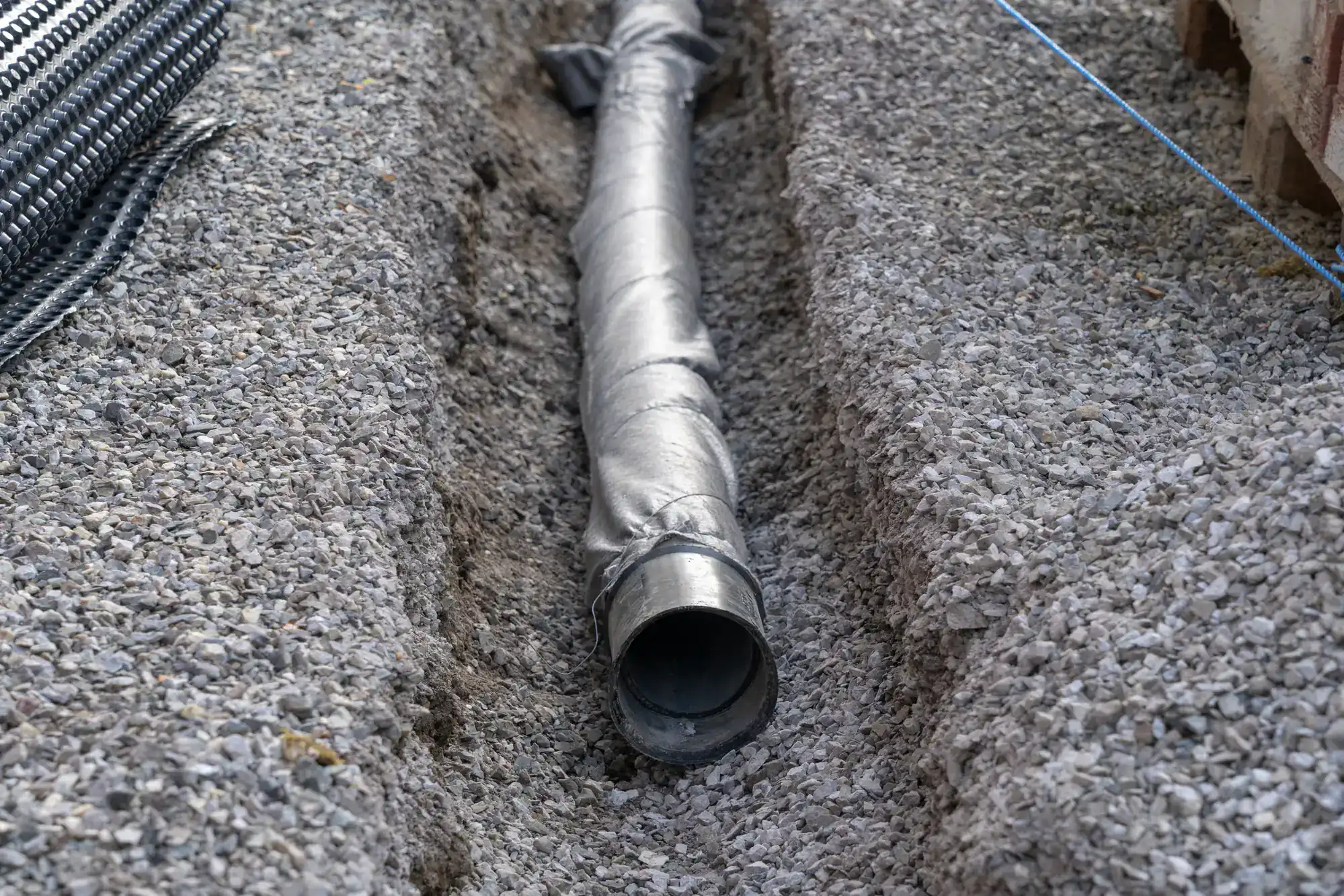
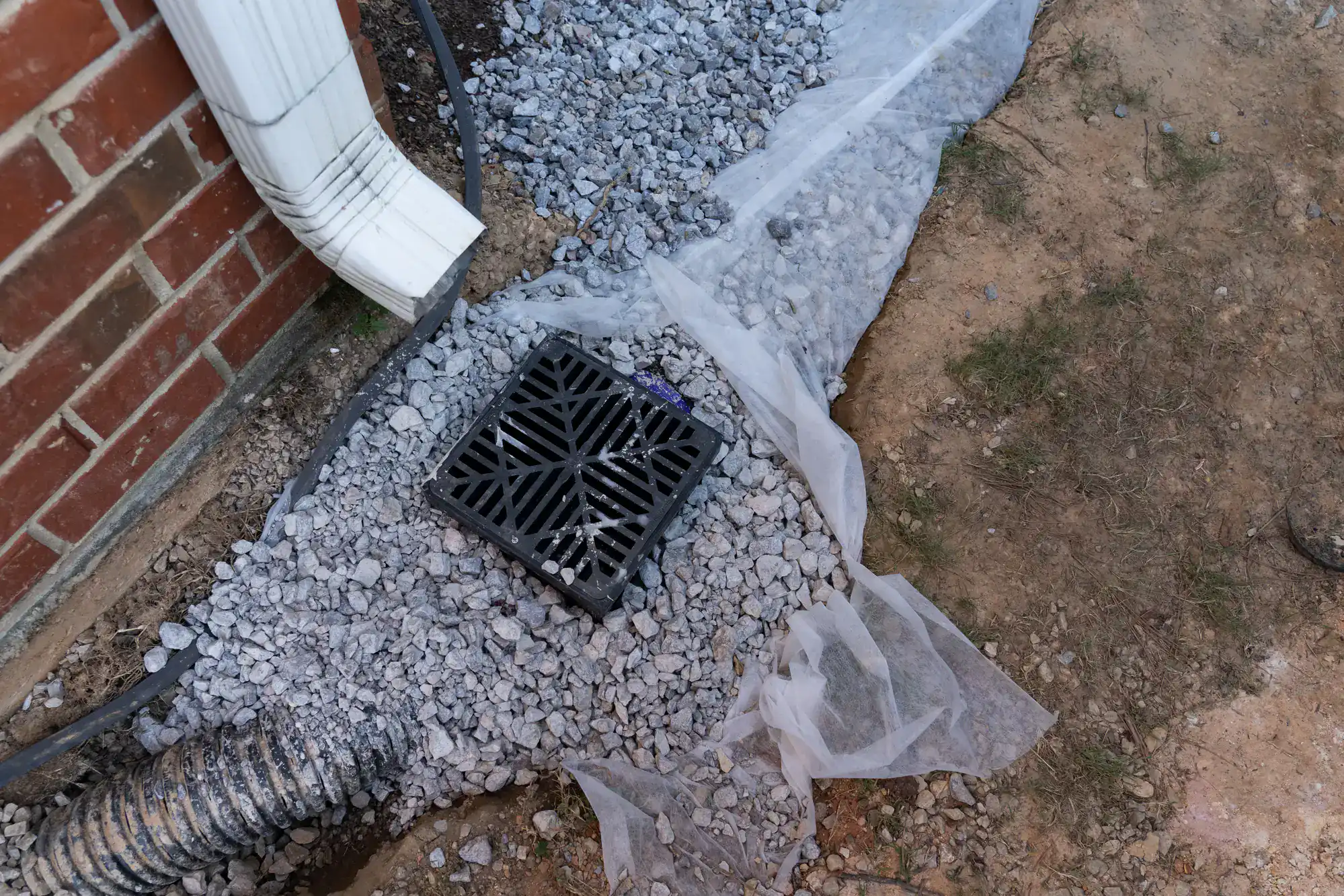
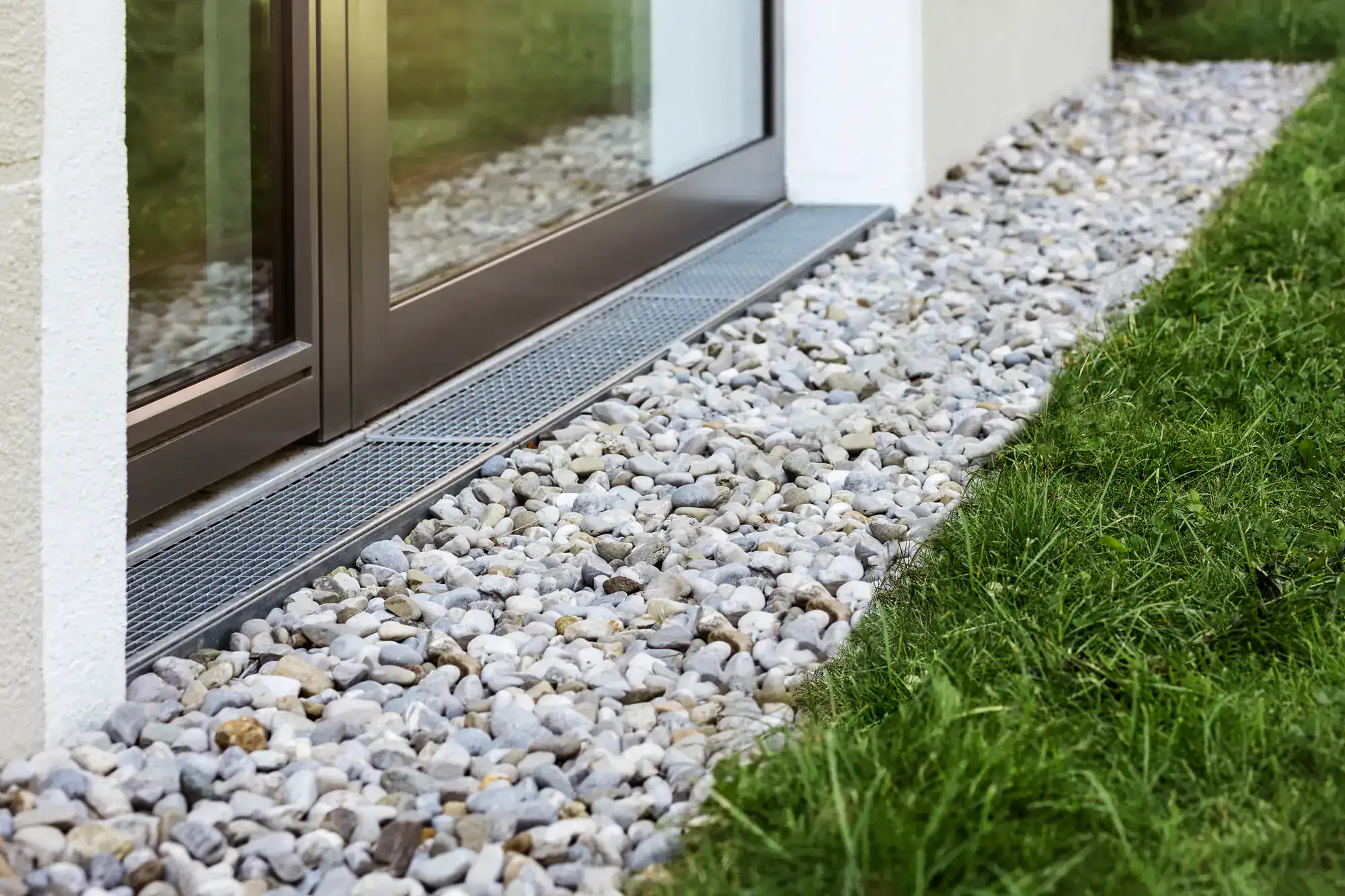
Installation involves trenching to the correct depth for Long Island’s frost line, laying rigid perforated pipe wrapped in double-punched geotextile filter fabric, backfilling with washed angular gravel, and establishing a clean outlet point. When the work is done, your yard is restored topsoil, seeding, or sod matching as needed. The trench is open for a day or two. The drainage protection it creates is built to last decades.
Ready to get started?
The most common reason French drain systems fail isn’t the concept it’s the execution. Cheap corrugated pipe, missing or wrong filter fabric, incorrect slope, no defined outlet. These aren’t rare installation mistakes. They’re what you get when drainage work is treated as an add-on by a landscaper or general contractor who doesn’t specialize in it. The result is a system that silently clogs with fine soil particles and stops working, usually revealing itself during the first heavy storm after it fails.
Every French drain system we install in East Quogue uses rigid perforated pipe not corrugated wrapped in double-punched geotextile filter fabric that keeps fine coastal sandy soil particles out of the gravel bed and the pipe. We maintain a consistent one-inch drop per eight to ten feet of pipe run, which is what keeps water moving through the system toward the outlet instead of sitting stagnant inside it. These aren’t upgrades. They’re the baseline for a system that actually works long-term.
For properties near Tiana Bay, Shinnecock Bay, or Weesuck Creek, we also evaluate outlet placement carefully. A system that daylights into an area subject to tidal backflow needs to be designed differently than one draining to a dry well or a storm catch point. East Quogue’s coastal position makes that evaluation part of every job here not an afterthought.
It depends on the scope and location of the work. East Quogue falls under Southampton Town’s building permit jurisdiction, and drainage projects that significantly alter surface water flow or involve substantial excavation may require a permit from the town’s building department. If your property is near a coastal waterway Shinnecock Bay, Tiana Bay, or Weesuck Creek there may also be additional review required under New York State Environmental Conservation Law, which governs coastal erosion hazard areas throughout Southampton Town’s shoreline.
On top of that, New York State law requires all excavators to contact 811 before digging to have underground utilities marked. That’s not optional it’s a legal requirement on every project. We handle all of this as a standard part of our process. You won’t need to research permit requirements, contact town offices, or coordinate utility marking on your own. We take care of it before a shovel goes in the ground.
Most residential French drain installations in East Quogue fall somewhere between $5,000 and $12,000, with the average professional system running around $9,000 to $9,500. The actual number for your property depends on how much pipe is needed, how deep the system has to go, what the outlet situation looks like, and whether any permitting is involved. Properties near tidal waterways or in designated flood zones can add complexity and cost to the design.
What’s worth keeping in mind is the comparison. Foundation repair on Long Island runs $15,000 to $50,000. Mold remediation starts at $3,000 and climbs fast. And a wet basement can shave 10% or more off your home’s value at sale which, at East Quogue’s median home value, is a six-figure number. A properly installed French drain system isn’t a big expense relative to what it protects. We provide a clear, itemized estimate after the on-site assessment so you know exactly what you’re looking at before any commitment.
Yes but it has to be designed for those conditions specifically. Properties near Tiana Bay, Shinnecock Bay, and Weesuck Creek face a drainage dynamic that doesn’t exist in inland Long Island communities. The water table in these areas responds not just to rainfall but to tidal cycles. When the bay rises, groundwater near your property rises with it. A French drain system that ignores that reality one designed as if your yard were in Hauppauge or Commack will underperform or fail when the water table is at its highest.
The key is outlet placement and system depth. If the outlet point for your drain is in an area subject to tidal backflow, water can’t exit the system when you need it most. We evaluate tidal influence, soil saturation depth, and outlet feasibility as part of every site assessment in East Quogue. The system we design for a bay-adjacent property is engineered for the actual hydrology of that site not copied from a standard residential drainage template.
A properly installed French drain system should last 30 to 40 years. The ones that fail in two to five years almost always come down to the same handful of problems: corrugated pipe instead of rigid perforated pipe, missing or inadequate geotextile filter fabric, incorrect slope, or no clearly defined outlet point. In coastal sandy soils like those found throughout East Quogue and the South Fork, the filter fabric issue is especially critical. Fine sand particles migrate into drainage systems that aren’t properly wrapped, and once they infiltrate the gravel bed and the pipe, the system clogs usually without any visible warning until the next heavy rain.
The slope issue is just as common. A French drain needs a consistent one-inch drop per eight to ten feet of pipe run. Too flat, and water sits in the pipe and never reaches the outlet. That’s a design failure, not a material failure, and it’s just as damaging to the system’s longevity. Asking a contractor what pipe they use and how they confirm slope before installation will tell you a lot about whether their system is going to last.
It can, yes and for many East Quogue homes, it’s one of the most effective tools available. Basement water infiltration in this area usually comes from one of two sources: surface water that pools against the foundation after heavy rain and eventually finds its way through cracks or joints, or groundwater that rises during storms or tidal cycles and pushes up through the floor or lower walls. A properly placed exterior French drain intercepts surface water before it reaches the foundation and redirects it away from the structure.
For homes built around 1981 which describes most of East Quogue’s housing stock the original foundation waterproofing membrane and any drainage provisions from construction are now over 40 years old. Many of those systems were never designed for today’s storm intensity or the elevated water table conditions that come with sea-level rise along the South Shore. An exterior French drain doesn’t replace foundation waterproofing, but it significantly reduces the hydrostatic pressure that causes infiltration in the first place. In many cases, it’s the intervention that stops recurring basement water problems without requiring interior waterproofing work.
The most reliable signs are standing water that lingers in your yard for more than 24 to 48 hours after rain, soft or perpetually soggy areas in the lawn, water staining or moisture along the base of your foundation, and basement dampness or water intrusion that follows storm events. If you’re noticing any of those, you likely have a drainage problem that isn’t going to resolve on its own especially in East Quogue, where the combination of a high coastal water table, sandy soils that saturate quickly near the bay, and aging 1981-era grading creates conditions that tend to worsen over time rather than stabilize.
For second-home owners in East Quogue, the signs sometimes show up after a season away a musty smell in the basement, dead patches in the lawn from prolonged saturation, or visible erosion near the foundation. Those are drainage failures that happened while the property was unoccupied, and they’re worth taking seriously. A free on-site assessment is the most straightforward way to get a real answer. We look at the actual conditions on your property and tell you honestly whether a French drain is the right fix, and if so, what that would involve.