
Hear from Our Customers
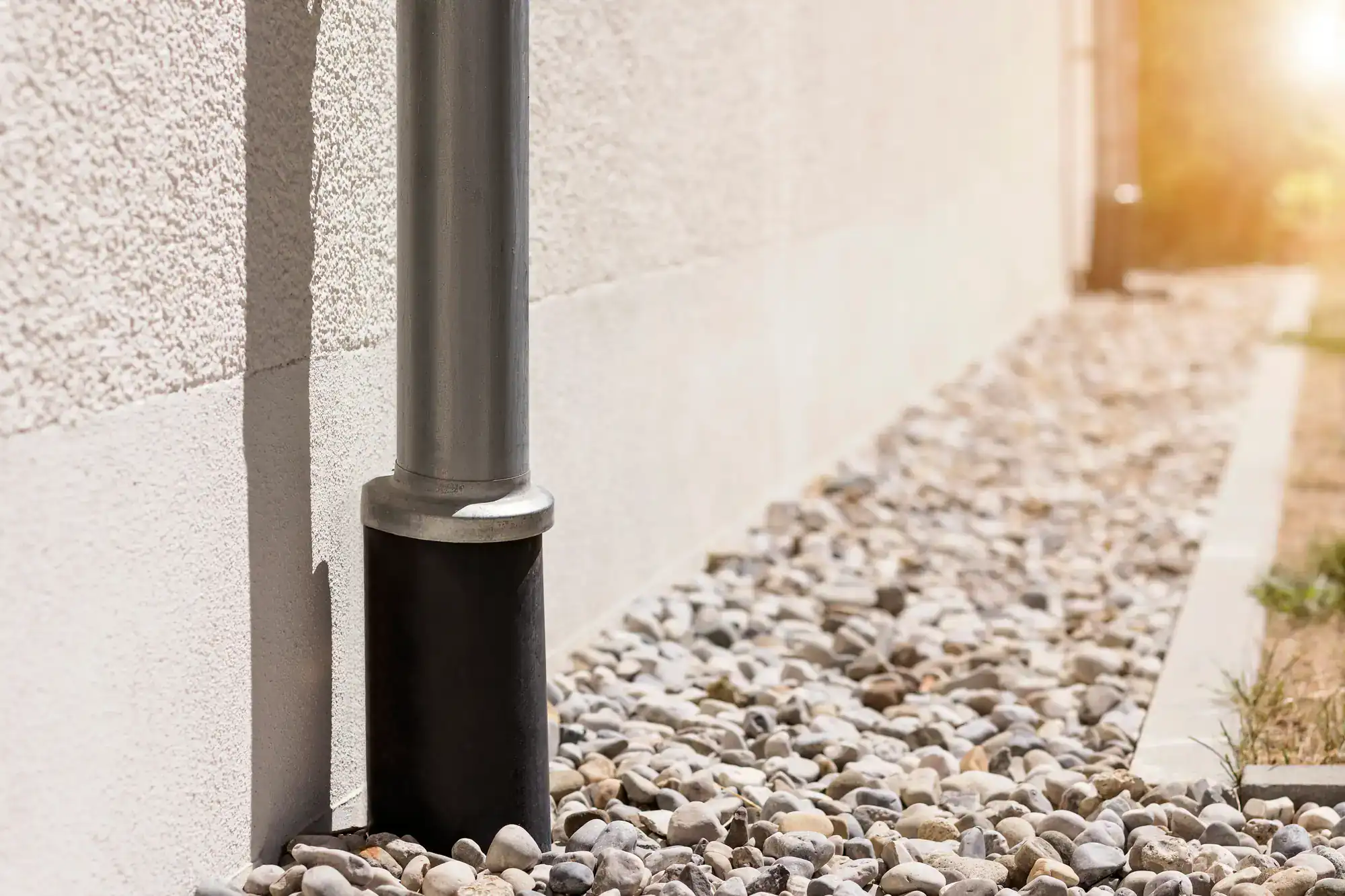
Once a properly designed French drain system is in place, the difference is immediate and lasting. Water that used to sit against your foundation or pool in the low spots of your yard now has somewhere to go. Your lawn becomes usable again. Your basement stays dry. And you stop dreading the forecast every time a nor’easter rolls up the coast.
In Riverhead, that last part matters more than it might somewhere else. The Peconic River drains a 74.7-square-mile watershed before it empties into Flanders Bay right here in town. After a heavy storm, groundwater levels in properties near the river corridor and in low-lying areas of Calverton, Aquebogue, and the hamlet itself rise in ways that catch homeowners off guard. A French drain system installed to the right depth and with the right outlet design handles that subsurface pressure before it becomes a foundation problem.
There’s also a real financial argument here. Riverhead is in the middle of an active real estate run new construction is listing around $539,000 and homes are moving fast. A wet basement or a chronically soggy yard is one of the fastest ways to lose negotiating power at the point of sale. Residential French drain installation in Riverhead isn’t just maintenance. It’s protection for the investment you’ve already made.
We’re a water drainage contractor serving Riverhead and the surrounding East End communities, including Calverton, Aquebogue, Jamesport, Wading River, and Baiting Hollow. This isn’t a company that covers all of Long Island from a dispatch center two counties away. The work happens here, by people who know what the soil in this part of Suffolk County actually does after a three-inch rain.
Riverhead sits on glacial outwash soils Riverhead sandy loam, Carver sand, Plymouth sand that look like they should drain well and sometimes don’t. A perched water table can develop above a less permeable layer, leaving your yard saturated days after a storm even though the ground looks sandy. Understanding that dynamic is the difference between a drain that works and one that doesn’t. We’re fully licensed and insured in New York State, and every project starts with a free on-site assessment no phone quotes, no guesswork.
It starts with the free on-site assessment. One of our drainage professionals comes to your property, walks the site, and identifies where the water is coming from, where it’s going, and what’s stopping it from leaving. In Riverhead, that means looking at your proximity to the Peconic River, your yard’s grade relative to the street, your soil profile, and whether your sump pump is currently discharging to the street which the Town of Riverhead prohibits and can fine you for. That assessment shapes the entire system design.
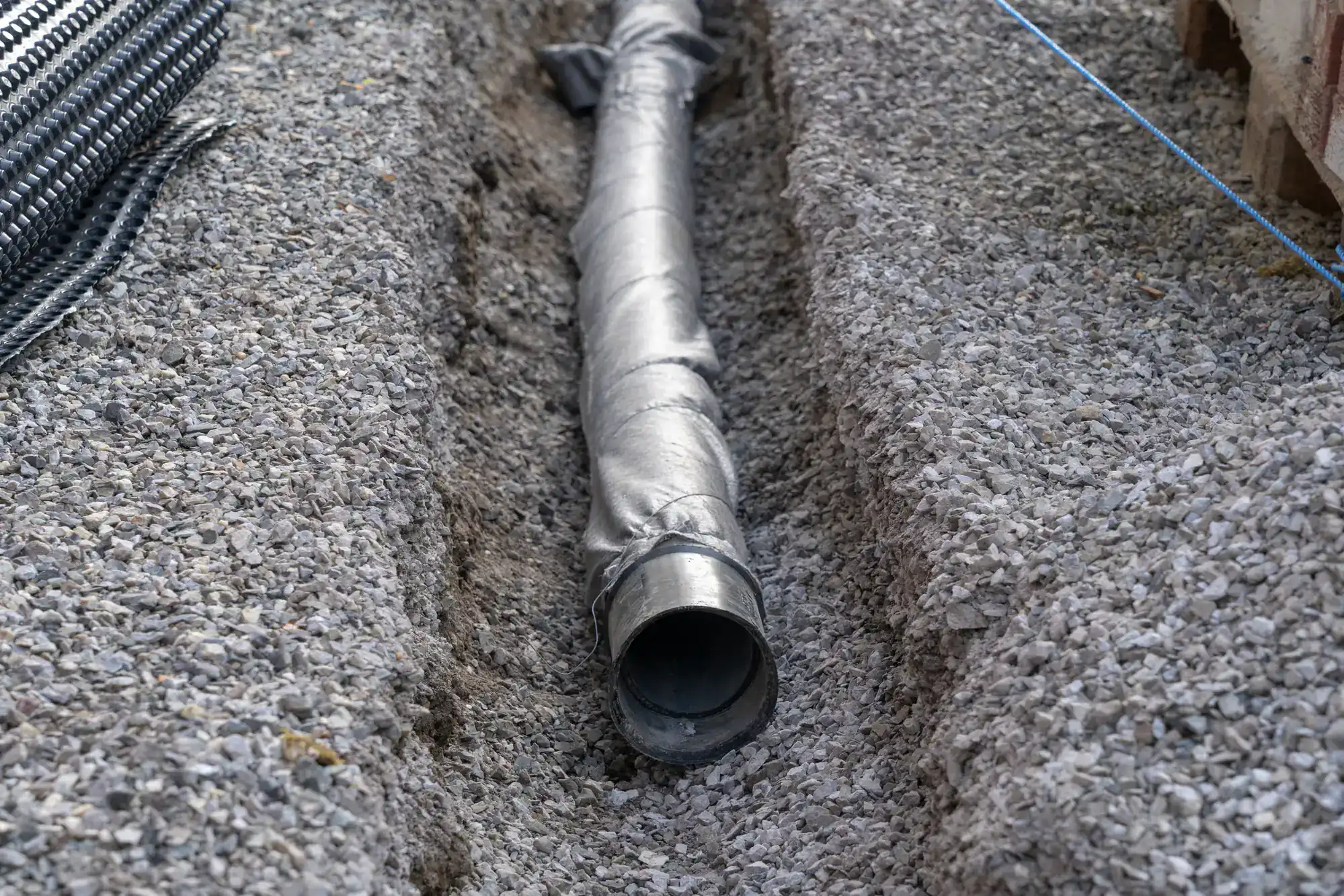
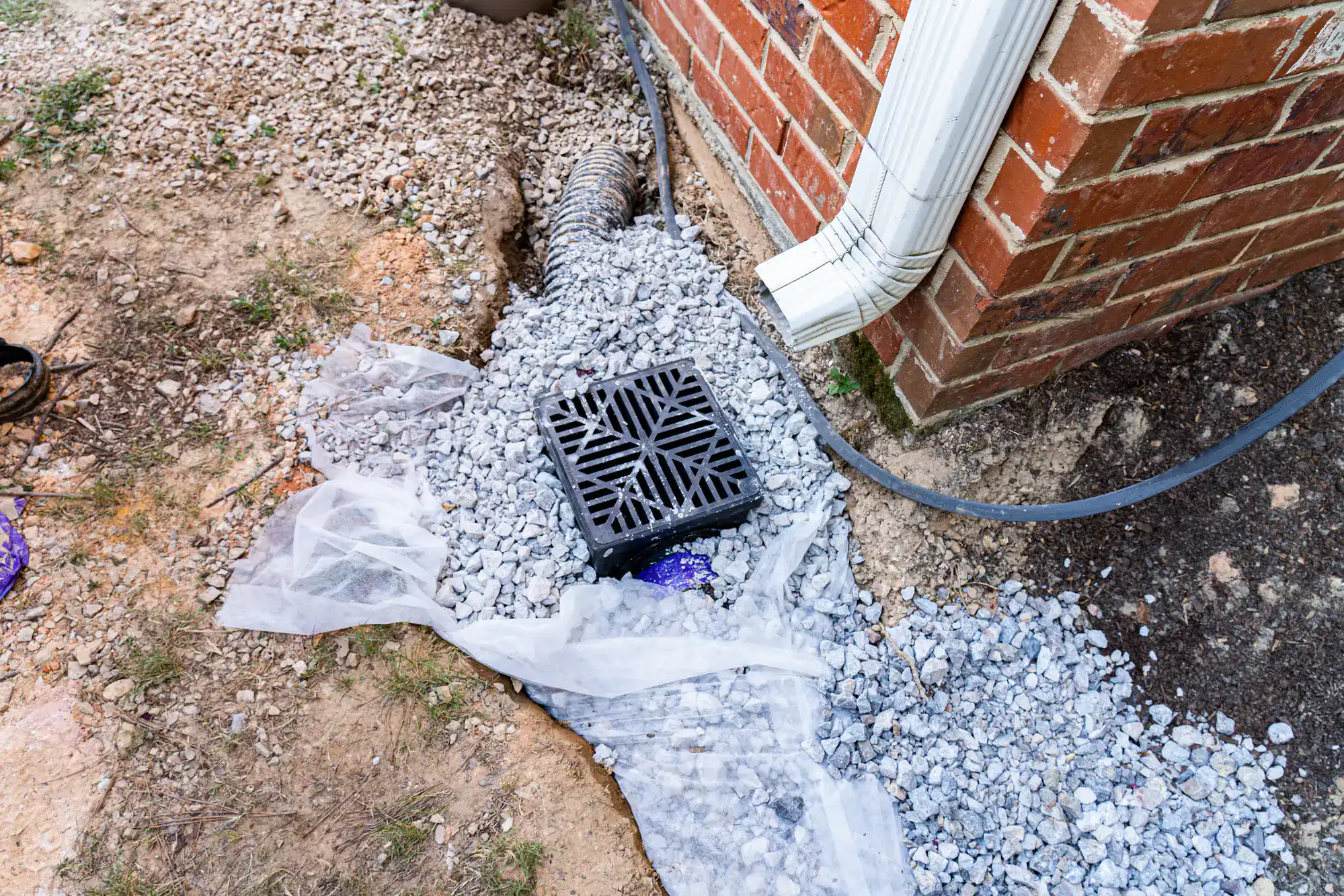
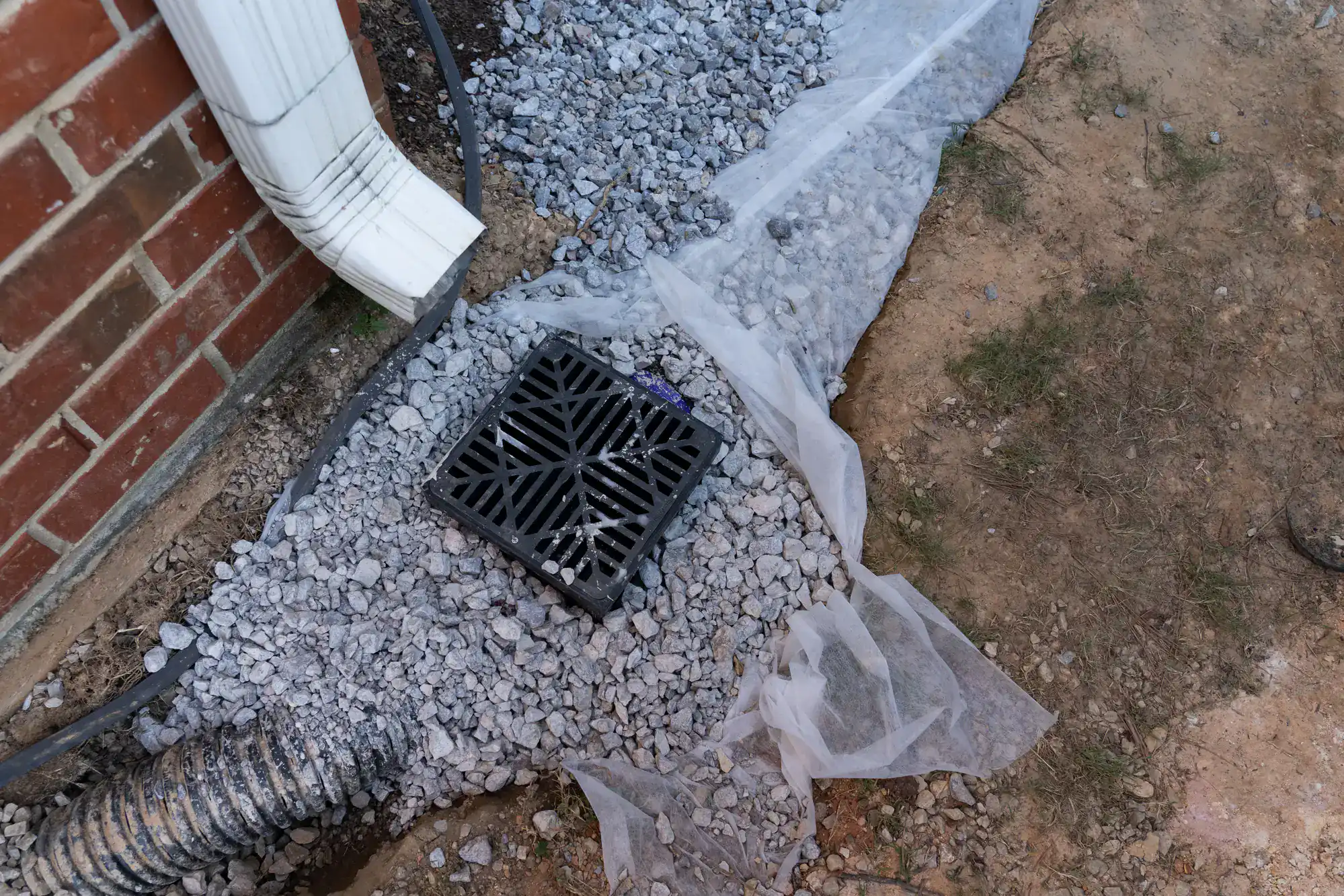
Once the scope is defined and you’ve approved the plan, we call 811 before any excavation begins that’s required by New York State law, and it protects your property and your neighbors’. Then we trench, install the perforated pipe in a gravel bed wrapped in filter fabric, and connect it to a defined outlet: a dry well, a catch basin, or a daylight outlet, depending on what your property allows. Pipe depth is set to account for Long Island’s frost line a shallow install will freeze and fail its first winter, and that’s not a repair anyone wants to deal with.
When the system is in, we restore the yard. Topsoil, seeding, cleanup the trench disappears. Most residential French drain installations in Riverhead are completed in one to three days.
Ready to get started?
What makes a well-designed French drain system different from a quick fix is that it addresses the full picture not just the symptom you can see. For a lot of Riverhead properties, that means handling multiple issues within a single installation. Perforated pipe along the foundation perimeter captures subsurface water before it reaches the basement. Catch basins in low-lying yard areas intercept surface pooling. A dry well or compliant daylight outlet gives your sump pump somewhere to discharge that isn’t the street which keeps you in line with Town of Riverhead stormwater regulations. Downspout extensions tie into the system with solid pipe so roof runoff doesn’t reenter the ground right next to your foundation.
For properties in Calverton and Wading River, where sandier outwash soils can create perched water conditions, system depth is especially important. For properties near the Peconic River or in flood-mapped areas of the hamlet, outlet design has to account for periods of elevated groundwater. For newer construction in the Calverton corridor, where grading often meets code minimums but not real-world performance, a drainage French drain system is frequently the first improvement a new homeowner makes. Every installation includes full yard restoration and is backed by a workmanship warranty ask about the specific terms when you book your assessment.
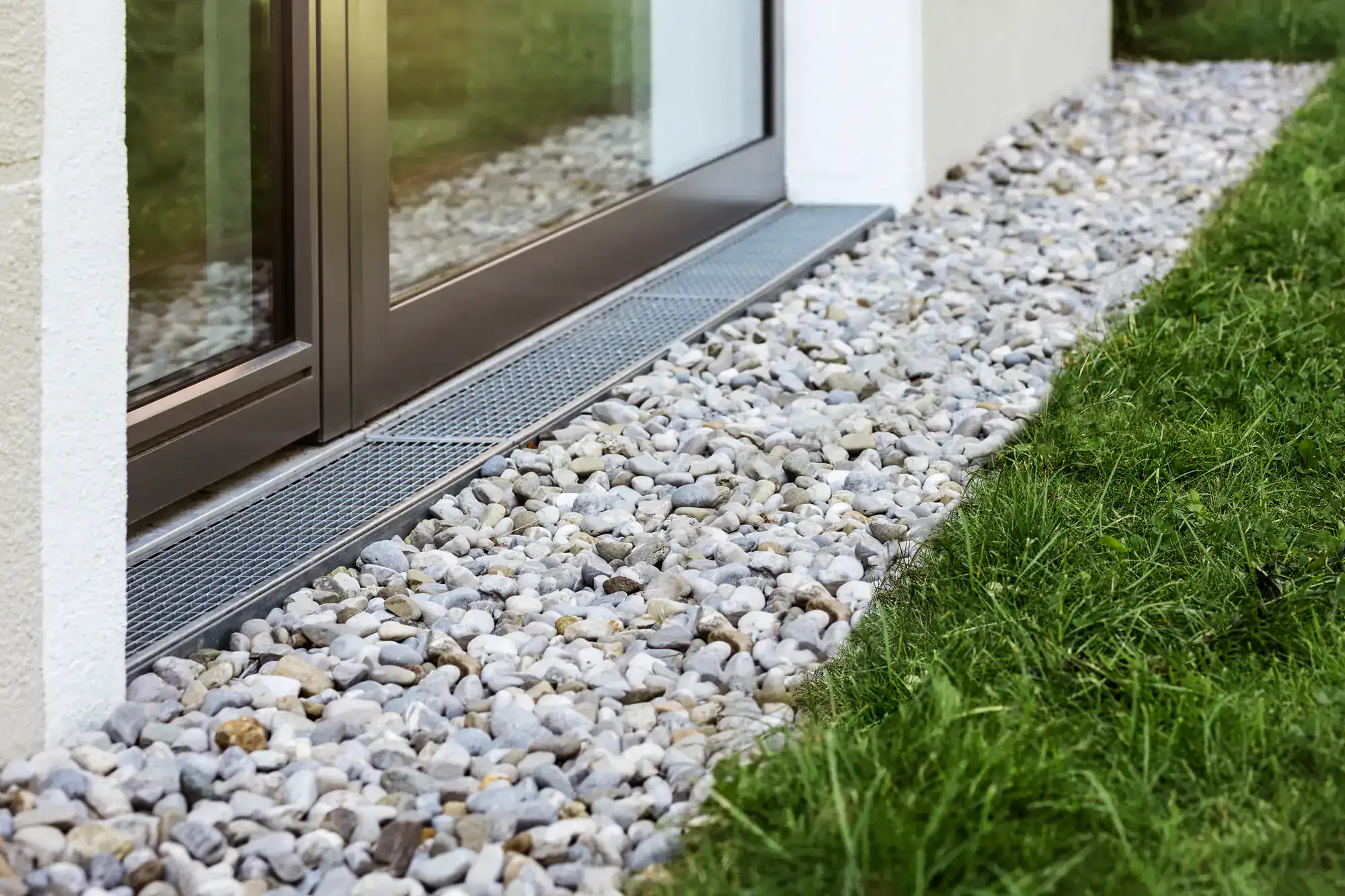
It depends on the scope of the project. Most standard residential French drain installations perimeter drainage, yard drainage, dry well connections don’t require a building permit in Riverhead. However, any excavation that disturbs one acre or more of soil triggers New York State’s SPDES Construction General Permit, which requires a stormwater pollution prevention plan. For properties in flood zones near the Peconic River or Flanders Bay, a Flood Elevation Certificate may also be relevant to the project.
What’s required regardless of permit status is calling 811 before any excavation begins. That’s New York State law, and it protects underground utilities on your property and your neighbors’. We handle all of this before a shovel goes in the ground. You don’t have to track down the right forms or make calls to the Town of Riverhead’s Engineering Department that’s part of what you’re hiring a qualified drainage contractor to manage.
Most residential French drain installations in Riverhead run between $5,000 and $9,250, though the range extends from around $1,650 for a simple, short run to $12,250 or more for complex systems involving multiple catch basins, long pipe runs, or deep excavation near the foundation. What drives cost up is scope how many linear feet of trench, how deep the pipe needs to go to get below the perched water zone, and what kind of outlet your property requires.
The number that puts the cost in context is the one on the other side of the decision. Foundation repair on Long Island runs $15,000 to $50,000. Mold remediation starts at $3,000 and climbs fast depending on how far the moisture has spread. In a market where Riverhead properties are actively appreciating, an unresolved drainage problem also has a real cost at the point of sale buyers notice, and it shows up in offers. A free on-site assessment gives you an accurate number for your specific property before you commit to anything.
Yes and in many cases it’s the most effective long-term solution available for basement water intrusion. The mechanism behind most wet basements is hydrostatic pressure: water in saturated soil presses against the foundation wall or floor and finds any crack or gap it can. A French drain system installed along the foundation perimeter intercepts that water before it builds pressure, redirecting it away from the structure through a defined outlet. The basement stays dry because the water never reaches it.
In Riverhead, this is especially relevant for properties in lower-lying areas of the hamlet and along the Peconic River corridor, where groundwater levels rise after significant storms. It’s also relevant for properties whose sump pumps are currently discharging to the street which the town prohibits. A properly designed French drain system with a dry well or compliant daylight outlet solves the basement water problem and the discharge compliance issue at the same time. Interior waterproofing systems manage water after it enters; a French drain stops it before it does.
This is one of the most common questions from homeowners in Calverton, Aquebogue, and Wading River and the answer comes down to what’s happening below the surface. Riverhead’s soils are predominantly sandy loam and outwash sands, which should drain well. But when a less permeable layer exists below the surface even a few feet down water gets trapped in the upper soil profile and can’t move. This creates what’s called a perched water table: a temporary zone of saturation that leaves your yard soaked for days after a storm, even though the ground looks like it should drain.
The fix is a French drain system installed deep enough to get below the perched zone and into the freely draining layer underneath. A drain that’s too shallow which is what you get with a lot of DIY installs or contractors who don’t understand the local soil profile will sit in the saturated zone and do almost nothing. Getting the depth right requires knowing the specific soil conditions of your property, which is exactly what the on-site assessment is designed to determine.
A properly installed French drain system in Riverhead should last 30 to 40 years. The lifespan depends heavily on two things: how well the filter fabric was installed around the gravel bed, and whether the pipe was buried at the right depth. Filter fabric prevents fine soil particles from migrating into the gravel and clogging the pipe over time. Proper depth protects the pipe from Long Island’s freeze-thaw cycles pipe installed too shallow will crack and fail in the first hard winter, often requiring a full reinstallation.
Maintenance is minimal once the system is in. Catch basins should be checked and cleared of debris once or twice a year leaves and sediment can accumulate, especially after fall storms. Outlet points should be inspected to confirm they’re discharging freely and haven’t been blocked by vegetation or soil movement. Beyond that, a well-built system largely takes care of itself. If you notice the system isn’t performing the way it did water pooling in areas that used to drain that’s usually a sign of a blockage, not a failed system, and it’s typically a straightforward fix.
They serve different functions, and in many Riverhead installations, they work together. A French drain is the collection system perforated pipe in a gravel trench that captures water moving through the soil and redirects it. A dry well is the discharge point an underground chamber filled with gravel or a perforated plastic structure where that collected water can slowly percolate back into the ground. The French drain moves the water; the dry well absorbs it.
Whether you need both depends on your property and what the Town of Riverhead’s regulations allow for your outlet options. Properties that can daylight to a lower grade meaning the pipe can exit the ground on a slope and discharge away from the house may not need a dry well at all. Properties in more level areas of the hamlet, or those whose sump pumps currently discharge to the street (which is prohibited in Riverhead), often need a dry well to provide a compliant outlet. The on-site assessment determines which combination makes sense for your specific lot, your soil’s percolation rate, and your proximity to the Peconic River or any mapped flood zones.