
Hear from Our Customers
When a French drain is installed correctly, the difference shows up fast. Standing water that used to linger for days after a storm disappears. The low corner of your yard that turned into a muddy mess every spring finally drains the way it should. Your basement stays dry. Your foundation stops taking on hydrostatic pressure that builds up silently over years.
Saint James sits on the Harbor Hill Moraine a glacial deposit made up of dense clay, silt, and rock that doesn’t drain freely the way sandy South Shore soil does. When rain hits, that water has nowhere to go quickly. It saturates the ground, migrates laterally, and finds the weakest point near your home. For the older Cape Cods, bi-levels, and ranch homes that make up most of the housing stock in the 11780 ZIP code, that weak point is usually the foundation.
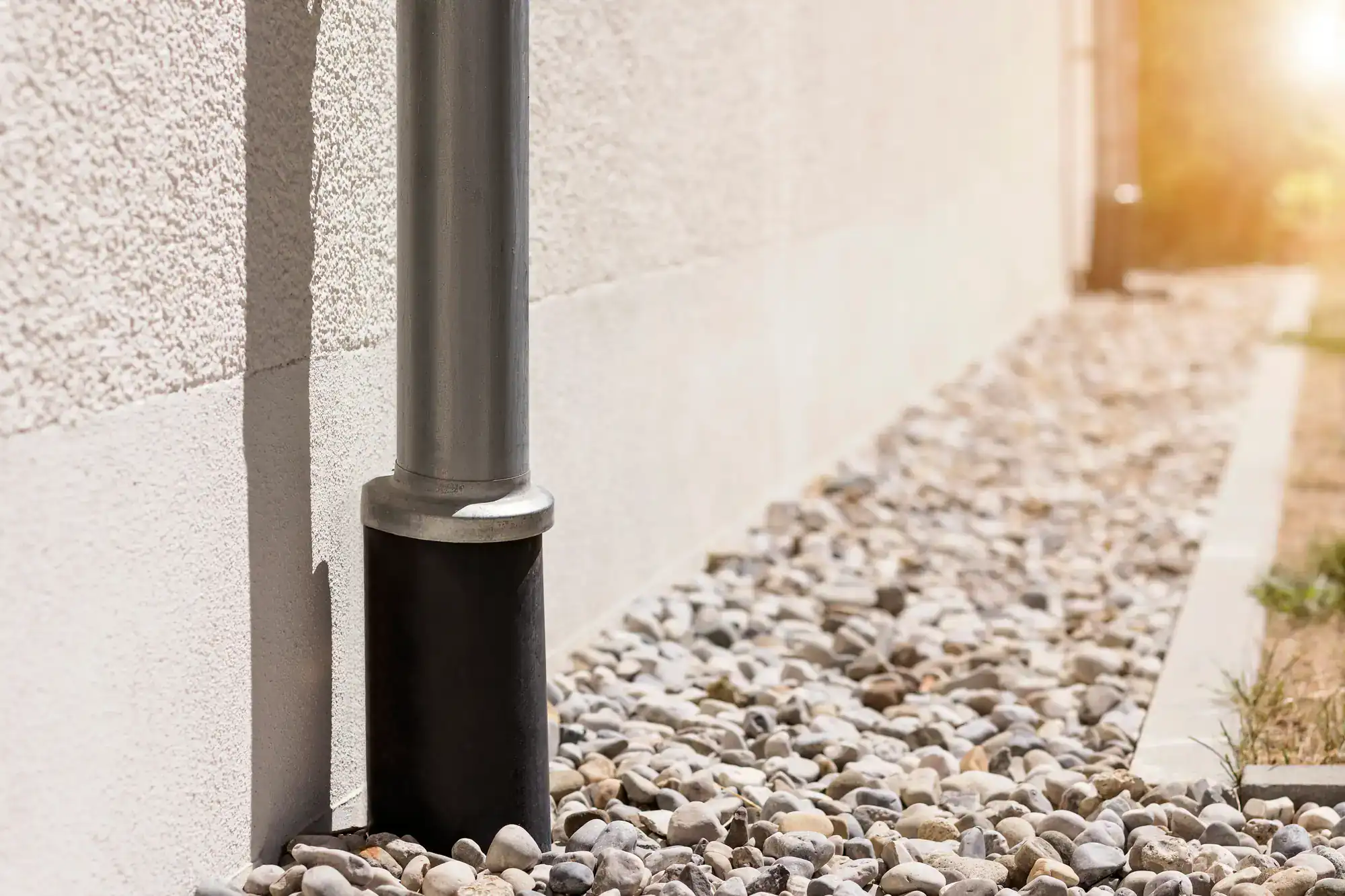
A French drain intercepts that water before it becomes a problem. It redirects it through a gravel-lined trench and perforated pipe to a safe outlet point, using the natural grade of your property to move water away with gravity. No pumps. No ongoing mechanical maintenance. Just a system that does its job quietly, year after year through every nor’easter and heavy spring rain that comes through Suffolk County.
We’ve been doing drainage work across Saint James and the North Shore long enough to know that what works in a flat South Shore neighborhood doesn’t automatically work here. The moraine terrain around Saint James, the seasonal water table behavior near the Nissequogue River corridor, the older housing stock along the streets off Route 25A these are things we’ve learned by showing up on job sites in this specific area, not by reading a manual.
We’re a licensed and insured drainage contractor serving Saint James and the surrounding Smithtown corridor. Every project starts with a free on-site assessment because drainage problems can’t be diagnosed over the phone. We walk your property, identify what’s actually causing the issue, and give you a clear answer on what it will take to fix it before you commit to anything.
We don’t install a system and disappear. The work is backed by a workmanship warranty, and we handle permitting through the Town of Smithtown Building Department so you don’t have to figure out what’s required on your own.
It starts with the free on-site assessment. We walk your property, look at where water is collecting, check the existing grade, and assess the soil conditions. In Saint James, that often means accounting for clay-heavy moraine till that holds water near the surface, and identifying whether the natural slope of your lot can be used to gravity-feed the system to a safe outlet which on the North Shore, it often can.
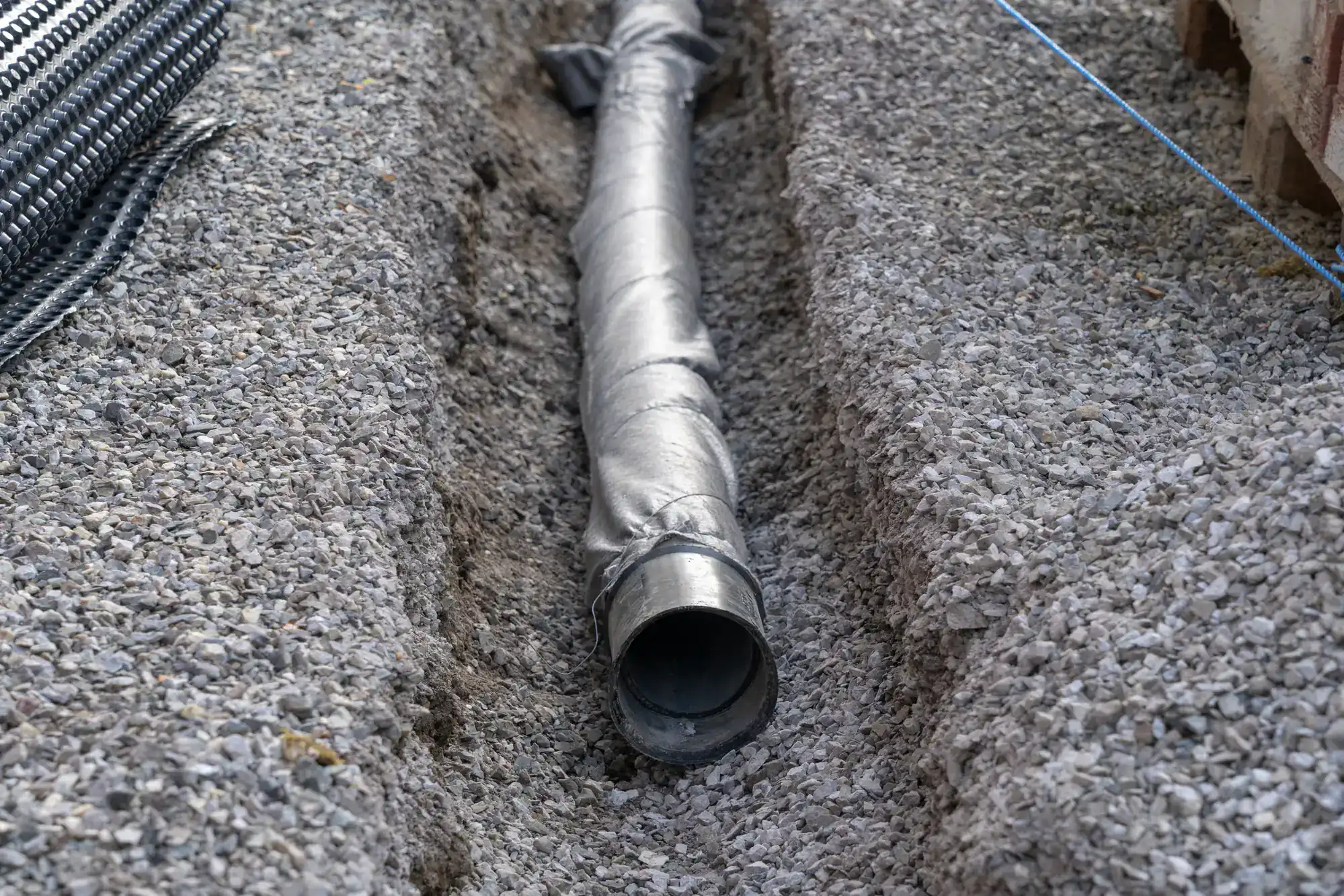
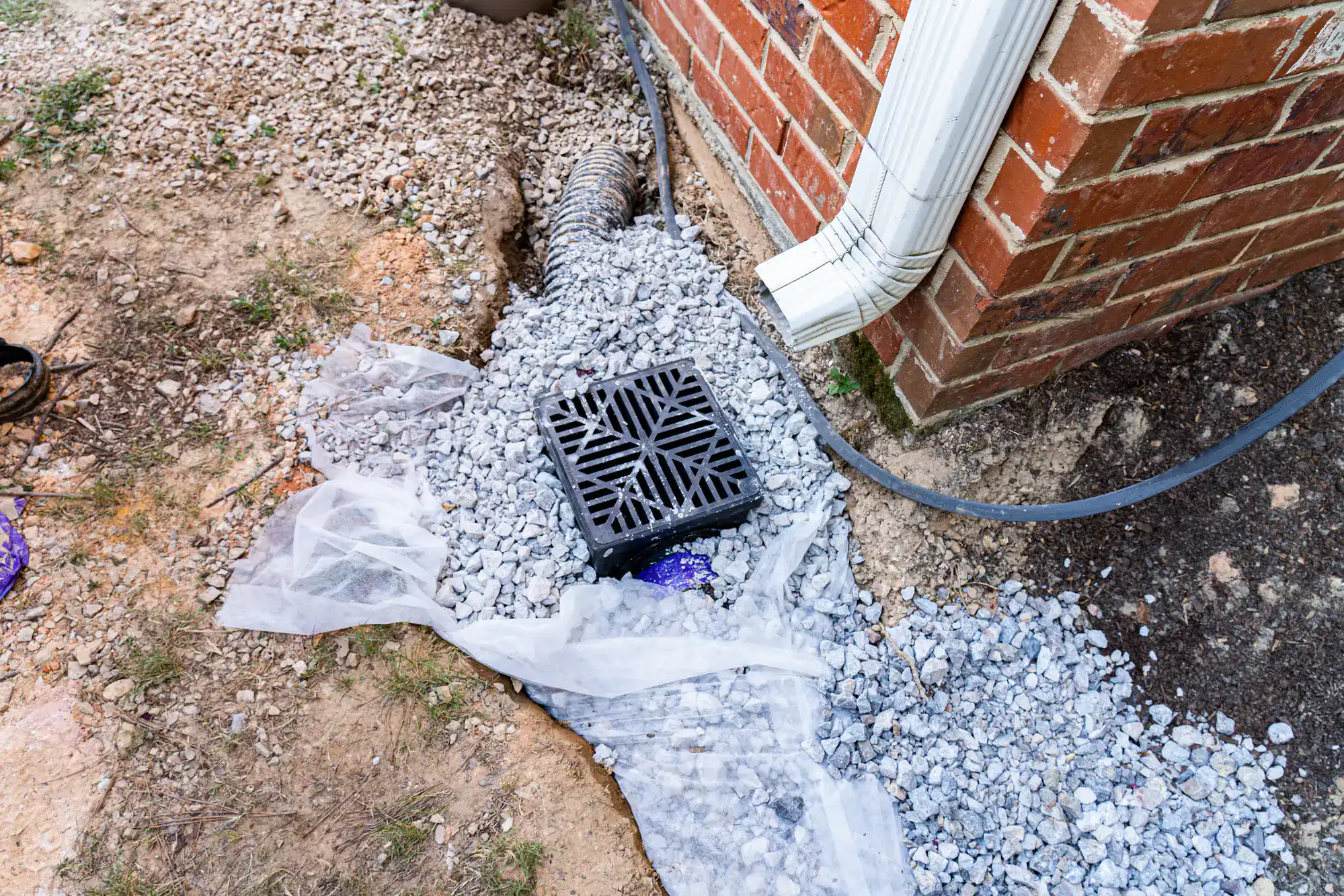
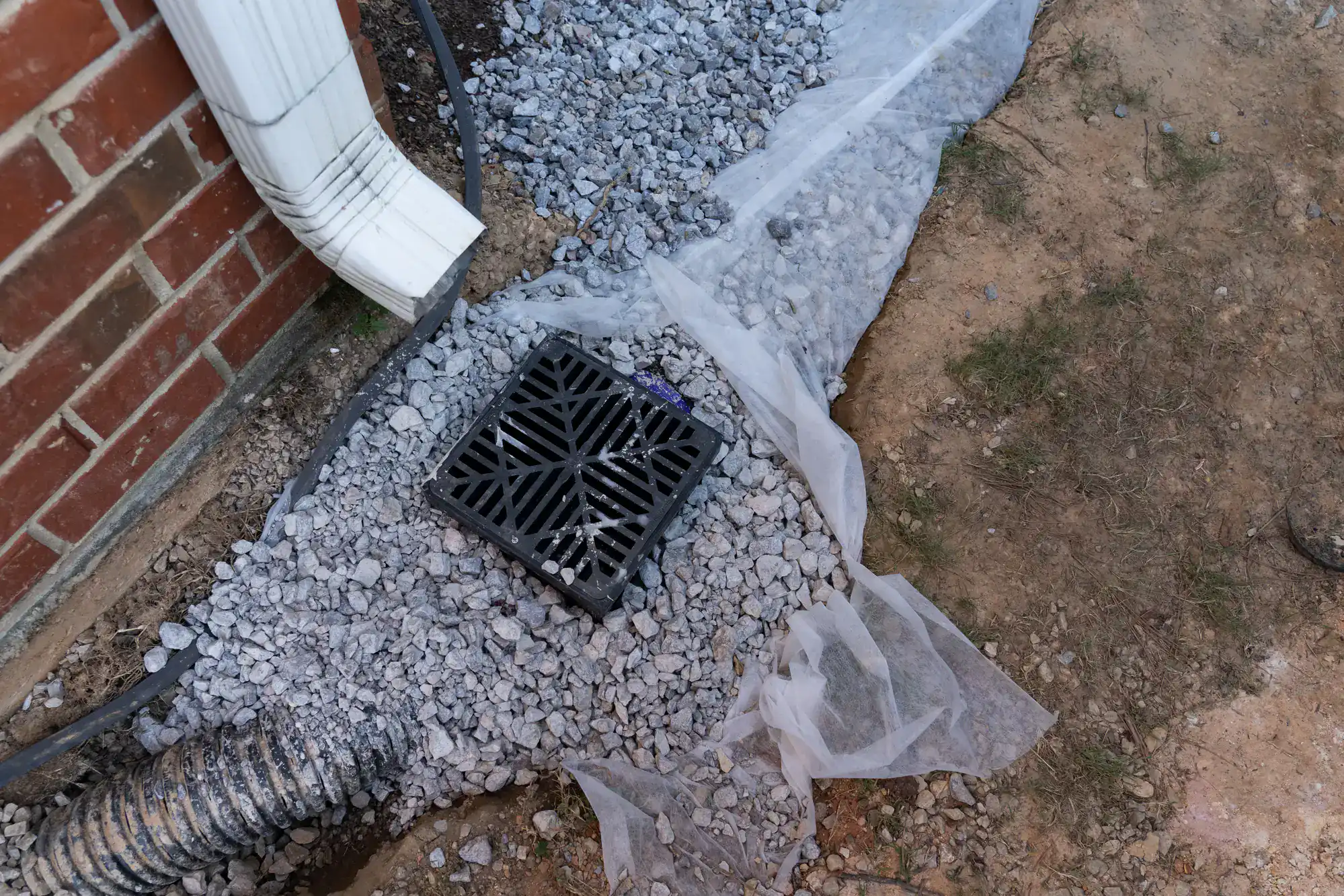
Once we have a clear picture, we design the system around your specific property. That means selecting the right trench depth, the right perforated pipe, angular washed gravel, and a double-punched geotextile filter fabric that keeps silt out of the system for the long haul. Before any excavation starts, we call 811 to have underground utilities marked that’s a New York State legal requirement, and it’s non-negotiable. If your project requires a permit through the Town of Smithtown, we handle that process too.
Installation is done with your landscaping in mind. Saint James properties have established trees, gardens, and lawns that took years to develop. We plan the excavation route to minimize disruption, and when the work is done, the disturbed area is restored with topsoil and seeding. The drainage benefit is permanent. The disruption is temporary.
Ready to get started?
A French drain is only as good as the materials and the installation behind it. Corrugated pipe without proper filter fabric, round pea gravel instead of angular washed stone, inconsistent pipe slope these are the shortcuts that produce systems that clog within a few years instead of lasting three to four decades. Every French drain installation we complete in Saint James uses proper geotextile fabric, angular washed gravel, and perforated pipe set at the correct slope to keep water moving.
For homeowners in the northern parts of Saint James particularly in Head of the Harbor and the Nissequogue area drainage design also has to account for seasonal groundwater behavior tied to the Nissequogue River watershed. Properties in lower-lying positions or on larger lots can see the water table rise during spring snowmelt and after major storm events. The system has to be sized for those conditions, not just average rainfall.
We also install French drains at the correct depth for Long Island’s frost line. Pipes installed too shallow will freeze in winter and fail. That’s a detail that matters in this climate, and it’s one of the reasons the difference between a properly installed system and a cheap one shows up a few winters down the road. When the work is done right the first time, you don’t have to think about it again.
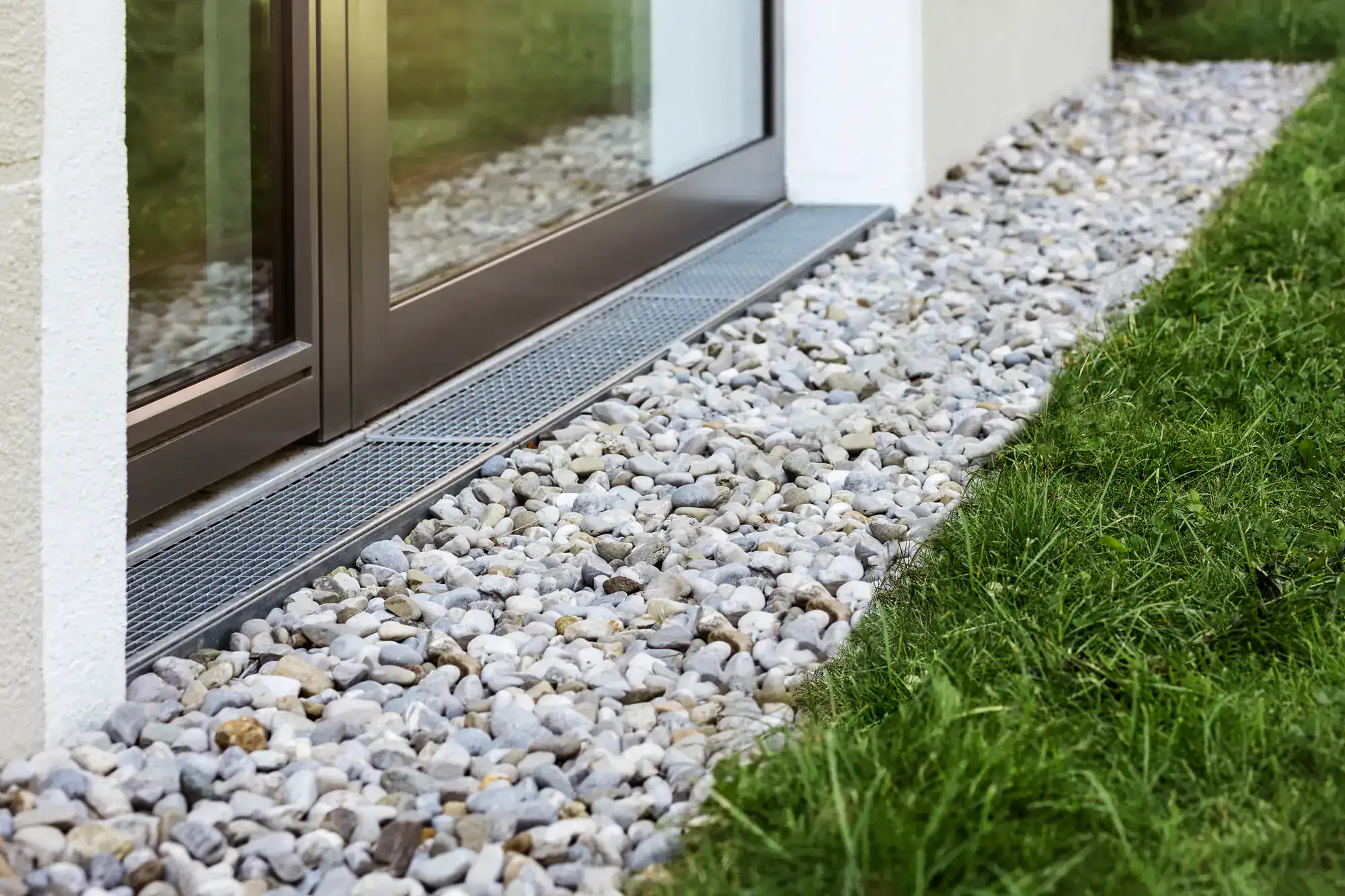
The most common reason is the soil itself. Saint James sits on the Harbor Hill Moraine, which is made up of glacial till a dense mix of clay, silt, and rock fragments deposited thousands of years ago. Unlike the sandy outwash soils on Long Island’s South Shore, moraine clay doesn’t transmit water freely. It holds it near the surface, and when the ground is already saturated from a previous storm, the next rain event has nowhere to go. That’s when you get the standing water, the muddy patches, and the low spots that just won’t dry out.
The other factor is grade. Over decades, the soil around older Saint James homes settles and shifts. Grading that once directed water away from the house gradually reverses, and water that should be moving away from your foundation starts pooling instead. A French drain system addresses both problems it intercepts the water before it saturates the surface and routes it away from your property through a properly designed outlet.
Most residential French drain installations in Saint James fall somewhere in the range of $5,000 to $9,500, depending on the length of the trench, the complexity of the outlet design, and how much landscape restoration is needed after installation. Properties in the northern parts of the 11780 ZIP code particularly in Head of the Harbor or on the larger lots in the Nissequogue area can run toward the higher end of that range because of the scope and the soil conditions involved.
The more useful number to keep in mind is what you’re protecting. Foundation crack repair on a Long Island home typically runs $15,000 to $50,000. Mold remediation starts around $3,000 and climbs fast. A home with a documented wet basement can lose 10% or more of its value at sale on a Saint James home priced near the area median, that’s $70,000 to $80,000 off the table. Against those numbers, a properly installed French drain system that lasts 30 to 40 years is one of the more straightforward investments you can make in your property.
It depends on the scope of the work. Saint James is an unincorporated hamlet within the Town of Smithtown, so all permitting for drainage work including grading, trenching, and stormwater redirection falls under the Town of Smithtown Building Department. For most standard residential French drain installations, permits may or may not be required depending on the size of the disturbance and whether the work involves redirecting surface water in a way that could affect neighboring properties or nearby wetlands.
What is always required in New York State, regardless of permit status, is calling 811 before any excavation begins to have underground utilities marked. We handle this on every job. If your project does require a permit through the Town of Smithtown, we manage the application process. You don’t need to figure out what the town requires that’s part of what you’re hiring us for.
Depth depends on two things: what the drain is designed to intercept, and the frost line for the area. On Long Island, the frost line sits at approximately 36 inches. Any perforated pipe installed shallower than that is at risk of freezing during winter, which can crack the pipe and block the system entirely. This is one of the most common ways that cheaply installed French drains fail within the first few winters the pipe was laid too shallow to survive the freeze-thaw cycles that Long Island winters bring.
For a standard yard drainage system designed to capture surface and near-surface water, a depth of 18 to 24 inches is often sufficient for the drainage function itself. But for systems that need to handle subsurface groundwater or that are installed in areas with seasonal water table fluctuations which is common in the northern parts of Saint James near the Nissequogue River corridor deeper installation is often warranted. The right depth is determined during the on-site assessment, not guessed at from a phone call.
In most cases, yes but the answer depends on where the water is coming from. The majority of wet basement situations in older Saint James homes are caused by one of two things: surface water migrating toward the foundation because of poor grading or saturated soil, or subsurface groundwater building up hydrostatic pressure against the foundation wall. A properly designed exterior French drain system addresses both by intercepting water before it reaches the foundation and routing it away from the structure.
Where a French drain alone may not be sufficient is in cases of a high water table that rises above the footer level, or where there are cracks in the foundation wall that are already allowing water to pass through. In those situations, an exterior French drain is still part of the solution but it may need to be combined with other measures. That’s exactly why the on-site assessment matters. The goal is to diagnose what’s actually happening before recommending a fix, not to sell the same solution to every house.
Most residential French drain installations in Saint James are completed in one to two days, depending on the length of the system, the complexity of the outlet design, and the site conditions. Properties with dense established landscaping which is common throughout the hamlet, particularly on the older lots off Route 25A and in the Head of the Harbor area may require more careful excavation planning to avoid damaging mature root systems, which can add time to the process.
If the project requires a permit through the Town of Smithtown, that approval process happens before installation begins and is factored into the overall project timeline. The physical installation itself is straightforward once the design is finalized and utilities are marked. After the trench is backfilled and the system is in place, the disturbed area is restored with topsoil and seeding. Most homeowners are looking at a fully completed and restored site within two to three days of the crew arriving and a drainage problem that’s been building for years, finally solved.