
Hear from Our Customers
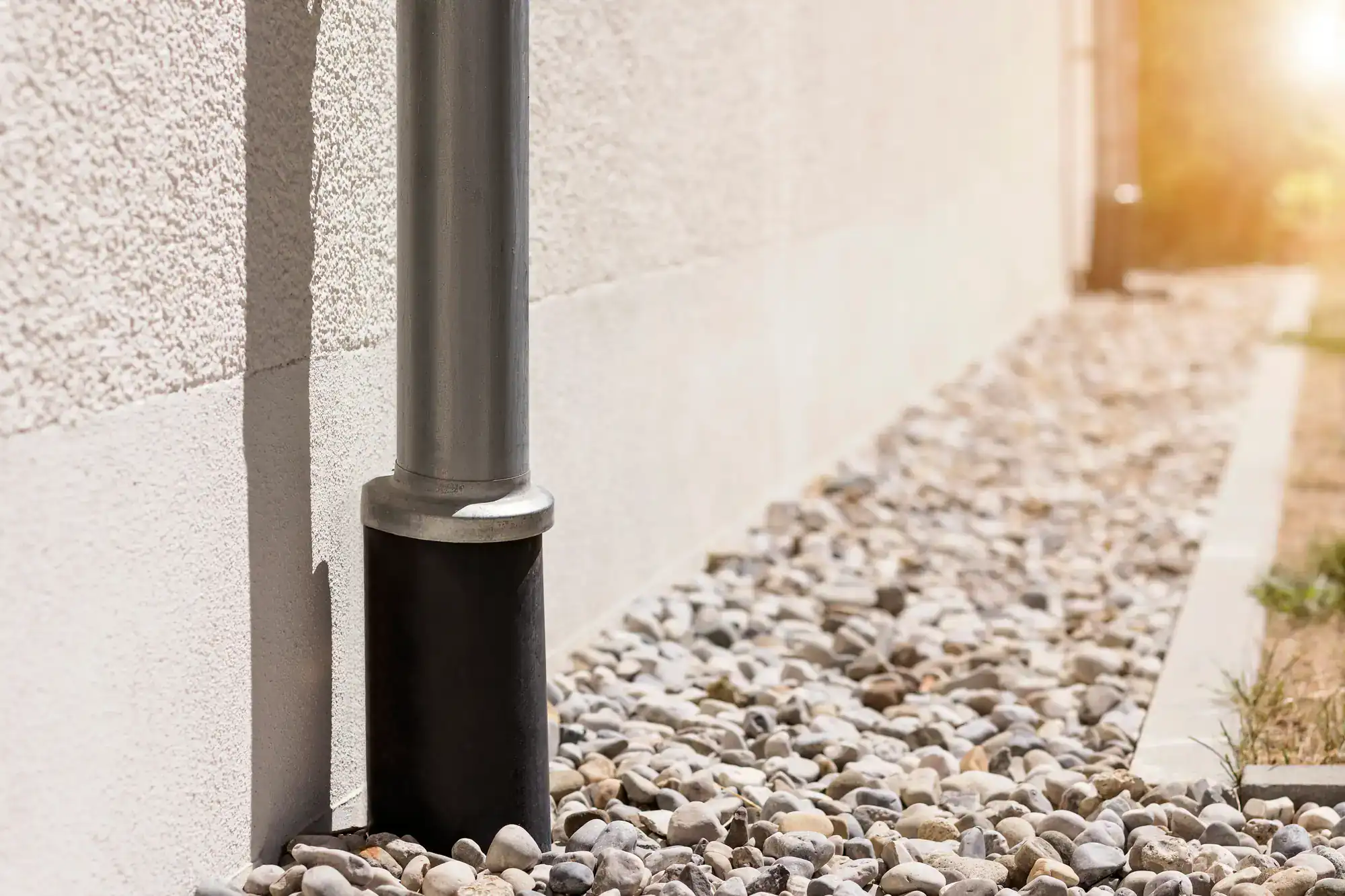
A yard that drains properly isn’t just easier to look at it’s usable again. No more spongy grass after every rainstorm, no more avoiding the back corner of the yard because it stays wet for days. When a French drain system is working the way it should, the water moves away from your property instead of pooling against it.
For Shirley homeowners specifically, that matters on two fronts. The first is the yard itself. The low-lying, outwash plain soils throughout Shirley especially south of Montauk Highway toward Smith Point saturate quickly and hold water longer than most people expect. A residential French drain installation intercepts that water before it becomes a recurring problem every spring and fall.
The second front is your foundation. Homes in Shirley were largely built in the 1940s and 1950s, and those foundations were never designed to handle decades of hydrostatic pressure from saturated soil pushing against them. A French drain for yard drainage and foundation perimeter protection relieves that pressure permanently. The wall cracks, the efflorescence staining, the musty smell in the basement those are symptoms of a problem that a properly installed French drain system is designed to prevent before it reaches that point.
We work throughout the South Shore of Long Island, and Shirley is one of those markets where the drainage stakes are genuinely higher than most. The peninsula geography, the proximity to the Carmans River wetlands, the post-war housing stock these aren’t details we read about. They’re what we see on job sites in Shirley week after week.
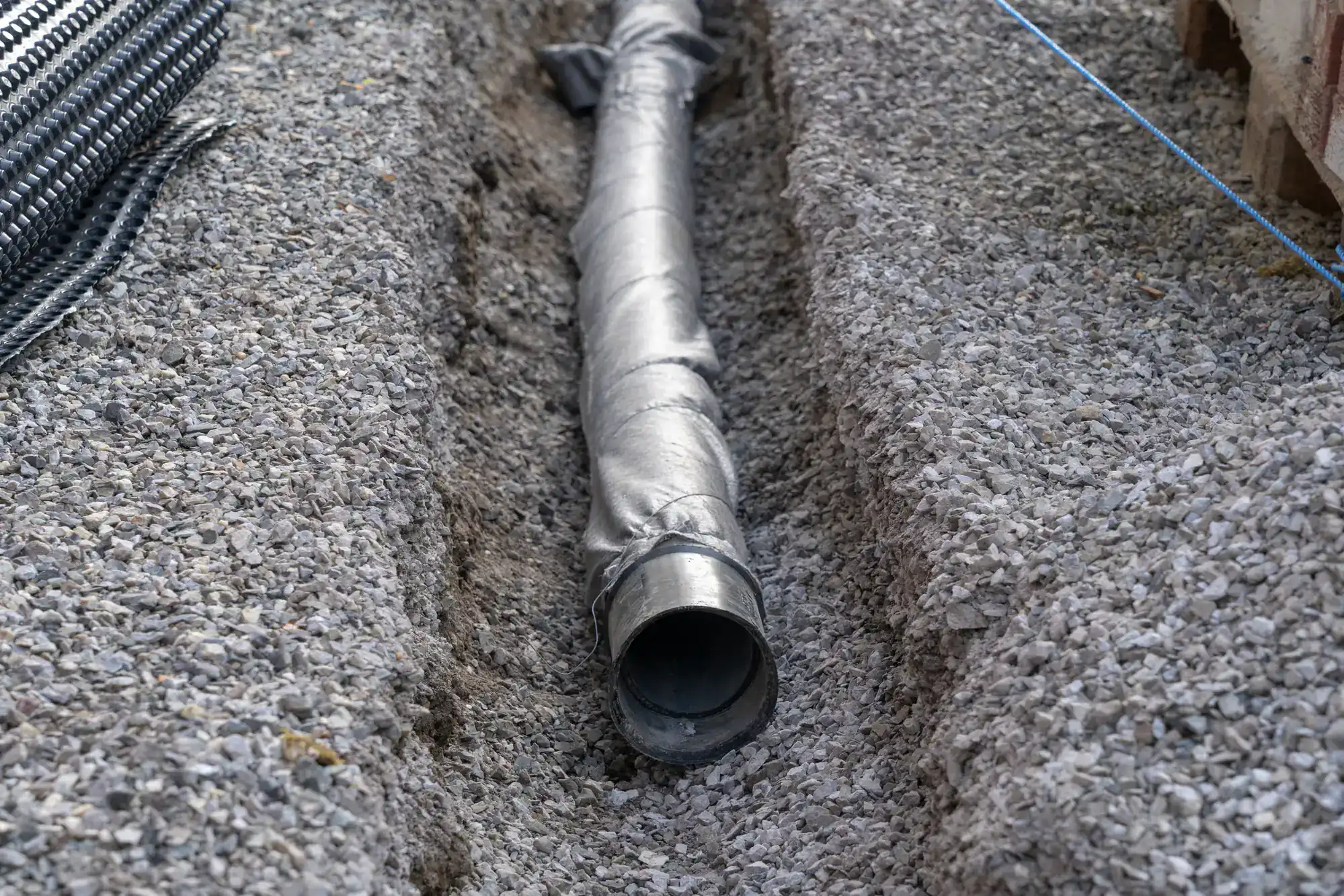
We’re a residential drainage contractor, not a general landscaping crew that occasionally digs a trench. French drain installation is the work. We assess each property on its own conditions, design a system that fits the actual problem, and install it with materials that last perforated PVC pipe, washed angular stone, proper geotextile fabric, and a slope that actually moves water instead of letting it sit.
Every project includes handling the required utility markings and any applicable permitting through the Town of Brookhaven, so you’re not left navigating that on your own. When we’re done, the yard gets restored. You shouldn’t have to look at a construction site for weeks after drainage work.
It starts with a free on-site assessment. We come out, walk the property, and look at where the water is coming from, where it’s going, and what’s in between. In Shirley, that often means accounting for the natural grade of the lot, proximity to wetlands, and whether the problem is surface pooling, subsurface groundwater, or both. We don’t quote drainage work over the phone because a phone call can’t tell us what your property actually needs.
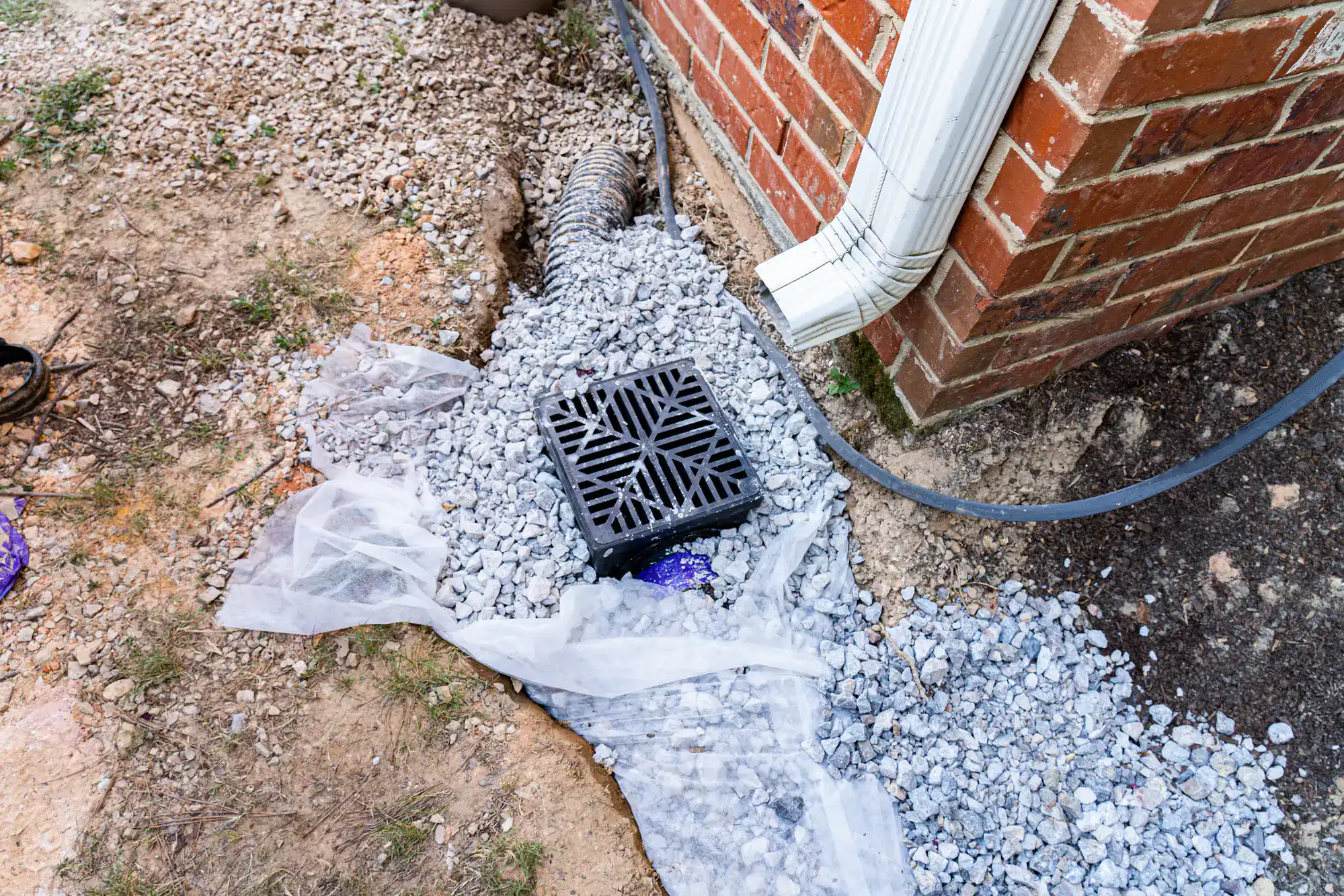
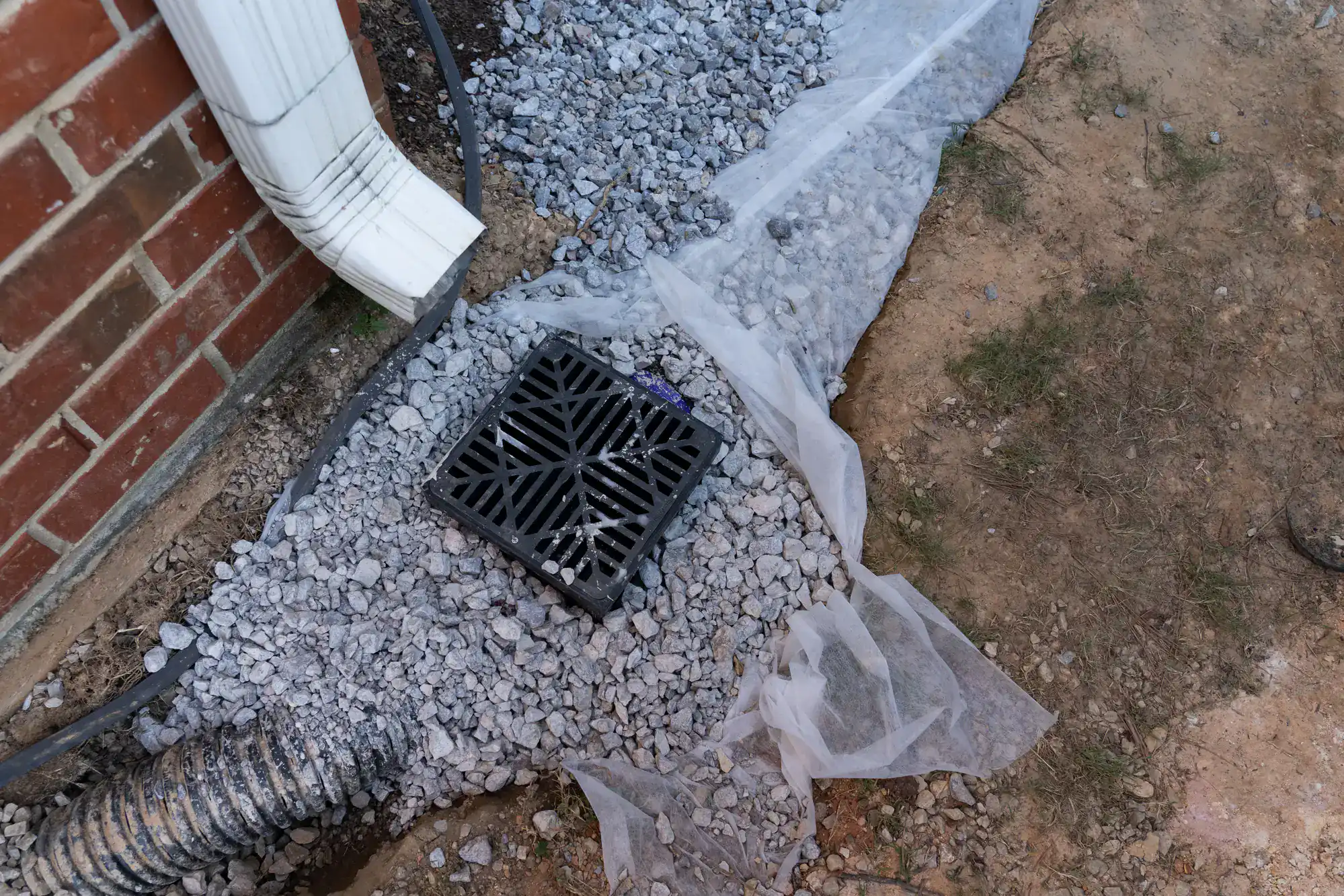
From there, we design the system. That means determining the right pipe size, the depth of the trench, the gravel bed dimensions, and where the water will outlet whether that’s a pop-up emitter at the property edge, a dry well, or a connection to an existing drainage point. For properties near the Wertheim National Wildlife Refuge corridor or within a FEMA-designated flood zone in the Smith Point area, we identify any additional permitting requirements upfront before a shovel goes in the ground. New York State law also requires calling 811 to mark underground utilities before any excavation that’s handled as a standard part of every project.
Installation day is straightforward: excavate the trench, lay the fabric, place the gravel bed, set the pipe, backfill, and restore the surface with topsoil and seed. Most residential French drain installations in Shirley are completed in one to two days depending on scope. When we leave, the yard looks like a yard again.
Ready to get started?
The French drain systems we install are built around what’s actually in the ground in Shirley not a generic spec pulled from a catalog. Shirley’s sandy outwash plain soils drain well in some areas and hold water stubbornly in others, especially where organic material has built up or where the water table is naturally close to the surface. Every system is sized and sloped to match those conditions.
For yard drainage, that typically means a trench-based French drain for yard water that intercepts surface and near-surface flow before it pools. For foundation protection, it means a perimeter French drain system installed at the base of the foundation wall to relieve hydrostatic pressure and redirect groundwater away from the structure. Many Shirley properties need both and we’ll tell you honestly during the assessment which one applies to your situation, or whether a combined approach makes the most sense.
What you’re getting in every installation: perforated PVC pipe, double-punched geotextile filter fabric wrapped around the full gravel bed, washed angular stone, proper outlet placement, utility marking coordination, permit handling through the Town of Brookhaven where required, and full surface restoration after the work is complete. The goal isn’t just to move water today it’s to build a system that’s still working correctly in 30 years, which means the materials and the method both have to be right from the start.
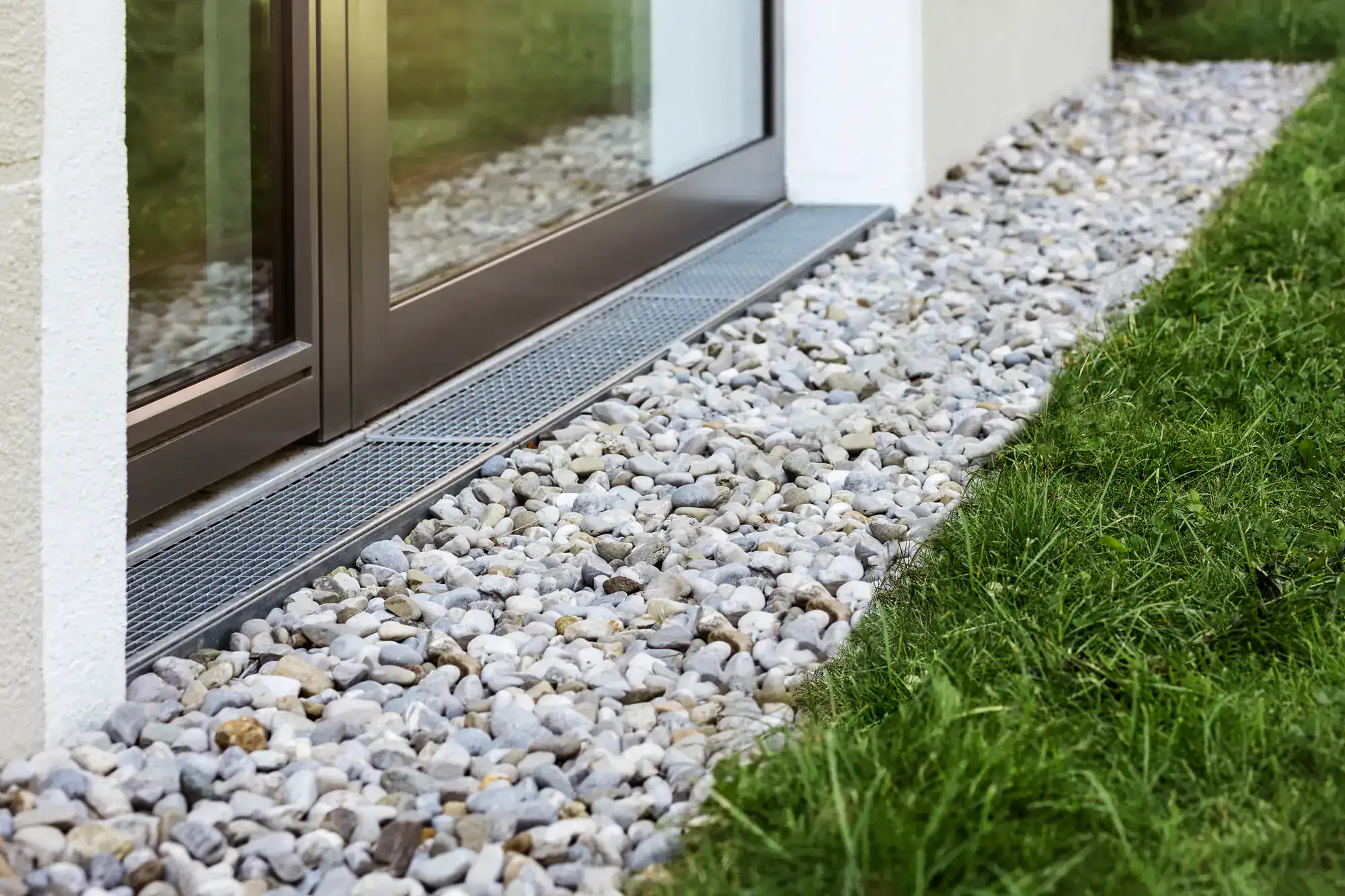
Shirley sits on a narrow peninsula between the Great South Bay and Moriches Bay, and much of the hamlet was built on glacial outwash plain soils that can become fully saturated during heavy rain events especially in the lower-lying areas south of Montauk Highway toward Smith Point. When the soil is already holding water from a previous storm or from seasonal groundwater rise, there’s nowhere for new rainfall to go except across the surface of your yard.
That pooling is a drainage problem, not just a weather problem. It means water isn’t moving away from your property fast enough, and in many cases it’s sitting long enough to work its way toward your foundation. A French drain system installed at the right depth and slope intercepts that water before it pools, routes it through a gravel-and-pipe channel, and outlets it away from your home. That’s the difference between a yard that dries out within hours of a storm and one that stays soggy for days.
Most residential French drain installations in Shirley fall somewhere between $5,000 and $9,000, depending on the length of the system, the depth required, and whether you’re addressing yard drainage, foundation perimeter drainage, or both. Shorter, shallower yard drainage runs tend to be toward the lower end of that range. Deeper foundation perimeter systems on larger lots, or projects that require additional permitting through the Town of Brookhaven, will typically run higher.
The number that matters more than the installation cost is the cost of doing nothing. Foundation crack repair and structural waterproofing on a Shirley home typically runs $15,000 to $50,000. Mold remediation after chronic basement moisture starts at $3,000 and climbs quickly depending on how far it’s spread. At a median home value of around $423,000 in Shirley, a wet basement can also reduce what a buyer is willing to pay by 10% or more that’s over $42,000 in lost equity. The French drain installation is the cheaper option by a significant margin.
It depends on the scope and location of the work. In the Town of Brookhaven, drainage projects that involve significant grading changes, proximity to regulated wetlands, or work within a FEMA Special Flood Hazard Area may require a permit from the Town’s Building Department. Shirley has specific areas particularly in the Smith Point section near the Great South Bay that fall within FEMA-designated flood zones, and work in those areas can trigger additional review requirements.
There’s also the wetlands consideration. Shirley borders the Wertheim National Wildlife Refuge and the Carmans River wetlands, and properties within a certain distance of those regulated areas may require a NYSDEC permit in addition to the local building permit. Suffolk County also has groundwater protection regulations that apply to drainage systems, particularly on properties that aren’t yet connected to municipal sewer. We handle all applicable permitting and utility markings as a standard part of every installation you won’t need to figure out which agencies to contact or what forms to file.
The location of your water problem tells you which system you need. If you’re seeing standing water in the yard puddles that form after rain and take days to disappear, soggy patches that never fully dry out, or areas where grass won’t grow because the soil stays wet that’s a yard drainage problem. A French drain for yard water, installed at the right depth along the flow path, is the appropriate fix.
If the problem is showing up inside water seeping through basement walls, efflorescence staining on the foundation block, a musty smell that gets worse after heavy rain, or visible cracks in the foundation wall that points to hydrostatic pressure from saturated soil surrounding the foundation. That’s a foundation perimeter drainage problem, and it requires a different system depth and placement. Many Shirley homes, especially those built in the 1940s and 1950s on lots that were never properly graded, have both problems happening at the same time. The on-site assessment is specifically designed to identify which issue or combination of issues you’re dealing with before any work is recommended.
A properly installed French drain system the right pipe, the right gravel, the right fabric, and the right slope should last 30 to 40 years with minimal maintenance. The systems that fail in three to five years almost always come down to the same shortcuts: corrugated plastic pipe that collapses under soil pressure over time, geotextile fabric that wasn’t wrapped correctly and allows silt to infiltrate the gravel bed, insufficient stone depth, or a pipe that wasn’t sloped enough to keep water moving.
In Shirley’s soil conditions, the fabric and gravel spec matter more than most people realize. Sandy soils can migrate into the gravel bed over time if the filter fabric isn’t installed correctly, and once the gravel bed silts up, the system loses its drainage capacity. That’s why the material and installation method aren’t optional details they’re what determines whether you’re solving the problem once or paying to dig it up again in a few years. Every system we install uses perforated PVC pipe, double-punched geotextile filter fabric around the full gravel bed, and washed angular stone not whatever is cheapest at the supply house that week.
Yes and in many cases it’s more urgent, not less. Homes in Shirley that experienced flooding during Superstorm Sandy or during the chronic tidal and groundwater flooding events the area sees regularly are often left with foundation walls that have already been stressed, basement spaces that have absorbed moisture repeatedly, and soil grading around the foundation that may have shifted during flood events. A French drain system installed after prior flood damage isn’t starting from scratch it’s stopping a cycle that’s already been running.
The practical value is straightforward: a French drain for yard drainage and foundation perimeter protection reduces the hydrostatic load on a foundation that may already be compromised, keeps the basement drier between storm events, and gives the structure a better chance of staying stable over time. It also matters at resale. Buyers in today’s Long Island market especially on the South Shore are asking direct questions about flood history and drainage. A home with a documented, professionally installed drainage system is a meaningfully different conversation than one with a history of water intrusion and no mitigation in place. That difference shows up in offers.