
Hear from Our Customers
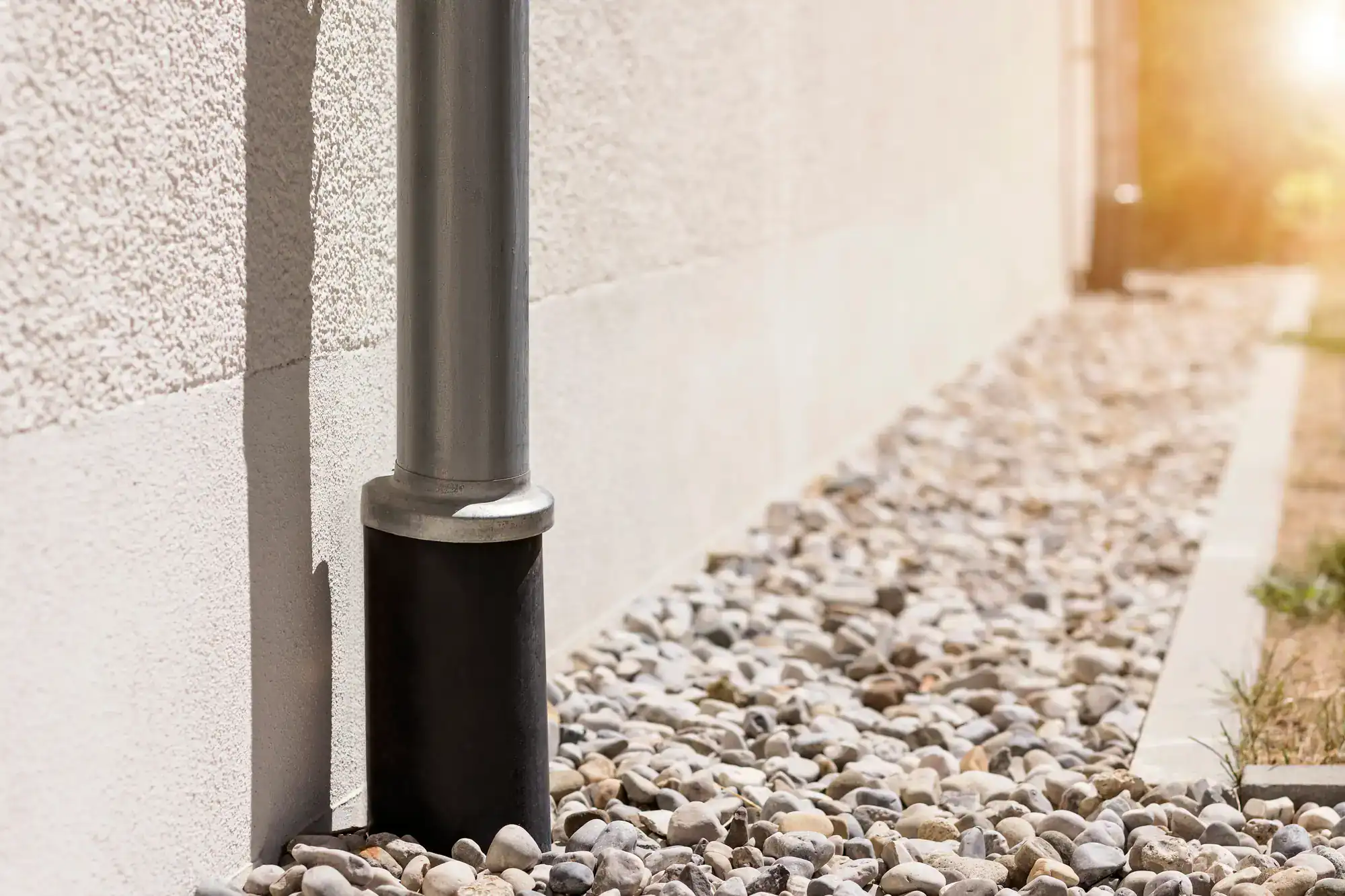
The soggy corner of your yard that stays wet for days after a rainstorm isn’t a quirk it’s a symptom. St. James sits on the Harbor Hill Moraine, a ridge of glacial till with enough clay content that water simply doesn’t move through it the way it does on Long Island’s South Shore. That’s not a problem you can fix with topsoil or a redirected downspout. It needs an engineered path out.
When a French drain system is properly installed, the difference is immediate and lasting. Standing water disappears. The lawn firms up. The musty smell in the basement fades because the hydrostatic pressure that was pushing moisture through your foundation walls is gone. For homes built between the 1950s and 1980s which describes most of the housing stock in St. James that pressure has been building for decades. A properly designed system relieves it at the source.
The longer-term outcome matters just as much. Foundation repairs on Long Island run $15,000 to $50,000. Mold remediation starts around $3,000 and climbs fast. A French drain system installed correctly, with the right pipe, the right fabric, and the right outlet, is built to last 30 to 40 years. That’s not a marketing number it’s the documented lifespan of a system that was done right the first time.
We’re a Long Island drainage contractor that works specifically across the North Shore including St. James and the surrounding Smithtown-area communities. That distinction matters. The soil conditions along Route 25A and up toward Head of the Harbor are nothing like what you’ll find in Lindenhurst or Bay Shore. We don’t apply a South Shore drainage template to a North Shore property and call it a day.
Every assessment starts on your property, not over the phone. We walk the lot, look at where water is entering, trace where it needs to go, and design a system around your specific topography and soil conditions. For properties in northern St. James near the Stony Brook Harbor watershed, that also means accounting for elevated water tables and outlet placement that meets Town of Smithtown and New York State DEC requirements.
You get a contractor who handles the permitting, coordinates the 811 utility markings before any excavation starts, and restores your lawn after the work is done. No surprises, no hand-offs, no loose ends.
It starts with a free on-site assessment. We come to your property in St. James, walk the yard, look at the foundation, and identify exactly where the water is coming from and where it needs to go. No phone estimates, because no two properties here drain the same way lot grade, proximity to the harbor watershed, and the specific clay content in your soil all factor into how the system needs to be designed.
Once we have a plan, we handle the Town of Smithtown permit process and submit the required 811 utility marking request before any digging starts. That step is legally required in New York State and protects your property from underground utility damage. For properties near wetland buffers or the Nissequogue River corridor, we also coordinate any additional DEC review that may apply.
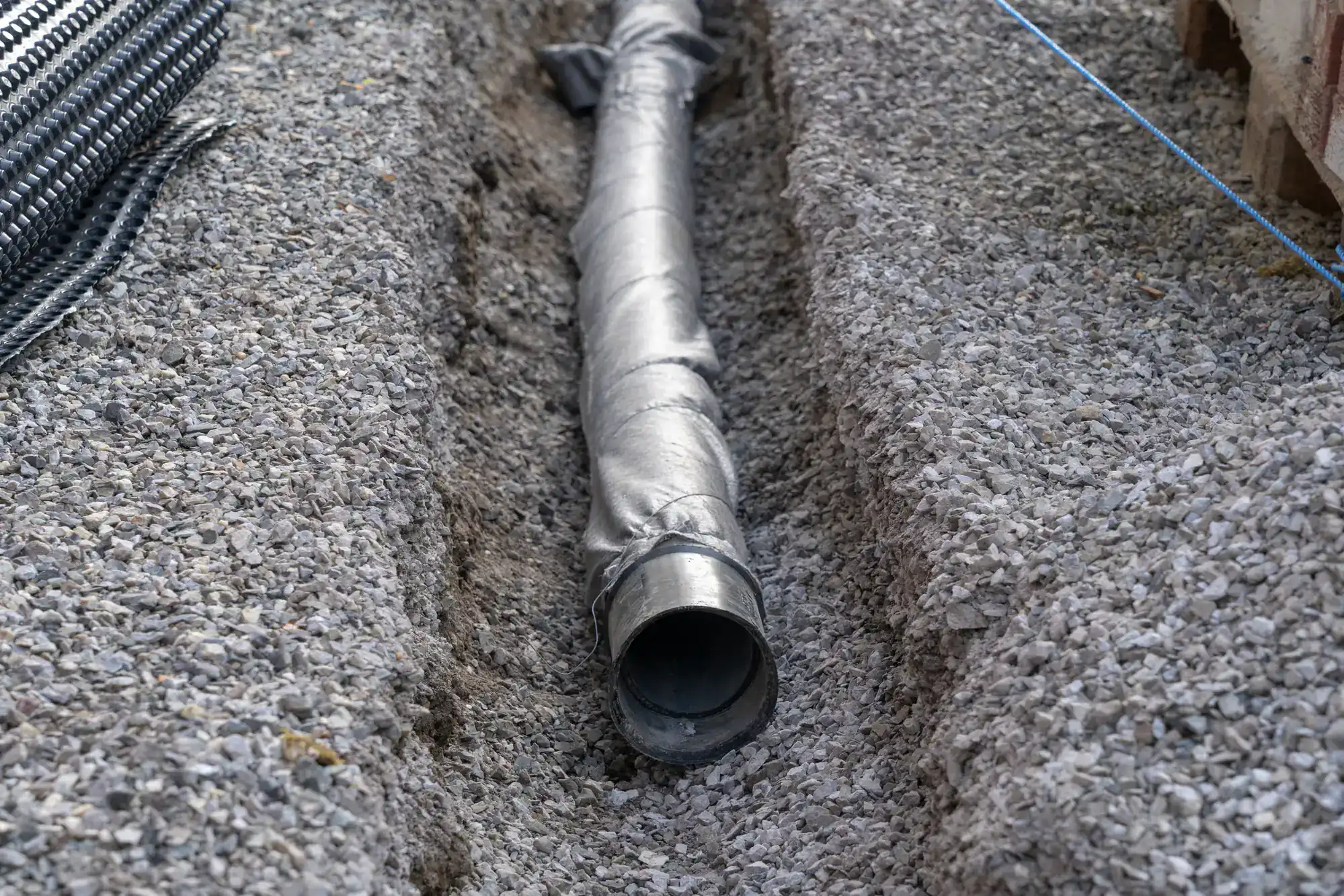
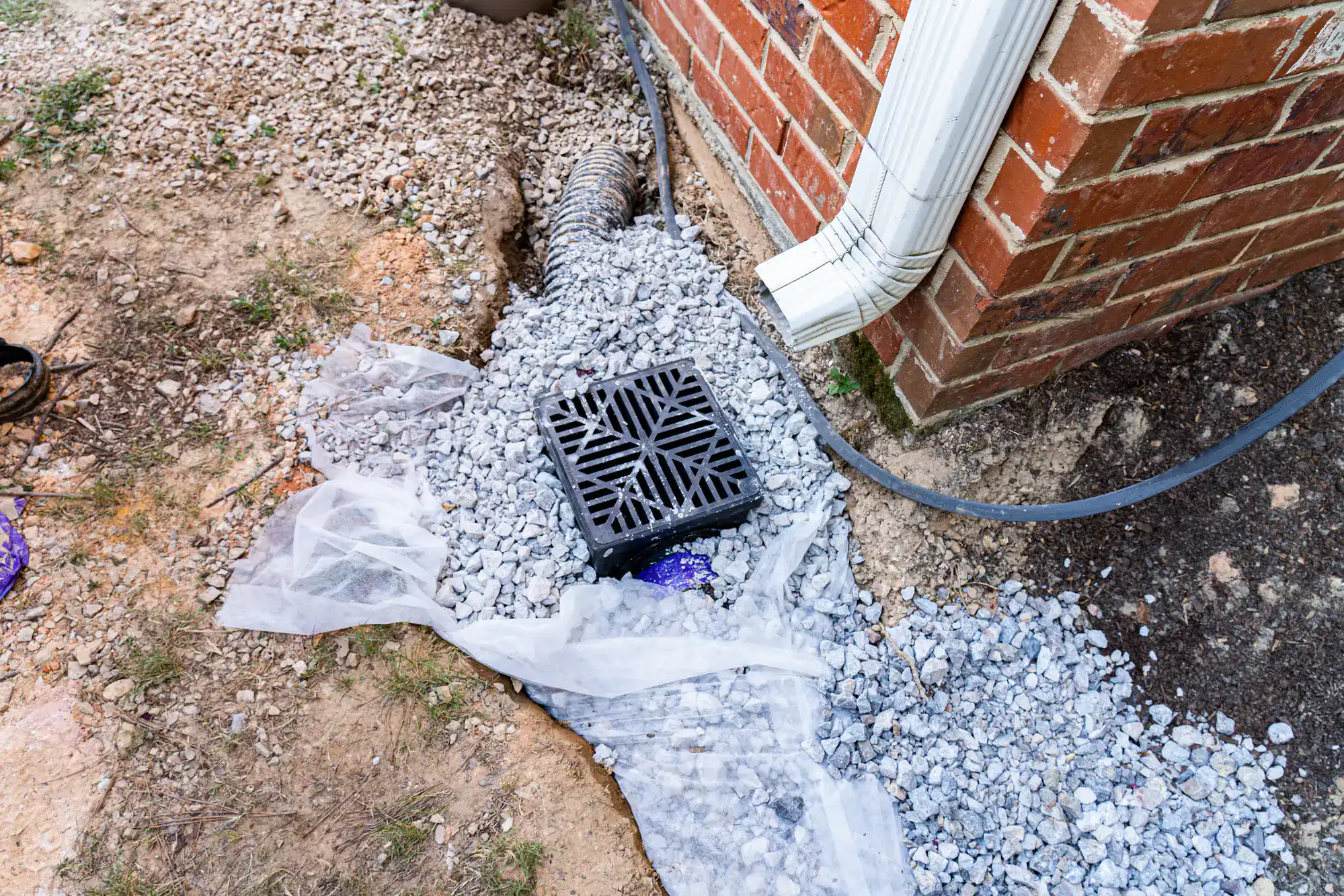
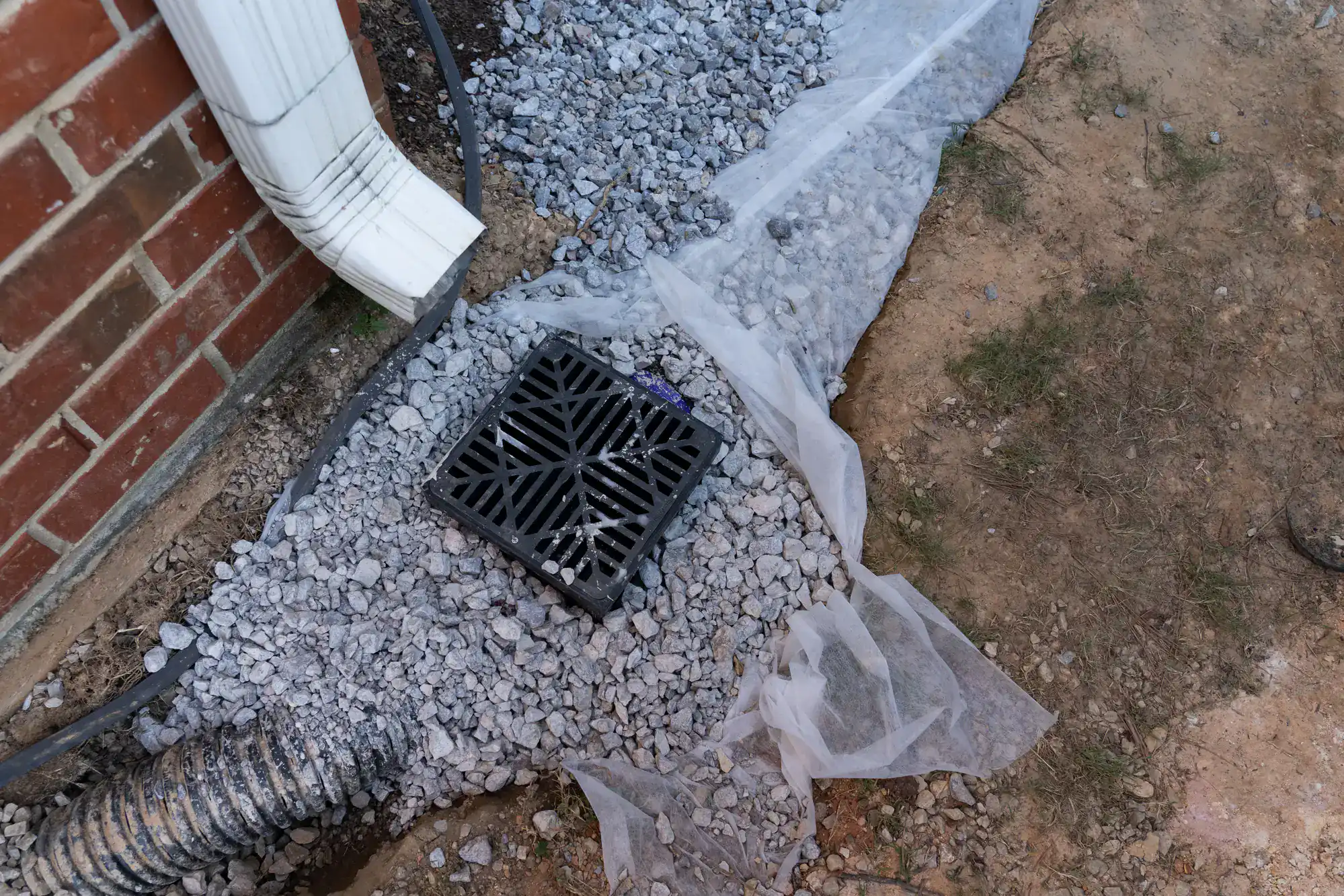
Installation typically takes one to three days for a residential project in St. James. We excavate the trench at the correct slope a minimum of one inch of drop per eight to ten feet of pipe lay the geotextile filter fabric, set the perforated pipe in washed angular gravel, wrap and backfill, and tie the system to its outlet point. One critical detail specific to Long Island’s North Shore: frost depth here can reach 36 inches in a hard winter, so pipe depth is set accordingly. A system installed too shallow will freeze and fail. When the work is done, the surface is restored with topsoil and seed or sod matched to your existing lawn.
Ready to get started?
French drain installation in St. James isn’t a one-size solution. The combination of clay-heavy moraine soil, North Shore topography, and the freeze-thaw cycles Long Island winters deliver means every component of the system has to be specified for local conditions not pulled from a generic residential drainage catalog.
The pipe we use is perforated PVC or SDR-rated pipe, not the corrugated plastic tubing that general landscapers sometimes substitute because it’s cheaper and easier to work with. Corrugated pipe collapses under soil pressure and clogs faster. The filter fabric wrapped around the gravel bed is a double-punched geotextile it keeps fine clay particles from migrating into the gravel and eventually clogging the system. The gravel itself is washed angular stone, which holds void space and lets water move freely. These aren’t upgrades they’re the baseline specification for a system that’s actually going to last.
For St. James homeowners dealing with wet basements specifically, the system design addresses the exterior foundation perimeter, intercepting groundwater before it ever reaches the wall. For yard drainage problems pooling near patios, saturated lawn areas, water tracking toward a garage the system is routed to a daylight outlet, a dry well, or a connection to an approved storm drainage structure, depending on what your property allows and what the Town of Smithtown jurisdiction requires. Every project gets a free on-site assessment and a transparent, itemized quote before any work begins.
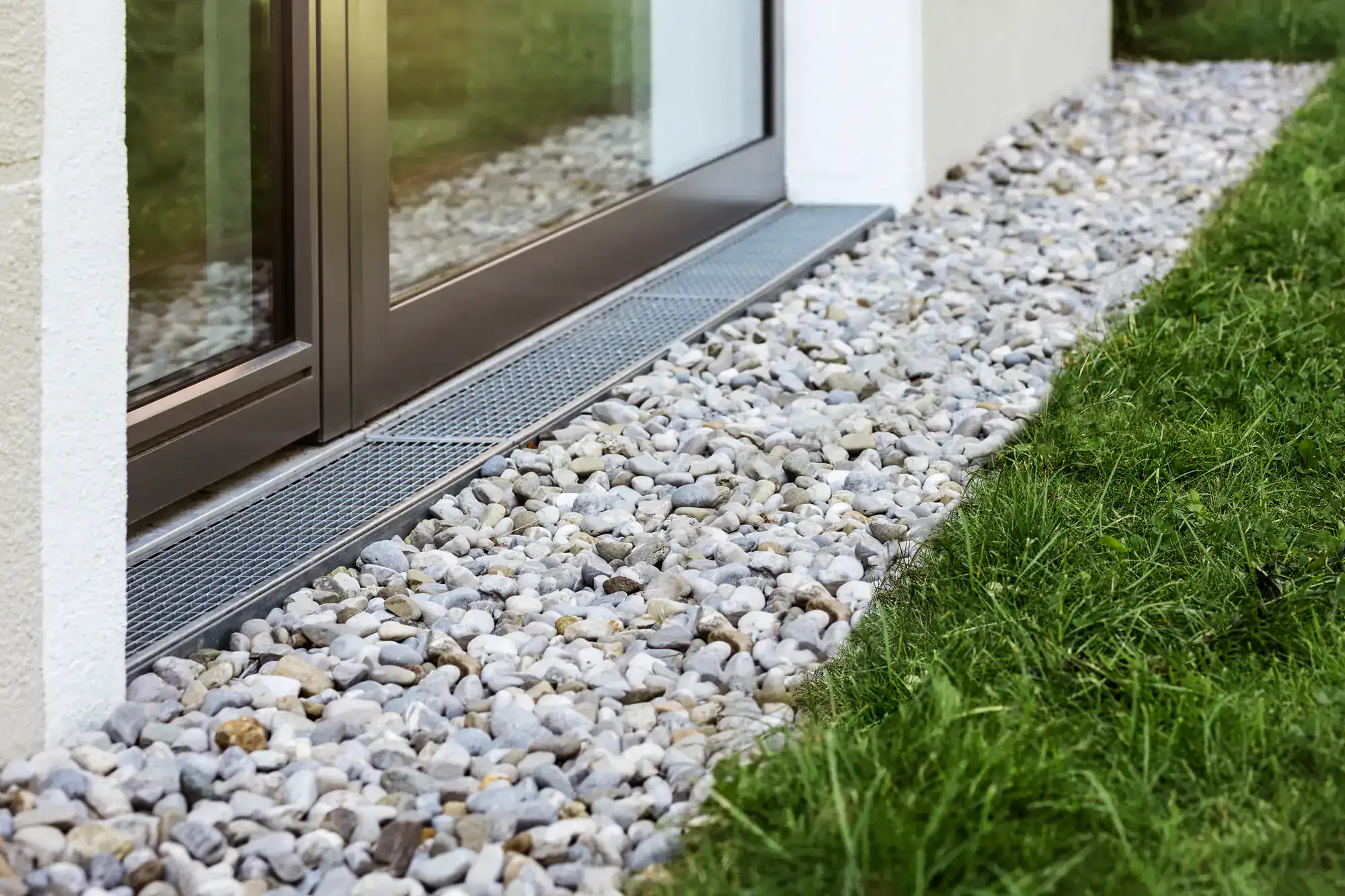
For most residential French drain projects in St. James, yes a permit from the Town of Smithtown Building Department is required before work begins. The specific requirements depend on the scope of the project, how much soil is being disturbed, and whether the work alters surface water flow patterns on or adjacent to your property. It’s not a complicated process for a standard yard drainage or foundation perimeter system, but it does need to be filed correctly and approved before excavation starts.
For properties in northern St. James near Stony Brook Harbor or within the Nissequogue River watershed, there’s an additional layer: the New York State Department of Environmental Conservation may require review if the project is within a wetland buffer zone or near a regulated water body. We handle all of this the Smithtown permit application, the 811 utility marking coordination, and any DEC review that applies to your specific location. You don’t need to figure out which forms to file or which agency to call. That’s part of what you’re hiring a professional drainage contractor for.
For a residential French drain installation in St. James, most projects fall somewhere between $5,000 and $12,000 depending on the length of the system, the depth required, and the complexity of the outlet situation. Simpler yard drainage runs on the lower end. Foundation perimeter systems which require deeper excavation and more precise outlet engineering typically run higher. The national average reported by HomeAdvisor sits around $9,250, and Long Island pricing is generally consistent with that range given local labor and material costs.
What’s worth understanding is what you’re actually comparing when you get multiple quotes. A lower bid often reflects cheaper pipe (corrugated instead of perforated PVC), thinner or missing filter fabric, or a shallower installation depth that won’t survive Long Island’s frost cycles. Those aren’t savings they’re a system that fails in three to five years instead of lasting three to four decades. When you look at the cost against what you’re protecting a home in a ZIP code where average household incomes approach $141,000 and property values reflect decades of North Shore appreciation the math on doing it right the first time is straightforward.
The short answer is the soil. St. James sits on the Harbor Hill Moraine, which is composed of poorly sorted glacial till a mix of boulders, gravel, sand, silt, and clay that was deposited quickly by retreating glaciers roughly 11,000 years ago. Because it wasn’t sorted the way river or outwash deposits are, it contains significant clay fractions that dramatically slow how fast water moves through the ground. This is fundamentally different from the sandy soil you’ll find on Long Island’s South Shore, which drains relatively freely. On the North Shore, water perches on top of or within those clay layers and just sits there.
This is not something that resolves itself seasonally, and it’s not something you can fix by adding topsoil to low spots or redirecting a downspout. The problem is in the ground beneath your lawn. A French drain system intercepts that water and gives it an engineered path to a controlled outlet working around the soil’s natural limitations rather than fighting them. Long Island also gets roughly 44 to 48 inches of rain distributed across all four seasons, so there’s no extended dry period that lets saturated moraine soil fully recover. The drainage challenge in St. James is year-round, and the solution needs to be permanent.
A properly installed French drain system should last 30 to 40 years. That lifespan is well-documented in the drainage industry, but it comes with an important qualifier: properly installed. The two most common reasons French drains fail prematurely are wrong materials and insufficient depth both of which are shortcuts taken during installation that you won’t discover until the system stops working years later.
On the materials side, the difference between perforated PVC pipe and cheap corrugated tubing is significant. Corrugated pipe collapses under soil pressure over time and accumulates sediment faster. Without proper geotextile filter fabric around the gravel bed, fine clay particles and St. James has plenty of those migrate into the system and clog it. On the depth side, Long Island’s North Shore can see frost penetration down to 36 inches in a severe winter. A pipe set too shallow freezes, cracks, and fails in its first hard winter. We install every system to the depth and material specification that the local conditions actually require not the minimum that saves time on the job.
A French drain system can absolutely address a wet basement in fact, for many St. James homeowners, that’s the primary reason they call. The mechanism is the same whether you’re dealing with a soggy yard or a damp foundation: the system intercepts groundwater before it builds up hydrostatic pressure against the structure. For basement applications, the French drain is typically installed along the exterior foundation perimeter, at a depth that captures water from the surrounding soil before it ever reaches the wall.
This is particularly relevant for homes in St. James built between the 1950s and 1980s, which make up a significant portion of the local housing stock. Those foundations typically poured concrete or concrete block have been absorbing hydrostatic pressure from clay-heavy moraine soil for 40 to 70 years. Cracks, efflorescence, and persistent moisture are common symptoms. An exterior French drain system addresses the source of that pressure. Interior waterproofing systems manage water that has already gotten in they don’t stop it from trying. When the drainage problem is rooted in the soil conditions outside the foundation, which it almost always is in St. James, the exterior French drain is the right starting point.
It’s a fair concern, especially for homeowners in St. James who have spent years building out established landscaping, mature garden beds, and maintained lawns. The honest answer is that installation does require excavation a trench needs to be opened along the drainage path, and that disrupts the surface above it. For most residential projects, that trench is roughly 12 to 24 inches wide depending on the system design.
What we do after the pipe is in the ground matters just as much as the installation itself. Every St. James project includes full surface restoration topsoil, seeding, or sod matched to your existing lawn. We work carefully around established plantings and flag anything near the trench path before excavation begins. Most homeowners find that within one growing season, the trench line is completely invisible. The disruption is temporary and contained. The drainage improvement is permanent. For a property on the North Shore where you’ve invested significantly in both the home and the landscaping around it, that’s the only acceptable standard for how a job should be finished.