
Hear from Our Customers
When a French drain system is working the way it should, the difference is immediate and lasting. The soggy corner of your yard that stays muddy for days after rain gone. The basement wall with the water stain that shows up every spring that pressure gets relieved before it ever reaches the foundation. You stop managing the symptoms and start dealing with the actual cause.
Baywood gets nearly 48 inches of rain a year spread across more than 77 wet days, and the hamlet sits on flat terrain that gives water almost nowhere to go naturally. Add the clay-heavy soil that’s common throughout this part of Suffolk County, and you’ve got conditions where water just sits against your foundation, under your lawn, and eventually inside your home. A properly installed French drain intercepts that water below the surface and redirects it before it becomes your problem.
The homes here were built in the 1940s, 50s, and 60s decades before drainage engineering was a standard part of residential construction. That means most foundations in Baywood have been absorbing water pressure for 60 to 80 years with no engineered relief. A French drain doesn’t just solve today’s wet yard it gives your home the protection it should have had from the beginning.
We’re a residential drainage contractor serving Long Island with deep roots in Suffolk County and direct experience working in Baywood and the surrounding Town of Islip communities including Bay Shore, Brentwood, and Deer Park. We’re not a national franchise applying a one-size-fits-all approach. We understand what the clay soils in south-central Suffolk County do to mid-century foundations, and we design drainage systems around those specific conditions.
When you call us, you’re talking to people who know what Baywood’s housing stock actually looks like the bi-levels and ranches on quiet, tree-lined streets where the yards matter and the foundations are aging. We handle the Town of Islip permit process, the 811 utility marking requirements, and every step of the installation. You don’t have to navigate any of that on your own.
We also know that in a community this size, reputation is everything. Baywood is a small hamlet under 8,000 residents in 2.2 square miles. Word travels. We do work we’d be comfortable putting our name behind in any neighborhood we serve.
It starts with a free on-site assessment. We come to your property in Baywood, walk the yard, look at where water is entering, how the lot is graded, and what the soil conditions look like. No phone quotes every property is different, and Baywood’s flat topography and clay soil mean the drainage path has to be engineered specifically for your lot, not estimated from a description.
Once we’ve assessed the site, we design a French drain system that fits your property. That means determining the right trench depth which matters more here than in many other areas, because Long Island winters regularly push well below freezing and a shallow-installed pipe will crack and fail. We account for frost depth, outlet location, and how the system integrates with your existing yard layout. Before any digging begins, we file for any required Town of Islip building permits and call 811 to mark underground utilities both are legal requirements, and both are handled entirely by us.
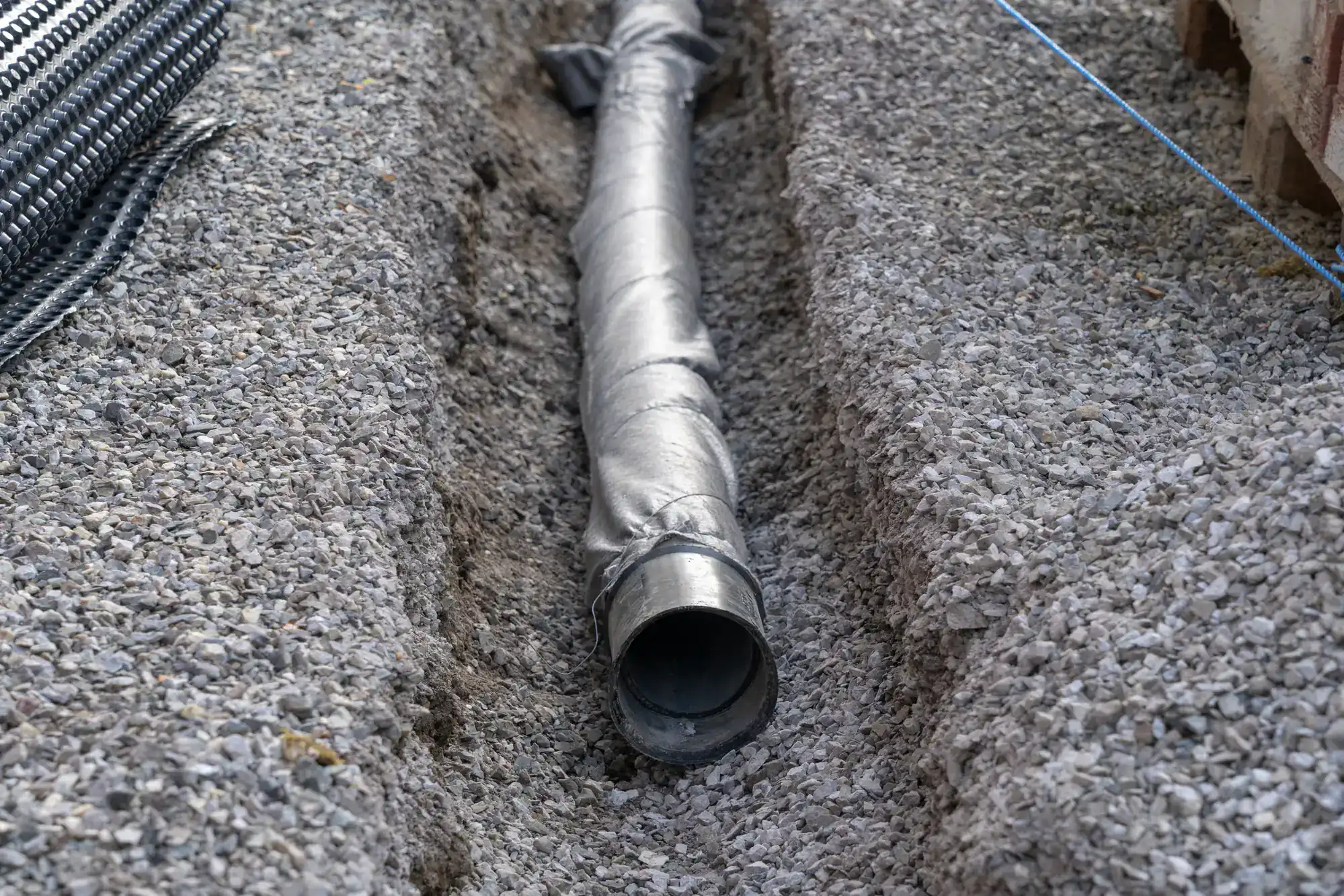
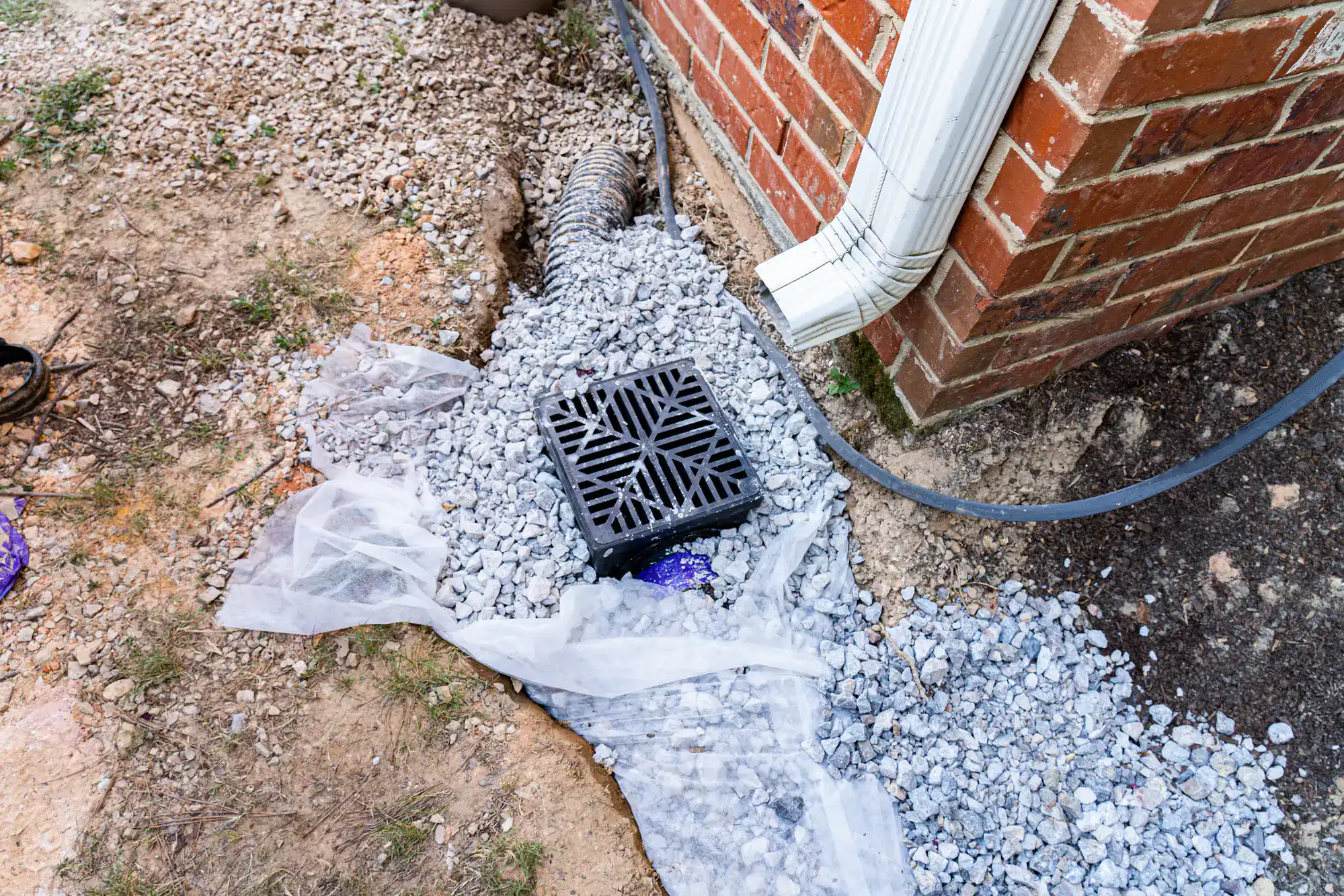
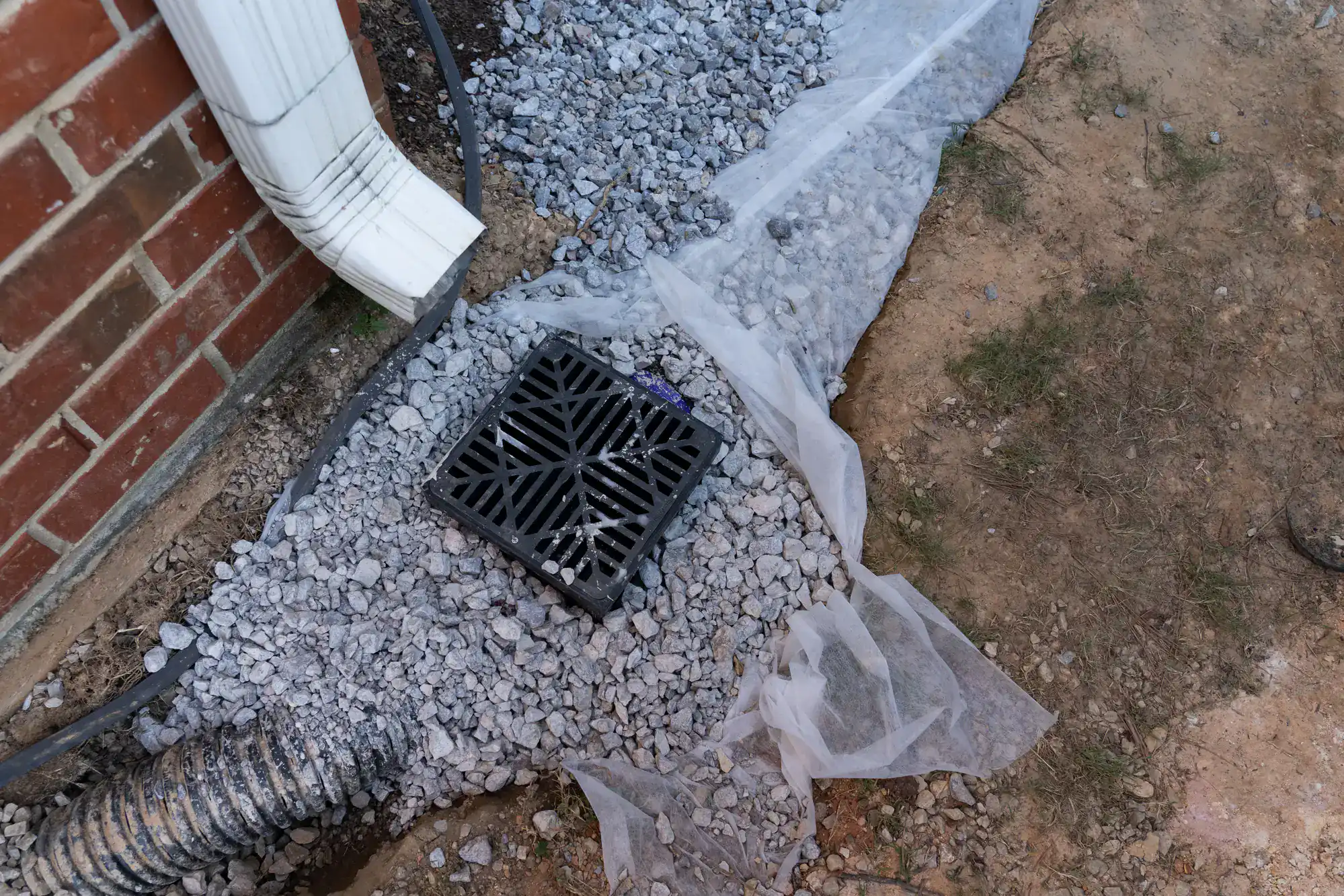
Installation typically involves trenching along the problem area, laying perforated pipe in a gravel bed, wrapping it in filter fabric to prevent clay migration, and directing the outlet to a safe discharge point away from your foundation and away from any on-site septic or cesspool infrastructure a critical detail in Suffolk County, where municipal sewer connections are not universal. When the work is done, we restore your yard topsoil, seeding, and surface grading so the disruption is temporary and the protection is permanent.
Ready to get started?
Every French drain installation we do in Baywood is designed around the specific conditions of your property not a standard package pulled off a shelf. The clay-heavy soils in this part of the Town of Islip behave differently than the sandy, fast-draining soils you find further east on the Island. Water moves slowly through them, which means the gravel bed, pipe perforations, and outlet placement all need to account for slower drainage rates and higher hydrostatic pressure against foundation walls.
For homes along Baywood’s residential streets many of them built between the 1940s and 1960s we typically address one of two scenarios, or both: exterior yard drainage where surface water is pooling and saturating the lawn, and foundation perimeter drainage where subsurface water is pressing against the basement or crawl space walls. These aren’t separate services bolted together they’re part of a single, integrated approach to water management on your property.
As a water drainage contractor serving Baywood, NY, we’re fully licensed and insured for Suffolk County drainage work. That matters because it protects you not just the project. If something unexpected comes up during installation, you’re covered. And because we work regularly in the Town of Islip, we know exactly what the building department requires, what Suffolk County’s stormwater regulations mean for your specific lot, and how to keep the project moving without surprises.
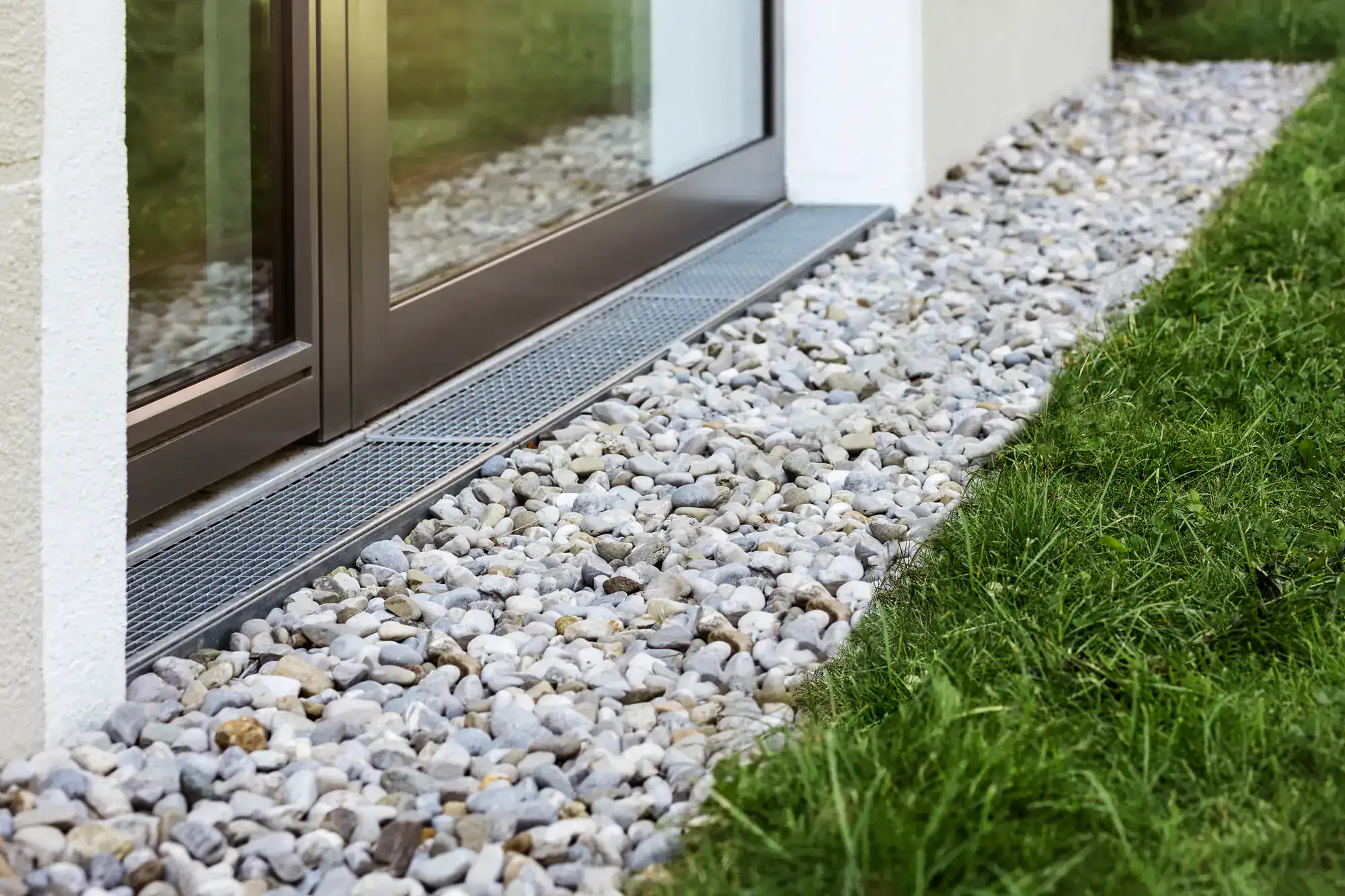
It depends on what’s causing the water problem. Some drainage issues can be addressed with regrading adjusting the slope of the yard so water flows away from the foundation rather than toward it. Others are caused by a failed or nonexistent gutter downspout extension. But if you’re seeing recurring standing water in your yard after rain, water stains on your basement walls, or consistently soggy soil that takes days to dry out, those are signs of a subsurface drainage problem that surface-level fixes won’t solve.
In Baywood specifically, the combination of clay-heavy soil and flat topography means water has nowhere to drain naturally once it saturates the ground. Regrading helps with surface flow, but it doesn’t address what’s happening below the surface. A French drain system intercepts subsurface water before it reaches your foundation and for homes built in the 1940s through 1960s with no engineered drainage, that’s usually the right solution, not a workaround.
Most residential French drain installations in the Baywood area fall somewhere between $5,000 and $9,500, depending on the scope of the project how much linear footage the trench covers, whether you’re addressing yard drainage, foundation perimeter drainage, or both, and what the outlet conditions look like on your specific lot. Larger or more complex properties will land toward the higher end of that range.
What’s worth keeping in mind is the cost comparison. Foundation repair on a mid-century home in Suffolk County can run $15,000 to $50,000 depending on the extent of the damage. Mold remediation starts around $3,000 and escalates fast. And a wet basement can reduce your home’s resale value by 10% or more on a Baywood home valued at $520,000 or above, that’s a significant number. A properly installed French drain system is one of the most cost-effective protective investments you can make in a Long Island home.
In many cases, yes. The Town of Islip requires building permits for drainage work that alters surface water flow, connects to stormwater infrastructure, or involves significant excavation. Whether your specific project requires a permit depends on the scope and location of the work but it’s not something you want to guess on. Unpermitted drainage work can create complications when you sell the property and may not be covered if something goes wrong.
Beyond the Town of Islip permit requirements, New York State law requires calling 811 before any digging begins. This is a legal requirement, not optional, and it’s especially important in Baywood given the active utility corridors along Bay Shore Road and the surrounding area. When you work with us, we handle both the permit application and the 811 utility marking process as part of the job you don’t need to make a single call to the building department yourself.
Depth depends on what the drain is protecting against, but for foundation perimeter drainage in Baywood, the pipe typically needs to sit at or below the footing level which on mid-century homes in this area is usually 3 to 4 feet down. For yard drainage addressing surface saturation, shallower installations can be effective, but there’s a minimum depth requirement that often gets cut in cheaper installs: the pipe needs to sit below Long Island’s frost penetration depth.
Baywood winters regularly push below freezing sometimes well below. A French drain pipe installed too shallow will freeze, crack, and stop working entirely, usually in the first hard winter after installation. This is one of the most common reasons French drains fail on Long Island, and it’s completely avoidable with proper installation depth. Every system we install accounts for local frost depth so the drain keeps functioning through every freeze-thaw cycle, not just the first mild winter after the job is done.
It’s a fair concern, and one we hear often from Baywood homeowners. The tall oaks and established evergreens on Baywood’s residential streets aren’t just aesthetically important they’re part of what makes the neighborhood feel the way it does, and they’re not easily replaced. We route trenches to avoid major root systems wherever possible, and when a tree is in the path of the drainage line, we adjust the layout rather than compromising the root structure.
Beyond tree preservation, landscape restoration is part of every installation we do. Once the trench is backfilled and the system is in place, we restore the surface with topsoil and seeding matched to your existing lawn. The yard won’t look like a construction site when we leave. The disruption is real but temporary typically a few days of visible work followed by a lawn that fills back in over the following weeks. The drainage protection, done correctly, lasts 30 to 40 years.
Ask them directly about the soil. Baywood sits on clay-heavy glacial deposits not the sandy, fast-draining soils you find further east on the Island. A contractor who knows this area will tell you that clay soil requires a specific approach: tighter filter fabric to prevent clay migration into the gravel bed, careful outlet placement because water moves slowly through these soils, and proper gravel sizing to maintain drainage capacity over time. If the contractor you’re talking to gives you a generic answer about “Long Island soil,” that’s worth noting.
Also ask about the Town of Islip permit process and whether they handle 811 utility marking. A contractor who works regularly in Baywood and the surrounding Town of Islip communities will know exactly what’s required and will handle it without you having to ask twice. Finally, ask about their experience with Suffolk County’s on-site septic and cesspool infrastructure. In many parts of Baywood, municipal sewer connections don’t exist, and French drain outlets need to be sited carefully to avoid interfering with those systems. That’s a local nuance that a contractor without real experience in this area may not think to address.