
Hear from Our Customers
Once we install a properly engineered French drain system, the standing water that used to sit in your Central Islip yard for days after a storm stops being your problem. No more soggy patches killing your grass, no more mud tracked into the house, no more watching the rain and wondering what you’re going to find in the basement. The drainage problem gets redirected underground before it ever reaches your foundation.
For Central Islip homeowners specifically, this matters more than it might in other parts of Long Island. The terrain here is nearly flat there’s no natural slope to carry runoff away from your home the way there is in the North Shore hill towns. Water just pools. And because a large portion of the housing stock was built between 1940 and 1969, most of these homes were never designed with modern drainage in mind. Decades of soil settling have often made the original grading worse, not better, with ground now sloping toward the foundation instead of away from it.
Add in the seasonal reality Long Island’s Upper Glacial aquifer rises close to the surface every spring, creating hydrostatic pressure against basement walls even when it hasn’t rained recently and you’ve got a situation where doing nothing is genuinely costly. Foundation repair runs $15,000 to $50,000. Mold remediation starts at $3,000. A wet basement can knock 10% or more off your home’s value at resale. With median home values in Central Islip sitting around $472,000, that’s a real number. A French drain system that costs a fraction of that and lasts 30 to 40 years isn’t an expense it’s the smarter financial move.
We’re a Long Island drainage contractor that works specifically with residential homeowners the people who actually have to live with the consequences when a drainage system fails. We’re not a general landscaping company that adds French drains to a service menu. This is what we do, and we’ve done it across Suffolk County, including in the older neighborhoods off Suffolk Avenue and Carleton Avenue in Central Islip and in the newer developments near the courthouse complex.
We understand the Town of Islip’s permit process, the stormwater management regulations that apply to your property, and the specific soil and terrain conditions that make drainage in Central Islip different from anywhere else on Long Island. We pull all required permits, coordinate utility markings through 811 as required by New York State law, and handle every step of the compliance process so you don’t have to figure it out yourself.
What you get from us is a straight answer about what’s causing your drainage problem, a system designed to fix it, and a yard that looks like nothing happened when we leave because the work is underground where it belongs.
It starts with a free on-site assessment. We come to your Central Islip property, walk the yard, look at where water is entering and where it’s pooling, check the existing grade, and identify the actual source of the drainage failure not just the symptom. No two properties drain the same way, and a quote over the phone isn’t a diagnosis. This step is free and comes with no obligation.
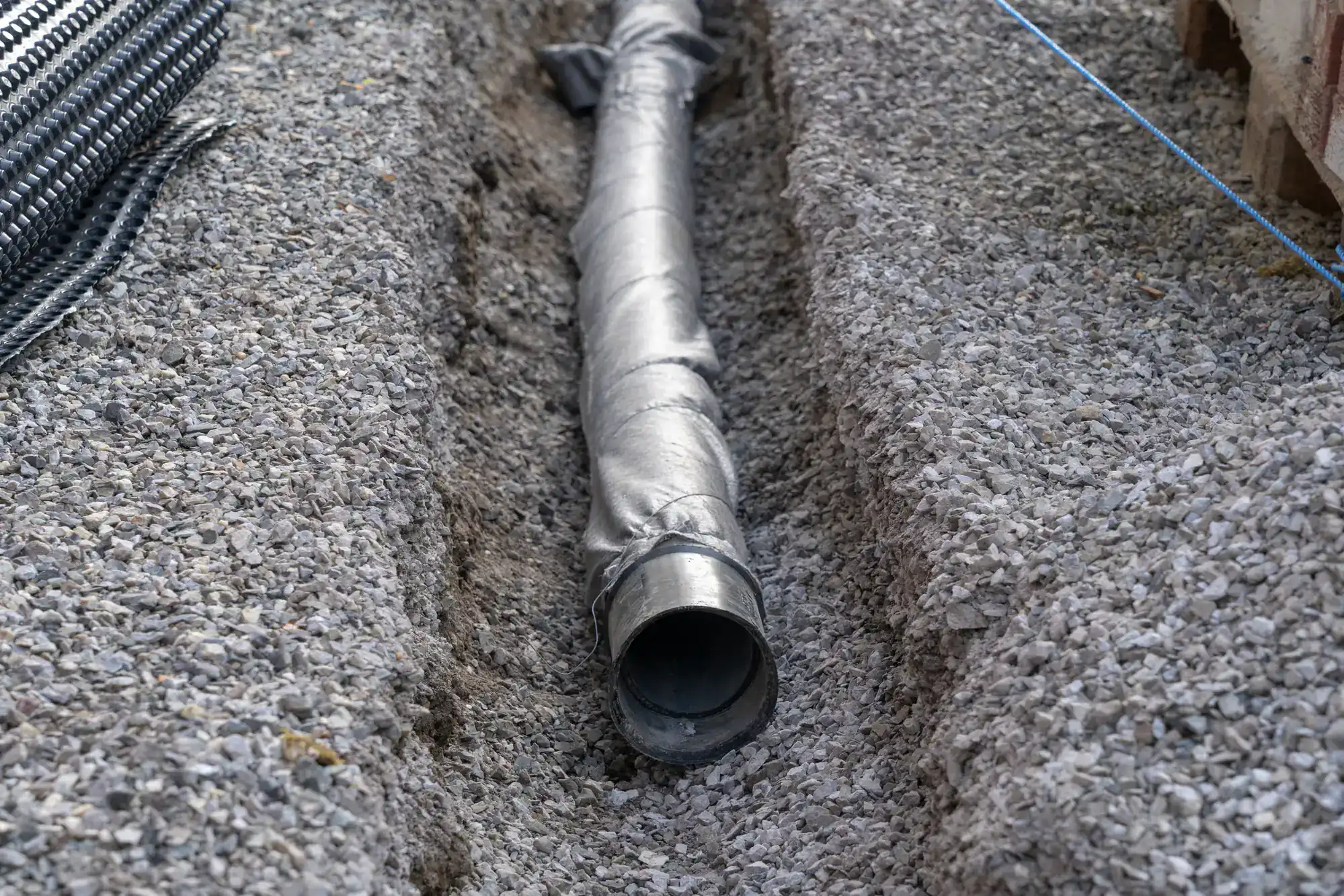
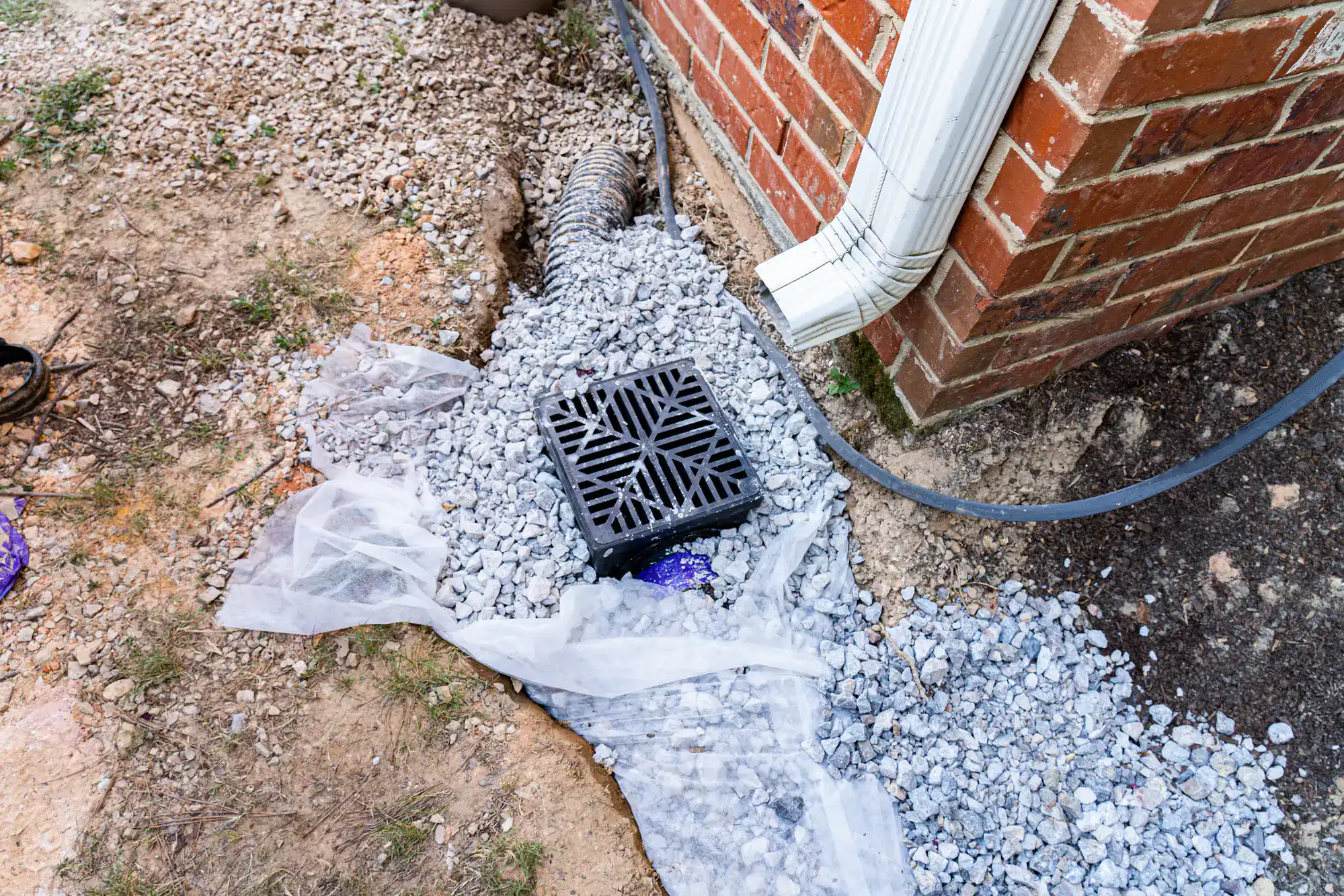
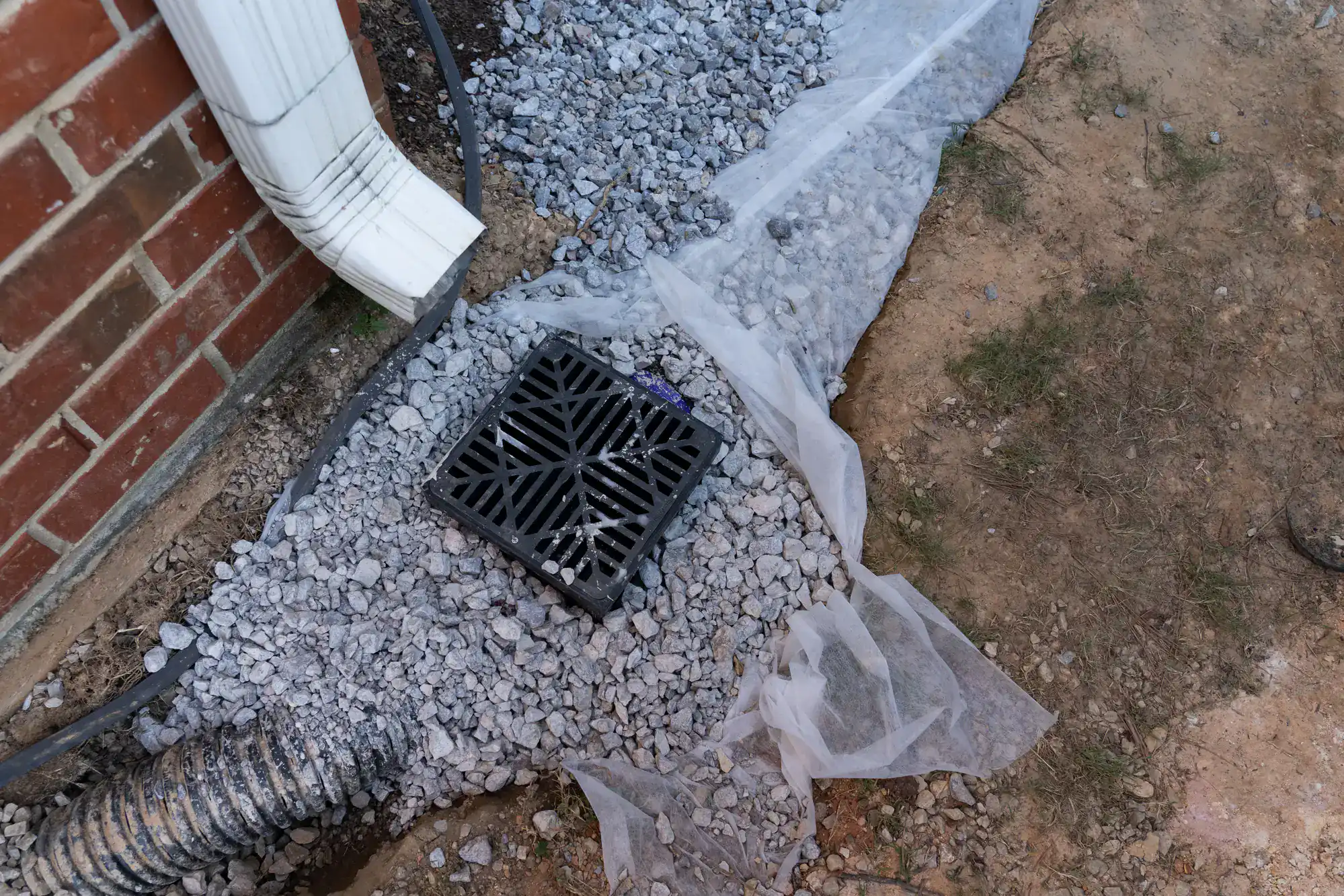
Once we’ve identified the problem, we design a French drain system specific to your property. On Central Islip’s flat terrain, this means calculating precise slope within the pipe run itself because the land isn’t going to do that work for us. We use perforated pipe wrapped in double-punched geotextile filter fabric, surrounded by washed angular gravel, and installed below Long Island’s frost depth of 12 to 24 inches. That last detail matters more than most homeowners realize. Pipe installed too shallow will freeze and crack in the first winter, destroying the system before it ever proves itself. We don’t cut that corner.
Before any digging starts, we handle the Town of Islip permit requirements and coordinate all utility markings. Most residential installations in Central Islip complete in one to three days. When the work is done, we restore the yard topsoil, seeding, sod matching where needed so the surface reflects the quality of what’s underneath it.
Ready to get started?
Every French drain installation we complete in Central Islip includes a full on-site drainage assessment, engineered system design specific to your property’s grade and soil conditions, all required Town of Islip permits, 811 utility marking coordination, and complete yard restoration after the work is finished. There are no add-on fees for the things that should have been included from the start.
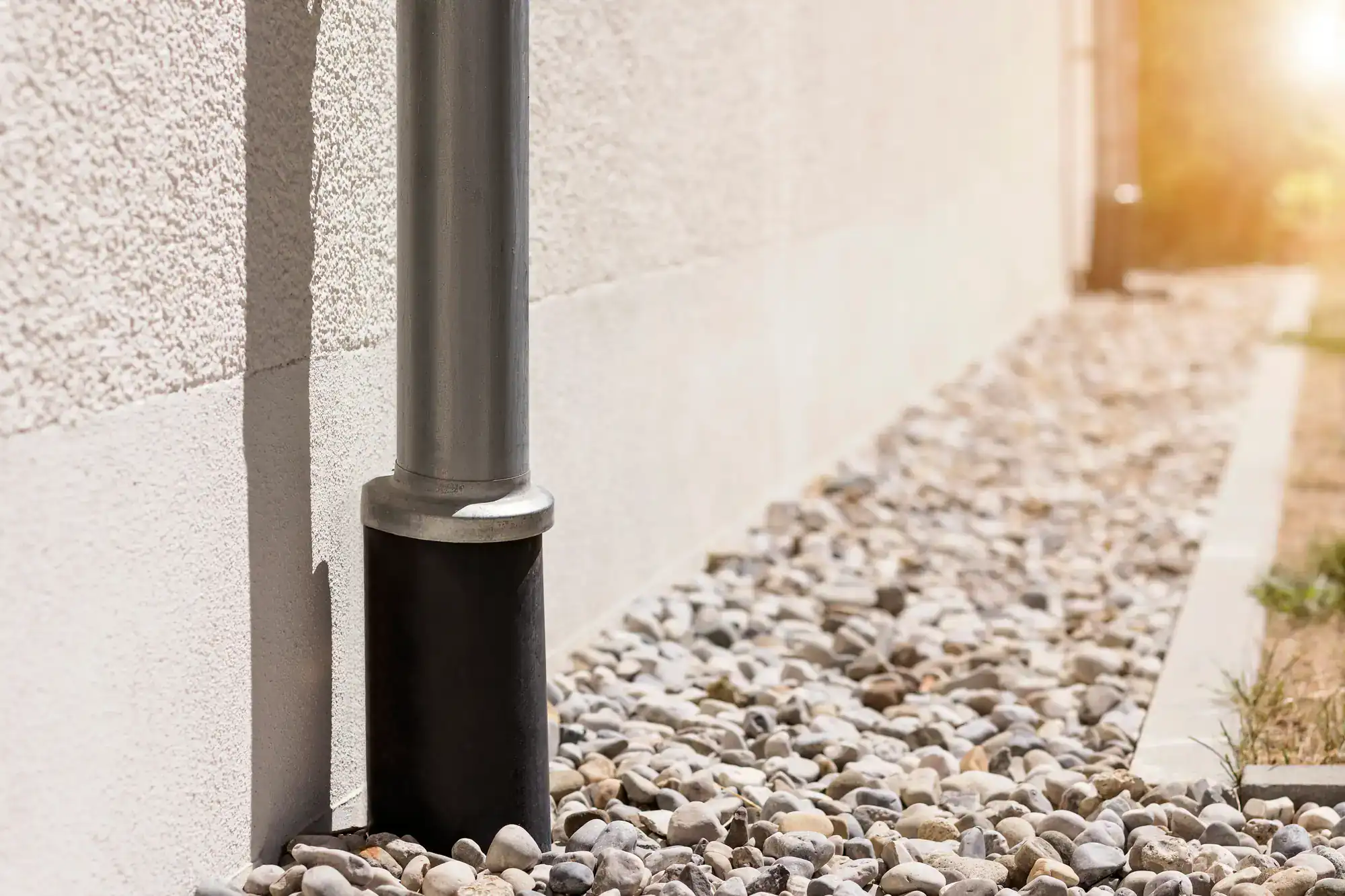
The materials we use are specified for longevity not for margin. Perforated pipe, not cheap corrugated tubing that collapses under soil pressure. Double-punched geotextile filter fabric wrapping the entire gravel bed, not a loose sock around the pipe that lets fine particles migrate in over time. Washed angular gravel, not round pea gravel that shifts and allows the system to settle out of alignment. These distinctions matter because they’re the difference between a system that works for 30 to 40 years and one that needs to be dug up and redone in five.
We also cover both exterior perimeter systems which intercept water before it reaches the foundation wall and yard drainage systems designed to eliminate surface pooling in low-lying areas. Central Islip properties near the redeveloped areas around Courthouse Commons and Islip Landings often have disrupted drainage patterns from the original development grading, and we’ve seen that pattern enough to know what to look for. Every installation is backed by a workmanship warranty, and if the system doesn’t perform as designed, we come back and make it right.
In most cases, yes and the specifics depend on your property’s location within the Town of Islip. Central Islip falls under Town of Islip jurisdiction, which has active stormwater management regulations and a Flood Damage Prevention ordinance originally adopted in 1987. If your property sits within a FEMA-designated special flood hazard area, a floodplain development permit is required before any drainage work can begin. Even outside flood zones, excavation work requires 811 utility marking under New York State law before any digging takes place.
Navigating the Town of Islip Building Division and Planning Division is not something most homeowners want to figure out on their own and they shouldn’t have to. We handle the full permit process for every Central Islip installation: application, utility coordination, and inspection scheduling. You don’t have to make a single call to Town Hall.
Most residential French drain installations in Central Islip fall somewhere between $5,000 and $9,250, depending on the scope of the system how much linear footage is needed, whether you’re addressing yard drainage, perimeter drainage, or both, and what the outlet options look like on your specific property. Larger or more complex jobs can run higher.
The number that matters more, though, is what you’re protecting. With median home values in Central Islip around $472,000, a drainage system in that price range is protecting an asset worth roughly 50 to 90 times its cost. Foundation repair alone runs $15,000 to $50,000. A wet basement at resale can reduce your home’s value by 10% or more that’s close to $47,000 on a median-priced home here. The cost of the French drain system looks very different when it’s sitting next to those numbers. We provide transparent, itemized estimates after the on-site assessment so you know exactly what you’re paying for before any work begins.
The short answer is terrain and soil. Central Islip sits on the flat interior coastal plain of Long Island, where the land is nearly level and there’s very little natural slope to carry surface water away from your property. Unlike communities on the North Shore moraine where the elevation itself helps drain the land Central Islip yards have to rely entirely on engineered drainage or the soil’s own infiltration capacity to move water.
The soil complicates things further. Long Island’s glacial geology means clay pockets are common throughout the central plain, and clay doesn’t drain well. It holds water, expands when wet, and can take days to release what it’s absorbed. On top of that, decades of foot traffic, lawn maintenance, and vehicle parking compact the soil over time, reducing its natural infiltration rate even further. In older Central Islip neighborhoods with housing stock from the 1940s through 1960s, this compaction has often accumulated for 50 to 80 years. A French drain system intercepts that surface water and routes it away before it has a chance to pool.
Most residential French drain installations in Central Islip complete in one to three days from start to finish including excavation, system installation, and yard restoration. The timeline depends on the scope of the system: a straightforward yard drainage installation on a standard lot moves quickly, while a full perimeter system around a foundation or a property with multiple drainage problem areas takes longer.
What affects timing locally is the permit process. If your property requires a Town of Islip drainage permit or falls within a flood zone, that paperwork needs to be in order before excavation begins. We handle that process in advance so it doesn’t delay your project once we’re scheduled. We give you a clear timeline before work starts, and we show up when we say we will. The goal is to have your drainage problem resolved and your yard restored before the next significant rain event puts the system to the test.
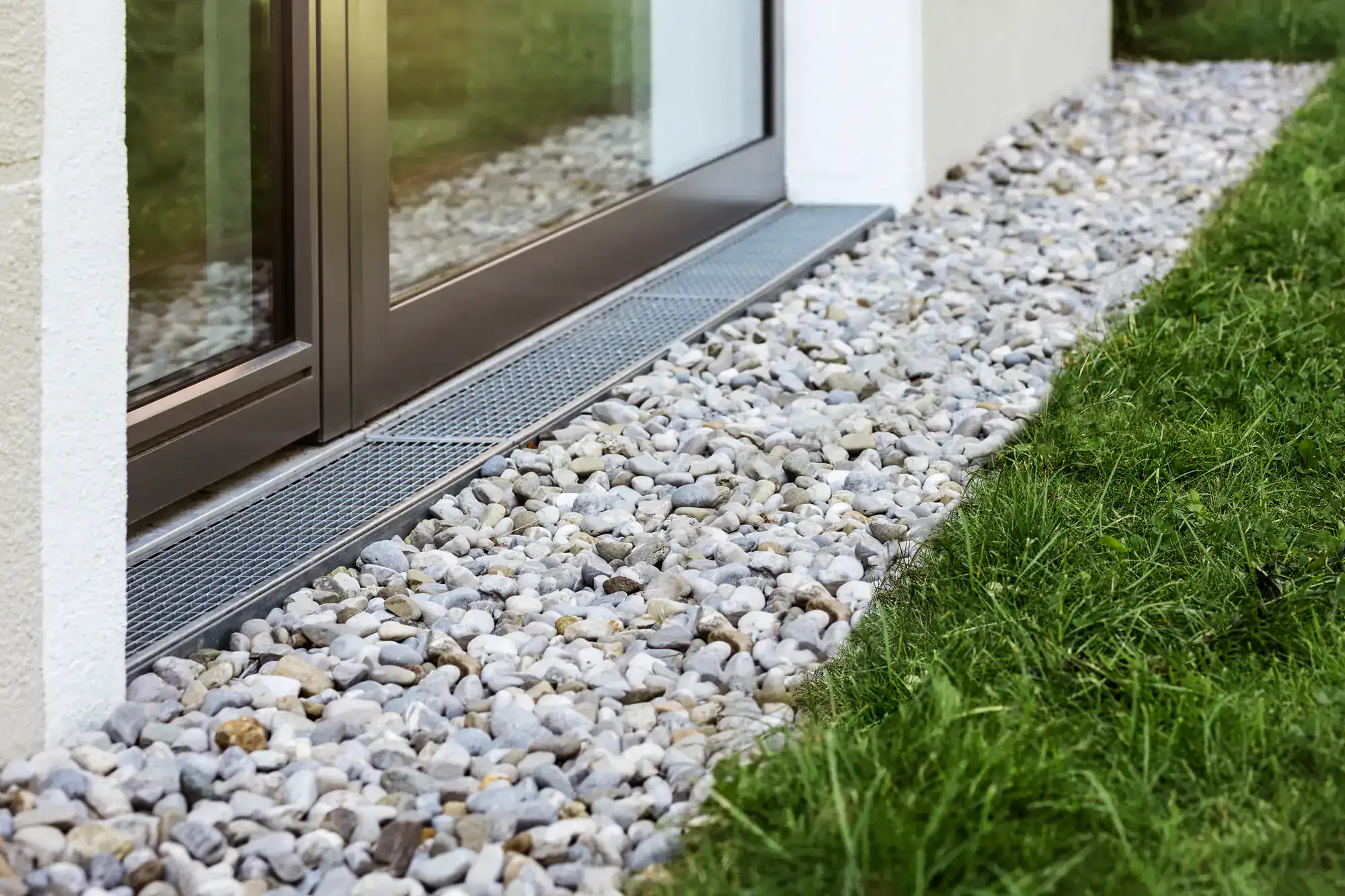
An exterior French drain is installed around the perimeter of your foundation on the outside of the house. It intercepts groundwater and surface runoff before it reaches the foundation wall, relieving the hydrostatic pressure that causes water to push through concrete and block walls. This is the more comprehensive solution it addresses the source of the problem rather than managing the water after it’s already inside.
An interior French drain is installed inside the basement, typically along the perimeter of the floor. It captures water that has already entered the basement and routes it to a sump pump for removal. It’s less invasive to install and works well in situations where exterior excavation isn’t practical, but it doesn’t stop water from entering it just manages it once it does. For Central Islip homeowners dealing with hydrostatic pressure from the seasonally high water table, an exterior system is usually the more effective long-term solution. That said, the right answer depends on your specific property, which is why the on-site assessment matters before any recommendation is made.
If you’re in Central Islip and close to the Brentwood or Bay Shore borders, yes a French drain system is typically the right solution for persistent yard pooling, and the drainage conditions in this part of the Town of Islip are well-suited to it. The flat terrain that runs across this section of the south shore plain doesn’t change much at the hamlet boundaries, so the same drainage challenges that affect Central Islip yards show up in the adjacent communities too.
What does vary is the specific soil composition, the existing grade of your property, and where a viable outlet point can be located for the system. Properties closer to Bay Shore and the south shore have different considerations than those bordering Hauppauge to the north, where the terrain starts to rise slightly toward the moraine. A French drain for yard drainage in this area is designed around your specific property conditions not a one-size approach applied across the whole region. The free on-site assessment is where that gets sorted out, and it’s the only honest starting point for a system that will actually work.