Hear from Our Customers
Standing water in a Holtsville yard isn’t just an inconvenience it’s a slow-moving threat to your foundation, your landscaping, and the equity you’ve built in your home. Median home values in Holtsville have crossed $560,000 and continue to climb. Water damage doesn’t care about any of that. Foundation repairs on Long Island run $15,000 to $50,000. Mold remediation starts at $3,000 and goes up fast. A properly installed French drain system typically runs $5,000 to $9,250 a fraction of what you’d spend cleaning up the damage it prevents.
Central Suffolk County’s soil is the root of most of these problems. Beneath the topsoil sits a layer of clay and glacial deposits left behind by the last ice age. Clay doesn’t drain. When rain falls, that water has nowhere to go it pools on the surface, saturates the lawn, and pushes against your foundation. Holtsville’s relatively flat terrain makes this worse, because there’s no natural grade to carry water away from your home.
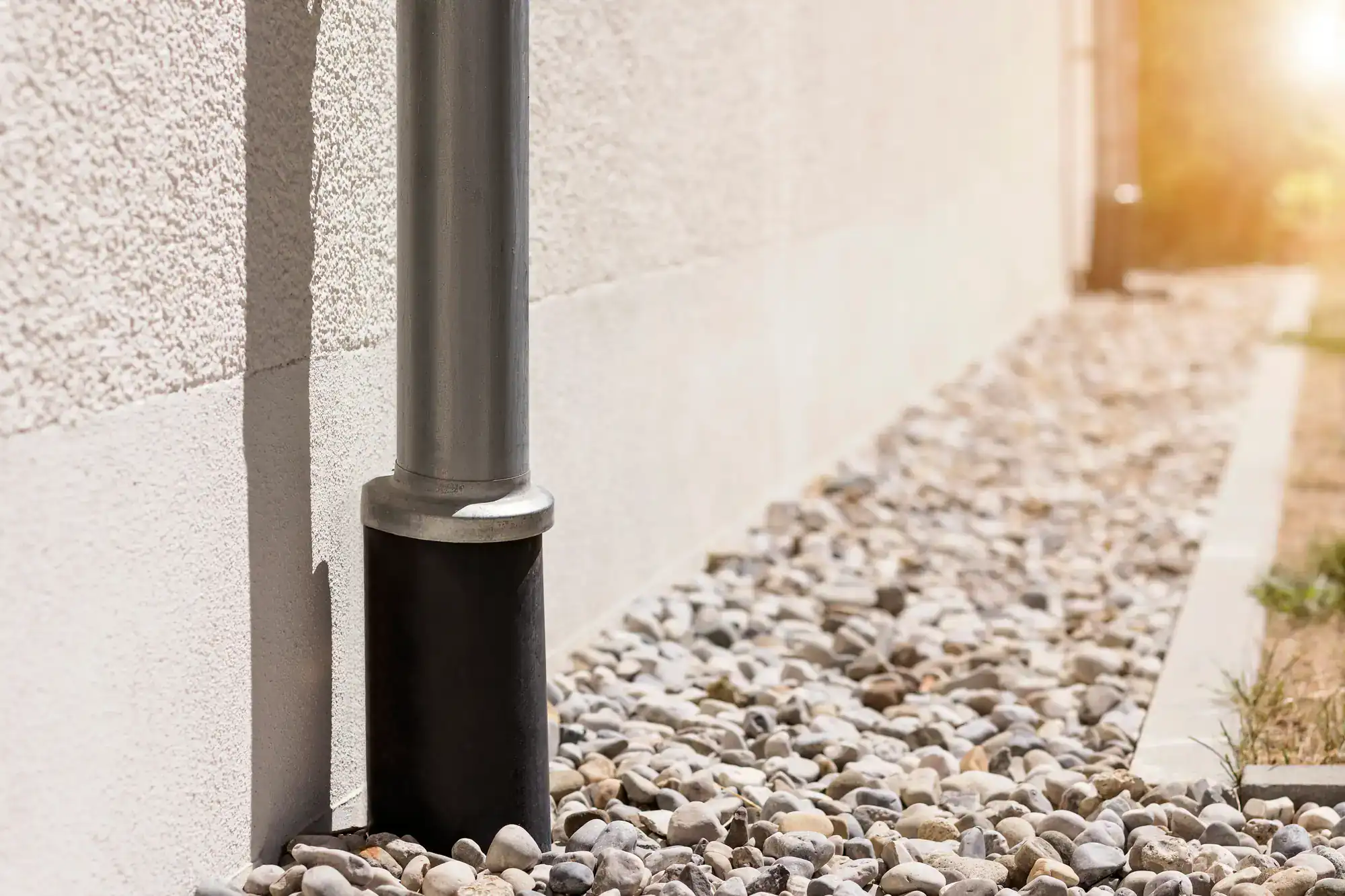
Once a French drain system is in place, that changes. Water gets intercepted before it reaches your foundation and redirected to a safe outlet point. Your yard dries out within hours of a storm instead of days. Your basement stays dry. And the established landscaping you’ve spent years maintaining whether you’re in a ranch-style home off Waverly Avenue or inside the Summerfield gates stays intact.
We’re a residential drainage contractor serving Long Island homeowners, and Holtsville is part of our core service area. We’re not a general landscaping company that digs trenches on the side. Drainage is what we do and we’ve built our process around the specific conditions that Long Island’s soil, climate, and local regulations create.
Holtsville is one of the few hamlets on Long Island split between two town jurisdictions. Most of the hamlet falls under the Town of Brookhaven, but the southwestern portion sits within the Town of Islip and each has its own permit requirements, stormwater regulations, and inspection standards. Most homeowners don’t know which town governs their address. We do. We handle all permit research, utility marking (New York State law requires an 811 call before any excavation), and inspection coordination for every job we complete in the 11742 ZIP code.
When you call us, you’re talking to someone who knows the difference between a Brookhaven address and an Islip address, who understands what central Suffolk County’s soil actually does to a drainage system, and who treats your yard with the same care you do.
It starts with a free, no-obligation on-site assessment. No phone quotes, no guessing. Every Holtsville property drains differently the depth of the clay layer, the location of cesspools and utilities, the available outlet points, your yard’s grade all of it affects how the system needs to be designed. We come to your property, walk the problem areas with you, and give you a clear, honest recommendation before any work is discussed.
Once you’re ready to move forward, we handle the permitting. Depending on where your property sits Brookhaven or Islip jurisdiction the requirements differ, and we manage that process entirely. New York State’s 811 utility marking requirement is completed before any excavation begins. From there, we dig the trench to the proper depth for Long Island’s climate. Central Long Island’s frost depth reaches roughly 36 inches in a hard winter, and pipes installed too shallow will freeze, crack, and fail before the season is over. That’s a common failure point for inexperienced installs, and it’s one we don’t cut corners on.
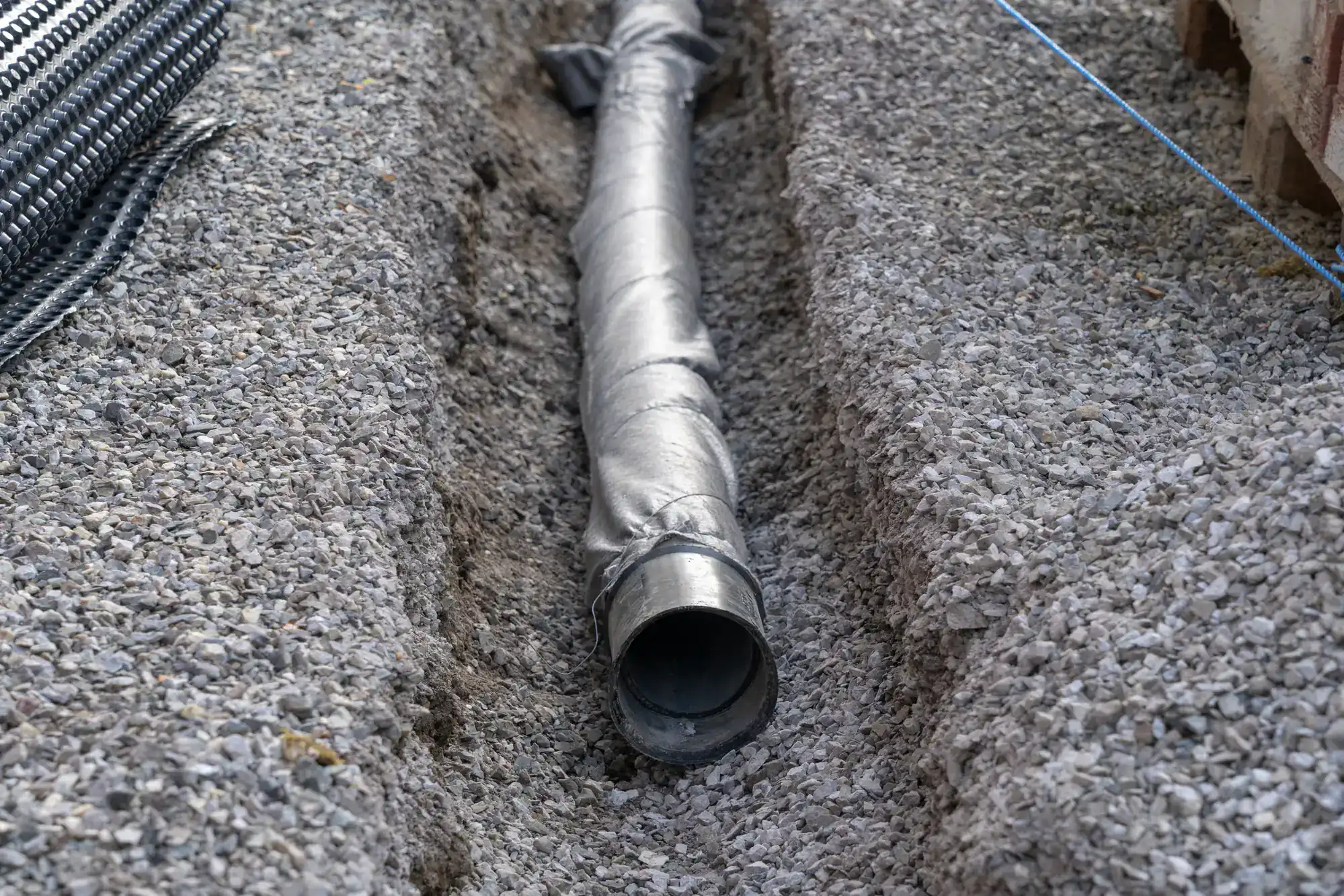
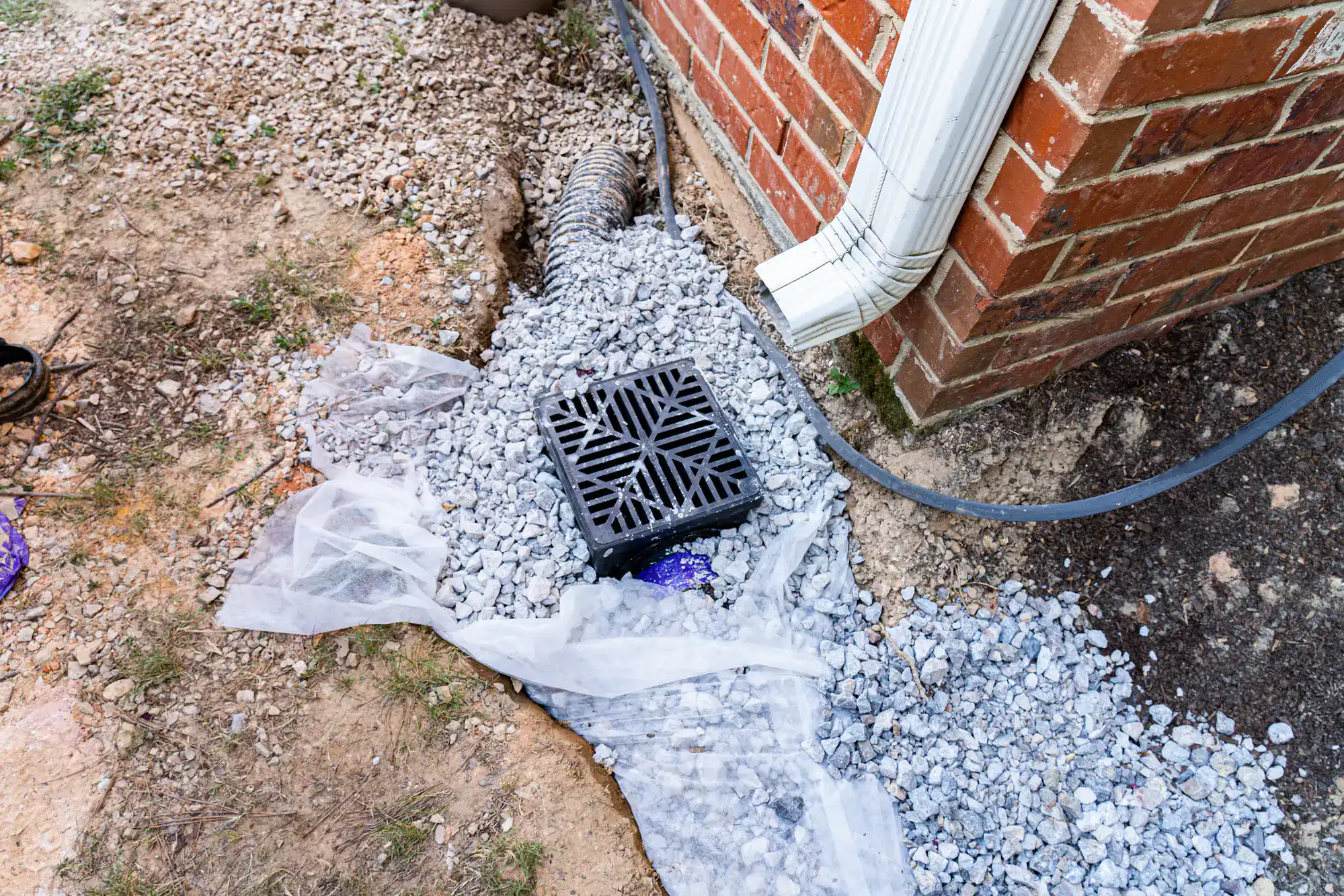
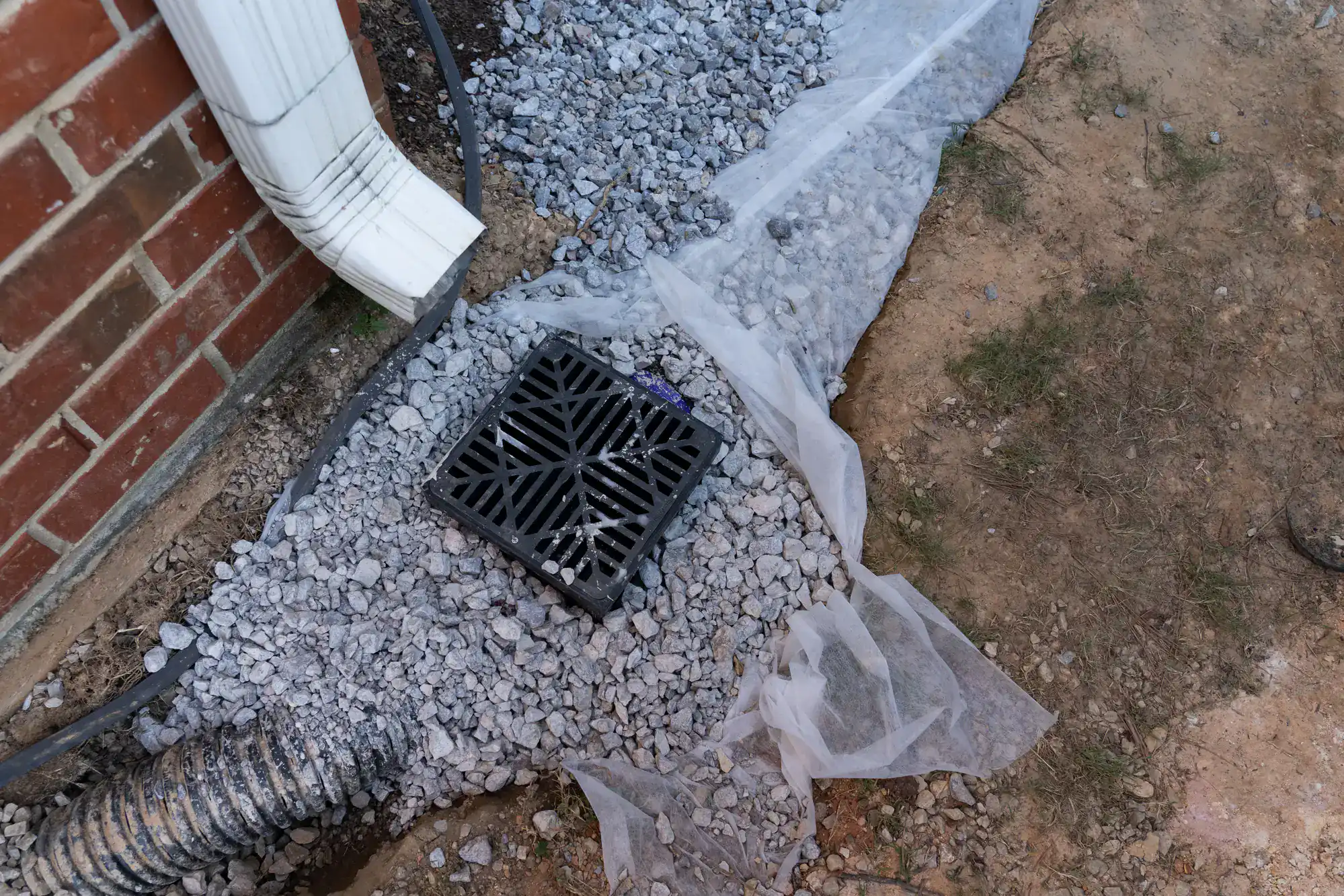
The system goes in with perforated pipe, double-punched geotextile filter fabric to keep sediment out, and washed angular gravel that actually allows water to move. The outlet is positioned whether that’s a daylight discharge, a dry well, or a connection to the storm sewer and the trench is backfilled and restored. Topsoil, seeding, and sod matching are part of the job. When we’re done, the only thing different about your yard is that it drains.
Ready to get started?
Every French drain system we install in Holtsville is designed around what’s actually happening on your property not a standard kit pulled off a shelf. The materials matter more than most homeowners realize. Perforated pipe paired with geotextile filter fabric keeps the system from silting up over time. Washed angular gravel, not rounded pea stone, allows water to move efficiently through the trench. Proper slope calculated for your specific yard determines whether water flows to the outlet or just sits in the pipe. Get any one of those wrong, and the system fails within a few years instead of lasting the 30 to 40 years a well-built system should.
For Holtsville properties, we also assess how your downspouts, surface runoff, and subsurface water are contributing to the problem. In many cases, a single trench isn’t the full answer a catch basin at a low point, a downspout connection, or a secondary line running along a fence line makes the difference between a system that handles a heavy storm and one that gets overwhelmed by it. Homes in the Summerfield community, with their quarter-acre lots and proximity to the development’s man-made lakes, often have unique grading considerations that require a more tailored design.
The Town of Brookhaven’s own published standard is worth knowing: if pooling on your property persists beyond 24 hours after a rain event, that’s a documented drainage failure. If you’re still looking at standing water two days after the last storm in Holtsville, that’s not normal and it’s not something that resolves on its own.
Holtsville is one of the few Long Island hamlets split between two town jurisdictions. The majority of the hamlet falls within the Town of Brookhaven, but the southwestern portion sits within the Town of Islip. Each town has its own permitting process, stormwater regulations, and inspection requirements and they’re not interchangeable.
Most homeowners in Holtsville don’t know which town governs their specific address, and that’s completely understandable. It’s not information that comes up until you’re trying to pull a permit. Before we begin any installation in Holtsville, we confirm your jurisdiction, handle all permit applications, and coordinate any required inspections including the Town of Brookhaven’s requirement for underground drainage inspection prior to backfilling. New York State law also requires an 811 utility marking call before any excavation, and we manage that as well. You don’t have to figure out the bureaucracy. That’s part of what we handle.
The short answer is the soil. Central Suffolk County sits on a mix of sand, clay, and glacial deposits and the clay layer is what causes most of the drainage problems homeowners in Holtsville deal with. Clay doesn’t absorb water. It holds it. When rain falls, water moves through the topsoil and hits that clay layer with nowhere to go. It pools on the surface, saturates the lawn, and in some cases finds its way toward your foundation.
Holtsville’s relatively flat terrain compounds the problem. Without a meaningful grade to carry water away from your home, surface water moves slowly and collects in low spots. The Town of Brookhaven’s own standard states that pooling should dissipate within 24 hours after a rain storm. If yours is lasting two or three days, that’s not a quirk of your yard it’s a drainage failure that a properly designed French drain system is built to fix. The system intercepts the water before it accumulates and redirects it to a designated outlet point, so your yard recovers in hours, not days.
Depth matters more than most people realize, and it’s one of the most common places inexperienced contractors cut corners. On Long Island, the frost depth in a typical hard winter reaches approximately 36 inches. A French drain pipe installed too shallow say, 12 to 18 inches will freeze solid during the first real cold snap. When water inside the pipe freezes, it expands, and that expansion cracks the pipe. By the time spring arrives, the system that was supposed to handle snowmelt is already broken.
Proper installation depth for a Long Island French drain depends on the specific application a perimeter foundation drain may need to go deeper than a surface yard drain but the frost line is always a baseline consideration. We design every Holtsville installation with Long Island’s freeze-thaw cycle in mind, because a system that fails in February, when snowmelt is adding significant water volume to already-saturated soil, is worse than no system at all. If you’ve had drainage work done before that didn’t last through the first winter, shallow installation is one of the first things worth investigating.
Most residential French drain installations in the Holtsville area fall somewhere between $5,000 and $9,250, based on current national averages for 2025. The actual cost for your property depends on the length of the trench, the complexity of the system, the outlet solution required, and whether any catch basins or downspout connections are part of the design. Larger or more complex systems particularly on properties with multiple drainage problem areas or on lots like those in the Summerfield community where grading considerations are more involved will sit toward the higher end of that range.
It’s worth putting that number in context. Foundation repair on Long Island costs $15,000 to $50,000. Mold remediation starts at $3,000. With Holtsville’s median home values above $560,000, the cost of a French drain system is roughly 1% to 1.5% of your home’s value and it’s protecting an asset that has already appreciated significantly over the past two decades. We provide a clear, itemized estimate after the on-site assessment, so you know exactly what you’re paying for before any work begins.
Yes and honestly, clay soil is exactly the condition a French drain system is designed to address. The problem with clay isn’t that it’s impossible to drain around, it’s that you have to work with it rather than through it. Clay doesn’t absorb water, so the goal of a French drain in clay soil is to intercept water at the surface or subsurface level and redirect it to an outlet before it has a chance to pool or push against your foundation.
The key is proper system design. In clay-heavy soil like what’s found beneath Holtsville properties, the trench needs to be dug to the right depth, lined with geotextile filter fabric to prevent clay particles from migrating into the gravel bed, and filled with washed angular gravel that maintains its drainage capacity over time. A system installed without filter fabric in clay soil will silt up within a few years as clay particles work their way into the gravel. That’s a common failure mode for cheaper installs. When the system is designed correctly for the soil conditions in Holtsville not just copied from a generic drainage template it works, and it keeps working for decades.
A properly installed French drain system should last 30 to 40 years. That’s not a marketing claim it’s what the materials and design are capable of when the installation is done right. The variables that determine whether your system reaches that lifespan or fails in five years come down to pipe quality, filter fabric, gravel type, slope calculation, and installation depth.
The most common failure points we see on Long Island are systems installed without geotextile filter fabric which allows sediment and clay particles to clog the gravel bed over time and pipes installed too shallow for the frost depth, which crack during freeze-thaw cycles. Corrugated plastic pipe, which is cheaper and easier to work with, is also more prone to collapse under soil pressure than rigid perforated pipe. In Holtsville’s clay soil environment, these shortcuts don’t just reduce performance they accelerate failure. If you’ve had drainage work done before that didn’t hold up, the materials and depth are the first things worth examining. A system built with the right components, installed at the right depth, and designed for the actual conditions on your property is a one-time investment not something you’ll be replacing in a few years.