Hear from Our Customers
Standing water isn’t just an eyesore. Every time your yard floods and sits, that water is pushing against your foundation, suffocating your lawn from the roots, and moving closer to the inside of your home. In Holtsville, where the terrain is flat and natural slope is basically nonexistent, water has nowhere to go unless you give it somewhere to go.
That’s the core of what a properly installed drainage system does it creates a path. French drains, catch basins, regraded surface flow, and drywells that are sized and positioned correctly can take a yard that floods after every significant rain and turn it into one that drains within hours. For homeowners near Summerfield Estates or on any of the ranch-style lots that make up most of Holtsville’s housing stock, the difference is immediate and visible.
Here’s the part most contractors skip: on Long Island, a drywell alone is often not enough. When the water table rises after a prolonged wet stretch which it does regularly in central Suffolk a standalone drywell fills up and stops moving water. A system that accounts for that, with catch basins and conveyance built in, keeps working when a single drywell would be backing up. That’s the difference between a drainage fix and a real drainage solution.
A lot of Holtsville homeowners who call us have already had drainage work done. A drywell was installed. Maybe a short French drain. And the yard is still flooding. That’s not a coincidence it’s what happens when a contractor skips the diagnosis and goes straight to the install.
We serve central Suffolk County and understand what makes drainage in this area different from anywhere else. The flat terrain. The variable water table. The mixed soil conditions that behave differently lot to lot, sometimes block to block. Whether your property is near the LIE corridor off Exit 62, in a community like Summerfield, or on a standard residential street closer to Holbrook or Ronkonkoma, we assess the full picture before recommending anything.
You get a clear explanation of what’s causing the problem, what the fix looks like, and what it costs before any work begins.
It starts with a site assessment. We walk the property, map where water is entering, how it’s moving across the lot, and where it needs to discharge. In Holtsville, this step matters more than most people expect because the problem is rarely just where the water sits. It’s where it’s coming from, and what’s blocking it from leaving.
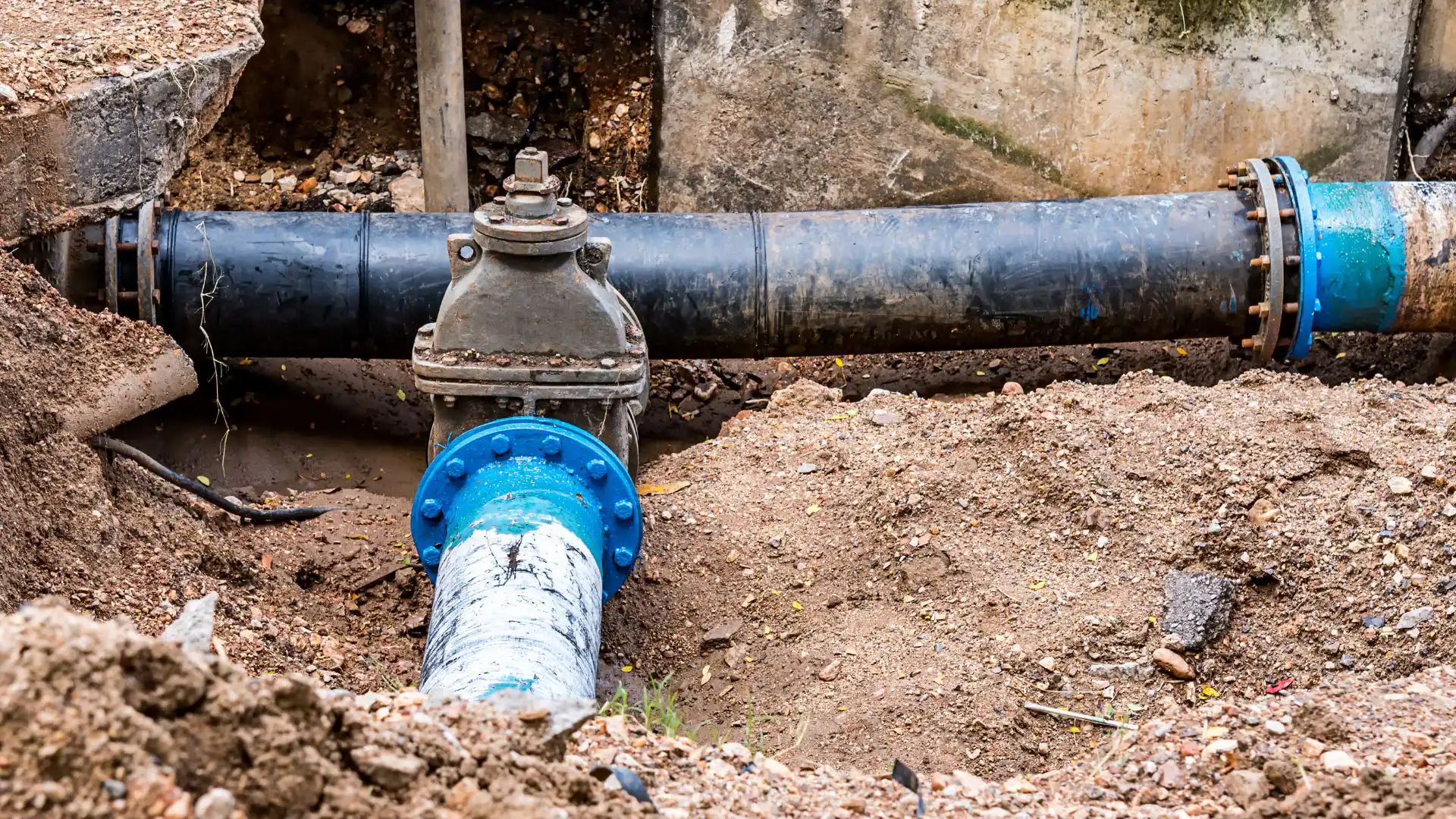
From there, we design a system around your specific conditions. That might mean a French drain running along the foundation perimeter, a catch basin in the low point of the yard, regrading the surface to establish proper slope, or a combination of all three feeding into a correctly sized drywell. Because Holtsville straddles the boundary between the Town of Brookhaven and the Town of Islip, the permit requirements for your project depend on which municipality your address falls under and we handle that correctly from the start so there are no delays mid-project.
Once the system is installed, we restore the disturbed turf and grade the surface clean. The goal is a yard that looks better than it did before we arrived and a drainage system you never have to think about again because it’s doing its job quietly underground.
Ready to get started?
Our landscape drainage services cover the full scope of what it takes to move water off your property correctly. That includes French drain installation, catch basin placement, surface regrading, drywell installation or replacement, channel drain systems for hardscaped areas like driveways and patios, and full lawn restoration after the work is complete. You’re not coordinating three separate contractors the drainage, the grading, and the restoration all happen under one project.
For homeowners in Summerfield Estates, there’s an added layer we understand well: HOA communities have their own standards for exterior work, and individual lot drainage often interacts with community-wide infrastructure, including the two man-made lakes that sit within the development. We design with those constraints in mind and can help you navigate the HOA approval process before work begins.
Every project starts with a written quote that breaks down labor, materials, and scope in plain language. No vague estimates, no surprises at the end. The Town of Brookhaven Highway Department maintains roughly 44,000 drainage structures across the town the municipal system is extensive, but it doesn’t extend to your yard. That’s your responsibility, and a properly designed yard drainage system is what protects everything behind your property line.
This is one of the most common situations we run into in central Suffolk County, and the answer almost always comes down to one of two things: the drywell was undersized for the volume of water your yard collects during a heavy storm, or the water table was too high at the time of the storm for the drywell to drain effectively.
On Long Island, drywells work by allowing water to percolate down through the soil to the water table. When that water table is already elevated from prior rainfall which happens regularly in Holtsville after any extended wet period a drywell loses its ability to drain. It fills up faster than it empties, and water backs up to the surface. A single drywell was never designed to handle that scenario on its own. A properly designed system adds catch basins and conveyance piping that give water somewhere to go even when the drywell is at capacity, which is exactly when you need it most.
It’s a genuinely confusing distinction, and a lot of Holtsville homeowners end up calling the wrong type of contractor first. Plumbers handle water inside pipes clogged drains, sewer lines, cesspools, and anything related to your home’s internal water systems. If water is backing up through a floor drain or a toilet, that’s a plumber’s problem.
Landscape drainage is a different issue entirely. It’s about how water moves across your land why it pools in your backyard, why it collects against your foundation after a storm, why one corner of your lawn never fully dries out. That’s a grading, soil, and conveyance problem, not a pipe-blockage problem. We handle the land side: French drains, catch basins, surface regrading, and drywell systems designed to move stormwater away from your property before it becomes a structural or landscaping problem.
Most residential drainage projects in central Suffolk County fall somewhere between $2,100 and $7,200, with the average landing around $4,600. The range is wide because the scope varies significantly from one property to the next a simple French drain along a foundation perimeter is a different project than a full catch basin and conveyance system with surface regrading and lawn restoration.
What drives cost in Holtsville specifically is the combination of flat terrain and variable soil conditions. Flat lots require more engineered slope to move water effectively, which sometimes means more linear footage of pipe or more grading work than a property with natural elevation change would need. The materials used also matter geotextile fabric around French drains, for example, prevents silt from clogging the system over time, which is a detail some contractors skip to cut costs and one that leads to systems failing within a few years. A written, itemized quote before any work begins is the clearest way to understand exactly what you’re getting and why it costs what it costs.
It depends on the scope of the work and which part of Holtsville your property sits in. Holtsville is one of the few hamlets in Suffolk County that straddles two town boundaries most of the hamlet falls under the Town of Brookhaven, while the southwestern portion is governed by the Town of Islip. Each town has its own building department and its own requirements for drainage-related permits, so the answer to this question is genuinely different depending on your address.
For most standard residential drainage projects a French drain, a catch basin, a drywell replacement the disturbed area is typically small enough that a full construction permit may not be required. But excavation work that significantly alters surface drainage or connects to any municipal storm infrastructure does trigger review requirements under both town and Suffolk County codes. We handle the permit process as part of the project we confirm which municipality governs your address, determine what’s required, and make sure the work is compliant from the start.
Honestly, the best time is before the next storm which on Long Island is never more than a few months away. Late spring through early fall tends to be the most practical installation window in central Suffolk County. The ground is workable, the weather is stable enough for excavation and lawn restoration, and you’re ahead of the late-summer storm season that historically causes the most significant flooding events in this area.
What we’d caution against is waiting until after a major flooding event to start the process. The August 2014 storm dropped over 13 inches of rain near Ronkonkoma in a matter of hours, and both the Town of Brookhaven and the Town of Islip the two municipalities that govern Holtsville declared states of emergency. August 2024 brought another round of record rainfall across Suffolk County. These aren’t isolated incidents. If your yard flooded last summer, it will flood again. The cost of a drainage system typically $2,100 to $7,200 for a residential property is a fraction of what foundation repairs or repeated water damage remediation costs over time.
It’s not overstated it’s one of the most financially significant things a drainage system does, and it’s often the reason homeowners in Holtsville finally pull the trigger on getting the work done. Water that pools against a foundation doesn’t stay on the surface. It works its way into the soil around the footing, creates hydrostatic pressure against the foundation wall, and over time causes cracking, bowing, and moisture intrusion. Foundation repairs on Long Island run $23,000 to $48,000 depending on the extent of the damage and that’s before you factor in any basement waterproofing, mold remediation, or resale value impact.
For Holtsville homeowners specifically, the flat terrain means water has no natural incentive to move away from structures on its own. Without engineered slope and a conveyance system directing water to a proper discharge point, it will find the path of least resistance and that path often runs directly along your foundation perimeter. A properly graded yard with a working drainage system keeps that water moving away from the house, which is exactly where it needs to go.