
Hear from Our Customers
Standing water in your yard isn’t just an eyesore. In Islip, it’s a signal that the soil beneath your feet has hit its limit and the water has nowhere to go but sideways, usually toward your foundation. A properly installed French drain system intercepts that movement before it becomes a $20,000 problem.
Properties south of Montauk Highway sit above one of the shallowest water tables on Long Island. When significant rain hits and Islip gets significant rain, including the August 2014 storm that broke New York State’s single-day rainfall record at MacArthur Airport the ground saturates fast. Without a drainage system designed for those conditions, you’re watching water pool in the same corner of your yard every single time.
What changes after we install a French drain is simple: the yard drains, the basement wall stays dry, and the landscaping you’ve spent years building doesn’t get undermined by moisture sitting against the foundation. Older homes near the bay, many built decades before modern drainage engineering was standard, are especially vulnerable. Getting a French drain system installed isn’t a luxury upgrade in this part of Suffolk County, it’s basic property protection.
We install residential French drain systems across the South Shore of Long Island, and the Islip area is home territory. That matters because drainage in Islip isn’t the same as drainage in an inland suburb. The soil profile here glacially deposited sand above a clay confining layer behaves differently than what you’d find further north toward Hauppauge or Holbrook. The water table near the Great South Bay is shallower. The storm exposure is more direct. The housing stock is older.
When our crew assesses your property, we’re not running a generic checklist. We’re evaluating your site against real working knowledge of how water moves through Islip specifically what the ground does after a nor’easter, how properties near Heckscher State Park and the bay waterfront differ from those closer to the Islip LIRR corridor, and what the Town of Islip’s stormwater regulations require before any drainage work begins. That local context is what separates a system that actually solves the problem from one that just looks like it does.
It starts with a free on-site assessment. There’s no way to design a drainage system correctly without walking the property, understanding where the water is coming from, and evaluating the existing grade and soil conditions. A phone quote for a French drain is a red flag the right system depends on what’s actually happening on your specific lot in Islip.
Once the assessment is complete, you get a clear proposal: what the system will include, where it will run, where it outlets, and what it will cost. Before any digging starts, the required 811 utility marking call is made this is a legal requirement in New York, and it protects both your property and our crew. If your project requires a building permit under the Town of Islip’s Stormwater Management Ordinance which applies to drainage work that alters surface water flow we handle that paperwork. You don’t have to navigate the Town’s permit office or figure out whether your property falls under the Wetland and Watercourse Management Area Overlay District on your own.
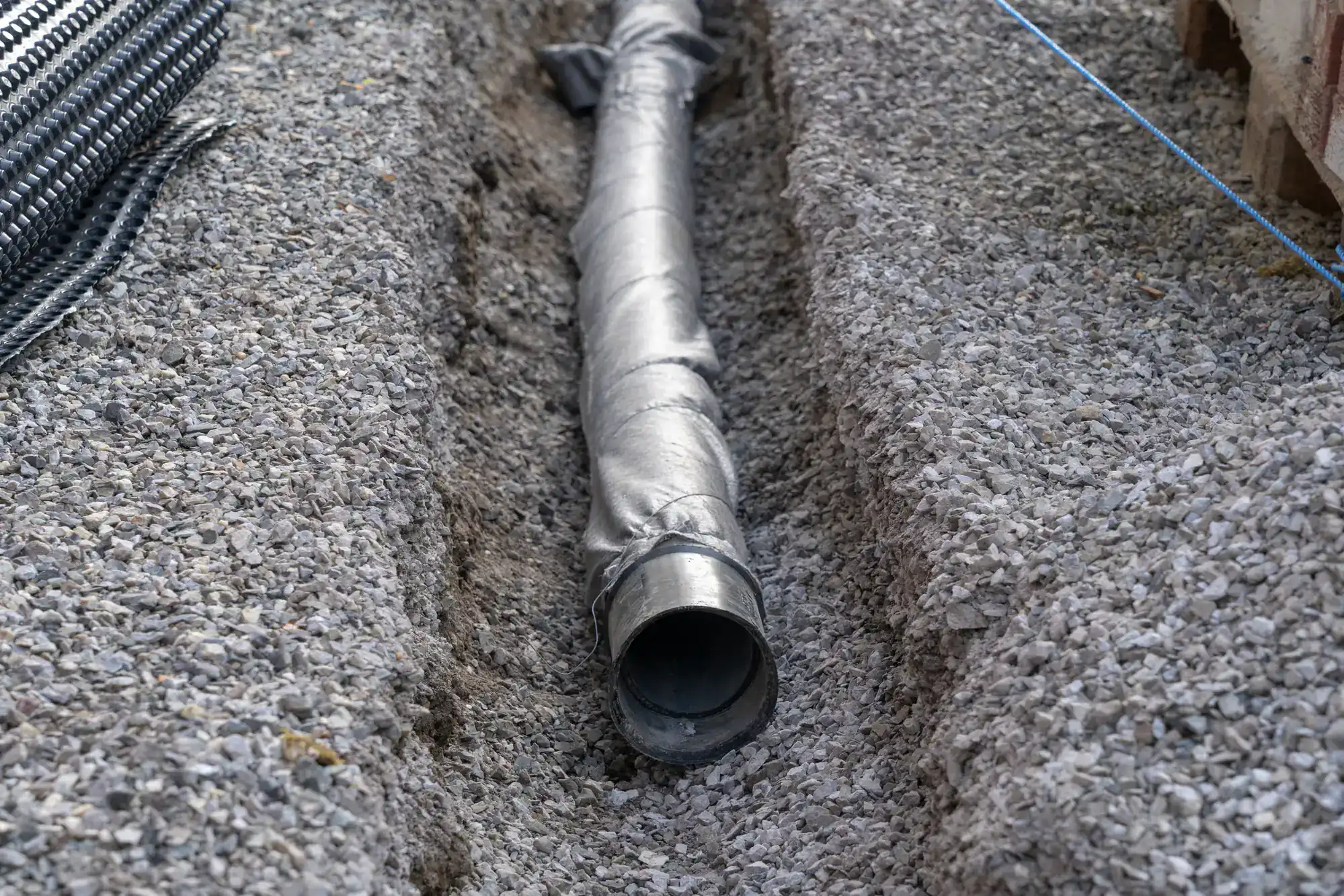
Installation uses perforated rigid pipe, double-punched geotextile filter fabric wrapping the full gravel bed, and washed angular gravel the materials that determine whether your system is still working in 30 years or failing in five. After the trench is set, the gravel bed is placed, and the area is backfilled, the disturbed surface is restored with topsoil and seeding. The excavation is temporary. The drainage is not.
Ready to get started?
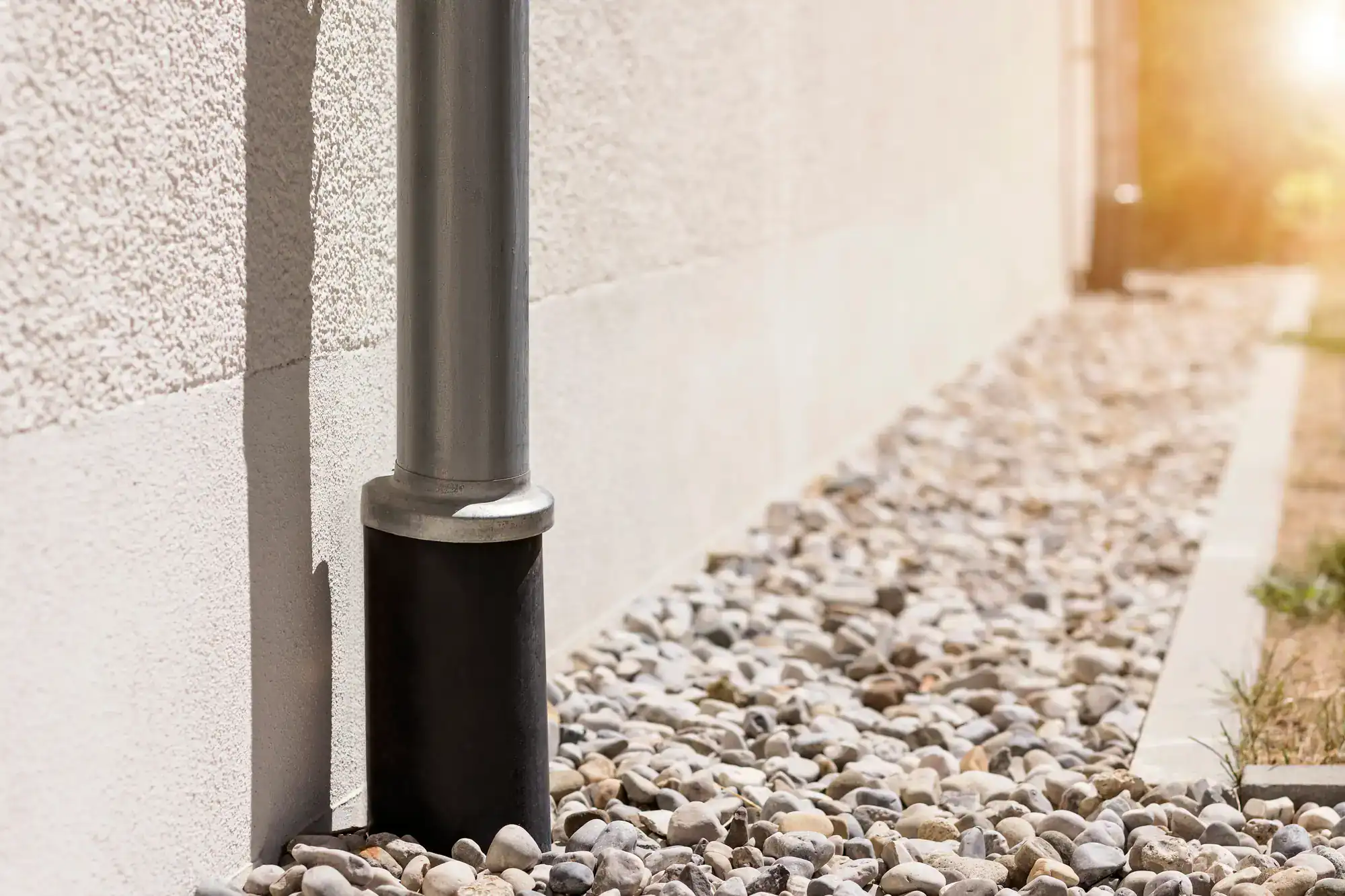
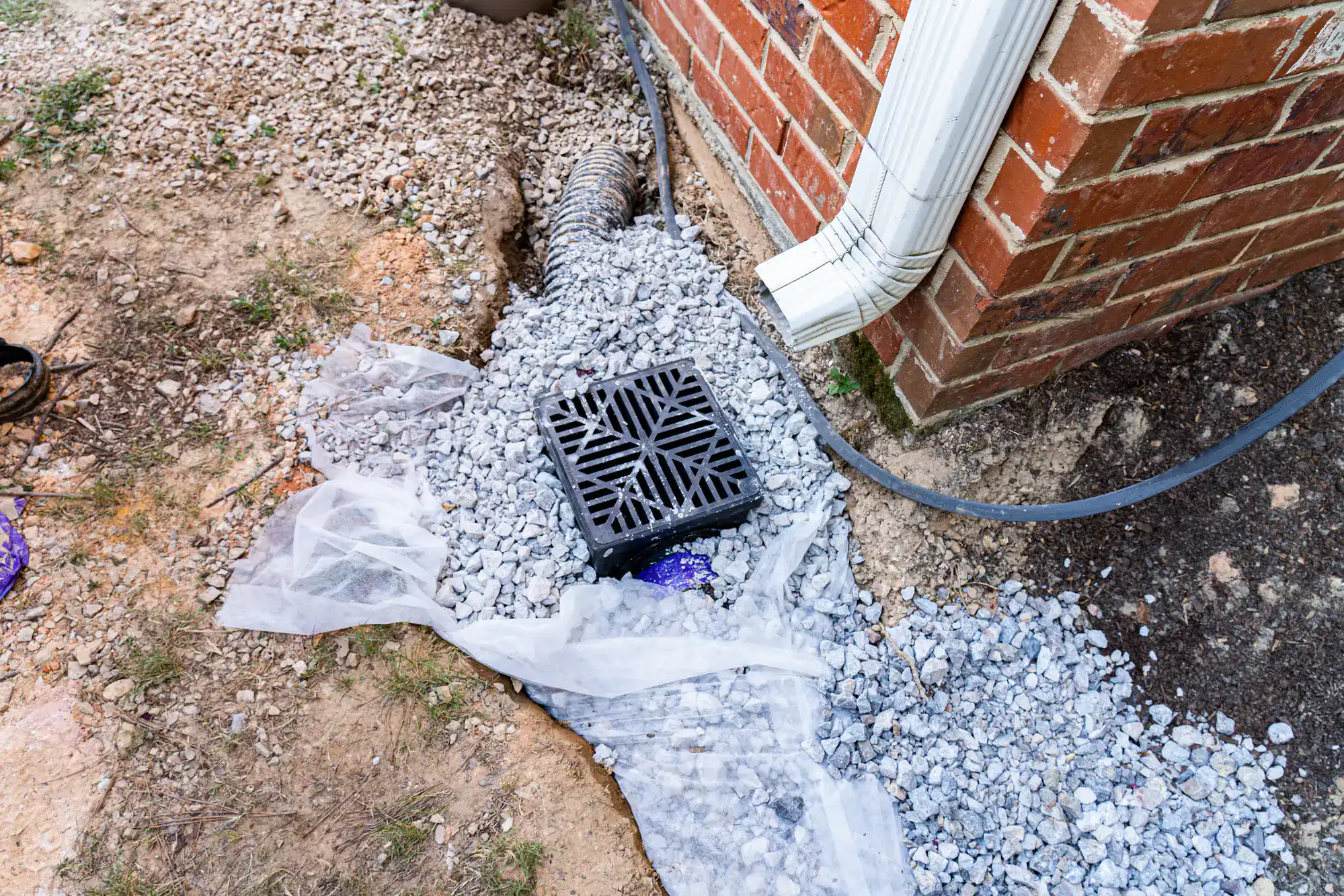
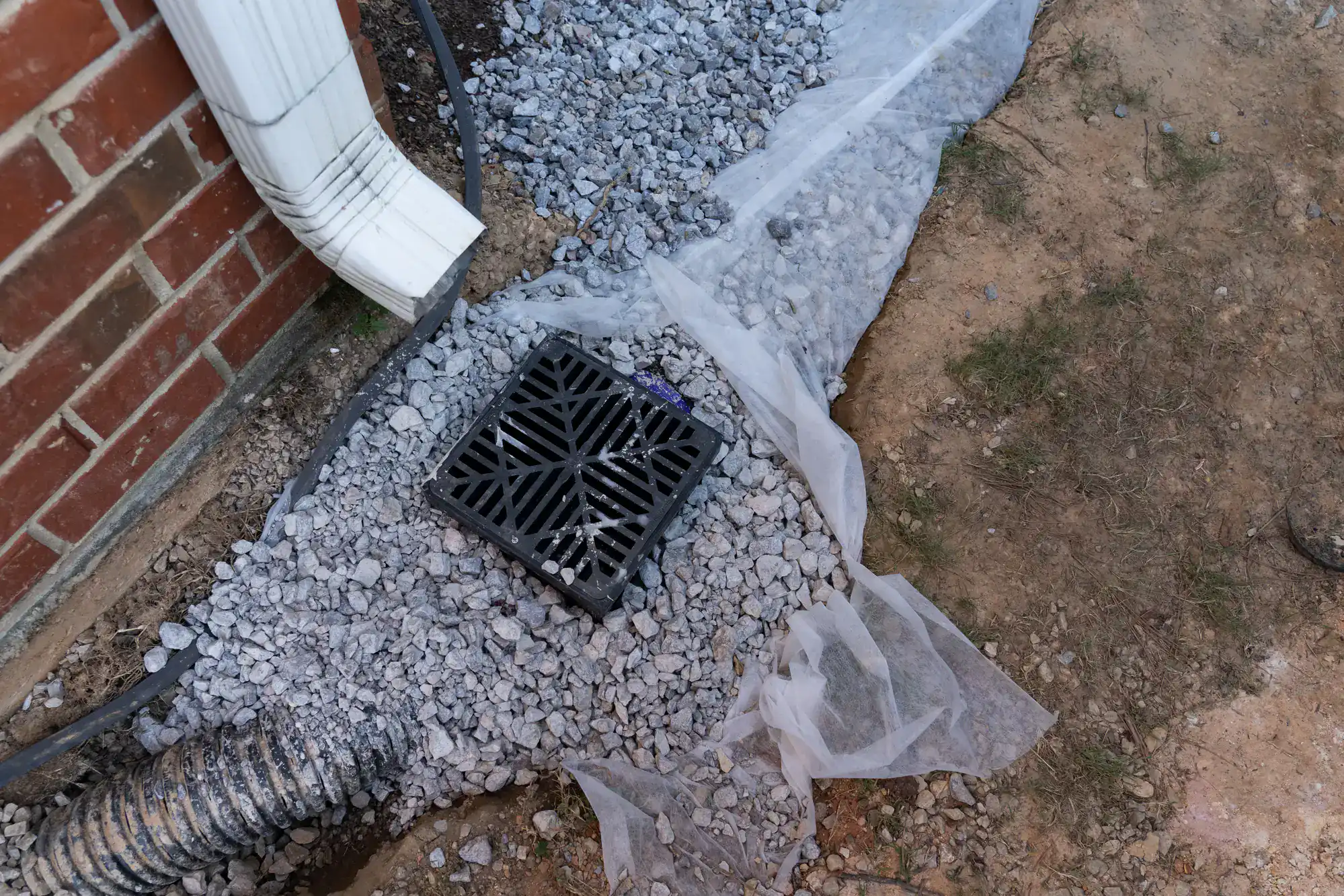
French drain installation in Islip, NY covers more than just a trench and a pipe. Depending on what your property needs, the system may include a surface yard drain to capture standing water in low-lying areas, a foundation perimeter drain to relieve hydrostatic pressure against basement walls, a curtain drain to intercept groundwater moving down a slope, or integration with an existing catch basin or downspout system. The right combination depends on where the water is coming from and where it needs to go.
For properties near the Great South Bay particularly those in FEMA-designated flood zones within the hamlet outlet placement requires careful planning. The Town of Islip’s stormwater ordinance prohibits discharging water onto adjacent properties and requires that drainage improvements contain at least a two-inch storm event. Every system we install is designed to meet those standards, not just pass a visual inspection.
Material quality is where most drainage systems either earn their lifespan or lose it early. Corrugated flexible pipe collapses under soil pressure. The wrong geotextile fabric silts up within a few years. Insufficiently graded angular gravel reduces drainage capacity before the system ever gets a real test. We specify rigid perforated pipe, properly graded angular washed gravel, and filter fabric that wraps the entire gravel envelope not just the pipe. In a community where a single storm can drop over thirteen inches of rain in twenty-four hours, that level of material specificity isn’t optional.
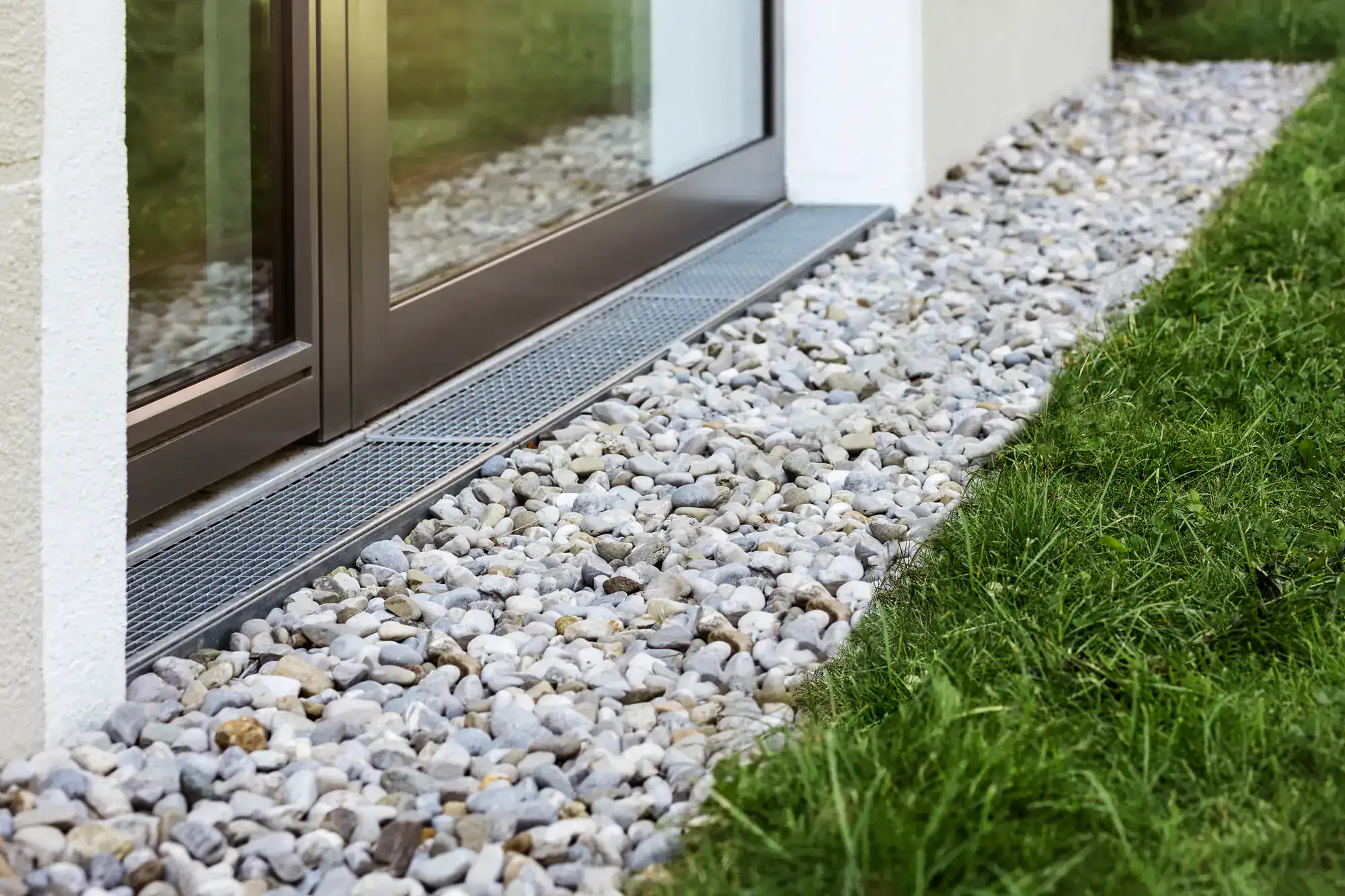
It depends on the scope of the work, but in many cases yes. The Town of Islip enforces a Stormwater Management Ordinance that requires drainage improvements to contain a two-inch storm event and prohibits directing water onto neighboring properties. If your project alters surface water flow in a meaningful way, a building permit is typically required before work begins.
Properties near the Great South Bay, tidal creeks, or any designated wetland area also fall under the Town’s Wetland and Watercourse Management Area Overlay District, which adds an additional layer of review. And if your property sits in a FEMA flood zone which applies to a number of homes in the Islip hamlet, particularly south of Montauk Highway there are floodplain management considerations that affect how drainage systems are designed and permitted. We handle all of this as part of the installation process. You won’t be left figuring out the Town’s permit office on your own.
Most residential French drain installations in the Islip area fall between $5,000 and $12,000, depending on the length of the system, its depth, and whether it includes additional components like a catch basin, downspout tie-in, or foundation perimeter drain. Per linear foot, professional installation typically runs $20 to $60, with deeper perimeter systems toward the higher end.
The more useful number to hold onto is the cost of not installing one. Foundation crack repair in the New York market runs $15,000 to $50,000. Mold remediation starts around $3,000 and climbs fast depending on how far it’s spread. In a community where homes regularly carry $600,000-plus in value and where a single storm can overwhelm an inadequate drainage setup, a properly engineered French drain system is a straightforward investment in protecting what you already own. The free on-site assessment gives you an exact number for your specific property no guessing, no phone estimates.
This is one of the most common questions from South Shore homeowners, and the answer is in what’s happening below the surface. Long Island’s soils are layered the top layer is glacially deposited sand and gravel that drains reasonably well on its own. But beneath that, on the South Shore near Islip, sits the Gardiners Clay confining layer, a dense clay formation that restricts downward water movement. When heavy rain saturates the sandy layer above the clay, the water hits a wall and starts moving laterally instead of draining down.
That lateral movement heads toward the lowest point on your property often a corner of the yard, a foundation wall, or a basement window well. Properties in the Islip hamlet, especially those closer to the Great South Bay where the water table is already shallow, have less vertical space for water to travel before it backs up. A French drain system intercepts that lateral movement and redirects it to a controlled outlet, solving the problem at the source rather than just managing the symptoms.
A French drain system built with the right materials and installed correctly should last 30 to 40 years. The variables that shorten that lifespan are almost always material-related: corrugated flexible pipe that collapses under soil pressure, geotextile fabric that only wraps the pipe instead of the full gravel bed, or rounded pea gravel instead of angular washed gravel. Rounded gravel compacts over time and loses drainage capacity. The wrong fabric silts up within a few years. These aren’t minor differences they’re the difference between a system that works for decades and one that needs to be dug up and replaced within five to seven years.
In Islip, where storm events can be intense and the water table is naturally shallow near the bay, a system that starts degrading early gets tested hard and fails fast. Asking a contractor what specific materials they use before signing anything is a reasonable and important question. The answer tells you a lot about what you’re actually buying.
Some disruption is unavoidable a trench needs to be dug, and that means disturbing the surface along the system’s path. But the scope of that disruption depends heavily on how the installation is planned and executed. Our crew takes the time to map the route carefully, hand-dig around established root zones near mature trees, and stage the excavation in sections to minimize damage.
After the pipe is set, the gravel bed is placed, and the trench is backfilled, the disturbed area is restored with topsoil and reseeding or sod to match. Most homeowners are surprised by how clean the finished result looks within a few weeks. In Islip, where established yards near the waterfront often include mature plantings and gardens that took years to develop, that restoration step is taken seriously not treated as an afterthought.
Yes and in many cases it’s the most effective long-term solution, because it addresses the source of the problem rather than just managing water after it gets in. A sump pump handles water that’s already inside. An exterior French drain system installed around the foundation perimeter intercepts groundwater before it ever reaches your basement walls, relieving the hydrostatic pressure that causes seepage, cracks, and long-term structural damage.
In the Islip hamlet, basement water intrusion after heavy rain is a common issue particularly in older homes built before modern drainage engineering was standard, and especially on properties where the water table sits close to grade near the Great South Bay. The August 2014 storm that set New York State’s single-day rainfall record at MacArthur Airport is a useful benchmark: if your basement took on water that night, a properly designed exterior French drain system is likely what was missing. A free on-site assessment will tell you whether an exterior perimeter drain, an interior system, or a combination of both is the right call for your specific property.