
Hear from Our Customers
Mattituck homes aren’t cheap. With median values pushing close to $940,000 and waterfront properties well above that a drainage problem isn’t just an inconvenience. It’s a liability. A wet basement or a yard that pools after every rain is a material disclosure issue under New York State law. That means it follows you to the closing table, and buyers will use it against you.
A properly installed French drain system redirects groundwater before it reaches your foundation, your crawlspace, or the surface of your lawn. On the North Fork, where roughly 34% of properties in the Peconic Estuary sit on lots with groundwater less than 13 feet below the surface, that kind of proactive drainage isn’t optional it’s what keeps a home structurally sound and sellable.
For the significant number of Mattituck homeowners who use their property seasonally, the stakes are even higher. A drainage failure that starts in January can go undetected until May. By then, you’re not just dealing with standing water you’re dealing with mold, wood rot, and a repair bill that dwarfs what a French drain would have cost. Solving this now means your property is working for you year-round, whether you’re there or not.
We work on North Fork properties specifically and that distinction matters more here than almost anywhere else on Long Island. The drainage challenges around Mattituck Creek, the agricultural runoff from the vineyard corridors along Oregon Road, the older housing stock built well before modern stormwater standards existed these aren’t things you figure out from a generic playbook. They’re things we’ve learned from doing this work in this place.
We’re fully licensed and insured in New York State, and we’re familiar with Southold Town’s Chapter 236 stormwater management requirements the local code that governs drainage work in Mattituck. We handle permitting, utility marking, and any regulatory considerations for properties near wetlands or protected waterways so you don’t have to navigate Southold’s building department on your own.
What you get is a contractor who has actually thought about your property before showing up not one running a generic Long Island drainage template on a community that doesn’t fit it.
It starts with a free on-site assessment. We come to your Mattituck property, walk the yard, look at the grade, check proximity to Mattituck Creek or any protected waterways, and identify where the water is actually coming from. Surface runoff, hydrostatic pressure from a high water table, agricultural drainage from an adjacent property the source determines the solution. We don’t quote over the phone because a phone quote isn’t a diagnosis.
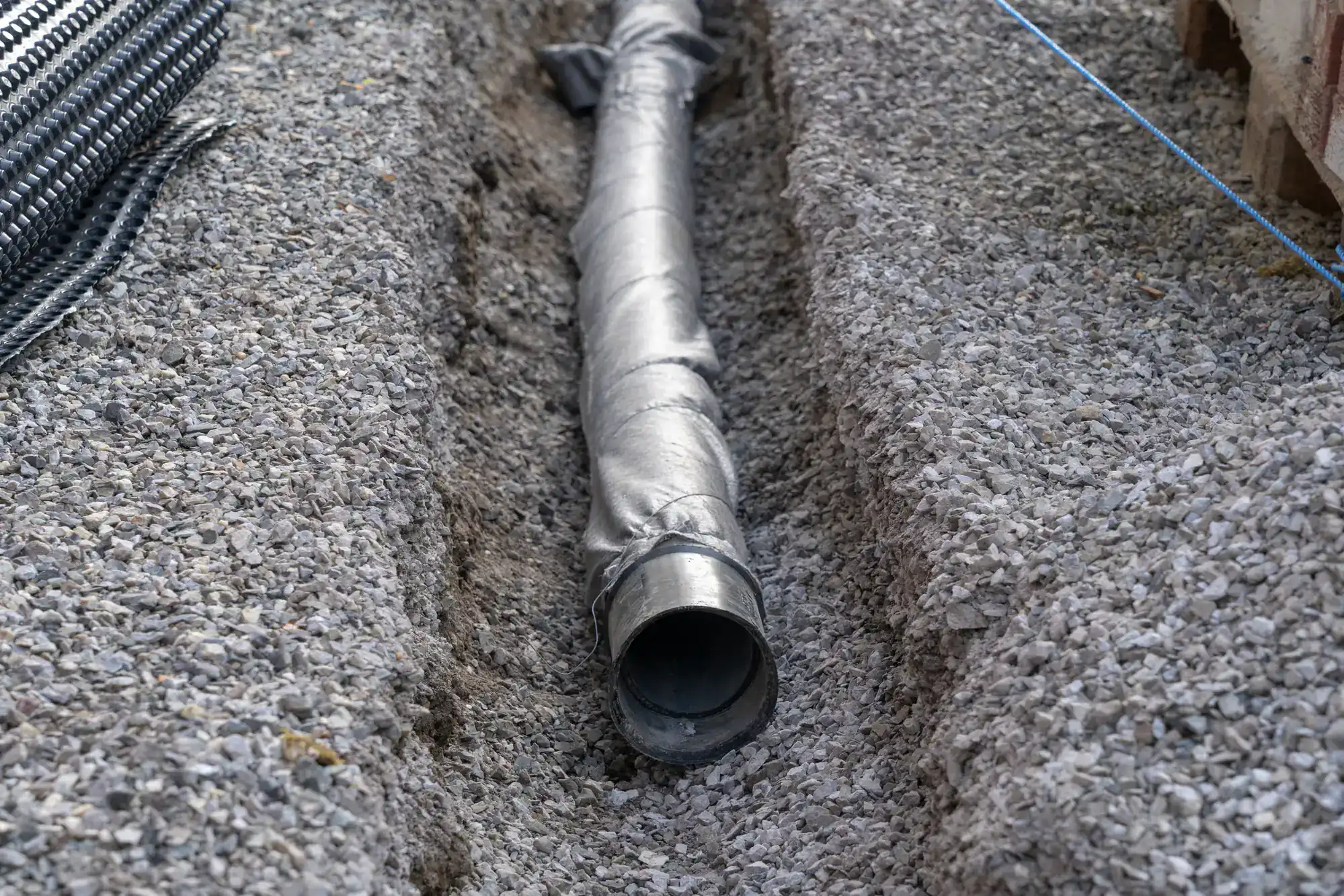
Once we’ve assessed the site, we design a system specific to your property and pull any permits required under Southold Town’s Chapter 236. Before any excavation begins, we call 811 to have underground utilities marked that’s required by New York State law and something every contractor should be doing without being asked. From there, we excavate the trench, set the slope, lay the gravel bed, install perforated pipe wrapped in geotextile filter fabric, backfill, and restore the surface. The slope matters more than most homeowners realize too flat and water pools in the pipe, too steep and you get erosion at the outlet. We engineer it correctly.
After installation, we restore your yard. Topsoil, seeding, or sod to match whatever gets your property back to the way it looked before we arrived. A system built this way, with correct materials and proper slope, should last 30 to 40 years. That’s not a marketing claim. That’s what a well-built French drain actually does.
Ready to get started?
Every French drain installation we do in Mattituck is designed around the specific conditions of this community not a one-size-fits-all approach borrowed from mid-Island work. That means accounting for the Peconic Estuary’s high water table, the sandy-over-hardpan soil profile that creates perched water conditions near the surface, and the proximity many properties have to Mattituck Creek, James Creek, or the bay-side shoreline where hydric soils drain poorly regardless of what the top layer looks like.
For properties near protected waterways or wetland buffers, we assess whether Local Waterfront Revitalization Program consistency review applies under Southold Town’s regulations. For properties along the Oregon Road vineyard corridor or near Harbes Farm and the agricultural belt, we factor in runoff loads from adjacent land that most drainage contractors never think to ask about. These aren’t edge cases in Mattituck they’re common scenarios.
We install using solid perforated pipe, properly graded at a consistent slope, wrapped in double-punched geotextile filter fabric, and bedded in washed angular gravel. We don’t use cheap corrugated pipe, and we don’t skip the fabric both are the most common reasons French drains fail within a few years of installation. Every project includes full surface restoration and a workmanship warranty. You’re not just buying a trench in the ground. You’re buying a drainage system that’s been engineered for where you actually live.
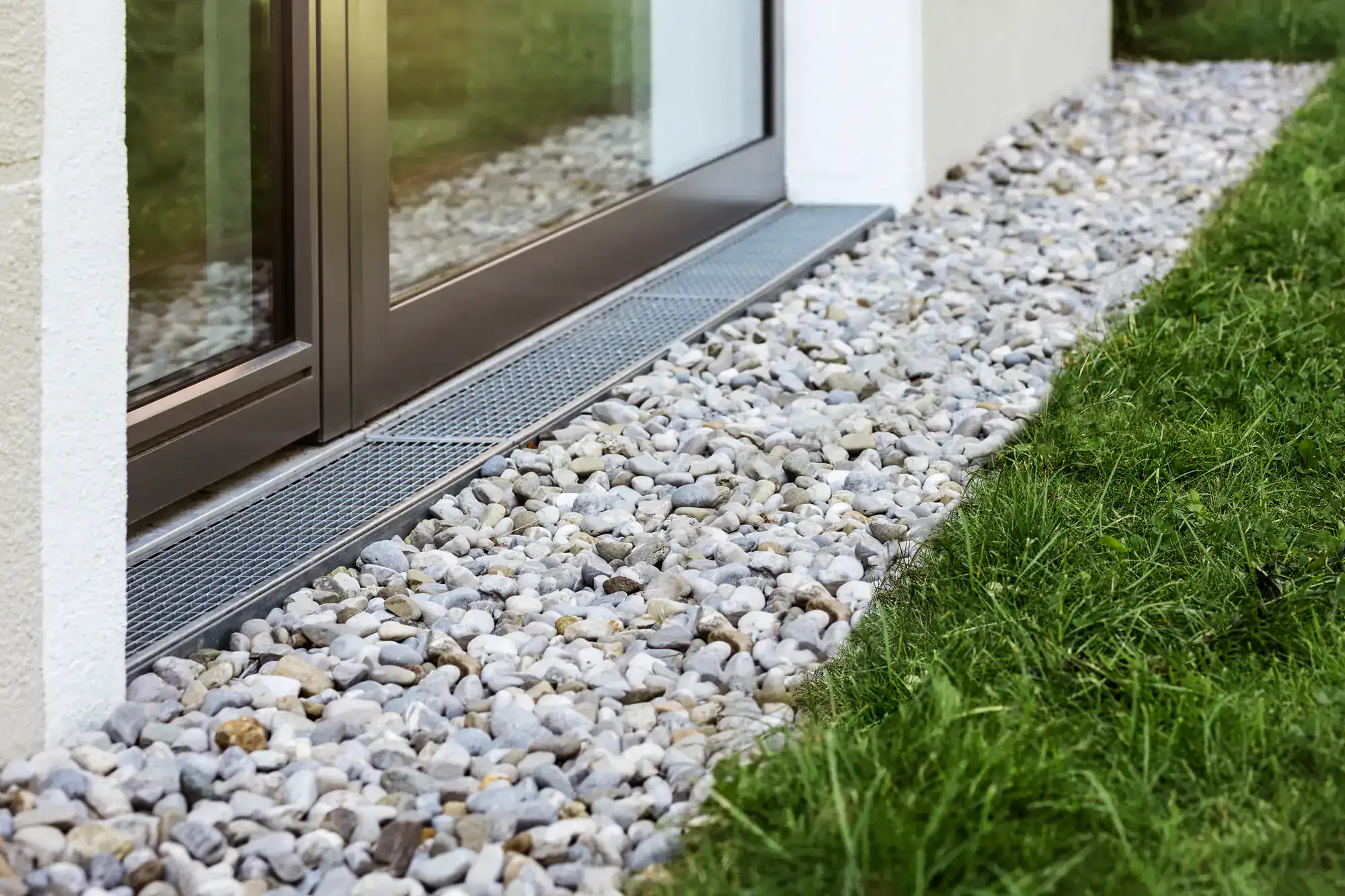
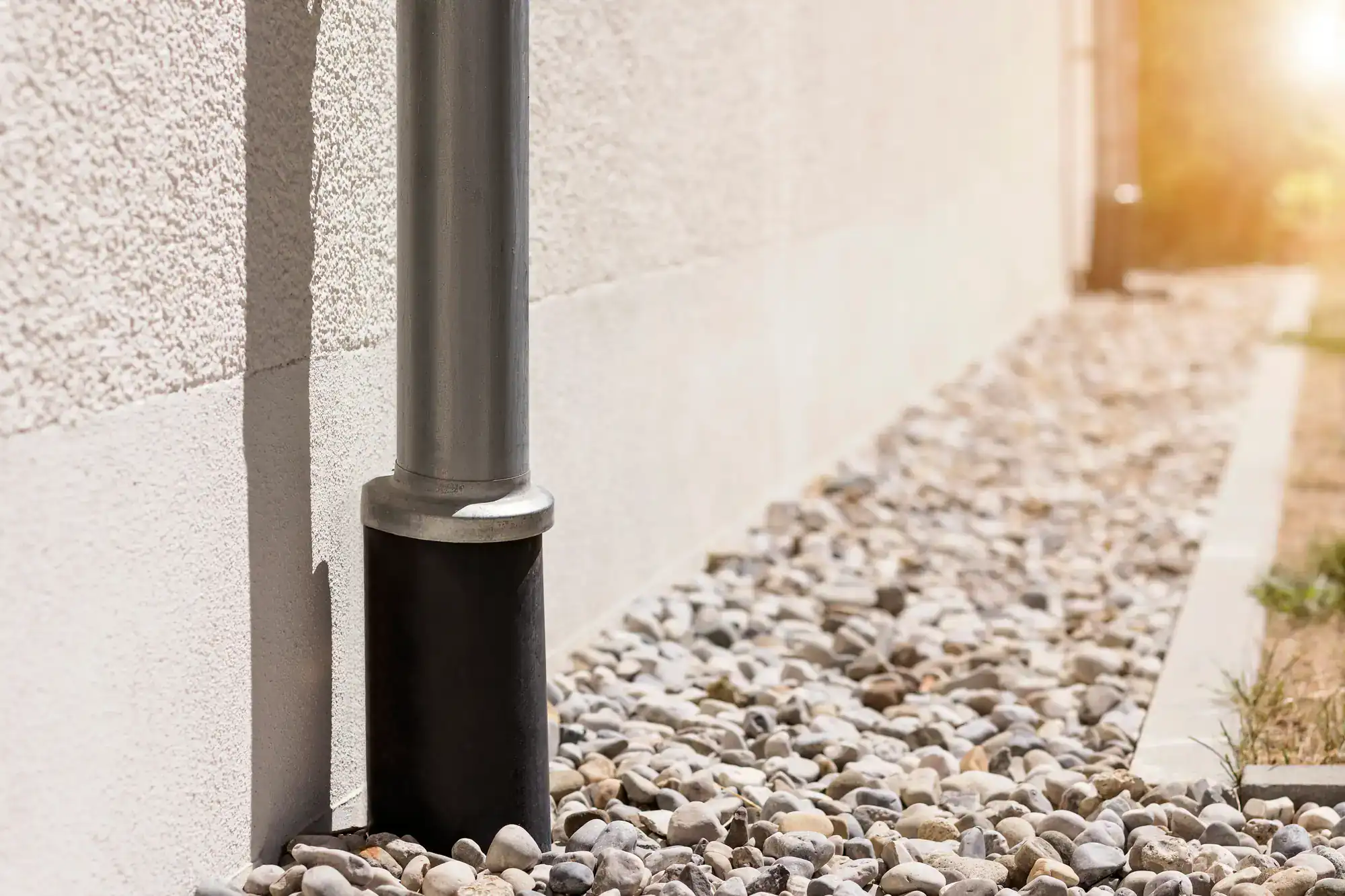
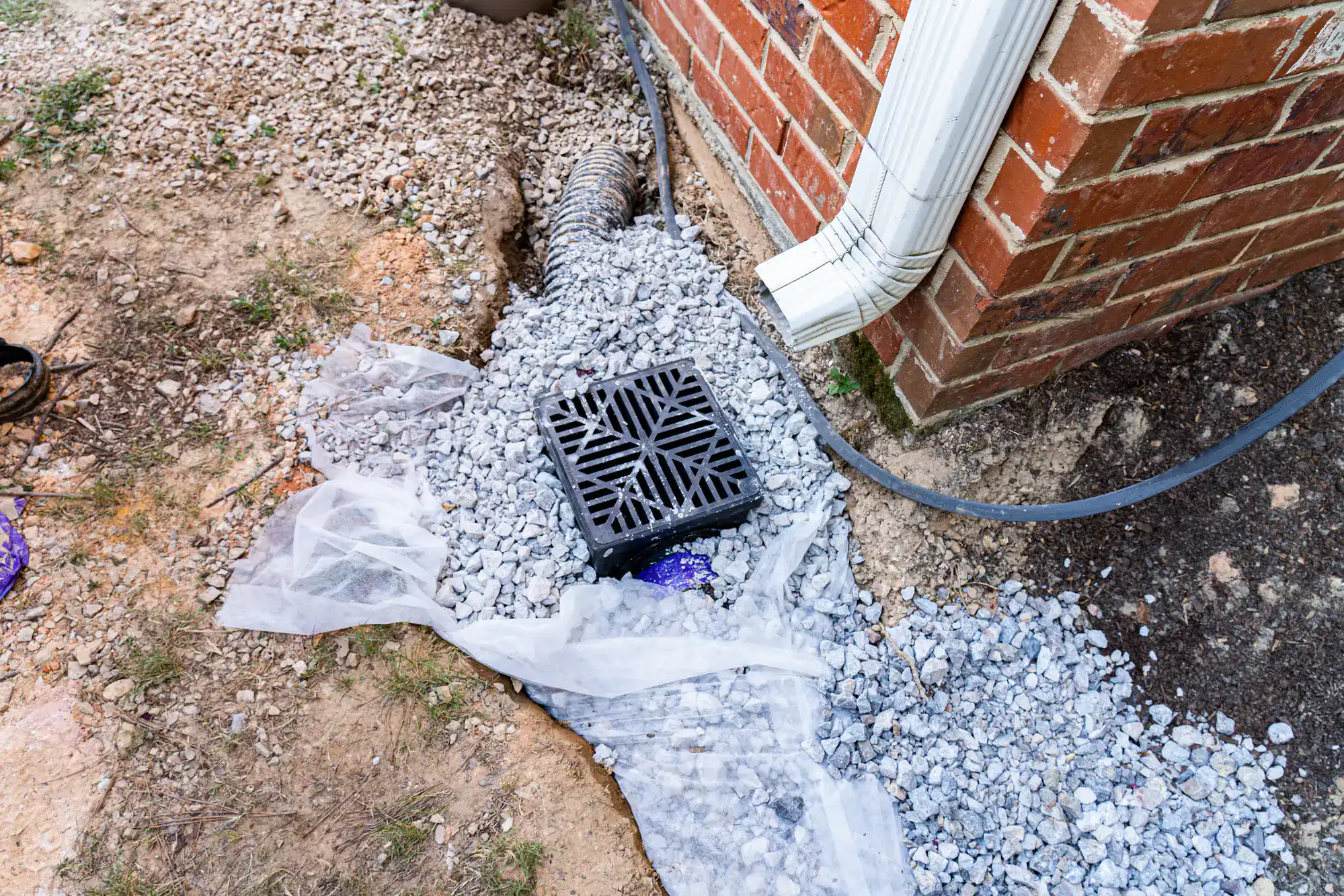
It depends on where the water is coming from, and that’s exactly why a site assessment matters before any recommendation is made. Some drainage problems in Mattituck are surface-level a grading issue, a clogged catch basin, or a downspout that’s discharging too close to the foundation. Those can sometimes be resolved with simpler corrections. But on the North Fork, where the water table sits less than 13 feet below the surface on a significant portion of properties in the Peconic Estuary, the problem is often coming from below not just from rain falling on your yard.
When you’re dealing with hydrostatic pressure pushing up against a foundation, or groundwater that saturates the soil faster than it can drain away, a French drain system is typically the right long-term answer. It’s designed to intercept that water before it becomes your problem. A simpler fix applied to a groundwater issue is usually money spent twice once on the band-aid, and once on the actual solution.
Nationally, the average for a residential French drain installation runs around $5,000 to $9,250, with cost driven primarily by system length, depth, soil conditions, and how complex the outlet situation is. In Mattituck, you should expect to be at or above that range for a quality installation and that’s appropriate given the property values here and the conditions that make the work more involved than a standard suburban job.
Properties near Mattituck Creek, James Creek, or the Peconic Bay shoreline may require additional permitting review under Southold Town’s Chapter 236 or LWRP consistency assessment, which adds time and process. Properties with agricultural adjacency or hardpan soil conditions may require deeper excavation. We walk your property before quoting, not after. Anyone giving you a firm number over the phone without seeing the site is guessing. Against the cost of foundation repair which starts at $15,000 and can run much higher the investment in a properly installed French drain is straightforward math.
In most cases, yes. Drainage work that involves grading, excavation, or altering stormwater runoff patterns falls under Chapter 236 of the Town of Southold Code, which governs stormwater management across the entire town including Mattituck. The Town of Southold updated its Stormwater Management Program Plan as recently as February 2025, which reflects how seriously the town takes drainage compliance.
If your property is near Mattituck Creek, James Creek, or any tidal wetland areas, there may also be a review required under Chapter 275 (Wetlands) and a Local Waterfront Revitalization Program consistency check. New York State law also requires a call to 811 before any excavation to have underground utilities marked no exceptions. We handle all of this as part of the project so you’re not left navigating Southold’s building department on your own. Unpermitted drainage work can surface as a disclosure issue when you sell, so doing it correctly from the start protects you on both ends.
Especially worth it, actually. Seasonal properties in Mattituck face a specific risk that year-round homes don’t: a drainage problem can develop and compound for months before anyone notices. The water table on the North Fork is at its seasonal peak in late winter and early spring exactly when most seasonal homes are sitting empty. If water is working its way into your basement or saturating your foundation perimeter during those months, you may not find out until you return in May or June. By then, mold has had time to establish, wood framing has had time to absorb moisture, and what started as a drainage issue has become a remediation project.
A French drain system that actively manages groundwater year-round doesn’t require you to be on-site to do its job. It works whether you’re in the city or on the water. We also coordinate site assessments and installation schedules around the availability of owners who aren’t local full-time so getting this handled doesn’t require you to rearrange your life to be there every step of the way.
Yes, installation involves excavation there’s no way around that. A French drain requires a trench, and a trench means disruption to the surface. What separates a contractor who does this well from one who doesn’t is what happens after the trench is backfilled. Surface restoration is part of every installation we do in Mattituck. That means topsoil is brought back to grade, and the surface is seeded or sodded to match the surrounding lawn. We don’t leave a dirt scar across your yard and call it done.
For properties with established landscaping mature plantings, ornamental beds, carefully maintained grounds we assess what’s in the path of the installation during the site visit and plan the routing to minimize impact wherever the system design allows. Many Mattituck properties have significant landscape investment, and we treat that as part of the project scope, not an afterthought. The goal is a yard that drains correctly and looks like the work was never there.
The most reliable way to tell is by pattern. If water appears in your basement primarily after heavy rain or during snowmelt typically late winter through spring on the North Fork it’s most likely a surface or subsurface drainage issue that a French drain can address. Water that appears regardless of recent rainfall, or that seeps through the floor rather than through the walls, is more likely tied to hydrostatic pressure from a high water table, which is a real condition in Mattituck given the Peconic Estuary’s shallow groundwater depths.
Efflorescence the white mineral residue left behind as water evaporates from concrete is a strong indicator that water has been moving through your foundation walls over time, even if you haven’t seen standing water. Musty odors without visible moisture are another signal. In older Mattituck homes, many of which were built in the 1950s and 1960s without modern drainage infrastructure, these signs are common and often go unaddressed for years. A site assessment gives you a clear picture of what’s actually happening and whether a French drain, a sump system, or a combination of both is the right answer for your specific situation.