
Hear from Our Customers
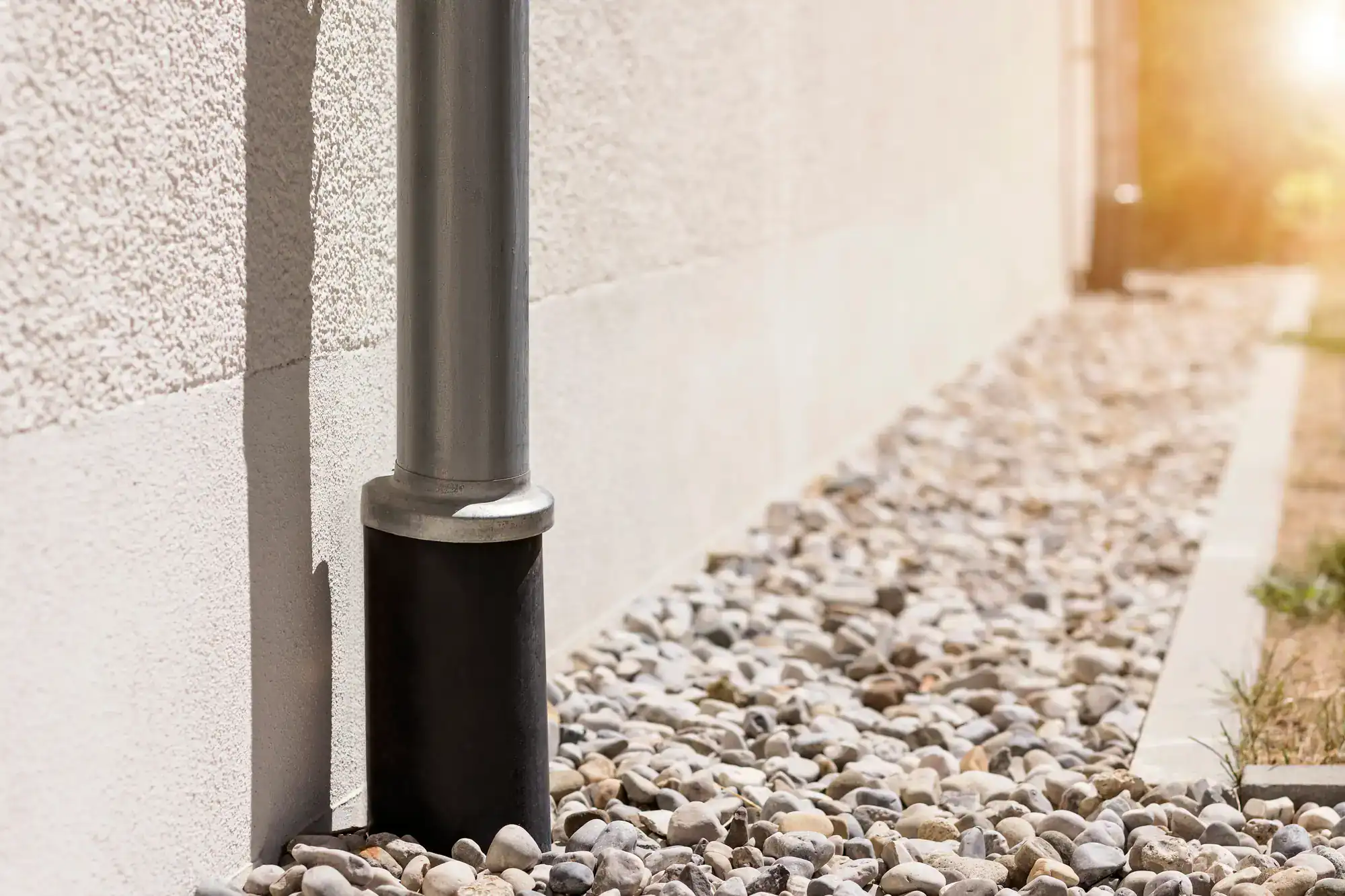
The flat outwash plain that North Bay Shore sits on wasn’t designed to drain itself. Unlike the hilly terrain on Long Island’s North Shore, water that falls on a South Shore property has no natural grade pushing it away from your home. It pools, it saturates, and eventually it finds your foundation. A properly installed French drain system creates the slope, the pathway, and the outlet that your property is missing and it does it underground, invisibly, without changing the way your yard looks or functions.
For the ranch homes, hi-ranches, and bi-levels that make up most of North Bay Shore’s housing stock, this matters more than most homeowners realize. These homes were built quickly in the 1950s and 1960s with minimal grading and no perimeter drainage to speak of. Decades of soil compaction, added driveways, and mature landscaping have made things worse over time. The drainage problem you’re dealing with today didn’t appear overnight it’s been building for years, and it won’t fix itself.
Once a French drain system is in place, the difference is immediate and lasting. Water that used to sit against your foundation gets intercepted before it gets there. The soggy corner of your yard that killed your lawn every spring finally drains. Your basement stays dry through nor’easters and heavy spring rains. For a home worth close to $600,000, a properly installed French drain system is one of the more straightforward investments you can make in protecting what you own.
We serve the Islip corridor North Bay Shore, Bay Shore, West Bay Shore, Baywood, and the surrounding communities that share the same South Shore terrain and the same post-war housing challenges. This isn’t a company that lists 200 towns on a website and sends whoever’s available. The conditions between the Sagtikos State Parkway and the Southern State Parkway are conditions we work in regularly.
We’ve seen what happens when drainage systems are installed without accounting for Long Island’s frost depth, the water table dynamics near the Great South Bay, or the specific way water moves across a flat South Shore lot after a major storm. We’ve also fixed plenty of systems that other contractors installed incorrectly. That experience shapes how we approach every project with a site assessment first, a design that fits the actual property, and materials that hold up for decades, not a few seasons.
When we leave your North Bay Shore property, the yard is restored. Topsoil, reseeding, cleanup all of it. The disruption is temporary. The drainage is permanent.
It starts with a free on-site assessment. Drainage problems can’t be diagnosed over the phone the source of the water, the grade of the property, the soil conditions, and the best outlet point all need to be evaluated in person. We visit your North Bay Shore property, walk the problem areas, and give you a clear picture of what’s happening and what the right solution looks like. No obligation, no phone guesses.
Once the design is confirmed, we handle utility marking through New York State’s 811 Dig Safe system before any excavation begins that’s a legal requirement, and it protects your property. Depending on the scope of the project and your location within the Town of Islip, permits may also be required, particularly for properties near flood zones or wetlands. We research and manage that process so you don’t have to navigate Islip’s stormwater management regulations on your own.
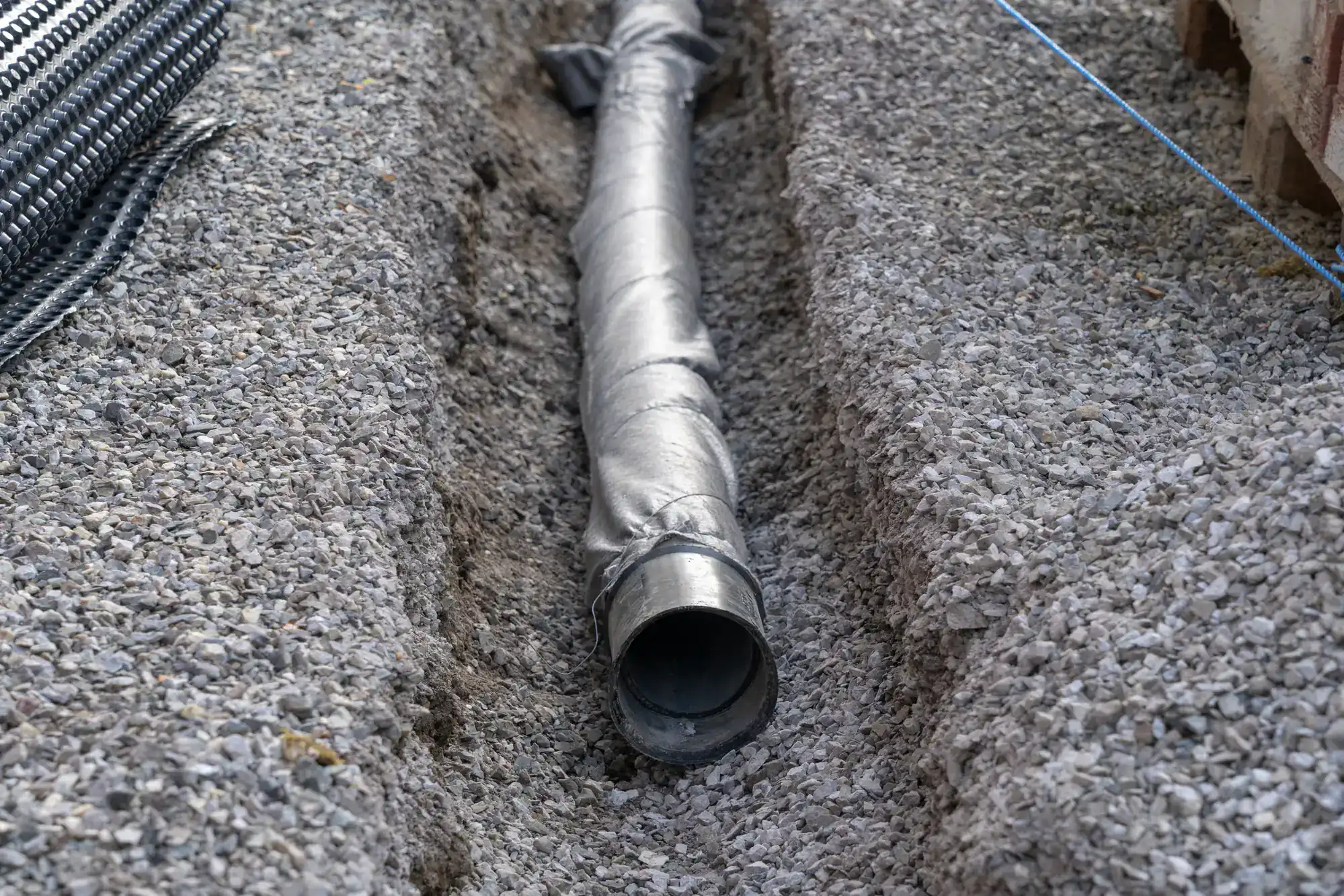
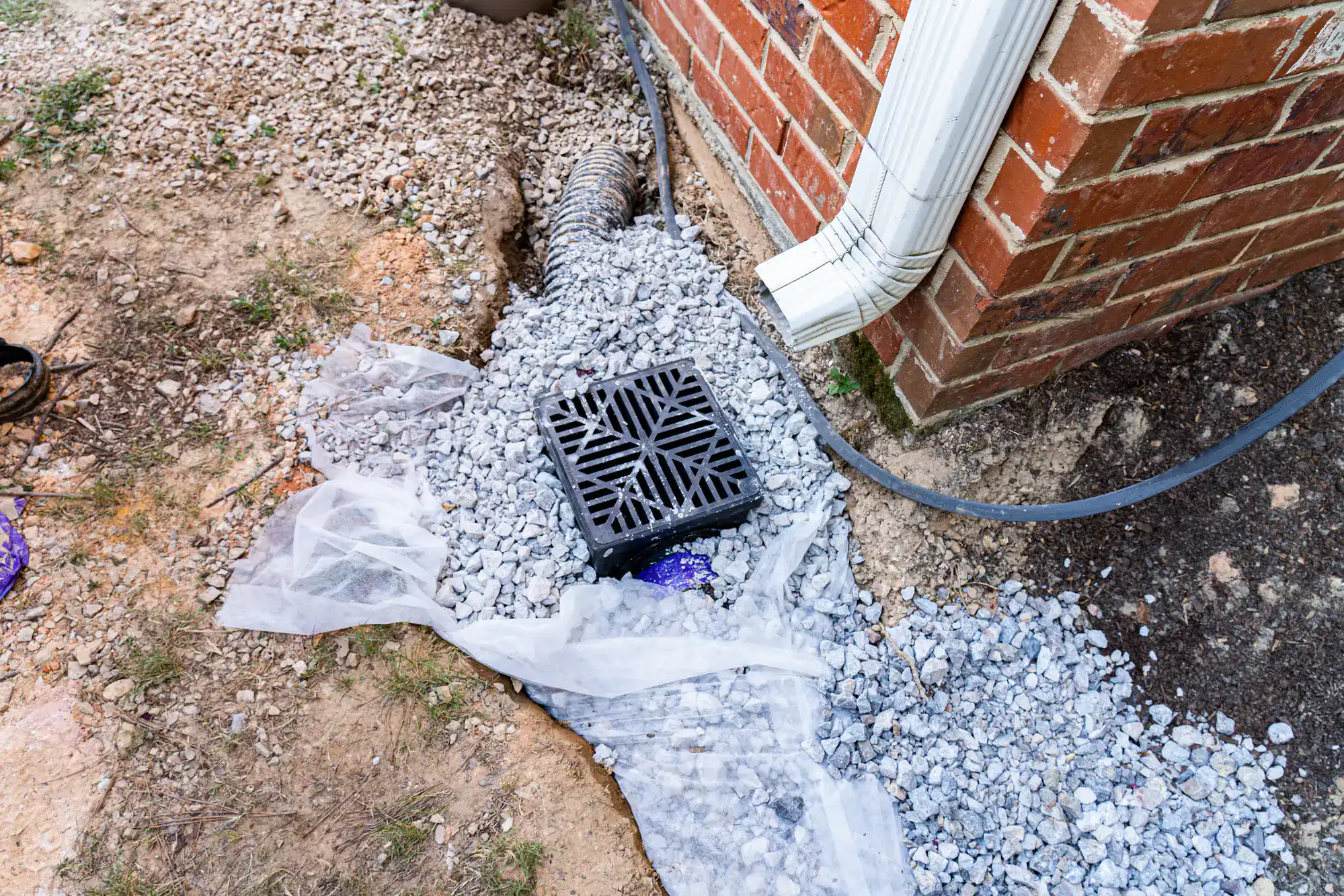
Installation involves excavating a trench at the correct depth on Long Island, that means accounting for a frost depth of approximately 36 inches, so the pipe doesn’t freeze and crack in the first hard winter. We line the trench with double-punched geotextile filter fabric, fill it with washed angular gravel, set perforated pipe at the right slope, and route everything to a defined outlet. When the system is in, we restore the yard topsoil, seed, cleanup. What you’re left with is a property that drains the way it should have from the beginning.
Ready to get started?
A French drain system is only as good as its weakest component. The reason some systems fail within two to five years while others last thirty to forty comes down entirely to materials and installation technique. Every residential French drain installation we complete in North Bay Shore uses perforated pipe sized to handle the water volume Long Island storms produce, double-punched geotextile filter fabric wrapping the entire gravel bed (not just the pipe), and washed angular gravel that maintains void space and flow capacity over time. Round pea gravel compacts. Cheap corrugated tubing cracks. We don’t use either.
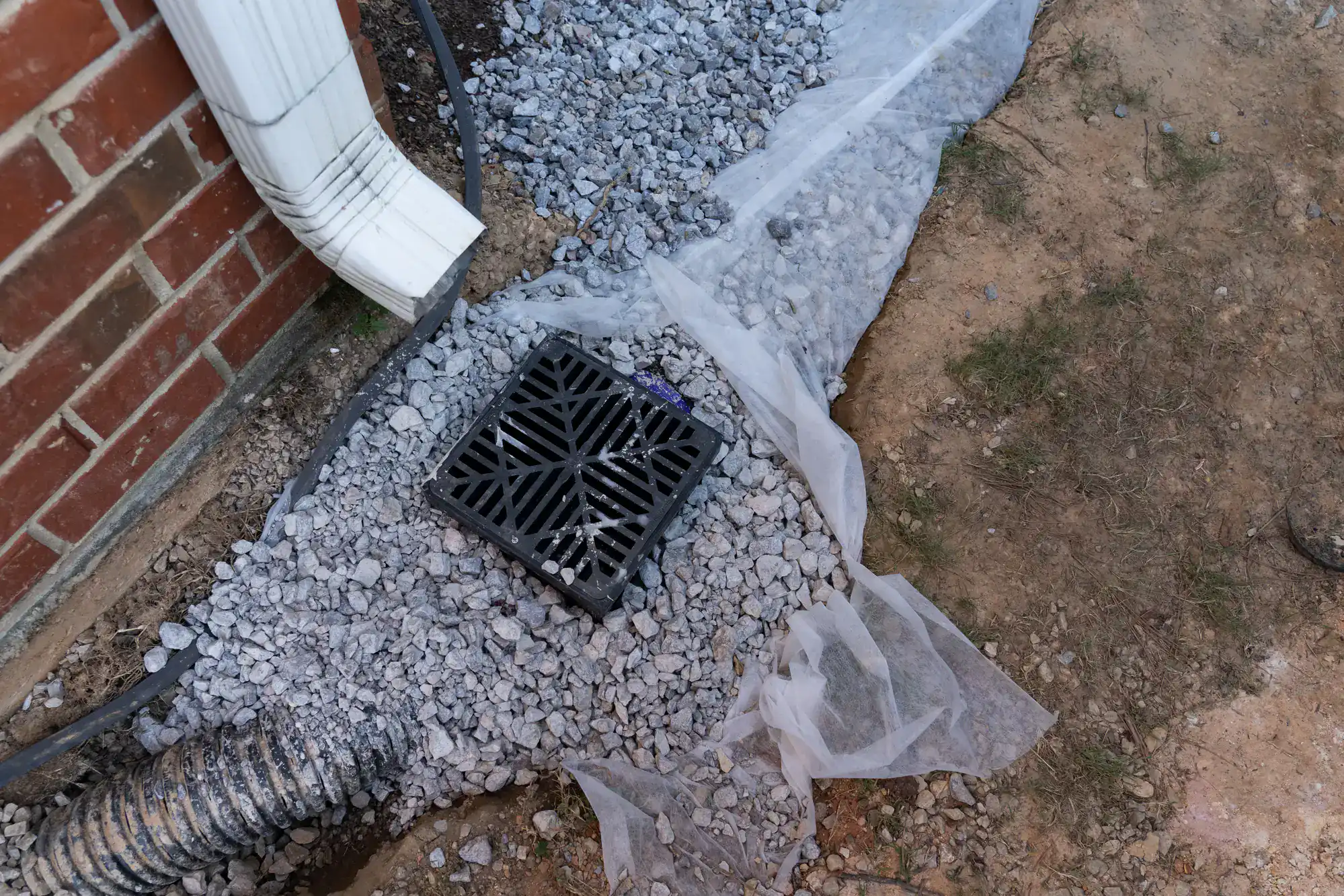
Every system is designed with a defined outlet whether that’s a daylight outlet, a dry well, a catch basin, or a connection to an existing storm system based on what your specific property allows and what the Town of Islip’s stormwater regulations permit. For North Bay Shore homeowners in or near designated flood zones, we factor in the floodplain management requirements that govern drainage modifications in those areas. Suffolk County’s sole-source aquifer also means we’re careful about where and how water is directed protecting groundwater quality is part of responsible drainage work on Long Island.
Whether the issue is a saturated yard in Pine Aire, a wet basement on a street that feeds the Sagtikos, or hydrostatic pressure building against a foundation that’s been fighting the water table for decades the system we design is specific to your property, not a one-size-fits-all fix pulled from a catalog.
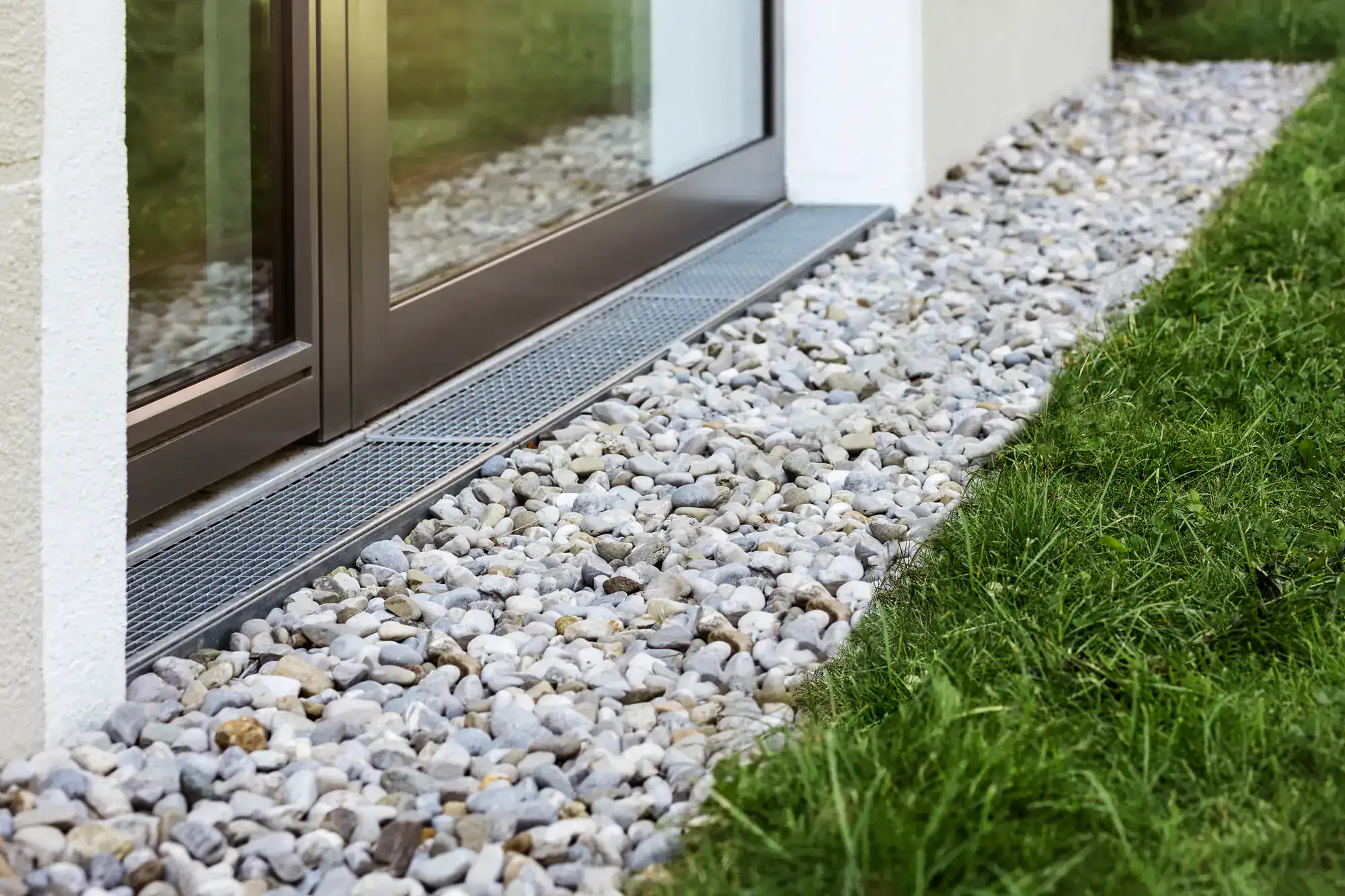
North Bay Shore sits on a flat glacial outwash plain the same South Shore terrain that runs along much of Long Island’s lower half. Unlike areas with natural hills or slopes that push water away from structures, this flat topography gives surface water nowhere to go after a heavy rain. It spreads out, saturates the soil, and sits until it either evaporates or slowly percolates down.
The problem is compounded by the housing stock in North Bay Shore. Most homes were built in the 1950s and 1960s with minimal grading and no engineered drainage systems. Over time, driveways, patios, and landscaping have changed how water moves across the property usually in ways that make drainage worse, not better. A French drain system intercepts that surface water and subsurface water before it pools, routing it to a proper outlet so your yard recovers in hours, not days.
Most residential French drain installations in North Bay Shore fall somewhere between $5,000 and $9,250, with the full range running from roughly $1,650 on the low end for a simple, short run to $12,250 or more for complex systems involving multiple drain lines, dry wells, or catch basins. The variables that drive cost are the length of the drain run, the depth required, the outlet type, the accessibility of the excavation area, and whether any permit fees apply through the Town of Islip.
What’s worth keeping in perspective is the cost of the alternative. Foundation crack repair on a post-WWII South Shore home runs $15,000 to $50,000. Mold remediation starts at $3,000 and climbs fast. For a home with a median value around $595,000, a properly installed French drain system is one of the more straightforward investments you can make in protecting what you own. We provide detailed, itemized estimates after the on-site assessment no vague ballpark numbers over the phone.
Pipe depth depends on what the drain is meant to do, but on Long Island there’s a hard floor you can’t ignore: the frost depth is approximately 36 inches. Any perforated pipe installed shallower than that in a climate-exposed location risks freezing during a hard winter, which cracks the pipe and destroys the system. This is one of the most common reasons DIY French drains and systems installed by inexperienced contractors fail within the first year or two.
For a yard drainage system intercepting surface runoff, pipe is typically installed 18 to 24 inches deep but in North Bay Shore, where winters are real and frost cycles are consistent from December through March, we account for local conditions in every design decision. For foundation perimeter drains where the goal is to relieve hydrostatic pressure, the pipe needs to sit at or below the footing level, which on older South Shore homes often means going deeper than homeowners expect. The site assessment determines the right depth for your specific situation.
It depends on the scope of the work and where your property is located. The Town of Islip operates as an MS4 a Municipal Separate Storm Sewer System permit holder under New York State and federal authorization, which means it has formal stormwater management ordinances in place. For drainage work that alters the flow of surface water, particularly on properties in or near designated flood zones, a permit may be required before work begins.
North Bay Shore has areas that fall within FEMA flood zone mapping administered through Islip’s floodplain management program. If your home is in or adjacent to one of those zones, drainage modifications are subject to additional review. Beyond permits, New York State law requires that 811 Dig Safe be called before any excavation that’s non-negotiable regardless of project size. We handle the permit research and utility marking process as part of every installation, so you’re not left trying to interpret municipal code on your own.
A French drain is a linear system a trench filled with gravel and perforated pipe that collects water along its length and moves it toward an outlet. A dry well is a vertical structure, typically a perforated chamber or pit filled with gravel, that receives water from a single point and allows it to percolate slowly into the surrounding soil. They solve different problems, and in many cases they work together.
On a typical North Bay Shore property, a French drain handles the lateral movement of water intercepting sheet flow across the yard or groundwater migrating toward the foundation. A dry well handles the volume giving the collected water somewhere to go once the drain has moved it. Suffolk County’s sandy outwash soil generally percolates well, which makes dry wells an effective outlet option in this area. Whether you need one, the other, or both depends on your specific drainage pattern, your soil conditions, and the available space on your property. That’s exactly what the site assessment is designed to determine.
Most residential French drain installations in North Bay Shore are completed in one to two days, depending on the length of the drain run and the complexity of the outlet. Larger systems with multiple drain lines or catch basins may take an additional day. The excavation is targeted we dig where the drain needs to go, not across the entire yard so the disruption is more contained than most homeowners expect going in.
Yes, there will be a trench, and yes, the lawn along that trench will be disturbed. That’s unavoidable with any underground drainage system. What matters is what happens after the pipe is in the ground. Every installation we complete includes full yard restoration topsoil is replaced, the area is reseeded or matched with sod, and the site is cleaned up before we leave. Within a few weeks of installation, most North Bay Shore homeowners find it difficult to tell exactly where the drain runs. The disruption is temporary. The drainage benefit is not.