
Hear from Our Customers
Most Patchogue homeowners don’t realize how much their drainage problem is costing them until it’s already gotten worse. A yard that stays saturated for days isn’t just inconvenient it’s actively working against your foundation, your landscaping, and the long-term value of a home that’s likely worth close to $484,000 in today’s market.
The South Shore’s sandy, loamy soil drains reasonably well under normal conditions. But when a nor’easter rolls in and drops two to three inches of rain over two days which happens multiple times a year along this coastline that same soil saturates fast. Add in the shallow water table that comes with living near Great South Bay, and water starts pushing up from below just as fast as it’s coming down from above. That’s a compounding problem, and surface fixes don’t solve it.
A properly installed French drain system in Patchogue intercepts that water before it reaches your home and moves it to a defined discharge point away from your foundation, away from your yard’s low spots, and away from the areas that flood first. The result is a yard that recovers within hours of a storm, a basement that stays dry through the spring thaw, and a home that doesn’t carry a water damage disclosure into your next real estate transaction.
We work across Long Island’s South Shore, and Patchogue is one of the communities we know well. That means we understand what drainage looks like here the sandy soil profile, the shallow water table near the bay, the older housing stock that makes up most of the residential neighborhoods between Route 112 and the waterfront, and the specific stormwater regulations that apply inside an incorporated village like Patchogue.
That last part matters more than most contractors will tell you. The Village of Patchogue operates under its own stormwater management code Village Code §369 and its own MS4 permit through the NYSDEC. Drainage work here isn’t just a landscaping project. It may involve village permit review and discharge point compliance, especially given the proximity to Great South Bay and Patchogue Bay, both of which are designated No Discharge Zones. We handle that process so you don’t have to navigate it alone.
We’re fully licensed and insured in New York State, and we come out to assess your property before recommending anything. No phone quotes, no guesswork.
It starts with a free on-site assessment. We come to your property, walk the yard, look at where water is entering, where it’s pooling, and what’s driving it whether that’s surface runoff, a rising water table, or both. In Patchogue, it’s often both, particularly for homes near the Patchogue River corridor or in low-lying areas close to the bay. That site visit is the only way to design a system that actually solves your specific problem.
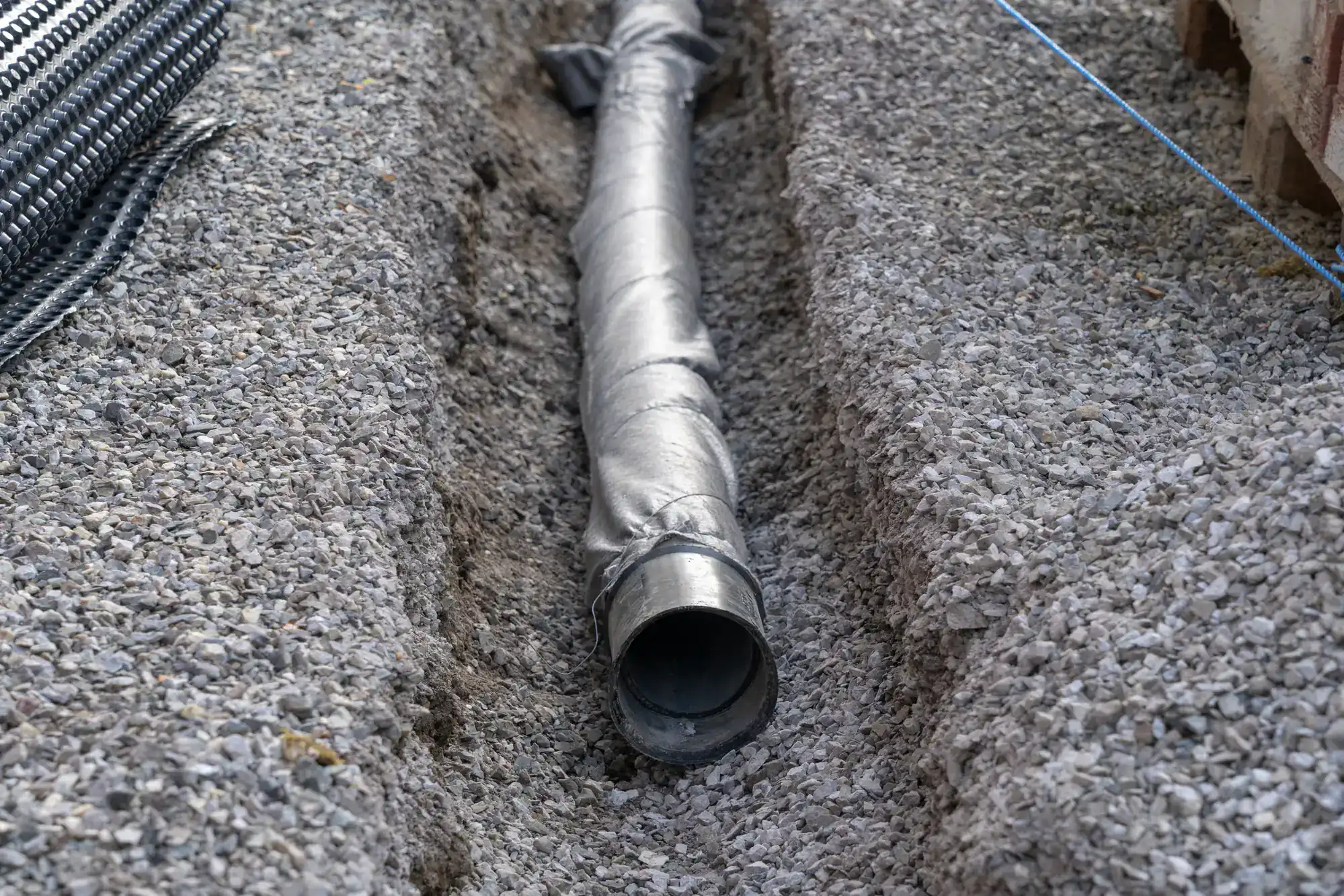
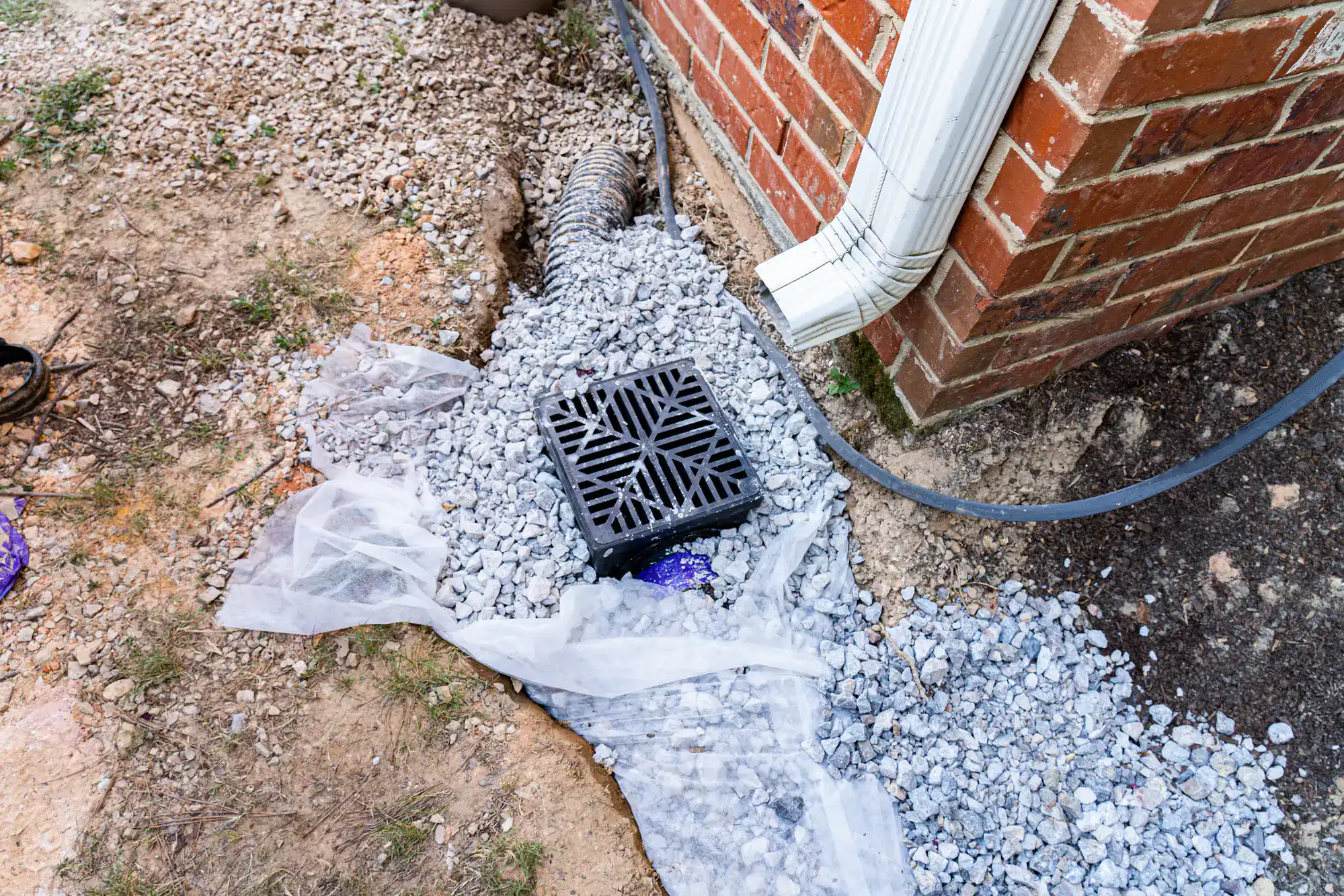
From there, we design the French drain system around your property’s actual conditions the slope of your yard, the soil profile, the location of your foundation, and where water can be safely discharged in compliance with the village’s stormwater code. We use perforated pipe, washed angular gravel, and geotextile filter fabric that keeps the system from silting up over time. The slope is calculated precisely a French drain that doesn’t flow correctly is just a pipe buried in your yard.
Installation involves targeted excavation, which we follow with clean restoration of your lawn and landscaping. Most residential French drain installations in Patchogue are completed in one to two days depending on scope. If your project requires a village permit, we handle that paperwork before a shovel goes in the ground. When we’re done, the system is working and your yard looks like we were never there.
Ready to get started?
Patchogue’s drainage challenges are specific enough that a system designed for a generic Long Island property often falls short here. Homes in the 11772 ZIP code were predominantly built in the 1940s and 1960s long before engineered drainage was standard in residential construction. Decades of soil settling, root intrusion, and compaction have compounded whatever original grading existed. In many cases, there was no drainage infrastructure to begin with.
For yard drainage problems standing water, saturated turf, low spots that never fully dry we install French drain systems for yards that collect and redirect surface water before it has a chance to pool. For foundation and basement water intrusion, we design perimeter systems that intercept groundwater at depth, which is especially important for homes near the bay where the water table can rise quickly during storm events. Both approaches use materials rated for long-term performance: pipe that won’t collapse under soil pressure, fabric that won’t allow silt infiltration, and gravel with the void ratio needed to move water efficiently.
Every residential French drain installation in Patchogue, NY includes a full site assessment, system design specific to your property, permit handling where required under Village Code §369, installation, and yard restoration. The goal isn’t just a working drain it’s a system that holds up for decades without constant maintenance, protecting your home and your investment in it.
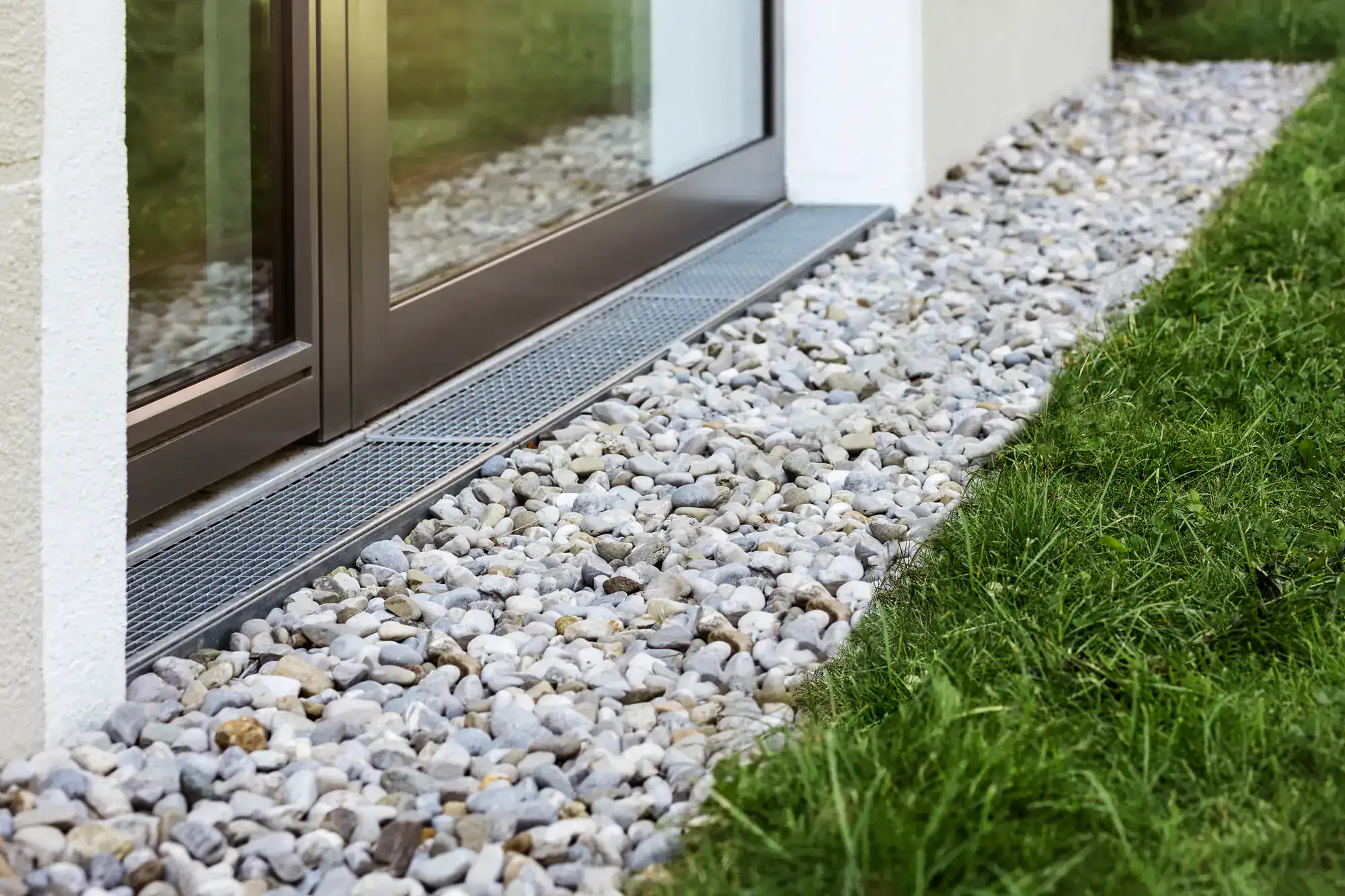
It depends on where your water problem is coming from, and that’s exactly why a site visit matters before any recommendation is made. If you have standing water in your yard after rain, a soggy lawn that takes days to dry, or water pooling near your foundation, a French drain system is usually the right solution. It intercepts water at or below the surface and moves it away from the problem area through a perforated pipe system bedded in gravel.
That said, some Patchogue properties particularly those close to Great South Bay or the Patchogue River experience water intrusion that’s driven primarily by a rising water table rather than surface runoff. In those cases, a French drain alone may need to be paired with a sump pump system to manage hydrostatic pressure from below. The only way to know which applies to your property is to look at it. We assess both surface drainage patterns and subsurface conditions before recommending anything, so you’re not paying for a solution to the wrong problem.
Most residential French drain installations in Patchogue fall somewhere between $5,000 and $12,000, depending on the length of the system, how deep it needs to go, and how complex the discharge routing is. Professional installation generally runs $20 to $60 per linear foot shallow yard drainage systems come in at the lower end, while deep foundation perimeter systems run higher.
In Patchogue specifically, a few factors can affect cost. If your project requires a village permit under the stormwater management code, that adds some lead time and administrative work. Properties near the bay may need deeper systems to account for the water table, which affects labor and material costs. And homes with mature landscaping or finished hardscaping require more careful excavation and restoration, which is reflected in the price. What you’re spending on drainage, though, needs to be weighed against what you’re protecting a foundation repair in a home worth close to $484,000 starts at $15,000 and climbs fast from there.
Possibly, and it’s worth taking seriously. The Village of Patchogue is an incorporated village with its own stormwater management regulations under Village Code §369, adopted in 2009. The village also operates a Municipal Separate Storm Sewer System under a NYSDEC SPDES permit, which means it manages its own stormwater infrastructure independently from the Town of Brookhaven. Drainage work that alters surface water flow or connects to the municipal stormwater system may require compliance review and permit approval from the village.
This is one of the ways Patchogue differs from unincorporated hamlets in Suffolk County, where you’re dealing solely with town and county rules. The village code also explicitly requires that storm drainage be conveyed to an adequate and approved disposal system which matters especially near Great South Bay and Patchogue Bay, both designated No Discharge Zones. We handle the permit process as part of our residential French drain installation service in Patchogue, so you’re covered from a compliance standpoint before installation begins.
A properly installed French drain system should last 30 to 40 years with minimal maintenance. The key word is properly. The most common reason French drains fail early usually two to five years after installation is that corners were cut on materials: cheap corrugated pipe that collapses under soil pressure, the wrong geotextile fabric or none at all, which allows silt to infiltrate and clog the system over time, or insufficient gravel that doesn’t move water efficiently.
On Long Island’s South Shore, soil conditions add another variable. Sandy loam soils are relatively forgiving, but fine particles can still migrate into a poorly wrapped system over time. Using double-punched geotextile filter fabric wrapped around the entire gravel bed not just the pipe is what keeps the system clean long-term. We also calculate slope precisely: a French drain needs at least one inch of drop per eight to ten feet of run to flow correctly. If it doesn’t have that, water sits in the pipe instead of moving to the outlet. Ask any drainage contractor what specific materials and slope calculations they use before you commit to anything.
A few things could explain it, and they’re not mutually exclusive. First, Patchogue’s downtown has seen significant new development in recent years the Carriage House project alone is adding over 400 structured parking spaces and 262 apartment units to the village core. New impervious surfaces upstream mean more runoff moving into the surrounding residential neighborhoods during rain events. If you live near the downtown development zone and your yard has gotten wetter in the last few years, increased runoff from new construction is a real and documented cause.
Second, even South Shore sandy soil has a saturation point. If you’ve had a run of particularly active nor’easter seasons which Long Island has seen recently the cumulative effect on groundwater levels near the bay can be significant. What used to drain overnight now stays wet for days because the water table is starting from a higher baseline. A French drain system for your yard in Patchogue addresses both scenarios: it intercepts surface runoff before it pools and manages subsurface water before it saturates the soil profile around your foundation.
Yes and for homes built in the 1940s and 1960s, which make up the bulk of the housing stock in the 11772 ZIP code, it’s often the most effective long-term solution available. Homes from that era were built without engineered drainage systems. The original grading was done by hand, without drainage calculations, and decades of settling have made it worse. Many of these homes have fieldstone or block foundations that absorb and transmit moisture more readily than poured concrete, which makes them more vulnerable to water intrusion when the surrounding soil stays saturated.
A perimeter French drain system intercepts groundwater before it reaches the foundation wall, which is where the problem starts. For homes near Great South Bay where the water table rises quickly during storm events, this is especially important the water isn’t just coming in through the walls laterally, it’s pushing up from below. In those cases, a French drain system designed to prevent basement flooding in Patchogue, NY works best when it’s paired with an interior sump pump that handles any residual hydrostatic pressure. We assess both during the site visit and recommend only what your specific property actually needs.