
Hear from Our Customers
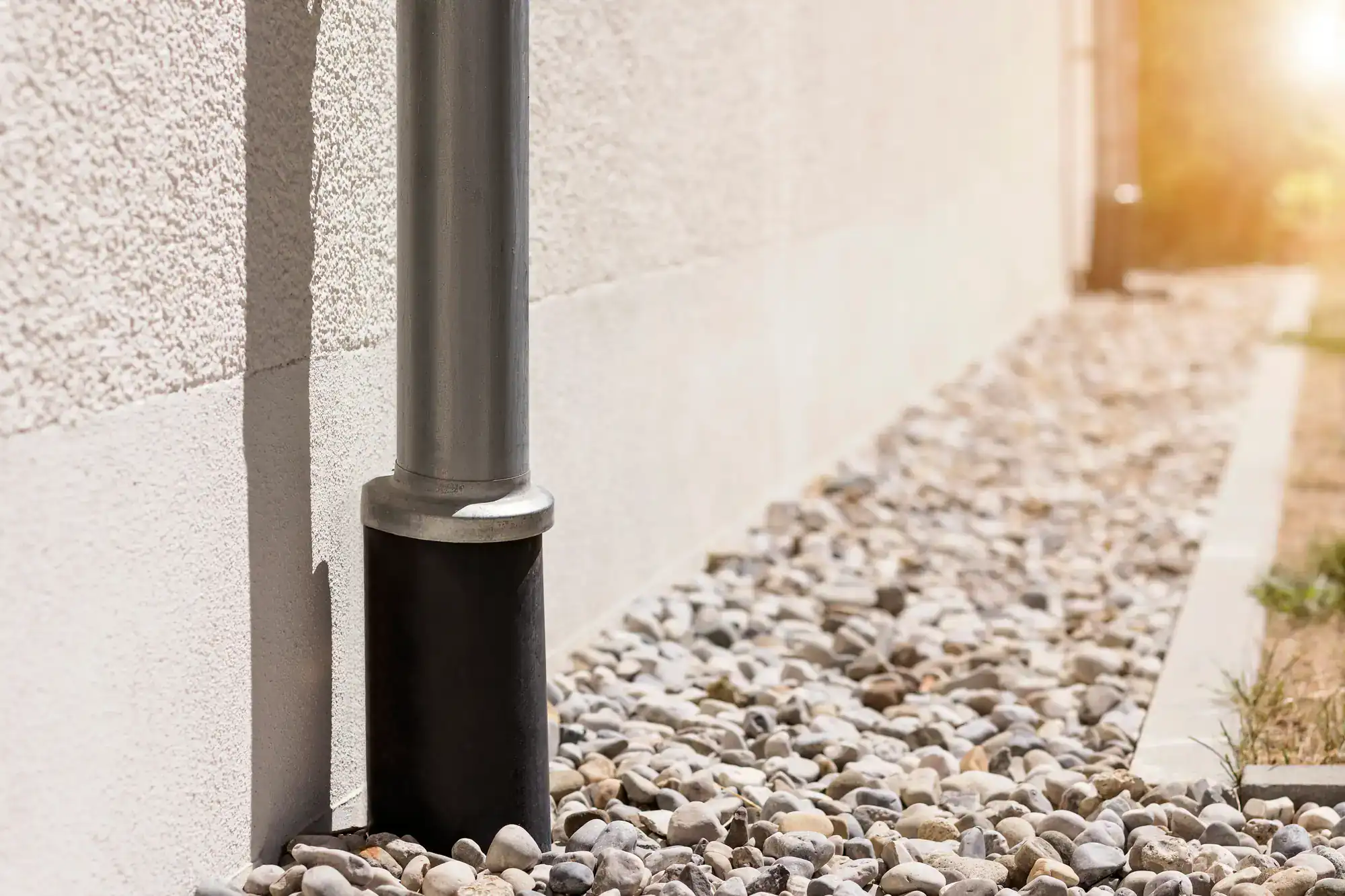
When the water has somewhere to go, everything changes. The yard your kids couldn’t use after a rainstorm is usable again. The corner of the basement you’ve been ignoring stops collecting moisture. The foundation that’s been sitting in saturated soil finally gets relief. That’s what a properly installed French drain system actually delivers not a temporary patch, a permanent redirect.
Ronkonkoma’s soil holds water in a way that most of Long Island doesn’t. The clay content here slows drainage dramatically, and when you add the influence of Lake Ronkonkoma’s water table rising during wet seasons, even homes several blocks from the lake can see basement seepage and standing water that won’t move on its own. A French drain system intercepts that subsurface water before it reaches your foundation or pools across your lawn and routes it to a safe outlet point away from your home.
For the postwar homes throughout Ronkonkoma the ones built in the 1950s, 60s, and 70s without engineered drainage this isn’t a luxury upgrade. It’s the infrastructure that should have been there from day one. Getting it installed now means you stop losing ground every wet season and start protecting a home that’s worth protecting.
We install French drain systems across Suffolk County, and Ronkonkoma is one of the areas we know in specific detail not just as a ZIP code, but as a place with its own soil behavior, its own water table dynamics, and its own permit complexity. When your property straddles the Islip-Brookhaven town line, knowing which municipality governs your drainage work isn’t a minor detail. It’s the difference between a smooth project and a stalled one.
We work within both the Town of Islip’s stormwater management program and the Town of Brookhaven’s requirements, and we handle that research on your behalf before a single shovel goes in the ground. We’ve assessed properties near the Lake Ronkonkoma watershed, installed systems in mid-century Sachem district neighborhoods, and dealt with the clay-heavy soil conditions that make drainage here genuinely different from other parts of Long Island.
You don’t have to explain your situation from scratch. We already understand the environment your home is sitting in.
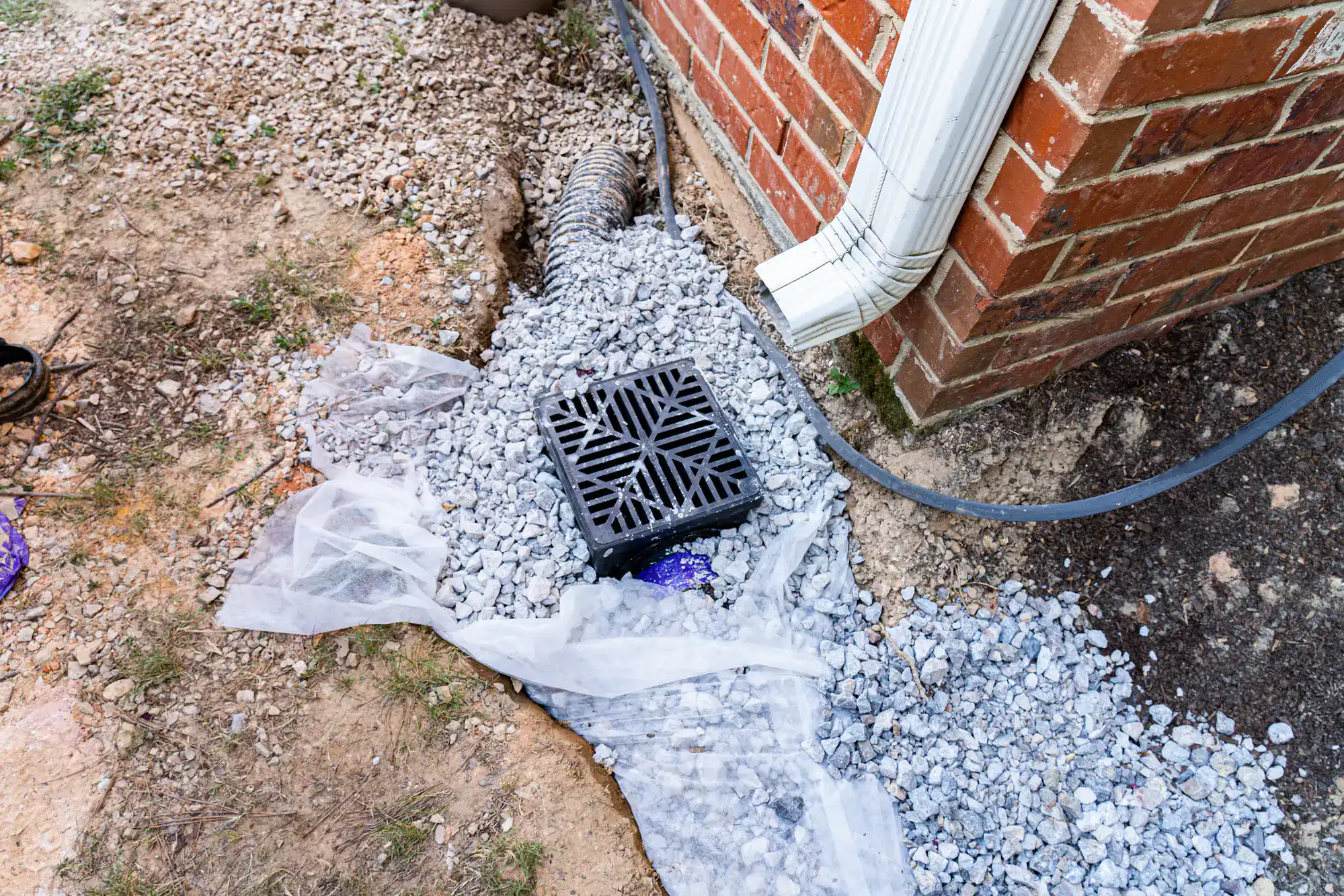
It starts with a free on-site assessment not a phone quote, not a ballpark estimate based on square footage. We come to your property, look at where the water is coming from, how it’s moving, and what your soil and grade are doing. In Ronkonkoma, that assessment almost always includes evaluating how the local water table and clay soil are interacting with your foundation or yard. That context shapes everything about how the system gets designed.
Once we know what you’re dealing with, we determine your municipal jurisdiction Town of Islip or Town of Brookhaven, depending on where your property sits and handle any permit requirements under the applicable stormwater ordinance. We also call 811 before any excavation begins, which is a legal requirement in New York State and non-negotiable on every job we run, especially in an area as utility-dense as Ronkonkoma.
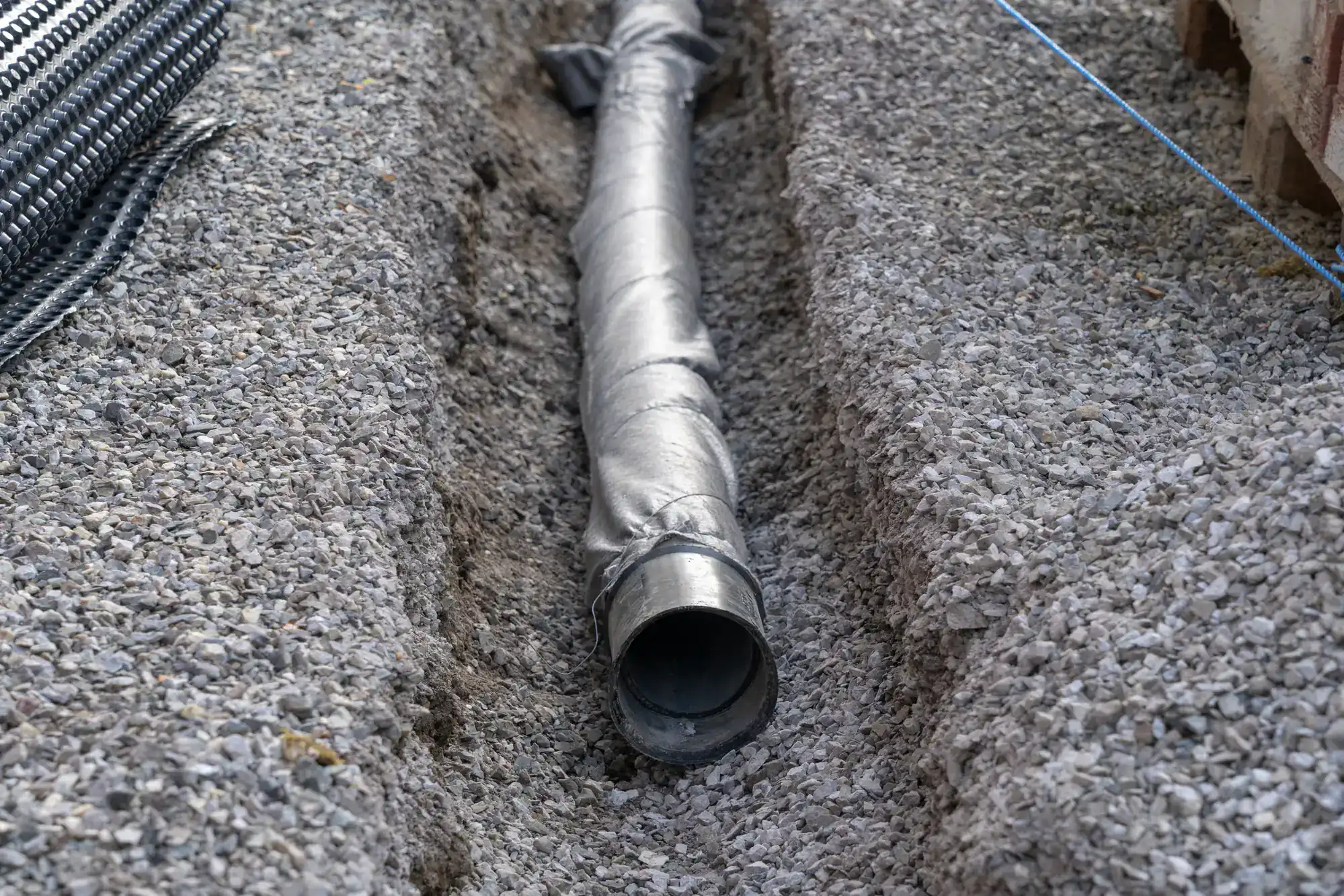
Installation uses perforated pipe wrapped in geotextile filter fabric, set in a bed of washed angular gravel, sloped at the right grade to move water consistently toward a defined outlet. Every system is installed at a depth that accounts for Long Island’s frost penetration typically 36 to 48 inches in a hard winter so the pipe survives freeze-thaw cycles and keeps working in February, not just in May. When the work is done, the trench area is restored with topsoil and seed. Most residential installs in Ronkonkoma are complete within one to three days.
Ready to get started?
Every French drain system we install is specified for the actual conditions of your property not a one-size approach that ignores the fact that Ronkonkoma’s clay soil behaves completely differently from the sandy outwash plains on Long Island’s East End. The materials matter: we use perforated pipe, not corrugated garden tubing. We wrap the full gravel bed in double-punched geotextile filter fabric, not just the pipe. We use washed angular gravel, not round pea gravel, which allows silt to infiltrate and clogs a system within a few years. These aren’t upsells they’re the baseline for a system that lasts 30 to 40 years instead of failing in three.
For homeowners near the Lake Ronkonkoma watershed, we design with the seasonal water table rise in mind. For properties on the Islip-Brookhaven boundary, we confirm jurisdiction and handle stormwater compliance before work begins. For the mid-century homes throughout the Sachem district that were built without any drainage infrastructure, we assess the full perimeter of the foundation and design an outlet strategy that works with your property’s existing grade.
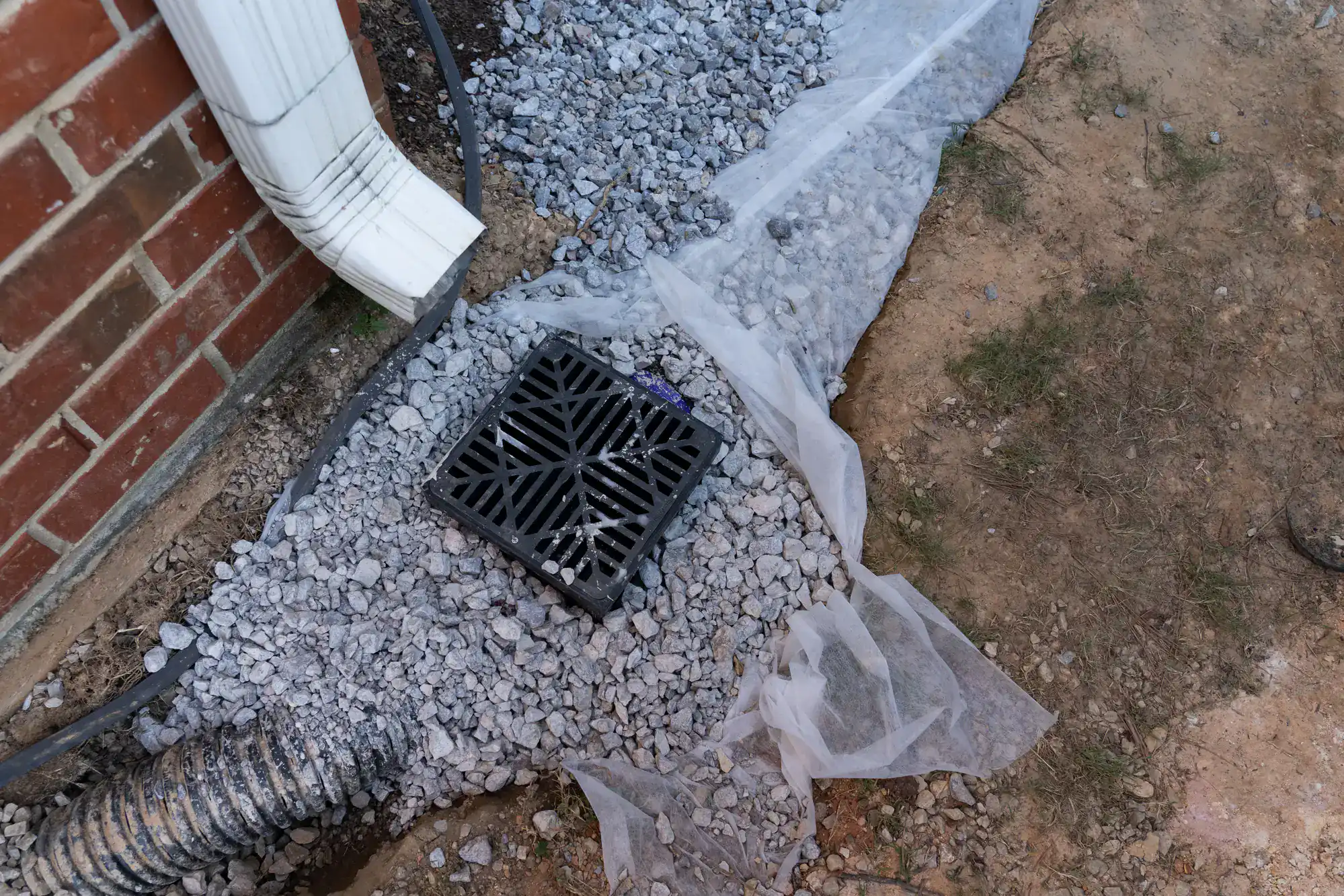
If your situation calls for a catch basin, a dry well, or a combination approach rather than a standalone French drain, we’ll tell you that honestly during the assessment. The goal is solving your water problem not selling you a single service regardless of fit.
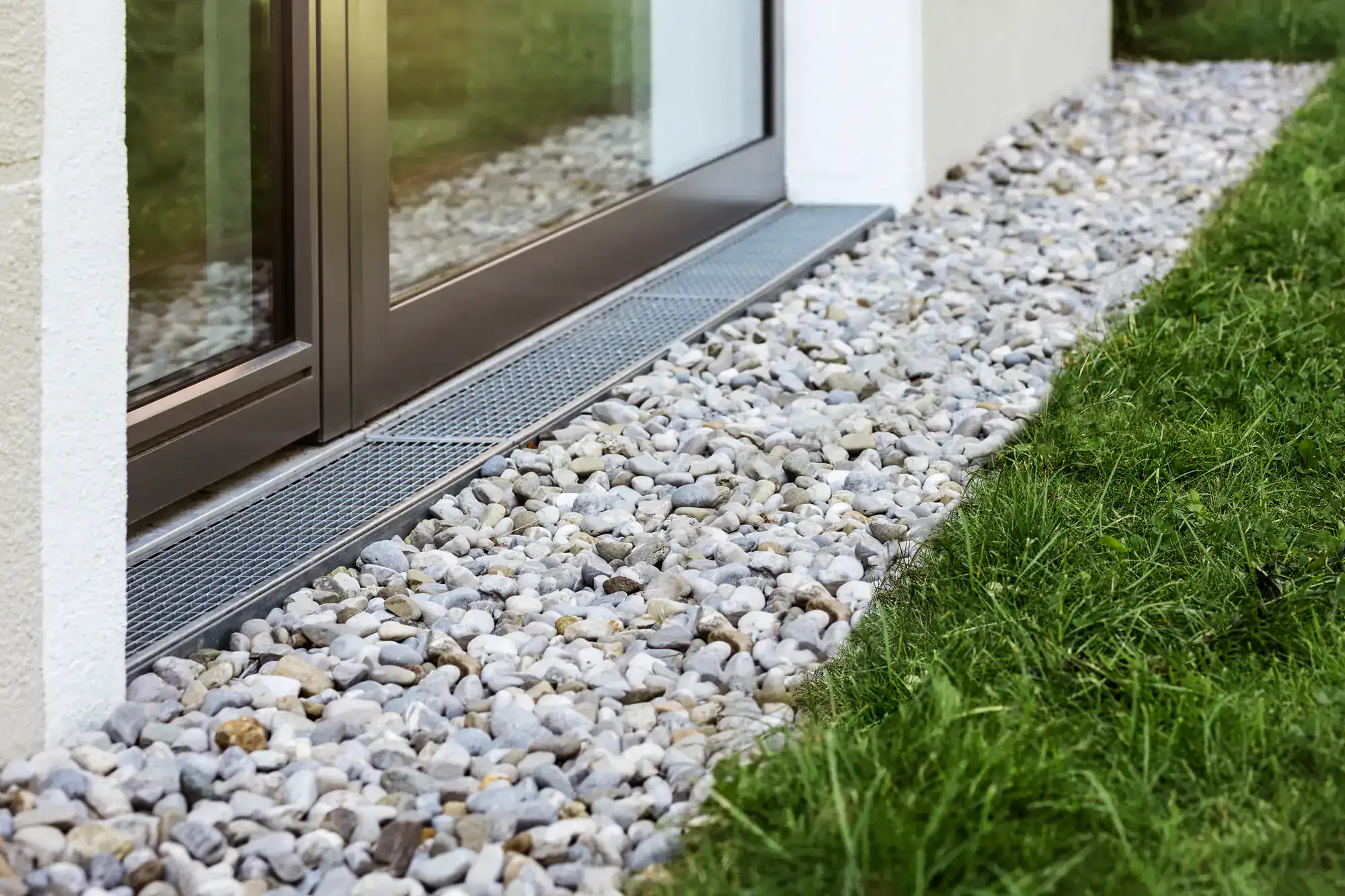
Yes and honestly, clay soil is exactly the condition a French drain is designed to address. The problem with clay is that it doesn’t let water pass through quickly, so it accumulates around your foundation and in low spots across your yard. A French drain doesn’t rely on the soil to absorb water it intercepts the water before it has a chance to pool or press against your foundation, and routes it through a gravel bed and perforated pipe to a designated outlet point.
The key in Ronkonkoma is designing the system to handle the volume and behavior of water that clay soil produces. That means proper pipe sizing, the right gravel bed depth, and a slope that keeps water moving consistently. A system installed without accounting for clay conditions with the wrong fabric, insufficient gravel, or inadequate slope will clog and fail. When it’s engineered correctly for your specific property, it works reliably for decades, clay soil and all.
Most residential French drain installations in Ronkonkoma fall between $5,000 and $12,000, with the national average sitting around $9,250 according to 2025 HomeAdvisor data. Where your project lands in that range depends on the linear footage of pipe needed, how deep the system needs to go, what type of outlet is most appropriate for your property, and whether any permit filing is required under the Town of Islip or Town of Brookhaven stormwater ordinance.
It’s worth putting that number in context. Foundation crack repair and waterproofing runs $15,000 to $50,000. Mold remediation starts at $3,000 and can go much higher. A documented drainage problem can also force a price reduction of 10% or more when you sell on a median Ronkonkoma home worth around $659,000, that’s a $65,000 haircut at closing. A French drain system installed now is a fraction of what unresolved water damage costs later. We provide written, itemized proposals after the on-site assessment so you know exactly what you’re getting and why.
It depends on where your property sits and what the system connects to. Ronkonkoma straddles the Islip-Brookhaven town line, which means some properties fall under the Town of Islip’s stormwater management program and others fall under Town of Brookhaven requirements and a few are close enough to the boundary that it isn’t immediately obvious which applies. The Town of Islip operates an active stormwater program under the Clean Water Act and New York State SPDES requirements, and work that connects to municipal drainage infrastructure or involves significant grading near wetlands may require review or filing.
We determine your jurisdiction as part of the project assessment and handle all permit research and filing on your behalf. You don’t need to figure out which town governs your property or what forms are required that’s part of what we manage before work begins. We also call 811 before any excavation, which is a legal requirement in New York State. In a utility-dense area like Ronkonkoma, that step is never skipped.
Lake Ronkonkoma is a glacially formed kettle lake directly connected to the Long Island aquifer system. That connection means the lake’s water level rises and falls with regional precipitation and groundwater recharge and when it rises, the water table across the broader Ronkonkoma watershed rises with it. The Suffolk County Lake Ronkonkoma Watershed Management Plan documents persistent flooding, erosion, and groundwater drainage issues within the watershed area, and the effects aren’t limited to properties on the lake’s edge.
Homeowners several blocks away from the lake can experience basement seepage and saturated soil during heavy rain seasons not because of a plumbing issue, but because the ground beneath their property is responding to regional groundwater dynamics. This is why a French drain system designed by someone who understands local hydrology performs differently from a generic install. The outlet strategy, pipe depth, and gravel bed sizing all need to account for a water table that behaves differently here than it does in other parts of Suffolk County.
Almost certainly, yes at least in part. The majority of Ronkonkoma’s housing stock was built during the postwar suburban expansion of the 1940s through the 1970s, and drainage engineering simply wasn’t part of how those homes were constructed. Builders relied on the soil to absorb water, which worked adequately in the early years but has compounded significantly over 50 to 70 years of soil compaction, landscape changes, aging gutters, and deteriorating downspout extensions.
If you’re in a mid-century home in the Sachem district and you’re seeing water problems, you’re likely dealing with a structural deficiency that was baked into the property from the beginning not something that developed recently. The good news is that a French drain system addresses the root cause directly. It’s not a repair to something that broke; it’s the installation of infrastructure that should have been there when the house was built. Once it’s in, the system works with your property’s existing grade and soil conditions to manage water the way modern construction standards would have required from day one.
Most residential French drain installations in Ronkonkoma are completed within one to three days from start to finish. The timeline depends on the linear footage of the system, the complexity of the outlet design, and whether any permit coordination is required under the applicable town stormwater ordinance but for a standard yard or foundation perimeter drain, two days is a reasonable expectation for most properties.
As for the yard: yes, there’s excavation involved, and we won’t pretend otherwise. A trench gets dug, the system goes in, and the trench gets backfilled. After installation and inspection, we restore the disturbed area with topsoil and reseed to match your existing lawn. The disruption is temporary and measured in days. Many Ronkonkoma homeowners have established lawns and landscaping they’ve invested in over years, and restoring the yard cleanly after the work is done is something we take seriously not an afterthought. By the time the grass fills back in, the only evidence of the work is that your yard finally drains the way it should.