
Hear from Our Customers
Living on the South Shore means your drainage situation is different from what most contractors are used to. Sayville sits directly on the Great South Bay, and that proximity does something most homeowners don’t realize it raises the water table from below, not just from rainfall above. When a storm rolls through and combines with a high tide, the ground in the southern parts of town can saturate faster than any surface fix can keep up with. That’s exactly the kind of problem a properly installed French drain system is designed to solve.
Beneath Sayville’s sandy topsoil lies a layer of marine clay that water simply cannot pass through. Rain percolates down, hits that clay, and pools which is why your yard can look fine for two weeks and then turn into a swamp after a single heavy storm. A French drain intercepts that water before it reaches your foundation or surfaces in your lawn, and redirects it to a defined outlet point. The result is a yard you can actually use, a basement that stays dry, and a home that isn’t quietly taking on damage every time it rains.
For homeowners in Sayville, where median home values are pushing $750,000, that matters beyond comfort. A documented drainage problem can cut 10% or more off your sale price that’s $75,000 in lost equity on a home at that value. A French drain system installed today costs a fraction of that and protects the investment you’ve already made.
Gold Coast Landworks is a Long Island-based drainage contractor that works specifically in the South Shore environment which means we’re not guessing at what’s causing your drainage problem. We know the soil profile in this area. We know how the bay affects the water table. We know what a perched water table above a clay sublayer looks like in person, and we know how to design a system that actually addresses it.
We serve homeowners across the Town of Islip, including Sayville and the surrounding communities. Whether your home sits near the waterfront on River Road, in one of the established neighborhoods off Route 27A, or in a post-war Cape Cod that’s been quietly fighting drainage issues for decades we’ve seen it, and we know how to fix it.
Every project starts with a free on-site assessment. No pressure, no pitch just an honest look at what’s happening on your property and a clear recommendation for what will actually work.
It starts with the assessment. We come out to your Sayville property, walk the site, and look at where water is collecting, how your existing drainage is performing, and what the soil conditions are telling us. In Sayville, that means checking for the clay sublayer depth, evaluating how close you are to the bay’s tidal influence zone, and reviewing whether your foundation is already showing signs of hydrostatic pressure. You get a clear diagnosis before any work is discussed.
From there, we design the system for your specific property not a one-size-fits-all trench. That means calculating the correct slope (typically one inch of drop per eight to ten feet of pipe run), selecting the right outlet point, and determining whether a single lateral drain, a perimeter system, or a combination approach makes the most sense. Before any digging begins, we handle the 811 utility marking call required by New York State law, and we’ll let you know upfront if your project scope requires a permit through the Town of Islip Building Department.
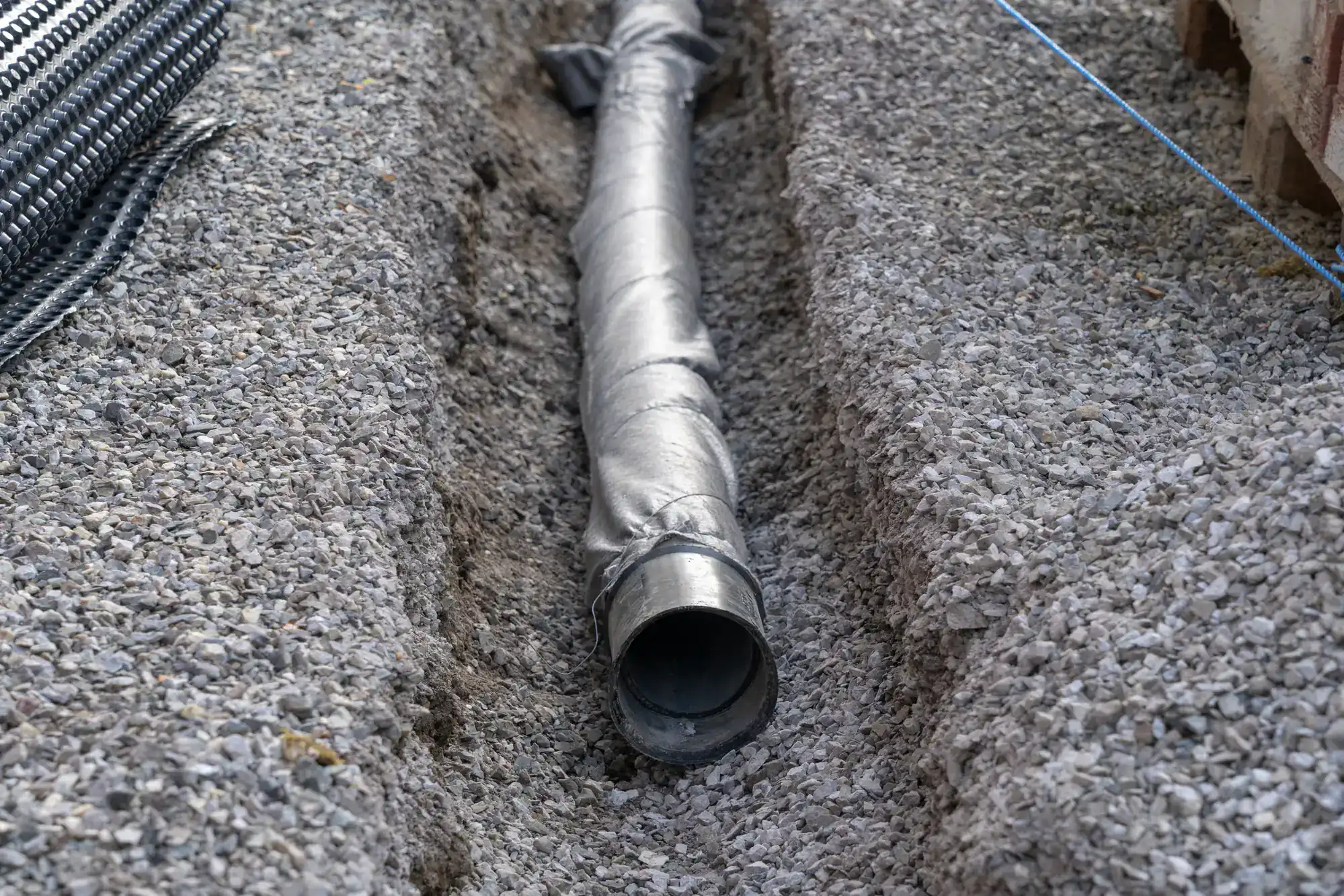
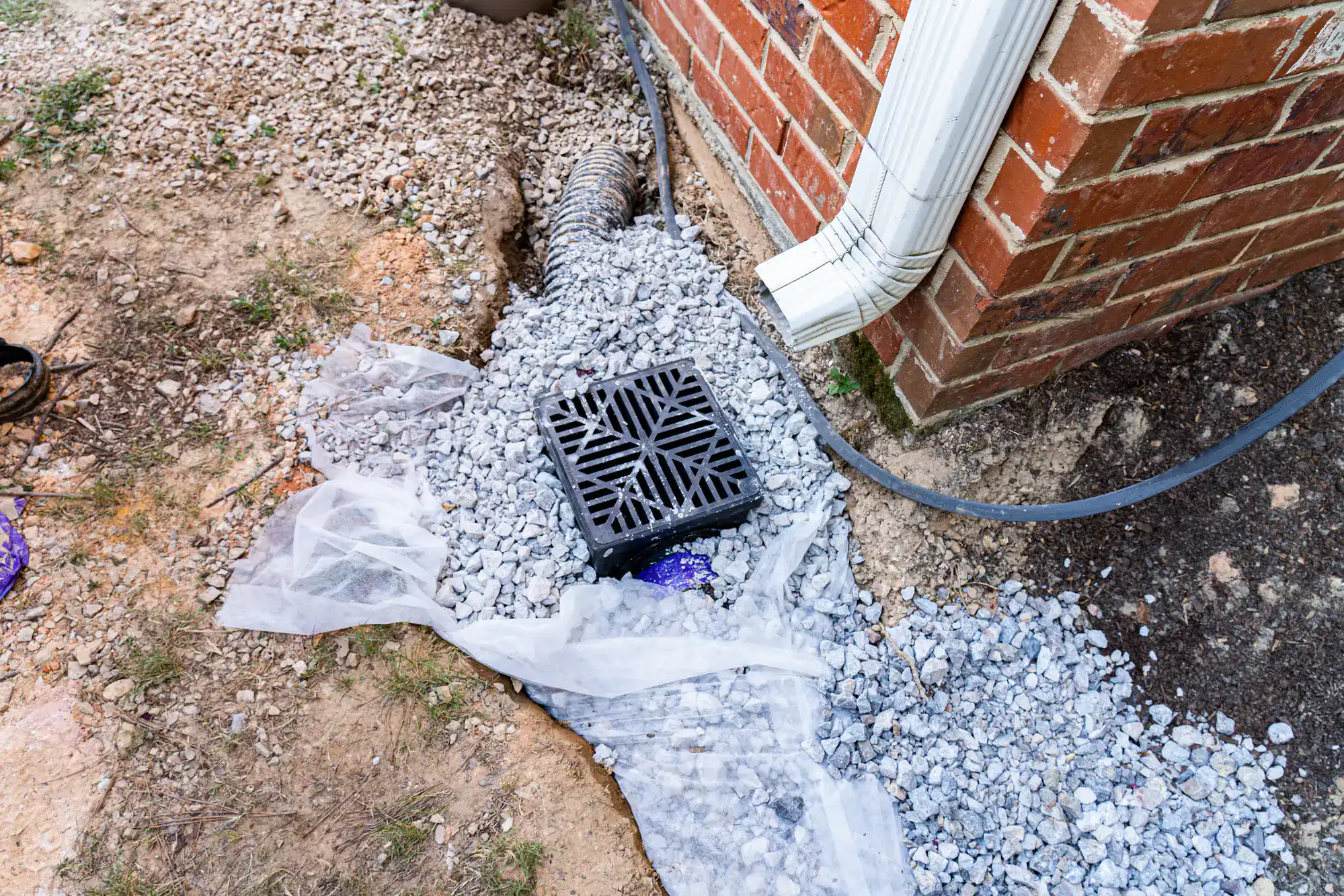
Installation typically runs one to three days for most residential properties in Sayville. We use perforated pipe, washed angular gravel, and double-punched geotextile filter fabric materials that are built to last 30 to 40 years, not fail in three. When the work is done, we restore your lawn with topsoil and seed so the yard looks right. Within a growing season, most homeowners can’t tell we were there except that their drainage problem is gone.
Ready to get started?
A French drain installation in Sayville, NY isn’t just a trench with some pipe in it. What goes into the ground matters and it matters more here than it does in most places. The combination of tidal groundwater influence, marine clay sublayers, and a housing stock that ranges from Victorian-era estates to post-war ranches means your drainage system has to be engineered for what’s actually there, not what a generic install assumes.
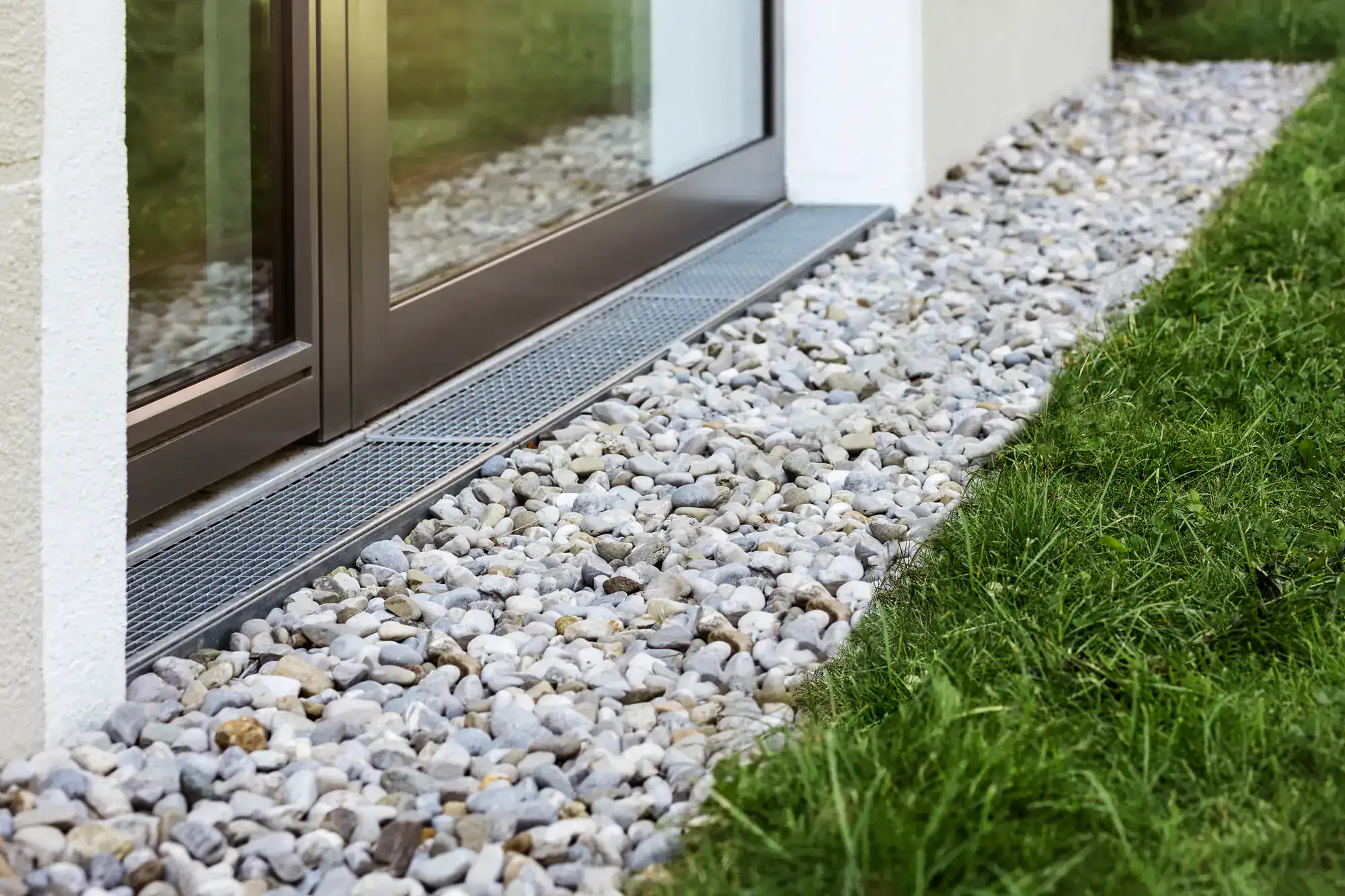
Every system we install includes perforated pipe rated for the soil pressure conditions in this area, washed angular gravel that won’t compact and restrict flow over time, and geotextile filter fabric wrapped around the entire gravel bed not just the pipe. That fabric is what keeps silt from infiltrating the system and clogging it within a few years. It’s one of the most commonly skipped steps in a budget installation, and it’s one of the main reasons drainage systems fail prematurely.
For homes in Sayville near the waterfront or in FEMA-designated flood zones along the bay, we factor tidal water table behavior into the outlet design. For older homes including the historic properties built during Sayville’s estate era in the late 1800s and early 1900s we assess foundation wall conditions as part of the process, since stone and brick foundations are especially vulnerable to the kind of hydrostatic pressure that builds up when drainage fails. You’ll know exactly what’s going into your yard, why it was specified that way, and what it’s designed to do.
Yes, and it’s one of the most misunderstood parts of drainage on the South Shore. The Great South Bay is a shallow tidal estuary, and its water level rises and falls with the tides. During storm events that combine heavy rainfall with high tide a documented, recurring condition in Sayville, including along River Road near the ferry terminal the water table in low-lying areas can rise to within inches of the surface. When that happens, the ground is already saturated before the rain even starts accumulating on top.
This is why homeowners in Sayville sometimes find that their yard floods even when the storm wasn’t that severe. It’s not just about how much rain fell it’s about where the water table was sitting when the rain arrived. A properly designed French drain system accounts for this by intercepting subsurface water and directing it to an outlet point before it can surface in your yard or push against your foundation. Surface fixes like regrading or adding topsoil don’t address this mechanism at all.
Most residential French drain installations in Sayville fall somewhere between $5,000 and $15,000, depending on the length of the system, the complexity of the outlet design, and whether the project involves a single lateral drain or a full perimeter system around a foundation. The national average sits around $9,250, and Long Island projects often run toward the higher end of that range given local labor costs and the material specifications required for South Shore soil conditions.
The more useful way to think about cost is what it prevents. Foundation crack repair and waterproofing runs $15,000 to $50,000. Mold remediation starts at $3,000 and can climb well past that for a finished basement. And in Sayville, where homes are selling around $749,000, a documented drainage problem can reduce your sale price by 10% or more roughly $75,000 in lost equity. A French drain system is one of the few home improvements that pays for itself in protection before you ever think about resale. We provide a clear, itemized quote after the free on-site assessment so you know exactly what you’re looking at before any decision is made.
This is almost always a soil profile issue, and it’s extremely common in Sayville and across the South Shore. The surface layer of your yard is glacial outwash sandy, porous material that water moves through fairly easily. But below that sandy layer, there’s a layer of marine clay that water cannot penetrate. Rain soaks through the top layer, hits the clay, and has nowhere to go. It pools just above that clay layer, which is why your yard saturates quickly and then slowly drains as water eventually evaporates or finds a lateral path out.
The technical term for this is a perched water table, and it’s a documented characteristic of the coastal zone that Sayville sits in. Grading your yard or adding more topsoil doesn’t fix it you’re just adding more material on top of the same drainage barrier. A French drain installed above the clay layer intercepts that pooling water and gives it a controlled path to an outlet. Once the system is in, heavy rains drain through the pipe instead of sitting on your lawn for days. Most homeowners notice the difference after the very first major storm.
It depends on the scope of the project and the specific conditions of your property. Not every residential French drain installation in the Town of Islip requires a building permit, but some do particularly if the project involves significant excavation, alters surface water flow in a way that could affect neighboring properties, or is located on a property within a FEMA-designated Special Flood Hazard Area, which applies to some of the lower-lying areas near the Great South Bay in Sayville.
There’s also the Suffolk County Department of Health Services to consider. If your property relies on a cesspool or septic system which is common in Sayville, where public sewer connections aren’t universal the outlet point for your French drain has to be sited in compliance with county setback requirements from sanitary infrastructure. On top of that, New York State law requires an 811 utility marking call before any excavation, no exceptions. We handle all of this as a standard part of every project. You don’t need to figure out what applies to your property we do that as part of the assessment and planning process.
A properly installed French drain system should last 30 to 40 years. The key word there is properly. Most French drain failures happen within the first two to five years, and they almost always come down to one of a few predictable problems: filter fabric that was skipped or installed incorrectly, allowing silt to infiltrate the gravel bed and clog the system; pipe that was laid without adequate slope, so water sits in the line instead of flowing to the outlet; or cheap corrugated tubing that collapses under soil pressure over time.
On Long Island’s South Shore, these issues are compounded by the freeze-thaw cycles that happen every winter. Pipe that’s buried too shallow can shift or crack when the ground freezes and expands. Gravel beds that weren’t properly wrapped in fabric get silted up faster in the clay-heavy soil profile that characterizes this area. The difference between a system that lasts three years and one that lasts thirty is entirely in the materials and the installation method not luck. When you’re investing in a French drain system for a home worth $700,000 or more, it’s worth understanding exactly what’s going into the ground before you sign off on anything.
In many cases, yes but the right answer depends on where the water is coming from. Sayville has a significant number of older homes, including pre-war colonials, Cape Cods built in the post-war decades, and historic properties from the estate-building era of the late 1800s and early 1900s. Many of these homes were built with stone or brick foundations that were never designed to handle the hydrostatic pressure that builds up when drainage fails around them. When water pools against those foundation walls season after season, it finds its way in.
An exterior French drain system installed around the perimeter of the foundation intercepts groundwater before it ever reaches the wall, which eliminates the pressure that drives water inside. This is different from interior waterproofing, which manages water after it’s already entered the basement a reactive fix rather than a preventive one. For Sayville homes with older foundations, getting the exterior drainage right is usually the more durable long-term solution. During the free assessment, we look at where the water is entering, what the foundation material is, and whether a perimeter French drain addresses the source or whether a combination approach makes more sense for your specific property.