
Hear from Our Customers
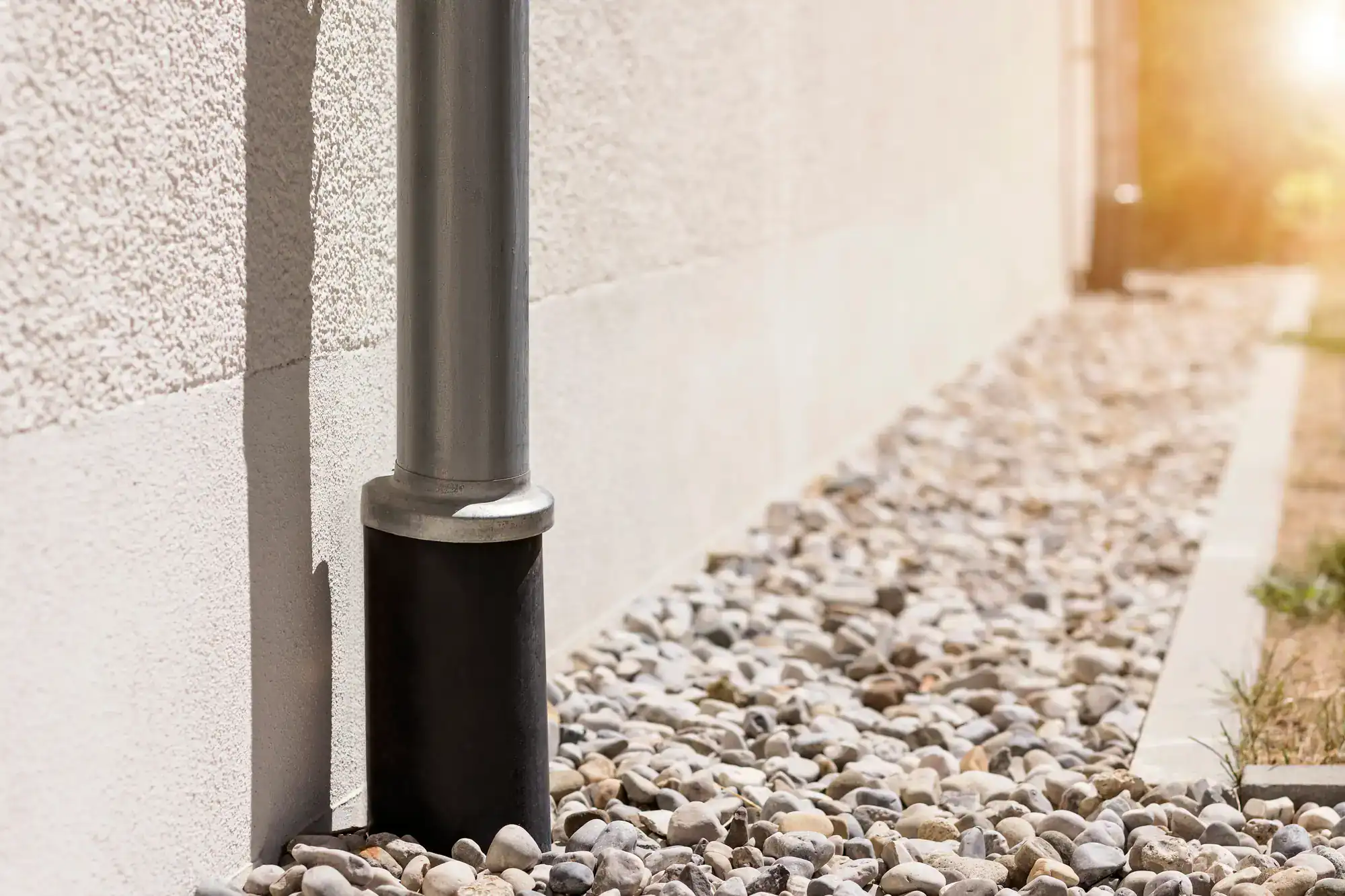
Stony Brook sits on the Harbor Hill Moraine glacial till deposited thousands of years ago that drains nothing like the sandy soil you’d find on the South Shore. That dense, clay-heavy subsoil is why water pools on your lawn long after the rain stops, why your basement smells musty every March, and why the problem keeps coming back no matter what you try. A properly installed French drain system gives that water somewhere to go before it reaches your foundation, your crawlspace, or your finished basement floor.
After August 2024, most Stony Brook homeowners don’t need a lecture on what unmanaged water can do. Nearly 10 inches of rain in one night collapsed Harbor Road, drained the Grist Mill Pond, and left the community dealing with damage that still hasn’t been fully repaired. That was a large-scale version of what happens at the property level when drainage fails. A French drain system intercepts water at the surface and subsurface before it becomes a structural problem not after.
The freeze-thaw cycle here makes it worse. Water saturates soil near your foundation in fall, freezes in winter, and expands against your foundation walls. Do that for five or ten years and you start seeing cracks. A French drain with pipe buried below the frost line breaks that cycle before it adds up. Foundation repair in Suffolk County runs $15,000 to $50,000. A well-built French drain system costs a fraction of that and lasts 30 to 40 years.
We’re a residential drainage contractor serving Long Island’s North Shore, including Stony Brook and the broader Three Village area. We install French drain systems built for the specific soil, slope, and seasonal conditions that properties here actually deal with not a generic system copied from a how-to guide.
We’ve worked on North Shore properties where the soil looks fine on the surface and turns into near-impermeable clay two feet down. We understand what it means to design a drainage system for a home near Stony Brook Harbor versus one closer to Nicolls Road and Route 25A. Every property in Stony Brook is different, and we assess yours before we quote anything.
You won’t get a one-size-fits-all proposal. You’ll get a contractor who’s done this work on Long Island, understands the glacial soil conditions that make North Shore drainage uniquely challenging, and treats your landscaping like it matters because in Stony Brook, it does.
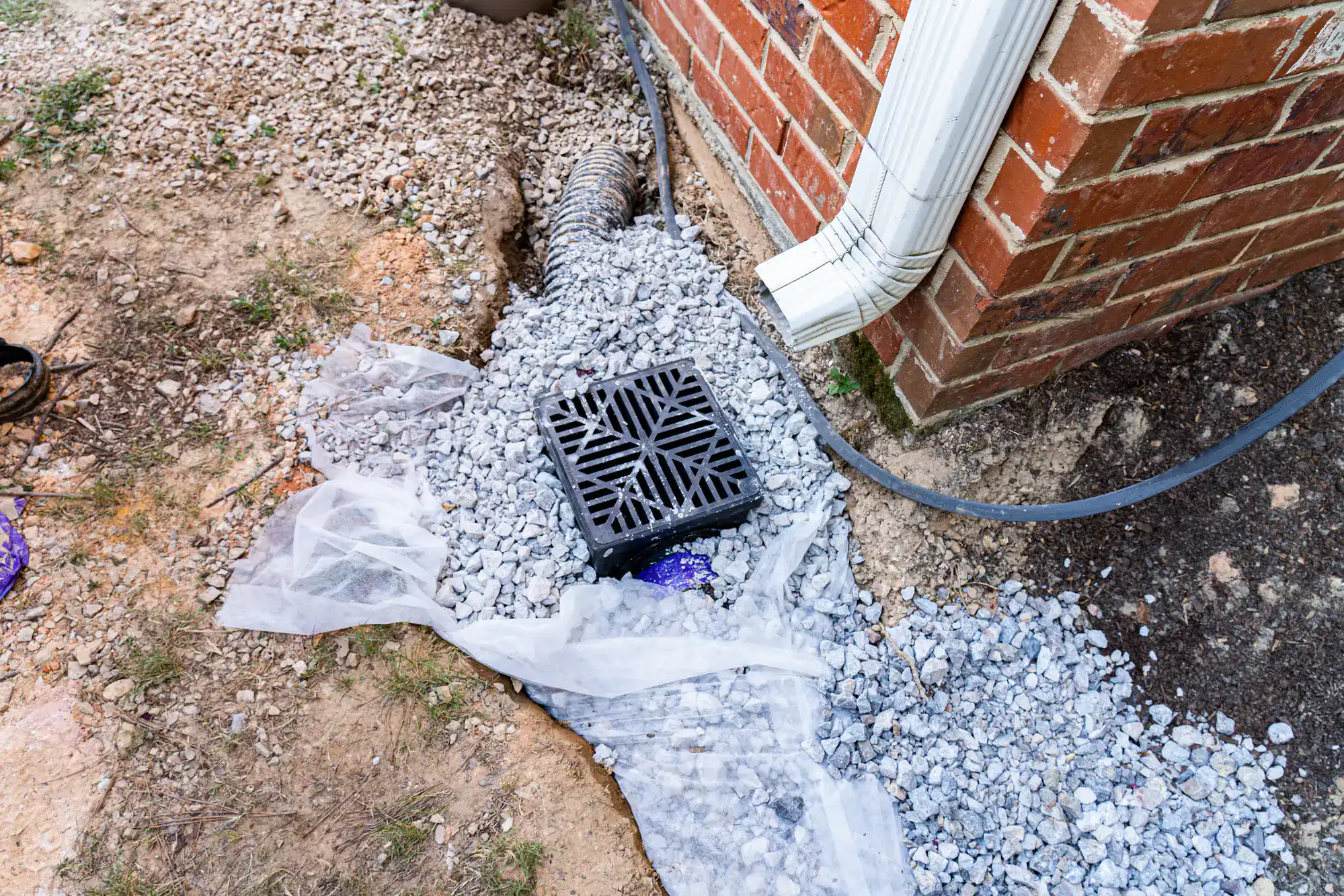
It starts with a free on-site assessment. We come to your property, walk the yard, look at where water is entering and where it’s pooling, and assess the soil and slope conditions. In Stony Brook, that assessment matters more than most places properties near the harbor, West Meadow Beach, or low-lying areas off Route 25A each have different drainage dynamics. We’re not guessing. We’re looking.
From there, we design a system specific to your property. That means specifying pipe diameter, trench depth, gravel type, fabric wrap, and outlet location based on what we actually found during the site visit. Before any digging starts, we handle 811 utility marking required by New York State law and manage any permit requirements through Brookhaven Town. If your property is near DEC-regulated wetland areas, we coordinate that too. You don’t have to figure out who to call.
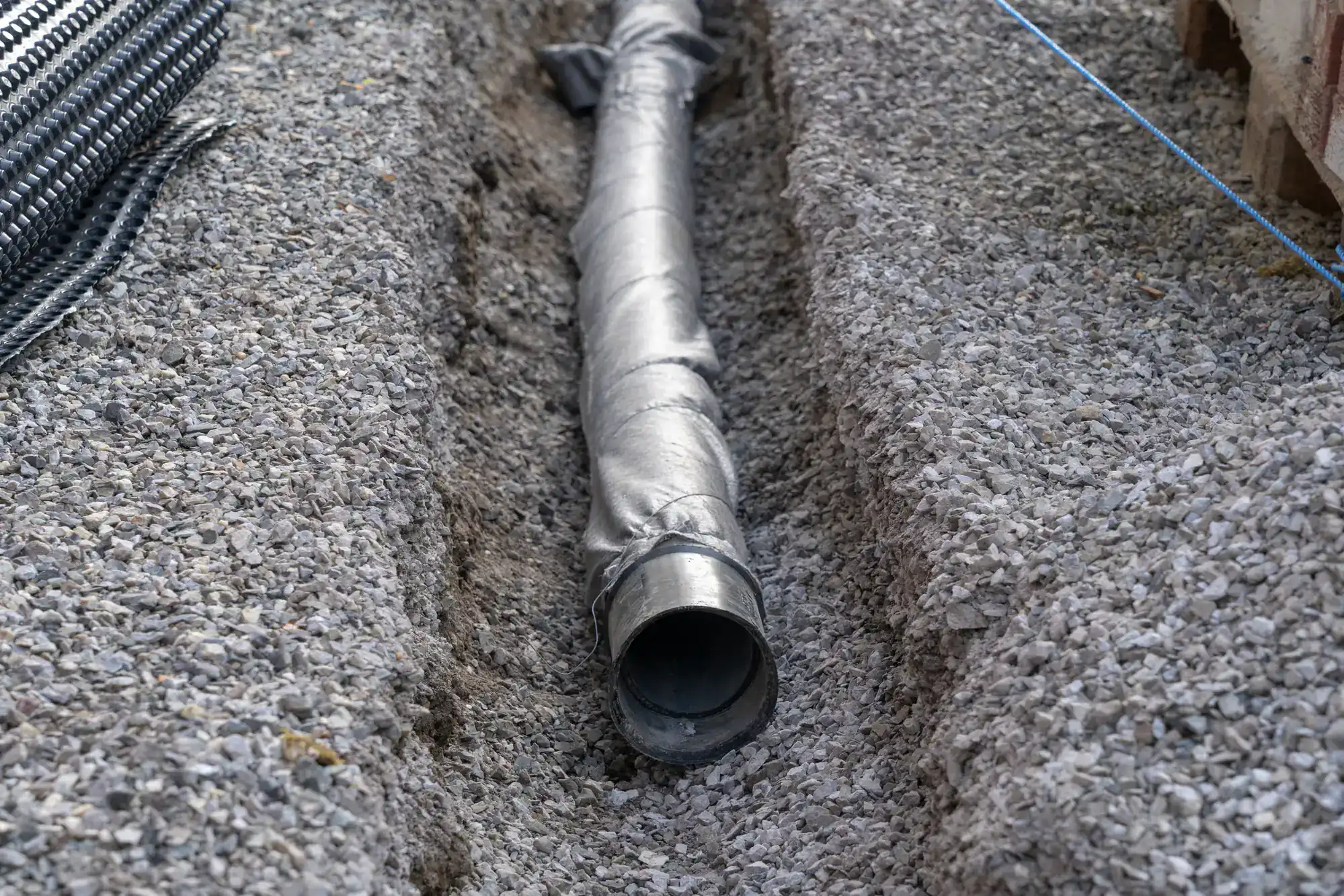
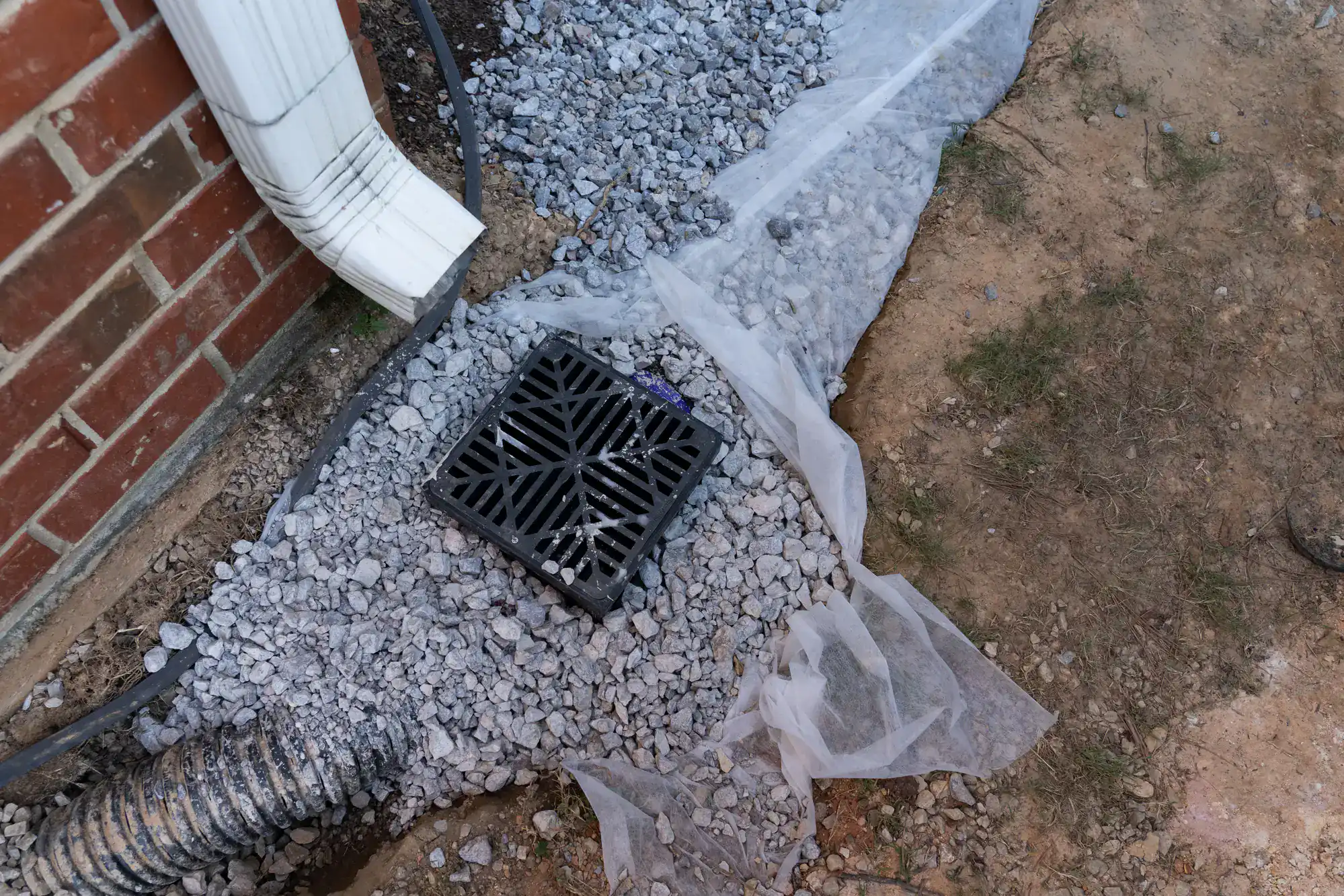
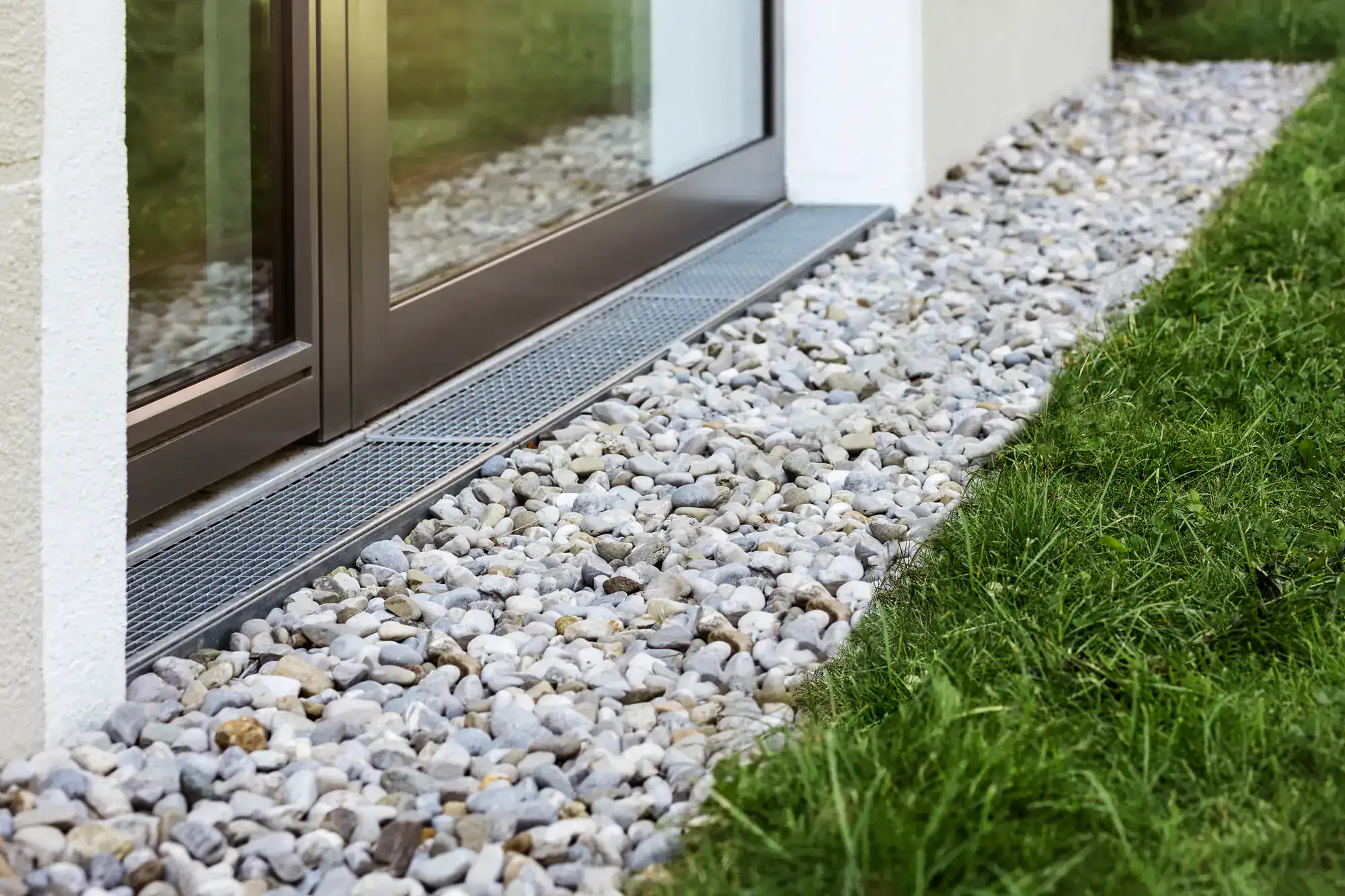
Installation involves trenching to the correct depth typically below the frost line for Stony Brook’s winters laying perforated pipe wrapped in geotextile filter fabric, backfilling with washed angular gravel, and restoring the surface. When we’re done, your yard looks like a yard again. Topsoil and seeding are part of the job. The disruption is temporary. The drainage benefit is not.
Ready to get started?
Every French drain system we install uses perforated pipe, double-punched geotextile filter fabric wrapping the full gravel bed, and washed angular gravel not round pea gravel, not corrugated flex pipe, not shortcuts. The slope is calculated, not eyeballed. These details are what separate a system that works for 35 years from one that clogs and backs up in three.
For Stony Brook homeowners, our service also includes full permitting coordination with Brookhaven Town and, where applicable, review for properties near DEC-regulated wetland zones along the harbor or tidal areas. Older homes in the Three Village area many built in the 1950s through 1970s without engineered drainage often need systems designed around existing landscaping, mature trees, and established hardscaping. We account for all of that during the design phase, not after the trench is dug.
Whether you’re dealing with a soggy backyard that’s been unusable for years, a basement that floods every spring along the Route 347 corridor, or a foundation showing early signs of water pressure, the system is designed around your specific situation. We’ll tell you exactly what we’re installing, why we chose those materials for your property, and what you can expect when it’s done.
In most cases, yes drainage work in Stony Brook falls under Brookhaven Town’s jurisdiction, and projects that alter surface water flow or involve significant excavation typically require a permit. The process isn’t complicated, but it does need to be done correctly before work begins.
If your property is near Stony Brook Harbor, West Meadow Beach, or any DEC-regulated wetland area, there may be an additional layer of review from the New York State Department of Environmental Conservation. The DEC was actively involved in the aftermath of the August 2024 flooding event in this area, which tells you the regulatory environment here is real and active. We handle all permitting and utility marking including the mandatory 811 call before any excavation so you don’t have to navigate that process on your own.
For most residential properties in Stony Brook, French drain installation runs between $5,000 and $9,250 depending on system length, pipe depth, soil conditions, and how complex the drainage design needs to be. Per-linear-foot pricing typically falls between $20 and $60 for professional installation.
That range can feel significant until you put it next to the alternative. Foundation repair in Suffolk County starts around $15,000 and can reach $50,000 for serious structural damage. Mold remediation starts at $3,000 and climbs fast. A wet basement can reduce your home’s sale price by 10% or more on an $800,000 Stony Brook property, that’s $80,000 gone. A French drain system that lasts 30 to 40 years is one of the more straightforward investments you can make in a home worth that much. We’ll give you a specific number after we see your property not a range pulled from thin air.
The short answer is the soil. Stony Brook sits on the Harbor Hill Moraine the glacial ridge that defines Long Island’s North Shore. That means your yard is likely sitting on glacial till: a dense, poorly sorted mix of clay, silt, sand, and gravel that drains far more slowly than the sandy outwash soil you’d find on the South Shore. Water hits the surface, can’t percolate down through the compacted subsoil, and sits.
For homes built in the 1950s, 1960s, and 1970s which describes a lot of the housing stock in the Three Village area around Stony Brook the original grading often didn’t account for modern drainage engineering, and decades of landscaping changes and added impervious surfaces like driveways and patios have made the problem worse over time. A French drain system cuts a path through that dense subsoil, giving water a direct route out before it pools, damages your lawn, or finds its way toward your foundation.
A properly installed French drain system with the right pipe, the right fabric, and the right gravel should last 30 to 40 years without major issues. The biggest factors that shorten that lifespan are material shortcuts and improper installation. Corrugated flex pipe clogs faster than rigid perforated pipe. Round pea gravel compacts over time and loses its void space. Filter fabric that doesn’t fully wrap the gravel bed lets fine soil particles migrate in and clog the system within a few years.
On Long Island’s North Shore, the clay-heavy glacial till soil puts more pressure on the filter fabric than sandy soils would which is exactly why the fabric specification matters here. A system installed with the correct double-punched geotextile, angular gravel, and rigid perforated pipe holds up against Stony Brook’s soil conditions for decades. We specify every material on our proposals so you know exactly what you’re getting and why it was chosen for your property.
Fall is generally the best window September through November before the ground freezes and while there’s still time for seeding to establish before winter. Installing in fall also means your system is fully operational before spring, which is peak flooding season on Long Island’s North Shore when snowmelt and spring rains combine to saturate already-wet glacial soil.
Spring installation is also common, especially for homeowners who discovered a drainage problem over the winter and want it resolved before the next rainy season. Summer works too, though the ground can be harder to work in dry stretches. What you want to avoid is waiting until the ground freezes typically December through February in Stony Brook when excavation becomes difficult and more expensive. If you’re thinking about it, fall is the time to move. The installation window is real, and it closes.
Yes and for many Stony Brook homeowners, it’s the most effective first line of defense. An exterior French drain installed along the foundation perimeter intercepts groundwater and surface water before it builds up hydrostatic pressure against your foundation walls. That pressure is what causes basement leaks, wall cracks, and water intrusion and it’s especially pronounced here because of the freeze-thaw cycle Stony Brook experiences every winter.
Water saturates the soil near your foundation in fall, freezes and expands in winter, and pushes against your foundation walls. Over years, that adds up to cracks and water intrusion that get expensive fast. An exterior French drain removes the water from the equation before the pressure builds. It won’t fix a foundation that’s already structurally compromised that needs its own repair but it stops the cycle that causes the damage in the first place. If your basement has been taking on water seasonally, a site assessment will tell you whether an exterior French drain, an interior drainage system, or a combination of both makes the most sense for your specific situation.