
Hear from Our Customers
The soggy corner of your yard that stays wet for a week after rain isn’t a minor inconvenience it’s a warning. In Terryville, the soil is predominantly clay, and clay doesn’t drain. It holds water against your foundation, builds pressure against your basement walls, and creates the exact conditions that lead to cracks, moisture intrusion, and mold. A French drain system intercepts that water before it gets there and redirects it away from your home entirely.
Once the system is in, you stop watching the weather with dread. Your basement stays dry. Your yard becomes usable again for your kids, for guests, for the outdoor space you’ve been trying to maintain for years. The musty smell after a nor’easter disappears. The mud tracking into the house stops. The grass that was slowly dying from oxygen-starved, waterlogged roots starts to recover.
For Terryville homeowners carrying a median property tax bill of over $10,000 a year on homes worth close to half a million dollars or more, this isn’t a luxury upgrade. A properly installed French drain system typically runs $5,000 to $9,000. Foundation repair on Long Island starts at $15,000 and climbs fast. Mold remediation adds thousands more. The math isn’t complicated it’s just easier to see once you’ve done it.
We install residential French drain systems across Suffolk County, including Terryville and the surrounding Port Jefferson Station area. We work on the North Shore specifically because the drainage challenges here are different from the rest of Long Island. Clay-heavy soil, freeze-thaw cycles, and hydrostatic pressure against established home foundations require a different approach than what works on the sandy South Shore and we design every system with that in mind.
When we show up to assess a property near Terryville Road or along the Route 112 corridor, we’re not running through a generic checklist. We’re looking at where the water is actually coming from, how your lot is graded, what your soil profile looks like, and where the system needs to outlet to actually solve the problem. That site-specific diagnosis is what separates a system that works from one that fails in its second winter.
We’re fully licensed and insured in New York State, and we manage all permitting and Brookhaven Town requirements from start to finish. You don’t have to navigate any of that.
It starts with a free on-site assessment. We walk your property, identify where the water is entering and pooling, evaluate the grade and soil conditions, and give you a clear diagnosis not a vague estimate over the phone. In Terryville’s clay-dominant soil, that site walk matters more than it does in most markets, because the drainage solution has to be designed around what’s actually happening underground, not just what’s visible on the surface.
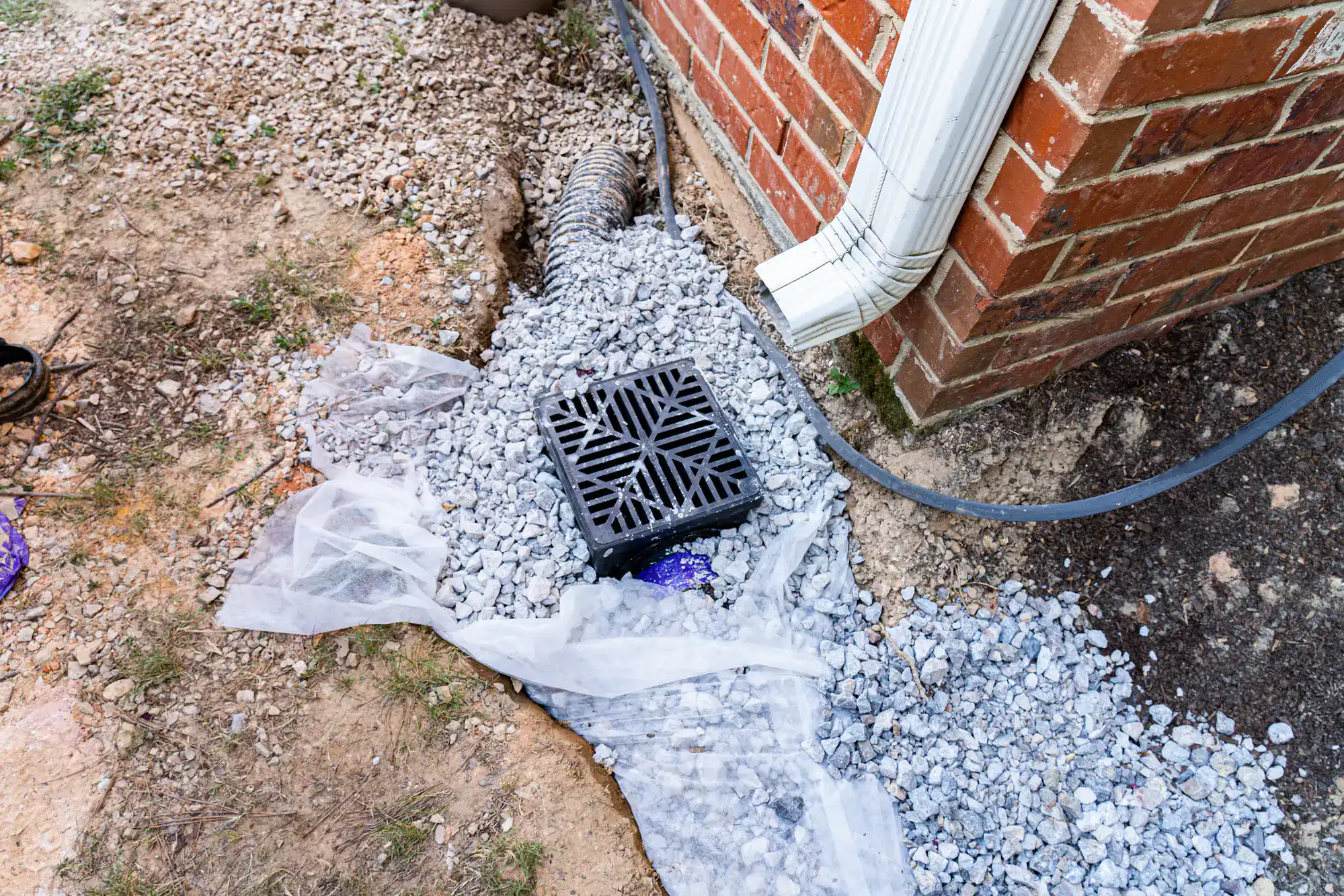
Once we’ve agreed on the scope, we handle all permitting with Brookhaven Town before a shovel goes in the ground. Drainage projects in this jurisdiction can require soil testing and SPDES compliance review depending on how the system outlets, and we take care of all of it. We also call 811 to mark utilities before any excavation that’s required by New York State law and something we do on every job without exception.
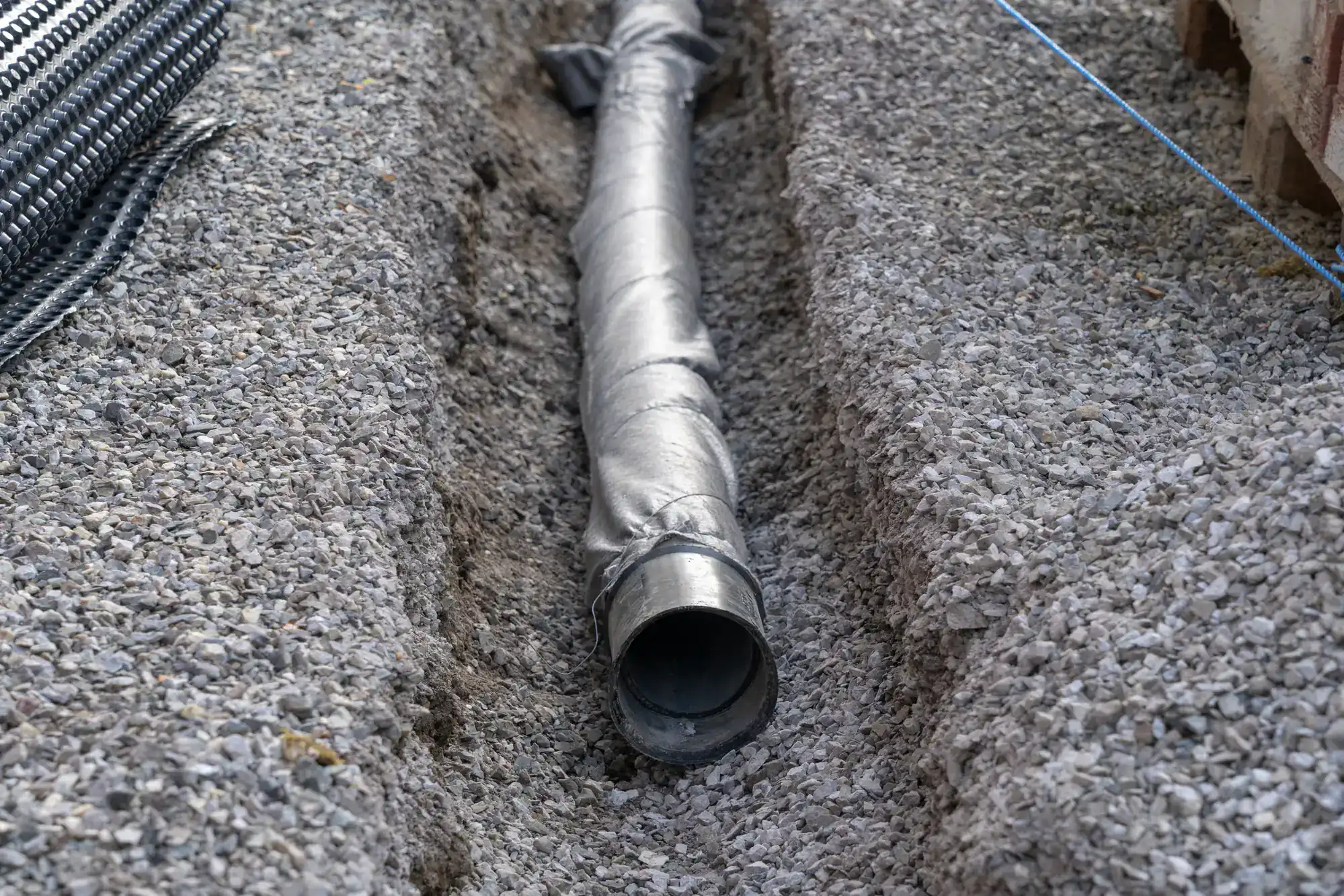
Installation typically takes one to three days for a standard residential system. We trench, lay the perforated pipe wrapped in geotextile filter fabric, backfill with the correct gravel, and restore your yard topsoil, seeding, cleanup before we leave. The filter fabric piece is critical in Terryville’s clay soil specifically: without it, fine clay particles migrate into the gravel bed and clog the system within a few years. We don’t skip that step. Most systems we install are built to last 30 to 40 years with minimal maintenance.
Ready to get started?
Every French drain system we install in Terryville is designed around the specific conditions of your property not a one-size template. That means accounting for North Shore clay soil, your lot’s natural grade, the depth required to stay below Long Island’s frost line, and where the water needs to go once the system captures it. We install both yard drainage systems for surface water and standing water problems, and perimeter foundation systems for homes dealing with basement moisture and hydrostatic pressure.
The materials we use are specified for this environment. Perforated pipe, double-punched geotextile filter fabric wrapped around the full gravel bed, and clean drainage stone are standard on every job. In Terryville’s clay-heavy soil, the filter fabric isn’t optional it’s the difference between a system that works for decades and one that clogs and fails within a few seasons. We don’t offer a budget version that cuts that corner.
We also handle the details that Terryville homeowners don’t want to deal with on their own: Brookhaven Town permit applications, utility marking through 811, and full yard restoration after the trench is closed. If you’re in the Comsewogue School District area, near Jefferson Cove, or anywhere along the North Shore corridor between Port Jefferson Station and the surrounding hamlets, we serve your area and we know the drainage patterns that come with it. Reach out for a free on-site assessment and we’ll tell you exactly what your property needs.
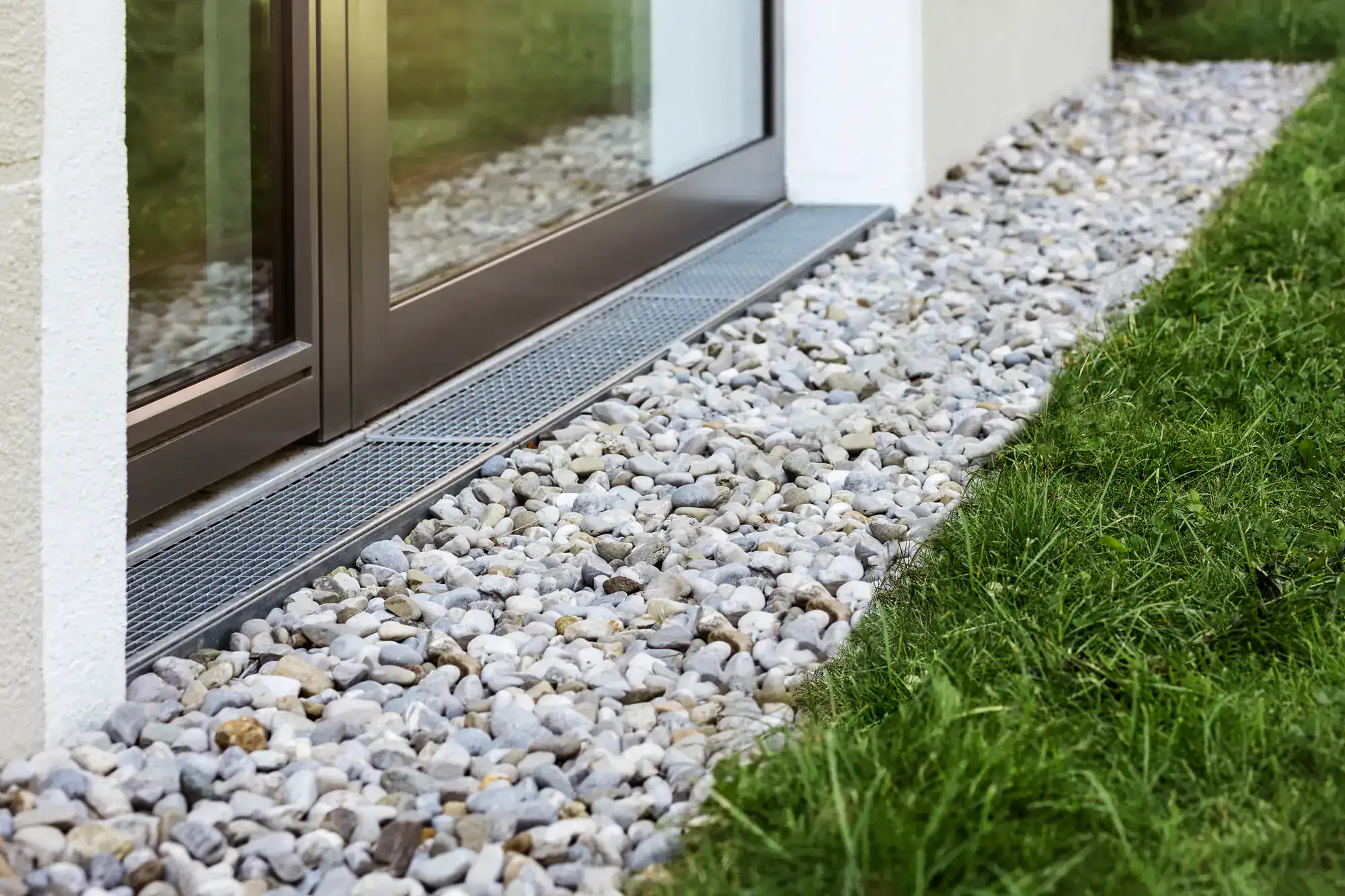
Yes and it’s worth understanding why. Clay soil is dense and nearly impermeable, which means water doesn’t percolate through it the way it does through the sandy soil you find on Long Island’s South Shore. When it rains in Terryville, that water has nowhere to go on its own. It sits against your foundation, builds hydrostatic pressure against your basement walls, and slowly saturates the root zone of your lawn.
Installing a French drain in clay soil requires specific material choices that aren’t always used in other markets. The gravel bed and perforated pipe need to be fully wrapped in geotextile filter fabric a step that’s optional in sandy soil but non-negotiable in clay. Without it, fine clay particles migrate into the gravel over time, reduce permeability with every rainfall, and eventually clog the system entirely. A contractor who skips the filter fabric in Terryville’s soil is installing a system with a built-in expiration date.
Most residential French drain installations in Terryville and the surrounding Port Jefferson Station area fall between $5,000 and $9,000, though the final number depends on the linear footage required, whether you’re addressing yard drainage or foundation perimeter drainage, and how complex the outlet situation is on your property. Long Island pricing is generally consistent with national averages given labor and material costs in Suffolk County.
The more useful number to hold in your head is what you’re protecting. Terryville homes are valued anywhere from $480,000 to over $690,000 depending on the property. Foundation repair on Long Island starts at $15,000 and can reach $50,000 for serious structural damage. Mold remediation adds thousands more, and a documented wet basement can reduce your home’s market value by 10% or more at sale. A French drain installation is one of the few home improvements where the cost of not doing it consistently exceeds the cost of doing it.
It depends on the scope of the project, but in many cases, yes. Terryville falls within the Town of Brookhaven, which operates under a SPDES permit for its municipal stormwater system. Drainage projects that alter how stormwater flows off your property, connect to municipal infrastructure, or are located near wetlands or flood zones may require permits and additional environmental review. Brookhaven also has a noted practice of requiring soil testing for drainage projects to confirm your property can handle the water load the system will redirect.
The permitting process isn’t something most homeowners want to navigate on their own, and you don’t have to. We handle all Brookhaven Town permit applications, coordinate any required soil testing, and ensure the project is fully compliant before installation begins. We also manage the 811 utility marking call, which is required by New York State law before any excavation. You won’t be chasing paperwork or making calls to the town that’s part of what we handle.
There is excavation involved that’s unavoidable with any French drain system. We trench along the drainage path, which does disturb the surface along that line. But for most residential installations in Terryville, the trench is relatively narrow, and we backfill, add topsoil, and seed the disturbed area before we leave the property. Most homeowners see meaningful grass recovery within three to six weeks depending on the season.
The installation itself typically takes one to three days for a standard residential system. We work efficiently and don’t leave a job open-ended. For Terryville homeowners with established landscaping mature trees, garden beds, irrigated lawns we walk the property before we start and plan the trench route to minimize disruption to anything that took years to grow. If there are specific areas you’re concerned about, that’s exactly the kind of detail we address during the free on-site assessment before any work is scheduled.
For most Terryville homes, yes a properly designed French drain system is one of the most effective tools for preventing basement flooding caused by groundwater and surface water intrusion. Nor’easters can drop several inches of rain in 12 to 24 hours, and when that happens over clay-heavy North Shore soil that’s already saturated from spring snowmelt, groundwater levels rise quickly. That’s when hydrostatic pressure against basement walls peaks, and that’s when homes without drainage systems flood.
A perimeter French drain system intercepts that water before it builds against your foundation. It captures groundwater along the exterior of the home and redirects it away from the structure through a defined outlet point. The key word is “properly designed” a system that’s too shallow will freeze during a Long Island winter and fail by spring. A system without the right filter fabric will clog within a few seasons. When the system is engineered correctly for Terryville’s soil and frost conditions, it handles the events that used to flood your basement without you thinking twice about it.
A properly installed French drain system should last 30 to 40 years with minimal maintenance. The variables that determine lifespan are material quality, installation depth, filter fabric specification, and outlet design all of which matter more in Terryville’s clay soil than they do in more forgiving soil conditions.
The most common reason French drains fail prematurely on Long Island’s North Shore is inadequate filter fabric. Clay particles are fine enough to migrate through low-quality or improperly installed fabric, settle into the gravel bed, and reduce the system’s permeability year over year until it stops functioning. The second most common failure is shallow pipe installation pipes set above the frost line crack during freeze-thaw cycles and are effectively broken by the time they’re needed most in early spring. When those two things are done right correct fabric specification and proper depth for Suffolk County’s frost conditions the system holds up for decades. That’s what we build, and that’s what we stand behind with a workmanship warranty on every installation.