
Hear from Our Customers
Standing water isn’t just an eyesore. In Terryville, where the soil runs heavy with clay and barely absorbs a hard rain, water that sits on your property is actively working against your foundation, your lawn, and your investment. The clay-heavy soils left behind by Long Island’s glacial moraine don’t drain the way sandy South Shore soils do when it rains hard, water pools fast and stays longer than it should.
The homes along Terryville Road and throughout this part of Brookhaven Town were mostly built in the 1970s through the 1990s, under drainage standards that weren’t designed for the rainfall events this area now sees regularly. A lot has changed since those homes were graded. Soil compacts. Grades shift. Nearby development like the Jefferson Plaza project on Route 112 adds impervious surface and pushes stormwater onto surrounding properties that never had a problem before.
What changes after we install a proper drainage system isn’t subtle. Your yard dries out after rain instead of staying soggy for days. Water stops approaching your foundation. You stop losing usable outdoor space to a problem that felt unfixable. And the next time a major storm rolls through, you’re not holding your breath.
Most drainage failures in Terryville aren’t bad luck. They’re the result of someone installing a solution before they fully understood the problem a single French drain where the system needed more capacity, a pipe without enough fall, a discharge point that had nowhere legal to go under Brookhaven Town’s stormwater code.
We serve the North Shore communities of Suffolk County, including Terryville, Port Jefferson Station, Mount Sinai, and Miller Place. We understand the clay soil conditions that make drainage in this part of Long Island different from the rest of the island, and we’re familiar with the Town of Brookhaven’s regulations including the code that prohibits diverting stormwater onto neighboring properties. That matters more than most homeowners realize until there’s a complaint.
Every project we take on starts with an honest assessment of what’s actually happening on your property. You get a written quote before anything is touched, and the work is backed by our workmanship warranty.
It starts with a site assessment not a sales pitch. We walk your property, map where water is entering, how it’s moving, where it’s pooling, and where it needs to go. In Terryville, that means accounting for the clay layer underneath your lawn that’s likely stopping infiltration cold, and identifying whether your grading has shifted from its original profile. If your property is near the Route 112 corridor or adjacent to any recent construction, we also look at whether new impervious surfaces nearby are contributing to your problem.
From there, we design a system that fits what your property actually needs whether that’s a French drain, a catch basin, regrading, a dry well, or some combination. We pull any permits required by the Town of Brookhaven, including assessing whether your project triggers SWPPP documentation or a soil percolation test. You’ll know what’s happening and why before we ever break ground.
Installation is followed by proper restoration. Disturbed turf gets addressed, topsoil is replaced where needed, and the finished yard reflects the work underneath it. In a neighborhood where property appearance matters and homes hold serious value, that’s not optional it’s part of the job.
Ready to get started?
The drainage challenges in Terryville aren’t generic Long Island problems. The combination of clay-heavy moraine soils, older housing stock, dense residential development, and increasingly intense storm events creates a specific set of conditions that require a specific approach. A contractor who treats every suburb the same will get the same mediocre results.
We provide French drain installation, catch basin and channel drain systems, dry well installation, yard regrading and re-sloping, and stormwater diversion design. Every system we design complies with Town of Brookhaven’s stormwater regulations including Code §86A-5.A, which prohibits redirecting runoff onto neighboring properties so you’re not left dealing with a code complaint or a neighbor dispute after the work is done.
For homeowners near the Comsewogue School District neighborhoods, along the Route 347 corridor, or in established subdivisions where the original grading has shifted over decades, these aren’t theoretical concerns. They’re the exact situations we assess on every project. If you’ve had drainage work done before that didn’t hold up, a second-opinion assessment is where we’d start because the goal isn’t to add another drain. It’s to get the diagnosis right the first time.
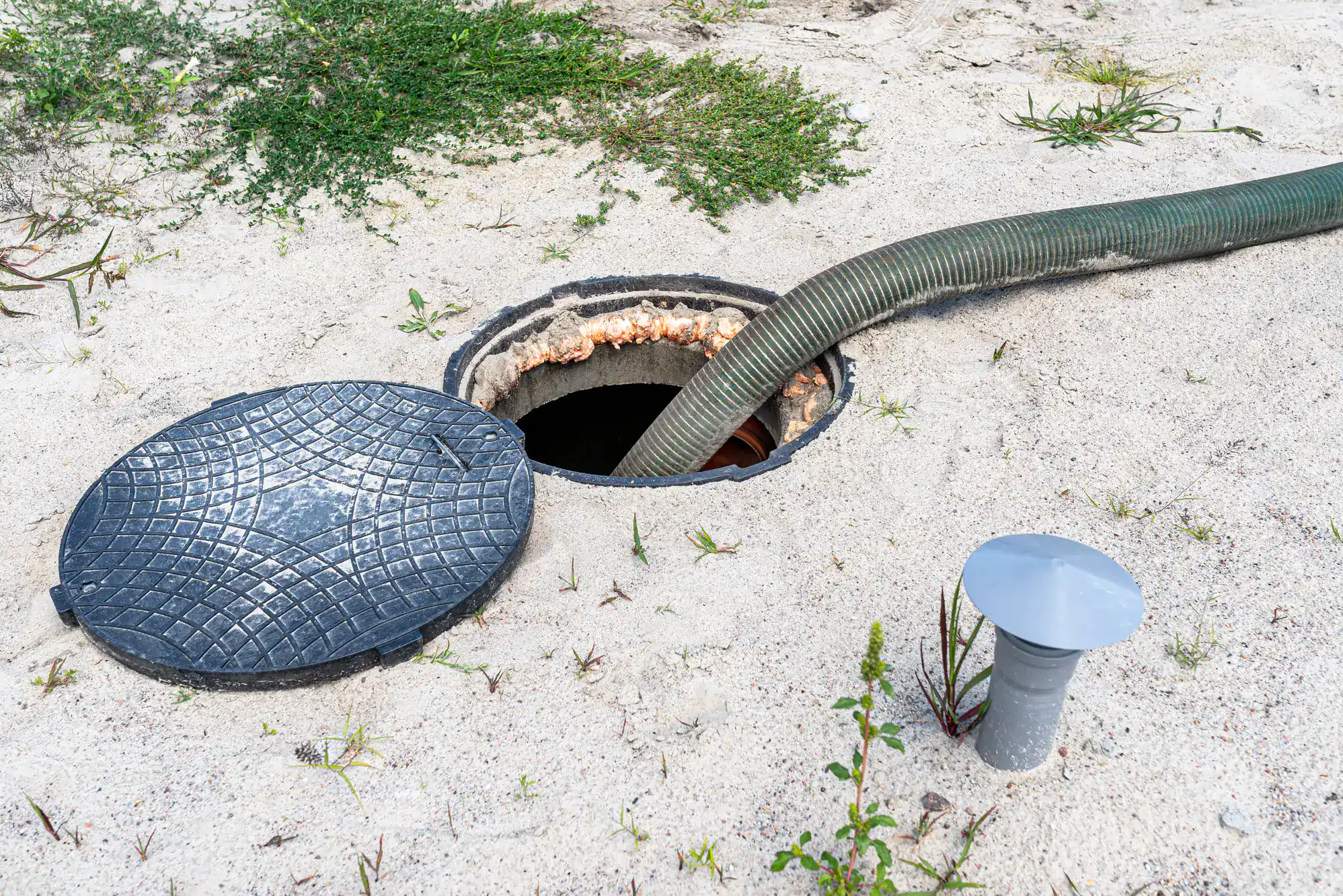
This is one of the most common situations we see on the North Shore. The short answer is that the previous system was either undersized for the volume of water your property receives, installed without a complete understanding of where the water was coming from, or discharged to a location that can’t handle the flow. In Terryville specifically, the clay-heavy soil underneath most lawns means that water can’t infiltrate the way it would in a sandier environment so any system that relies on ground absorption without accounting for that clay layer is going to underperform.
The August 2024 storm exposed a lot of these gaps. Systems that had been “working” in average conditions failed completely when the area received close to 10 inches of rain over a weekend. If your drainage held up through light rain but failed in that storm, the system was never truly sized for what this area can produce. A proper assessment looks at the full picture soil conditions, grading, inlet capacity, pipe sizing, and discharge location before we recommend any fix.
For most residential properties in Terryville, a professionally installed drainage system runs somewhere between $3,000 and $8,000, depending on the scope of the problem, the size of the yard, and what combination of solutions is needed. A single French drain on a smaller property might come in toward the lower end. A full system with catch basins, regrading, and a dry well on a larger lot common in the older split-level and colonial homes throughout Brookhaven Town will sit higher.
The more useful number to keep in mind is what you’re protecting against. Foundation repair from water damage on Long Island runs $23,000 to $48,000. A single basement flooding event averages $10,000 to $26,000 in damage. Against those figures, a drainage system isn’t an expense it’s the most cost-effective protection available for a home that’s worth $500,000 to close to $1 million. We provide written, itemized quotes before any work begins, so you know exactly what you’re getting and what it costs.
It depends on the scope of the project, but in many cases yes, or at minimum, there are regulatory requirements that need to be followed. The Town of Brookhaven operates under a NYSDEC SPDES stormwater permit and enforces local code that prohibits diverting stormwater onto neighboring properties without prior approval. For larger projects or any work involving significant land disturbance, a Stormwater Pollution Prevention Plan (SWPPP) may be required, and a soil percolation test conducted by a qualified professional is mandatory on sites proposed for development or redevelopment.
If your property is near a wetland area which is more common than many North Shore homeowners realize a Town of Brookhaven wetlands permit may also be triggered before excavation begins. Working with us means you’re not left figuring out these requirements on your own. We handle the regulatory side as part of every project.
Clay soil changes the equation significantly compared to the sandy soils found on Long Island’s South Shore or East End. Because clay becomes nearly impermeable when wet, systems that rely primarily on ground infiltration like a basic dry well in isolation often underperform in Terryville and surrounding areas. The water has nowhere to go fast enough, and the system backs up.
The most effective approach for clay-heavy properties typically combines active water collection and transport with a discharge point that doesn’t depend entirely on ground absorption. French drains with adequate fall, catch basins that intercept surface water before it pools, and channel drains along hardscaped areas all move water away from the problem area rather than waiting for the ground to absorb it. Regrading is often part of the solution as well restoring the slope that directs water away from the foundation and toward an appropriate discharge point. The right combination depends on your specific property, which is why we assess before we recommend.
Yes and this is something several homeowners near Terryville and Port Jefferson Station are dealing with right now. When new development adds impervious surface parking lots, building footprints, paved areas the stormwater that previously soaked into undeveloped ground gets redirected. It has to go somewhere, and often that somewhere is onto adjacent residential properties that never had a drainage issue before.
The Jefferson Plaza redevelopment on Route 112, which received re-zoning approval in 2024, is the most significant new development in this area in years. If your drainage problems are new or noticeably worse in the past year or two, and you’re in proximity to that corridor, there’s a real possibility that nearby construction activity is a contributing factor. A site assessment can help determine whether your flooding is a longstanding property-level issue, a result of grade changes on your own lot over time, or something being driven by external stormwater displacement because the solution looks different depending on the cause.
Most residential drainage installations in Terryville take one to three days, depending on the complexity of the system and the size of the property. A straightforward French drain or catch basin installation on a mid-sized lot is typically a one-day job. A more involved system with multiple inlets, regrading, and a discharge line running across the yard will take longer but we communicate the timeline upfront before work begins.
As for the yard itself yes, drainage work requires excavation, and there will be disruption during the process. What matters is what the yard looks like when we’re done. Disturbed turf is restored, topsoil is replaced, and the finished surface is left in clean, respectable condition. In Terryville, where homeowners have invested real money in their properties and take pride in how they look, restoration is treated as part of the job, not an afterthought. You shouldn’t have to look at a torn-up yard for weeks after a drainage project is complete.