Hear from Our Customers
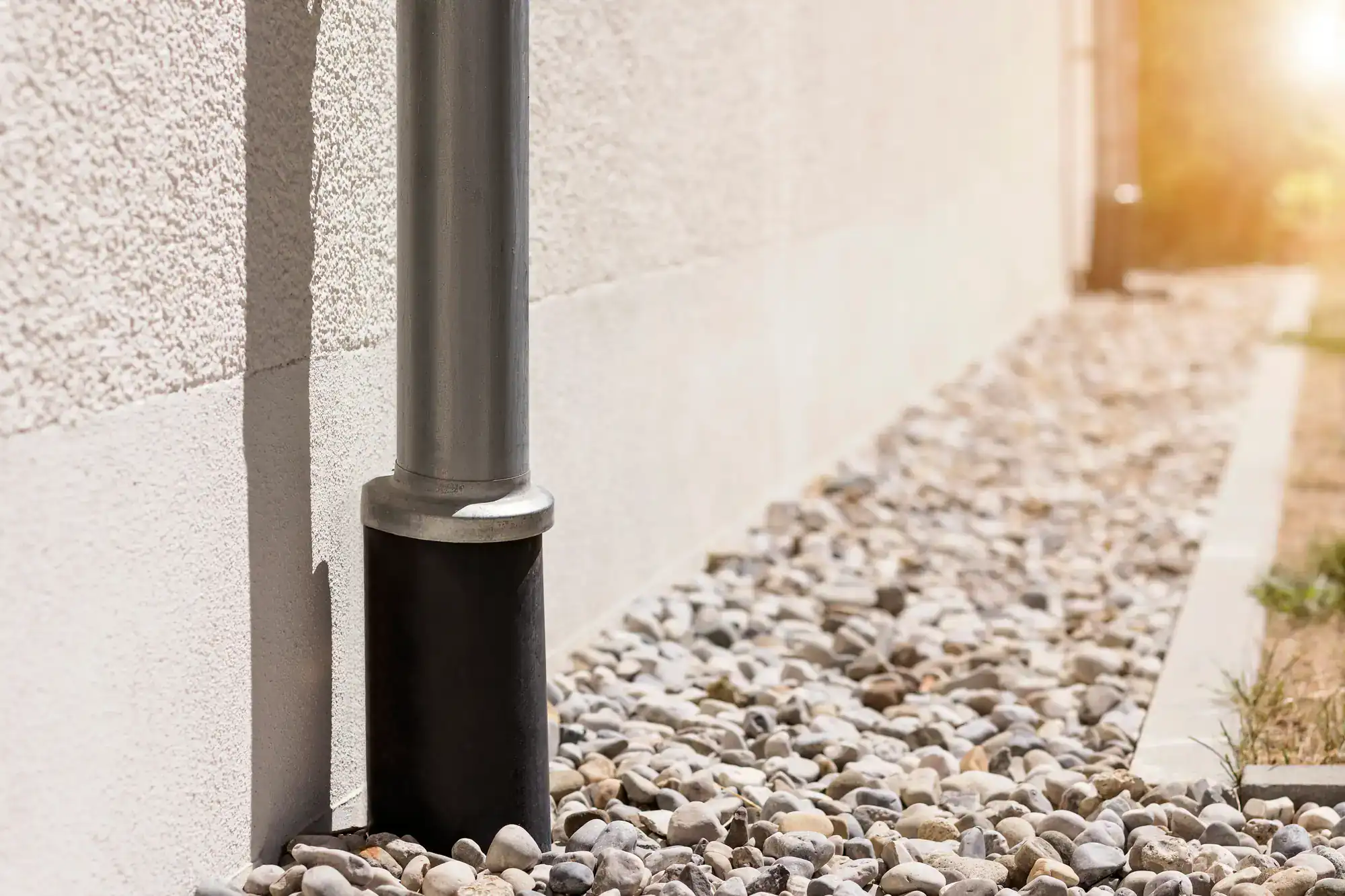
If your yard is still sitting in water two days after a nor’easter, that’s not just an inconvenience. It means your soil has hit its limit, water has nowhere to go, and your foundation is sitting under sustained pressure while you wait for it to drain. That pressure adds up season after season, storm after storm and eventually it shows up as cracks, dampness, or a basement that takes water every time the weather turns.
A properly installed French drain system intercepts that subsurface water before it ever reaches your foundation and moves it to a controlled outlet. The clay-heavy soil throughout West Sayville and the broader South Shore doesn’t absorb water quickly it holds it against your home. A French drain bypasses that entirely, giving water a direct path out instead of letting it pool and press.
For homes near the waterfront or in the lower-lying stretches of West Sayville, this isn’t a luxury upgrade. With median home values pushing well above $600,000 in the area, a drainage system that protects your foundation, your basement, and your landscaping is one of the highest-return investments you can make. The cost of doing nothing shows up in foundation repair bills, mold remediation, and inspection findings that kill deals when it’s time to sell.
Gold Coast Landworks has been working on Long Island’s South Shore long enough to know that drainage in West Sayville isn’t the same as drainage anywhere else. The Great South Bay pushes the water table up. The soil holds moisture longer than it should. And a lot of the homes in West Sayville, Sayville, and Oakdale were built before stormwater management was ever part of the design conversation. That combination creates drainage challenges that a generalist contractor or a national waterproofing chain isn’t going to diagnose correctly on the first visit.
We’re a water drainage contractor that focuses on getting the diagnosis right before anything else. That means a real on-site assessment, not a phone quote. We look at how water is moving on your specific property in West Sayville, what the soil and grade are doing, and what kind of system will actually solve the problem not just address the symptom. Every installation is handled by our crew, and we back the work with a workmanship warranty because we’re not interested in coming back for the wrong reasons.
It starts with a free on-site assessment. We come to your West Sayville property, walk the yard, look at where water is entering or pooling, evaluate the grade, and identify what’s driving the problem. No phone quotes for drainage work the conditions on your specific property are what determine the right system, and we need to see it firsthand.
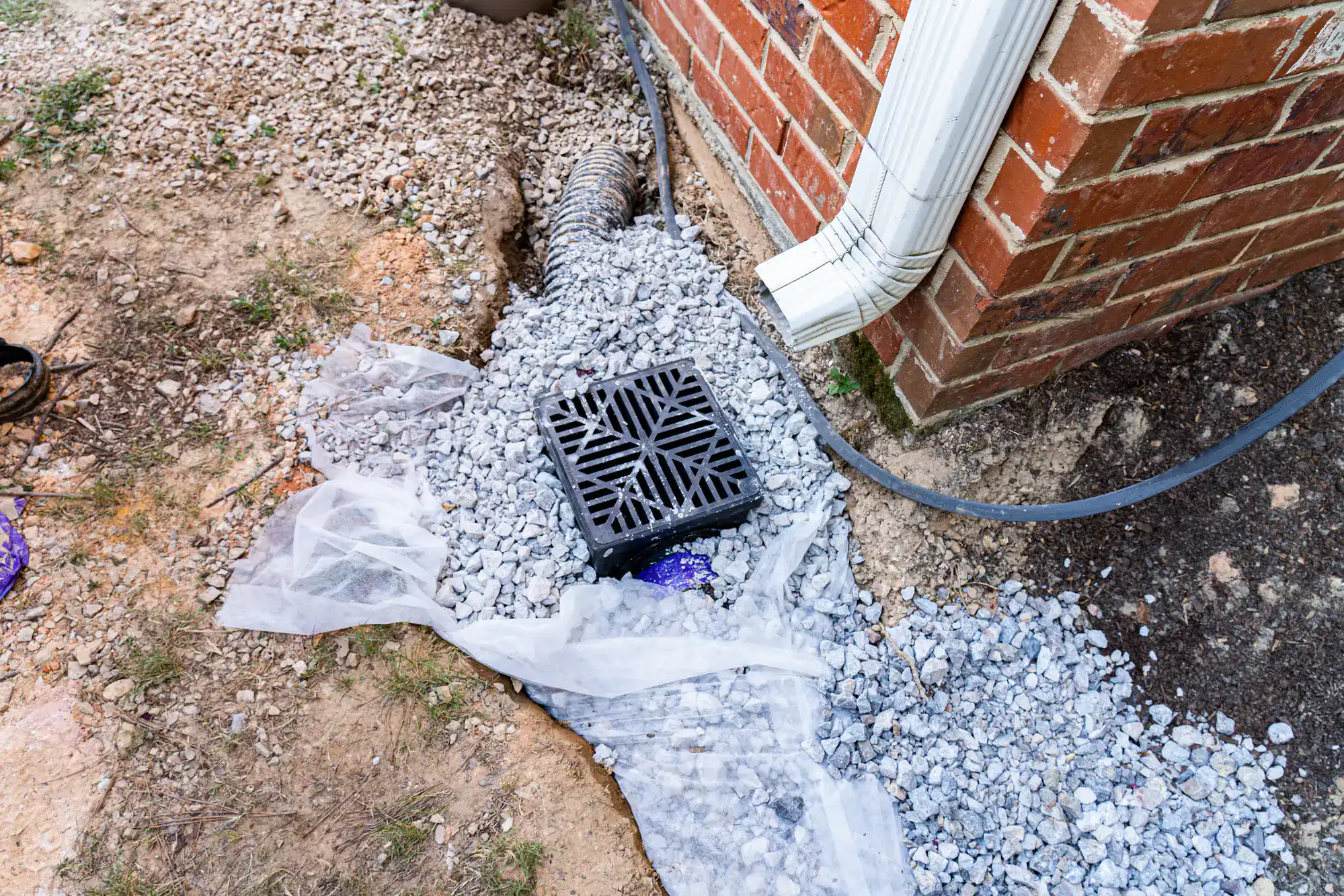
Once we’ve diagnosed the issue, we map out the French drain layout where the trench runs, what pipe and filter fabric we’re using, and where the outlet will discharge. Before any excavation starts, we call 811 to get underground utilities marked. That’s a legal requirement in New York State, and it’s a step that protects your property and our crew. If your project requires a permit through the Town of Islip Building Department, we handle that process too you don’t need to navigate Islip Town code on your own.
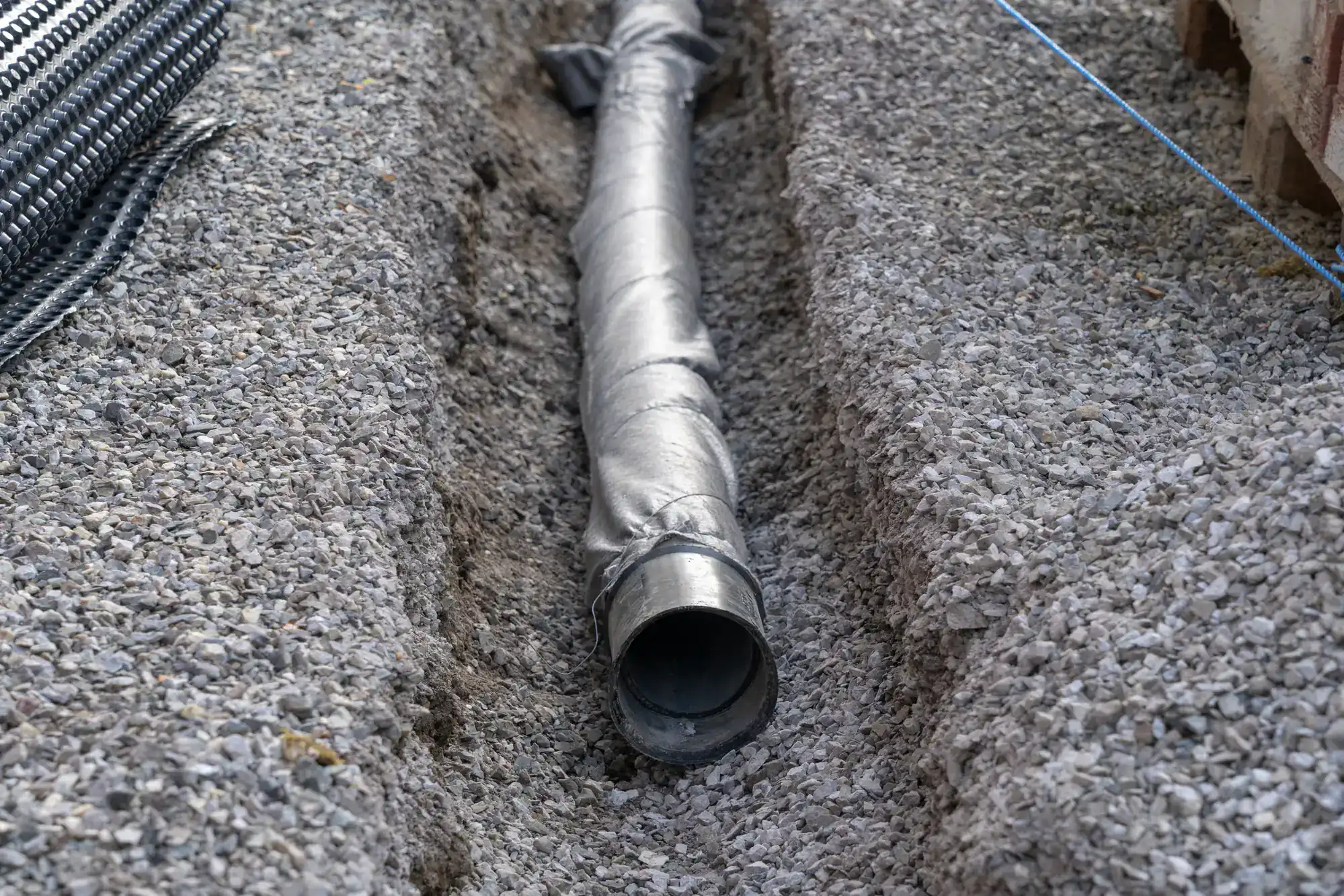
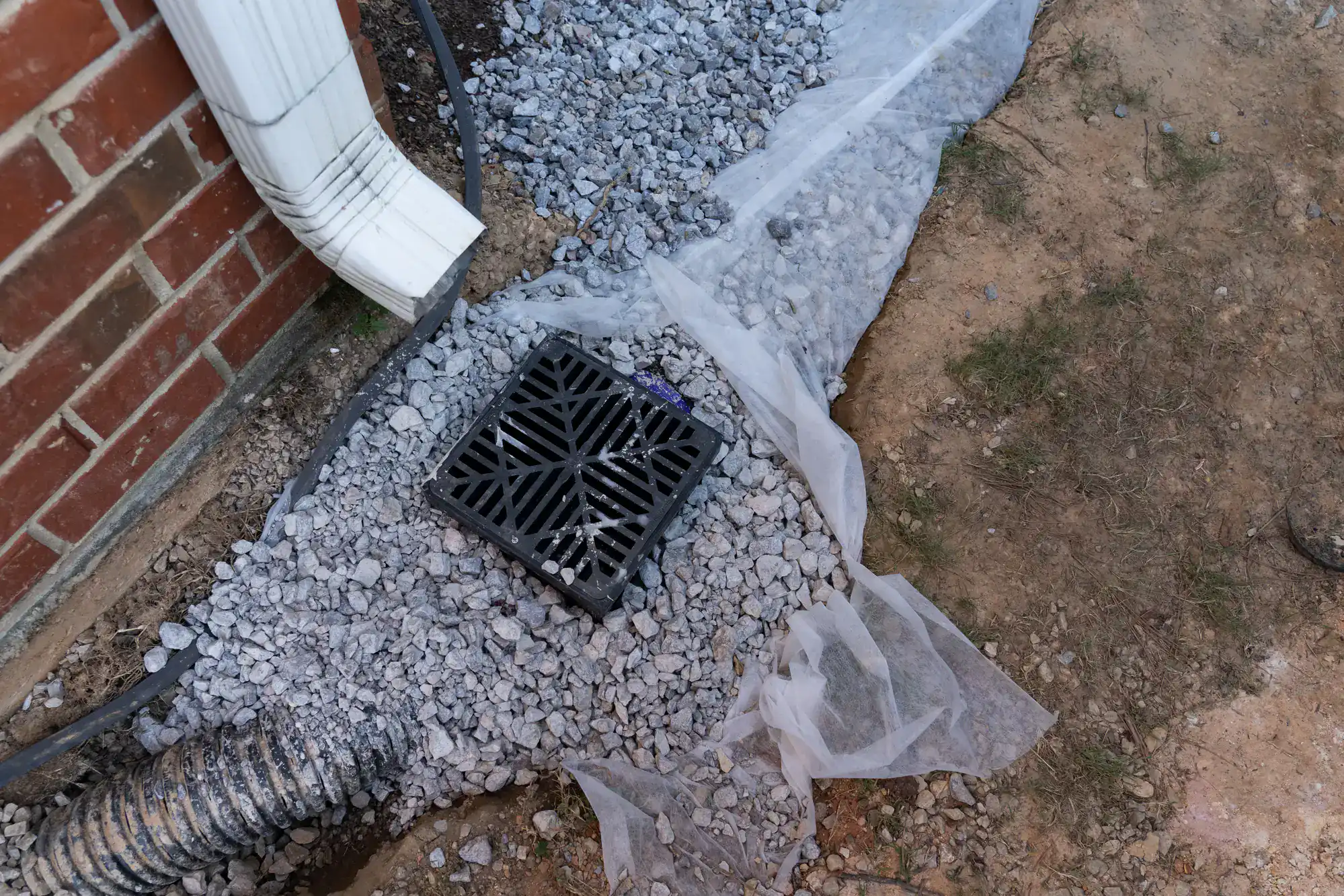
Installation on a typical West Sayville residential property takes one to three days. We excavate the trench, set the perforated pipe in washed angular gravel, wrap it in geotextile filter fabric to keep clay and sediment from clogging the system over time, backfill, and restore the surface. Topsoil is replaced, and we seed or match sod so your yard looks the way it did before we got there. The system itself, when installed correctly, is built to last 30 to 40 years.
Ready to get started?
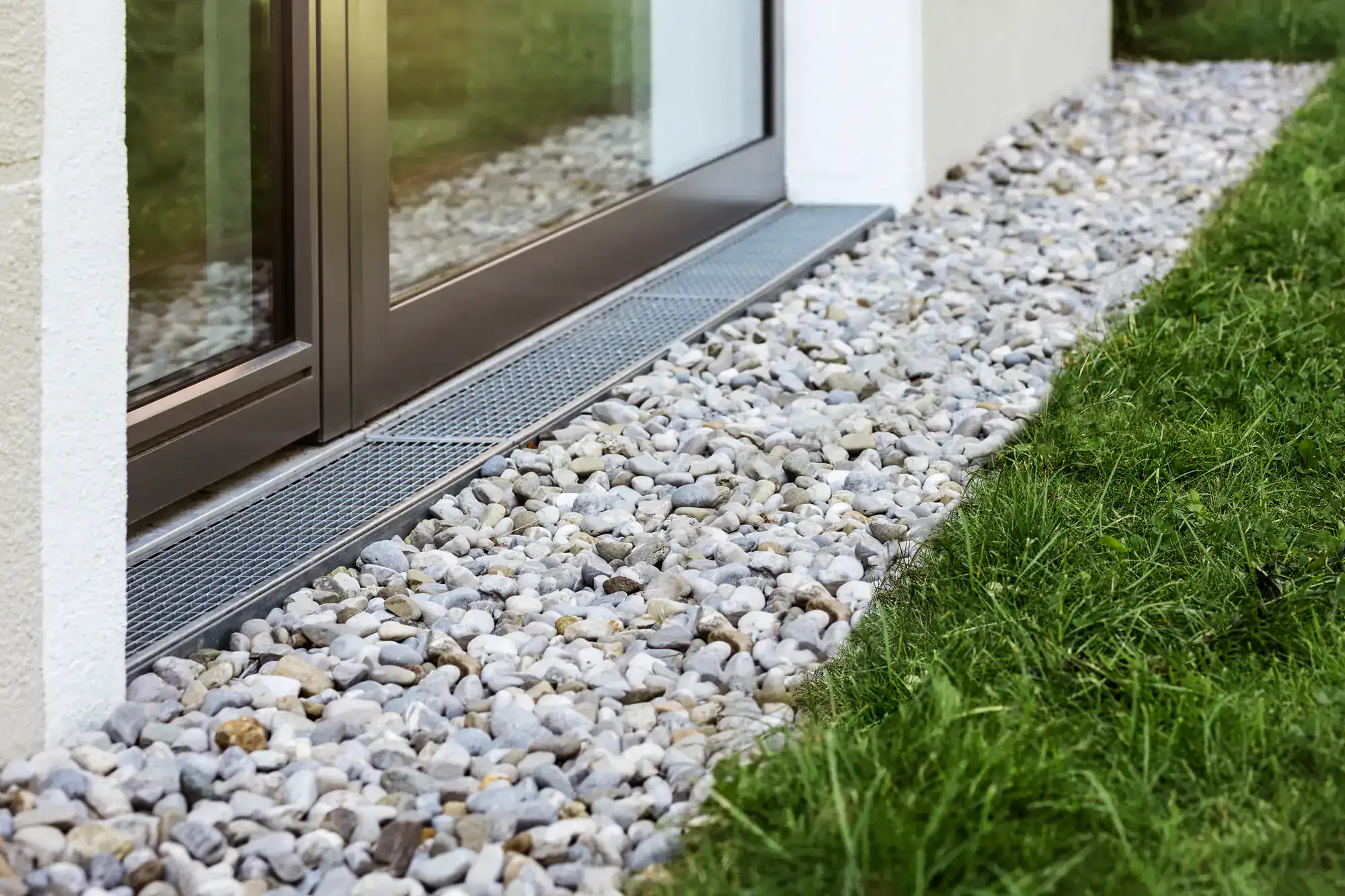
Every French drain system we install in West Sayville is spec’d for the conditions here not pulled from a generic template. That means perforated pipe sized for the volume of water your property handles, double-punched geotextile filter fabric that keeps the clay soil from migrating into the pipe and shortening the system’s life, and washed angular gravel that maintains drainage capacity around the pipe over time. The outlet is designed to discharge water away from your foundation and in compliance with Suffolk County’s groundwater protection requirements something that matters in a county built over a sole-source aquifer.
For homes in West Sayville’s lower-lying areas or near the waterfront along the Great South Bay, we pay particular attention to outlet placement and system depth. When the water table is already elevated from coastal conditions, the drain needs to be positioned and graded correctly to move water effectively a detail that gets missed when a contractor doesn’t understand South Shore hydrology.
We handle exterior French drains for yard drainage and foundation perimeter drainage, interior perimeter systems for basement water intrusion, and combination approaches when the problem is coming from multiple directions. If your property is in a FEMA flood zone which applies to portions of West Sayville’s residential areas we factor that into the system design and can speak to how a properly documented drainage installation may be relevant to your flood insurance situation. Every job includes utility marking, permit handling where required, and full surface restoration when we’re done.
Yes, and it’s one of the most important factors in diagnosing drainage problems for West Sayville properties. The Great South Bay is a shallow, enclosed body of water that runs along the southern edge of West Sayville and its water levels directly influence the saturated zone beneath nearby properties. The USGS actively monitors water surface elevation at West Sayville, and the NWS flood stage for that station is just 3.1 feet. That tells you how little margin there is between normal bay levels and conditions that start pushing water into yards and foundations.
What this means practically is that West Sayville’s water table is shallower than most inland Long Island communities especially after a nor’easter drives sustained onshore winds and raises bay levels. Even a moderate rain event can saturate the ground quickly when the water table is already close to the surface. A French drain system designed for these conditions accounts for that elevated baseline, not just the rainfall itself. If a contractor gives you a quote without asking about your proximity to the bay or the surrounding terrain, that’s a sign they haven’t thought through what’s actually driving your problem.
Most residential French drain installations in West Sayville fall somewhere in the $5,000 to $12,000 range, depending on the scope of the system. What drives that range is the linear footage of trench needed, how deep the system has to go to reach effective drainage depth given the local water table, whether the outlet requires any grading work, and how complex the surface restoration is. A simple yard drainage system on a flat property is going to cost less than a full foundation perimeter drain on a bay-adjacent property with clay soil and a tight water table margin.
What’s worth keeping in mind is the comparison. Foundation repair on a flooded Long Island home starts around $15,000 and can climb well past $50,000. Mold remediation runs $3,000 and up. A drainage system that prevents those outcomes on a West Sayville home worth $600,000 or more is a straightforward investment when you look at it that way. We give you a specific number after the on-site assessment, not a range pulled from the air. There are no surprise add-ons once the job starts.
Clay soil is actually one of the main reasons a French drain is the right solution for most West Sayville properties. Clay has low permeability it doesn’t absorb water quickly, and it doesn’t let water move laterally on its own. That’s why yards in West Sayville stay soggy long after the rain stops. The water has nowhere to go because the soil won’t take it.
A French drain works by creating a preferential drainage pathway through that clay. Water follows the path of least resistance, and a properly installed perforated pipe surrounded by washed gravel and wrapped in filter fabric gives it that path. Instead of sitting in the clay against your foundation or pooling in low spots in your yard, water moves into the pipe and out through the outlet. The filter fabric is especially important in clay-heavy soil it keeps fine clay particles from migrating into the gravel and pipe over time, which is what causes cheaper or poorly installed systems to clog and fail within a few years.
Permitting requirements depend on the scope and location of the work. In the Town of Islip, excavation work that alters drainage patterns on a property particularly work near foundations or within FEMA-designated flood zones can require a building permit. West Sayville’s waterfront areas carry Zone AE flood designations, which adds a layer of review for drainage alterations in those areas. Suffolk County’s sole-source aquifer designation also means that any system discharging to the ground needs to be designed to avoid groundwater contamination, which affects how the outlet is engineered.
Before any excavation starts on a West Sayville property, New York State law requires calling 811 to have underground utilities marked. That applies regardless of permit status. We handle the 811 call, evaluate whether your specific project requires a Town of Islip permit, and manage the application process if it does. Most homeowners aren’t familiar with how Islip Town’s permitting process works or when it applies that’s not a problem you need to solve on your own. We’ve been through it enough times to know what’s required and how to move through it without delays.
Most residential installations in West Sayville take one to three days from start to finish. The timeline depends on the length and complexity of the system, but for a typical single-family property, it’s rarely a week-long project. The excavation is targeted we dig the trench where the drain needs to run, not across the entire yard so the disruption is more contained than most homeowners expect going in.
Surface restoration is included in every installation. Once the pipe is set, gravel is placed, and the trench is backfilled, we replace topsoil and either seed the disturbed area or match existing sod. The goal is for your yard to look like we were never there, with the exception that water now drains the way it should. If you have mature landscaping or established garden beds near the work area, we discuss that during the assessment so there are no surprises. West Sayville homeowners tend to have well-maintained properties we treat them that way.
It depends on where the water is coming from, which is exactly why the assessment matters before anything else. If the water is entering through the foundation wall due to hydrostatic pressure from saturated soil which is the most common cause in West Sayville’s older housing stock then an exterior French drain installed along the foundation perimeter is typically the right solution. It relieves that pressure before it ever reaches the wall.
If water is getting in through the floor or through cracks at the base of the wall, an interior perimeter system may be needed in combination with or instead of an exterior drain. Some properties need both. What we won’t do is recommend a French drain if it’s not the right answer for your specific situation. There are West Sayville homes where the issue is grading, a failed sump pump, or a cracked foundation that needs repair before drainage work makes sense. We diagnose first. The spring flooding pattern you’re describing recurring, predictable, tied to the seasonal water table rise is exactly the scenario where a properly installed French drain system tends to deliver the clearest results.