Hear from Our Customers
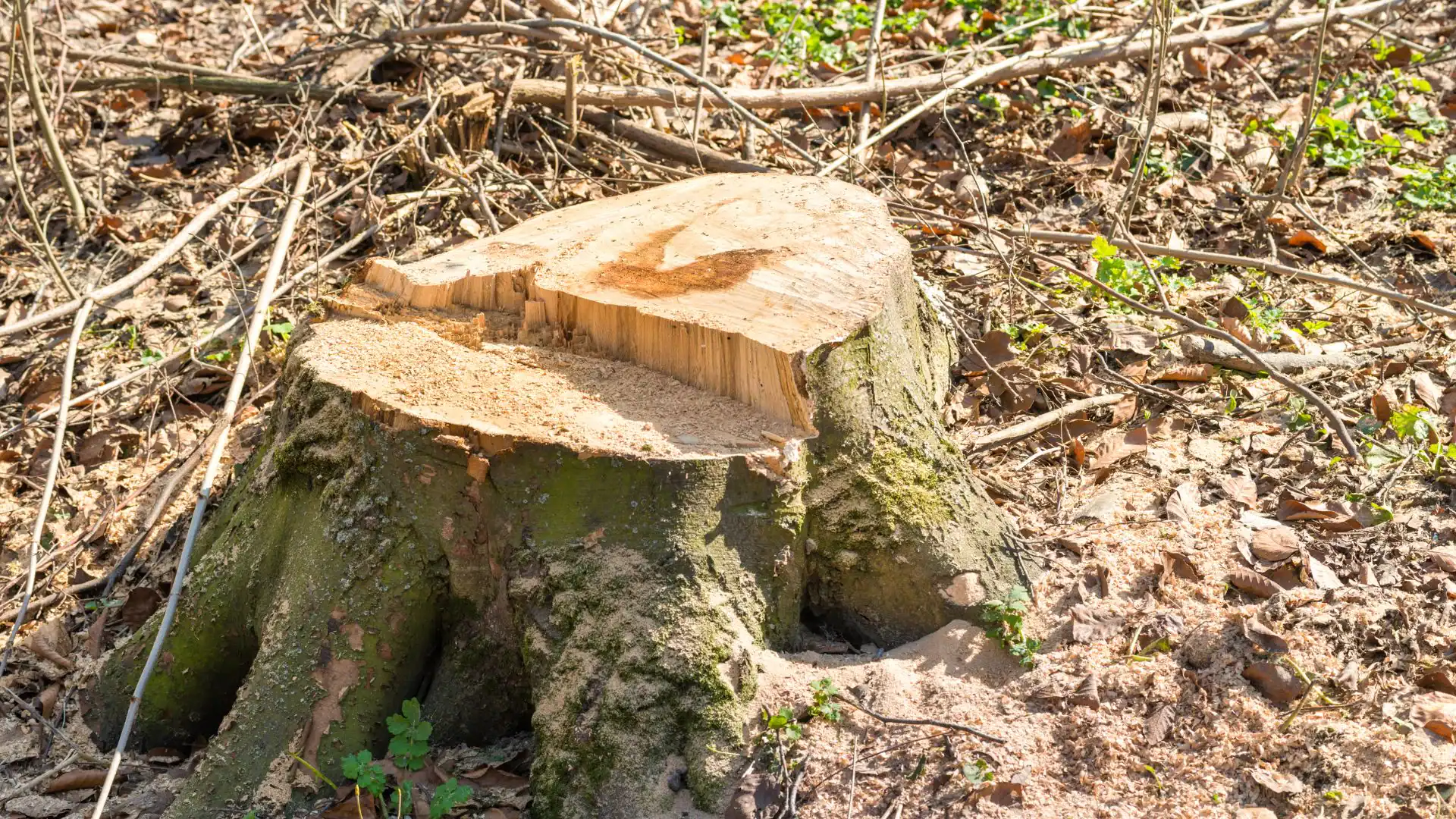
A cleared lot in Copiague right now is worth more than it was a year ago. With median home prices up around 6% year-over-year and properties moving in roughly 36 days, buyers and sellers both know that a clean, accessible site commands attention. Whether you just closed on a neglected ranch off Montauk Highway or you’re prepping a parcel near the LIRR station for new construction, what the property looks like when the work is done matters and it matters fast.
Copiague’s post-war housing stock means a lot of properties are carrying decades of unchecked growth. Mature trees that have spread into neighboring lots, rear yards that have gone fully wild, hedges that stopped being hedges years ago. When we clear that out properly stumps ground, debris hauled, site left level and clean we’re not just improving the look. We’re opening up the space for whatever comes next: landscaping, a renovation, a sale, or a build.
For properties near the water American Venice, Copiague Harbor, anywhere backing up to the canal network there’s another layer to this. Phragmites and other invasive species grow aggressively along the South Shore waterfront, and if they’ve taken hold on your Copiague property, clearing them the right way means addressing the root system, not just cutting the top off. A clean waterfront lot with clear sight lines to the bay is a genuinely different asset than one choked with 12-foot reeds.
We’re a Long Island land clearing operation that works across the South Shore and Copiague is not new territory for us. We know that a job near the American Venice canal system is a different conversation than a job two blocks north of Sunrise Highway. We know that the Town of Babylon’s land clearing permit process has real teeth, and that a contractor who skips that step is putting you at risk, not saving you time.
We handle the full scope of clearing work vegetation removal, brush clearing, tree felling, stump grinding, and site cleanup so you’re not coordinating between three different contractors to get one job done. Every quote is itemised so you know exactly what you’re paying for before anyone sets foot on the property.
What we don’t do is disappear after the estimate. If you’ve dealt with contractors who quote and vanish, you already know how frustrating that is. We respond, we show up, and we leave the site clean.
It starts with a site visit. Before we quote anything, we walk the property with you. We look at what’s actually there the species, the density, the access points, the proximity to structures or neighboring lots because a quote built on a phone description is a quote that blows out at the end. Copiague lots vary significantly. A property in Deauville Gardens with a straightforward rear yard is a different job than a waterfront parcel in Copiague Harbor with Phragmites growing along the bulkhead and a DEC setback to account for.
Once we’ve assessed the site, the first thing we confirm is the permit picture. Under the Town of Babylon’s Zoning Code, Chapter 213, Article XXX, a land clearing permit is required before vegetation removal begins and the threshold is lower than most people expect. Any woody plant with a diameter of one inch or more qualifies as a “tree” under the code. That includes most established shrubs and saplings, not just the big stuff. We handle the permit assessment as part of every job. If a permit is required, we walk you through what that means for your timeline.
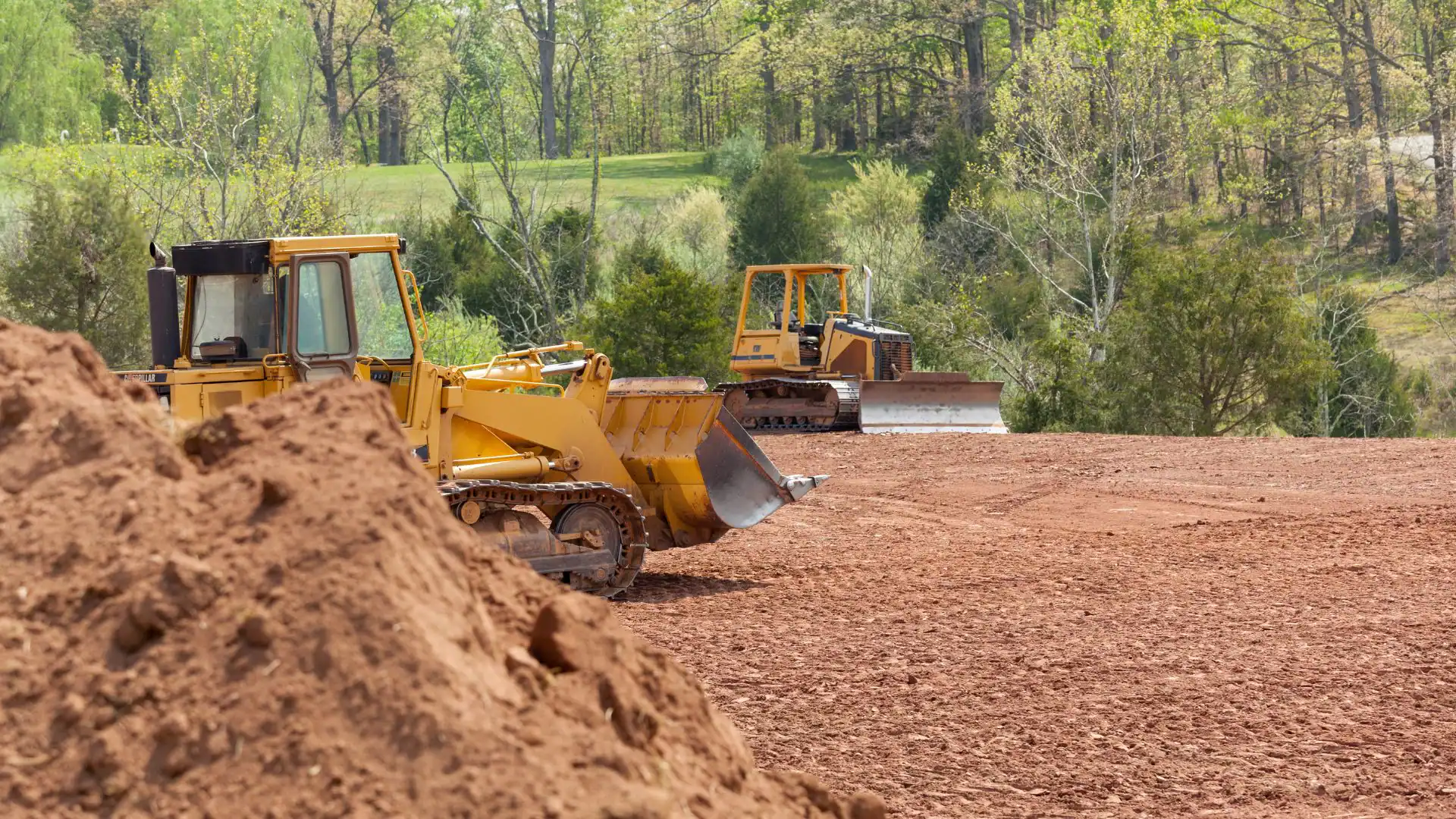
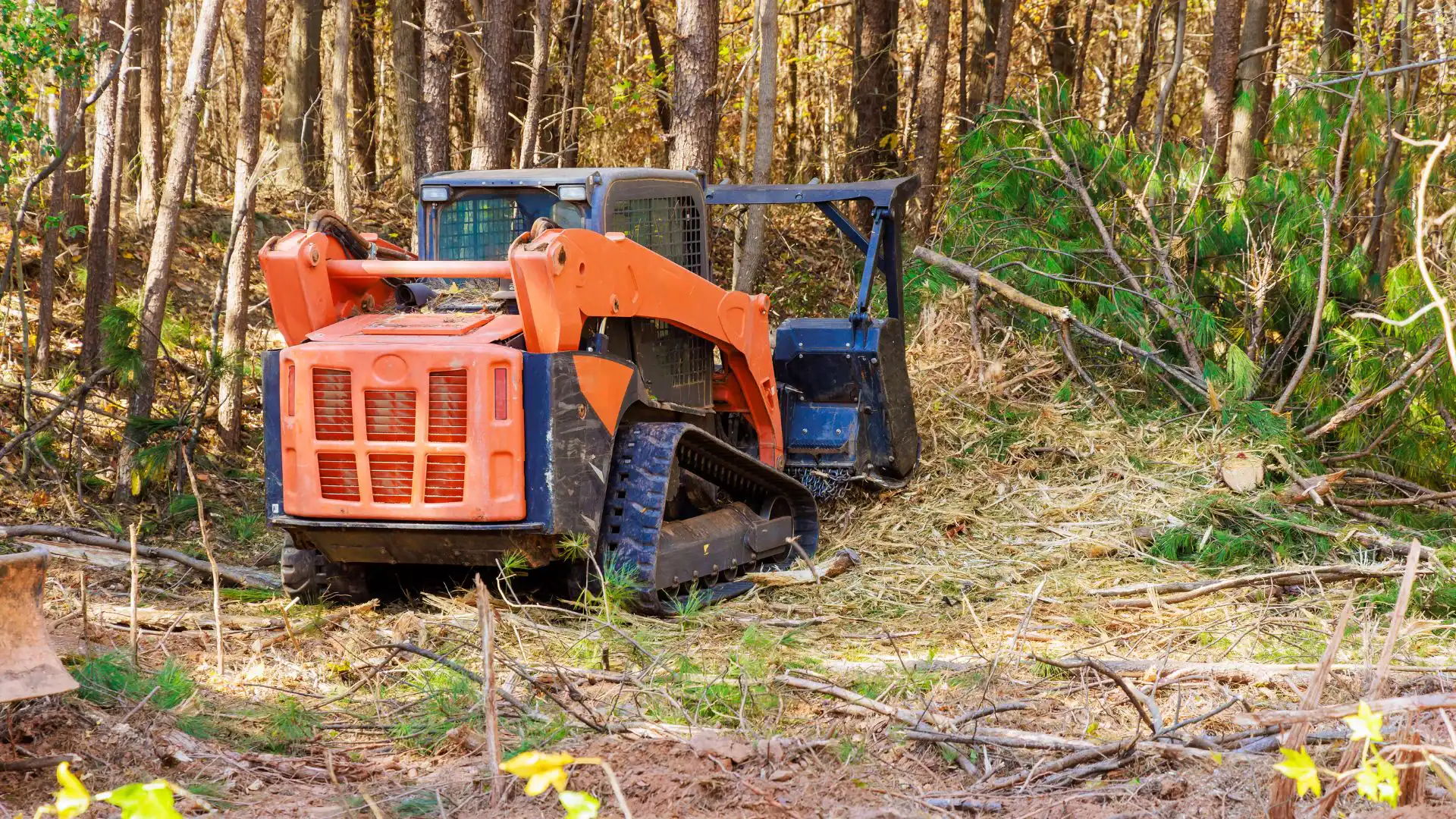
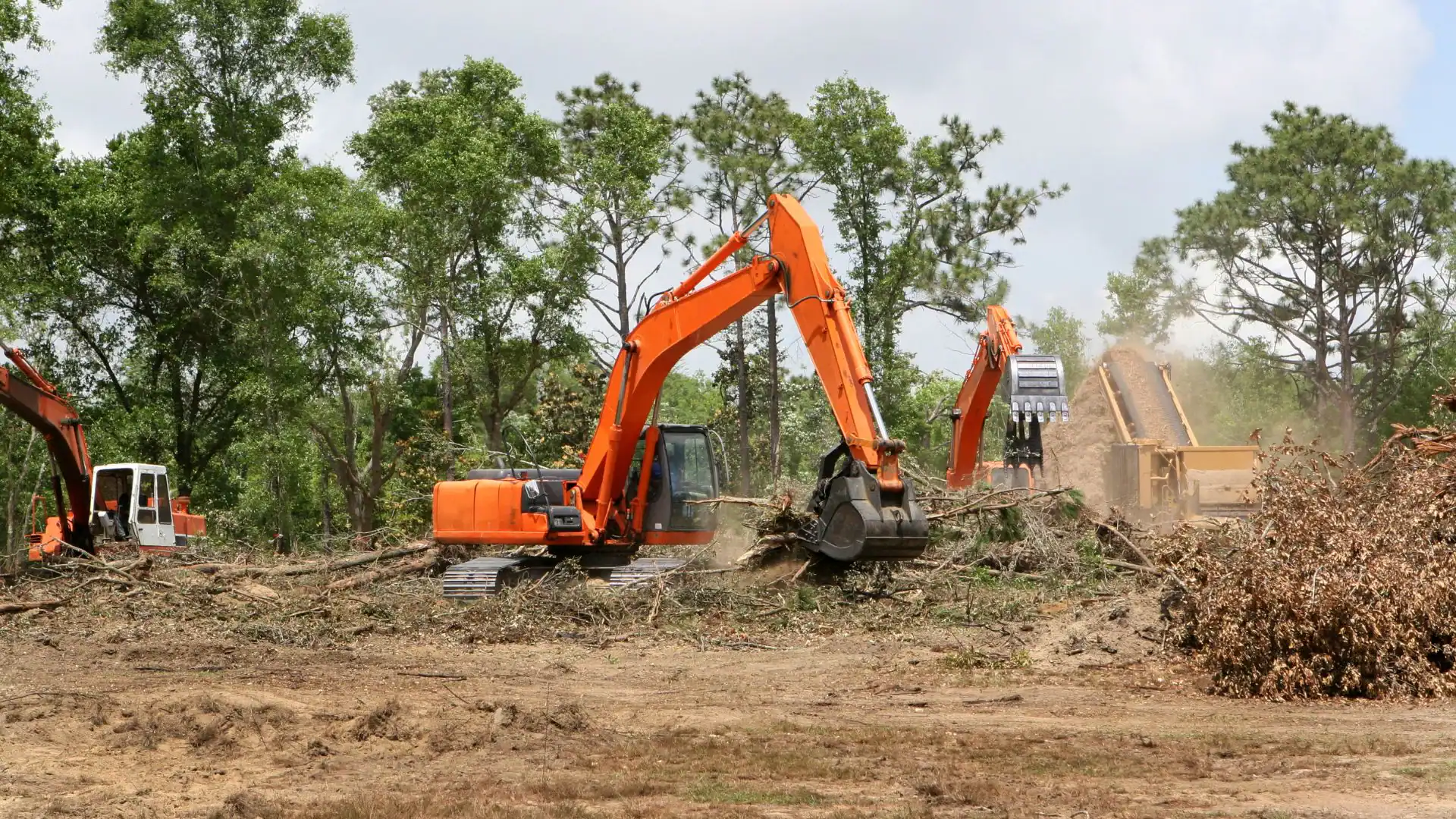
From there, clearing proceeds in a logical sequence: vegetation and brush first, trees next, stumps ground below grade, debris loaded and removed. When we’re done, the site is clean. Not “mostly clean.” Clean. In a community as dense as Copiague, where your neighbors are close and the Town of Babylon’s property maintenance ordinances are real, leaving piles of debris on site isn’t acceptable and we don’t do it.
Ready to get started?
Land clearing in Copiague isn’t one thing. It’s brush clearing on an overgrown residential lot. It’s lot clearing for a developer prepping a parcel near the Railroad Avenue revitalization corridor. It’s vegetation removal on a waterfront property where Phragmites has taken over the back half of the yard. It’s land reclamation on a neglected property that hasn’t been touched in years. The scope varies, and the quote reflects that but what doesn’t vary is what’s included when the job is done.
Every job we complete includes debris removal and site cleanup. Stumps are ground below grade. If invasive species like Phragmites, multiflora rose, or Japanese knotweed are present which is common on South Shore properties near the canal network and low-lying areas we clear them using methods that address the root system, not just the visible growth. Cutting Phragmites at the surface and walking away is not clearing; it’s a temporary cosmetic fix that comes back thicker the following season.
For properties in or near flood zones which covers a meaningful portion of southern Copiague we’re aware of the DEC wetland setback requirements that apply near tidal and freshwater wetlands. We clear right up to the regulatory boundary without crossing it. The Town of Babylon also requires all contractors performing this type of work to carry a minimum of $1,000,000 in personal injury liability coverage. We meet that requirement, and we can provide documentation before work starts.
Yes and the threshold is lower than most people assume. Under the Town of Babylon’s Zoning Code, Chapter 213, Article XXX, any woody plant with a diameter of one inch or more is legally defined as a “tree.” That means the permit requirement kicks in well before you get to mature trees. Established shrubs, saplings, and dense brush can all fall under the permit requirement depending on their size and what’s being removed.
The permit is issued by the Town of Babylon’s Department of Planning and Development, and work is supposed to stop or never start until it’s in hand. Skipping this step doesn’t save time; it creates exposure to enforcement action, stop-work orders, and fines. We handle the permit assessment as part of every job in Copiague. We confirm what requires a permit, what qualifies as exempt, and what the realistic timeline looks like before any clearing begins.
The honest answer is that it depends on what’s actually on the property and any contractor who quotes a flat number without walking the site first is guessing. Variables that affect cost include the density and type of vegetation, lot size, access (tight lots common in Copiague’s residential sections can require different equipment approaches), whether stump grinding is needed, and how much debris needs to be hauled.
That said, a straightforward residential lot clearing job in Copiague brush, light trees, stumps, and debris removal typically runs in the range of a few hundred to a few thousand dollars depending on scope. Larger jobs, waterfront properties with invasive species, or commercial-scale lot clearing near the Great Neck Road corridor will be priced accordingly. What you’ll get from us is an itemised quote that breaks down every line of work, so you’re not guessing at what’s included or bracing for a number at the end that doesn’t match what you were told at the start.
Phragmites australis common reed is an invasive species that’s widespread on Long Island’s South Shore, and it’s a persistent problem on Copiague properties near the canal network, the Great South Bay waterfront, and any low-lying or wet areas. It grows in dense stands that can reach 12 to 15 feet high, spreads aggressively through underground rhizomes, and can take over a rear yard or waterfront edge within a single growing season if it’s left unmanaged.
The key thing to understand about Phragmites is that cutting it down doesn’t clear it. The rhizome system underground will push new growth back up, often thicker than before, within weeks. Effective removal requires addressing the root system and in some cases, near regulated wetland areas, coordination with the New York State DEC. Properties in American Venice and Copiague Harbor are particularly affected. If your property backs up to a canal or sits in a low-lying area south of Montauk Highway, there’s a real chance Phragmites is part of what needs to be addressed.
Yes, but it requires knowing exactly where the regulatory lines are and staying on the right side of them. Properties in American Venice and the broader southern Copiague waterfront area are subject to New York State DEC jurisdiction over regulated wetlands. For freshwater wetlands, there’s a 100-foot setback from the wetland boundary. For tidal wetlands which applies to properties with direct bay or canal access that setback extends to 300 feet. Work within those setback areas requires DEC review and, in many cases, a permit from the state in addition to the Town of Babylon’s local clearing permit.
This doesn’t mean you can’t clear near the water. It means the clearing needs to be done by someone who understands the boundaries and doesn’t cut past them. We have experience working on waterfront properties across the South Shore. We know how to clear bulkhead edges, dock access areas, and canal-front yards in a way that improves the property without triggering a DEC violation. We assess the regulatory picture before we start, not after.
Spring and fall are the two peak windows, and both have real logic behind them. Spring roughly March through May is when most homeowners want to get ahead of the growing season. On Long Island’s South Shore, vegetation growth accelerates quickly in April and May. A property that looks manageable in March can be significantly more overgrown by June, which affects both the scope of the job and the cost. If you’re planning to landscape, renovate, or list a property, scheduling clearing in early spring gives you the most runway.
Fall September through November is the second peak, and it’s often the better window for assessing the full scope of a job. Once the growing season ends and leaves drop, it’s easier to see what’s actually there: the dead trees, the encroaching brush, the Phragmites stands that the summer canopy was hiding. Copiague’s coastal exposure also means nor’easters and storm events can create emergency clearing needs at any time of year, particularly for waterfront properties in American Venice and Copiague Harbor. We’re available for those situations as well.
The difference comes down to what’s been allowed to happen over time. Standard lot clearing preparing a relatively maintained property for landscaping or construction is a fairly linear job. Overgrown property clearing is a different category. These are properties where vegetation has been left unmanaged for years, sometimes decades. In Copiague, that often means post-war ranch homes or Cape Cods that have changed hands after sitting vacant, or properties where the rear yard has gone fully wild while the front was kept up.
On an overgrown property, you’re typically dealing with multiple layers: mature trees that have spread past their original footprint, dense understory brush and invasive species beneath them, root systems that have established deep, and access challenges that come from years of unchecked growth. The clearing sequence matters more, the equipment requirements can differ, and the debris volume is almost always higher than it looks from the street. We walk every overgrown property before quoting it because the only way to give you an accurate number is to actually see what’s there. Copiague’s older residential sections, particularly properties near the North Amityville border and along the Great Neck Road corridor, tend to produce the most complex overgrown clearing jobs we see on the South Shore.